Simposio Educación para la Carrera y Orientación Profesional en Latinoamérica 2025 (regional)
Simposio Educación para la Carrera y Orientación Profesional en Latinoamérica 2025 (regional)
Spanish
Academic institutions
Research papers, synthesis reports, country and programme studies are collected from many academic institutions and national, regional and international professional associations.

Other sources
Experts from many international, regional and national agencies generously share their views, experiences and findings on skills, helping policy-makers among other stakeholders to understand the linkages between education, training and the world of work, and how to integrate skills into national development planning to promote employment and economic growth.

Anticipating and matching skills needs

Anticipating and building skills for the future is essential to a rapidly changing labour market. This applies to changes in the types and levels of skills needed as well as in occupational and technical areas. Effective methods to anticipate future skills needs and avoid potential mismatches include: sustained dialogue between employers and trainers, coordination across government institutions, labour market information systems, employment services and performance reviews of training institutions.
Gender equality

Women represent both half of the world's population – and half the world's economic potential. Their participation in the labour market reduces poverty because they often invest 90 per cent of their income in the well-being, education and nutrition of their families. Yet labour force participation by women has stagnated at about 55 per cent globally since 2010. Moreover, women are disproportionately represented in precarious work – low-paid, low-skilled and insecure jobs.
Training plays an important role in the pursuit of equality of opportunity and treatment for women and men in the world of work. Yet women often lack access to technical and vocational education and training. Many also lack the basic functional skills, such as literacy and numeracy, to participate meaningfully in the work force. Overcoming this challenge requires the adoption of a life-cycle approach. This includes improving girls’ access to basic education; overcoming logistic, economic and cultural barriers to apprenticeships and to secondary and vocational training for young women; and meeting the training needs of women re-entering the labour market and of older women who have not had equal access to opportunities for lifelong learning.
Skills policies and strategies

Skills and employment policies should be viewed together. The full value of one policy set is realized when it supports the objectives of the other. For investments in education and training to yield maximum benefit to workers, enterprises, and economies, countries’ capacities for coordination is critical in three areas: connecting basic education to technical training and then to market entry; ensuring continuous communication between employers and training providers so that training meets the needs and aspirations of workers and enterprises, and integrating skills development policies with industrial, investment, trade, technology, environmental, rural and local development policies.
Training quality and relevance

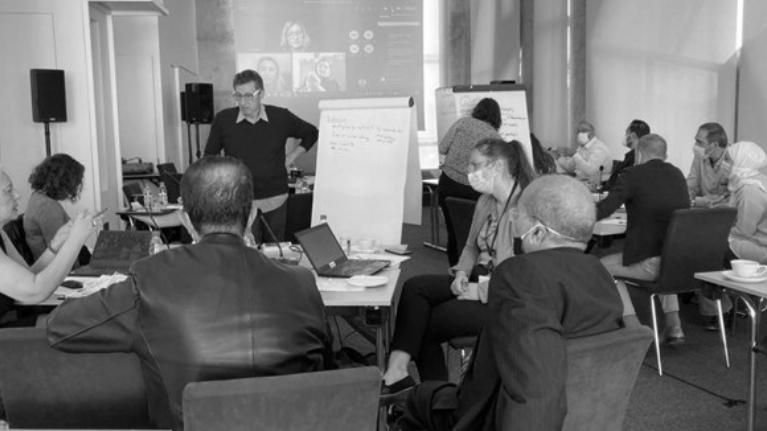
El Simposio está diseñado como un punto de encuentro para impulsar la preparación para el trabajo en clave latinoamericana y enfoque interseccional, focalizándose en: 1) la pertinencia cultural de las prácticas de educación para la carrera y la orientación profesional; y 2) la formación de profesionales de la orientación a lo largo de la vida.
Este enfoque crítico y de vanguardia impulsa la innovación en los servicios de orientación profesional y la difusión de investigación avanzada. Para ello, ya contamos con la participación confirmada de Marcelo Afonso Ribeiro (Brasil), Sergio Rascován (Argentina), Gabriela Cabrera (Colombia) y Gonzalo Gallardo (Chile) entre otras destacadas figuras, con quienes esperamos enriquecer la reflexión académica sobre estas materias.
The Symposium is designed as a meeting point to boost work readiness with a Latin American perspective and an intersectional approach, focusing on: 1) the cultural relevance of career education and professional guidance practices; and 2) the lifelong training of guidance professionals.
This critical and cutting-edge approach drives innovation in professional guidance services and the dissemination of advanced research. To this end, we already have confirmed participation from Marcelo Afonso Ribeiro (Brazil), Sergio Rascován (Argentina), Gabriela Cabrera (Colombia), and Gonzalo Gallardo (Chile), among other prominent figures, with whom we hope to enrich the academic reflection on these matters.
Date: 12-13 November 2025
Time: 09:00 hrs (GMT-3)
Location: Online
More information: https://ocides.org/desarrollodecarreralatam