Towards a redefinition of employability for the Southern African region (regional)

Towards a redefinition of employability for the Southern African region (regional)

Kind:
Event
Start Date:
25 Nov 2025
End Date:
04 Jun 2026
Event Location:
Online
Language:

English

Slug
english
Identifier
skpEng
Language Version:
--
Sources:

Other sources

Experts from many international, regional and national agencies generously share their views, experiences and findings on skills, helping policy-makers among other stakeholders to understand the linkages between education, training and the world of work, and how to integrate skills into national development planning to promote employment and economic growth.

Thumbnail
Identifier
skpOSource
Slug
other-sources
Topics:

Rural employment

Thumbnail

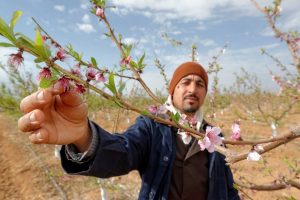
Eight out of 10 of the world’s working poor who live on US $1.25 per day live in rural areas, where many are caught in vulnerable employment, especially in agriculture.Flourishing rural areas are vital to regional and national development. Yet, rural economies tend to face a wide range of challenges that urban areas are more likely to overcome. These include access to transportation, sanitation and health services, and a consumer base in close proximity to support small and medium enterprise development. Women and men working in rural areas also face difficulties associated with a paucity of economic opportunities, under investment, poor infrastructure and public services, including education, and, in many cases, weak governance and underdeveloped markets.

Education, entrepreneurship, and physical and social infrastructure all play an important role in developing rural regions. Skills are central to improving employability and livelihood opportunities, reducing poverty, enhancing productivity and promoting environmentally sustainable development.

Identifier
skpREmpl
Slug
rural-employment

Youth employability

Thumbnail

Globally, nearly 68 million young women and men are looking for and available for work,  and an estimated 123 million young people are working but living in poverty. The number who are not in employment, education or training (NEET) stands at 267 million, a majority of whom are young women. Significantly, young people are three times as likely as adults (25 years and older) to be unemployed.

Skills development is a primary means of enabling young people to make a smooth transition to work. A comprehensive approach is required to integrate young women and men in the labour market, including relevant and quality skills training, labour market information, career guidance and employment services, recognition of prior learning, incorporating entrepreneurship with training and effective skills forecasting. Improved basic education and core work skills are particularly important to enable youth to engage in lifelong learning as well as transition to the labour market. 

Identifier
skpYoEmp
Slug
youth-employability
Knowledge Products:

Join the Southern African region's exciting Global Careers Month event, building on the success of 2022! 

This year's youth-driven programme is set to dive deep into the very definition of employability. We're moving beyond just finding a job to exploring the full spectrum of sustainable livelihoods, including creating employment, gig work, small-scale farming, and other forms of subsistence. Our goal is to craft a regional definition that encompasses people, profit, and planet, firmly embedding sustainability into the career education framework.

This vital event is generously supported by the EU Delegation of Eswatini and hosted by the National Curriculum Centre (NCC), a department of the Ministry of Education and Training which sees this as a crucial career education springboard for Eswatini's reform of the secondary education curriculum to a competency-based model. The EU Youth Sounding Board in Eswatini is driving the process, ensuring youth voices lead the deliberation to establish a final, impactful regional definition of employability, one that truly serves the needs and realities of the greater youth population. Mark your calendars for November 25th! More details to follow on shaping the future of careers in the region.

Time: 25 November 2025 at 9:00-10:00 CET

Place: Online (participation link: https://teams.microsoft.com/meet/36280163243023?p=n6qqwcmY78vPm8uo9f)

More information: https://www.sacda.org.za/news/SACDA-News-5



The digitization of TVET and skills systems

The digitization of TVET and skills systems

Type:
Document
Content Type:
The digitization of TVET and skills systems
Language:

English

Slug
english
Identifier
skpEng
Sources:

ILO

The International Labour Organization is the tripartite U.N. agency that promotes Decent Work through employment, social security, labour standards and social dialogue. Its work on skills development is guided by the conceptual framework on Skills to improve productivity, employment growth, and development agreed in 2008 by representatives of Governments, Employers’ Associations and Workers’ Associations. Research, policy advice, and pilot projects and technical cooperation programmes to apply good practices in different circumstances across its 185 member States aims to boost the employability of workers, the productivity and competitiveness of enterprises, and the inclusiveness of economic growth. The ILO Secretariat in offices in 40 countries works with Ministries of Labour, employers’ organizations, and trade unions to integrate skills development into national and sector development strategies in order to better meet current labour market needs and to prepare for the jobs of the future; to expand access to employment-related training so that youth, persons with disabilities and other vulnerable groups are better able to acquire skills and secure productive and decent work; and to improve the ability of public employment services to provide career guidance, maintain labour exchange services, and deliver active labour market programmes.For more information regarding the ILO’s work on skills and employability go to: http://www.ilo.org/skills/lang--en/index.htm; for ILO/Cinterfor's Knowledge Management Plarform, see: http://www.oitcinterfor.org

Thumbnail
Identifier
skpILO
Slug
ilo

Information is gathered from other international organizations that promote skills development and the transition from education and training to work. The Interagency Group on Technical and Vocational Education and Training (IAG-TVET) was established in 2009 to share research findings, coordinate joint research endeavours, and improve collaboration among organizations working at the international and national levels.

Thumbnail
Identifier
skpIntOrg
Slug
international-organizations
Topics:

Training quality and relevance

Thumbnail
Identifier
skpTrainQR
Slug
training-quality-and-relevance
Knowledge Products:

Case studies and good practices

Case studies that document good practices and illustrate the benefits and lessons learnt of particular approaches or methods in real practice. 

Thumbnail
Identifier
skpCaseStdy
Slug
case-studies-and-good-practices

Research papers

Working papers, reports, and other publications from international organizations, academic institutions and bilateral agencies. Research findings to stimulate informed debate on skills, employment and productivity issues. 

Thumbnail
Identifier
skpRPS
Slug
research-papers
Publication Date:
21 Aug 2020
This joint ILO-UNESCO report provides a global, high-level overview of how digitalization is affecting TVET and skills systems. It draws on consultations with key stakeholders in a set of countries and international organizations to provide insights into the nature and scope of digitalisation and how it is likely to affect the management, delivery, assessment and certification of technical and vocational education and training. The study draws on developments in Brazil, Ghana, India, Kenya, Malaysia, Malta, Mauritius, New Zealand, Slovenia, Turkey and the United States.
Subject Tags:

Internet

Slug
internet
Identifier
347

Skills and training policy

Slug
skills-and-training-policy
Identifier
666

Technology

Slug
technology
Identifier
345

TVET systems

Slug
tvet-systems
Identifier
661
Regions:

A review of skills levy systems in countries of the Southern African Development Community

A review of skills levy systems in countries of the Southern African Development Community

Type:
Document
Content Type:
A review of skills levy systems in countries of the Southern African Development Community
Language:

English

Slug
english
Identifier
skpEng
Sources:

ILO

The International Labour Organization is the tripartite U.N. agency that promotes Decent Work through employment, social security, labour standards and social dialogue. Its work on skills development is guided by the conceptual framework on Skills to improve productivity, employment growth, and development agreed in 2008 by representatives of Governments, Employers’ Associations and Workers’ Associations. Research, policy advice, and pilot projects and technical cooperation programmes to apply good practices in different circumstances across its 185 member States aims to boost the employability of workers, the productivity and competitiveness of enterprises, and the inclusiveness of economic growth. The ILO Secretariat in offices in 40 countries works with Ministries of Labour, employers’ organizations, and trade unions to integrate skills development into national and sector development strategies in order to better meet current labour market needs and to prepare for the jobs of the future; to expand access to employment-related training so that youth, persons with disabilities and other vulnerable groups are better able to acquire skills and secure productive and decent work; and to improve the ability of public employment services to provide career guidance, maintain labour exchange services, and deliver active labour market programmes.For more information regarding the ILO’s work on skills and employability go to: http://www.ilo.org/skills/lang--en/index.htm; for ILO/Cinterfor's Knowledge Management Plarform, see: http://www.oitcinterfor.org

Thumbnail
Identifier
skpILO
Slug
ilo
Topics:

Other topic

Thumbnail
Identifier
skpOIssue
Slug
other-topic
Knowledge Products:

Research papers

Working papers, reports, and other publications from international organizations, academic institutions and bilateral agencies. Research findings to stimulate informed debate on skills, employment and productivity issues. 

Thumbnail
Identifier
skpRPS
Slug
research-papers
Publication Date:
14 Aug 2020
This report details the findings of research into national training funds linked to employer levies in eight countries of the Southern African Development Community (SADC): Botswana, Malawi, Mauritius, Namibia, South Africa, United Republic of Tanzania, Zambia and Zimbabwe. The report includes an international literature review of levy systems globally to inform the country research which involved secondary data analysis, an online survey, and in-depth interviews with key stakeholders in the eight countries involved. The research drew on the views of representatives from government, the organizations managing the training funds, workers’ organizations and employers’ organizations. The report makes high level recommendations on levy based training funds in general as well as for the eight national training funds reviewed which are documented through country briefs in Part B of this report.

The report was developed through a partnership between the ILO Skills & Employability Branch and the ILO Decent Work Team for Eastern and Southern Africa.
Subject Tags:

Employers

Slug
employers
Identifier
672

Skills and training policy

Slug
skills-and-training-policy
Identifier
666
Regions:

Africa

Region Image

Mauritius - Inclusiveness of growth and shared prosperity

Mauritius - Inclusiveness of growth and shared prosperity

Type:
Document
Content Type:
Mauritius - Inclusiveness of growth and shared prosperity
Language:

English

Slug
english
Identifier
skpEng
Sources:

Information is gathered from other international organizations that promote skills development and the transition from education and training to work. The Interagency Group on Technical and Vocational Education and Training (IAG-TVET) was established in 2009 to share research findings, coordinate joint research endeavours, and improve collaboration among organizations working at the international and national levels.

Thumbnail
Identifier
skpIntOrg
Slug
international-organizations
Topics:

Skills policies and strategies

Thumbnail

Skills and employment policies should be viewed together.  The full value of one policy set is realized when it supports the objectives of the other.  For investments in education and training to yield maximum benefit to workers, enterprises, and economies, countries’ capacities for coordination is critical in three areas: connecting basic education to technical training and then to market entry; ensuring continuous communication between employers and training providers so that training meets the needs and aspirations of workers and enterprises, and integrating skills development policies with industrial, investment, trade, technology, environmental, rural and local development policies.

Identifier
skpPolConv
Slug
skills-policies-and-strategies
Knowledge Products:

Research papers

Working papers, reports, and other publications from international organizations, academic institutions and bilateral agencies. Research findings to stimulate informed debate on skills, employment and productivity issues. 

Thumbnail
Identifier
skpRPS
Slug
research-papers
Publication Date:
23 Feb 2017
Mauritius is a high middle-income country with low levels of poverty and inequality. The headcount poverty level was 6.9 percent in 2012; measured by the international standard of United States (U.S.) $2 per day (PPP), poverty was less than 1 percent. On inequality, Mauritius also fared well compared to its peer middle-income countries. On the negative side, Mauritius’ growth has not been equally shared, despite the general improvement in welfare. The economy’s polarization was associated with a structural transformation from labor-intensive industries to services and knowledge-intensive industries. Inclusiveness remains the main challenge for the current growth pattern. When Mauritius will be able to become a high-income country will depend on its ability to improve the labor force’s skill set, develop infrastructure, and further improve the business environment to attract foreign direct investment (FDI) and generate domestic investment. Reduction in inequality and boost of shared prosperity will require more growth and a more pro-poor pattern of growth. An increase in female labor force participation, reduction of high youth unemployment rates, improving the efficiency of the social protection system will reduce growing skills mismatch facilitating inclusive growth and eradicating poverty in Mauritius
Subject Tags:

Labour market information

Slug
labour-market-information
Identifier
684

Skills mismatch

Slug
skills-mismatch
Identifier
654
Regions:

Africa

Region Image
Countries and territories:

Mauritius: The Education and Human Resource Development Plan 2008 – 2020

Mauritius: The Education and Human Resource Development Plan 2008 – 2020

Type:
Document
Content Type:
Mauritius: The Education and Human Resource Development Plan 2008 – 2020
Language:

English

Slug
english
Identifier
skpEng
Sources:

Governments

Governments hold a wealth of knowledge on skills development, and are increasingly realizing the value of learning from each others’ experiences. Their policy documents, programme evaluations, and research findings contain their experience and ideas on how to better link skills to employment

Thumbnail
Identifier
skpGov
Slug
governments
Topics:

Access to training

Thumbnail

Access for all to good quality education, vocational training and workplace learning is a fundamental principle of social cohesion and economic growth. Some groups of people may require targeted attention if they are to benefit from education, training and employment opportunities.  

This is particularly the case for disadvantaged youth, lower skilled workers, people with disabilities, and people in rural communities. The attractiveness of vocational education and training is enhanced when combined with entrepreneurship training and when public policies encourage utilization of higher skills by business. 
 

Identifier
skpATSU
Slug
access-to-training

Training quality and relevance

Thumbnail
Identifier
skpTrainQR
Slug
training-quality-and-relevance
Knowledge Products:

National policies and initiatives

National legislation, policies and initiatives on the issue of training and skills development and the world of work. 

Thumbnail
Identifier
skpNatPol
Slug
national-policies-and-initiatives
Publication Date:
19 Mar 2013
The Education and Human Resource Development Plan 2008 – 2020 recognises TVET as an instrument for meeting labour market needs in skilled manpower. It acknowledges current weaknesses of TVET and calls for reforms aimed at improving governance, access, financing, quality, relevance, private sector participation and acquisition of skills in a non-formal and informal way.
The overall goal is to create an efficient TVET system responsive to the present and future needs by providing a skilled and flexible workforce for sustainable development. To achieve this goal, the Plan defines six strategic goals:
1. Increase access and improve equity in TVET;
2. Improve articulation between TVET and general education;
3. Enhance the quality and relevance of TVET;
4. Strengthen management of the TVET system;
5. Sustain funding for TVET;
6. Make Mauritius a Regional Hub for TVET.
Subject Tags:

Human resources development

Slug
human-resources-development
Identifier
118

Lifelong learning

Slug
lifelong-learning
Identifier
400

TVET systems

Slug
tvet-systems
Identifier
661
Regions:

Africa

Region Image
Countries and territories:

The implementation and impact of National Qualifications Frameworks: Report of a study in 16 countries

The implementation and impact of National Qualifications Frameworks: Report of a study in 16 countries

Type:
Document
Content Type:
The implementation and impact of National Qualifications Frameworks: Report of a study in 16 countries
Language:

English

Slug
english
Identifier
skpEng
Sources:

ILO

The International Labour Organization is the tripartite U.N. agency that promotes Decent Work through employment, social security, labour standards and social dialogue. Its work on skills development is guided by the conceptual framework on Skills to improve productivity, employment growth, and development agreed in 2008 by representatives of Governments, Employers’ Associations and Workers’ Associations. Research, policy advice, and pilot projects and technical cooperation programmes to apply good practices in different circumstances across its 185 member States aims to boost the employability of workers, the productivity and competitiveness of enterprises, and the inclusiveness of economic growth. The ILO Secretariat in offices in 40 countries works with Ministries of Labour, employers’ organizations, and trade unions to integrate skills development into national and sector development strategies in order to better meet current labour market needs and to prepare for the jobs of the future; to expand access to employment-related training so that youth, persons with disabilities and other vulnerable groups are better able to acquire skills and secure productive and decent work; and to improve the ability of public employment services to provide career guidance, maintain labour exchange services, and deliver active labour market programmes.For more information regarding the ILO’s work on skills and employability go to: http://www.ilo.org/skills/lang--en/index.htm; for ILO/Cinterfor's Knowledge Management Plarform, see: http://www.oitcinterfor.org

Thumbnail
Identifier
skpILO
Slug
ilo
Topics:

Training quality and relevance

Thumbnail
Identifier
skpTrainQR
Slug
training-quality-and-relevance
Knowledge Products:

Case studies and good practices

Case studies that document good practices and illustrate the benefits and lessons learnt of particular approaches or methods in real practice. 

Thumbnail
Identifier
skpCaseStdy
Slug
case-studies-and-good-practices

Research papers

Working papers, reports, and other publications from international organizations, academic institutions and bilateral agencies. Research findings to stimulate informed debate on skills, employment and productivity issues. 

Thumbnail
Identifier
skpRPS
Slug
research-papers
Publication Date:
21 Feb 2013
This is the report of an international research project conducted by the ILO on the implementation of National Qualifications Frameworks (NQFs) and their use and impact. The research aimed to produce empirical evidence and analysis of countries’ experiences as a basis for advising countries on whether, and if so, then how, to introduce a qualifications framework as part of a strategy to achieve their wider skills development and employment goals.
Subject Tags:

Competency standards

Slug
competency-standards
Identifier
642

Occupational qualification

Slug
occupational-qualification
Identifier
409

Skills recognition

Slug
skills-recognition
Identifier
656

Vocational training

Slug
vocational-training
Identifier
124
Regions:

Africa

Region Image

Americas

Region Image
Countries and territories:

Bangladesh

Bangladesh has a strong track record of growth and development, even in times of elevated global uncertainty.  A robust demographic dividend, strong ready-made garment exports, resilient remittance inflows, and stable macroeconomic conditions have supported rapid economic growth over the past two decades. A strong recovery from the COVID-19 pandemic continued in FY22, although a recent surge in commodity prices has presented new headwinds. 

Bangladesh reached lower-middle income status in 2015. It is on track to graduate from the UN’s Least Developed Countries list in 2026. Poverty declined from 43.5 percent in 1991 to 14.3 percent in 2016, based on the international poverty line of $1.90 a day (1).  

Like many of its Asian neighbours, Bangladesh faces a major challenge trying to develop modern, employability skills for tens of millions of young women and men. It has a large informal sector, which accounts for 94.7 percent of the total employment in 2017 (2). Youth continue to be highly affected by the lack of opportunities, with the share of youth aged 15-24 not in employment, education or training (NEET), estimated at 27.8 percent in 2020 (3). 

TVET has a huge role to play in equipping the vast young labour force of 15-29 years referred to as the country’s “demographic dividend” with employability skills and providing enhanced support services to ensure a better transition from school to work. TVET may also contribute to reducing poverty by providing employability skills, particularly to those who drop out of school early and to a large number of unemployed and underemployed adults.  

Despite many reform initiatives by the government, the TVET sector needs further strengthening through reform of policies and systems in the labour market.  Enhancing industry-relevance of TVET qualifications will furthermore require closer Government cooperation with the private sector. For one and a half decade, the ILO has worked closely with the Government of Bangladesh and its Social Partners to reform the TVET sector and to improve access for people to increase their skills and employability, in particular youth, women and people from other marginalized groups. 

The impact of the COVID-19 pandemic had detrimental effects on the TVET sector, due to the nation-wide closure of all educational institutes for one and a half years, starting on 17 March 2020.  Most students’ learning was effectively abolished for this duration, and learning and certification was only possible through limited online learning facilities in existence at the time. Only recently has the TVET returned to its prior activity level. 

The ILO landmark programmes aim to strengthen and improve the environment for industry skills development, address the mismatch between the supply and demand for skills training, and drive the increased employability of millions of young women and men. ILO’s support to develop the skills system in Bangladesh has focused on skills system governance, development of skills policies and qualifications frameworks; delivery of quality skills training, expanding access to TVET, and involvement by the private sector.    


Sources 

(1) https://www.worldbank.org/en/country/bangladesh/overview

(2) https://ilostat.ilo.org/topics/informality/

(3) https://ilostat.ilo.org/topics/youth/

Country Assessment and Priority (CAP) – Bangladesh strategy for skills and lifelong learning (2022)

Situation Analysis of Bangladesh TVET Sector (2019) https://www.ilo.org/wcmsp5/groups/public/—asia/—ro-bangkok/—ilo-dhaka/documents/publication/wcms_735704.pdf_

Национальные системы квалификационных стандартов:

Национальные системы квалификационных стандартов:

Type:
Document
Content Type:
Национальные системы квалификационных стандартов:
Language:
Sources:

ILO

The International Labour Organization is the tripartite U.N. agency that promotes Decent Work through employment, social security, labour standards and social dialogue. Its work on skills development is guided by the conceptual framework on Skills to improve productivity, employment growth, and development agreed in 2008 by representatives of Governments, Employers’ Associations and Workers’ Associations. Research, policy advice, and pilot projects and technical cooperation programmes to apply good practices in different circumstances across its 185 member States aims to boost the employability of workers, the productivity and competitiveness of enterprises, and the inclusiveness of economic growth. The ILO Secretariat in offices in 40 countries works with Ministries of Labour, employers’ organizations, and trade unions to integrate skills development into national and sector development strategies in order to better meet current labour market needs and to prepare for the jobs of the future; to expand access to employment-related training so that youth, persons with disabilities and other vulnerable groups are better able to acquire skills and secure productive and decent work; and to improve the ability of public employment services to provide career guidance, maintain labour exchange services, and deliver active labour market programmes.For more information regarding the ILO’s work on skills and employability go to: http://www.ilo.org/skills/lang--en/index.htm; for ILO/Cinterfor's Knowledge Management Plarform, see: http://www.oitcinterfor.org

Thumbnail
Identifier
skpILO
Slug
ilo
Topics:

Training quality and relevance

Thumbnail
Identifier
skpTrainQR
Slug
training-quality-and-relevance
Knowledge Products:

Case studies and good practices

Case studies that document good practices and illustrate the benefits and lessons learnt of particular approaches or methods in real practice. 

Thumbnail
Identifier
skpCaseStdy
Slug
case-studies-and-good-practices

Research papers

Working papers, reports, and other publications from international organizations, academic institutions and bilateral agencies. Research findings to stimulate informed debate on skills, employment and productivity issues. 

Thumbnail
Identifier
skpRPS
Slug
research-papers
Publication Date:
21 Feb 2013

Настоящая работа представляет собой отчет о результатах международного исследовательского проекта, реализованного Международной Организацией Труда и посвященного Национальным системам квалификационных стандартов, их применению и результатам внедрения. Целью исследования являлся сбор эмпирических данных и анализ опыта разных стран с целью разработки рекомендаций относительно того, нужна ли им национальная система квалификационных стандартов, и, при наличии заинтересованности, относительно порядка внедрения такой системы квалификаций в качестве элемента стратегии достижения более масштабных задач в сфере развития профессиональных навыков и обеспечения занятости.

Subject Tags:

Competency standards

Slug
competency-standards
Identifier
642

Occupational qualification

Slug
occupational-qualification
Identifier
409

Skills recognition

Slug
skills-recognition
Identifier
656

Vocational training

Slug
vocational-training
Identifier
124
Regions:

Africa

Region Image

Americas

Region Image
Countries and territories:

Bangladesh

Bangladesh has a strong track record of growth and development, even in times of elevated global uncertainty.  A robust demographic dividend, strong ready-made garment exports, resilient remittance inflows, and stable macroeconomic conditions have supported rapid economic growth over the past two decades. A strong recovery from the COVID-19 pandemic continued in FY22, although a recent surge in commodity prices has presented new headwinds. 

Bangladesh reached lower-middle income status in 2015. It is on track to graduate from the UN’s Least Developed Countries list in 2026. Poverty declined from 43.5 percent in 1991 to 14.3 percent in 2016, based on the international poverty line of $1.90 a day (1).  

Like many of its Asian neighbours, Bangladesh faces a major challenge trying to develop modern, employability skills for tens of millions of young women and men. It has a large informal sector, which accounts for 94.7 percent of the total employment in 2017 (2). Youth continue to be highly affected by the lack of opportunities, with the share of youth aged 15-24 not in employment, education or training (NEET), estimated at 27.8 percent in 2020 (3). 

TVET has a huge role to play in equipping the vast young labour force of 15-29 years referred to as the country’s “demographic dividend” with employability skills and providing enhanced support services to ensure a better transition from school to work. TVET may also contribute to reducing poverty by providing employability skills, particularly to those who drop out of school early and to a large number of unemployed and underemployed adults.  

Despite many reform initiatives by the government, the TVET sector needs further strengthening through reform of policies and systems in the labour market.  Enhancing industry-relevance of TVET qualifications will furthermore require closer Government cooperation with the private sector. For one and a half decade, the ILO has worked closely with the Government of Bangladesh and its Social Partners to reform the TVET sector and to improve access for people to increase their skills and employability, in particular youth, women and people from other marginalized groups. 

The impact of the COVID-19 pandemic had detrimental effects on the TVET sector, due to the nation-wide closure of all educational institutes for one and a half years, starting on 17 March 2020.  Most students’ learning was effectively abolished for this duration, and learning and certification was only possible through limited online learning facilities in existence at the time. Only recently has the TVET returned to its prior activity level. 

The ILO landmark programmes aim to strengthen and improve the environment for industry skills development, address the mismatch between the supply and demand for skills training, and drive the increased employability of millions of young women and men. ILO’s support to develop the skills system in Bangladesh has focused on skills system governance, development of skills policies and qualifications frameworks; delivery of quality skills training, expanding access to TVET, and involvement by the private sector.    


Sources 

(1) https://www.worldbank.org/en/country/bangladesh/overview

(2) https://ilostat.ilo.org/topics/informality/

(3) https://ilostat.ilo.org/topics/youth/

Country Assessment and Priority (CAP) – Bangladesh strategy for skills and lifelong learning (2022)

Situation Analysis of Bangladesh TVET Sector (2019) https://www.ilo.org/wcmsp5/groups/public/—asia/—ro-bangkok/—ilo-dhaka/documents/publication/wcms_735704.pdf_

Best practice in sustaining the financing through continuous improvement of the levy-grant system

Best practice in sustaining the financing through continuous improvement of the levy-grant system

Type:
Document
Content Type:
Best practice in sustaining the financing through continuous improvement of the levy-grant system
Language:

English

Slug
english
Identifier
skpEng
Sources:

Information is gathered from other international organizations that promote skills development and the transition from education and training to work. The Interagency Group on Technical and Vocational Education and Training (IAG-TVET) was established in 2009 to share research findings, coordinate joint research endeavours, and improve collaboration among organizations working at the international and national levels.

Thumbnail
Identifier
skpIntOrg
Slug
international-organizations
Topics:

Financing of training

Thumbnail

Initial education and training and lifelong learning benefit individuals, employers and society as a whole. Economic principles dictate that the costs for services with public and private benefits should be shared between public and private funding, or else too little training will be provided or taken up. Effective mechanisms for financing skills development vary according to countries’ economic and political circumstances and the degree and level of social dialogue established.

Identifier
skpFinanT
Slug
financing-training

Participation of employers' and workers' organizations

Thumbnail

The world of learning and the world of work are separate but linked. While one involves learning, the other produces goods and services. Neither can thrive without the other. Strong partnerships between government, employers and workers help ensure the relevance of training to the changing needs of enterprises and labour markets. 

Identifier
skpPSP
Slug
participation-of-employers-and-workers-organizations

Training quality and relevance

Thumbnail
Identifier
skpTrainQR
Slug
training-quality-and-relevance
Knowledge Products:

Case studies and good practices

Case studies that document good practices and illustrate the benefits and lessons learnt of particular approaches or methods in real practice. 

Thumbnail
Identifier
skpCaseStdy
Slug
case-studies-and-good-practices
Publication Date:
14 Dec 2012
Technical and vocational education and training (TVET) is very expensive and governments have to explore different sources of funding. Quality TVET is particularly expensive as it needs a relatively low trainee/trainer ratio, workshops of reputable standards, regular investment in new equipment, and the maintenance and repair of existing equipment. The publication explores the case of the training levy-grant system introduced in Mauritius as an alternative source for providing financing for quality TVET.
Subject Tags:

Financing training

Slug
financing-training
Identifier
673

Public private partnerships

Slug
public-private-partnerships
Identifier
138

Skills mismatch

Slug
skills-mismatch
Identifier
654

Skills upgrading

Slug
skills-upgrading
Identifier
657

Vocational training

Slug
vocational-training
Identifier
124
Regions:

Africa

Region Image
Countries and territories:

Integrating sustainable development in technical and vocational education and training: Six case studies from Southern and Eastern Africa

Integrating sustainable development in technical and vocational education and training: Six case studies from Southern and Eastern Africa

Type:
Document
Content Type:
Integrating sustainable development in technical and vocational education and training: Six case studies from Southern and Eastern Africa
Language:

English

Slug
english
Identifier
skpEng
Sources:

Information is gathered from other international organizations that promote skills development and the transition from education and training to work. The Interagency Group on Technical and Vocational Education and Training (IAG-TVET) was established in 2009 to share research findings, coordinate joint research endeavours, and improve collaboration among organizations working at the international and national levels.

Thumbnail
Identifier
skpIntOrg
Slug
international-organizations
Topics:

Anticipating and matching skills needs

Thumbnail

Anticipating and building skills for the future is essential to a rapidly changing labour market. This applies to changes in the types and levels of skills needed as well as in occupational and technical areas. Effective methods to anticipate future skills needs and avoid potential mismatches include: sustained dialogue between employers and trainers, coordination across government institutions, labour market information systems, employment services and performance reviews of training institutions. 

Identifier
skpAFSN
Slug
anticipating-and-matching-skills-needs

Training quality and relevance

Thumbnail
Identifier
skpTrainQR
Slug
training-quality-and-relevance
Knowledge Products:

Case studies and good practices

Case studies that document good practices and illustrate the benefits and lessons learnt of particular approaches or methods in real practice. 

Thumbnail
Identifier
skpCaseStdy
Slug
case-studies-and-good-practices
Publication Date:
19 Nov 2012
The Series of Case Studies of Technical and Vocational Education and Training (TVET) in Selected Countries provides in-depth information on issues of specific importance in the TVET systems of selected countries and regions. The publication is a collection of six studies from Southern and Eastern Africa on "Integrating Sustainable Development in Technical and Vocational Education and Training". It provides description and analysis of experiences and practices relating to integrating Education for Sustainable Development in TVET programmes in Botswana, Kenya, Malawi, Mauritius and Zambia.
Subject Tags:

Entrepreneurship

Slug
entrepreneurship
Identifier
182

Skills anticipation

Slug
skills-anticipation
Identifier
677

Sustainable development

Slug
sustainable-development
Identifier
658

TVET systems

Slug
tvet-systems
Identifier
661
Regions:

Africa

Region Image