Women and Jobs in Africa Policy Research Workshop
Women and Jobs in Africa Policy Research Workshop
English
Academic institutions
Research papers, synthesis reports, country and programme studies are collected from many academic institutions and national, regional and international professional associations.

Information is gathered from other international organizations that promote skills development and the transition from education and training to work. The Interagency Group on Technical and Vocational Education and Training (IAG-TVET) was established in 2009 to share research findings, coordinate joint research endeavours, and improve collaboration among organizations working at the international and national levels.

Think tanks, foundations and consultancy services
The platform also contains information and resources developed by Think tanks, foundations and consultancy services.

Gender equality
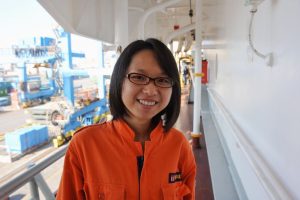
Women represent both half of the world's population – and half the world's economic potential. Their participation in the labour market reduces poverty because they often invest 90 per cent of their income in the well-being, education and nutrition of their families. Yet labour force participation by women has stagnated at about 55 per cent globally since 2010. Moreover, women are disproportionately represented in precarious work – low-paid, low-skilled and insecure jobs.
Training plays an important role in the pursuit of equality of opportunity and treatment for women and men in the world of work. Yet women often lack access to technical and vocational education and training. Many also lack the basic functional skills, such as literacy and numeracy, to participate meaningfully in the work force. Overcoming this challenge requires the adoption of a life-cycle approach. This includes improving girls’ access to basic education; overcoming logistic, economic and cultural barriers to apprenticeships and to secondary and vocational training for young women; and meeting the training needs of women re-entering the labour market and of older women who have not had equal access to opportunities for lifelong learning.
Governance and coordination mechanisms
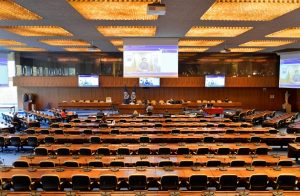
Effective governance and coordination are key elements of successful skill systems. Whilst coordination is an important factor, it needs to operate alongside other key conditions to strengthen governance. When multi-level governance is supported by effective communication, sustainable financing and effective coordination, it has the best chance of supporting the establishment of a lifelong learning ecosystem that enables individuals and enterprises to more effectively navigate the world of work and learning.
Recognition and portability of skills
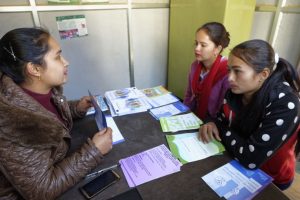
Skills development can be viewed from a life-cycle perspective of building, maintaining and improving competencies and skills. A holistic approach to skills development encompasses the following features: access to good basic education; development of cognitive and core skills, including literacy, numeracy, communication, problem-solving and learning ability; and, availability of continuous training opportunities targeting adult and older workers. Systems to improve recognition of attained skills across occupations, industries and countries improve the employability of workers, reduce labour shortages, and promote good working conditions for migrant workers.
This engaging workshop will unite leading researchers and influential policymakers to explore the dynamic landscape around women and jobs, from labor force participation, skills development, to entrepreneurship and resilient rural livelihoods in Africa.
Topics of interest include jobs for women as related to (but are not limited to):
Innovations to facilitate labor force participation
Education and skills development towards better job outcomes
Gaps in wages between men and women, and occupational segregation
How social norms affect jobs
Care economy and care work
Legal and policy frameworks to facilitate productive work
The impact of digitization and AI on employment outcomes
Livelihoods and resilience in agriculture
Access to markets for SME entrepreneurs
Time: 11-12 November 2025 at 07:00 AM - 04:00 PM ET
Place: the University of Ghana-Legon, Accra, Ghana
More information: https://www.worldbank.org/en/events/2025/11/11/women-and-jobs-in-africa-policy-research-workshop