RISE MasterClass Webinar "University-Business collaboration"
RISE MasterClass Webinar "University-Business collaboration"
English
Other sources
Experts from many international, regional and national agencies generously share their views, experiences and findings on skills, helping policy-makers among other stakeholders to understand the linkages between education, training and the world of work, and how to integrate skills into national development planning to promote employment and economic growth.

Career guidance and employment services

Career guidance and counselling, career education and lifelong development of skills for employability are key for success in learning activities, effective career transitions, livelihood planning, entrepreneurship and in increasing labour market participation. They are instrumental in promoting skills utilization, recognition (RPL), as well as in improving enterprise human resource management.
Career development activities encompass a wide variety of support activities including career information and advice, counselling, work exposure (e.g. job shadowing, work experience periods), assessment, coaching, mentoring, professional networking, advocacy, basic and employability skills training (curricular and non-curricular) and entrepreneurship training. It is often an area which is fragmented across different ministries (e.g. education, TVET, employment, youth) requiring an effort to achieve the necessary coordination to provide adequate support to individuals during learning, employment and unemployment/inactivity periods.
Entrepreneurship

Participation of employers' and workers' organizations

The world of learning and the world of work are separate but linked. While one involves learning, the other produces goods and services. Neither can thrive without the other. Strong partnerships between government, employers and workers help ensure the relevance of training to the changing needs of enterprises and labour markets.
Youth employability

Globally, nearly 68 million young women and men are looking for and available for work, and an estimated 123 million young people are working but living in poverty. The number who are not in employment, education or training (NEET) stands at 267 million, a majority of whom are young women. Significantly, young people are three times as likely as adults (25 years and older) to be unemployed.
Skills development is a primary means of enabling young people to make a smooth transition to work. A comprehensive approach is required to integrate young women and men in the labour market, including relevant and quality skills training, labour market information, career guidance and employment services, recognition of prior learning, incorporating entrepreneurship with training and effective skills forecasting. Improved basic education and core work skills are particularly important to enable youth to engage in lifelong learning as well as transition to the labour market.
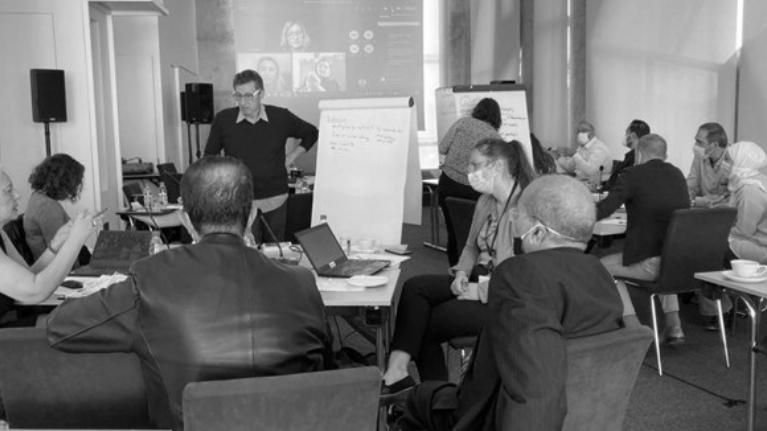
This webinar, part of the RISE MasterClass, showcases in detail the experience of the University of Murcia - UMU ’s Technology Transfer Office (OTRI) in promoting structured and strategic collaboration between academia and industry. It presents how OTRI identifies research results with transfer potential, supports intellectual property protection, and facilitates dialogue between researchers and companies. The session highlights concrete mechanisms for innovation and research commercialization, such as licensing agreements, spin-offs and start-ups, technology-based services, joint R&D projects, and innovation vouchers. It also explains how OTRI maps industrial needs, matches them with academic expertise, and builds long-term partnerships with businesses at regional, national, and international level.
Time: 12 November 2025 at 3:00 - 4.30 PM CET
Place: Online (Zoom), restricted participation
Target audience: University staff from Kurdistan region of Iraq
More information: https://www.risekrdproject.eu/rise-masterclass-spotlights-university-business-collaboration-in-the-framework-of-the-global-careers-month-2025/