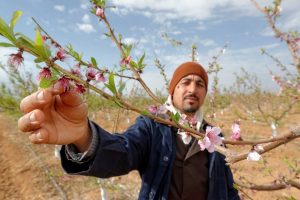
ILO Forum broadens knowledge and awareness on the role of skills development in promoting trade, employability and inclusive growth
ILO Forum broadens knowledge and awareness on the role of skills development in promoting trade, employability and inclusive growth
The International Labour Organization is the tripartite U.N. agency that promotes Decent Work through employment, social security, labour standards and social dialogue. Its work on skills development is guided by the conceptual framework on Skills to improve productivity, employment growth, and development agreed in 2008 by representatives of Governments, Employers’ Associations and Workers’ Associations. Research, policy advice, and pilot projects and technical cooperation programmes to apply good practices in different circumstances across its 185 member States aims to boost the employability of workers, the productivity and competitiveness of enterprises, and the inclusiveness of economic growth. The ILO Secretariat in offices in 40 countries works with Ministries of Labour, employers’ organizations, and trade unions to integrate skills development into national and sector development strategies in order to better meet current labour market needs and to prepare for the jobs of the future; to expand access to employment-related training so that youth, persons with disabilities and other vulnerable groups are better able to acquire skills and secure productive and decent work; and to improve the ability of public employment services to provide career guidance, maintain labour exchange services, and deliver active labour market programmes.For more information regarding the ILO’s work on skills and employability go to: http://www.ilo.org/skills/lang--en/index.htm; for ILO/Cinterfor's Knowledge Management Plarform, see: http://www.oitcinterfor.org
Anticipating and building skills for the future is essential to a rapidly changing labour market. This applies to changes in the types and levels of skills needed as well as in occupational and technical areas. Effective methods to anticipate future skills needs and avoid potential mismatches include: sustained dialogue between employers and trainers, coordination across government institutions, labour market information systems, employment services and performance reviews of training institutions.
Slug
anticipating-and-matching-skills-needs
Career guidance and counselling, career education and lifelong development of skills for employability are key for success in learning activities, effective career transitions, livelihood planning, entrepreneurship and in increasing labour market participation. They are instrumental in promoting skills utilization, recognition (RPL), as well as in improving enterprise human resource management.
Career development activities encompass a wide variety of support activities including career information and advice, counselling, work exposure (e.g. job shadowing, work experience periods), assessment, coaching, mentoring, professional networking, advocacy, basic and employability skills training (curricular and non-curricular) and entrepreneurship training. It is often an area which is fragmented across different ministries (e.g. education, TVET, employment, youth) requiring an effort to achieve the necessary coordination to provide adequate support to individuals during learning, employment and unemployment/inactivity periods.
Slug
career-guidance-and-employment-services
Eight out of 10 of the world’s working poor who live on US $1.25 per day live in rural areas, where many are caught in vulnerable employment, especially in agriculture.Flourishing rural areas are vital to regional and national development. Yet, rural economies tend to face a wide range of challenges that urban areas are more likely to overcome. These include access to transportation, sanitation and health services, and a consumer base in close proximity to support small and medium enterprise development. Women and men working in rural areas also face difficulties associated with a paucity of economic opportunities, under investment, poor infrastructure and public services, including education, and, in many cases, weak governance and underdeveloped markets.
Education, entrepreneurship, and physical and social infrastructure all play an important role in developing rural regions. Skills are central to improving employability and livelihood opportunities, reducing poverty, enhancing productivity and promoting environmentally sustainable development.
Presentations, discussion papers, meeting reports, promotional materials, videos, fact sheets, brochures and newsletters on skills development for employment.
Slug
promotional-material
SIEM REAP, Cambodia. 31 May 2017 – An inter-regional forum concluded here today following two days of intense discussion that have broadened knowledge and awareness among a wide spectrum of stakeholders from different countries on skills development strategies for promoting trade, employability and inclusive growth in the developing world.
Representatives from governments, workers’ and employers’ organizations, the private sector and development partners agreed that the forum had provided a unique opportunity to share experiences, knowledge and lessons learned that highlighted the challenges and potential for skills development to reap the benefits of trade and promote inclusive growth.
In concluding remarks, Olga Strietska-Ilina, ILO Skills Policies and Systems Specialist, said the Forum had been “very useful from the point of view of regional perspectives, the side of employers, the side of workers, international organizations, and development partners. Everyone agrees we need to institutionalize to help the private sector and the world of training work together.”
The Inter-regional Technical Forum on Skills for Trade, Employability and Inclusive Growth was organized within the framework of the Swedish International Development Cooperation Agency (SIDA) funded “Scaling up Skills for Trade and Economic Diversification (STED)” project and the Korea International Cooperation Agency (KOICA) funded “Skills for Employment and Productivity in Low-Income countries” project.
Speaking in behalf of SIDA, Magnus Saemundsson, First Secretary of the Embassy of Sweden in Cambodia noted that the discussions had highlighted the “many similarities” in experiences, while at the same time exposing the challenges of skills development systems in various countries and sectors.
“An issue related to these challenges is the difficulties of engaging not only of stakeholders, but different ministries’ and parts of ministries to cooperate,” he said.
The representative of KOICA, Hyungkyoo Kim, Country Director of the KOICA Office in Nepal, said: “There are two words on my mind after observing this two day forum. One is outcomes … more decent work, more jobs to the people, poor people that are excluded. Another word is reality: each country has their own situation. We should consider the reality of these countries, so we need to tailor the approach to the problems in these countries.”
Ms. Strietska-Ilina of the ILO said the Forum could be summarized by five key themes: targeting of disadvantaged groups, including women, people with disabilities, young people and aging workers and developing appropriate strategies for them; systematizing, or making sure there are forward looking approaches and active labour market policy measures; synergizing between different policies, including sectoral, industrial and national policies, and skills development strategies; creating institutional platforms for the private sector, education, training and collecting labour market information; and incentivising the private sector to take part in the provision of vocational training and hands on experience for the youth people.
Click on the PDF immediately below to read the entire article.