Potential Opportunities for Women’s Economic Empowerment - Potato and Leafy Green Vegetable Value Chains - Akkar, Northern Lebanon

Potential Opportunities for Women’s Economic Empowerment - Potato and Leafy Green Vegetable Value Chains - Akkar, Northern Lebanon

Type:
Document
Content Type:
Generic document
Language:

English

Slug
english
Identifier
skpEng
Sources:

ILO

The International Labour Organization is the tripartite U.N. agency that promotes Decent Work through employment, social security, labour standards and social dialogue. Its work on skills development is guided by the conceptual framework on Skills to improve productivity, employment growth, and development agreed in 2008 by representatives of Governments, Employers’ Associations and Workers’ Associations. Research, policy advice, and pilot projects and technical cooperation programmes to apply good practices in different circumstances across its 185 member States aims to boost the employability of workers, the productivity and competitiveness of enterprises, and the inclusiveness of economic growth. The ILO Secretariat in offices in 40 countries works with Ministries of Labour, employers’ organizations, and trade unions to integrate skills development into national and sector development strategies in order to better meet current labour market needs and to prepare for the jobs of the future; to expand access to employment-related training so that youth, persons with disabilities and other vulnerable groups are better able to acquire skills and secure productive and decent work; and to improve the ability of public employment services to provide career guidance, maintain labour exchange services, and deliver active labour market programmes.For more information regarding the ILO’s work on skills and employability go to: http://www.ilo.org/skills/lang--en/index.htm; for ILO/Cinterfor's Knowledge Management Plarform, see: http://www.oitcinterfor.org

Thumbnail
Identifier
skpILO
Slug
ilo
Topics:

Gender equality

Thumbnail

Women represent both half of the world's population – and half the world's economic potential. Their participation in the labour market reduces poverty because they often invest 90 per cent of their income in the well-being, education and nutrition of their families. Yet labour force participation by women has stagnated at about 55 per cent globally since 2010. Moreover, women are disproportionately represented in precarious work – low-paid, low-skilled and insecure jobs.

Training plays an important role in the pursuit of equality of opportunity and treatment for women and men in the world of work. Yet women often lack access to technical and vocational education and training. Many also lack the basic functional skills, such as literacy and numeracy, to participate meaningfully in the work force. Overcoming this challenge requires the adoption of a life-cycle approach. This includes improving girls’ access to basic education; overcoming logistic, economic and cultural barriers to apprenticeships and to secondary and vocational training for young women; and meeting the training needs of women re-entering the labour market and of older women who have not had equal access to opportunities for lifelong learning.

Identifier
skpGenEqul
Slug
gender-equality

Lifelong learning

Thumbnail

There is a critical need for a greater overall investment in education and training, particularly in developing countries. Education and training investments should be closely linked to economic and employment growth strategies and programmes. Responsibility should be shared between the government (primary responsibility), enterprises, the social partners, and the individual. To make lifelong learning for all a reality, countries will need to make major reforms of their vocational and education and training systems. School-to-work schemes for young people should integrate education with workplace learning. Training systems need to become more flexible and responsive to rapidly changing skill requirements. Reforms should also focus on how learning can be facilitated, not just on training for specific occupational categories.

Identifier
skpPSLLL
Slug
lifelong-learning

Rural employment

Thumbnail

Eight out of 10 of the world’s working poor who live on US $1.25 per day live in rural areas, where many are caught in vulnerable employment, especially in agriculture.Flourishing rural areas are vital to regional and national development. Yet, rural economies tend to face a wide range of challenges that urban areas are more likely to overcome. These include access to transportation, sanitation and health services, and a consumer base in close proximity to support small and medium enterprise development. Women and men working in rural areas also face difficulties associated with a paucity of economic opportunities, under investment, poor infrastructure and public services, including education, and, in many cases, weak governance and underdeveloped markets.

Education, entrepreneurship, and physical and social infrastructure all play an important role in developing rural regions. Skills are central to improving employability and livelihood opportunities, reducing poverty, enhancing productivity and promoting environmentally sustainable development.

Identifier
skpREmpl
Slug
rural-employment

Youth employability

Thumbnail

Globally, nearly 68 million young women and men are looking for and available for work,  and an estimated 123 million young people are working but living in poverty. The number who are not in employment, education or training (NEET) stands at 267 million, a majority of whom are young women. Significantly, young people are three times as likely as adults (25 years and older) to be unemployed.

Skills development is a primary means of enabling young people to make a smooth transition to work. A comprehensive approach is required to integrate young women and men in the labour market, including relevant and quality skills training, labour market information, career guidance and employment services, recognition of prior learning, incorporating entrepreneurship with training and effective skills forecasting. Improved basic education and core work skills are particularly important to enable youth to engage in lifelong learning as well as transition to the labour market. 

Identifier
skpYoEmp
Slug
youth-employability
Knowledge Products:

Case studies and good practices

Case studies that document good practices and illustrate the benefits and lessons learnt of particular approaches or methods in real practice. 

Thumbnail
Identifier
skpCaseStdy
Slug
case-studies-and-good-practices
Publication Date:
04 Oct 2022

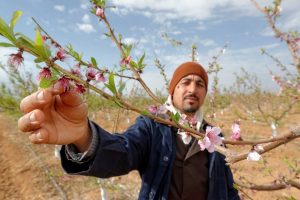
The assessment examines the status of women in the potatoes and leafy green vegetables value chains in the Akkar region in order to highlight potential areas that will increase their visibility as valuable members of both their individual communities and the agriculture sector, as well as to showcase opportunities for women empowerment.

Subject Tags:

Labour market

Slug
labour-market
Identifier
22

Rural employment

Slug
rural-employment
Identifier
670

Rural workers

Slug
rural-workers
Identifier
637

Women

Slug
women
Identifier
318
Regions:

Arab States

Region Image
Countries and territories:

Call for Expression of Interest in professional training in Career Guidance

Call for Expression of Interest in professional training in Career Guidance

Type:
Document
Content Type:
News
Language:

English

Slug
english
Identifier
skpEng
Sources:

Academic institutions

Research papers, synthesis reports, country and programme studies are collected from many academic institutions and national, regional and international professional associations.

Thumbnail
Identifier
skpAcaInst
Slug
academic-institutions
Topics:

Career guidance and employment services

Thumbnail

Career guidance and counselling, career education and lifelong development of skills for employability are key for success in learning activities, effective career transitions, livelihood planning, entrepreneurship and in increasing labour market participation. They are instrumental in promoting skills utilization, recognition (RPL), as well as in improving enterprise human resource management.

Career development activities encompass a wide variety of support activities including career information and advice, counselling, work exposure (e.g. job shadowing, work experience periods), assessment, coaching, mentoring, professional networking, advocacy, basic and employability skills training (curricular and non-curricular) and entrepreneurship training. It is often an area which is fragmented across different ministries (e.g. education, TVET, employment, youth) requiring an effort to achieve the necessary coordination to provide adequate support to individuals during learning, employment and unemployment/inactivity periods.
 

Identifier
skpLMIES
Slug
career-guidance-and-employment-services

Core skills and literacy

Thumbnail

Core employability skills build upon and strengthen the skills developed through basic education; the technical skills needed for specific occupations or to perform specific tasks or duties (such as nursing, accounting, using technology or driving a forklift); and professional/personal attributes such as honesty, reliability, punctuality and loyalty. 
Core work skills enable individuals to constantly acquire and apply new knowledge and skills; they are also critical to lifelong learning. Various agencies and organizations have given different labels to these skills, ranging from “key competencies” to “soft skills”, “transferable skills” or “essential skills”.
 

Identifier
skpCore
Slug
core-skills-and-literacy

Youth employability

Thumbnail

Globally, nearly 68 million young women and men are looking for and available for work,  and an estimated 123 million young people are working but living in poverty. The number who are not in employment, education or training (NEET) stands at 267 million, a majority of whom are young women. Significantly, young people are three times as likely as adults (25 years and older) to be unemployed.

Skills development is a primary means of enabling young people to make a smooth transition to work. A comprehensive approach is required to integrate young women and men in the labour market, including relevant and quality skills training, labour market information, career guidance and employment services, recognition of prior learning, incorporating entrepreneurship with training and effective skills forecasting. Improved basic education and core work skills are particularly important to enable youth to engage in lifelong learning as well as transition to the labour market. 

Identifier
skpYoEmp
Slug
youth-employability

Other topic

Thumbnail
Identifier
skpOIssue
Slug
other-topic
Knowledge Products:

Promotional material

Presentations, discussion papers, meeting reports, promotional materials, videos, fact sheets, brochures and newsletters on skills development for employment.

Thumbnail
Identifier
skpAIM
Slug
promotional-material
Publication Date:
06 Oct 2021

A Master in Lifelong Career Guidance and Development for countries in the MENA (Middle East and North Africa) region, will be offered by the University of Malta with the expert support of the European Training Foundation, the International Labour Organization, and the UNESCO-UNITWIN network.
The Master will be offered online on a part-time basis, starting October 2022.

On-line, part-time Master in Lifelong Career Guidance specifically for the MENA region


Career guidance (or ‘vocational guidance’) has been adopted in several countries in the world because it:

  • helps young people and adults choose their educational and employment pathways more wisely;
  • leads to appropriate choices that ensure more motivated students and more productive and satisfied workers;
  • facilitates a better match between the demand and supply of skills.


Career guidance services are greatly needed in the MENA region. They can be part of the strategy to address the twin challenge of high youth and adult unemployment on the one hand, and skills gaps on the other. They can also foster social inclusion through giving access to a livelihood.


The University of Malta – with the expert support of the European Training Foundation (ETF), the International Labour Organization (ILO), and the UNESCO-UNITWIN Network – has issued a Call for the Expression of Interest for those who would like to receive professional training in career guidance.


The Master course is designed in such a way as to

  • take into account the economic, labour market, educational and cultural realities of the MENA region;
  • provide participants with the interdisciplinary theoretical background and practical experience needed in order to design, deliver, and evaluate lifelong career guidance services;
  • promote regional expertise in policy development, systems-building, and practitioner competence. 


Individuals as well as public and private entities interested in the Masters can


  • email the course coordinators for further information. Professor Ronald G. Sultana ([email protected]) and Dr Manwel Debono ([email protected]) will be happy to respond to questions.


Scholarships, in the form of partial fee waivers, are being offered by the University of Malta to deserving applicants.

Assessing Informality and Vulnerability among Disadvantaged Groups in Lebanon: A Survey of Lebanese, and Syrian and Palestinian Refugees

Assessing Informality and Vulnerability among Disadvantaged Groups in Lebanon: A Survey of Lebanese, and Syrian and Palestinian Refugees

Type:
Document
Content Type:
Publication
Language:

English

Slug
english
Identifier
skpEng
Sources:

ILO

The International Labour Organization is the tripartite U.N. agency that promotes Decent Work through employment, social security, labour standards and social dialogue. Its work on skills development is guided by the conceptual framework on Skills to improve productivity, employment growth, and development agreed in 2008 by representatives of Governments, Employers’ Associations and Workers’ Associations. Research, policy advice, and pilot projects and technical cooperation programmes to apply good practices in different circumstances across its 185 member States aims to boost the employability of workers, the productivity and competitiveness of enterprises, and the inclusiveness of economic growth. The ILO Secretariat in offices in 40 countries works with Ministries of Labour, employers’ organizations, and trade unions to integrate skills development into national and sector development strategies in order to better meet current labour market needs and to prepare for the jobs of the future; to expand access to employment-related training so that youth, persons with disabilities and other vulnerable groups are better able to acquire skills and secure productive and decent work; and to improve the ability of public employment services to provide career guidance, maintain labour exchange services, and deliver active labour market programmes.For more information regarding the ILO’s work on skills and employability go to: http://www.ilo.org/skills/lang--en/index.htm; for ILO/Cinterfor's Knowledge Management Plarform, see: http://www.oitcinterfor.org

Thumbnail
Identifier
skpILO
Slug
ilo
Topics:

Migrant workers

Thumbnail

According to the ILO global estimates on migrant workers, there were around 164 million migrant workers in 2017. 

Migrant workers contribute to growth and development in their countries of destination, while countries of origin greatly benefit from their remittances and the skills acquired during their migration experience. Yet, many migrant workers face challenges in accessing quality training and decent jobs including under-utilization of skills, a lack of employment or training opportunities, lack of information, and exploitation of low-skilled workers.

To address these challenges, countries need to strengthen skills anticipation systems to inform migration policies, increase access to education and training, and establish bilateral or multilateral recognition of qualifications and skills.

Identifier
skpMigWor
Slug
migrant-workers

Monitoring and evaluation

Thumbnail

Measuring the outcomes of skills systems, policies and targeted programmes is essential in order to monitor and improve their effectiveness and relevance. Elements of sound assessment processes include: institutions to sustain feedback from employers and trainees; mechanisms to track labour market outcomes of training and systems of accountability that use this information; and, quantitative and qualitative labour market information and its dissemination to all stakeholders.

Identifier
skpPolPer
Slug
monitoring-and-evaluation
Knowledge Products:

Research papers

Working papers, reports, and other publications from international organizations, academic institutions and bilateral agencies. Research findings to stimulate informed debate on skills, employment and productivity issues. 

Thumbnail
Identifier
skpRPS
Slug
research-papers
Publication Date:
01 Oct 2021

This study assesses the extent of informal employment and vulnerability among the most deprived Lebanese citizens, and the Syrian and Palestinian refugees living in Lebanon, through the analysis of representative survey data on employment and labour market conditions of these three population sub-groups.

A sample of vulnerable households of Lebanese, Syrians and Palestinians was selected from the 251 most vulnerable cadastres in Lebanon – home to 87 percent of displaced Syrians and Palestinian refugees, and 67 percent of deprived Lebanese, as identified by the 2015 United Nations inter-agency assessment, and reported in the Lebanon Crisis Response Plan 2017–2020. Findings show that the compound effects of economic and labour market shocks brought on by currency depreciation, concomitant high levels of inflation, the COVID-19 pandemic and the Port of Beirut explosion, have deepened levels of vulnerability and informal employment among these already distressed communities

Subject Tags:

Employment policy

Slug
employment-policy
Identifier
16

Informal economy

Slug
informal-economy
Identifier
187

Labour market

Slug
labour-market
Identifier
22

Migration policy

Slug
migration-policy
Identifier
309
Regions:

Arab States

Region Image

Pathways to empowerment. Recognizing the competences of Syrian refugees in Egypt, Iraq, Jordan, Lebanon and Turkey

Pathways to empowerment. Recognizing the competences of Syrian refugees in Egypt, Iraq, Jordan, Lebanon and Turkey

Type:
Document
Content Type:
Pathways to empowerment. Recognizing the competences of Syrian refugees in Egypt, Iraq, Jordan, Lebanon and Turkey
Language:

English

Slug
english
Identifier
skpEng
Sources:

Information is gathered from other international organizations that promote skills development and the transition from education and training to work. The Interagency Group on Technical and Vocational Education and Training (IAG-TVET) was established in 2009 to share research findings, coordinate joint research endeavours, and improve collaboration among organizations working at the international and national levels.

Thumbnail
Identifier
skpIntOrg
Slug
international-organizations
Topics:

Migrant workers

Thumbnail

According to the ILO global estimates on migrant workers, there were around 164 million migrant workers in 2017. 

Migrant workers contribute to growth and development in their countries of destination, while countries of origin greatly benefit from their remittances and the skills acquired during their migration experience. Yet, many migrant workers face challenges in accessing quality training and decent jobs including under-utilization of skills, a lack of employment or training opportunities, lack of information, and exploitation of low-skilled workers.

To address these challenges, countries need to strengthen skills anticipation systems to inform migration policies, increase access to education and training, and establish bilateral or multilateral recognition of qualifications and skills.

Identifier
skpMigWor
Slug
migrant-workers

Skills policies and strategies

Thumbnail

Skills and employment policies should be viewed together.  The full value of one policy set is realized when it supports the objectives of the other.  For investments in education and training to yield maximum benefit to workers, enterprises, and economies, countries’ capacities for coordination is critical in three areas: connecting basic education to technical training and then to market entry; ensuring continuous communication between employers and training providers so that training meets the needs and aspirations of workers and enterprises, and integrating skills development policies with industrial, investment, trade, technology, environmental, rural and local development policies.

Identifier
skpPolConv
Slug
skills-policies-and-strategies

Youth employability

Thumbnail

Globally, nearly 68 million young women and men are looking for and available for work,  and an estimated 123 million young people are working but living in poverty. The number who are not in employment, education or training (NEET) stands at 267 million, a majority of whom are young women. Significantly, young people are three times as likely as adults (25 years and older) to be unemployed.

Skills development is a primary means of enabling young people to make a smooth transition to work. A comprehensive approach is required to integrate young women and men in the labour market, including relevant and quality skills training, labour market information, career guidance and employment services, recognition of prior learning, incorporating entrepreneurship with training and effective skills forecasting. Improved basic education and core work skills are particularly important to enable youth to engage in lifelong learning as well as transition to the labour market. 

Identifier
skpYoEmp
Slug
youth-employability
Knowledge Products:

Research papers

Working papers, reports, and other publications from international organizations, academic institutions and bilateral agencies. Research findings to stimulate informed debate on skills, employment and productivity issues. 

Thumbnail
Identifier
skpRPS
Slug
research-papers
Publication Date:
11 Jun 2018

This publication maps and analyses the non-formal and informal learning and competences of Syrian refugee youth and young adults living in Egypt, Iraq, Jordan, Lebanon and Turkey (the five main hosting countries since the beginning of the Syria crisis).

This publication aims at helping policy makers in these countries setting up appropriate recognition systems that will formally recognize, validate and accredit the qualifications of refugees, so that in turn, these refugees are able to re-enter education and training or integrate the work of work and regain their dignity.

This publication is the result of close collaboration between the UNESCO Institute for Lifelong Learning (UIL), in Hamburg, Germany, and the UNESCO Beirut Office and Regional Bureau for Education in the Arab States.

Subject Tags:

Access to training

Slug
access-to-training
Identifier
683

Migrant workers

Slug
migrant-workers
Identifier
681

School-to-work transition

Slug
school-to-work-transition
Identifier
652

Skills recognition

Slug
skills-recognition
Identifier
656
Regions:

Arab States

Region Image
Countries and territories:

Comparative analyses: Work-based learning programmes for young people in the Mediterranean region

Comparative analyses: Work-based learning programmes for young people in the Mediterranean region

Type:
Document
Content Type:
Comparative analyses: Work-based learning programmes for young people in the Mediterranean region
Language:

English

Slug
english
Identifier
skpEng
Sources:

Bilateral organizations

The development agencies of many countries make skills development a pillar of their Official Development Assistance – from the perspective of education systems, employment promotion, poverty reduction, and private sector development. Documentation of their experience, evaluations and impact assessments, mission statements, and other knowledge products are made available through the Global KSP.

Thumbnail
Identifier
skpBiOrg
Slug
bilateral-organizations
Topics:

Youth employability

Thumbnail

Globally, nearly 68 million young women and men are looking for and available for work,  and an estimated 123 million young people are working but living in poverty. The number who are not in employment, education or training (NEET) stands at 267 million, a majority of whom are young women. Significantly, young people are three times as likely as adults (25 years and older) to be unemployed.

Skills development is a primary means of enabling young people to make a smooth transition to work. A comprehensive approach is required to integrate young women and men in the labour market, including relevant and quality skills training, labour market information, career guidance and employment services, recognition of prior learning, incorporating entrepreneurship with training and effective skills forecasting. Improved basic education and core work skills are particularly important to enable youth to engage in lifelong learning as well as transition to the labour market. 

Identifier
skpYoEmp
Slug
youth-employability
Knowledge Products:

Research papers

Working papers, reports, and other publications from international organizations, academic institutions and bilateral agencies. Research findings to stimulate informed debate on skills, employment and productivity issues. 

Thumbnail
Identifier
skpRPS
Slug
research-papers
Publication Date:
04 Oct 2013
The report examines programmes for youth that combine learning in classrooms with participation in work. Such programmes raise special issues for public policy, as they require cooperation between employers and educational institutions, between the public and private sectors, and between education, labour market, economic and social policies. It draws on the experiences of ten Mediterranean countries: Algeria, Egypt, Israel, Jordan, Lebanon, Morocco, the Occupied Palestinian Territory, Syria, Tunisia and Turkey. The paper describes some of the contextual factors that can influence the nature and extent of work-based learning programmes for young people and looks at some evidence from the research and policy literature on the potential benefits of combining work with learning.
Subject Tags:

Apprenticeships

Slug
apprenticeships
Identifier
639

Vocational training

Slug
vocational-training
Identifier
124

Youth

Slug
youth
Identifier
319
Regions:

Africa

Region Image

Arab States

Region Image

Social partners in vocational education and training in the Southern Mediterranean

Social partners in vocational education and training in the Southern Mediterranean

Type:
Document
Content Type:
Social partners in vocational education and training in the Southern Mediterranean
Language:

English

Slug
english
Identifier
skpEng
Sources:

Bilateral organizations

The development agencies of many countries make skills development a pillar of their Official Development Assistance – from the perspective of education systems, employment promotion, poverty reduction, and private sector development. Documentation of their experience, evaluations and impact assessments, mission statements, and other knowledge products are made available through the Global KSP.

Thumbnail
Identifier
skpBiOrg
Slug
bilateral-organizations
Topics:

Participation of employers' and workers' organizations

Thumbnail

The world of learning and the world of work are separate but linked. While one involves learning, the other produces goods and services. Neither can thrive without the other. Strong partnerships between government, employers and workers help ensure the relevance of training to the changing needs of enterprises and labour markets. 

Identifier
skpPSP
Slug
participation-of-employers-and-workers-organizations
Knowledge Products:

Research papers

Working papers, reports, and other publications from international organizations, academic institutions and bilateral agencies. Research findings to stimulate informed debate on skills, employment and productivity issues. 

Thumbnail
Identifier
skpRPS
Slug
research-papers
Publication Date:
11 Jul 2013
The study provides a comprehensive analysis of social partnership in vocational education and training (VET) in eight southern Mediterranean countries (Algeria, Egypt, Jordan, Lebanon, Morocco, the occupied Palestinian Territory, Syria and Tunisia). It explores policy options within the different national contexts, specifically in terms of how to improve the participation of social partners in the field of human capital development in the context of lifelong learning. The study describes and analyses, country by country, the role of social partners in policy making and implementation in VET. The different stages of development of social partnership in the region are identified and discussed. The paper concludes with recommendations for policy development.
Subject Tags:

Lifelong learning

Slug
lifelong-learning
Identifier
400

Vocational training

Slug
vocational-training
Identifier
124
Regions:

Africa

Region Image

Arab States

Region Image

Union for the Mediterranean regional employability review: The challenge of youth employment in the Mediterranean

Union for the Mediterranean regional employability review: The challenge of youth employment in the Mediterranean

Type:
Document
Content Type:
Union for the Mediterranean regional employability review: The challenge of youth employment in the Mediterranean
Language:

English

Slug
english
Identifier
skpEng
Sources:

Bilateral organizations

The development agencies of many countries make skills development a pillar of their Official Development Assistance – from the perspective of education systems, employment promotion, poverty reduction, and private sector development. Documentation of their experience, evaluations and impact assessments, mission statements, and other knowledge products are made available through the Global KSP.

Thumbnail
Identifier
skpBiOrg
Slug
bilateral-organizations
Topics:

Youth employability

Thumbnail

Globally, nearly 68 million young women and men are looking for and available for work,  and an estimated 123 million young people are working but living in poverty. The number who are not in employment, education or training (NEET) stands at 267 million, a majority of whom are young women. Significantly, young people are three times as likely as adults (25 years and older) to be unemployed.

Skills development is a primary means of enabling young people to make a smooth transition to work. A comprehensive approach is required to integrate young women and men in the labour market, including relevant and quality skills training, labour market information, career guidance and employment services, recognition of prior learning, incorporating entrepreneurship with training and effective skills forecasting. Improved basic education and core work skills are particularly important to enable youth to engage in lifelong learning as well as transition to the labour market. 

Identifier
skpYoEmp
Slug
youth-employability
Knowledge Products:

Research papers

Working papers, reports, and other publications from international organizations, academic institutions and bilateral agencies. Research findings to stimulate informed debate on skills, employment and productivity issues. 

Thumbnail
Identifier
skpRPS
Slug
research-papers
Publication Date:
04 Jul 2013
The report focuses on the issue of youth and female employment and employability in 14 Mediterranean countries. Employability is a complex concept and a transversal issue, encompassing all initial education and knowledge, skills, experience and intercultural competences required to succeed in the labour market. Hence, it depends on many different factors: human capital education and training, but also socioeconomic and personal factors, macroeconomic perspectives and labour demand, and the institutional determinants of the job search and matching processes. All these factors are analysed throughout the report.

The paper reviews the initiatives that have already been implemented in different countries to enhance youth employability and concludes with some elements for an agenda for national employability policies and Euro-Mediterranean cooperation.

Skills development for the informal economy: Issues and options in vocational education and training in the Southern partner countries of the European Neighbourhood Policy

Skills development for the informal economy: Issues and options in vocational education and training in the Southern partner countries of the European Neighbourhood Policy

Type:
Document
Content Type:
Skills development for the informal economy: Issues and options in vocational education and training in the Southern partner countries of the European Neighbourhood Policy
Language:

English

Slug
english
Identifier
skpEng
Sources:

Information is gathered from other international organizations that promote skills development and the transition from education and training to work. The Interagency Group on Technical and Vocational Education and Training (IAG-TVET) was established in 2009 to share research findings, coordinate joint research endeavours, and improve collaboration among organizations working at the international and national levels.

Thumbnail
Identifier
skpIntOrg
Slug
international-organizations

Other sources

Experts from many international, regional and national agencies generously share their views, experiences and findings on skills, helping policy-makers among other stakeholders to understand the linkages between education, training and the world of work, and how to integrate skills into national development planning to promote employment and economic growth.

Thumbnail
Identifier
skpOSource
Slug
other-sources
Topics:

Access to training

Thumbnail

Access for all to good quality education, vocational training and workplace learning is a fundamental principle of social cohesion and economic growth. Some groups of people may require targeted attention if they are to benefit from education, training and employment opportunities.  

This is particularly the case for disadvantaged youth, lower skilled workers, people with disabilities, and people in rural communities. The attractiveness of vocational education and training is enhanced when combined with entrepreneurship training and when public policies encourage utilization of higher skills by business. 
 

Identifier
skpATSU
Slug
access-to-training

Training quality and relevance

Thumbnail
Identifier
skpTrainQR
Slug
training-quality-and-relevance
Knowledge Products:

Case studies and good practices

Case studies that document good practices and illustrate the benefits and lessons learnt of particular approaches or methods in real practice. 

Thumbnail
Identifier
skpCaseStdy
Slug
case-studies-and-good-practices

Research papers

Working papers, reports, and other publications from international organizations, academic institutions and bilateral agencies. Research findings to stimulate informed debate on skills, employment and productivity issues. 

Thumbnail
Identifier
skpRPS
Slug
research-papers
Publication Date:
03 Jul 2013
In its cooperation with partner countries outside the European Union, the European Commission has long been concerned with the development of human resources. Since 1995, the European Union has supported much needed reforms in technical and vocational education and training (TVET) in most Mediterranean partner countries through multiple projects.

The report focuses on nine Mediterranean countries which, while differing in many ways, also share characteristics. They all made major efforts in broadening access to education and training, but the gains thereof in terms of widespread income improvements are yet to materialize. Most countries have severe problems in balancing labour supply and demand. Their labour force participation rates are lower and their unemployment rates are higher than those of most countries outside the region. They all have significant and growing informal economies in which currently between 30 and 60 per cent of the labour force try and make a living without being covered by formal arrangements such as foreseen in regulation and legislation.

The report reviews what the countries in MENA region do to overcome informality at work and skill deficits. It provides policy recommendations for boosting skills of the working poor and integrating these measures into broader human development strategies.
Subject Tags:

Informal economy

Slug
informal-economy
Identifier
187

Vocational training

Slug
vocational-training
Identifier
124

Working poor

Slug
working-poor
Identifier
150
Regions:

Africa

Region Image

Arab States

Region Image

Non-public provision of active labor market programs in Arab- Mediterranean countries: An inventory of youth programs

Non-public provision of active labor market programs in Arab- Mediterranean countries: An inventory of youth programs

Type:
Document
Content Type:
Non-public provision of active labor market programs in Arab- Mediterranean countries: An inventory of youth programs
Language:

English

Slug
english
Identifier
skpEng
Sources:

Information is gathered from other international organizations that promote skills development and the transition from education and training to work. The Interagency Group on Technical and Vocational Education and Training (IAG-TVET) was established in 2009 to share research findings, coordinate joint research endeavours, and improve collaboration among organizations working at the international and national levels.

Thumbnail
Identifier
skpIntOrg
Slug
international-organizations
Topics:

Monitoring and evaluation

Thumbnail

Measuring the outcomes of skills systems, policies and targeted programmes is essential in order to monitor and improve their effectiveness and relevance. Elements of sound assessment processes include: institutions to sustain feedback from employers and trainees; mechanisms to track labour market outcomes of training and systems of accountability that use this information; and, quantitative and qualitative labour market information and its dissemination to all stakeholders.

Identifier
skpPolPer
Slug
monitoring-and-evaluation

Youth employability

Thumbnail

Globally, nearly 68 million young women and men are looking for and available for work,  and an estimated 123 million young people are working but living in poverty. The number who are not in employment, education or training (NEET) stands at 267 million, a majority of whom are young women. Significantly, young people are three times as likely as adults (25 years and older) to be unemployed.

Skills development is a primary means of enabling young people to make a smooth transition to work. A comprehensive approach is required to integrate young women and men in the labour market, including relevant and quality skills training, labour market information, career guidance and employment services, recognition of prior learning, incorporating entrepreneurship with training and effective skills forecasting. Improved basic education and core work skills are particularly important to enable youth to engage in lifelong learning as well as transition to the labour market. 

Identifier
skpYoEmp
Slug
youth-employability
Knowledge Products:

Research papers

Working papers, reports, and other publications from international organizations, academic institutions and bilateral agencies. Research findings to stimulate informed debate on skills, employment and productivity issues. 

Thumbnail
Identifier
skpRPS
Slug
research-papers
Publication Date:
30 Apr 2013
This note presents and analyzes the main design features of an inventory of non-publicly provided Active Labor Market Programs (ALMPs) in Arab-Mediterranean Countries (AMCs), with a specific focus on programs targeted at youth. Despite considerable international evidence, there is little systematic analysis on the effectiveness of ALMPs in AMCs as most programs and investments remain largely un-assessed. Since most AMCs lack unemployment insurance systems or other safety nets for the unemployed, ALMPs constitute a relevant instrument to address the consequences of labor market frictions, such as high unemployment and slow school-to-work transition. Programs from nine countries are included in the inventory: Morocco, Algeria, Tunisia, Egypt, Lebanon, Syria, Jordan, West Bank and Gaza, and Yemen. Benchmarked against international best practices, assessment of the programs covered in the inventory reveals that the majority lack the necessary mix of design features that make programs effective. These findings call for urgent reforms in program design and delivery, especially given the sizeable financial investments in programs and the urgency to improve labor market outcomes among youth. This policy note constitutes a first step towards understanding and assessing provision of ALMPs in the Middle East and North Africa region and intends to provide policy makers and financiers with options for reform to enhance efficiency of existing programs and improve the design of future interventions. In addition to specific aspects of program design and implementation, stakeholder coordination needs to be strengthened and put at the forefront of ALMP reform.
Subject Tags:

Entrepreneurship

Slug
entrepreneurship
Identifier
182

School-to-work transition

Slug
school-to-work-transition
Identifier
652

Skills mismatch

Slug
skills-mismatch
Identifier
654

Youth unemployment

Slug
youth-unemployment
Identifier
622
Regions:

Africa

Region Image

Arab States

Region Image

Public employment services in the Middle East and North Africa

Public employment services in the Middle East and North Africa

Type:
Document
Content Type:
Public employment services in the Middle East and North Africa
Language:

English

Slug
english
Identifier
skpEng
Sources:

Information is gathered from other international organizations that promote skills development and the transition from education and training to work. The Interagency Group on Technical and Vocational Education and Training (IAG-TVET) was established in 2009 to share research findings, coordinate joint research endeavours, and improve collaboration among organizations working at the international and national levels.

Thumbnail
Identifier
skpIntOrg
Slug
international-organizations
Topics:

Career guidance and employment services

Thumbnail

Career guidance and counselling, career education and lifelong development of skills for employability are key for success in learning activities, effective career transitions, livelihood planning, entrepreneurship and in increasing labour market participation. They are instrumental in promoting skills utilization, recognition (RPL), as well as in improving enterprise human resource management.

Career development activities encompass a wide variety of support activities including career information and advice, counselling, work exposure (e.g. job shadowing, work experience periods), assessment, coaching, mentoring, professional networking, advocacy, basic and employability skills training (curricular and non-curricular) and entrepreneurship training. It is often an area which is fragmented across different ministries (e.g. education, TVET, employment, youth) requiring an effort to achieve the necessary coordination to provide adequate support to individuals during learning, employment and unemployment/inactivity periods.
 

Identifier
skpLMIES
Slug
career-guidance-and-employment-services
Knowledge Products:

Research papers

Working papers, reports, and other publications from international organizations, academic institutions and bilateral agencies. Research findings to stimulate informed debate on skills, employment and productivity issues. 

Thumbnail
Identifier
skpRPS
Slug
research-papers
Publication Date:
15 Apr 2013
This study provides an institutional assessment of Public Employment Services (PES) in a selected group of countries in the Middle East and North Africa (MENA) and compiles an inventory of the programs they provide. Data included in this study were collected through faceto- face interviews with officers from the national PES in Tunisia, Morocco, Egypt, Yemen, Lebanon, Syria, and Jordan between January 2010 and June 2011. Results indicate the PES in a typical MENA country faces a number of severe problems: it lacks proper funding, is understaffed, and is heavily constrained by a fragmented network of micro-credit and training institutions. Moreover, many PES in the region operate in a very difficult environment of demand-deficient labor markets, double-digit unemployment rates, and high rates of informal employment. According to the data collected, most PES in the region provide a variety of programs, such as training, entrepreneurship promotion, direct job creation (i.e. public works), and employment incentives (such as wage subsidies). Labor intermediation remains largely undeveloped while in-class vocational training continues to be the main type of program provided by PES in MENA (targeting mainly high-skilled unemployed youth). Nevertheless, in recent years, many PES in MENA have scaled-up entrepreneurship and employment incentive programs. Most PES in the region do not have access to labor market information systems, to results-based monitoring, and/or to scientific methods for program evaluation. As such, despite important investments and a variety of services provided, the impact of most employment programs provided by PES in MENA remains largely un-assessed.
Subject Tags:

Entrepreneurship

Slug
entrepreneurship
Identifier
182

School-to-work transition

Slug
school-to-work-transition
Identifier
652

Youth

Slug
youth
Identifier
319
Regions:

Africa

Region Image

Arab States

Region Image