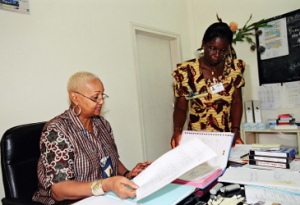
People with disabilities

Slug
people-with-disabilities
Identifier
323

Convention sur la mise en valeur des ressources humaines, 1975 (No. 142)

Convention sur la mise en valeur des ressources humaines, 1975 (No. 142)

Type:
Document
Content Type:
Convention sur la mise en valeur des ressources humaines, 1975 (No. 142)
Language:

French

Slug
french
Identifier
skpFrn
Sources:

ILO

The International Labour Organization is the tripartite U.N. agency that promotes Decent Work through employment, social security, labour standards and social dialogue. Its work on skills development is guided by the conceptual framework on Skills to improve productivity, employment growth, and development agreed in 2008 by representatives of Governments, Employers’ Associations and Workers’ Associations. Research, policy advice, and pilot projects and technical cooperation programmes to apply good practices in different circumstances across its 185 member States aims to boost the employability of workers, the productivity and competitiveness of enterprises, and the inclusiveness of economic growth. The ILO Secretariat in offices in 40 countries works with Ministries of Labour, employers’ organizations, and trade unions to integrate skills development into national and sector development strategies in order to better meet current labour market needs and to prepare for the jobs of the future; to expand access to employment-related training so that youth, persons with disabilities and other vulnerable groups are better able to acquire skills and secure productive and decent work; and to improve the ability of public employment services to provide career guidance, maintain labour exchange services, and deliver active labour market programmes.For more information regarding the ILO’s work on skills and employability go to: http://www.ilo.org/skills/lang--en/index.htm; for ILO/Cinterfor's Knowledge Management Plarform, see: http://www.oitcinterfor.org

Thumbnail
Identifier
skpILO
Slug
ilo
Topics:

Access to training

Thumbnail

Access for all to good quality education, vocational training and workplace learning is a fundamental principle of social cohesion and economic growth. Some groups of people may require targeted attention if they are to benefit from education, training and employment opportunities.  

This is particularly the case for disadvantaged youth, lower skilled workers, people with disabilities, and people in rural communities. The attractiveness of vocational education and training is enhanced when combined with entrepreneurship training and when public policies encourage utilization of higher skills by business. 
 

Identifier
skpATSU
Slug
access-to-training
Knowledge Products:

International standards

International conventions and recommendations and other international instruments on human resource and skills development. Strategy papers on the practical application of international standards from international organizations covering issues related to training, effective utilization and development of skills, and on linking skills to employment.

Thumbnail
Identifier
skpISSP
Slug
international-standards
Publication Date:
03 Jul 2013

Entrée en vigueur: 19 juillet 1977

Subject Tags:

Education and training

Slug
education-and-training
Identifier
116

Human resources development

Slug
human-resources-development
Identifier
118

People with disabilities

Slug
people-with-disabilities
Identifier
323

Vocational training

Slug
vocational-training
Identifier
124

Youth

Slug
youth
Identifier
319
Regions:

Fiji Islands: A National Policy on Persons Living with Disabilities 2008-2018

Fiji Islands: A National Policy on Persons Living with Disabilities 2008-2018

Type:
Document
Content Type:
Fiji Islands: A National Policy on Persons Living with Disabilities 2008-2018
Language:

English

Slug
english
Identifier
skpEng
Sources:

Governments

Governments hold a wealth of knowledge on skills development, and are increasingly realizing the value of learning from each others’ experiences. Their policy documents, programme evaluations, and research findings contain their experience and ideas on how to better link skills to employment

Thumbnail
Identifier
skpGov
Slug
governments
Topics:

People with disabilities

Thumbnail

Of an estimated 1 billion people with disabilities in the world today, some 785 million are of working age. While many are successfully employed and fully integrated into society, most face a disproportionate level of poverty and unemployment. This is a massive loss both to them and their countries. A strategy of including people with disabilities in training and employment promotion policies, combined with targeted supports to ensure their participation, can help disabled persons obtain productive mainstream employment.

Identifier
skpPeoDis
Slug
people-with-disabilities
Knowledge Products:

National policies and initiatives

National legislation, policies and initiatives on the issue of training and skills development and the world of work. 

Thumbnail
Identifier
skpNatPol
Slug
national-policies-and-initiatives
Publication Date:
20 May 2013
The purpose of this policy is to provide a framework for addressing disability in Fiji and to develop a more inclusive society, create greater awareness of the needs of people with disabilities and identify priority areas for action to dismantle barriers hindering the full participation of people with disabilities in the social and economic life of the Fiji Islands. Skills development and improved participation in employment of people with disabilities is one of 12 strategic policy areas of the document. The policy is the result of wide stakeholder consultation throughout Fiji.
Subject Tags:

Economic and social rights

Slug
economic-and-social-rights
Identifier
264

People with disabilities

Slug
people-with-disabilities
Identifier
323

Skills and training policy

Slug
skills-and-training-policy
Identifier
666
Regions:
Countries and territories:

Disability in the workplace: Employers' organizations and business networks

Disability in the workplace: Employers' organizations and business networks

Type:
Document
Content Type:
Disability in the workplace: Employers' organizations and business networks
Language:

English

Slug
english
Identifier
skpEng
Sources:

Employers' organizations

Employers invest in training in order to improve productivity, innovate and adopt new technologies, and compete in changing markets. Case studies and research from individual employers and associations of employers on the Global KSP deal with apprenticeship and workplace skills provision, quality assurance and governance of training institutions, and employers’ roles in anticipating skill needs and in influencing national and sector policies on skills development.

Thumbnail
Identifier
skpEmp
Slug
employers-organizations

ILO

The International Labour Organization is the tripartite U.N. agency that promotes Decent Work through employment, social security, labour standards and social dialogue. Its work on skills development is guided by the conceptual framework on Skills to improve productivity, employment growth, and development agreed in 2008 by representatives of Governments, Employers’ Associations and Workers’ Associations. Research, policy advice, and pilot projects and technical cooperation programmes to apply good practices in different circumstances across its 185 member States aims to boost the employability of workers, the productivity and competitiveness of enterprises, and the inclusiveness of economic growth. The ILO Secretariat in offices in 40 countries works with Ministries of Labour, employers’ organizations, and trade unions to integrate skills development into national and sector development strategies in order to better meet current labour market needs and to prepare for the jobs of the future; to expand access to employment-related training so that youth, persons with disabilities and other vulnerable groups are better able to acquire skills and secure productive and decent work; and to improve the ability of public employment services to provide career guidance, maintain labour exchange services, and deliver active labour market programmes.For more information regarding the ILO’s work on skills and employability go to: http://www.ilo.org/skills/lang--en/index.htm; for ILO/Cinterfor's Knowledge Management Plarform, see: http://www.oitcinterfor.org

Thumbnail
Identifier
skpILO
Slug
ilo
Topics:

Participation of employers' and workers' organizations

Thumbnail

The world of learning and the world of work are separate but linked. While one involves learning, the other produces goods and services. Neither can thrive without the other. Strong partnerships between government, employers and workers help ensure the relevance of training to the changing needs of enterprises and labour markets. 

Identifier
skpPSP
Slug
participation-of-employers-and-workers-organizations

People with disabilities

Thumbnail

Of an estimated 1 billion people with disabilities in the world today, some 785 million are of working age. While many are successfully employed and fully integrated into society, most face a disproportionate level of poverty and unemployment. This is a massive loss both to them and their countries. A strategy of including people with disabilities in training and employment promotion policies, combined with targeted supports to ensure their participation, can help disabled persons obtain productive mainstream employment.

Identifier
skpPeoDis
Slug
people-with-disabilities
Knowledge Products:

Case studies and good practices

Case studies that document good practices and illustrate the benefits and lessons learnt of particular approaches or methods in real practice. 

Thumbnail
Identifier
skpCaseStdy
Slug
case-studies-and-good-practices

Research papers

Working papers, reports, and other publications from international organizations, academic institutions and bilateral agencies. Research findings to stimulate informed debate on skills, employment and productivity issues. 

Thumbnail
Identifier
skpRPS
Slug
research-papers
Publication Date:
29 Apr 2013
The publication is a compilation of 12 case studies of employers’ organizations and business networks, describing their activities related to disability and employment. It provides insights into how representative organizations of business address the issue of disability. The practices described in these examples demonstrate how such organizations are well placed to link business interests and the productive integration of people with disabilities in the labour market.
Subject Tags:

Employers

Slug
employers
Identifier
672

Enterprises

Slug
enterprises
Identifier
175

Human resources development

Slug
human-resources-development
Identifier
118

People with disabilities

Slug
people-with-disabilities
Identifier
323

Private sector

Slug
private-sector
Identifier
229

Productivity

Slug
productivity
Identifier
188
Regions:

Trade unions and workers with disabilities: Promoting decent work, combating discrimination

Trade unions and workers with disabilities: Promoting decent work, combating discrimination

Type:
Document
Content Type:
Trade unions and workers with disabilities: Promoting decent work, combating discrimination
Language:

English

Slug
english
Identifier
skpEng
Sources:

ILO

The International Labour Organization is the tripartite U.N. agency that promotes Decent Work through employment, social security, labour standards and social dialogue. Its work on skills development is guided by the conceptual framework on Skills to improve productivity, employment growth, and development agreed in 2008 by representatives of Governments, Employers’ Associations and Workers’ Associations. Research, policy advice, and pilot projects and technical cooperation programmes to apply good practices in different circumstances across its 185 member States aims to boost the employability of workers, the productivity and competitiveness of enterprises, and the inclusiveness of economic growth. The ILO Secretariat in offices in 40 countries works with Ministries of Labour, employers’ organizations, and trade unions to integrate skills development into national and sector development strategies in order to better meet current labour market needs and to prepare for the jobs of the future; to expand access to employment-related training so that youth, persons with disabilities and other vulnerable groups are better able to acquire skills and secure productive and decent work; and to improve the ability of public employment services to provide career guidance, maintain labour exchange services, and deliver active labour market programmes.For more information regarding the ILO’s work on skills and employability go to: http://www.ilo.org/skills/lang--en/index.htm; for ILO/Cinterfor's Knowledge Management Plarform, see: http://www.oitcinterfor.org

Thumbnail
Identifier
skpILO
Slug
ilo

Workers' organizations

Learning new skills and upgrading existing ones help workers maintain their employability and improve their standard of living. Trade unions play a key role in increasing workplace-based training opportunities. The Global KSP shares, among other resource items, case studies, good practices and research provided by trade unions that highlight their involvement in promoting training at individual workplaces, social dialogue and collective bargaining on skills issues, and participating in developing skills policies and strengthening training institutions.

Thumbnail
Identifier
skpWork
Slug
workers-organizations
Topics:

Access to training

Thumbnail

Access for all to good quality education, vocational training and workplace learning is a fundamental principle of social cohesion and economic growth. Some groups of people may require targeted attention if they are to benefit from education, training and employment opportunities.  

This is particularly the case for disadvantaged youth, lower skilled workers, people with disabilities, and people in rural communities. The attractiveness of vocational education and training is enhanced when combined with entrepreneurship training and when public policies encourage utilization of higher skills by business. 
 

Identifier
skpATSU
Slug
access-to-training

Participation of employers' and workers' organizations

Thumbnail

The world of learning and the world of work are separate but linked. While one involves learning, the other produces goods and services. Neither can thrive without the other. Strong partnerships between government, employers and workers help ensure the relevance of training to the changing needs of enterprises and labour markets. 

Identifier
skpPSP
Slug
participation-of-employers-and-workers-organizations

People with disabilities

Thumbnail

Of an estimated 1 billion people with disabilities in the world today, some 785 million are of working age. While many are successfully employed and fully integrated into society, most face a disproportionate level of poverty and unemployment. This is a massive loss both to them and their countries. A strategy of including people with disabilities in training and employment promotion policies, combined with targeted supports to ensure their participation, can help disabled persons obtain productive mainstream employment.

Identifier
skpPeoDis
Slug
people-with-disabilities
Knowledge Products:

Case studies and good practices

Case studies that document good practices and illustrate the benefits and lessons learnt of particular approaches or methods in real practice. 

Thumbnail
Identifier
skpCaseStdy
Slug
case-studies-and-good-practices

Research papers

Working papers, reports, and other publications from international organizations, academic institutions and bilateral agencies. Research findings to stimulate informed debate on skills, employment and productivity issues. 

Thumbnail
Identifier
skpRPS
Slug
research-papers
Publication Date:
14 Feb 2013
Labour Education 2004/4, No. 137 This quarterly review published by the Bureau for Workers' Activities of the ILO focuses on what trade unions can do to defend and promote the rights of workers with disabilities. There is a wealth of instruments at international and national level to address the many problems faced by disabled persons concerning access to education, training and employment and trade unions have a very important role to play in this campaign. The publication reports on a number of initiatives taken in that direction, including providing access to vocational training for disabled persons and changes in laws and policies concerning the training and employment of disabled persons.
Subject Tags:

Economic and social rights

Slug
economic-and-social-rights
Identifier
264

People with disabilities

Slug
people-with-disabilities
Identifier
323

Vocational guidance

Slug
vocational-guidance
Identifier
123

Vocational training

Slug
vocational-training
Identifier
124
Regions:

Zero Project Report 2013

Zero Project Report 2013

Type:
Document
Content Type:
Zero Project Report 2013
Language:

English

Slug
english
Identifier
skpEng
Sources:

Other sources

Experts from many international, regional and national agencies generously share their views, experiences and findings on skills, helping policy-makers among other stakeholders to understand the linkages between education, training and the world of work, and how to integrate skills into national development planning to promote employment and economic growth.

Thumbnail
Identifier
skpOSource
Slug
other-sources
Topics:

Access to training

Thumbnail

Access for all to good quality education, vocational training and workplace learning is a fundamental principle of social cohesion and economic growth. Some groups of people may require targeted attention if they are to benefit from education, training and employment opportunities.  

This is particularly the case for disadvantaged youth, lower skilled workers, people with disabilities, and people in rural communities. The attractiveness of vocational education and training is enhanced when combined with entrepreneurship training and when public policies encourage utilization of higher skills by business. 
 

Identifier
skpATSU
Slug
access-to-training

People with disabilities

Thumbnail

Of an estimated 1 billion people with disabilities in the world today, some 785 million are of working age. While many are successfully employed and fully integrated into society, most face a disproportionate level of poverty and unemployment. This is a massive loss both to them and their countries. A strategy of including people with disabilities in training and employment promotion policies, combined with targeted supports to ensure their participation, can help disabled persons obtain productive mainstream employment.

Identifier
skpPeoDis
Slug
people-with-disabilities
Knowledge Products:

Research papers

Working papers, reports, and other publications from international organizations, academic institutions and bilateral agencies. Research findings to stimulate informed debate on skills, employment and productivity issues. 

Thumbnail
Identifier
skpRPS
Slug
research-papers
Publication Date:
17 Apr 2013
Prepared in cooperation with 374 persons with disabilities, experts and academics, NGOs, foundations and international organisations in 116 countries, and the World Future Council Zero Project Report is an annual international study on the implementation of the UN Convention on the Rights of Persons with Disabilities. The current publication contains:

• Survey of 23 Social Indicators on the implementation of the UN Convention on the Rights of Persons with Disabilities in 55 countries;
• Survey of 10 Social Indicators focusing on the employment of persons with disabilities in 82 countries;
• 40 Innovative Practices that promote the employment of persons with disabilities;
• 11 Innovative Policies that promote the employment of persons with disabilities.

Many practices and policies mentioned in the report highlight successful initiatives in inclusive training for individuals with disabilities.
Subject Tags:

Economic and social rights

Slug
economic-and-social-rights
Identifier
264

Inclusion

Slug
inclusion
Identifier
665

People with disabilities

Slug
people-with-disabilities
Identifier
323

Survey

Slug
survey
Identifier
611
Regions:

Technical and vocational education training (TVET) reform in Bangladesh: Mid-term evaluation

Technical and vocational education training (TVET) reform in Bangladesh: Mid-term evaluation

Type:
Document
Content Type:
Technical and vocational education training (TVET) reform in Bangladesh: Mid-term evaluation
Language:

English

Slug
english
Identifier
skpEng
Sources:

ILO

The International Labour Organization is the tripartite U.N. agency that promotes Decent Work through employment, social security, labour standards and social dialogue. Its work on skills development is guided by the conceptual framework on Skills to improve productivity, employment growth, and development agreed in 2008 by representatives of Governments, Employers’ Associations and Workers’ Associations. Research, policy advice, and pilot projects and technical cooperation programmes to apply good practices in different circumstances across its 185 member States aims to boost the employability of workers, the productivity and competitiveness of enterprises, and the inclusiveness of economic growth. The ILO Secretariat in offices in 40 countries works with Ministries of Labour, employers’ organizations, and trade unions to integrate skills development into national and sector development strategies in order to better meet current labour market needs and to prepare for the jobs of the future; to expand access to employment-related training so that youth, persons with disabilities and other vulnerable groups are better able to acquire skills and secure productive and decent work; and to improve the ability of public employment services to provide career guidance, maintain labour exchange services, and deliver active labour market programmes.For more information regarding the ILO’s work on skills and employability go to: http://www.ilo.org/skills/lang--en/index.htm; for ILO/Cinterfor's Knowledge Management Plarform, see: http://www.oitcinterfor.org

Thumbnail
Identifier
skpILO
Slug
ilo
Topics:

Access to training

Thumbnail

Access for all to good quality education, vocational training and workplace learning is a fundamental principle of social cohesion and economic growth. Some groups of people may require targeted attention if they are to benefit from education, training and employment opportunities.  

This is particularly the case for disadvantaged youth, lower skilled workers, people with disabilities, and people in rural communities. The attractiveness of vocational education and training is enhanced when combined with entrepreneurship training and when public policies encourage utilization of higher skills by business. 
 

Identifier
skpATSU
Slug
access-to-training

Participation of employers' and workers' organizations

Thumbnail

The world of learning and the world of work are separate but linked. While one involves learning, the other produces goods and services. Neither can thrive without the other. Strong partnerships between government, employers and workers help ensure the relevance of training to the changing needs of enterprises and labour markets. 

Identifier
skpPSP
Slug
participation-of-employers-and-workers-organizations

Training quality and relevance

Thumbnail
Identifier
skpTrainQR
Slug
training-quality-and-relevance
Knowledge Products:

Evaluation reports

Analytical assessments of technical cooperation programmes and national skills and employment policies, identifying success factors of different interventions in response to particular challenges in different circumstances.

Thumbnail
Identifier
skpEvalRep
Slug
evaluation-reports
Publication Date:
17 Apr 2013
Provides a summary of a mid-term evaluation of the Technical and vocational education training (TVET) reform project in Bangladesh. It is an initiative of the Government of Bangladesh funded by the European Union and executed by the ILO in partnership with government agencies. Its objective is to strengthen economic development by ensuring that TVET in Bangladesh is of a consistently high quality, accessible to everyone, internationally recognized and relevant to the needs of industry. The project has five major components. Component 1 aims to review and strengthen TVET policies, systems and legislation at the central and decentralised levels. Component 2 seeks to enhance the flexibility, quality and relevance of TVET. Component 3 is concerned with the strengthening of TVET institutions through improved knowledge and skills of managers and teachers. Component 4 endeavours to improve skills development and enhance productivity and competitiveness in key growth and export - oriented industries in the formal industrial sector. Component 5 is concerned with increased access to TVET for underprivileged groups.
Subject Tags:

Economic recovery

Slug
economic-recovery
Identifier
667

Inclusion

Slug
inclusion
Identifier
665

People with disabilities

Slug
people-with-disabilities
Identifier
323

Poverty alleviation

Slug
poverty-alleviation
Identifier
149

Qualification frameworks

Slug
qualification-frameworks
Identifier
651

Vocational training

Slug
vocational-training
Identifier
124
Regions:
Countries and territories:

Bangladesh

Bangladesh has a strong track record of growth and development, even in times of elevated global uncertainty.  A robust demographic dividend, strong ready-made garment exports, resilient remittance inflows, and stable macroeconomic conditions have supported rapid economic growth over the past two decades. A strong recovery from the COVID-19 pandemic continued in FY22, although a recent surge in commodity prices has presented new headwinds. 

Bangladesh reached lower-middle income status in 2015. It is on track to graduate from the UN’s Least Developed Countries list in 2026. Poverty declined from 43.5 percent in 1991 to 14.3 percent in 2016, based on the international poverty line of $1.90 a day (1).  

Like many of its Asian neighbours, Bangladesh faces a major challenge trying to develop modern, employability skills for tens of millions of young women and men. It has a large informal sector, which accounts for 94.7 percent of the total employment in 2017 (2). Youth continue to be highly affected by the lack of opportunities, with the share of youth aged 15-24 not in employment, education or training (NEET), estimated at 27.8 percent in 2020 (3). 

TVET has a huge role to play in equipping the vast young labour force of 15-29 years referred to as the country’s “demographic dividend” with employability skills and providing enhanced support services to ensure a better transition from school to work. TVET may also contribute to reducing poverty by providing employability skills, particularly to those who drop out of school early and to a large number of unemployed and underemployed adults.  

Despite many reform initiatives by the government, the TVET sector needs further strengthening through reform of policies and systems in the labour market.  Enhancing industry-relevance of TVET qualifications will furthermore require closer Government cooperation with the private sector. For one and a half decade, the ILO has worked closely with the Government of Bangladesh and its Social Partners to reform the TVET sector and to improve access for people to increase their skills and employability, in particular youth, women and people from other marginalized groups. 

The impact of the COVID-19 pandemic had detrimental effects on the TVET sector, due to the nation-wide closure of all educational institutes for one and a half years, starting on 17 March 2020.  Most students’ learning was effectively abolished for this duration, and learning and certification was only possible through limited online learning facilities in existence at the time. Only recently has the TVET returned to its prior activity level. 

The ILO landmark programmes aim to strengthen and improve the environment for industry skills development, address the mismatch between the supply and demand for skills training, and drive the increased employability of millions of young women and men. ILO’s support to develop the skills system in Bangladesh has focused on skills system governance, development of skills policies and qualifications frameworks; delivery of quality skills training, expanding access to TVET, and involvement by the private sector.    


Sources 

(1) https://www.worldbank.org/en/country/bangladesh/overview

(2) https://ilostat.ilo.org/topics/informality/

(3) https://ilostat.ilo.org/topics/youth/

Country Assessment and Priority (CAP) – Bangladesh strategy for skills and lifelong learning (2022)

Situation Analysis of Bangladesh TVET Sector (2019) https://www.ilo.org/wcmsp5/groups/public/—asia/—ro-bangkok/—ilo-dhaka/documents/publication/wcms_735704.pdf_

Discapacidad en el lugar de trabajo: organizaciones de empleadores y redes empresariales

Discapacidad en el lugar de trabajo: organizaciones de empleadores y redes empresariales

Type:
Document
Content Type:
Discapacidad en el lugar de trabajo: organizaciones de empleadores y redes empresariales
Language:

Spanish

Slug
spanish
Identifier
skpEsp
Sources:

Employers' organizations

Employers invest in training in order to improve productivity, innovate and adopt new technologies, and compete in changing markets. Case studies and research from individual employers and associations of employers on the Global KSP deal with apprenticeship and workplace skills provision, quality assurance and governance of training institutions, and employers’ roles in anticipating skill needs and in influencing national and sector policies on skills development.

Thumbnail
Identifier
skpEmp
Slug
employers-organizations

ILO

The International Labour Organization is the tripartite U.N. agency that promotes Decent Work through employment, social security, labour standards and social dialogue. Its work on skills development is guided by the conceptual framework on Skills to improve productivity, employment growth, and development agreed in 2008 by representatives of Governments, Employers’ Associations and Workers’ Associations. Research, policy advice, and pilot projects and technical cooperation programmes to apply good practices in different circumstances across its 185 member States aims to boost the employability of workers, the productivity and competitiveness of enterprises, and the inclusiveness of economic growth. The ILO Secretariat in offices in 40 countries works with Ministries of Labour, employers’ organizations, and trade unions to integrate skills development into national and sector development strategies in order to better meet current labour market needs and to prepare for the jobs of the future; to expand access to employment-related training so that youth, persons with disabilities and other vulnerable groups are better able to acquire skills and secure productive and decent work; and to improve the ability of public employment services to provide career guidance, maintain labour exchange services, and deliver active labour market programmes.For more information regarding the ILO’s work on skills and employability go to: http://www.ilo.org/skills/lang--en/index.htm; for ILO/Cinterfor's Knowledge Management Plarform, see: http://www.oitcinterfor.org

Thumbnail
Identifier
skpILO
Slug
ilo
Topics:

People with disabilities

Thumbnail

Of an estimated 1 billion people with disabilities in the world today, some 785 million are of working age. While many are successfully employed and fully integrated into society, most face a disproportionate level of poverty and unemployment. This is a massive loss both to them and their countries. A strategy of including people with disabilities in training and employment promotion policies, combined with targeted supports to ensure their participation, can help disabled persons obtain productive mainstream employment.

Identifier
skpPeoDis
Slug
people-with-disabilities
Knowledge Products:

Case studies and good practices

Case studies that document good practices and illustrate the benefits and lessons learnt of particular approaches or methods in real practice. 

Thumbnail
Identifier
skpCaseStdy
Slug
case-studies-and-good-practices

Research papers

Working papers, reports, and other publications from international organizations, academic institutions and bilateral agencies. Research findings to stimulate informed debate on skills, employment and productivity issues. 

Thumbnail
Identifier
skpRPS
Slug
research-papers
Publication Date:
15 Apr 2013

Discapacidad en el lugar de trabajo: Organizaciones de empleadores y redes empresariales aporta detalles que permiten conocer las formas en que distintas organizaciones representativas de las empresas abordan el tema de la discapacidad. Las prácticas descritas en estos ejemplos demuestran que estas organizaciones son actores idóneos para articular los intereses empresariales con la integración productiva de las personas con discapacidad en el mercado de trabajo. En momentos en que un número cada vez mayor de países está ratificando y adoptando medidas para la aplicación de la Convención de las Naciones Unidas sobre los Derechos de las Personas con Discapacidad –un instrumento integral de protección de los derechos humanos de este segmento de la población–, se hace cada vez más necesario brindar elementos para inspirar y orientar al sector empresarial. La publicación responde a un conjunto emergente de información que confirma la viabilidad comercial de contratar a personas con discapacidad y el interés de las empresas en mantener una fuerza laboral diversa.

Subject Tags:

Employers

Slug
employers
Identifier
672

Enterprises

Slug
enterprises
Identifier
175

Human resources development

Slug
human-resources-development
Identifier
118

People with disabilities

Slug
people-with-disabilities
Identifier
323

Private sector

Slug
private-sector
Identifier
229
Regions:

Mapping report of vocational training and employment for people with disabilities in Viet Nam

Mapping report of vocational training and employment for people with disabilities in Viet Nam

Type:
Document
Content Type:
Mapping report of vocational training and employment for people with disabilities in Viet Nam
Language:

English

Slug
english
Identifier
skpEng
Sources:

ILO

The International Labour Organization is the tripartite U.N. agency that promotes Decent Work through employment, social security, labour standards and social dialogue. Its work on skills development is guided by the conceptual framework on Skills to improve productivity, employment growth, and development agreed in 2008 by representatives of Governments, Employers’ Associations and Workers’ Associations. Research, policy advice, and pilot projects and technical cooperation programmes to apply good practices in different circumstances across its 185 member States aims to boost the employability of workers, the productivity and competitiveness of enterprises, and the inclusiveness of economic growth. The ILO Secretariat in offices in 40 countries works with Ministries of Labour, employers’ organizations, and trade unions to integrate skills development into national and sector development strategies in order to better meet current labour market needs and to prepare for the jobs of the future; to expand access to employment-related training so that youth, persons with disabilities and other vulnerable groups are better able to acquire skills and secure productive and decent work; and to improve the ability of public employment services to provide career guidance, maintain labour exchange services, and deliver active labour market programmes.For more information regarding the ILO’s work on skills and employability go to: http://www.ilo.org/skills/lang--en/index.htm; for ILO/Cinterfor's Knowledge Management Plarform, see: http://www.oitcinterfor.org

Thumbnail
Identifier
skpILO
Slug
ilo
Topics:

Access to training

Thumbnail

Access for all to good quality education, vocational training and workplace learning is a fundamental principle of social cohesion and economic growth. Some groups of people may require targeted attention if they are to benefit from education, training and employment opportunities.  

This is particularly the case for disadvantaged youth, lower skilled workers, people with disabilities, and people in rural communities. The attractiveness of vocational education and training is enhanced when combined with entrepreneurship training and when public policies encourage utilization of higher skills by business. 
 

Identifier
skpATSU
Slug
access-to-training

People with disabilities

Thumbnail

Of an estimated 1 billion people with disabilities in the world today, some 785 million are of working age. While many are successfully employed and fully integrated into society, most face a disproportionate level of poverty and unemployment. This is a massive loss both to them and their countries. A strategy of including people with disabilities in training and employment promotion policies, combined with targeted supports to ensure their participation, can help disabled persons obtain productive mainstream employment.

Identifier
skpPeoDis
Slug
people-with-disabilities
Knowledge Products:

Research papers

Working papers, reports, and other publications from international organizations, academic institutions and bilateral agencies. Research findings to stimulate informed debate on skills, employment and productivity issues. 

Thumbnail
Identifier
skpRPS
Slug
research-papers
Publication Date:
11 Apr 2013
The purpose of this report is to provide a comprehensive overview of organizations of or representing women with disabilities and services available to them in several different provinces of Viet Nam. The mapping project has been conducted in anticipation of the ILO project Promoting Decent Work for People with Disabilities through a Disability Inclusion Support Service (INCLUDE). The overview presented in this report is a result of a mapping exercise of the existing situation regarding access of people with disabilities to vocational training, conducted in preparation for implementation of INCLUDE in Vietnam in July 2008.
Subject Tags:

Entrepreneurship

Slug
entrepreneurship
Identifier
182

People with disabilities

Slug
people-with-disabilities
Identifier
323

Vocational training

Slug
vocational-training
Identifier
124

Women

Slug
women
Identifier
318
Regions:
Countries and territories:

Europe 2020: An Agenda for new skills and jobs: A European contribution towards full employment

Europe 2020: An Agenda for new skills and jobs: A European contribution towards full employment

Type:
Document
Content Type:
Europe 2020: An Agenda for new skills and jobs: A European contribution towards full employment
Language:

English

Slug
english
Identifier
skpEng
Sources:

Information is gathered from other international organizations that promote skills development and the transition from education and training to work. The Interagency Group on Technical and Vocational Education and Training (IAG-TVET) was established in 2009 to share research findings, coordinate joint research endeavours, and improve collaboration among organizations working at the international and national levels.

Thumbnail
Identifier
skpIntOrg
Slug
international-organizations
Topics:

Anticipating and matching skills needs

Thumbnail

Anticipating and building skills for the future is essential to a rapidly changing labour market. This applies to changes in the types and levels of skills needed as well as in occupational and technical areas. Effective methods to anticipate future skills needs and avoid potential mismatches include: sustained dialogue between employers and trainers, coordination across government institutions, labour market information systems, employment services and performance reviews of training institutions. 

Identifier
skpAFSN
Slug
anticipating-and-matching-skills-needs

Career guidance and employment services

Thumbnail

Career guidance and counselling, career education and lifelong development of skills for employability are key for success in learning activities, effective career transitions, livelihood planning, entrepreneurship and in increasing labour market participation. They are instrumental in promoting skills utilization, recognition (RPL), as well as in improving enterprise human resource management.

Career development activities encompass a wide variety of support activities including career information and advice, counselling, work exposure (e.g. job shadowing, work experience periods), assessment, coaching, mentoring, professional networking, advocacy, basic and employability skills training (curricular and non-curricular) and entrepreneurship training. It is often an area which is fragmented across different ministries (e.g. education, TVET, employment, youth) requiring an effort to achieve the necessary coordination to provide adequate support to individuals during learning, employment and unemployment/inactivity periods.
 

Identifier
skpLMIES
Slug
career-guidance-and-employment-services

Financing of training

Thumbnail

Initial education and training and lifelong learning benefit individuals, employers and society as a whole. Economic principles dictate that the costs for services with public and private benefits should be shared between public and private funding, or else too little training will be provided or taken up. Effective mechanisms for financing skills development vary according to countries’ economic and political circumstances and the degree and level of social dialogue established.

Identifier
skpFinanT
Slug
financing-training

Training quality and relevance

Thumbnail
Identifier
skpTrainQR
Slug
training-quality-and-relevance
Knowledge Products:

National policies and initiatives

National legislation, policies and initiatives on the issue of training and skills development and the world of work. 

Thumbnail
Identifier
skpNatPol
Slug
national-policies-and-initiatives
Publication Date:
05 Apr 2013
The ‘Agenda for new skills and jobs’ flagship initiative sets out, in 13 key actions with accompanying and preparatory measures, how the European Commission will help the EU reach its employment target for 2020: 75% of the working-age population in work. Launched in 2010, it is part of the EU's overall strategy – Europe 2020 – promoting smart, sustainable and inclusive growth in the next 10 years and beyond.

The overall objective of the Agenda is to modernise labour markets and empower people by developing their skills throughout the lifecycle with a view to increase labour participation and better match labour supply and demand, including through labour mobility.

The Agenda presents a set of concrete actions that will help:
• Stepping up reforms to improve flexibility and security in the labour market ('flexicurity');
• Equipping people with the right skills for the jobs of today and tomorrow;
• Improving the quality of jobs and ensuring better working conditions;
• Improving the conditions for job creation.
Subject Tags:

Entrepreneurship

Slug
entrepreneurship
Identifier
182

Financing training

Slug
financing-training
Identifier
673

Lifelong learning

Slug
lifelong-learning
Identifier
400

People with disabilities

Slug
people-with-disabilities
Identifier
323

Skills anticipation

Slug
skills-anticipation
Identifier
677

Skills mismatch

Slug
skills-mismatch
Identifier
654

Skills recognition

Slug
skills-recognition
Identifier
656

Skills upgrading

Slug
skills-upgrading
Identifier
657

Youth

Slug
youth
Identifier
319
Regions:

Disability at a Glance 2012: Strengthening the evidence base in Asia and the Pacific

Disability at a Glance 2012: Strengthening the evidence base in Asia and the Pacific

Type:
Document
Content Type:
Disability at a Glance 2012: Strengthening the evidence base in Asia and the Pacific
Language:

English

Slug
english
Identifier
skpEng
Sources:

Other sources

Experts from many international, regional and national agencies generously share their views, experiences and findings on skills, helping policy-makers among other stakeholders to understand the linkages between education, training and the world of work, and how to integrate skills into national development planning to promote employment and economic growth.

Thumbnail
Identifier
skpOSource
Slug
other-sources
Topics:

People with disabilities

Thumbnail

Of an estimated 1 billion people with disabilities in the world today, some 785 million are of working age. While many are successfully employed and fully integrated into society, most face a disproportionate level of poverty and unemployment. This is a massive loss both to them and their countries. A strategy of including people with disabilities in training and employment promotion policies, combined with targeted supports to ensure their participation, can help disabled persons obtain productive mainstream employment.

Identifier
skpPeoDis
Slug
people-with-disabilities
Knowledge Products:

National policies and initiatives

National legislation, policies and initiatives on the issue of training and skills development and the world of work. 

Thumbnail
Identifier
skpNatPol
Slug
national-policies-and-initiatives

Statistical information

Data produced by the international organizations and countries on trends in skills provision, demand, and employment outcomes to help inform policy-making and monitoring processes.

Thumbnail
Identifier
skpStatInfo
Slug
statistical-information
Publication Date:
04 Apr 2013
The Disability at a Glance series, which started in 2006, serves as a companion for policymakers, statisticians and representatives of organizations of, and for, persons with disabilities in Asia and the Pacific. These publications aim to provide a regional overview of disability policies and practices, as well as relevant country data and information.

The fourth edition, Disability at a Glance 2012: Strengthening the Evidence Base in Asia and the Pacific continues this tradition. It highlights the complexity of interpreting disability data and stresses the urgent need to work towards a greater common understanding of disability, related data and data collection practices.
Subject Tags:

Data collecting

Slug
data-collecting
Identifier
362

Economic and social development

Slug
economic-and-social-development
Identifier
125

People with disabilities

Slug
people-with-disabilities
Identifier
323
Regions: