Lifelong learning

Thumbnail

There is a critical need for a greater overall investment in education and training, particularly in developing countries. Education and training investments should be closely linked to economic and employment growth strategies and programmes. Responsibility should be shared between the government (primary responsibility), enterprises, the social partners, and the individual. To make lifelong learning for all a reality, countries will need to make major reforms of their vocational and education and training systems. School-to-work schemes for young people should integrate education with workplace learning. Training systems need to become more flexible and responsive to rapidly changing skill requirements. Reforms should also focus on how learning can be facilitated, not just on training for specific occupational categories.

Identifier
skpPSLLL
Slug
lifelong-learning

Tripartite workshop for the pilot on recognition and harmonization of occupational standards in the agriculture and construction sectors of Ghana, Nigeria, and Togo

Tripartite workshop for the pilot on recognition and harmonization of occupational standards in the agriculture and construction sectors of Ghana, Nigeria, and Togo

Type:
Document
Content Type:
News
Language:

English

Slug
english
Identifier
skpEng
Sources:

ILO

The International Labour Organization is the tripartite U.N. agency that promotes Decent Work through employment, social security, labour standards and social dialogue. Its work on skills development is guided by the conceptual framework on Skills to improve productivity, employment growth, and development agreed in 2008 by representatives of Governments, Employers’ Associations and Workers’ Associations. Research, policy advice, and pilot projects and technical cooperation programmes to apply good practices in different circumstances across its 185 member States aims to boost the employability of workers, the productivity and competitiveness of enterprises, and the inclusiveness of economic growth. The ILO Secretariat in offices in 40 countries works with Ministries of Labour, employers’ organizations, and trade unions to integrate skills development into national and sector development strategies in order to better meet current labour market needs and to prepare for the jobs of the future; to expand access to employment-related training so that youth, persons with disabilities and other vulnerable groups are better able to acquire skills and secure productive and decent work; and to improve the ability of public employment services to provide career guidance, maintain labour exchange services, and deliver active labour market programmes.For more information regarding the ILO’s work on skills and employability go to: http://www.ilo.org/skills/lang--en/index.htm; for ILO/Cinterfor's Knowledge Management Plarform, see: http://www.oitcinterfor.org

Thumbnail
Identifier
skpILO
Slug
ilo
Topics:

Access to training

Thumbnail

Access for all to good quality education, vocational training and workplace learning is a fundamental principle of social cohesion and economic growth. Some groups of people may require targeted attention if they are to benefit from education, training and employment opportunities.  

This is particularly the case for disadvantaged youth, lower skilled workers, people with disabilities, and people in rural communities. The attractiveness of vocational education and training is enhanced when combined with entrepreneurship training and when public policies encourage utilization of higher skills by business. 
 

Identifier
skpATSU
Slug
access-to-training

Lifelong learning

Thumbnail

There is a critical need for a greater overall investment in education and training, particularly in developing countries. Education and training investments should be closely linked to economic and employment growth strategies and programmes. Responsibility should be shared between the government (primary responsibility), enterprises, the social partners, and the individual. To make lifelong learning for all a reality, countries will need to make major reforms of their vocational and education and training systems. School-to-work schemes for young people should integrate education with workplace learning. Training systems need to become more flexible and responsive to rapidly changing skill requirements. Reforms should also focus on how learning can be facilitated, not just on training for specific occupational categories.

Identifier
skpPSLLL
Slug
lifelong-learning

Migrant workers

Thumbnail

According to the ILO global estimates on migrant workers, there were around 164 million migrant workers in 2017. 

Migrant workers contribute to growth and development in their countries of destination, while countries of origin greatly benefit from their remittances and the skills acquired during their migration experience. Yet, many migrant workers face challenges in accessing quality training and decent jobs including under-utilization of skills, a lack of employment or training opportunities, lack of information, and exploitation of low-skilled workers.

To address these challenges, countries need to strengthen skills anticipation systems to inform migration policies, increase access to education and training, and establish bilateral or multilateral recognition of qualifications and skills.

Identifier
skpMigWor
Slug
migrant-workers
Knowledge Products:

Research papers

Working papers, reports, and other publications from international organizations, academic institutions and bilateral agencies. Research findings to stimulate informed debate on skills, employment and productivity issues. 

Thumbnail
Identifier
skpRPS
Slug
research-papers
Publication Date:
21 Dec 2022

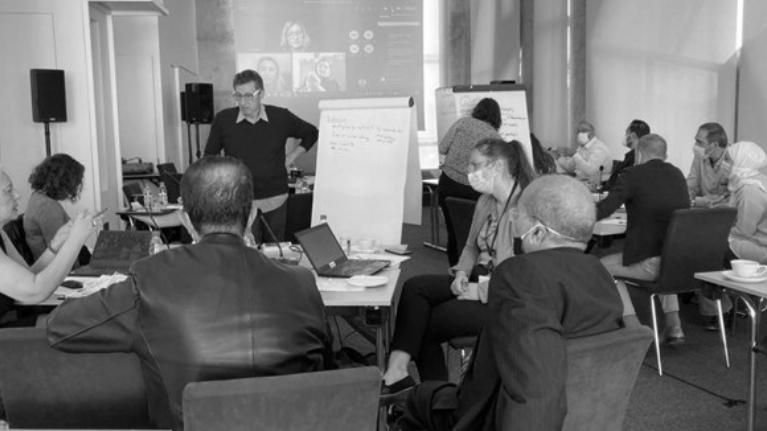
Under the Global Programme on Skills and Lifelong Learning (GPSL3) funded by Norway, tripartite constituents from Ghana, Nigeria and Togo met in Accra on the 30th of November 2022, to strengthen the skills partnership between the three countries active since 2019 and promote skills portability and recognition in the region.

 
This workshop concluded a series of online and country-level face-to-face consultations and exchange processes with representatives of government, workers\' and employers\' organizations from each country to increase skills portability in West Africa and through a skills partnership on migration. The partnership idea between the three countries was developed at the subregional tripartite workshop held in Abuja in September 2019. The purpose of this technical workshop will be for representatives of the three countries to present the skills ecosystems in their respective countries to the other representatives and to discuss the next steps and strategy to promote skills portability and recognition of the harmonized minimum standards at the national levels/ regional levels in the agriculture and construction sectors. The tripartite workshop was attended by representatives of:
  • The Council for Technical and Vocational Education and Training (Ghana),
  • The Ghana Trades Union Congress (Ghana),
  • Ghana Employers\' Association (Ghana),
  • The Nigeria Labour Congress (Nigeria),
  • The National Board of Technical Education (Nigeria),
  • The Nigeria Employers Consultative Association (Nigeria), 
  • Le Ministère De L\'enseignement Technique, de la Formation et de L\'insertion Professionnelles (Togo),
  • Le Conseil National du Patronat du Togo (Togo)
  • La Confédération Nationale des Travailleurs du Togo

The workshop led to the Validation of the harmonized minimum occupational standards for poultry farming, assistant mason, mason, and plumber, the development of recommendations to further strengthen the skills partnership between Ghana, Nigeria and Togo and the construction of a three-year roadmap for mutual recognition of certifications and youth training in the three countries.
Subject Tags:

Employment policy

Slug
employment-policy
Identifier
16

Labour migration

Slug
labour-migration
Identifier
609

Lifelong learning

Slug
lifelong-learning
Identifier
400
Slug
occupational-qualification
Identifier
409
Regions:

Africa

Region Image
Countries and territories:

ILO and the Government of Norway sign a new partnership agreement on skills development and lifelong learning

ILO and the Government of Norway sign a new partnership agreement on skills development and lifelong learning

Type:
Document
Content Type:
Press release
Language:

English

Slug
english
Identifier
skpEng
Sources:

ILO

The International Labour Organization is the tripartite U.N. agency that promotes Decent Work through employment, social security, labour standards and social dialogue. Its work on skills development is guided by the conceptual framework on Skills to improve productivity, employment growth, and development agreed in 2008 by representatives of Governments, Employers’ Associations and Workers’ Associations. Research, policy advice, and pilot projects and technical cooperation programmes to apply good practices in different circumstances across its 185 member States aims to boost the employability of workers, the productivity and competitiveness of enterprises, and the inclusiveness of economic growth. The ILO Secretariat in offices in 40 countries works with Ministries of Labour, employers’ organizations, and trade unions to integrate skills development into national and sector development strategies in order to better meet current labour market needs and to prepare for the jobs of the future; to expand access to employment-related training so that youth, persons with disabilities and other vulnerable groups are better able to acquire skills and secure productive and decent work; and to improve the ability of public employment services to provide career guidance, maintain labour exchange services, and deliver active labour market programmes.For more information regarding the ILO’s work on skills and employability go to: http://www.ilo.org/skills/lang--en/index.htm; for ILO/Cinterfor's Knowledge Management Plarform, see: http://www.oitcinterfor.org

Thumbnail
Identifier
skpILO
Slug
ilo
Topics:

Lifelong learning

Thumbnail

There is a critical need for a greater overall investment in education and training, particularly in developing countries. Education and training investments should be closely linked to economic and employment growth strategies and programmes. Responsibility should be shared between the government (primary responsibility), enterprises, the social partners, and the individual. To make lifelong learning for all a reality, countries will need to make major reforms of their vocational and education and training systems. School-to-work schemes for young people should integrate education with workplace learning. Training systems need to become more flexible and responsive to rapidly changing skill requirements. Reforms should also focus on how learning can be facilitated, not just on training for specific occupational categories.

Identifier
skpPSLLL
Slug
lifelong-learning
Knowledge Products:

Promotional material

Presentations, discussion papers, meeting reports, promotional materials, videos, fact sheets, brochures and newsletters on skills development for employment.

Thumbnail
Identifier
skpAIM
Slug
promotional-material
Publication Date:
21 Dec 2022
The Norwegian Agency for Development Cooperation (Norad) and the International Labour Organization (ILO) have signed a new strategic partnership agreement for 2023-2024 to strengthen the skills development eco-system in targeted countries and contribute to human development objectives. Decent Work as well as Norwegian priorities of green energy, food security, equality and inclusive societies are at the centre of this cooperation.

Through this lightly earmarked contribution for the ILO’s development cooperation activities, Norway will support skills development and lifelong learning in Ethiopia, Ghana, Lebanon, Malawi, Senegal and Tanzania through:
  • Providing timely, accurate and forward-looking anticipation of future skills needs;
  • Increasing the number of women and men benefiting from skills and lifelong learning programmes and services;
  • Strengthening effective governance and coordination in skills systems to improve policies and financing arrangements; and
  • Enhancing global knowledge base, innovation, partnerships and capacity building to empower constituents to tackle contemporary skills challenges.
The agreement is a new phase of a long-standing partnership between the ILO and the Government of Norway on skills development. For the last four years, the collaboration has enabled support to selected countries to develop, upscale and institutionalise approaches such as private sector led governance structures and innovative skills anticipation, training and assessments.

It will continue to support constituents by providing technical expertise, building capacity, and supporting them to implement pilot programmes, with a particular attention given to vulnerable groups. This partnership ultimately contributes to achieving Outcome 5 of the ILO’s Programme and Budget 2022-23 , Skills and lifelong learning to facilitate access to and transitions in the labour market.
Subject Tags:

Labour market

Slug
labour-market
Identifier
22

Lifelong learning

Slug
lifelong-learning
Identifier
400

Skilled workers

Slug
skilled-workers
Identifier
45
Regions:

COP27 Event - Check your skills readiness for a just transition

COP27 Event - Check your skills readiness for a just transition

Kind:
Event
Start Date:
10 Nov 2022
End Date:
17 Jun 2026
Event Location:
ILO Just Transition Pavilion, Sharm El-Sheikh, Egypt
EventType:
Language:

English

Slug
english
Identifier
skpEng
Language Version:
--
Sources:

ILO

The International Labour Organization is the tripartite U.N. agency that promotes Decent Work through employment, social security, labour standards and social dialogue. Its work on skills development is guided by the conceptual framework on Skills to improve productivity, employment growth, and development agreed in 2008 by representatives of Governments, Employers’ Associations and Workers’ Associations. Research, policy advice, and pilot projects and technical cooperation programmes to apply good practices in different circumstances across its 185 member States aims to boost the employability of workers, the productivity and competitiveness of enterprises, and the inclusiveness of economic growth. The ILO Secretariat in offices in 40 countries works with Ministries of Labour, employers’ organizations, and trade unions to integrate skills development into national and sector development strategies in order to better meet current labour market needs and to prepare for the jobs of the future; to expand access to employment-related training so that youth, persons with disabilities and other vulnerable groups are better able to acquire skills and secure productive and decent work; and to improve the ability of public employment services to provide career guidance, maintain labour exchange services, and deliver active labour market programmes.For more information regarding the ILO’s work on skills and employability go to: http://www.ilo.org/skills/lang--en/index.htm; for ILO/Cinterfor's Knowledge Management Plarform, see: http://www.oitcinterfor.org

Thumbnail
Identifier
skpILO
Slug
ilo
Topics:

Access to training

Thumbnail

Access for all to good quality education, vocational training and workplace learning is a fundamental principle of social cohesion and economic growth. Some groups of people may require targeted attention if they are to benefit from education, training and employment opportunities.  

This is particularly the case for disadvantaged youth, lower skilled workers, people with disabilities, and people in rural communities. The attractiveness of vocational education and training is enhanced when combined with entrepreneurship training and when public policies encourage utilization of higher skills by business. 
 

Identifier
skpATSU
Slug
access-to-training

Anticipating and matching skills needs

Thumbnail

Anticipating and building skills for the future is essential to a rapidly changing labour market. This applies to changes in the types and levels of skills needed as well as in occupational and technical areas. Effective methods to anticipate future skills needs and avoid potential mismatches include: sustained dialogue between employers and trainers, coordination across government institutions, labour market information systems, employment services and performance reviews of training institutions. 

Identifier
skpAFSN
Slug
anticipating-and-matching-skills-needs

Lifelong learning

Thumbnail

There is a critical need for a greater overall investment in education and training, particularly in developing countries. Education and training investments should be closely linked to economic and employment growth strategies and programmes. Responsibility should be shared between the government (primary responsibility), enterprises, the social partners, and the individual. To make lifelong learning for all a reality, countries will need to make major reforms of their vocational and education and training systems. School-to-work schemes for young people should integrate education with workplace learning. Training systems need to become more flexible and responsive to rapidly changing skill requirements. Reforms should also focus on how learning can be facilitated, not just on training for specific occupational categories.

Identifier
skpPSLLL
Slug
lifelong-learning
Knowledge Products:

Promotional material

Presentations, discussion papers, meeting reports, promotional materials, videos, fact sheets, brochures and newsletters on skills development for employment.

Thumbnail
Identifier
skpAIM
Slug
promotional-material

Do you want to know how ready you are for a just transition? The ILO, European Training Foundation (ETF) and LinkedIn will host a two-way knowledge exchange session through a panel session which will be followed by a small competition on finding creative solutions for greening jobs and skills for a just transition. The session will focus on discussing how the world of work is transitioning towards a greener economy, what jobs and skills are most in demand, how education and training, particularly TVET plays a crucial role in the transition and how countries are preparing their current and future workforce for the green transition. It is expected to expand the collective knowledge and build community of ideas on the green and just transition with skills perspective while triggering new thoughts and discover innovative solutions for greening jobs and skills for a just transition. The winners of the competition will receive a package of souvenirs.
 

The list of speakers:

  • Efrem Bycer, LinkedIn
  • Francesca Rosso, ETF
  • Hae-Kyeung Chun, ILO

This event will be streamed via the ILO live platform .

For more information and questions, please contact [email protected]


Subject Tags:

Green jobs

Slug
green-jobs
Identifier
623

Sustainable development

Slug
sustainable-development
Identifier
658
Regions:
Countries and territories:
Economic groups:
--

NATIONAL APPRENTICESHIP GUIDELINES

NATIONAL APPRENTICESHIP GUIDELINES

Type:
Document
Content Type:
Publication
Language:

English

Slug
english
Identifier
skpEng
Sources:

Governments

Governments hold a wealth of knowledge on skills development, and are increasingly realizing the value of learning from each others’ experiences. Their policy documents, programme evaluations, and research findings contain their experience and ideas on how to better link skills to employment

Thumbnail
Identifier
skpGov
Slug
governments
Topics:

Access to training

Thumbnail

Access for all to good quality education, vocational training and workplace learning is a fundamental principle of social cohesion and economic growth. Some groups of people may require targeted attention if they are to benefit from education, training and employment opportunities.  

This is particularly the case for disadvantaged youth, lower skilled workers, people with disabilities, and people in rural communities. The attractiveness of vocational education and training is enhanced when combined with entrepreneurship training and when public policies encourage utilization of higher skills by business. 
 

Identifier
skpATSU
Slug
access-to-training

Anticipating and matching skills needs

Thumbnail

Anticipating and building skills for the future is essential to a rapidly changing labour market. This applies to changes in the types and levels of skills needed as well as in occupational and technical areas. Effective methods to anticipate future skills needs and avoid potential mismatches include: sustained dialogue between employers and trainers, coordination across government institutions, labour market information systems, employment services and performance reviews of training institutions. 

Identifier
skpAFSN
Slug
anticipating-and-matching-skills-needs

Lifelong learning

Thumbnail

There is a critical need for a greater overall investment in education and training, particularly in developing countries. Education and training investments should be closely linked to economic and employment growth strategies and programmes. Responsibility should be shared between the government (primary responsibility), enterprises, the social partners, and the individual. To make lifelong learning for all a reality, countries will need to make major reforms of their vocational and education and training systems. School-to-work schemes for young people should integrate education with workplace learning. Training systems need to become more flexible and responsive to rapidly changing skill requirements. Reforms should also focus on how learning can be facilitated, not just on training for specific occupational categories.

Identifier
skpPSLLL
Slug
lifelong-learning
Knowledge Products:

Research papers

Working papers, reports, and other publications from international organizations, academic institutions and bilateral agencies. Research findings to stimulate informed debate on skills, employment and productivity issues. 

Thumbnail
Identifier
skpRPS
Slug
research-papers

Tools and guidance

The platform includes a variety of practical tools and guidance materials developed by the ILO at global and national levels. The resources include guides, case studies, cheklist, visual materials and more, and they cover a wide range of topics. Some are specifically aimed at certain groups of stakeholders, for example employers, workers or governments, and some are designed to support specific groups of beneficiaries. 

Thumbnail
Identifier
skpTag
Slug
tools-and-guidance
Publication Date:
21 Dec 2022
The main objective of the National Apprenticeship Guideline (NAG) is to provide guidance to all stakeholders in developing, implementing, monitoring and evaluating apprenticeship training programmes in Tanzania. Specifi c objectives of the guidelines include:- (a) To set out the roles and responsibilities of all stakeholders in training, funding, quality assurance and coordination of apprenticeship programs; (b) To establish a structured continuous dialogue mechanism between all apprenticeship partners; and (c) To provide a clear framework for quality assurance of apprenticeship programs.
Subject Tags:

Access to training

Slug
access-to-training
Identifier
683

Career guidance

Slug
career-guidance
Identifier
640

Skills anticipation

Slug
skills-anticipation
Identifier
677
Regions:

Youth initiatives win IsDB-ILO prizes for innovative ideas on green jobs and skills

Youth initiatives win IsDB-ILO prizes for innovative ideas on green jobs and skills

Type:
Document
Content Type:
Press release
Language:
Sources:

ILO

The International Labour Organization is the tripartite U.N. agency that promotes Decent Work through employment, social security, labour standards and social dialogue. Its work on skills development is guided by the conceptual framework on Skills to improve productivity, employment growth, and development agreed in 2008 by representatives of Governments, Employers’ Associations and Workers’ Associations. Research, policy advice, and pilot projects and technical cooperation programmes to apply good practices in different circumstances across its 185 member States aims to boost the employability of workers, the productivity and competitiveness of enterprises, and the inclusiveness of economic growth. The ILO Secretariat in offices in 40 countries works with Ministries of Labour, employers’ organizations, and trade unions to integrate skills development into national and sector development strategies in order to better meet current labour market needs and to prepare for the jobs of the future; to expand access to employment-related training so that youth, persons with disabilities and other vulnerable groups are better able to acquire skills and secure productive and decent work; and to improve the ability of public employment services to provide career guidance, maintain labour exchange services, and deliver active labour market programmes.For more information regarding the ILO’s work on skills and employability go to: http://www.ilo.org/skills/lang--en/index.htm; for ILO/Cinterfor's Knowledge Management Plarform, see: http://www.oitcinterfor.org

Thumbnail
Identifier
skpILO
Slug
ilo
Topics:

Access to training

Thumbnail

Access for all to good quality education, vocational training and workplace learning is a fundamental principle of social cohesion and economic growth. Some groups of people may require targeted attention if they are to benefit from education, training and employment opportunities.  

This is particularly the case for disadvantaged youth, lower skilled workers, people with disabilities, and people in rural communities. The attractiveness of vocational education and training is enhanced when combined with entrepreneurship training and when public policies encourage utilization of higher skills by business. 
 

Identifier
skpATSU
Slug
access-to-training

Lifelong learning

Thumbnail

There is a critical need for a greater overall investment in education and training, particularly in developing countries. Education and training investments should be closely linked to economic and employment growth strategies and programmes. Responsibility should be shared between the government (primary responsibility), enterprises, the social partners, and the individual. To make lifelong learning for all a reality, countries will need to make major reforms of their vocational and education and training systems. School-to-work schemes for young people should integrate education with workplace learning. Training systems need to become more flexible and responsive to rapidly changing skill requirements. Reforms should also focus on how learning can be facilitated, not just on training for specific occupational categories.

Identifier
skpPSLLL
Slug
lifelong-learning
Knowledge Products:

Promotional material

Presentations, discussion papers, meeting reports, promotional materials, videos, fact sheets, brochures and newsletters on skills development for employment.

Thumbnail
Identifier
skpAIM
Slug
promotional-material
Publication Date:
21 Dec 2022

CAIRO (ILO News) - Three youth groups that responded to the Islamic Development Bank (IsDB) and International Labour Organization (ILO) Youth Green Skills Accelerator Challenge  Call have won cash prizes and specialized support to enable them to further develop their innovative initiatives towards a just transition to a greener future in their communities.

The IsDB and the ILO jointly launched the Challenge Call in May 2022 as part of efforts to build skills required for green jobs and promote youth participation in a just transition. It worked to identify, incubate, test and disseminate innovative ideas that equip youths living in IsDB-ILO common member states with the competencies required to support a just transition in their communities.

After having received more than 120 applications, a rigorous evaluation process was followed, yielding three winning teams which were announced during the Youth and Future Generations Day at the COP27 UN Climate Change Conference taking place in Sharm el-Sheikh, Egypt.

In addition to sizeable cash prizes, the winners will receive technical support in the form of a Skills Innovation Lab and will join the ILO’s Skills Innovation Network, both integral elements of the Skills Innovation Facility  in the context of which the Challenge Call was launched by the IsDB and the ILO.

The winners were announced and presented with their awards at a ceremony at the COP27 conference.

Subject Tags:

Green jobs

Slug
green-jobs
Identifier
623

Skills re-training

Slug
skills-re-training
Identifier
655

Youth employment

Slug
youth-employment
Identifier
15
Regions:
Countries and territories:

COP27 Event - Check your skills readiness for a just transition

COP27 Event - Check your skills readiness for a just transition

Kind:
Event
Start Date:
10 Nov 2022
End Date:
17 Jun 2026
Event Location:
ILO Just Transition Pavilion, Sharm El-Sheikh, Egypt
EventType:
Language:

English

Slug
english
Identifier
skpEng
Language Version:
--
Sources:

ILO

The International Labour Organization is the tripartite U.N. agency that promotes Decent Work through employment, social security, labour standards and social dialogue. Its work on skills development is guided by the conceptual framework on Skills to improve productivity, employment growth, and development agreed in 2008 by representatives of Governments, Employers’ Associations and Workers’ Associations. Research, policy advice, and pilot projects and technical cooperation programmes to apply good practices in different circumstances across its 185 member States aims to boost the employability of workers, the productivity and competitiveness of enterprises, and the inclusiveness of economic growth. The ILO Secretariat in offices in 40 countries works with Ministries of Labour, employers’ organizations, and trade unions to integrate skills development into national and sector development strategies in order to better meet current labour market needs and to prepare for the jobs of the future; to expand access to employment-related training so that youth, persons with disabilities and other vulnerable groups are better able to acquire skills and secure productive and decent work; and to improve the ability of public employment services to provide career guidance, maintain labour exchange services, and deliver active labour market programmes.For more information regarding the ILO’s work on skills and employability go to: http://www.ilo.org/skills/lang--en/index.htm; for ILO/Cinterfor's Knowledge Management Plarform, see: http://www.oitcinterfor.org

Thumbnail
Identifier
skpILO
Slug
ilo
Topics:

Access to training

Thumbnail

Access for all to good quality education, vocational training and workplace learning is a fundamental principle of social cohesion and economic growth. Some groups of people may require targeted attention if they are to benefit from education, training and employment opportunities.  

This is particularly the case for disadvantaged youth, lower skilled workers, people with disabilities, and people in rural communities. The attractiveness of vocational education and training is enhanced when combined with entrepreneurship training and when public policies encourage utilization of higher skills by business. 
 

Identifier
skpATSU
Slug
access-to-training

Anticipating and matching skills needs

Thumbnail

Anticipating and building skills for the future is essential to a rapidly changing labour market. This applies to changes in the types and levels of skills needed as well as in occupational and technical areas. Effective methods to anticipate future skills needs and avoid potential mismatches include: sustained dialogue between employers and trainers, coordination across government institutions, labour market information systems, employment services and performance reviews of training institutions. 

Identifier
skpAFSN
Slug
anticipating-and-matching-skills-needs

Lifelong learning

Thumbnail

There is a critical need for a greater overall investment in education and training, particularly in developing countries. Education and training investments should be closely linked to economic and employment growth strategies and programmes. Responsibility should be shared between the government (primary responsibility), enterprises, the social partners, and the individual. To make lifelong learning for all a reality, countries will need to make major reforms of their vocational and education and training systems. School-to-work schemes for young people should integrate education with workplace learning. Training systems need to become more flexible and responsive to rapidly changing skill requirements. Reforms should also focus on how learning can be facilitated, not just on training for specific occupational categories.

Identifier
skpPSLLL
Slug
lifelong-learning
Knowledge Products:

Promotional material

Presentations, discussion papers, meeting reports, promotional materials, videos, fact sheets, brochures and newsletters on skills development for employment.

Thumbnail
Identifier
skpAIM
Slug
promotional-material

Do you want to know how ready you are for a just transition? The ILO, European Training Foundation (ETF) and LinkedIn will host a two-way knowledge exchange session through a panel session which will be followed by a small competition on finding creative solutions for greening jobs and skills for a just transition. The session will focus on discussing how the world of work is transitioning towards a greener economy, what jobs and skills are most in demand, how education and training, particularly TVET plays a crucial role in the transition and how countries are preparing their current and future workforce for the green transition. It is expected to expand the collective knowledge and build community of ideas on the green and just transition with skills perspective while triggering new thoughts and discover innovative solutions for greening jobs and skills for a just transition. The winners of the competition will receive a package of souvenirs.
 

The list of speakers:

  • Efrem Bycer, LinkedIn
  • Francesca Rosso, ETF
  • Hae-Kyeung Chun, ILO

This event will be streamed via the ILO live platform .

For more information and questions, please contact [email protected]


Subject Tags:

Green jobs

Slug
green-jobs
Identifier
623

Sustainable development

Slug
sustainable-development
Identifier
658
Regions:
Countries and territories:
Economic groups:
--

State of Skills - Tanzania

State of Skills - Tanzania

Type:
Document
Content Type:
Publication
Language:

English

Slug
english
Identifier
skpEng
Sources:

ILO

The International Labour Organization is the tripartite U.N. agency that promotes Decent Work through employment, social security, labour standards and social dialogue. Its work on skills development is guided by the conceptual framework on Skills to improve productivity, employment growth, and development agreed in 2008 by representatives of Governments, Employers’ Associations and Workers’ Associations. Research, policy advice, and pilot projects and technical cooperation programmes to apply good practices in different circumstances across its 185 member States aims to boost the employability of workers, the productivity and competitiveness of enterprises, and the inclusiveness of economic growth. The ILO Secretariat in offices in 40 countries works with Ministries of Labour, employers’ organizations, and trade unions to integrate skills development into national and sector development strategies in order to better meet current labour market needs and to prepare for the jobs of the future; to expand access to employment-related training so that youth, persons with disabilities and other vulnerable groups are better able to acquire skills and secure productive and decent work; and to improve the ability of public employment services to provide career guidance, maintain labour exchange services, and deliver active labour market programmes.For more information regarding the ILO’s work on skills and employability go to: http://www.ilo.org/skills/lang--en/index.htm; for ILO/Cinterfor's Knowledge Management Plarform, see: http://www.oitcinterfor.org

Thumbnail
Identifier
skpILO
Slug
ilo
Topics:

Access to training

Thumbnail

Access for all to good quality education, vocational training and workplace learning is a fundamental principle of social cohesion and economic growth. Some groups of people may require targeted attention if they are to benefit from education, training and employment opportunities.  

This is particularly the case for disadvantaged youth, lower skilled workers, people with disabilities, and people in rural communities. The attractiveness of vocational education and training is enhanced when combined with entrepreneurship training and when public policies encourage utilization of higher skills by business. 
 

Identifier
skpATSU
Slug
access-to-training

Anticipating and matching skills needs

Thumbnail

Anticipating and building skills for the future is essential to a rapidly changing labour market. This applies to changes in the types and levels of skills needed as well as in occupational and technical areas. Effective methods to anticipate future skills needs and avoid potential mismatches include: sustained dialogue between employers and trainers, coordination across government institutions, labour market information systems, employment services and performance reviews of training institutions. 

Identifier
skpAFSN
Slug
anticipating-and-matching-skills-needs

Lifelong learning

Thumbnail

There is a critical need for a greater overall investment in education and training, particularly in developing countries. Education and training investments should be closely linked to economic and employment growth strategies and programmes. Responsibility should be shared between the government (primary responsibility), enterprises, the social partners, and the individual. To make lifelong learning for all a reality, countries will need to make major reforms of their vocational and education and training systems. School-to-work schemes for young people should integrate education with workplace learning. Training systems need to become more flexible and responsive to rapidly changing skill requirements. Reforms should also focus on how learning can be facilitated, not just on training for specific occupational categories.

Identifier
skpPSLLL
Slug
lifelong-learning
Knowledge Products:

Tools and guidance

The platform includes a variety of practical tools and guidance materials developed by the ILO at global and national levels. The resources include guides, case studies, cheklist, visual materials and more, and they cover a wide range of topics. Some are specifically aimed at certain groups of stakeholders, for example employers, workers or governments, and some are designed to support specific groups of beneficiaries. 

Thumbnail
Identifier
skpTag
Slug
tools-and-guidance
Publication Date:
19 Dec 2022

Tanzania has sustained relatively high economic growth over the past decade, averaging 5 to 8 per cent per year, and leading to a decline in poverty rates. However, the country’s population is growing rapidly, and educational attainment is weak. Agriculture provides most employment. Economic growth and formal employment are concentrated in the main urban area, Dar es Salaam. Achieving structural transformation of the economy and poverty reduction, while preventing environmental degradation, will therefore require a massive effort in skilling the labour force. However, technical and vocational education and training (TVET) has long suffered from limited access, poor quality, lack of labour-market relevance, and stretched governance capacity. An ambitious National Skills Development Strategy (NSDS) has been designed to address these challenges.

Subject Tags:

Access to training

Slug
access-to-training
Identifier
683

Skills anticipation

Slug
skills-anticipation
Identifier
677

Skills upgrading

Slug
skills-upgrading
Identifier
657
Regions:
Countries and territories:

Entrepreneurship competence in vocational education and training

Entrepreneurship competence in vocational education and training

Type:
Document
Content Type:
Generic document
Language:

English

Slug
english
Identifier
skpEng
Sources:

Bilateral organizations

The development agencies of many countries make skills development a pillar of their Official Development Assistance – from the perspective of education systems, employment promotion, poverty reduction, and private sector development. Documentation of their experience, evaluations and impact assessments, mission statements, and other knowledge products are made available through the Global KSP.

Thumbnail
Identifier
skpBiOrg
Slug
bilateral-organizations
Topics:

Core skills and literacy

Thumbnail

Core employability skills build upon and strengthen the skills developed through basic education; the technical skills needed for specific occupations or to perform specific tasks or duties (such as nursing, accounting, using technology or driving a forklift); and professional/personal attributes such as honesty, reliability, punctuality and loyalty. 
Core work skills enable individuals to constantly acquire and apply new knowledge and skills; they are also critical to lifelong learning. Various agencies and organizations have given different labels to these skills, ranging from “key competencies” to “soft skills”, “transferable skills” or “essential skills”.
 

Identifier
skpCore
Slug
core-skills-and-literacy

Lifelong learning

Thumbnail

There is a critical need for a greater overall investment in education and training, particularly in developing countries. Education and training investments should be closely linked to economic and employment growth strategies and programmes. Responsibility should be shared between the government (primary responsibility), enterprises, the social partners, and the individual. To make lifelong learning for all a reality, countries will need to make major reforms of their vocational and education and training systems. School-to-work schemes for young people should integrate education with workplace learning. Training systems need to become more flexible and responsive to rapidly changing skill requirements. Reforms should also focus on how learning can be facilitated, not just on training for specific occupational categories.

Identifier
skpPSLLL
Slug
lifelong-learning

Work-based learning and skills utilization

Thumbnail

Increasingly, countries around the world, at all levels of development are putting work-based learning, particularly apprenticeships, high on their policy agenda, recognizing its potential for reducing skills mismatch, meeting skills demand of a fast changing labour market, providing cost-effective training, promoting private sector development and smoothing transitions to the world of work. 

Moreover, the issue of how skills are used in the workplace and how businesses engage with the local skills ecosystem are getting greater attention. It is increasingly recognized that workers who better use their skills are more likely to have greater job satisfaction, earn better wages and are more prepared to adapt to changes in the nature of work, while employers benefit from a more productive and innovative workforce, enabling them to maximise business performance and profitability. 

Identifier
skpWrkLrn
Slug
work-based-learning-and-skills-utilization
Knowledge Products:

Research papers

Working papers, reports, and other publications from international organizations, academic institutions and bilateral agencies. Research findings to stimulate informed debate on skills, employment and productivity issues. 

Thumbnail
Identifier
skpRPS
Slug
research-papers
Publication Date:
10 Oct 2022

This report describes how entrepreneurship competence is embedded in vocational education and training (VET) in Italy.

It complements existing knowledge with examples of methods, tools and approaches that can help policy-makers, VET providers and other stakeholders build better entrepreneurial learning ecosystems.

The report is based on the pilot research of Cedefop’s study Entrepreneurship competence in VET. It is part of a series of eight national case studies (Spain, France, Croatia, Italy, Latvia, Austria, Sweden and Finland) and the forthcoming final report.

Subject Tags:

Entrepreneurship

Slug
entrepreneurship
Identifier
182

TVET systems

Slug
tvet-systems
Identifier
661

Vocational training

Slug
vocational-training
Identifier
124
Regions:

ILO Workshop at the Global Lifelong Learning Summit: Micro-credentials promoting lifelong learning and careers

ILO Workshop at the Global Lifelong Learning Summit: Micro-credentials promoting lifelong learning and careers

Kind:
Event
Start Date:
01 Nov 2022
End Date:
17 Jun 2026
Event Location:
Singapore
EventType:
Language:

English

Slug
english
Identifier
skpEng
Language Version:
--
Sources:

ILO

The International Labour Organization is the tripartite U.N. agency that promotes Decent Work through employment, social security, labour standards and social dialogue. Its work on skills development is guided by the conceptual framework on Skills to improve productivity, employment growth, and development agreed in 2008 by representatives of Governments, Employers’ Associations and Workers’ Associations. Research, policy advice, and pilot projects and technical cooperation programmes to apply good practices in different circumstances across its 185 member States aims to boost the employability of workers, the productivity and competitiveness of enterprises, and the inclusiveness of economic growth. The ILO Secretariat in offices in 40 countries works with Ministries of Labour, employers’ organizations, and trade unions to integrate skills development into national and sector development strategies in order to better meet current labour market needs and to prepare for the jobs of the future; to expand access to employment-related training so that youth, persons with disabilities and other vulnerable groups are better able to acquire skills and secure productive and decent work; and to improve the ability of public employment services to provide career guidance, maintain labour exchange services, and deliver active labour market programmes.For more information regarding the ILO’s work on skills and employability go to: http://www.ilo.org/skills/lang--en/index.htm; for ILO/Cinterfor's Knowledge Management Plarform, see: http://www.oitcinterfor.org

Thumbnail
Identifier
skpILO
Slug
ilo
Topics:

Digital skills

Thumbnail

The world of work is undergoing a substantial transformation due to new forces. In particular, technological advances, such as AI, automation and robotics, have produced numerous new opportunities, but also given rise to urgent challenges. While new jobs are constantly being created with the emergence of the digital economy, many jobs are at risk of becoming obsolete. Digital innovations will rapidly change the demand for skills, thereby creating a wider skills gap that has the potential to hold back economic growth. Equipping people with basic or advanced digital skills promises to prepare them for unprecedented job opportunities in the digital economy. This will lead to innovation, higher productivity and competitiveness, as well as expanding markets, access to work and entrepreneurship opportunities. 

Identifier
skpdigskills
Slug
digital-skills

Lifelong learning

Thumbnail

There is a critical need for a greater overall investment in education and training, particularly in developing countries. Education and training investments should be closely linked to economic and employment growth strategies and programmes. Responsibility should be shared between the government (primary responsibility), enterprises, the social partners, and the individual. To make lifelong learning for all a reality, countries will need to make major reforms of their vocational and education and training systems. School-to-work schemes for young people should integrate education with workplace learning. Training systems need to become more flexible and responsive to rapidly changing skill requirements. Reforms should also focus on how learning can be facilitated, not just on training for specific occupational categories.

Identifier
skpPSLLL
Slug
lifelong-learning

Skills for care economy

Thumbnail

The growing demand for care work will continue to create a large number of jobs in the coming years. To build a care sector that benefits care workers, care recipients and society overall, governments should take crucial steps regarding the nature and provision of care policies and services, and the terms and conditions of care work. This must include creating a comprehensive system for training, skills development and skills recognition, ensuring that workers are able to meet emerging care needs.

Identifier
skpCare
Slug
skills-for-care-economy

Skills for transition to formality

Thumbnail

Most young people around the world do not have the chance to attend formal institutions of learning. The capacity of formal education and training systems is often limited due to inadequate training infrastructures and the relatively high costs of full-time, centre-based training. Consequently, large numbers of youth are learning and then working in the informal economy. 

Informal apprenticeship systems that transmit the skills of a trade to a young person in a micro- or small enterprise have operated for generations in many countries. They are considered by far the most important source of skills training in Africa and South Asia.

Women and men in the informal economy often do not possess a formal proof of their skills. Skills acquired informally are not visible and hence are often not recognized by employers. Transitions to the formal labour market can also be facilitated if skills are assessed and recognized. Systems of Recognition of Prior Learning are being introduced by countries to offer access to further learning or to formal labour markets.

Identifier
skpTrnForm
Slug
skills-for-transition-to-formality
Knowledge Products:

Micro-credentials are becoming increasingly popular tools to recognise the completion of bite-size learning activities, particularly  in non-formal and informal contexts, making proof of acquired learning outcomes. While they are not new, they have gained greater visibility in recent years, particularly during the COVID-19 pandemic. The turn to digital work and learning accelerated the transition from physical to digital and hybrid skills systems, pushing the private offer of short online training and popularised the use of digital credentials.
 

This workshop will aim at raising awareness about challenges and opportunities associated with the implementation of micro-credentials, as well as highlight successful examples emerging from private and public initiatives. The workshop will be structured around a panel discussion including government, workers and employers representatives, as well as micro-credentials providers. The discussion will have particular interest for policy makers, social partner representatives, training institutions managers.

Key themes to be discussed include:

  • The role and limitations of micro-credentials as an enabler of lifelong learning, access to decent work and long-term careers for all groups
  • The challenges and opportunities of micro-credentials as an enabler for workers to upskill, reskill and access qualifications
  • The potential and limitations of micro-credentials as enhancers of learning, talent acquisition, skills utilization, motivation and productivity in enterprises, promoting just green and digital transitions
  • The role of governments and social partners in generating a skills ecosystem conducive to quality, trust and effective connections between industry, training offer and recognition mechanisms
  • Digital transformation, inclusiveness and data ownership
Subject Tags:
Regions:
Countries and territories:
Economic groups:
--

Potential Opportunities for Women’s Economic Empowerment - Potato and Leafy Green Vegetable Value Chains - Akkar, Northern Lebanon

Potential Opportunities for Women’s Economic Empowerment - Potato and Leafy Green Vegetable Value Chains - Akkar, Northern Lebanon

Type:
Document
Content Type:
Generic document
Language:

English

Slug
english
Identifier
skpEng
Sources:

ILO

The International Labour Organization is the tripartite U.N. agency that promotes Decent Work through employment, social security, labour standards and social dialogue. Its work on skills development is guided by the conceptual framework on Skills to improve productivity, employment growth, and development agreed in 2008 by representatives of Governments, Employers’ Associations and Workers’ Associations. Research, policy advice, and pilot projects and technical cooperation programmes to apply good practices in different circumstances across its 185 member States aims to boost the employability of workers, the productivity and competitiveness of enterprises, and the inclusiveness of economic growth. The ILO Secretariat in offices in 40 countries works with Ministries of Labour, employers’ organizations, and trade unions to integrate skills development into national and sector development strategies in order to better meet current labour market needs and to prepare for the jobs of the future; to expand access to employment-related training so that youth, persons with disabilities and other vulnerable groups are better able to acquire skills and secure productive and decent work; and to improve the ability of public employment services to provide career guidance, maintain labour exchange services, and deliver active labour market programmes.For more information regarding the ILO’s work on skills and employability go to: http://www.ilo.org/skills/lang--en/index.htm; for ILO/Cinterfor's Knowledge Management Plarform, see: http://www.oitcinterfor.org

Thumbnail
Identifier
skpILO
Slug
ilo
Topics:

Gender equality

Thumbnail

Women represent both half of the world's population – and half the world's economic potential. Their participation in the labour market reduces poverty because they often invest 90 per cent of their income in the well-being, education and nutrition of their families. Yet labour force participation by women has stagnated at about 55 per cent globally since 2010. Moreover, women are disproportionately represented in precarious work – low-paid, low-skilled and insecure jobs.

Training plays an important role in the pursuit of equality of opportunity and treatment for women and men in the world of work. Yet women often lack access to technical and vocational education and training. Many also lack the basic functional skills, such as literacy and numeracy, to participate meaningfully in the work force. Overcoming this challenge requires the adoption of a life-cycle approach. This includes improving girls’ access to basic education; overcoming logistic, economic and cultural barriers to apprenticeships and to secondary and vocational training for young women; and meeting the training needs of women re-entering the labour market and of older women who have not had equal access to opportunities for lifelong learning.

Identifier
skpGenEqul
Slug
gender-equality

Lifelong learning

Thumbnail

There is a critical need for a greater overall investment in education and training, particularly in developing countries. Education and training investments should be closely linked to economic and employment growth strategies and programmes. Responsibility should be shared between the government (primary responsibility), enterprises, the social partners, and the individual. To make lifelong learning for all a reality, countries will need to make major reforms of their vocational and education and training systems. School-to-work schemes for young people should integrate education with workplace learning. Training systems need to become more flexible and responsive to rapidly changing skill requirements. Reforms should also focus on how learning can be facilitated, not just on training for specific occupational categories.

Identifier
skpPSLLL
Slug
lifelong-learning

Rural employment

Thumbnail

Eight out of 10 of the world’s working poor who live on US $1.25 per day live in rural areas, where many are caught in vulnerable employment, especially in agriculture.Flourishing rural areas are vital to regional and national development. Yet, rural economies tend to face a wide range of challenges that urban areas are more likely to overcome. These include access to transportation, sanitation and health services, and a consumer base in close proximity to support small and medium enterprise development. Women and men working in rural areas also face difficulties associated with a paucity of economic opportunities, under investment, poor infrastructure and public services, including education, and, in many cases, weak governance and underdeveloped markets.

Education, entrepreneurship, and physical and social infrastructure all play an important role in developing rural regions. Skills are central to improving employability and livelihood opportunities, reducing poverty, enhancing productivity and promoting environmentally sustainable development.

Identifier
skpREmpl
Slug
rural-employment

Youth employability

Thumbnail

Globally, nearly 68 million young women and men are looking for and available for work,  and an estimated 123 million young people are working but living in poverty. The number who are not in employment, education or training (NEET) stands at 267 million, a majority of whom are young women. Significantly, young people are three times as likely as adults (25 years and older) to be unemployed.

Skills development is a primary means of enabling young people to make a smooth transition to work. A comprehensive approach is required to integrate young women and men in the labour market, including relevant and quality skills training, labour market information, career guidance and employment services, recognition of prior learning, incorporating entrepreneurship with training and effective skills forecasting. Improved basic education and core work skills are particularly important to enable youth to engage in lifelong learning as well as transition to the labour market. 

Identifier
skpYoEmp
Slug
youth-employability
Knowledge Products:

Case studies and good practices

Case studies that document good practices and illustrate the benefits and lessons learnt of particular approaches or methods in real practice. 

Thumbnail
Identifier
skpCaseStdy
Slug
case-studies-and-good-practices
Publication Date:
04 Oct 2022

The assessment examines the status of women in the potatoes and leafy green vegetables value chains in the Akkar region in order to highlight potential areas that will increase their visibility as valuable members of both their individual communities and the agriculture sector, as well as to showcase opportunities for women empowerment.

Subject Tags:

Labour market

Slug
labour-market
Identifier
22

Rural employment

Slug
rural-employment
Identifier
670

Rural workers

Slug
rural-workers
Identifier
637

Women

Slug
women
Identifier
318
Regions:

Arab States

Region Image
Countries and territories: