Lifelong learning

Thumbnail

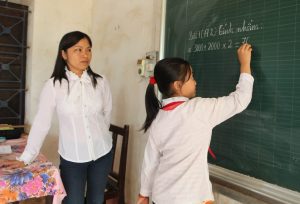
There is a critical need for a greater overall investment in education and training, particularly in developing countries. Education and training investments should be closely linked to economic and employment growth strategies and programmes. Responsibility should be shared between the government (primary responsibility), enterprises, the social partners, and the individual. To make lifelong learning for all a reality, countries will need to make major reforms of their vocational and education and training systems. School-to-work schemes for young people should integrate education with workplace learning. Training systems need to become more flexible and responsive to rapidly changing skill requirements. Reforms should also focus on how learning can be facilitated, not just on training for specific occupational categories.

Identifier
skpPSLLL
Slug
lifelong-learning

Guidelines on Open and Distance Learning for Youth and Adult Literacy

Guidelines on Open and Distance Learning for Youth and Adult Literacy

Type:
Document
Content Type:
Generic document
Language:

English

Slug
english
Identifier
skpEng
Sources:

Information is gathered from other international organizations that promote skills development and the transition from education and training to work. The Interagency Group on Technical and Vocational Education and Training (IAG-TVET) was established in 2009 to share research findings, coordinate joint research endeavours, and improve collaboration among organizations working at the international and national levels.

Thumbnail
Identifier
skpIntOrg
Slug
international-organizations
Topics:

Access to training

Thumbnail

Access for all to good quality education, vocational training and workplace learning is a fundamental principle of social cohesion and economic growth. Some groups of people may require targeted attention if they are to benefit from education, training and employment opportunities.  

This is particularly the case for disadvantaged youth, lower skilled workers, people with disabilities, and people in rural communities. The attractiveness of vocational education and training is enhanced when combined with entrepreneurship training and when public policies encourage utilization of higher skills by business. 
 

Identifier
skpATSU
Slug
access-to-training

Digital skills

Thumbnail

The world of work is undergoing a substantial transformation due to new forces. In particular, technological advances, such as AI, automation and robotics, have produced numerous new opportunities, but also given rise to urgent challenges. While new jobs are constantly being created with the emergence of the digital economy, many jobs are at risk of becoming obsolete. Digital innovations will rapidly change the demand for skills, thereby creating a wider skills gap that has the potential to hold back economic growth. Equipping people with basic or advanced digital skills promises to prepare them for unprecedented job opportunities in the digital economy. This will lead to innovation, higher productivity and competitiveness, as well as expanding markets, access to work and entrepreneurship opportunities. 

Identifier
skpdigskills
Slug
digital-skills

Lifelong learning

Thumbnail

There is a critical need for a greater overall investment in education and training, particularly in developing countries. Education and training investments should be closely linked to economic and employment growth strategies and programmes. Responsibility should be shared between the government (primary responsibility), enterprises, the social partners, and the individual. To make lifelong learning for all a reality, countries will need to make major reforms of their vocational and education and training systems. School-to-work schemes for young people should integrate education with workplace learning. Training systems need to become more flexible and responsive to rapidly changing skill requirements. Reforms should also focus on how learning can be facilitated, not just on training for specific occupational categories.

Identifier
skpPSLLL
Slug
lifelong-learning

Training quality and relevance

Thumbnail
Identifier
skpTrainQR
Slug
training-quality-and-relevance
Knowledge Products:

Tools and guidance

The platform includes a variety of practical tools and guidance materials developed by the ILO at global and national levels. The resources include guides, case studies, cheklist, visual materials and more, and they cover a wide range of topics. Some are specifically aimed at certain groups of stakeholders, for example employers, workers or governments, and some are designed to support specific groups of beneficiaries. 

Thumbnail
Identifier
skpTag
Slug
tools-and-guidance
Publication Date:
27 Sep 2022
Guidelines on open and distance learning for youth and adult literacy addresses a gap in literacy provision by presenting open and distance learning (ODL) principles and practices to illustrate how learning and education can be delivered at a distance. This publication is divided into two main parts. Part 1 presents practical guidance in four areas—planning, development, implementation, and monitoring and evaluation—and part 2 considers the various technologies that are used for ODL programmes and could support youth and adult literacy learning. Policy-makers, literacy providers and educators will benefit from understanding and applying the concept and principles of ODL in designing and delivering effective, inclusive and sustainable literacy programmes and learning opportunities—strengthening the resilience of their literacy programmes and expanding outreach and participation in the process.
Subject Tags:

Information and communication technologies

Slug
information-and-communication-technologies
Identifier
346

Lifelong learning

Slug
lifelong-learning
Identifier
400

Technology

Slug
technology
Identifier
345
Regions:

Community of Practice on Digital Skills and Digitalization

Community of Practice on Digital Skills and Digitalization

Kind:
Event
Start Date:
27 Sep 2022
End Date:
17 Jun 2026
Event Location:
https://ilo-skills.tribeplatform.com
EventType:
Language:

English

Slug
english
Identifier
skpEng
Language Version:
--
Sources:

ILO

The International Labour Organization is the tripartite U.N. agency that promotes Decent Work through employment, social security, labour standards and social dialogue. Its work on skills development is guided by the conceptual framework on Skills to improve productivity, employment growth, and development agreed in 2008 by representatives of Governments, Employers’ Associations and Workers’ Associations. Research, policy advice, and pilot projects and technical cooperation programmes to apply good practices in different circumstances across its 185 member States aims to boost the employability of workers, the productivity and competitiveness of enterprises, and the inclusiveness of economic growth. The ILO Secretariat in offices in 40 countries works with Ministries of Labour, employers’ organizations, and trade unions to integrate skills development into national and sector development strategies in order to better meet current labour market needs and to prepare for the jobs of the future; to expand access to employment-related training so that youth, persons with disabilities and other vulnerable groups are better able to acquire skills and secure productive and decent work; and to improve the ability of public employment services to provide career guidance, maintain labour exchange services, and deliver active labour market programmes.For more information regarding the ILO’s work on skills and employability go to: http://www.ilo.org/skills/lang--en/index.htm; for ILO/Cinterfor's Knowledge Management Plarform, see: http://www.oitcinterfor.org

Thumbnail
Identifier
skpILO
Slug
ilo
Topics:

Digital skills

Thumbnail

The world of work is undergoing a substantial transformation due to new forces. In particular, technological advances, such as AI, automation and robotics, have produced numerous new opportunities, but also given rise to urgent challenges. While new jobs are constantly being created with the emergence of the digital economy, many jobs are at risk of becoming obsolete. Digital innovations will rapidly change the demand for skills, thereby creating a wider skills gap that has the potential to hold back economic growth. Equipping people with basic or advanced digital skills promises to prepare them for unprecedented job opportunities in the digital economy. This will lead to innovation, higher productivity and competitiveness, as well as expanding markets, access to work and entrepreneurship opportunities. 

Identifier
skpdigskills
Slug
digital-skills

Lifelong learning

Thumbnail

There is a critical need for a greater overall investment in education and training, particularly in developing countries. Education and training investments should be closely linked to economic and employment growth strategies and programmes. Responsibility should be shared between the government (primary responsibility), enterprises, the social partners, and the individual. To make lifelong learning for all a reality, countries will need to make major reforms of their vocational and education and training systems. School-to-work schemes for young people should integrate education with workplace learning. Training systems need to become more flexible and responsive to rapidly changing skill requirements. Reforms should also focus on how learning can be facilitated, not just on training for specific occupational categories.

Identifier
skpPSLLL
Slug
lifelong-learning

Youth employability

Thumbnail

Globally, nearly 68 million young women and men are looking for and available for work,  and an estimated 123 million young people are working but living in poverty. The number who are not in employment, education or training (NEET) stands at 267 million, a majority of whom are young women. Significantly, young people are three times as likely as adults (25 years and older) to be unemployed.

Skills development is a primary means of enabling young people to make a smooth transition to work. A comprehensive approach is required to integrate young women and men in the labour market, including relevant and quality skills training, labour market information, career guidance and employment services, recognition of prior learning, incorporating entrepreneurship with training and effective skills forecasting. Improved basic education and core work skills are particularly important to enable youth to engage in lifelong learning as well as transition to the labour market. 

Identifier
skpYoEmp
Slug
youth-employability
Knowledge Products:

Tools and guidance

The platform includes a variety of practical tools and guidance materials developed by the ILO at global and national levels. The resources include guides, case studies, cheklist, visual materials and more, and they cover a wide range of topics. Some are specifically aimed at certain groups of stakeholders, for example employers, workers or governments, and some are designed to support specific groups of beneficiaries. 

Thumbnail
Identifier
skpTag
Slug
tools-and-guidance

At the session, Eugenio Donadio from Goodwall will be introducing their mobile-first platform and technology that they leverage to provide digital learning and upskilling pathways for youth based on experiential learning. Working alongside global and local partners, Goodwall has developed an inclusive environment where young people can come together to support and learn from each other while building, testing and showcasing their skills. Over the past years, Goodwall has created and scaled up partnerships with influential actors such as UNICEF, GIZ, Generation Unlimited and PwC, among others, which led them to host virtual programmes and launch hybrid online-offline initiatives.

As Chief Impact Officer at Goodwall, Eugenio oversees the Business Development department and leads the Social Impact work of the organization. He has a background in civil and management engineering, and started his career in the international development sector, working for over 10 years across 20+ countries leading humanitarian responses for crises such as Syria, Gaza, Ebola and Zika. Over the years he covered key roles such as Director of WeWorld and at executive management level in Plan International.

CoP live session this coming Tuesday, 27 September 2022, 13:00 CET.
Zoom link for the session: https://ilo-org.zoom.us/j/97961629539 (meeting ID: 979 6162 9539).


At the session, Eugenio Donadio from Goodwall will be introducing their mobile-first platform and technology that they leverage to provide digital learning and upskilling pathways for youth based on experiential learning. Working alongside global and local partners, Goodwall has developed an inclusive environment where young people can come together to support and learn from each other while building, testing and showcasing their skills. Over the past years, Goodwall has created and scaled up partnerships with influential actors such as UNICEF, GIZ, Generation Unlimited and PwC, among others, which led them to host virtual programmes and launch hybrid online-offline initiatives.

As Chief Impact Officer at Goodwall, Eugenio oversees the Business Development department and leads the Social Impact work of the organization. He has a background in civil and management engineering, and started his career in the international development sector, working for over 10 years across 20+ countries leading humanitarian responses for crises such as Syria, Gaza, Ebola and Zika. Over the years he covered key roles such as Director of WeWorld and at executive management level in Plan International.

CoP live session this coming Tuesday, 27 September 2022, 13:00 CET.
Zoom link for the session: https://ilo-org.zoom.us/j/97961629539 (meeting ID: 979 6162 9539).


Subject Tags:

Career guidance

Slug
career-guidance
Identifier
640

Skills utilization

Slug
skills-utilization
Identifier
685

Transport

Slug
transport
Identifier
245

Youth

Slug
youth
Identifier
319
Regions:
Countries and territories:
Economic groups:
--

Jednostavni alati za kreiranje sadržaja za učenje na mreži

Jednostavni alati za kreiranje sadržaja za učenje na mreži

Type:
Document
Content Type:
Project documentation
Language:

Bosnian

Slug
bosnian
Identifier
skpbs
Sources:

ILO

The International Labour Organization is the tripartite U.N. agency that promotes Decent Work through employment, social security, labour standards and social dialogue. Its work on skills development is guided by the conceptual framework on Skills to improve productivity, employment growth, and development agreed in 2008 by representatives of Governments, Employers’ Associations and Workers’ Associations. Research, policy advice, and pilot projects and technical cooperation programmes to apply good practices in different circumstances across its 185 member States aims to boost the employability of workers, the productivity and competitiveness of enterprises, and the inclusiveness of economic growth. The ILO Secretariat in offices in 40 countries works with Ministries of Labour, employers’ organizations, and trade unions to integrate skills development into national and sector development strategies in order to better meet current labour market needs and to prepare for the jobs of the future; to expand access to employment-related training so that youth, persons with disabilities and other vulnerable groups are better able to acquire skills and secure productive and decent work; and to improve the ability of public employment services to provide career guidance, maintain labour exchange services, and deliver active labour market programmes.For more information regarding the ILO’s work on skills and employability go to: http://www.ilo.org/skills/lang--en/index.htm; for ILO/Cinterfor's Knowledge Management Plarform, see: http://www.oitcinterfor.org

Thumbnail
Identifier
skpILO
Slug
ilo
Topics:

Digital skills

Thumbnail

The world of work is undergoing a substantial transformation due to new forces. In particular, technological advances, such as AI, automation and robotics, have produced numerous new opportunities, but also given rise to urgent challenges. While new jobs are constantly being created with the emergence of the digital economy, many jobs are at risk of becoming obsolete. Digital innovations will rapidly change the demand for skills, thereby creating a wider skills gap that has the potential to hold back economic growth. Equipping people with basic or advanced digital skills promises to prepare them for unprecedented job opportunities in the digital economy. This will lead to innovation, higher productivity and competitiveness, as well as expanding markets, access to work and entrepreneurship opportunities. 

Identifier
skpdigskills
Slug
digital-skills

Lifelong learning

Thumbnail

There is a critical need for a greater overall investment in education and training, particularly in developing countries. Education and training investments should be closely linked to economic and employment growth strategies and programmes. Responsibility should be shared between the government (primary responsibility), enterprises, the social partners, and the individual. To make lifelong learning for all a reality, countries will need to make major reforms of their vocational and education and training systems. School-to-work schemes for young people should integrate education with workplace learning. Training systems need to become more flexible and responsive to rapidly changing skill requirements. Reforms should also focus on how learning can be facilitated, not just on training for specific occupational categories.

Identifier
skpPSLLL
Slug
lifelong-learning

Online and distance learning

Thumbnail

In view of the rapid socio-economic and technological changes, jobs and the skills required to perform them continue to evolve. Many jobs in labour intensive sectors, which tend to be occupied by economically vulnerable groups of people (such as women and the poorly educated), are at high risk of being automated. In this light, delivering job-relevant skills at a reasonable cost, especially for workers whose jobs are at risk, is important. If well implemented, ICTs in TVET have the potential to improve access to learning, to improve quality while decreasing costs, to make teaching and learning more relevant to people’s work and lives, and to encourage individuals to become lifelong learners.

Identifier
skpOnlDist
Slug
online-and-distance-learning

Teachers, trainers and training organizations

Thumbnail

At the heart of any skills system are the managers and staff of training institutions who face considerable challenges to deliver quality programmes at a time of fiscal constraint. As the expectations placed on institutions continue to grow, managers and trainers are increasingly expected to deliver flexible, responsive and current programmes based on strong partnerships with local employers that provide good employment outcomes. Because of this, there is a need for constituents to build the capacity of their institutional workforce to meet the expectations placed upon them by demand driven systems.

Identifier
skpTeach
Slug
teachers-trainers-and-training-organizations
Knowledge Products:

Tools and guidance

The platform includes a variety of practical tools and guidance materials developed by the ILO at global and national levels. The resources include guides, case studies, cheklist, visual materials and more, and they cover a wide range of topics. Some are specifically aimed at certain groups of stakeholders, for example employers, workers or governments, and some are designed to support specific groups of beneficiaries. 

Thumbnail
Identifier
skpTag
Slug
tools-and-guidance
Publication Date:
05 Sep 2022

Within the project ‘Reimagining Education for Marginalized Girls and Boys during and post COVID-19’ ILO and Smart Lab created video tutorials for TVET teachers on how to easily produce interactive training content for E-Learning.

ILO has cooperated with Smart Lab, a Sarajevo-based company specialized in E-Learning products, within the frame of the project ‘Reimagining Education for Marginalized Girls and Boys during and post COVID-19’. This framework project involved many UN partners, like UNESCO, UNICEF and UN Volunteers. One of its results are 7 short tutorial videos explaining and guiding through the production of E-Learning materials, multimedia training content, with a freely available or low-cost software. The URL directs to the first of the tutorials, which is part of a playlist, where all of them can be found. In these videos, people working at Smart Lab explain different steps in the creation of the E-Learning content in a way which is easy to follow. While the target group of these videos are teachers in TVET, the ultimate beneficiaries are TVET students, as their education will get more engaging and flexible.

Subject Tags:

Lifelong learning

Slug
lifelong-learning
Identifier
400

Technology

Slug
technology
Identifier
345

Training of trainers

Slug
training-of-trainers
Identifier
122

TVET systems

Slug
tvet-systems
Identifier
661
Regions:
Countries and territories:

Strengthening skills systems in times of transition - Insights from Cedefop’s 2022 European skills index

Strengthening skills systems in times of transition - Insights from Cedefop’s 2022 European skills index

Type:
Document
Content Type:
Generic document
Language:

English

Slug
english
Identifier
skpEng
Sources:

Information is gathered from other international organizations that promote skills development and the transition from education and training to work. The Interagency Group on Technical and Vocational Education and Training (IAG-TVET) was established in 2009 to share research findings, coordinate joint research endeavours, and improve collaboration among organizations working at the international and national levels.

Thumbnail
Identifier
skpIntOrg
Slug
international-organizations
Topics:

Anticipating and matching skills needs

Thumbnail

Anticipating and building skills for the future is essential to a rapidly changing labour market. This applies to changes in the types and levels of skills needed as well as in occupational and technical areas. Effective methods to anticipate future skills needs and avoid potential mismatches include: sustained dialogue between employers and trainers, coordination across government institutions, labour market information systems, employment services and performance reviews of training institutions. 

Identifier
skpAFSN
Slug
anticipating-and-matching-skills-needs

Lifelong learning

Thumbnail

There is a critical need for a greater overall investment in education and training, particularly in developing countries. Education and training investments should be closely linked to economic and employment growth strategies and programmes. Responsibility should be shared between the government (primary responsibility), enterprises, the social partners, and the individual. To make lifelong learning for all a reality, countries will need to make major reforms of their vocational and education and training systems. School-to-work schemes for young people should integrate education with workplace learning. Training systems need to become more flexible and responsive to rapidly changing skill requirements. Reforms should also focus on how learning can be facilitated, not just on training for specific occupational categories.

Identifier
skpPSLLL
Slug
lifelong-learning

Skills policies and strategies

Thumbnail

Skills and employment policies should be viewed together.  The full value of one policy set is realized when it supports the objectives of the other.  For investments in education and training to yield maximum benefit to workers, enterprises, and economies, countries’ capacities for coordination is critical in three areas: connecting basic education to technical training and then to market entry; ensuring continuous communication between employers and training providers so that training meets the needs and aspirations of workers and enterprises, and integrating skills development policies with industrial, investment, trade, technology, environmental, rural and local development policies.

Identifier
skpPolConv
Slug
skills-policies-and-strategies
Knowledge Products:

Tools and guidance

The platform includes a variety of practical tools and guidance materials developed by the ILO at global and national levels. The resources include guides, case studies, cheklist, visual materials and more, and they cover a wide range of topics. Some are specifically aimed at certain groups of stakeholders, for example employers, workers or governments, and some are designed to support specific groups of beneficiaries. 

Thumbnail
Identifier
skpTag
Slug
tools-and-guidance
Publication Date:
25 Aug 2022
Skills lie at the core of well-functioning economies and inclusive societies. Skills systems support and shape transitions and play a crucial role in delivering skills, in using talent and in matching skills to jobs. With a view to promoting evidence-based skills policy in the EU, this policy brief uses Cedefop’s 2022 European skills index to take stock of trends, to identify improvement potential and to locate best practices.
Subject Tags:

Skills and training policy

Slug
skills-and-training-policy
Identifier
666

Skills mismatch

Slug
skills-mismatch
Identifier
654
Regions:

Minimising early leaving from vocational education and training in Europe

Minimising early leaving from vocational education and training in Europe

Type:
Document
Content Type:
Generic document
Language:

English

Slug
english
Identifier
skpEng
Sources:

Information is gathered from other international organizations that promote skills development and the transition from education and training to work. The Interagency Group on Technical and Vocational Education and Training (IAG-TVET) was established in 2009 to share research findings, coordinate joint research endeavours, and improve collaboration among organizations working at the international and national levels.

Thumbnail
Identifier
skpIntOrg
Slug
international-organizations
Topics:

Career guidance and employment services

Thumbnail

Career guidance and counselling, career education and lifelong development of skills for employability are key for success in learning activities, effective career transitions, livelihood planning, entrepreneurship and in increasing labour market participation. They are instrumental in promoting skills utilization, recognition (RPL), as well as in improving enterprise human resource management.

Career development activities encompass a wide variety of support activities including career information and advice, counselling, work exposure (e.g. job shadowing, work experience periods), assessment, coaching, mentoring, professional networking, advocacy, basic and employability skills training (curricular and non-curricular) and entrepreneurship training. It is often an area which is fragmented across different ministries (e.g. education, TVET, employment, youth) requiring an effort to achieve the necessary coordination to provide adequate support to individuals during learning, employment and unemployment/inactivity periods.
 

Identifier
skpLMIES
Slug
career-guidance-and-employment-services

Financing of training

Thumbnail

Initial education and training and lifelong learning benefit individuals, employers and society as a whole. Economic principles dictate that the costs for services with public and private benefits should be shared between public and private funding, or else too little training will be provided or taken up. Effective mechanisms for financing skills development vary according to countries’ economic and political circumstances and the degree and level of social dialogue established.

Identifier
skpFinanT
Slug
financing-training

Lifelong learning

Thumbnail

There is a critical need for a greater overall investment in education and training, particularly in developing countries. Education and training investments should be closely linked to economic and employment growth strategies and programmes. Responsibility should be shared between the government (primary responsibility), enterprises, the social partners, and the individual. To make lifelong learning for all a reality, countries will need to make major reforms of their vocational and education and training systems. School-to-work schemes for young people should integrate education with workplace learning. Training systems need to become more flexible and responsive to rapidly changing skill requirements. Reforms should also focus on how learning can be facilitated, not just on training for specific occupational categories.

Identifier
skpPSLLL
Slug
lifelong-learning

Skills policies and strategies

Thumbnail

Skills and employment policies should be viewed together.  The full value of one policy set is realized when it supports the objectives of the other.  For investments in education and training to yield maximum benefit to workers, enterprises, and economies, countries’ capacities for coordination is critical in three areas: connecting basic education to technical training and then to market entry; ensuring continuous communication between employers and training providers so that training meets the needs and aspirations of workers and enterprises, and integrating skills development policies with industrial, investment, trade, technology, environmental, rural and local development policies.

Identifier
skpPolConv
Slug
skills-policies-and-strategies
Knowledge Products:

Case studies and good practices

Case studies that document good practices and illustrate the benefits and lessons learnt of particular approaches or methods in real practice. 

Thumbnail
Identifier
skpCaseStdy
Slug
case-studies-and-good-practices
Publication Date:
22 Aug 2022
Career guidance and counselling are key features of comprehensive strategies aiming to reduce early leaving from education and training. They may assist students, not only in terms of decision-making but also in managing their transitions within education and training pathways or from education to employment.

Minimising the risks of either insufficient information or unrealistic expectations, career guidance and counselling may support learners in making informed decisions based on their interests, talents, and future job aspirations, as well as preventing dropout and early leaving. For those who have left education and training early, career guidance and counselling may assist them to return to, and qualify in, upper secondary education. This paper examines how national policies and practices in career guidance and counselling in EU Member States may support learners at risk and early leavers from education and training. It identifies common patterns and existing information gaps, and sets out future prospects.
Subject Tags:

Financing training

Slug
financing-training
Identifier
673

School-to-work transition

Slug
school-to-work-transition
Identifier
652

Youth employment

Slug
youth-employment
Identifier
15
Regions:

Policies for system change and lifelong learning - A Torino Process cross-country digest (2018–21)

Policies for system change and lifelong learning - A Torino Process cross-country digest (2018–21)

Type:
Document
Content Type:
Generic document
Language:

English

Slug
english
Identifier
skpEng
Sources:

Bilateral organizations

The development agencies of many countries make skills development a pillar of their Official Development Assistance – from the perspective of education systems, employment promotion, poverty reduction, and private sector development. Documentation of their experience, evaluations and impact assessments, mission statements, and other knowledge products are made available through the Global KSP.

Thumbnail
Identifier
skpBiOrg
Slug
bilateral-organizations
Topics:

Lifelong learning

Thumbnail

There is a critical need for a greater overall investment in education and training, particularly in developing countries. Education and training investments should be closely linked to economic and employment growth strategies and programmes. Responsibility should be shared between the government (primary responsibility), enterprises, the social partners, and the individual. To make lifelong learning for all a reality, countries will need to make major reforms of their vocational and education and training systems. School-to-work schemes for young people should integrate education with workplace learning. Training systems need to become more flexible and responsive to rapidly changing skill requirements. Reforms should also focus on how learning can be facilitated, not just on training for specific occupational categories.

Identifier
skpPSLLL
Slug
lifelong-learning

Training quality and relevance

Thumbnail
Identifier
skpTrainQR
Slug
training-quality-and-relevance
Knowledge Products:

Case studies and good practices

Case studies that document good practices and illustrate the benefits and lessons learnt of particular approaches or methods in real practice. 

Thumbnail
Identifier
skpCaseStdy
Slug
case-studies-and-good-practices
Publication Date:
22 Aug 2022
This report presents an overview of policies and actions in support of lifelong learning in the ETF’s partner countries in South Eastern Europe and Turkey, Central Asia, the Eastern Partnership region, and the Southern and Eastern Mediterranean. Our analysis explores the extent to which the creation of lifelong learning opportunities is a priority in the reform agenda of these countries in the field of education and training, and the ways in which they are influencing the formation of that agenda. The report also discusses the efforts of authorities and stakeholders in implementing their reform plans in the wake of changing circumstances before and during the Covid-19 pandemic, and identifies policy gaps and lessons to be learned before providing a handful of policy recommendations in a cross-country perspective.
Subject Tags:

Lifelong learning

Slug
lifelong-learning
Identifier
400

Skills and training policy

Slug
skills-and-training-policy
Identifier
666
Regions:

Discussion paper: Action Track 2 on Learning and skills for life, work, and sustainable development

Discussion paper: Action Track 2 on Learning and skills for life, work, and sustainable development

Type:
Document
Content Type:
Generic document
Language:

English

Slug
english
Identifier
skpEng
Sources:

Information is gathered from other international organizations that promote skills development and the transition from education and training to work. The Interagency Group on Technical and Vocational Education and Training (IAG-TVET) was established in 2009 to share research findings, coordinate joint research endeavours, and improve collaboration among organizations working at the international and national levels.

Thumbnail
Identifier
skpIntOrg
Slug
international-organizations
Topics:

Lifelong learning

Thumbnail

There is a critical need for a greater overall investment in education and training, particularly in developing countries. Education and training investments should be closely linked to economic and employment growth strategies and programmes. Responsibility should be shared between the government (primary responsibility), enterprises, the social partners, and the individual. To make lifelong learning for all a reality, countries will need to make major reforms of their vocational and education and training systems. School-to-work schemes for young people should integrate education with workplace learning. Training systems need to become more flexible and responsive to rapidly changing skill requirements. Reforms should also focus on how learning can be facilitated, not just on training for specific occupational categories.

Identifier
skpPSLLL
Slug
lifelong-learning

Skills for green transition/climate action

Thumbnail

The growing importance of sustainable development and the shift to a low-carbon and climateresilient economy will require new skills and qualifications, offering great potential for the creation of green jobs but also implying structural changes and a transformation of existing jobs. The transition to a low-carbon and greener economy will generate millions of new jobs, negatively affect some high-emitting sectors, and alter most existing occupations in terms of task compositions and skills requirements. 

Ensuring the right skills for green jobs is a prerequisite to make the transition to a greener economy happen. Today, skills gaps are already recognised as a major bottleneck in a number of sectors, such as renewable energy, energy and resource efficiency, green building or environmental services. The adoption and dissemination of clean technologies require skills in technology application, adaptation and maintenance. Skills are also crucial for economies and
businesses, workers and entrepreneurs to rapidly adapt to changes deriving from climate change and environmental policies. 

Identifier
skpGreen
Slug
skills-for-green-transition-climate-action

Skills policies and strategies

Thumbnail

Skills and employment policies should be viewed together.  The full value of one policy set is realized when it supports the objectives of the other.  For investments in education and training to yield maximum benefit to workers, enterprises, and economies, countries’ capacities for coordination is critical in three areas: connecting basic education to technical training and then to market entry; ensuring continuous communication between employers and training providers so that training meets the needs and aspirations of workers and enterprises, and integrating skills development policies with industrial, investment, trade, technology, environmental, rural and local development policies.

Identifier
skpPolConv
Slug
skills-policies-and-strategies
Knowledge Products:

Promotional material

Presentations, discussion papers, meeting reports, promotional materials, videos, fact sheets, brochures and newsletters on skills development for employment.

Thumbnail
Identifier
skpAIM
Slug
promotional-material

Research papers

Working papers, reports, and other publications from international organizations, academic institutions and bilateral agencies. Research findings to stimulate informed debate on skills, employment and productivity issues. 

Thumbnail
Identifier
skpRPS
Slug
research-papers
Publication Date:
18 Aug 2022
The world today, with the multiple challenges and continuous changes, demands that education, not only reflects, but also anticipates and responds to these situations. These include, for example, the existential threat of climate change, mass loss of biodiversity, natural disasters, pandemics, extreme poverty and inequalities, rapid technological change, and violent conflicts, among others. These challenges disproportionately affect vulnerable populations, exacerbating already existing inequalities and suffering, and must be faced through foundational and lifelong learning.
Subject Tags:

Green skills

Slug
green-skills
Identifier
645

Skills anticipation

Slug
skills-anticipation
Identifier
677
Regions:

Are Children Really Learning? Exploring foundational skills in the midst of a learning crisis

Are Children Really Learning? Exploring foundational skills in the midst of a learning crisis

Type:
Document
Content Type:
Generic document
Language:

English

Slug
english
Identifier
skpEng
Sources:

Information is gathered from other international organizations that promote skills development and the transition from education and training to work. The Interagency Group on Technical and Vocational Education and Training (IAG-TVET) was established in 2009 to share research findings, coordinate joint research endeavours, and improve collaboration among organizations working at the international and national levels.

Thumbnail
Identifier
skpIntOrg
Slug
international-organizations
Topics:

Access to training

Thumbnail

Access for all to good quality education, vocational training and workplace learning is a fundamental principle of social cohesion and economic growth. Some groups of people may require targeted attention if they are to benefit from education, training and employment opportunities.  

This is particularly the case for disadvantaged youth, lower skilled workers, people with disabilities, and people in rural communities. The attractiveness of vocational education and training is enhanced when combined with entrepreneurship training and when public policies encourage utilization of higher skills by business. 
 

Identifier
skpATSU
Slug
access-to-training

Lifelong learning

Thumbnail

There is a critical need for a greater overall investment in education and training, particularly in developing countries. Education and training investments should be closely linked to economic and employment growth strategies and programmes. Responsibility should be shared between the government (primary responsibility), enterprises, the social partners, and the individual. To make lifelong learning for all a reality, countries will need to make major reforms of their vocational and education and training systems. School-to-work schemes for young people should integrate education with workplace learning. Training systems need to become more flexible and responsive to rapidly changing skill requirements. Reforms should also focus on how learning can be facilitated, not just on training for specific occupational categories.

Identifier
skpPSLLL
Slug
lifelong-learning

Training quality and relevance

Thumbnail
Identifier
skpTrainQR
Slug
training-quality-and-relevance

Youth employability

Thumbnail

Globally, nearly 68 million young women and men are looking for and available for work,  and an estimated 123 million young people are working but living in poverty. The number who are not in employment, education or training (NEET) stands at 267 million, a majority of whom are young women. Significantly, young people are three times as likely as adults (25 years and older) to be unemployed.

Skills development is a primary means of enabling young people to make a smooth transition to work. A comprehensive approach is required to integrate young women and men in the labour market, including relevant and quality skills training, labour market information, career guidance and employment services, recognition of prior learning, incorporating entrepreneurship with training and effective skills forecasting. Improved basic education and core work skills are particularly important to enable youth to engage in lifelong learning as well as transition to the labour market. 

Identifier
skpYoEmp
Slug
youth-employability
Knowledge Products:

Case studies and good practices

Case studies that document good practices and illustrate the benefits and lessons learnt of particular approaches or methods in real practice. 

Thumbnail
Identifier
skpCaseStdy
Slug
case-studies-and-good-practices
Publication Date:
18 Aug 2022

Even before the onset of the COVID-19 pandemic, there were serious questions about whether children were actually learning. With widespread school closures and other disruptions to the education system brought about by the pandemic, the learning crisis has escalated to new heights. As the pandemic enters its third year, 23 countries – home to around 405 million schoolchildren – are yet to fully open schools, with many schoolchildren at risk of dropping out. Over the past two years nearly 147 million children missed more than half of their in-person schooling, amounting to 2 trillion hours of lost learning. Children have to get back to the classroom, but changes are needed to ensure that they really learn, starting with the foundational basics of reading and numeracy. 

This report offers unique insight into the extent of the learning crisis by providing an in-depth picture of which children are most at risk of not acquiring foundational learning skills. The analysis of 32 low- and middle-income countries and territories uses newly released data to examine the equity perspectives of the crisis, exploring learning outcomes among different subgroups of children, with a focus on the most vulnerable. 

Subject Tags:

Skills upgrading

Slug
skills-upgrading
Identifier
657

Youth

Slug
youth
Identifier
319
Regions:

A market systems approach to skills development

A market systems approach to skills development

Type:
Document
Content Type:
Generic document
Language:

English

Slug
english
Identifier
skpEng
Sources:

ILO

The International Labour Organization is the tripartite U.N. agency that promotes Decent Work through employment, social security, labour standards and social dialogue. Its work on skills development is guided by the conceptual framework on Skills to improve productivity, employment growth, and development agreed in 2008 by representatives of Governments, Employers’ Associations and Workers’ Associations. Research, policy advice, and pilot projects and technical cooperation programmes to apply good practices in different circumstances across its 185 member States aims to boost the employability of workers, the productivity and competitiveness of enterprises, and the inclusiveness of economic growth. The ILO Secretariat in offices in 40 countries works with Ministries of Labour, employers’ organizations, and trade unions to integrate skills development into national and sector development strategies in order to better meet current labour market needs and to prepare for the jobs of the future; to expand access to employment-related training so that youth, persons with disabilities and other vulnerable groups are better able to acquire skills and secure productive and decent work; and to improve the ability of public employment services to provide career guidance, maintain labour exchange services, and deliver active labour market programmes.For more information regarding the ILO’s work on skills and employability go to: http://www.ilo.org/skills/lang--en/index.htm; for ILO/Cinterfor's Knowledge Management Plarform, see: http://www.oitcinterfor.org

Thumbnail
Identifier
skpILO
Slug
ilo
Topics:

Anticipating and matching skills needs

Thumbnail

Anticipating and building skills for the future is essential to a rapidly changing labour market. This applies to changes in the types and levels of skills needed as well as in occupational and technical areas. Effective methods to anticipate future skills needs and avoid potential mismatches include: sustained dialogue between employers and trainers, coordination across government institutions, labour market information systems, employment services and performance reviews of training institutions. 

Identifier
skpAFSN
Slug
anticipating-and-matching-skills-needs

Lifelong learning

Thumbnail

There is a critical need for a greater overall investment in education and training, particularly in developing countries. Education and training investments should be closely linked to economic and employment growth strategies and programmes. Responsibility should be shared between the government (primary responsibility), enterprises, the social partners, and the individual. To make lifelong learning for all a reality, countries will need to make major reforms of their vocational and education and training systems. School-to-work schemes for young people should integrate education with workplace learning. Training systems need to become more flexible and responsive to rapidly changing skill requirements. Reforms should also focus on how learning can be facilitated, not just on training for specific occupational categories.

Identifier
skpPSLLL
Slug
lifelong-learning

Skills policies and strategies

Thumbnail

Skills and employment policies should be viewed together.  The full value of one policy set is realized when it supports the objectives of the other.  For investments in education and training to yield maximum benefit to workers, enterprises, and economies, countries’ capacities for coordination is critical in three areas: connecting basic education to technical training and then to market entry; ensuring continuous communication between employers and training providers so that training meets the needs and aspirations of workers and enterprises, and integrating skills development policies with industrial, investment, trade, technology, environmental, rural and local development policies.

Identifier
skpPolConv
Slug
skills-policies-and-strategies

Youth employability

Thumbnail

Globally, nearly 68 million young women and men are looking for and available for work,  and an estimated 123 million young people are working but living in poverty. The number who are not in employment, education or training (NEET) stands at 267 million, a majority of whom are young women. Significantly, young people are three times as likely as adults (25 years and older) to be unemployed.

Skills development is a primary means of enabling young people to make a smooth transition to work. A comprehensive approach is required to integrate young women and men in the labour market, including relevant and quality skills training, labour market information, career guidance and employment services, recognition of prior learning, incorporating entrepreneurship with training and effective skills forecasting. Improved basic education and core work skills are particularly important to enable youth to engage in lifelong learning as well as transition to the labour market. 

Identifier
skpYoEmp
Slug
youth-employability
Knowledge Products:

Case studies and good practices

Case studies that document good practices and illustrate the benefits and lessons learnt of particular approaches or methods in real practice. 

Thumbnail
Identifier
skpCaseStdy
Slug
case-studies-and-good-practices
Publication Date:
25 Jul 2022

Enterprises can drive business success and support inclusive economic growth by making investments into educating, training and reskilling of workers. Workers also face an imperative to proactively upgrade their skills or acquire new ones through training, education, and lifelong learning to remain employable, especially in the face of rapid transformation brought about by advances in automation and digitalisation.

A market systems approach to skills development has the potential to lead to more sustainable employment outcomes at scale, by taking a holistic approach to addressing both supply- and demand-side factors, as well as tackling the cost of skills development programmes and strengthening the link between market needs and the important role of regulation and standards.

Drawing on three case studies, this paper explores how a market systems development (MSD) approach to skills development can lead to employment outcomes and foster sustainable impact through systemic change that is owned, maintained, and further evolved by local stakeholders.

Subject Tags:

Labour market

Slug
labour-market
Identifier
22

Private sector

Slug
private-sector
Identifier
229

Skills anticipation

Slug
skills-anticipation
Identifier
677

Skills mismatch

Slug
skills-mismatch
Identifier
654
Regions:
Countries and territories:

Bangladesh

Bangladesh has a strong track record of growth and development, even in times of elevated global uncertainty.  A robust demographic dividend, strong ready-made garment exports, resilient remittance inflows, and stable macroeconomic conditions have supported rapid economic growth over the past two decades. A strong recovery from the COVID-19 pandemic continued in FY22, although a recent surge in commodity prices has presented new headwinds. 

Bangladesh reached lower-middle income status in 2015. It is on track to graduate from the UN’s Least Developed Countries list in 2026. Poverty declined from 43.5 percent in 1991 to 14.3 percent in 2016, based on the international poverty line of $1.90 a day (1).  

Like many of its Asian neighbours, Bangladesh faces a major challenge trying to develop modern, employability skills for tens of millions of young women and men. It has a large informal sector, which accounts for 94.7 percent of the total employment in 2017 (2). Youth continue to be highly affected by the lack of opportunities, with the share of youth aged 15-24 not in employment, education or training (NEET), estimated at 27.8 percent in 2020 (3). 

TVET has a huge role to play in equipping the vast young labour force of 15-29 years referred to as the country’s “demographic dividend” with employability skills and providing enhanced support services to ensure a better transition from school to work. TVET may also contribute to reducing poverty by providing employability skills, particularly to those who drop out of school early and to a large number of unemployed and underemployed adults.  

Despite many reform initiatives by the government, the TVET sector needs further strengthening through reform of policies and systems in the labour market.  Enhancing industry-relevance of TVET qualifications will furthermore require closer Government cooperation with the private sector. For one and a half decade, the ILO has worked closely with the Government of Bangladesh and its Social Partners to reform the TVET sector and to improve access for people to increase their skills and employability, in particular youth, women and people from other marginalized groups. 

The impact of the COVID-19 pandemic had detrimental effects on the TVET sector, due to the nation-wide closure of all educational institutes for one and a half years, starting on 17 March 2020.  Most students’ learning was effectively abolished for this duration, and learning and certification was only possible through limited online learning facilities in existence at the time. Only recently has the TVET returned to its prior activity level. 

The ILO landmark programmes aim to strengthen and improve the environment for industry skills development, address the mismatch between the supply and demand for skills training, and drive the increased employability of millions of young women and men. ILO’s support to develop the skills system in Bangladesh has focused on skills system governance, development of skills policies and qualifications frameworks; delivery of quality skills training, expanding access to TVET, and involvement by the private sector.    


Sources 

(1) https://www.worldbank.org/en/country/bangladesh/overview

(2) https://ilostat.ilo.org/topics/informality/

(3) https://ilostat.ilo.org/topics/youth/

Country Assessment and Priority (CAP) – Bangladesh strategy for skills and lifelong learning (2022)

Situation Analysis of Bangladesh TVET Sector (2019) https://www.ilo.org/wcmsp5/groups/public/—asia/—ro-bangkok/—ilo-dhaka/documents/publication/wcms_735704.pdf_

Compétences pour le commerce et la diversification économique: Alignement des compétences sur les stratégies de développement sectoriel en Algérie, au Maroc et en Tunisie

Compétences pour le commerce et la diversification économique: Alignement des compétences sur les stratégies de développement sectoriel en Algérie, au Maroc et en Tunisie

Type:
Document
Content Type:
Generic document
Language:

French

Slug
french
Identifier
skpFrn
Sources:

ILO

The International Labour Organization is the tripartite U.N. agency that promotes Decent Work through employment, social security, labour standards and social dialogue. Its work on skills development is guided by the conceptual framework on Skills to improve productivity, employment growth, and development agreed in 2008 by representatives of Governments, Employers’ Associations and Workers’ Associations. Research, policy advice, and pilot projects and technical cooperation programmes to apply good practices in different circumstances across its 185 member States aims to boost the employability of workers, the productivity and competitiveness of enterprises, and the inclusiveness of economic growth. The ILO Secretariat in offices in 40 countries works with Ministries of Labour, employers’ organizations, and trade unions to integrate skills development into national and sector development strategies in order to better meet current labour market needs and to prepare for the jobs of the future; to expand access to employment-related training so that youth, persons with disabilities and other vulnerable groups are better able to acquire skills and secure productive and decent work; and to improve the ability of public employment services to provide career guidance, maintain labour exchange services, and deliver active labour market programmes.For more information regarding the ILO’s work on skills and employability go to: http://www.ilo.org/skills/lang--en/index.htm; for ILO/Cinterfor's Knowledge Management Plarform, see: http://www.oitcinterfor.org

Thumbnail
Identifier
skpILO
Slug
ilo
Topics:

Lifelong learning

Thumbnail

There is a critical need for a greater overall investment in education and training, particularly in developing countries. Education and training investments should be closely linked to economic and employment growth strategies and programmes. Responsibility should be shared between the government (primary responsibility), enterprises, the social partners, and the individual. To make lifelong learning for all a reality, countries will need to make major reforms of their vocational and education and training systems. School-to-work schemes for young people should integrate education with workplace learning. Training systems need to become more flexible and responsive to rapidly changing skill requirements. Reforms should also focus on how learning can be facilitated, not just on training for specific occupational categories.

Identifier
skpPSLLL
Slug
lifelong-learning

Skills policies and strategies

Thumbnail

Skills and employment policies should be viewed together.  The full value of one policy set is realized when it supports the objectives of the other.  For investments in education and training to yield maximum benefit to workers, enterprises, and economies, countries’ capacities for coordination is critical in three areas: connecting basic education to technical training and then to market entry; ensuring continuous communication between employers and training providers so that training meets the needs and aspirations of workers and enterprises, and integrating skills development policies with industrial, investment, trade, technology, environmental, rural and local development policies.

Identifier
skpPolConv
Slug
skills-policies-and-strategies

Training quality and relevance

Thumbnail
Identifier
skpTrainQR
Slug
training-quality-and-relevance
Knowledge Products:

Case studies and good practices

Case studies that document good practices and illustrate the benefits and lessons learnt of particular approaches or methods in real practice. 

Thumbnail
Identifier
skpCaseStdy
Slug
case-studies-and-good-practices
Publication Date:
11 Jul 2022

Rapport de stratégie de développement des compétences dans la branche de biscuiterie-chocolaterie-confiserie

La stratégie de développement des compétences dans la branche Biscuiterie - Chocolaterie - Confiserie (BCC), objet du présent rapport fait suite au rapport de diagnostic de la situation actuelle de la branche et de ses perspectives d’évolution. Ces deux rapports font partie de la phase de l’analyse sectorielle STED du projet « Compétences pour le commerce et la diversification économique Alignement des compétences sur les stratégies de développement sectoriel en Algérie, au Maroc et en Tunisie » (Projet STED- AMT-2020-2023), piloté par l’OIT et financé par la KOICA (Agence Coréenne de Coopération Internationale).

A partir des résultats de la phase diagnostique et de la vision future souhaitée par les acteurs concernés pour le développement de la branche BCC à moyen terme, le présent rapport analyse les besoins en compétences à développer pour renforcer les capacités d’affaires de la branche BCC en vue de contribuer à l’atteinte des objectifs de cette vision. Il déduit les déséquilibres offre demande de compétences et effectue des recommandations pour combler les déficits de compétences et atténuer les contraintes systémiques à l’offre de compétences dans la branche.

Outre les résultats du diagnostic, la stratégie de développement des compétences s’est appuyée sur les résultats de l’enquête auprès des entreprises et des entretiens avec des professionnels, des experts et des personnes ressources.
 

Subject Tags:

Economic and social development

Slug
economic-and-social-development
Identifier
125

Sectoral approaches

Slug
sectoral-approaches
Identifier
676

Skills re-training

Slug
skills-re-training
Identifier
655
Regions:

Africa

Region Image
Countries and territories: