Academic institutions

Research papers, synthesis reports, country and programme studies are collected from many academic institutions and national, regional and international professional associations.

Thumbnail
Identifier
skpAcaInst
Slug
academic-institutions

Call for Expression of Interest in professional training in Career Guidance

Call for Expression of Interest in professional training in Career Guidance

Type:
Document
Content Type:
News
Language:

English

Slug
english
Identifier
skpEng
Sources:

Academic institutions

Research papers, synthesis reports, country and programme studies are collected from many academic institutions and national, regional and international professional associations.

Thumbnail
Identifier
skpAcaInst
Slug
academic-institutions
Topics:

Career guidance and employment services

Thumbnail

Career guidance and counselling, career education and lifelong development of skills for employability are key for success in learning activities, effective career transitions, livelihood planning, entrepreneurship and in increasing labour market participation. They are instrumental in promoting skills utilization, recognition (RPL), as well as in improving enterprise human resource management.

Career development activities encompass a wide variety of support activities including career information and advice, counselling, work exposure (e.g. job shadowing, work experience periods), assessment, coaching, mentoring, professional networking, advocacy, basic and employability skills training (curricular and non-curricular) and entrepreneurship training. It is often an area which is fragmented across different ministries (e.g. education, TVET, employment, youth) requiring an effort to achieve the necessary coordination to provide adequate support to individuals during learning, employment and unemployment/inactivity periods.
 

Identifier
skpLMIES
Slug
career-guidance-and-employment-services

Core skills and literacy

Thumbnail

Core employability skills build upon and strengthen the skills developed through basic education; the technical skills needed for specific occupations or to perform specific tasks or duties (such as nursing, accounting, using technology or driving a forklift); and professional/personal attributes such as honesty, reliability, punctuality and loyalty. 
Core work skills enable individuals to constantly acquire and apply new knowledge and skills; they are also critical to lifelong learning. Various agencies and organizations have given different labels to these skills, ranging from “key competencies” to “soft skills”, “transferable skills” or “essential skills”.
 

Identifier
skpCore
Slug
core-skills-and-literacy

Youth employability

Thumbnail

Globally, nearly 68 million young women and men are looking for and available for work,  and an estimated 123 million young people are working but living in poverty. The number who are not in employment, education or training (NEET) stands at 267 million, a majority of whom are young women. Significantly, young people are three times as likely as adults (25 years and older) to be unemployed.

Skills development is a primary means of enabling young people to make a smooth transition to work. A comprehensive approach is required to integrate young women and men in the labour market, including relevant and quality skills training, labour market information, career guidance and employment services, recognition of prior learning, incorporating entrepreneurship with training and effective skills forecasting. Improved basic education and core work skills are particularly important to enable youth to engage in lifelong learning as well as transition to the labour market. 

Identifier
skpYoEmp
Slug
youth-employability

Other topic

Thumbnail
Identifier
skpOIssue
Slug
other-topic
Knowledge Products:

Promotional material

Presentations, discussion papers, meeting reports, promotional materials, videos, fact sheets, brochures and newsletters on skills development for employment.

Thumbnail
Identifier
skpAIM
Slug
promotional-material
Publication Date:
06 Oct 2021

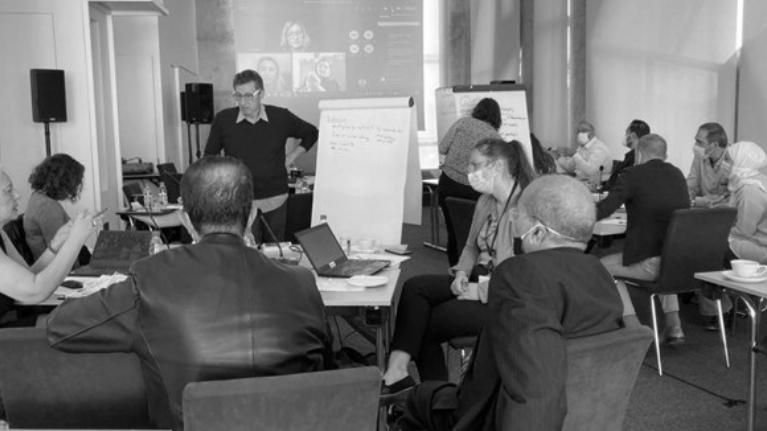
A Master in Lifelong Career Guidance and Development for countries in the MENA (Middle East and North Africa) region, will be offered by the University of Malta with the expert support of the European Training Foundation, the International Labour Organization, and the UNESCO-UNITWIN network.
The Master will be offered online on a part-time basis, starting October 2022.

On-line, part-time Master in Lifelong Career Guidance specifically for the MENA region


Career guidance (or ‘vocational guidance’) has been adopted in several countries in the world because it:

  • helps young people and adults choose their educational and employment pathways more wisely;
  • leads to appropriate choices that ensure more motivated students and more productive and satisfied workers;
  • facilitates a better match between the demand and supply of skills.


Career guidance services are greatly needed in the MENA region. They can be part of the strategy to address the twin challenge of high youth and adult unemployment on the one hand, and skills gaps on the other. They can also foster social inclusion through giving access to a livelihood.


The University of Malta – with the expert support of the European Training Foundation (ETF), the International Labour Organization (ILO), and the UNESCO-UNITWIN Network – has issued a Call for the Expression of Interest for those who would like to receive professional training in career guidance.


The Master course is designed in such a way as to

  • take into account the economic, labour market, educational and cultural realities of the MENA region;
  • provide participants with the interdisciplinary theoretical background and practical experience needed in order to design, deliver, and evaluate lifelong career guidance services;
  • promote regional expertise in policy development, systems-building, and practitioner competence. 


Individuals as well as public and private entities interested in the Masters can


  • email the course coordinators for further information. Professor Ronald G. Sultana ([email protected]) and Dr Manwel Debono ([email protected]) will be happy to respond to questions.


Scholarships, in the form of partial fee waivers, are being offered by the University of Malta to deserving applicants.

Educational Jobs: Youth and Employability in the Social Economy

Educational Jobs: Youth and Employability in the Social Economy

Type:
Document
Content Type:
Educational Jobs: Youth and Employability in the Social Economy
Language:

English

Slug
english
Identifier
skpEng
Sources:

Academic institutions

Research papers, synthesis reports, country and programme studies are collected from many academic institutions and national, regional and international professional associations.

Thumbnail
Identifier
skpAcaInst
Slug
academic-institutions
Topics:

Youth employability

Thumbnail

Globally, nearly 68 million young women and men are looking for and available for work,  and an estimated 123 million young people are working but living in poverty. The number who are not in employment, education or training (NEET) stands at 267 million, a majority of whom are young women. Significantly, young people are three times as likely as adults (25 years and older) to be unemployed.

Skills development is a primary means of enabling young people to make a smooth transition to work. A comprehensive approach is required to integrate young women and men in the labour market, including relevant and quality skills training, labour market information, career guidance and employment services, recognition of prior learning, incorporating entrepreneurship with training and effective skills forecasting. Improved basic education and core work skills are particularly important to enable youth to engage in lifelong learning as well as transition to the labour market. 

Identifier
skpYoEmp
Slug
youth-employability
Knowledge Products:

Research papers

Working papers, reports, and other publications from international organizations, academic institutions and bilateral agencies. Research findings to stimulate informed debate on skills, employment and productivity issues. 

Thumbnail
Identifier
skpRPS
Slug
research-papers
Publication Date:
05 Apr 2021
Investigations in Italy, Malta, Portugal, Romania,Spain, United Kingdom This study has been carried out to understand the priority initiatives that can be undertaken by the social economy organizations themselves and the institutions with educational tasks (university, secondary schools, training centres) to foster the meeting of the supply and employment de- mand for quali ed young people.
Subject Tags:

Youth

Slug
youth
Identifier
319
Regions:

Online and open education in Shanghai: Emergency response and innovative practice during COVID-19 Pandemic

Online and open education in Shanghai: Emergency response and innovative practice during COVID-19 Pandemic

Type:
Document
Content Type:
Online and open education in Shanghai: Emergency response and innovative practice during COVID-19 Pandemic
Language:

English

Slug
english
Identifier
skpEng
Sources:

Academic institutions

Research papers, synthesis reports, country and programme studies are collected from many academic institutions and national, regional and international professional associations.

Thumbnail
Identifier
skpAcaInst
Slug
academic-institutions

Information is gathered from other international organizations that promote skills development and the transition from education and training to work. The Interagency Group on Technical and Vocational Education and Training (IAG-TVET) was established in 2009 to share research findings, coordinate joint research endeavours, and improve collaboration among organizations working at the international and national levels.

Thumbnail
Identifier
skpIntOrg
Slug
international-organizations
Topics:

Access to training

Thumbnail

Access for all to good quality education, vocational training and workplace learning is a fundamental principle of social cohesion and economic growth. Some groups of people may require targeted attention if they are to benefit from education, training and employment opportunities.  

This is particularly the case for disadvantaged youth, lower skilled workers, people with disabilities, and people in rural communities. The attractiveness of vocational education and training is enhanced when combined with entrepreneurship training and when public policies encourage utilization of higher skills by business. 
 

Identifier
skpATSU
Slug
access-to-training

Training quality and relevance

Thumbnail
Identifier
skpTrainQR
Slug
training-quality-and-relevance
Knowledge Products:

Research papers

Working papers, reports, and other publications from international organizations, academic institutions and bilateral agencies. Research findings to stimulate informed debate on skills, employment and productivity issues. 

Thumbnail
Identifier
skpRPS
Slug
research-papers
Publication Date:
27 Jul 2020
This report aims to document the emergency response and innovative experience accumulated by Shanghai in protecting students' safety and ensuring that learning is undisrupted during this challenging period. The aim is to describe the immediate and systematic actions of the local government, the innovative and inspiring practices of teachers, students, parents and education administrators, and the active and passionate engagement of the public, both learners and learning supporters. The most dynamic parts of this Report are the 18 case study examples collected from the different educational categories of preschool education, primary and secondary education, higher education, vocational education, and technical training, and formal and informal learning for parents, the elderly, and the public. It is a tiny part of Shanghai's experience in combating the pandemic. However, these examples reflect the collective yet individualized approach in different situations and for different groups of learners, including rural areas, students with special needs, and psychological issues in the times when classes disrupted.
Subject Tags:

Access to training

Slug
access-to-training
Identifier
683

TVET systems

Slug
tvet-systems
Identifier
661

Vocational training

Slug
vocational-training
Identifier
124
Regions:
Countries and territories:

Quality TVET for the successful training to employment transition of Africa’s youth

Quality TVET for the successful training to employment transition of Africa’s youth

Type:
Document
Content Type:
Publication
Language:

English

Slug
english
Identifier
skpEng
Sources:

Academic institutions

Research papers, synthesis reports, country and programme studies are collected from many academic institutions and national, regional and international professional associations.

Thumbnail
Identifier
skpAcaInst
Slug
academic-institutions

Governments

Governments hold a wealth of knowledge on skills development, and are increasingly realizing the value of learning from each others’ experiences. Their policy documents, programme evaluations, and research findings contain their experience and ideas on how to better link skills to employment

Thumbnail
Identifier
skpGov
Slug
governments

Information is gathered from other international organizations that promote skills development and the transition from education and training to work. The Interagency Group on Technical and Vocational Education and Training (IAG-TVET) was established in 2009 to share research findings, coordinate joint research endeavours, and improve collaboration among organizations working at the international and national levels.

Thumbnail
Identifier
skpIntOrg
Slug
international-organizations
Topics:

Youth employability

Thumbnail

Globally, nearly 68 million young women and men are looking for and available for work,  and an estimated 123 million young people are working but living in poverty. The number who are not in employment, education or training (NEET) stands at 267 million, a majority of whom are young women. Significantly, young people are three times as likely as adults (25 years and older) to be unemployed.

Skills development is a primary means of enabling young people to make a smooth transition to work. A comprehensive approach is required to integrate young women and men in the labour market, including relevant and quality skills training, labour market information, career guidance and employment services, recognition of prior learning, incorporating entrepreneurship with training and effective skills forecasting. Improved basic education and core work skills are particularly important to enable youth to engage in lifelong learning as well as transition to the labour market. 

Identifier
skpYoEmp
Slug
youth-employability
Knowledge Products:

Case studies and good practices

Case studies that document good practices and illustrate the benefits and lessons learnt of particular approaches or methods in real practice. 

Thumbnail
Identifier
skpCaseStdy
Slug
case-studies-and-good-practices

Research papers

Working papers, reports, and other publications from international organizations, academic institutions and bilateral agencies. Research findings to stimulate informed debate on skills, employment and productivity issues. 

Thumbnail
Identifier
skpRPS
Slug
research-papers
Publication Date:
01 Jul 2020
This report constitutes the analytical synthesis of the 2nd Regional Workshop for Exchange between Vocational Training Actors in Africa and their Mutual Strengthening, held in Nairobi from 18-20 June 2019, on the theme of “Quality TVET for the successful training-to-employment transition of Africa’s youth”. It was organized under the technical coordination of the Dakar-based Africa office of UNESCO’s International Institute for Educational Planning (UNESCO-IIEP Dakar), in partnership with the Luxemburg Development Cooperation Agency (LuxDev) and La Francophonie’s Institute for Education and Training (IFEF). The workshop received support from the European Commission’s VET Toolbox and the Agence Française de Développement (AFD).

This forum built upon the lessons learned from the first regional exchange workshop of this kind held in Dakar in March 2018, on public-private partnerships in vocational training, of which the wealth of cross-reflections and shared experiences were committed to a thematic report similar to this one.
Subject Tags:

Access to training

Slug
access-to-training
Identifier
683

School-to-work transition

Slug
school-to-work-transition
Identifier
652

TVET systems

Slug
tvet-systems
Identifier
661
Regions:

Africa

Region Image

Overeducation, skill mismatches, and labor market outcomes for college graduates

Overeducation, skill mismatches, and labor market outcomes for college graduates

Type:
Document
Content Type:
Overeducation, skill mismatches, and labor market outcomes for college graduates
Language:

English

Slug
english
Identifier
skpEng
Sources:

Academic institutions

Research papers, synthesis reports, country and programme studies are collected from many academic institutions and national, regional and international professional associations.

Thumbnail
Identifier
skpAcaInst
Slug
academic-institutions

Other sources

Experts from many international, regional and national agencies generously share their views, experiences and findings on skills, helping policy-makers among other stakeholders to understand the linkages between education, training and the world of work, and how to integrate skills into national development planning to promote employment and economic growth.

Thumbnail
Identifier
skpOSource
Slug
other-sources
Topics:

Youth employability

Thumbnail

Globally, nearly 68 million young women and men are looking for and available for work,  and an estimated 123 million young people are working but living in poverty. The number who are not in employment, education or training (NEET) stands at 267 million, a majority of whom are young women. Significantly, young people are three times as likely as adults (25 years and older) to be unemployed.

Skills development is a primary means of enabling young people to make a smooth transition to work. A comprehensive approach is required to integrate young women and men in the labour market, including relevant and quality skills training, labour market information, career guidance and employment services, recognition of prior learning, incorporating entrepreneurship with training and effective skills forecasting. Improved basic education and core work skills are particularly important to enable youth to engage in lifelong learning as well as transition to the labour market. 

Identifier
skpYoEmp
Slug
youth-employability
Knowledge Products:

Research papers

Working papers, reports, and other publications from international organizations, academic institutions and bilateral agencies. Research findings to stimulate informed debate on skills, employment and productivity issues. 

Thumbnail
Identifier
skpRPS
Slug
research-papers
Publication Date:
08 Jun 2020
Concerns exist that overeducation damages employee welfare; however it is overeducation combined with overskilling that is the real problem. Labor market mismatches (where employee qualifications do not match job requirements or are not used on the job) can result from overeducation or overskilling, which are two distinct phenomena. Policymakers should be especially concerned with overskilling which is likely to be harmful both to the welfare of employees (lower job satisfaction) and the interests of employers (lower productivity). Thus policy should ensure that education policies recognize that they must integrate with policies on skill formation outside the workplace, in case over-production of formal education interacts negatively with skill formation.
Subject Tags:

Job matching

Slug
job-matching
Identifier
649

Skills mismatch

Slug
skills-mismatch
Identifier
654
Regions:

Youth transitions – A global interdisciplinary policy research conference

Youth transitions – A global interdisciplinary policy research conference

Kind:
Event
Start Date:
20 Feb 2020
End Date:
17 Jun 2026
Event Location:
Maison de la paix, Geneva
EventType:
Language:

English

Slug
english
Identifier
skpEng
Language Version:
--
Sources:

Academic institutions

Research papers, synthesis reports, country and programme studies are collected from many academic institutions and national, regional and international professional associations.

Thumbnail
Identifier
skpAcaInst
Slug
academic-institutions
Topics:

Youth employability

Thumbnail

Globally, nearly 68 million young women and men are looking for and available for work,  and an estimated 123 million young people are working but living in poverty. The number who are not in employment, education or training (NEET) stands at 267 million, a majority of whom are young women. Significantly, young people are three times as likely as adults (25 years and older) to be unemployed.

Skills development is a primary means of enabling young people to make a smooth transition to work. A comprehensive approach is required to integrate young women and men in the labour market, including relevant and quality skills training, labour market information, career guidance and employment services, recognition of prior learning, incorporating entrepreneurship with training and effective skills forecasting. Improved basic education and core work skills are particularly important to enable youth to engage in lifelong learning as well as transition to the labour market. 

Identifier
skpYoEmp
Slug
youth-employability
Knowledge Products:

Launch of the first global network of policy research on youth transitions

The Conference will bring together researchers from academia across disciplines and policy think tanks from global South and North to analyse the state of policy research, debate and agenda on youth transitions.

The Conference will focus on multiple dimensions of transitions: the youth employment crisis and future of work prospects; youth transitions in situations of conflict and peace-building; and youth participation in civic and political spheres.

The Conference aims at defining knowledge gaps and proposing methods and partnerships for strengthening the policy and research interface on youth transitions. The participation of multiple stakeholders , public and private users of policy research, international governmental and non-governmental organizations will bring a diversity of views to bear.

The event will also discuss the launch of the first Global Network of Policy Research on Youth Transitions. The Global Network will be open for inclusive partnership for policy-relevant research on youth transitions.

For more information, click on the link provided below.

Subject Tags:

Youth

Slug
youth
Identifier
319
Regions:
Countries and territories:
Economic groups:
--

Labour market impact of National Qualification Frameworks in six countries

Labour market impact of National Qualification Frameworks in six countries

Type:
Document
Content Type:
Labour market impact of National Qualification Frameworks in six countries
Language:

English

Slug
english
Identifier
skpEng
Sources:

Academic institutions

Research papers, synthesis reports, country and programme studies are collected from many academic institutions and national, regional and international professional associations.

Thumbnail
Identifier
skpAcaInst
Slug
academic-institutions

ILO

The International Labour Organization is the tripartite U.N. agency that promotes Decent Work through employment, social security, labour standards and social dialogue. Its work on skills development is guided by the conceptual framework on Skills to improve productivity, employment growth, and development agreed in 2008 by representatives of Governments, Employers’ Associations and Workers’ Associations. Research, policy advice, and pilot projects and technical cooperation programmes to apply good practices in different circumstances across its 185 member States aims to boost the employability of workers, the productivity and competitiveness of enterprises, and the inclusiveness of economic growth. The ILO Secretariat in offices in 40 countries works with Ministries of Labour, employers’ organizations, and trade unions to integrate skills development into national and sector development strategies in order to better meet current labour market needs and to prepare for the jobs of the future; to expand access to employment-related training so that youth, persons with disabilities and other vulnerable groups are better able to acquire skills and secure productive and decent work; and to improve the ability of public employment services to provide career guidance, maintain labour exchange services, and deliver active labour market programmes.For more information regarding the ILO’s work on skills and employability go to: http://www.ilo.org/skills/lang--en/index.htm; for ILO/Cinterfor's Knowledge Management Plarform, see: http://www.oitcinterfor.org

Thumbnail
Identifier
skpILO
Slug
ilo
Topics:

Training quality and relevance

Thumbnail
Identifier
skpTrainQR
Slug
training-quality-and-relevance
Knowledge Products:

Case studies and good practices

Case studies that document good practices and illustrate the benefits and lessons learnt of particular approaches or methods in real practice. 

Thumbnail
Identifier
skpCaseStdy
Slug
case-studies-and-good-practices

Research papers

Working papers, reports, and other publications from international organizations, academic institutions and bilateral agencies. Research findings to stimulate informed debate on skills, employment and productivity issues. 

Thumbnail
Identifier
skpRPS
Slug
research-papers
Publication Date:
24 Oct 2017
In 2010, the ILO together with European Training Foundation (ETF) presented research on ‘The implementation and impact of National Qualifications Framework: Report of a study in 16 countries’ documenting countries that were early adopters of NQFs, such as Australia, Scotland, New Zealand, England, Wales and Northern Ireland as well as countries that had recently started implementation of National Qualifications Framework (NQFs), such as South Africa, Mexico, Chile, Malaysia, Mauritius, Botswana, Sri Lanka, Turkey, Lithuania, Tunisia, Bangladesh and Russia.

In the intervening years as the number of countries implementing NQFs has grown exponentially, the debate has increasingly centered on topics like labour market impact and outcomes of NQFs, including employer experience in using qualification frameworks when making hiring decisions.

This follow-up ILO research is therefore intended to better understand labour market aspects of NQF implementation and to provide sound empirical evidence of how employers recruit, fill vacancies and understand how qualification frameworks are tools for them and for employing people. In doing so we have been careful to chose countries that reflect various stages of implementation including Ireland, France, Belize, Jamaica, Sri Lanka and Tunisia.

The results clearly show that whilst the challenges associated with NQF implementation are myriad, benefits do accrue, especially over the long term. As such, for all the promised benefits of NQFs to be realised, a very long timeframe needs to be taken into account.
Subject Tags:

Competency standards

Slug
competency-standards
Identifier
642

Qualification frameworks

Slug
qualification-frameworks
Identifier
651

TVET systems

Slug
tvet-systems
Identifier
661

Vocational training

Slug
vocational-training
Identifier
124
Regions:

Trade union involvement in skills development: an international review

Trade union involvement in skills development: an international review

Type:
Document
Content Type:
Trade union involvement in skills development: an international review
Language:

English

Slug
english
Identifier
skpEng
Sources:

Academic institutions

Research papers, synthesis reports, country and programme studies are collected from many academic institutions and national, regional and international professional associations.

Thumbnail
Identifier
skpAcaInst
Slug
academic-institutions

ILO

The International Labour Organization is the tripartite U.N. agency that promotes Decent Work through employment, social security, labour standards and social dialogue. Its work on skills development is guided by the conceptual framework on Skills to improve productivity, employment growth, and development agreed in 2008 by representatives of Governments, Employers’ Associations and Workers’ Associations. Research, policy advice, and pilot projects and technical cooperation programmes to apply good practices in different circumstances across its 185 member States aims to boost the employability of workers, the productivity and competitiveness of enterprises, and the inclusiveness of economic growth. The ILO Secretariat in offices in 40 countries works with Ministries of Labour, employers’ organizations, and trade unions to integrate skills development into national and sector development strategies in order to better meet current labour market needs and to prepare for the jobs of the future; to expand access to employment-related training so that youth, persons with disabilities and other vulnerable groups are better able to acquire skills and secure productive and decent work; and to improve the ability of public employment services to provide career guidance, maintain labour exchange services, and deliver active labour market programmes.For more information regarding the ILO’s work on skills and employability go to: http://www.ilo.org/skills/lang--en/index.htm; for ILO/Cinterfor's Knowledge Management Plarform, see: http://www.oitcinterfor.org

Thumbnail
Identifier
skpILO
Slug
ilo
Topics:

Participation of employers' and workers' organizations

Thumbnail

The world of learning and the world of work are separate but linked. While one involves learning, the other produces goods and services. Neither can thrive without the other. Strong partnerships between government, employers and workers help ensure the relevance of training to the changing needs of enterprises and labour markets. 

Identifier
skpPSP
Slug
participation-of-employers-and-workers-organizations

Training quality and relevance

Thumbnail
Identifier
skpTrainQR
Slug
training-quality-and-relevance
Knowledge Products:

Case studies and good practices

Case studies that document good practices and illustrate the benefits and lessons learnt of particular approaches or methods in real practice. 

Thumbnail
Identifier
skpCaseStdy
Slug
case-studies-and-good-practices

Research papers

Working papers, reports, and other publications from international organizations, academic institutions and bilateral agencies. Research findings to stimulate informed debate on skills, employment and productivity issues. 

Thumbnail
Identifier
skpRPS
Slug
research-papers
Publication Date:
23 Oct 2017
This report seeks to improve our understanding of the involvement of trade unions in the domain of TVET and skills development at the national, sectoral and enterprise levels. It does this through case studies of ten countries at different stages of development and with different traditions of unionism and social dialogue.

This publication reflects a joint effort by the Skills and Employability Branch (SKILLS) and Bureau for Workers Activities (ACTRAV) of the International Labour Organisation (ILO). This collaboration has documented current practices with the intention of supporting workers organisations so they can take part in the development of national, sectoral and enterprise skills policies and by providing them with advice, tools and training courses to enable them to do so.
Subject Tags:

Skills and training policy

Slug
skills-and-training-policy
Identifier
666

TVET systems

Slug
tvet-systems
Identifier
661

Vocational training

Slug
vocational-training
Identifier
124
Regions:
Countries and territories:

Bangladesh

Bangladesh has a strong track record of growth and development, even in times of elevated global uncertainty.  A robust demographic dividend, strong ready-made garment exports, resilient remittance inflows, and stable macroeconomic conditions have supported rapid economic growth over the past two decades. A strong recovery from the COVID-19 pandemic continued in FY22, although a recent surge in commodity prices has presented new headwinds. 

Bangladesh reached lower-middle income status in 2015. It is on track to graduate from the UN’s Least Developed Countries list in 2026. Poverty declined from 43.5 percent in 1991 to 14.3 percent in 2016, based on the international poverty line of $1.90 a day (1).  

Like many of its Asian neighbours, Bangladesh faces a major challenge trying to develop modern, employability skills for tens of millions of young women and men. It has a large informal sector, which accounts for 94.7 percent of the total employment in 2017 (2). Youth continue to be highly affected by the lack of opportunities, with the share of youth aged 15-24 not in employment, education or training (NEET), estimated at 27.8 percent in 2020 (3). 

TVET has a huge role to play in equipping the vast young labour force of 15-29 years referred to as the country’s “demographic dividend” with employability skills and providing enhanced support services to ensure a better transition from school to work. TVET may also contribute to reducing poverty by providing employability skills, particularly to those who drop out of school early and to a large number of unemployed and underemployed adults.  

Despite many reform initiatives by the government, the TVET sector needs further strengthening through reform of policies and systems in the labour market.  Enhancing industry-relevance of TVET qualifications will furthermore require closer Government cooperation with the private sector. For one and a half decade, the ILO has worked closely with the Government of Bangladesh and its Social Partners to reform the TVET sector and to improve access for people to increase their skills and employability, in particular youth, women and people from other marginalized groups. 

The impact of the COVID-19 pandemic had detrimental effects on the TVET sector, due to the nation-wide closure of all educational institutes for one and a half years, starting on 17 March 2020.  Most students’ learning was effectively abolished for this duration, and learning and certification was only possible through limited online learning facilities in existence at the time. Only recently has the TVET returned to its prior activity level. 

The ILO landmark programmes aim to strengthen and improve the environment for industry skills development, address the mismatch between the supply and demand for skills training, and drive the increased employability of millions of young women and men. ILO’s support to develop the skills system in Bangladesh has focused on skills system governance, development of skills policies and qualifications frameworks; delivery of quality skills training, expanding access to TVET, and involvement by the private sector.    


Sources 

(1) https://www.worldbank.org/en/country/bangladesh/overview

(2) https://ilostat.ilo.org/topics/informality/

(3) https://ilostat.ilo.org/topics/youth/

Country Assessment and Priority (CAP) – Bangladesh strategy for skills and lifelong learning (2022)

Situation Analysis of Bangladesh TVET Sector (2019) https://www.ilo.org/wcmsp5/groups/public/—asia/—ro-bangkok/—ilo-dhaka/documents/publication/wcms_735704.pdf_

Africa’s youth employment challenge: New perspectives (IDS Bulletin)

Africa’s youth employment challenge: New perspectives (IDS Bulletin)

Type:
Document
Content Type:
Africa’s youth employment challenge: New perspectives (IDS Bulletin)
Language:

English

Slug
english
Identifier
skpEng
Sources:

Academic institutions

Research papers, synthesis reports, country and programme studies are collected from many academic institutions and national, regional and international professional associations.

Thumbnail
Identifier
skpAcaInst
Slug
academic-institutions
Topics:

Youth employability

Thumbnail

Globally, nearly 68 million young women and men are looking for and available for work,  and an estimated 123 million young people are working but living in poverty. The number who are not in employment, education or training (NEET) stands at 267 million, a majority of whom are young women. Significantly, young people are three times as likely as adults (25 years and older) to be unemployed.

Skills development is a primary means of enabling young people to make a smooth transition to work. A comprehensive approach is required to integrate young women and men in the labour market, including relevant and quality skills training, labour market information, career guidance and employment services, recognition of prior learning, incorporating entrepreneurship with training and effective skills forecasting. Improved basic education and core work skills are particularly important to enable youth to engage in lifelong learning as well as transition to the labour market. 

Identifier
skpYoEmp
Slug
youth-employability
Knowledge Products:

Research papers

Working papers, reports, and other publications from international organizations, academic institutions and bilateral agencies. Research findings to stimulate informed debate on skills, employment and productivity issues. 

Thumbnail
Identifier
skpRPS
Slug
research-papers
Publication Date:
16 Jun 2017
Volume 48 Issue 3.The IDS Bulletin is an open access, peer-review journal exploring emerging international development challenges. It is published bi-monthly and is the flagship publication of the Institute of Development Studies, a leading global institution for research, teaching and learning, and impact and communications, based at the University of Sussex. Who are the youth and what is the problem? Are entrepreneurship and self-employment the solution? And what about youth aspirations? Such questions are addressed in this issue of the IDS Bulletin, drawing from the literature on how development research affects policy and noting that it says little about how young researchers move into policy engagement. Articles consider the evidence on youth employment policy and interventions, the politics of youth policy, the changing nature of young people’s work, and the promotion of entrepreneurship. They are authored by the ten members of the first cohort of the Matasa Fellows Network (a joint initiative by the MasterCard Foundation and IDS), which has a particular focus on the youth employment challenge in Africa.

DOI: 10.19088/1968-2017.121
Subject Tags:

Entrepreneurship

Slug
entrepreneurship
Identifier
182

Youth

Slug
youth
Identifier
319
Regions:

Africa

Region Image

Africa’s youth employment challenge: New perspectives (IDS Bulletin) FR

Africa’s youth employment challenge: New perspectives (IDS Bulletin) FR

Type:
Document
Content Type:
Africa’s youth employment challenge: New perspectives (IDS Bulletin) FR
Language:

French

Slug
french
Identifier
skpFrn
Sources:

Academic institutions

Research papers, synthesis reports, country and programme studies are collected from many academic institutions and national, regional and international professional associations.

Thumbnail
Identifier
skpAcaInst
Slug
academic-institutions
Topics:

Youth employability

Thumbnail

Globally, nearly 68 million young women and men are looking for and available for work,  and an estimated 123 million young people are working but living in poverty. The number who are not in employment, education or training (NEET) stands at 267 million, a majority of whom are young women. Significantly, young people are three times as likely as adults (25 years and older) to be unemployed.

Skills development is a primary means of enabling young people to make a smooth transition to work. A comprehensive approach is required to integrate young women and men in the labour market, including relevant and quality skills training, labour market information, career guidance and employment services, recognition of prior learning, incorporating entrepreneurship with training and effective skills forecasting. Improved basic education and core work skills are particularly important to enable youth to engage in lifelong learning as well as transition to the labour market. 

Identifier
skpYoEmp
Slug
youth-employability
Knowledge Products:

Research papers

Working papers, reports, and other publications from international organizations, academic institutions and bilateral agencies. Research findings to stimulate informed debate on skills, employment and productivity issues. 

Thumbnail
Identifier
skpRPS
Slug
research-papers
Publication Date:
16 Jun 2017

Volume 48 Issue 3.The IDS Bulletin is an open access, peer-review journal exploring emerging international development challenges. It is published bi-monthly and is the flagship publication of the Institute of Development Studies, a leading global institution for research, teaching and learning, and impact and communications, based at the University of Sussex.

Who are the youth and what is the problem? Are entrepreneurship and self-employment the solution? And what about youth aspirations? Such questions are addressed in this issue of the IDS Bulletin, drawing from the literature on how development research affects policy and noting that it says little about how young researchers move into policy engagement. Articles consider the evidence on youth employment policy and interventions, the politics of youth policy, the changing nature of young people’s work, and the promotion of entrepreneurship. They are authored by the ten members of the first cohort of the Matasa Fellows Network (a joint initiative by the MasterCard Foundation and IDS), which has a particular focus on the youth employment challenge in Africa.

DOI: 10.19088/1968-2017.121

Subject Tags:

Youth

Slug
youth
Identifier
319
Regions:

Africa

Region Image