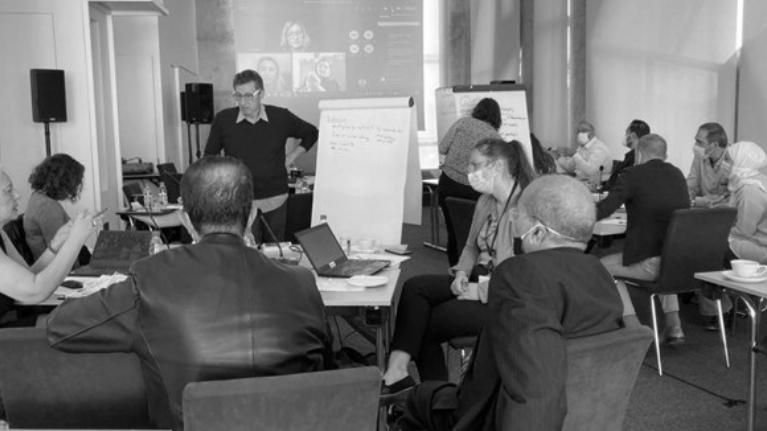
44th ILO/Cinterfor Technical Committee Meeting: Vocational training for sustainable development

44th ILO/Cinterfor Technical Committee Meeting: Vocational training for sustainable development

Kind:
Event
Start Date:
06 Aug 2019
End Date:
18 Jun 2026
Event Location:
Montevideo, Uruguay
EventType:
Language:

English

Slug
english
Identifier
skpEng
Language Version:
--
Sources:

ILO

The International Labour Organization is the tripartite U.N. agency that promotes Decent Work through employment, social security, labour standards and social dialogue. Its work on skills development is guided by the conceptual framework on Skills to improve productivity, employment growth, and development agreed in 2008 by representatives of Governments, Employers’ Associations and Workers’ Associations. Research, policy advice, and pilot projects and technical cooperation programmes to apply good practices in different circumstances across its 185 member States aims to boost the employability of workers, the productivity and competitiveness of enterprises, and the inclusiveness of economic growth. The ILO Secretariat in offices in 40 countries works with Ministries of Labour, employers’ organizations, and trade unions to integrate skills development into national and sector development strategies in order to better meet current labour market needs and to prepare for the jobs of the future; to expand access to employment-related training so that youth, persons with disabilities and other vulnerable groups are better able to acquire skills and secure productive and decent work; and to improve the ability of public employment services to provide career guidance, maintain labour exchange services, and deliver active labour market programmes.For more information regarding the ILO’s work on skills and employability go to: http://www.ilo.org/skills/lang--en/index.htm; for ILO/Cinterfor's Knowledge Management Plarform, see: http://www.oitcinterfor.org

Thumbnail
Identifier
skpILO
Slug
ilo
Topics:

Training quality and relevance

Thumbnail
Identifier
skpTrainQR
Slug
training-quality-and-relevance
Knowledge Products:

The Technical Committee Meeting is one of the most important events on vocational training in Latin America.

The Technical Committee Meeting is one of the most important events on vocational training in Latin America. It brings together representatives of national organizations and specialized entities in training and education for work in Latin America, the Caribbean, Spain and Cape Verde, representatives of employers 'and workers' organizations appointed by the ILO Governing Body, as well as observers of national and international cooperation agencies and authorities of other entities related to human resources development.

The 44th TCM will be held from 6 to 8 August in Montevideo, Uruguay, with the support of the Ministry of Labor and Social Security and the National Institute of Employment and Vocational Training of Uruguay. The central theme is: Vocational training for sustainable development, which will be addressed through various conferences with distinguished guests and thematic discussion panels.

The participation of around 200 representatives of the world of vocational training and education is expected. The official languages of the meeting will be Spanish, Portuguese and English. Simultaneous interpretations is foreseen during all sessions.

To learn more, click on the link provided below.

Subject Tags:

Apprenticeships

Slug
apprenticeships
Identifier
639

Lifelong learning

Slug
lifelong-learning
Identifier
400

Sustainable development

Slug
sustainable-development
Identifier
658

Vocational training

Slug
vocational-training
Identifier
124
Regions:

Americas

Region Image
Countries and territories:
Economic groups:
--

The future of manufacturing in Europe

The future of manufacturing in Europe

Type:
Document
Content Type:
The future of manufacturing in Europe
Language:

English

Slug
english
Identifier
skpEng
Sources:

Other sources

Experts from many international, regional and national agencies generously share their views, experiences and findings on skills, helping policy-makers among other stakeholders to understand the linkages between education, training and the world of work, and how to integrate skills into national development planning to promote employment and economic growth.

Thumbnail
Identifier
skpOSource
Slug
other-sources
Topics:

Anticipating and matching skills needs

Thumbnail

Anticipating and building skills for the future is essential to a rapidly changing labour market. This applies to changes in the types and levels of skills needed as well as in occupational and technical areas. Effective methods to anticipate future skills needs and avoid potential mismatches include: sustained dialogue between employers and trainers, coordination across government institutions, labour market information systems, employment services and performance reviews of training institutions. 

Identifier
skpAFSN
Slug
anticipating-and-matching-skills-needs
Knowledge Products:

Research papers

Working papers, reports, and other publications from international organizations, academic institutions and bilateral agencies. Research findings to stimulate informed debate on skills, employment and productivity issues. 

Thumbnail
Identifier
skpRPS
Slug
research-papers
Publication Date:
22 Jul 2019
The pilot project The Future of Manufacturing in Europe is an explorative and future-oriented study. It explores the future adoption of some key game-changing technologies and how this adoption can be promoted, even regionally. The analysis of implications for working life focuses primarily on tasks and skills, not only at the white-collar, tertiary-education level, but also for blue-collar occupations, including a focus on challenges facing national and company apprenticeship systems. The future orientation also includes quantitative estimates of the employment implications of the Paris Climate Agreement, of large increases in global tariffs and of radical automation. It also measures the return of previously offshored jobs to Europe. Other research examines how the deepening globalisation provides opportunities for small companies to engage in international supply chains. This final report summarises the 10 project reports, which are complemented by 47 case studies, 27 policy instruments and 4 associated publications.
Subject Tags:

Industrial development

Slug
industrial-development
Identifier
214

Industrial restructuring

Slug
industrial-restructuring
Identifier
215

Manufacturing

Slug
manufacturing
Identifier
216

Skills anticipation

Slug
skills-anticipation
Identifier
677
Regions:

Skills mismatch and productivity in the EU

Skills mismatch and productivity in the EU

Type:
Document
Content Type:
Skills mismatch and productivity in the EU
Language:

English

Slug
english
Identifier
skpEng
Sources:

Other sources

Experts from many international, regional and national agencies generously share their views, experiences and findings on skills, helping policy-makers among other stakeholders to understand the linkages between education, training and the world of work, and how to integrate skills into national development planning to promote employment and economic growth.

Thumbnail
Identifier
skpOSource
Slug
other-sources
Topics:

Career guidance and employment services

Thumbnail

Career guidance and counselling, career education and lifelong development of skills for employability are key for success in learning activities, effective career transitions, livelihood planning, entrepreneurship and in increasing labour market participation. They are instrumental in promoting skills utilization, recognition (RPL), as well as in improving enterprise human resource management.

Career development activities encompass a wide variety of support activities including career information and advice, counselling, work exposure (e.g. job shadowing, work experience periods), assessment, coaching, mentoring, professional networking, advocacy, basic and employability skills training (curricular and non-curricular) and entrepreneurship training. It is often an area which is fragmented across different ministries (e.g. education, TVET, employment, youth) requiring an effort to achieve the necessary coordination to provide adequate support to individuals during learning, employment and unemployment/inactivity periods.
 

Identifier
skpLMIES
Slug
career-guidance-and-employment-services
Knowledge Products:

Research papers

Working papers, reports, and other publications from international organizations, academic institutions and bilateral agencies. Research findings to stimulate informed debate on skills, employment and productivity issues. 

Thumbnail
Identifier
skpRPS
Slug
research-papers
Publication Date:
22 Jul 2019
This study examines the dynamics of different dimensions of skills mismatch and explores the empirical relationship between these skills mismatch measures and labour productivity.
Subject Tags:

Productivity

Slug
productivity
Identifier
188

Skills and training policy

Slug
skills-and-training-policy
Identifier
666

Skills mismatch

Slug
skills-mismatch
Identifier
654
Regions:

Adult Learning policy and provision in the Member States of the EU

Adult Learning policy and provision in the Member States of the EU

Type:
Document
Content Type:
Adult Learning policy and provision in the Member States of the EU
Language:

English

Slug
english
Identifier
skpEng
Sources:

Other sources

Experts from many international, regional and national agencies generously share their views, experiences and findings on skills, helping policy-makers among other stakeholders to understand the linkages between education, training and the world of work, and how to integrate skills into national development planning to promote employment and economic growth.

Thumbnail
Identifier
skpOSource
Slug
other-sources
Topics:

Lifelong learning

Thumbnail

There is a critical need for a greater overall investment in education and training, particularly in developing countries. Education and training investments should be closely linked to economic and employment growth strategies and programmes. Responsibility should be shared between the government (primary responsibility), enterprises, the social partners, and the individual. To make lifelong learning for all a reality, countries will need to make major reforms of their vocational and education and training systems. School-to-work schemes for young people should integrate education with workplace learning. Training systems need to become more flexible and responsive to rapidly changing skill requirements. Reforms should also focus on how learning can be facilitated, not just on training for specific occupational categories.

Identifier
skpPSLLL
Slug
lifelong-learning
Knowledge Products:

Research papers

Working papers, reports, and other publications from international organizations, academic institutions and bilateral agencies. Research findings to stimulate informed debate on skills, employment and productivity issues. 

Thumbnail
Identifier
skpRPS
Slug
research-papers
Publication Date:
22 Jul 2019
A synthesis of reports by country experts This synthesis report presents the current situation of national adult learning policies and systems across the EU-28 and brings together the findings from a set of country reports.

The paper reflects on the complex adult learning policy and financing frameworks, national targets and interventions, as well as their strengths and weaknesses and the reforms needed in the systems that are in place in Member States.
Subject Tags:

Financing training

Slug
financing-training
Identifier
673

Lifelong learning

Slug
lifelong-learning
Identifier
400
Regions:

25 hechos sobre la Formación Profesional en América Latina, el Caribe y España

25 hechos sobre la Formación Profesional en América Latina, el Caribe y España

Type:
Document
Content Type:
25 hechos sobre la Formación Profesional en América Latina, el Caribe y España
Language:

Spanish

Slug
spanish
Identifier
skpEsp
Sources:

ILO

The International Labour Organization is the tripartite U.N. agency that promotes Decent Work through employment, social security, labour standards and social dialogue. Its work on skills development is guided by the conceptual framework on Skills to improve productivity, employment growth, and development agreed in 2008 by representatives of Governments, Employers’ Associations and Workers’ Associations. Research, policy advice, and pilot projects and technical cooperation programmes to apply good practices in different circumstances across its 185 member States aims to boost the employability of workers, the productivity and competitiveness of enterprises, and the inclusiveness of economic growth. The ILO Secretariat in offices in 40 countries works with Ministries of Labour, employers’ organizations, and trade unions to integrate skills development into national and sector development strategies in order to better meet current labour market needs and to prepare for the jobs of the future; to expand access to employment-related training so that youth, persons with disabilities and other vulnerable groups are better able to acquire skills and secure productive and decent work; and to improve the ability of public employment services to provide career guidance, maintain labour exchange services, and deliver active labour market programmes.For more information regarding the ILO’s work on skills and employability go to: http://www.ilo.org/skills/lang--en/index.htm; for ILO/Cinterfor's Knowledge Management Plarform, see: http://www.oitcinterfor.org

Thumbnail
Identifier
skpILO
Slug
ilo
Topics:

Access to training

Thumbnail

Access for all to good quality education, vocational training and workplace learning is a fundamental principle of social cohesion and economic growth. Some groups of people may require targeted attention if they are to benefit from education, training and employment opportunities.  

This is particularly the case for disadvantaged youth, lower skilled workers, people with disabilities, and people in rural communities. The attractiveness of vocational education and training is enhanced when combined with entrepreneurship training and when public policies encourage utilization of higher skills by business. 
 

Identifier
skpATSU
Slug
access-to-training

Training quality and relevance

Thumbnail
Identifier
skpTrainQR
Slug
training-quality-and-relevance
Knowledge Products:

Promotional material

Presentations, discussion papers, meeting reports, promotional materials, videos, fact sheets, brochures and newsletters on skills development for employment.

Thumbnail
Identifier
skpAIM
Slug
promotional-material
Publication Date:
19 Jul 2019

La comparación de estadísticas de formación entre las instituciones de la región ha resultado particularmente difícil por no disponerse de unidades de medición estandarizadas e indicadores que puedan facilitar dicho cotejo. OIT/Cinterfor ha realizado el esfuerzo de organizar en ciertas categorías desagregadas la información compartida por estas instituciones, lo que permitió arribar a un conjunto de conclusiones que aquí se plantean.

Este material es producto de dicho análisis y sintetiza los hechos más destacados de la formación profesional en nuestra región durante 2017. Toma como fuente la información estadística de las instituciones de formación profesional recabada durante el año 2018, donde participaron 24 instituciones que representan a 17 países.

Subject Tags:

Financing training

Slug
financing-training
Identifier
673

TVET systems

Slug
tvet-systems
Identifier
661

Vocational training

Slug
vocational-training
Identifier
124
Regions:

Americas

Region Image

Compétences au service de l’emploi: Bulletin Juin 2019

Compétences au service de l’emploi: Bulletin Juin 2019

Type:
Newsletter
Start Date:
01 Jan 1970
Language:

French

Slug
french
Identifier
skpFrn
Sources:

ILO

The International Labour Organization is the tripartite U.N. agency that promotes Decent Work through employment, social security, labour standards and social dialogue. Its work on skills development is guided by the conceptual framework on Skills to improve productivity, employment growth, and development agreed in 2008 by representatives of Governments, Employers’ Associations and Workers’ Associations. Research, policy advice, and pilot projects and technical cooperation programmes to apply good practices in different circumstances across its 185 member States aims to boost the employability of workers, the productivity and competitiveness of enterprises, and the inclusiveness of economic growth. The ILO Secretariat in offices in 40 countries works with Ministries of Labour, employers’ organizations, and trade unions to integrate skills development into national and sector development strategies in order to better meet current labour market needs and to prepare for the jobs of the future; to expand access to employment-related training so that youth, persons with disabilities and other vulnerable groups are better able to acquire skills and secure productive and decent work; and to improve the ability of public employment services to provide career guidance, maintain labour exchange services, and deliver active labour market programmes.For more information regarding the ILO’s work on skills and employability go to: http://www.ilo.org/skills/lang--en/index.htm; for ILO/Cinterfor's Knowledge Management Plarform, see: http://www.oitcinterfor.org

Thumbnail
Identifier
skpILO
Slug
ilo
Topics:
Knowledge Products:

Promotional material

Presentations, discussion papers, meeting reports, promotional materials, videos, fact sheets, brochures and newsletters on skills development for employment.

Thumbnail
Identifier
skpAIM
Slug
promotional-material

Le bulletin mensuel Global KSP met en évidence les publications récemment téléchargées, les rapports, les articles de recherche, les vidéos et les événements à venir sur les compétences au service de l’emploi.

Pour vous abonner au KSP mondial par email cliquez sur " Abonnez-vous pour recevoir notre bulletin " au bas de la page ou envoyez-nous un courriel à: [email protected]

Subject Tags:
Countries and territories:
Economic groups:
--

The Nordic future of work: Drivers, institutions, and politics

The Nordic future of work: Drivers, institutions, and politics

Type:
Document
Content Type:
The Nordic future of work: Drivers, institutions, and politics
Language:

English

Slug
english
Identifier
skpEng
Sources:

Other sources

Experts from many international, regional and national agencies generously share their views, experiences and findings on skills, helping policy-makers among other stakeholders to understand the linkages between education, training and the world of work, and how to integrate skills into national development planning to promote employment and economic growth.

Thumbnail
Identifier
skpOSource
Slug
other-sources
Topics:

Anticipating and matching skills needs

Thumbnail

Anticipating and building skills for the future is essential to a rapidly changing labour market. This applies to changes in the types and levels of skills needed as well as in occupational and technical areas. Effective methods to anticipate future skills needs and avoid potential mismatches include: sustained dialogue between employers and trainers, coordination across government institutions, labour market information systems, employment services and performance reviews of training institutions. 

Identifier
skpAFSN
Slug
anticipating-and-matching-skills-needs
Knowledge Products:

Research papers

Working papers, reports, and other publications from international organizations, academic institutions and bilateral agencies. Research findings to stimulate informed debate on skills, employment and productivity issues. 

Thumbnail
Identifier
skpRPS
Slug
research-papers
Publication Date:
30 May 2019
First project report from 'The future of work: Opportunities and challenges for the Nordic models' This initial report describes the main drivers and trends expected to shape the future of work. It also reviews the main distinctions of the Nordic model and recent developments in Nordic working lives, pointing towards the kind of challenges the future of work may pose to the Nordic models. Too often, debates about the future narrowly focus on changes in technology. This report draws attention to the broader drivers and political-institutional frameworks influencing working life developments, aiming to spur debate about how the interaction of changes in demography, climate, globalization and digital technologies may influence Nordic working lives in the coming decades.
Subject Tags:

Climate change

Slug
climate-change
Identifier
610

Gender equality

Slug
gender-equality
Identifier
144

Technology

Slug
technology
Identifier
345
Regions:

Strategies to promote access to employment for all people

Strategies to promote access to employment for all people

Type:
Document
Content Type:
Strategies to promote access to employment for all people
Language:

English

Slug
english
Identifier
skpEng
Sources:

Other sources

Experts from many international, regional and national agencies generously share their views, experiences and findings on skills, helping policy-makers among other stakeholders to understand the linkages between education, training and the world of work, and how to integrate skills into national development planning to promote employment and economic growth.

Thumbnail
Identifier
skpOSource
Slug
other-sources
Topics:

Access to training

Thumbnail

Access for all to good quality education, vocational training and workplace learning is a fundamental principle of social cohesion and economic growth. Some groups of people may require targeted attention if they are to benefit from education, training and employment opportunities.  

This is particularly the case for disadvantaged youth, lower skilled workers, people with disabilities, and people in rural communities. The attractiveness of vocational education and training is enhanced when combined with entrepreneurship training and when public policies encourage utilization of higher skills by business. 
 

Identifier
skpATSU
Slug
access-to-training

Career guidance and employment services

Thumbnail

Career guidance and counselling, career education and lifelong development of skills for employability are key for success in learning activities, effective career transitions, livelihood planning, entrepreneurship and in increasing labour market participation. They are instrumental in promoting skills utilization, recognition (RPL), as well as in improving enterprise human resource management.

Career development activities encompass a wide variety of support activities including career information and advice, counselling, work exposure (e.g. job shadowing, work experience periods), assessment, coaching, mentoring, professional networking, advocacy, basic and employability skills training (curricular and non-curricular) and entrepreneurship training. It is often an area which is fragmented across different ministries (e.g. education, TVET, employment, youth) requiring an effort to achieve the necessary coordination to provide adequate support to individuals during learning, employment and unemployment/inactivity periods.
 

Identifier
skpLMIES
Slug
career-guidance-and-employment-services
Knowledge Products:

Policy and strategy

Recommendations and advice on resolving policy challenges related to skills development systems and their linkages to the world of work.  Concise syntheses of experience from the international organizations.

Thumbnail
Identifier
skpPolOp
Slug
policy-and-strategy
Publication Date:
09 May 2019
Policy paper The publication presents key recommendations to promote access to employment for all people as a pathway to social inclusion and full participation in society. It underlines how quality social services is the key between quality jobs and social inclusion efforts. The policy paper also provides examples of good practices implemented among Eurodiaconia’s member organisations. With this publication, Eurodiaconia aims to inspire other organisations within and outside its network to ensure a social market economy that promotes inclusive growth.
Subject Tags:
Regions:

Skills for the future: managing transition. Conference conclusions

Skills for the future: managing transition. Conference conclusions

Type:
Document
Content Type:
Skills for the future: managing transition. Conference conclusions
Language:

English

Slug
english
Identifier
skpEng
Sources:

Other sources

Experts from many international, regional and national agencies generously share their views, experiences and findings on skills, helping policy-makers among other stakeholders to understand the linkages between education, training and the world of work, and how to integrate skills into national development planning to promote employment and economic growth.

Thumbnail
Identifier
skpOSource
Slug
other-sources
Topics:

Anticipating and matching skills needs

Thumbnail

Anticipating and building skills for the future is essential to a rapidly changing labour market. This applies to changes in the types and levels of skills needed as well as in occupational and technical areas. Effective methods to anticipate future skills needs and avoid potential mismatches include: sustained dialogue between employers and trainers, coordination across government institutions, labour market information systems, employment services and performance reviews of training institutions. 

Identifier
skpAFSN
Slug
anticipating-and-matching-skills-needs
Knowledge Products:

Other knowledge products

Thumbnail
Identifier
skpOProduct
Slug
other-knowledge-products
Publication Date:
09 May 2019
Skills for the future: managing transition, an international conference hosted by the European Training Foundation in Turin (Italy) on 21-22 November 2018, brought together representatives of government, business and civil society from the ETF’s partner countries, the EU Member States, as well as the research community, and EU and international organisations. This was one of the first gatherings at which global debate on the future of skills took place in the context of the countries bordering the EU, which present a wide variety of economic, social and political structures and skills development systems. What follow are the main conclusions of the conference, in the light of discussions with the ETF’s partner countries and the European Commission’s own responses to the future of work, which prioritise digital skills, basic skills, key competences, inclusion and equity.
Subject Tags:
Regions:

Report of High-Level Expert Group on the Impact of the Digital Transformation on EU Labour Markets

Report of High-Level Expert Group on the Impact of the Digital Transformation on EU Labour Markets

Type:
Document
Content Type:
Report of High-Level Expert Group on the Impact of the Digital Transformation on EU Labour Markets
Language:

English

Slug
english
Identifier
skpEng
Sources:

Other sources

Experts from many international, regional and national agencies generously share their views, experiences and findings on skills, helping policy-makers among other stakeholders to understand the linkages between education, training and the world of work, and how to integrate skills into national development planning to promote employment and economic growth.

Thumbnail
Identifier
skpOSource
Slug
other-sources
Topics:

Anticipating and matching skills needs

Thumbnail

Anticipating and building skills for the future is essential to a rapidly changing labour market. This applies to changes in the types and levels of skills needed as well as in occupational and technical areas. Effective methods to anticipate future skills needs and avoid potential mismatches include: sustained dialogue between employers and trainers, coordination across government institutions, labour market information systems, employment services and performance reviews of training institutions. 

Identifier
skpAFSN
Slug
anticipating-and-matching-skills-needs
Knowledge Products:

Research papers

Working papers, reports, and other publications from international organizations, academic institutions and bilateral agencies. Research findings to stimulate informed debate on skills, employment and productivity issues. 

Thumbnail
Identifier
skpRPS
Slug
research-papers
Publication Date:
08 May 2019
Digitalisation is driving rapid changes in the labour market influencing the nature, quality and productivity of work. European leaders face the challenge of making use of these developments to foster economic growth and employment - while at the same time ensuring decent working conditions, social protection and equal opportunities for all. In light of these ongoing changes, the European Commission convened a group of ten High-Level Experts to discuss these challenges from their respective fields of expertise and provide innovative policy recommendations on how to address and overcome them.
Subject Tags:

Employability

Slug
employability
Identifier
643

Labour market information

Slug
labour-market-information
Identifier
684

Skills and training policy

Slug
skills-and-training-policy
Identifier
666

Skills anticipation

Slug
skills-anticipation
Identifier
677
Regions: