Green jobs

Slug
green-jobs
Identifier
623

Orientaciones de política: Transición a una economía mundial más verde – el desafío de las competencias laborales

Orientaciones de política: Transición a una economía mundial más verde – el desafío de las competencias laborales

Type:
Document
Content Type:
Orientaciones de política: Transición a una economía mundial más verde – el desafío de las competencias laborales
Language:

Spanish

Slug
spanish
Identifier
skpEsp
Sources:

ILO

The International Labour Organization is the tripartite U.N. agency that promotes Decent Work through employment, social security, labour standards and social dialogue. Its work on skills development is guided by the conceptual framework on Skills to improve productivity, employment growth, and development agreed in 2008 by representatives of Governments, Employers’ Associations and Workers’ Associations. Research, policy advice, and pilot projects and technical cooperation programmes to apply good practices in different circumstances across its 185 member States aims to boost the employability of workers, the productivity and competitiveness of enterprises, and the inclusiveness of economic growth. The ILO Secretariat in offices in 40 countries works with Ministries of Labour, employers’ organizations, and trade unions to integrate skills development into national and sector development strategies in order to better meet current labour market needs and to prepare for the jobs of the future; to expand access to employment-related training so that youth, persons with disabilities and other vulnerable groups are better able to acquire skills and secure productive and decent work; and to improve the ability of public employment services to provide career guidance, maintain labour exchange services, and deliver active labour market programmes.For more information regarding the ILO’s work on skills and employability go to: http://www.ilo.org/skills/lang--en/index.htm; for ILO/Cinterfor's Knowledge Management Plarform, see: http://www.oitcinterfor.org

Thumbnail
Identifier
skpILO
Slug
ilo
Topics:

Anticipating and matching skills needs

Thumbnail

Anticipating and building skills for the future is essential to a rapidly changing labour market. This applies to changes in the types and levels of skills needed as well as in occupational and technical areas. Effective methods to anticipate future skills needs and avoid potential mismatches include: sustained dialogue between employers and trainers, coordination across government institutions, labour market information systems, employment services and performance reviews of training institutions. 

Identifier
skpAFSN
Slug
anticipating-and-matching-skills-needs
Knowledge Products:

Policy and strategy

Recommendations and advice on resolving policy challenges related to skills development systems and their linkages to the world of work.  Concise syntheses of experience from the international organizations.

Thumbnail
Identifier
skpPolOp
Slug
policy-and-strategy
Publication Date:
22 Feb 2013

En esta reseña de orientaciones se llama, a la atención de los responsables de las políticas y los interlocutores sociales de los países desarrollados y en desarrollo sobre la importancia que reviste el desarrollo de competencias laborales para facilitar la transición a una economía más verde y aprovechar las oportunidades de empleo que entraña dicho proceso. Se basa en una investigación aplicada a políticas y a numerosos estudios de caso sobre diversas experiencias y buenas prácticas a nivel de países, realizados en colaboración con el Centro Europeo para el Desarrollo de la Formación Profesional (Cedefop) y la Comisión Europea.


Subject Tags:

Green jobs

Slug
green-jobs
Identifier
623

Skills anticipation

Slug
skills-anticipation
Identifier
677

Skills re-training

Slug
skills-re-training
Identifier
655

Sustainable development

Slug
sustainable-development
Identifier
658
Regions:

Trade unions and climate change: Workshop on climate change, its impacts on employment and labour markets

Trade unions and climate change: Workshop on climate change, its impacts on employment and labour markets

Type:
Document
Content Type:
Trade unions and climate change: Workshop on climate change, its impacts on employment and labour markets
Language:

English

Slug
english
Identifier
skpEng
Sources:

ILO

The International Labour Organization is the tripartite U.N. agency that promotes Decent Work through employment, social security, labour standards and social dialogue. Its work on skills development is guided by the conceptual framework on Skills to improve productivity, employment growth, and development agreed in 2008 by representatives of Governments, Employers’ Associations and Workers’ Associations. Research, policy advice, and pilot projects and technical cooperation programmes to apply good practices in different circumstances across its 185 member States aims to boost the employability of workers, the productivity and competitiveness of enterprises, and the inclusiveness of economic growth. The ILO Secretariat in offices in 40 countries works with Ministries of Labour, employers’ organizations, and trade unions to integrate skills development into national and sector development strategies in order to better meet current labour market needs and to prepare for the jobs of the future; to expand access to employment-related training so that youth, persons with disabilities and other vulnerable groups are better able to acquire skills and secure productive and decent work; and to improve the ability of public employment services to provide career guidance, maintain labour exchange services, and deliver active labour market programmes.For more information regarding the ILO’s work on skills and employability go to: http://www.ilo.org/skills/lang--en/index.htm; for ILO/Cinterfor's Knowledge Management Plarform, see: http://www.oitcinterfor.org

Thumbnail
Identifier
skpILO
Slug
ilo

Workers' organizations

Learning new skills and upgrading existing ones help workers maintain their employability and improve their standard of living. Trade unions play a key role in increasing workplace-based training opportunities. The Global KSP shares, among other resource items, case studies, good practices and research provided by trade unions that highlight their involvement in promoting training at individual workplaces, social dialogue and collective bargaining on skills issues, and participating in developing skills policies and strengthening training institutions.

Thumbnail
Identifier
skpWork
Slug
workers-organizations
Topics:

Anticipating and matching skills needs

Thumbnail

Anticipating and building skills for the future is essential to a rapidly changing labour market. This applies to changes in the types and levels of skills needed as well as in occupational and technical areas. Effective methods to anticipate future skills needs and avoid potential mismatches include: sustained dialogue between employers and trainers, coordination across government institutions, labour market information systems, employment services and performance reviews of training institutions. 

Identifier
skpAFSN
Slug
anticipating-and-matching-skills-needs

Participation of employers' and workers' organizations

Thumbnail

The world of learning and the world of work are separate but linked. While one involves learning, the other produces goods and services. Neither can thrive without the other. Strong partnerships between government, employers and workers help ensure the relevance of training to the changing needs of enterprises and labour markets. 

Identifier
skpPSP
Slug
participation-of-employers-and-workers-organizations
Knowledge Products:

Promotional material

Presentations, discussion papers, meeting reports, promotional materials, videos, fact sheets, brochures and newsletters on skills development for employment.

Thumbnail
Identifier
skpAIM
Slug
promotional-material
Publication Date:
18 Feb 2013
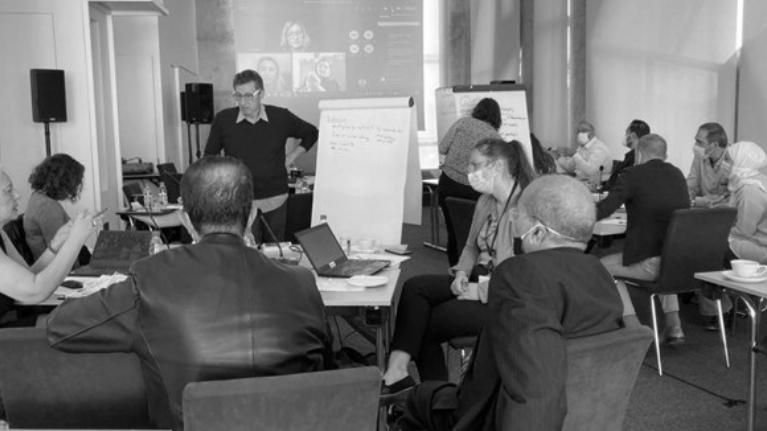
This is the report of the workshop on "Climate change, its impact on employment and labour markets" organised by the Global Union Research Network and coordinated by the ILO’s Bureau for Workers’ Activities and the International Trade Union Confederation. The aim of the workshop was to discuss academic research on the employment aspects of climate change and identify research gaps. This in turn would help the global trade union movement in its efforts to build cohesion and find creative and reliable ideas, solutions and examples to push for a socially just and environmentally sustainable society. Impacts of climate change on employment and new ‘green’ skills were among the issues addressed during the workshop.
Subject Tags:

Climate change

Slug
climate-change
Identifier
610

Green jobs

Slug
green-jobs
Identifier
623

Skills anticipation

Slug
skills-anticipation
Identifier
677

Skills re-training

Slug
skills-re-training
Identifier
655

Sustainable development

Slug
sustainable-development
Identifier
658
Regions:

ILO in the Arab States: A step forward

ILO in the Arab States: A step forward

Type:
Document
Content Type:
ILO in the Arab States: A step forward
Language:

English

Slug
english
Identifier
skpEng
Sources:

ILO

The International Labour Organization is the tripartite U.N. agency that promotes Decent Work through employment, social security, labour standards and social dialogue. Its work on skills development is guided by the conceptual framework on Skills to improve productivity, employment growth, and development agreed in 2008 by representatives of Governments, Employers’ Associations and Workers’ Associations. Research, policy advice, and pilot projects and technical cooperation programmes to apply good practices in different circumstances across its 185 member States aims to boost the employability of workers, the productivity and competitiveness of enterprises, and the inclusiveness of economic growth. The ILO Secretariat in offices in 40 countries works with Ministries of Labour, employers’ organizations, and trade unions to integrate skills development into national and sector development strategies in order to better meet current labour market needs and to prepare for the jobs of the future; to expand access to employment-related training so that youth, persons with disabilities and other vulnerable groups are better able to acquire skills and secure productive and decent work; and to improve the ability of public employment services to provide career guidance, maintain labour exchange services, and deliver active labour market programmes.For more information regarding the ILO’s work on skills and employability go to: http://www.ilo.org/skills/lang--en/index.htm; for ILO/Cinterfor's Knowledge Management Plarform, see: http://www.oitcinterfor.org

Thumbnail
Identifier
skpILO
Slug
ilo
Topics:

Access to training

Thumbnail

Access for all to good quality education, vocational training and workplace learning is a fundamental principle of social cohesion and economic growth. Some groups of people may require targeted attention if they are to benefit from education, training and employment opportunities.  

This is particularly the case for disadvantaged youth, lower skilled workers, people with disabilities, and people in rural communities. The attractiveness of vocational education and training is enhanced when combined with entrepreneurship training and when public policies encourage utilization of higher skills by business. 
 

Identifier
skpATSU
Slug
access-to-training

Gender equality

Thumbnail

Women represent both half of the world's population – and half the world's economic potential. Their participation in the labour market reduces poverty because they often invest 90 per cent of their income in the well-being, education and nutrition of their families. Yet labour force participation by women has stagnated at about 55 per cent globally since 2010. Moreover, women are disproportionately represented in precarious work – low-paid, low-skilled and insecure jobs.

Training plays an important role in the pursuit of equality of opportunity and treatment for women and men in the world of work. Yet women often lack access to technical and vocational education and training. Many also lack the basic functional skills, such as literacy and numeracy, to participate meaningfully in the work force. Overcoming this challenge requires the adoption of a life-cycle approach. This includes improving girls’ access to basic education; overcoming logistic, economic and cultural barriers to apprenticeships and to secondary and vocational training for young women; and meeting the training needs of women re-entering the labour market and of older women who have not had equal access to opportunities for lifelong learning.

Identifier
skpGenEqul
Slug
gender-equality

Training quality and relevance

Thumbnail
Identifier
skpTrainQR
Slug
training-quality-and-relevance
Knowledge Products:

Promotional material

Presentations, discussion papers, meeting reports, promotional materials, videos, fact sheets, brochures and newsletters on skills development for employment.

Thumbnail
Identifier
skpAIM
Slug
promotional-material
Publication Date:
13 Dec 2012
The document is bilingual (English and Arabic). The publication features success stories of several initiatives of skill training programmes implemented by the ILO in the Arab region. The programmes mentioned in the publication are as follows: the ILO Know About Business Programme, Women in TVET in Yemen, Youth Leadership Programme, Construction Sector in South Lebanon, and Green Jobs in Gaza.
Subject Tags:

Construction industry

Slug
construction-industry
Identifier
208

Entrepreneurship

Slug
entrepreneurship
Identifier
182

Globalization

Slug
globalization
Identifier
267

Green jobs

Slug
green-jobs
Identifier
623

Skills upgrading

Slug
skills-upgrading
Identifier
657

Vocational training

Slug
vocational-training
Identifier
124
Regions:

Arab States

Region Image
Countries and territories:

Promoting Decent Work in a Green Economy - ILO Background Note to Towards a Green Economy: Pathways to Sustainable Development and Poverty Eradication, UNEP

Promoting Decent Work in a Green Economy - ILO Background Note to Towards a Green Economy: Pathways to Sustainable Development and Poverty Eradication, UNEP

Type:
Document
Content Type:
Promoting Decent Work in a Green Economy - ILO Background Note to Towards a Green Economy: Pathways to Sustainable Development and Poverty Eradication, UNEP
Language:

English

Slug
english
Identifier
skpEng
Sources:

ILO

The International Labour Organization is the tripartite U.N. agency that promotes Decent Work through employment, social security, labour standards and social dialogue. Its work on skills development is guided by the conceptual framework on Skills to improve productivity, employment growth, and development agreed in 2008 by representatives of Governments, Employers’ Associations and Workers’ Associations. Research, policy advice, and pilot projects and technical cooperation programmes to apply good practices in different circumstances across its 185 member States aims to boost the employability of workers, the productivity and competitiveness of enterprises, and the inclusiveness of economic growth. The ILO Secretariat in offices in 40 countries works with Ministries of Labour, employers’ organizations, and trade unions to integrate skills development into national and sector development strategies in order to better meet current labour market needs and to prepare for the jobs of the future; to expand access to employment-related training so that youth, persons with disabilities and other vulnerable groups are better able to acquire skills and secure productive and decent work; and to improve the ability of public employment services to provide career guidance, maintain labour exchange services, and deliver active labour market programmes.For more information regarding the ILO’s work on skills and employability go to: http://www.ilo.org/skills/lang--en/index.htm; for ILO/Cinterfor's Knowledge Management Plarform, see: http://www.oitcinterfor.org

Thumbnail
Identifier
skpILO
Slug
ilo
Topics:

Anticipating and matching skills needs

Thumbnail

Anticipating and building skills for the future is essential to a rapidly changing labour market. This applies to changes in the types and levels of skills needed as well as in occupational and technical areas. Effective methods to anticipate future skills needs and avoid potential mismatches include: sustained dialogue between employers and trainers, coordination across government institutions, labour market information systems, employment services and performance reviews of training institutions. 

Identifier
skpAFSN
Slug
anticipating-and-matching-skills-needs
Knowledge Products:

Research papers

Working papers, reports, and other publications from international organizations, academic institutions and bilateral agencies. Research findings to stimulate informed debate on skills, employment and productivity issues. 

Thumbnail
Identifier
skpRPS
Slug
research-papers
Publication Date:
22 Nov 2012
This background paper expands on and complements the report ‘Towards a Green Economy: Pathways to Sustainable Development and Poverty Eradication’ issued by UNEP by focusing on the importance of decent work creation and poverty reduction in the transition towards a green economy. The aim of the paper is to discuss the implications of introducing new forms of production for the labour market and to highlight the provisions needed to better prepare the labour force. It seeks to provide guidance how the transition can induce the creation of more productive employment. It also calls for the development of inclusive social protection systems and the support of social dialogue, i.e. tripartite mechanisms for strategic discussion among stakeholders. The key stakeholders also include local communities likely to be affected by climate change.
Subject Tags:

Energy

Slug
energy
Identifier
340

Green jobs

Slug
green-jobs
Identifier
623

Green skills

Slug
green-skills
Identifier
645

Skills anticipation

Slug
skills-anticipation
Identifier
677

Skills upgrading

Slug
skills-upgrading
Identifier
657

Women

Slug
women
Identifier
318
Regions:

Skills supply and demand in Europe, Medium-term forecast up to 2020

Skills supply and demand in Europe, Medium-term forecast up to 2020

Type:
Document
Content Type:
Skills supply and demand in Europe, Medium-term forecast up to 2020
Language:

English

Slug
english
Identifier
skpEng
Sources:

Other sources

Experts from many international, regional and national agencies generously share their views, experiences and findings on skills, helping policy-makers among other stakeholders to understand the linkages between education, training and the world of work, and how to integrate skills into national development planning to promote employment and economic growth.

Thumbnail
Identifier
skpOSource
Slug
other-sources
Topics:

Anticipating and matching skills needs

Thumbnail

Anticipating and building skills for the future is essential to a rapidly changing labour market. This applies to changes in the types and levels of skills needed as well as in occupational and technical areas. Effective methods to anticipate future skills needs and avoid potential mismatches include: sustained dialogue between employers and trainers, coordination across government institutions, labour market information systems, employment services and performance reviews of training institutions. 

Identifier
skpAFSN
Slug
anticipating-and-matching-skills-needs

Career guidance and employment services

Thumbnail

Career guidance and counselling, career education and lifelong development of skills for employability are key for success in learning activities, effective career transitions, livelihood planning, entrepreneurship and in increasing labour market participation. They are instrumental in promoting skills utilization, recognition (RPL), as well as in improving enterprise human resource management.

Career development activities encompass a wide variety of support activities including career information and advice, counselling, work exposure (e.g. job shadowing, work experience periods), assessment, coaching, mentoring, professional networking, advocacy, basic and employability skills training (curricular and non-curricular) and entrepreneurship training. It is often an area which is fragmented across different ministries (e.g. education, TVET, employment, youth) requiring an effort to achieve the necessary coordination to provide adequate support to individuals during learning, employment and unemployment/inactivity periods.
 

Identifier
skpLMIES
Slug
career-guidance-and-employment-services
Knowledge Products:

Research papers

Working papers, reports, and other publications from international organizations, academic institutions and bilateral agencies. Research findings to stimulate informed debate on skills, employment and productivity issues. 

Thumbnail
Identifier
skpRPS
Slug
research-papers

Statistical information

Data produced by the international organizations and countries on trends in skills provision, demand, and employment outcomes to help inform policy-making and monitoring processes.

Thumbnail
Identifier
skpStatInfo
Slug
statistical-information
Publication Date:
22 Nov 2012
Cedefop’s new skill demand and supply forecast up to 2020 sets the scene for anticipating future trends. The aim of this report is to provide policy-makers, employers, skills providers, employment services and individual learners with better information to make more informed decisions. The European Centre for the Development of Vocational Training (Cedefop) is the European Union's reference centre for vocational education and training.
Subject Tags:

Green jobs

Slug
green-jobs
Identifier
623

Human resources development

Slug
human-resources-development
Identifier
118

Skills anticipation

Slug
skills-anticipation
Identifier
677
Regions:

Factsheet on Youth Unemployment among Women

Factsheet on Youth Unemployment among Women

Type:
Document
Content Type:
Factsheet on Youth Unemployment among Women
Language:

English

Slug
english
Identifier
skpEng
Sources:

Other sources

Experts from many international, regional and national agencies generously share their views, experiences and findings on skills, helping policy-makers among other stakeholders to understand the linkages between education, training and the world of work, and how to integrate skills into national development planning to promote employment and economic growth.

Thumbnail
Identifier
skpOSource
Slug
other-sources
Topics:

Access to training

Thumbnail

Access for all to good quality education, vocational training and workplace learning is a fundamental principle of social cohesion and economic growth. Some groups of people may require targeted attention if they are to benefit from education, training and employment opportunities.  

This is particularly the case for disadvantaged youth, lower skilled workers, people with disabilities, and people in rural communities. The attractiveness of vocational education and training is enhanced when combined with entrepreneurship training and when public policies encourage utilization of higher skills by business. 
 

Identifier
skpATSU
Slug
access-to-training

Lifelong learning

Thumbnail

There is a critical need for a greater overall investment in education and training, particularly in developing countries. Education and training investments should be closely linked to economic and employment growth strategies and programmes. Responsibility should be shared between the government (primary responsibility), enterprises, the social partners, and the individual. To make lifelong learning for all a reality, countries will need to make major reforms of their vocational and education and training systems. School-to-work schemes for young people should integrate education with workplace learning. Training systems need to become more flexible and responsive to rapidly changing skill requirements. Reforms should also focus on how learning can be facilitated, not just on training for specific occupational categories.

Identifier
skpPSLLL
Slug
lifelong-learning
Knowledge Products:

Promotional material

Presentations, discussion papers, meeting reports, promotional materials, videos, fact sheets, brochures and newsletters on skills development for employment.

Thumbnail
Identifier
skpAIM
Slug
promotional-material
Publication Date:
22 Nov 2012
Subject Tags:

Green jobs

Slug
green-jobs
Identifier
623

Lifelong learning

Slug
lifelong-learning
Identifier
400

Technology

Slug
technology
Identifier
345

Women

Slug
women
Identifier
318

Youth

Slug
youth
Identifier
319
Regions:

Sustainable development, green growth and quality employment: Realizing the potential for mutually reinforcing policies

Sustainable development, green growth and quality employment: Realizing the potential for mutually reinforcing policies

Type:
Document
Content Type:
Sustainable development, green growth and quality employment: Realizing the potential for mutually reinforcing policies
Language:

English

Slug
english
Identifier
skpEng
Sources:

ILO

The International Labour Organization is the tripartite U.N. agency that promotes Decent Work through employment, social security, labour standards and social dialogue. Its work on skills development is guided by the conceptual framework on Skills to improve productivity, employment growth, and development agreed in 2008 by representatives of Governments, Employers’ Associations and Workers’ Associations. Research, policy advice, and pilot projects and technical cooperation programmes to apply good practices in different circumstances across its 185 member States aims to boost the employability of workers, the productivity and competitiveness of enterprises, and the inclusiveness of economic growth. The ILO Secretariat in offices in 40 countries works with Ministries of Labour, employers’ organizations, and trade unions to integrate skills development into national and sector development strategies in order to better meet current labour market needs and to prepare for the jobs of the future; to expand access to employment-related training so that youth, persons with disabilities and other vulnerable groups are better able to acquire skills and secure productive and decent work; and to improve the ability of public employment services to provide career guidance, maintain labour exchange services, and deliver active labour market programmes.For more information regarding the ILO’s work on skills and employability go to: http://www.ilo.org/skills/lang--en/index.htm; for ILO/Cinterfor's Knowledge Management Plarform, see: http://www.oitcinterfor.org

Thumbnail
Identifier
skpILO
Slug
ilo

Information is gathered from other international organizations that promote skills development and the transition from education and training to work. The Interagency Group on Technical and Vocational Education and Training (IAG-TVET) was established in 2009 to share research findings, coordinate joint research endeavours, and improve collaboration among organizations working at the international and national levels.

Thumbnail
Identifier
skpIntOrg
Slug
international-organizations
Topics:

Anticipating and matching skills needs

Thumbnail

Anticipating and building skills for the future is essential to a rapidly changing labour market. This applies to changes in the types and levels of skills needed as well as in occupational and technical areas. Effective methods to anticipate future skills needs and avoid potential mismatches include: sustained dialogue between employers and trainers, coordination across government institutions, labour market information systems, employment services and performance reviews of training institutions. 

Identifier
skpAFSN
Slug
anticipating-and-matching-skills-needs

Skills policies and strategies

Thumbnail

Skills and employment policies should be viewed together.  The full value of one policy set is realized when it supports the objectives of the other.  For investments in education and training to yield maximum benefit to workers, enterprises, and economies, countries’ capacities for coordination is critical in three areas: connecting basic education to technical training and then to market entry; ensuring continuous communication between employers and training providers so that training meets the needs and aspirations of workers and enterprises, and integrating skills development policies with industrial, investment, trade, technology, environmental, rural and local development policies.

Identifier
skpPolConv
Slug
skills-policies-and-strategies
Knowledge Products:

Promotional material

Presentations, discussion papers, meeting reports, promotional materials, videos, fact sheets, brochures and newsletters on skills development for employment.

Thumbnail
Identifier
skpAIM
Slug
promotional-material
Publication Date:
20 Nov 2012
Background paper prepared by the ILO and the OECD for the Meeting of G20 Labour and Employment Ministers Guadalajara, 17–18 May 2012 This paper, jointly prepared by the ILO and the OECD, reviews the main short-term and longer term implications for the labour market of a transition towards sustainable development and green growth and highlights the main policy challenges for labour market and training policies. It begins with a short discussion of the relationship between green growth and good labour market performance, emphasizing the importance of finding win-win policy approaches that promote both of these critical policy goals. Attention then shifts to analysing the main impacts of green growth policies on the labour market. Finally, the note discusses how labour market and education/training policies can best contribute to a fast, efficient and just transition towards inclusive green growth in the G20 countries. Throughout, the aim is to identify key policy issues that labour market authorities would need to address in the context of a transition towards environmentally sustainable growth, rather than to provide definitive guidance for making policy choices.
Subject Tags:

Climate change

Slug
climate-change
Identifier
610

Green jobs

Slug
green-jobs
Identifier
623

Policy convergence

Slug
policy-convergence
Identifier
674

Skills anticipation

Slug
skills-anticipation
Identifier
677

Sustainable development

Slug
sustainable-development
Identifier
658
Regions:

Americas

Region Image

Arab States

Region Image

ICT skills and employment: New competences and jobs for a greener and smarter economy

ICT skills and employment: New competences and jobs for a greener and smarter economy

Type:
Document
Content Type:
ICT skills and employment: New competences and jobs for a greener and smarter economy
Language:

English

Slug
english
Identifier
skpEng
Sources:

Information is gathered from other international organizations that promote skills development and the transition from education and training to work. The Interagency Group on Technical and Vocational Education and Training (IAG-TVET) was established in 2009 to share research findings, coordinate joint research endeavours, and improve collaboration among organizations working at the international and national levels.

Thumbnail
Identifier
skpIntOrg
Slug
international-organizations
Topics:

Anticipating and matching skills needs

Thumbnail

Anticipating and building skills for the future is essential to a rapidly changing labour market. This applies to changes in the types and levels of skills needed as well as in occupational and technical areas. Effective methods to anticipate future skills needs and avoid potential mismatches include: sustained dialogue between employers and trainers, coordination across government institutions, labour market information systems, employment services and performance reviews of training institutions. 

Identifier
skpAFSN
Slug
anticipating-and-matching-skills-needs

Training quality and relevance

Thumbnail
Identifier
skpTrainQR
Slug
training-quality-and-relevance
Knowledge Products:

Research papers

Working papers, reports, and other publications from international organizations, academic institutions and bilateral agencies. Research findings to stimulate informed debate on skills, employment and productivity issues. 

Thumbnail
Identifier
skpRPS
Slug
research-papers
Publication Date:
20 Nov 2012
OECD Digital Economy Papers, No. 198 This report analyses developments in ICT-related skills and employment, focusing in particular on the potential of green ICTs for job creation in the post crisis era. It examines the skills and competences required for the new ICT-related jobs, and to what extent existing skill sets are sufficient or need to be upgraded. This requires, as a consequence, a discussion of labour market transformation induced by the increasing deployment of ICTs and ICT-intensive technologies including green technologies. It also requires a discussion on means of acquiring needed skills; namely through education, training, outsourcing, and migration. The report analyses OECD government policies and programmes promoting ICT-related skills and jobs, and in particular green ICT-related skills and jobs. It finds that the further creation of new jobs can only occur if the right mix of skills and competences are available in the labour market.
Subject Tags:

Green jobs

Slug
green-jobs
Identifier
623

Information and communication technologies

Slug
information-and-communication-technologies
Identifier
346

Skills anticipation

Slug
skills-anticipation
Identifier
677

Vocational training

Slug
vocational-training
Identifier
124
Regions:

Inclusive green growth: the pathway to sustainable development

Inclusive green growth: the pathway to sustainable development

Type:
Document
Content Type:
Inclusive green growth: the pathway to sustainable development
Language:

English

Slug
english
Identifier
skpEng
Sources:

Information is gathered from other international organizations that promote skills development and the transition from education and training to work. The Interagency Group on Technical and Vocational Education and Training (IAG-TVET) was established in 2009 to share research findings, coordinate joint research endeavours, and improve collaboration among organizations working at the international and national levels.

Thumbnail
Identifier
skpIntOrg
Slug
international-organizations
Topics:

Anticipating and matching skills needs

Thumbnail

Anticipating and building skills for the future is essential to a rapidly changing labour market. This applies to changes in the types and levels of skills needed as well as in occupational and technical areas. Effective methods to anticipate future skills needs and avoid potential mismatches include: sustained dialogue between employers and trainers, coordination across government institutions, labour market information systems, employment services and performance reviews of training institutions. 

Identifier
skpAFSN
Slug
anticipating-and-matching-skills-needs
Knowledge Products:

Research papers

Working papers, reports, and other publications from international organizations, academic institutions and bilateral agencies. Research findings to stimulate informed debate on skills, employment and productivity issues. 

Thumbnail
Identifier
skpRPS
Slug
research-papers
Publication Date:
20 Nov 2012
The report argues that sustained growth is necessary to achieve the urgent development needs of the world’s poor and that there is substantial scope for growing cleaner without growing slower. It recommends that countries make strategic investments and farsighted policy changes that acknowledge natural resource constraints and enable the world's poorest and most vulnerable to benefit from efficient, clean, and resilient growth. Chapter 4 of the report examines implications of green growth policies for labour markets and job creation and tackles the debate on whether green growth will create jobs. It finds that in order to smooth the impacts on labor markets of the transition to green growth, policy makers need to tackle potential skill shortages and impediments to worker mobility.
Subject Tags:

Green jobs

Slug
green-jobs
Identifier
623

Skills anticipation

Slug
skills-anticipation
Identifier
677

Sustainable development

Slug
sustainable-development
Identifier
658
Regions:

Green jobs: Towards decent work in a sustainable, low-carbon world

Green jobs: Towards decent work in a sustainable, low-carbon world

Type:
Document
Content Type:
Green jobs: Towards decent work in a sustainable, low-carbon world
Language:

English

Slug
english
Identifier
skpEng
Sources:

ILO

The International Labour Organization is the tripartite U.N. agency that promotes Decent Work through employment, social security, labour standards and social dialogue. Its work on skills development is guided by the conceptual framework on Skills to improve productivity, employment growth, and development agreed in 2008 by representatives of Governments, Employers’ Associations and Workers’ Associations. Research, policy advice, and pilot projects and technical cooperation programmes to apply good practices in different circumstances across its 185 member States aims to boost the employability of workers, the productivity and competitiveness of enterprises, and the inclusiveness of economic growth. The ILO Secretariat in offices in 40 countries works with Ministries of Labour, employers’ organizations, and trade unions to integrate skills development into national and sector development strategies in order to better meet current labour market needs and to prepare for the jobs of the future; to expand access to employment-related training so that youth, persons with disabilities and other vulnerable groups are better able to acquire skills and secure productive and decent work; and to improve the ability of public employment services to provide career guidance, maintain labour exchange services, and deliver active labour market programmes.For more information regarding the ILO’s work on skills and employability go to: http://www.ilo.org/skills/lang--en/index.htm; for ILO/Cinterfor's Knowledge Management Plarform, see: http://www.oitcinterfor.org

Thumbnail
Identifier
skpILO
Slug
ilo

Information is gathered from other international organizations that promote skills development and the transition from education and training to work. The Interagency Group on Technical and Vocational Education and Training (IAG-TVET) was established in 2009 to share research findings, coordinate joint research endeavours, and improve collaboration among organizations working at the international and national levels.

Thumbnail
Identifier
skpIntOrg
Slug
international-organizations
Topics:

Anticipating and matching skills needs

Thumbnail

Anticipating and building skills for the future is essential to a rapidly changing labour market. This applies to changes in the types and levels of skills needed as well as in occupational and technical areas. Effective methods to anticipate future skills needs and avoid potential mismatches include: sustained dialogue between employers and trainers, coordination across government institutions, labour market information systems, employment services and performance reviews of training institutions. 

Identifier
skpAFSN
Slug
anticipating-and-matching-skills-needs
Knowledge Products:

International standards

International conventions and recommendations and other international instruments on human resource and skills development. Strategy papers on the practical application of international standards from international organizations covering issues related to training, effective utilization and development of skills, and on linking skills to employment.

Thumbnail
Identifier
skpISSP
Slug
international-standards

Research papers

Working papers, reports, and other publications from international organizations, academic institutions and bilateral agencies. Research findings to stimulate informed debate on skills, employment and productivity issues. 

Thumbnail
Identifier
skpRPS
Slug
research-papers
Publication Date:
20 Nov 2012
This landmark report is the first comprehensive study on the emergence of a “green economy” and its impact on the world of work in the 21st century. It assembles evidence - quantitative, anecdotal, and conceptual—for currently existing green jobs in key economic sectors (renewable energy, buildings and construction, transportation, basic industry, agriculture, and forestry) and presents estimates for future green employment. The report recommends a number of pathways to a more sustainable future directing investment to low-cost measures that should be taken immediately including: assessing the potential for green jobs and monitoring progress to provide a framework for policy and investment; addressing the current skills bottleneck by meeting skill requirements because available technology and resources for investments can only be deployed effectively with qualified entrepreneurs and skilled workers; and ensuring individual enterprises’ and economic sectors’ contribution to reducing emissions of greenhouse gases with labour-management initiatives to green workplaces. The report was funded and commissioned by the UN Environment Programme (UNEP) under a joint Green Jobs Initiative with the International Labour Office (ILO), and the International Trade Union Confederation (ITUC) and the International Organization of Employers (IOE), which together represent millions of workers and employers worldwide. It was produced by the Worldwatch Institute, with technical assistance from the Cornell University Global Labour Institute.
Subject Tags:

Green jobs

Slug
green-jobs
Identifier
623

Skills anticipation

Slug
skills-anticipation
Identifier
677

Skills mismatch

Slug
skills-mismatch
Identifier
654

Skills upgrading

Slug
skills-upgrading
Identifier
657

Sustainable development

Slug
sustainable-development
Identifier
658
Regions:

Africa

Region Image

Americas

Region Image

Arab States

Region Image