Vocational Training and Rehabilitation of Drug Addicts: Challenges, Innovations, and Best Practices
Vocational Training and Rehabilitation of Drug Addicts: Challenges, Innovations, and Best Practices
Hindi
Other sources
Experts from many international, regional and national agencies generously share their views, experiences and findings on skills, helping policy-makers among other stakeholders to understand the linkages between education, training and the world of work, and how to integrate skills into national development planning to promote employment and economic growth.

Access to training

Access for all to good quality education, vocational training and workplace learning is a fundamental principle of social cohesion and economic growth. Some groups of people may require targeted attention if they are to benefit from education, training and employment opportunities.
This is particularly the case for disadvantaged youth, lower skilled workers, people with disabilities, and people in rural communities. The attractiveness of vocational education and training is enhanced when combined with entrepreneurship training and when public policies encourage utilization of higher skills by business.
Teachers, trainers and training organizations
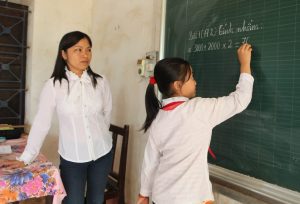
At the heart of any skills system are the managers and staff of training institutions who face considerable challenges to deliver quality programmes at a time of fiscal constraint. As the expectations placed on institutions continue to grow, managers and trainers are increasingly expected to deliver flexible, responsive and current programmes based on strong partnerships with local employers that provide good employment outcomes. Because of this, there is a need for constituents to build the capacity of their institutional workforce to meet the expectations placed upon them by demand driven systems.
Training quality and relevance

Work-based learning and skills utilization

Increasingly, countries around the world, at all levels of development are putting work-based learning, particularly apprenticeships, high on their policy agenda, recognizing its potential for reducing skills mismatch, meeting skills demand of a fast changing labour market, providing cost-effective training, promoting private sector development and smoothing transitions to the world of work.
Moreover, the issue of how skills are used in the workplace and how businesses engage with the local skills ecosystem are getting greater attention. It is increasingly recognized that workers who better use their skills are more likely to have greater job satisfaction, earn better wages and are more prepared to adapt to changes in the nature of work, while employers benefit from a more productive and innovative workforce, enabling them to maximise business performance and profitability.
Promoted by the Inter-Agency Career Guidance Working Group (ILO, UNESCO, World Bank, OECD, and other global partners), Global Career Month 2025 is being observed across the world to promote awareness, innovation, and collaboration in career development. As part of this initiative, Gunjan Organisation for Community Development, the State Level Coordinating Agency of the Ministry of Social Justice and Empowerment (Government of India), in association with the Himachal Pradesh Association of Career Educators (HP ACE), proposes to organise a 90-minute webinar on “Vocational Training and Rehabilitation of Drug Addicts: Challenges, Innovations, and Best Practices.”
Substance dependence remains a serious public health and social concern, and while medical treatment addresses immediate needs, long-term recovery requires sustainable livelihood pathways and social reintegration. Vocational rehabilitation is therefore critical for ensuring stability, dignity, and relapse prevention. However, personnel working in Integrated Rehabilitation Centres for Addicts (IRCAs) often face multiple challenges—limited employability among recovering clients, stigma from employers, fragmented institutional linkages, and insufficient market-relevant training opportunities.
This webinar aims to bring together IRCA professionals, practitioners, trainers, counsellors, community workers, and other stakeholders engaged in rehabilitation and skill development. It will provide a platform to share field experiences, emerging challenges, and effective models of vocational training, supported employment, and community-based reintegration. The discussion will also highlight possibilities for convergence with skill missions, industry partners, and government schemes. The overall intent is to enhance capacities, inspire collaborative solutions, and strengthen the ecosystem that supports recovery and livelihood restoration.
Time: 23 November 2025 at 11:00 AM - 12:30 PM (IST)
Place: Online
Asia and the Pacific