Promotional material

Presentations, discussion papers, meeting reports, promotional materials, videos, fact sheets, brochures and newsletters on skills development for employment.

Thumbnail
Identifier
skpAIM
Slug
promotional-material

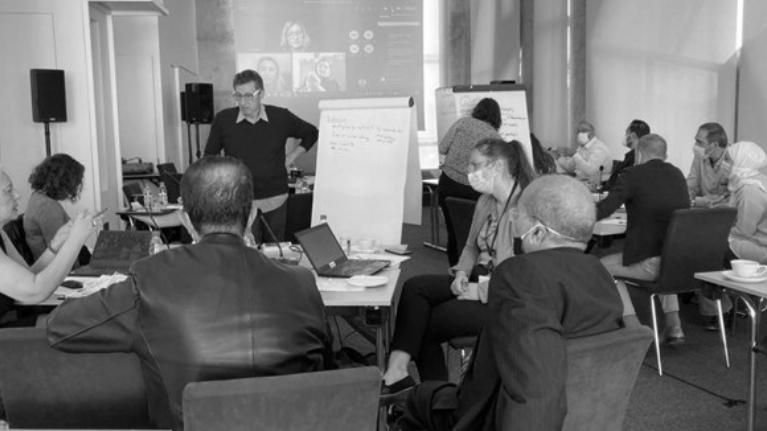
Managing the TVET institution: Computer simulation

Managing the TVET institution: Computer simulation

Type:
Document
Content Type:
Managing the TVET institution: Computer simulation
Language:

English

Slug
english
Identifier
skpEng
Sources:

Academic institutions

Research papers, synthesis reports, country and programme studies are collected from many academic institutions and national, regional and international professional associations.

Thumbnail
Identifier
skpAcaInst
Slug
academic-institutions

ILO

The International Labour Organization is the tripartite U.N. agency that promotes Decent Work through employment, social security, labour standards and social dialogue. Its work on skills development is guided by the conceptual framework on Skills to improve productivity, employment growth, and development agreed in 2008 by representatives of Governments, Employers’ Associations and Workers’ Associations. Research, policy advice, and pilot projects and technical cooperation programmes to apply good practices in different circumstances across its 185 member States aims to boost the employability of workers, the productivity and competitiveness of enterprises, and the inclusiveness of economic growth. The ILO Secretariat in offices in 40 countries works with Ministries of Labour, employers’ organizations, and trade unions to integrate skills development into national and sector development strategies in order to better meet current labour market needs and to prepare for the jobs of the future; to expand access to employment-related training so that youth, persons with disabilities and other vulnerable groups are better able to acquire skills and secure productive and decent work; and to improve the ability of public employment services to provide career guidance, maintain labour exchange services, and deliver active labour market programmes.For more information regarding the ILO’s work on skills and employability go to: http://www.ilo.org/skills/lang--en/index.htm; for ILO/Cinterfor's Knowledge Management Plarform, see: http://www.oitcinterfor.org

Thumbnail
Identifier
skpILO
Slug
ilo

Other sources

Experts from many international, regional and national agencies generously share their views, experiences and findings on skills, helping policy-makers among other stakeholders to understand the linkages between education, training and the world of work, and how to integrate skills into national development planning to promote employment and economic growth.

Thumbnail
Identifier
skpOSource
Slug
other-sources
Topics:

Anticipating and matching skills needs

Thumbnail

Anticipating and building skills for the future is essential to a rapidly changing labour market. This applies to changes in the types and levels of skills needed as well as in occupational and technical areas. Effective methods to anticipate future skills needs and avoid potential mismatches include: sustained dialogue between employers and trainers, coordination across government institutions, labour market information systems, employment services and performance reviews of training institutions. 

Identifier
skpAFSN
Slug
anticipating-and-matching-skills-needs
Knowledge Products:

Promotional material

Presentations, discussion papers, meeting reports, promotional materials, videos, fact sheets, brochures and newsletters on skills development for employment.

Thumbnail
Identifier
skpAIM
Slug
promotional-material
Publication Date:
20 May 2015
About the project

Goals: development of support mechanisms and training programmes for modern labour market demands that match the innovative economic development.

Target audience: managers of TVET institutions.

Project proposal: interactive course based on a computer simulation (face-to-face and distant formats).

Subject Tags:

G20

Slug
g20
Identifier
669

Information and communication technologies

Slug
information-and-communication-technologies
Identifier
346

Skills and training policy

Slug
skills-and-training-policy
Identifier
666

Skills anticipation

Slug
skills-anticipation
Identifier
677

Skills indicators

Slug
skills-indicators
Identifier
653

TVET systems

Slug
tvet-systems
Identifier
661

Vocational training

Slug
vocational-training
Identifier
124
Regions:

Краткое описание проекта: Применение стратегии профессиональной подготовки Группы двадцати.

Краткое описание проекта: Применение стратегии профессиональной подготовки Группы двадцати.

Type:
Document
Content Type:
Краткое описание проекта: Применение стратегии профессиональной подготовки Группы двадцати.
Language:

Russian

Slug
russian
Identifier
skpRus
Sources:

ILO

The International Labour Organization is the tripartite U.N. agency that promotes Decent Work through employment, social security, labour standards and social dialogue. Its work on skills development is guided by the conceptual framework on Skills to improve productivity, employment growth, and development agreed in 2008 by representatives of Governments, Employers’ Associations and Workers’ Associations. Research, policy advice, and pilot projects and technical cooperation programmes to apply good practices in different circumstances across its 185 member States aims to boost the employability of workers, the productivity and competitiveness of enterprises, and the inclusiveness of economic growth. The ILO Secretariat in offices in 40 countries works with Ministries of Labour, employers’ organizations, and trade unions to integrate skills development into national and sector development strategies in order to better meet current labour market needs and to prepare for the jobs of the future; to expand access to employment-related training so that youth, persons with disabilities and other vulnerable groups are better able to acquire skills and secure productive and decent work; and to improve the ability of public employment services to provide career guidance, maintain labour exchange services, and deliver active labour market programmes.For more information regarding the ILO’s work on skills and employability go to: http://www.ilo.org/skills/lang--en/index.htm; for ILO/Cinterfor's Knowledge Management Plarform, see: http://www.oitcinterfor.org

Thumbnail
Identifier
skpILO
Slug
ilo
Topics:

Anticipating and matching skills needs

Thumbnail

Anticipating and building skills for the future is essential to a rapidly changing labour market. This applies to changes in the types and levels of skills needed as well as in occupational and technical areas. Effective methods to anticipate future skills needs and avoid potential mismatches include: sustained dialogue between employers and trainers, coordination across government institutions, labour market information systems, employment services and performance reviews of training institutions. 

Identifier
skpAFSN
Slug
anticipating-and-matching-skills-needs

Training quality and relevance

Thumbnail
Identifier
skpTrainQR
Slug
training-quality-and-relevance
Knowledge Products:

Promotional material

Presentations, discussion papers, meeting reports, promotional materials, videos, fact sheets, brochures and newsletters on skills development for employment.

Thumbnail
Identifier
skpAIM
Slug
promotional-material
Publication Date:
20 May 2015

Сроки осуществления проекта: декабрь 2012 – ноябрь 2015 гг.

Основной принцип проекта заключается в гармонизации существующих подходов к профессиональной подготовке и потребностей рынка труда. Проект направлен на совершенствование работы системы профессионально-технического образования, улучшение его структуры и ориентирование учреждений ПТО на потребности рынка труда. Эти усилия нацелены на повышение квалификации кадров в тех секторах экономики, которые обладают существенным потенциалом для повышения экономического роста, производительности труда, а также возможностей расширения трудоустройства в странах проекта.

Subject Tags:

G20

Slug
g20
Identifier
669

G20 Training Strategy

Slug
g20-training-strategy
Identifier
644

Information and communication technologies

Slug
information-and-communication-technologies
Identifier
346

Skills and training policy

Slug
skills-and-training-policy
Identifier
666

Skills anticipation

Slug
skills-anticipation
Identifier
677

Vocational training

Slug
vocational-training
Identifier
124
Regions:

Project brief: Applying the G20 Training Strategy

Project brief: Applying the G20 Training Strategy

Type:
Document
Content Type:
Project brief: Applying the G20 Training Strategy
Language:

English

Slug
english
Identifier
skpEng
Sources:

ILO

The International Labour Organization is the tripartite U.N. agency that promotes Decent Work through employment, social security, labour standards and social dialogue. Its work on skills development is guided by the conceptual framework on Skills to improve productivity, employment growth, and development agreed in 2008 by representatives of Governments, Employers’ Associations and Workers’ Associations. Research, policy advice, and pilot projects and technical cooperation programmes to apply good practices in different circumstances across its 185 member States aims to boost the employability of workers, the productivity and competitiveness of enterprises, and the inclusiveness of economic growth. The ILO Secretariat in offices in 40 countries works with Ministries of Labour, employers’ organizations, and trade unions to integrate skills development into national and sector development strategies in order to better meet current labour market needs and to prepare for the jobs of the future; to expand access to employment-related training so that youth, persons with disabilities and other vulnerable groups are better able to acquire skills and secure productive and decent work; and to improve the ability of public employment services to provide career guidance, maintain labour exchange services, and deliver active labour market programmes.For more information regarding the ILO’s work on skills and employability go to: http://www.ilo.org/skills/lang--en/index.htm; for ILO/Cinterfor's Knowledge Management Plarform, see: http://www.oitcinterfor.org

Thumbnail
Identifier
skpILO
Slug
ilo
Topics:

Anticipating and matching skills needs

Thumbnail

Anticipating and building skills for the future is essential to a rapidly changing labour market. This applies to changes in the types and levels of skills needed as well as in occupational and technical areas. Effective methods to anticipate future skills needs and avoid potential mismatches include: sustained dialogue between employers and trainers, coordination across government institutions, labour market information systems, employment services and performance reviews of training institutions. 

Identifier
skpAFSN
Slug
anticipating-and-matching-skills-needs

Training quality and relevance

Thumbnail
Identifier
skpTrainQR
Slug
training-quality-and-relevance
Knowledge Products:

Promotional material

Presentations, discussion papers, meeting reports, promotional materials, videos, fact sheets, brochures and newsletters on skills development for employment.

Thumbnail
Identifier
skpAIM
Slug
promotional-material
Publication Date:
19 May 2015

Duration: December 2012 – November 2015

The key essence of this project is to correlate the existing approaches to training and the needs of the labour market. The program is aimed at improving the functioning of the system of vocational education, by improving the structure and orientation of TVET institutions in the labour market. Efforts are aimed at skills development in sectors that have a significant potential to increase economic growth, productivity, and expand employment opportunities.

Subject Tags:

G20

Slug
g20
Identifier
669

G20 Training Strategy

Slug
g20-training-strategy
Identifier
644

Information and communication technologies

Slug
information-and-communication-technologies
Identifier
346

Skills and training policy

Slug
skills-and-training-policy
Identifier
666

Skills anticipation

Slug
skills-anticipation
Identifier
677

Vocational training

Slug
vocational-training
Identifier
124
Regions:

Using technology foresights for identifying future skills needs

Using technology foresights for identifying future skills needs

Type:
Document
Content Type:
Using technology foresights for identifying future skills needs
Language:

English

Slug
english
Identifier
skpEng
Sources:

Academic institutions

Research papers, synthesis reports, country and programme studies are collected from many academic institutions and national, regional and international professional associations.

Thumbnail
Identifier
skpAcaInst
Slug
academic-institutions

ILO

The International Labour Organization is the tripartite U.N. agency that promotes Decent Work through employment, social security, labour standards and social dialogue. Its work on skills development is guided by the conceptual framework on Skills to improve productivity, employment growth, and development agreed in 2008 by representatives of Governments, Employers’ Associations and Workers’ Associations. Research, policy advice, and pilot projects and technical cooperation programmes to apply good practices in different circumstances across its 185 member States aims to boost the employability of workers, the productivity and competitiveness of enterprises, and the inclusiveness of economic growth. The ILO Secretariat in offices in 40 countries works with Ministries of Labour, employers’ organizations, and trade unions to integrate skills development into national and sector development strategies in order to better meet current labour market needs and to prepare for the jobs of the future; to expand access to employment-related training so that youth, persons with disabilities and other vulnerable groups are better able to acquire skills and secure productive and decent work; and to improve the ability of public employment services to provide career guidance, maintain labour exchange services, and deliver active labour market programmes.For more information regarding the ILO’s work on skills and employability go to: http://www.ilo.org/skills/lang--en/index.htm; for ILO/Cinterfor's Knowledge Management Plarform, see: http://www.oitcinterfor.org

Thumbnail
Identifier
skpILO
Slug
ilo
Topics:

Anticipating and matching skills needs

Thumbnail

Anticipating and building skills for the future is essential to a rapidly changing labour market. This applies to changes in the types and levels of skills needed as well as in occupational and technical areas. Effective methods to anticipate future skills needs and avoid potential mismatches include: sustained dialogue between employers and trainers, coordination across government institutions, labour market information systems, employment services and performance reviews of training institutions. 

Identifier
skpAFSN
Slug
anticipating-and-matching-skills-needs
Knowledge Products:

Promotional material

Presentations, discussion papers, meeting reports, promotional materials, videos, fact sheets, brochures and newsletters on skills development for employment.

Thumbnail
Identifier
skpAIM
Slug
promotional-material
Publication Date:
13 May 2015

Project: Applying the G20 Training Strategy

The problem of identifying future skills needs is becoming more and more acute in the context of the current dynamics of the global economy. In the turbulent times the speed of change is growing while the global competition in numerous sectors is further becoming tighter, with former leaders leaving and new actors joining the game. To avoid disorientation caused by the pace of the economic globalization, governments need to look forward to the long-term development of the critical sectors of the national economy. In particular, of interest are the technology-driven industries – as the focal points concentrating research and development, foreign direct investment, talent and cutting-edge technology. The use of technologies increases labour productivity and economic competitiveness and may potentially fuel growth with a positive impact on employment. The technology can partially substitute the labour thus influencing the structure of the demand: skill-intensive jobs become more sought-after while jobs with routine tasks can be fully substituted by the technological solutions.

With the launch of Skills Foresight project under the auspices of the G20 Training Strategy, an attempt was made to bridge the two areas of research and planning to introduce a technology foresight-based method of skills anticipation built around international best practices. One of the key landmarks of the project was the Global Workshop “Using Technology Foresights for Identifying Future Skills Needs” which featured leading skills anticipation and technology foresight experts across the globe. The workshop results are presented in this publication.

Subject Tags:

G20

Slug
g20
Identifier
669

G20 Training Strategy

Slug
g20-training-strategy
Identifier
644

Skills and training policy

Slug
skills-and-training-policy
Identifier
666

Skills anticipation

Slug
skills-anticipation
Identifier
677

Skills mismatch

Slug
skills-mismatch
Identifier
654

Skills re-training

Slug
skills-re-training
Identifier
655

Skills upgrading

Slug
skills-upgrading
Identifier
657
Regions:

Vocational education and training in European development cooperation

Vocational education and training in European development cooperation

Type:
Document
Content Type:
Vocational education and training in European development cooperation
Language:

English

Slug
english
Identifier
skpEng
Sources:

Other sources

Experts from many international, regional and national agencies generously share their views, experiences and findings on skills, helping policy-makers among other stakeholders to understand the linkages between education, training and the world of work, and how to integrate skills into national development planning to promote employment and economic growth.

Thumbnail
Identifier
skpOSource
Slug
other-sources
Topics:

Training quality and relevance

Thumbnail
Identifier
skpTrainQR
Slug
training-quality-and-relevance
Knowledge Products:

International standards

International conventions and recommendations and other international instruments on human resource and skills development. Strategy papers on the practical application of international standards from international organizations covering issues related to training, effective utilization and development of skills, and on linking skills to employment.

Thumbnail
Identifier
skpISSP
Slug
international-standards

Promotional material

Presentations, discussion papers, meeting reports, promotional materials, videos, fact sheets, brochures and newsletters on skills development for employment.

Thumbnail
Identifier
skpAIM
Slug
promotional-material
Publication Date:
12 May 2015
Vocational Education and Training (VET)1 refers to ‘learning pathways which aim to equip people with knowledge, know-how, skills and/or competences required in particular occupations or more broadly in the labour market’ for the jobs of today and tomorrow. High-quality vocational education and training systems that have a strong work-based learning element facilitate young people’s transition to work and can contribute to reducing unemployment and supporting economic development. VET is also a powerful means of empowering people to develop their full capabilities, enabling them to seize social and employment opportunities, and increasing the productivity of both workers and enterprises. Better education and training is also necessary for (although it does not guarantee) decent work and socially sustainable, fair growth.

VET and skills policies include formal, non-formal and informal vocational learning, workplace and work-based learning, and other learning opportunities in the formal and informal economies. These policies support a life-long learning approach to economic growth, and good employment and social objectives. This paper sets out the concepts that underlie the preparation of VET reforms and other VET-related projects by EU Delegations or teams within the European Commission.
Subject Tags:

Skills and training policy

Slug
skills-and-training-policy
Identifier
666

TVET systems

Slug
tvet-systems
Identifier
661

Vocational training

Slug
vocational-training
Identifier
124
Regions:

Shifting sands in labour markets mean greater inequalities

Shifting sands in labour markets mean greater inequalities

Type:
Document
Content Type:
Shifting sands in labour markets mean greater inequalities
Language:

Spanish

Slug
spanish
Identifier
skpEsp
Sources:

ILO

The International Labour Organization is the tripartite U.N. agency that promotes Decent Work through employment, social security, labour standards and social dialogue. Its work on skills development is guided by the conceptual framework on Skills to improve productivity, employment growth, and development agreed in 2008 by representatives of Governments, Employers’ Associations and Workers’ Associations. Research, policy advice, and pilot projects and technical cooperation programmes to apply good practices in different circumstances across its 185 member States aims to boost the employability of workers, the productivity and competitiveness of enterprises, and the inclusiveness of economic growth. The ILO Secretariat in offices in 40 countries works with Ministries of Labour, employers’ organizations, and trade unions to integrate skills development into national and sector development strategies in order to better meet current labour market needs and to prepare for the jobs of the future; to expand access to employment-related training so that youth, persons with disabilities and other vulnerable groups are better able to acquire skills and secure productive and decent work; and to improve the ability of public employment services to provide career guidance, maintain labour exchange services, and deliver active labour market programmes.For more information regarding the ILO’s work on skills and employability go to: http://www.ilo.org/skills/lang--en/index.htm; for ILO/Cinterfor's Knowledge Management Plarform, see: http://www.oitcinterfor.org

Thumbnail
Identifier
skpILO
Slug
ilo
Topics:

Anticipating and matching skills needs

Thumbnail

Anticipating and building skills for the future is essential to a rapidly changing labour market. This applies to changes in the types and levels of skills needed as well as in occupational and technical areas. Effective methods to anticipate future skills needs and avoid potential mismatches include: sustained dialogue between employers and trainers, coordination across government institutions, labour market information systems, employment services and performance reviews of training institutions. 

Identifier
skpAFSN
Slug
anticipating-and-matching-skills-needs

Youth employability

Thumbnail

Globally, nearly 68 million young women and men are looking for and available for work,  and an estimated 123 million young people are working but living in poverty. The number who are not in employment, education or training (NEET) stands at 267 million, a majority of whom are young women. Significantly, young people are three times as likely as adults (25 years and older) to be unemployed.

Skills development is a primary means of enabling young people to make a smooth transition to work. A comprehensive approach is required to integrate young women and men in the labour market, including relevant and quality skills training, labour market information, career guidance and employment services, recognition of prior learning, incorporating entrepreneurship with training and effective skills forecasting. Improved basic education and core work skills are particularly important to enable youth to engage in lifelong learning as well as transition to the labour market. 

Identifier
skpYoEmp
Slug
youth-employability
Knowledge Products:

Promotional material

Presentations, discussion papers, meeting reports, promotional materials, videos, fact sheets, brochures and newsletters on skills development for employment.

Thumbnail
Identifier
skpAIM
Slug
promotional-material
Publication Date:
26 Mar 2015

According to the International Labour Organization’s World Employment and Social Outlook, middle-skilled jobs like accounting and clerical work are declining. That’s because, in our globalized economies, many of these jobs can now be done by computers. So where are the jobs now?

ILO Economist Christian Viegelahn explains that many jobs can now be found at opposite ends of the skills ladder:

“Particularly in developed economies, the share of low-skilled, non-routine jobs, such as security personnel and some personal care workers, and high-skilled non-routine cognitive jobs, such as lawyers and software engineers, has increased.”

Subject Tags:

Economic growth

Slug
economic-growth
Identifier
166

Economic recovery

Slug
economic-recovery
Identifier
667

Education and training

Slug
education-and-training
Identifier
116

Employability

Slug
employability
Identifier
643

Skills mismatch

Slug
skills-mismatch
Identifier
654
Regions:

iMENA-Learning from the innovation policy experience in Eastern Europe, Korea and Turkey

iMENA-Learning from the innovation policy experience in Eastern Europe, Korea and Turkey

Type:
Document
Content Type:
iMENA-Learning from the innovation policy experience in Eastern Europe, Korea and Turkey
Language:

English

Slug
english
Identifier
skpEng
Sources:

International organizations

Information is gathered from other international organizations that promote skills development and the transition from education and training to work. The Interagency Group on Technical and Vocational Education and Training (IAG-TVET) was established in 2009 to share research findings, coordinate joint research endeavours, and improve collaboration among organizations working at the international and national levels.

Thumbnail
Identifier
skpIntOrg
Slug
international-organizations
Topics:

Other topic

Thumbnail
Identifier
skpOIssue
Slug
other-topic
Knowledge Products:

Promotional material

Presentations, discussion papers, meeting reports, promotional materials, videos, fact sheets, brochures and newsletters on skills development for employment.

Thumbnail
Identifier
skpAIM
Slug
promotional-material
Publication Date:
15 Mar 2015

Innovation is often touted as a key component in unleashing private sector growth and the dynamism necessary for solving the Middle East and North Africa (MENA) region's employment challenges. The region's innovation strategy identifies the major development challenges including youth unemployment, low diversification of exports, low share of medium and high tech exports, and the need to move from privilege to competition. The MENA region does not perform well on innovation and education indicators, and scores below the world average on the knowledge index (2011). Innovation policies should first focus on improving the business environment, innovation finance, and skills. While developing the innovation policy framework, it will be important to leverage international linkages and to focus on promoting inclusive innovation. MENA's innovation policy agenda will be country specific and difficult to operationalize.

Subject Tags:

Education and training

Slug
education-and-training
Identifier
116

Entrepreneurship

Slug
entrepreneurship
Identifier
182
Regions:

ILO Director General: How can we create decent jobs in the digital age?

ILO Director General: How can we create decent jobs in the digital age?

Type:
Document
Content Type:
ILO Director General: How can we create decent jobs in the digital age?
Language:

English

Slug
english
Identifier
skpEng
Sources:

ILO

The International Labour Organization is the tripartite U.N. agency that promotes Decent Work through employment, social security, labour standards and social dialogue. Its work on skills development is guided by the conceptual framework on Skills to improve productivity, employment growth, and development agreed in 2008 by representatives of Governments, Employers’ Associations and Workers’ Associations. Research, policy advice, and pilot projects and technical cooperation programmes to apply good practices in different circumstances across its 185 member States aims to boost the employability of workers, the productivity and competitiveness of enterprises, and the inclusiveness of economic growth. The ILO Secretariat in offices in 40 countries works with Ministries of Labour, employers’ organizations, and trade unions to integrate skills development into national and sector development strategies in order to better meet current labour market needs and to prepare for the jobs of the future; to expand access to employment-related training so that youth, persons with disabilities and other vulnerable groups are better able to acquire skills and secure productive and decent work; and to improve the ability of public employment services to provide career guidance, maintain labour exchange services, and deliver active labour market programmes.For more information regarding the ILO’s work on skills and employability go to: http://www.ilo.org/skills/lang--en/index.htm; for ILO/Cinterfor's Knowledge Management Plarform, see: http://www.oitcinterfor.org

Thumbnail
Identifier
skpILO
Slug
ilo
Topics:

Anticipating and matching skills needs

Thumbnail

Anticipating and building skills for the future is essential to a rapidly changing labour market. This applies to changes in the types and levels of skills needed as well as in occupational and technical areas. Effective methods to anticipate future skills needs and avoid potential mismatches include: sustained dialogue between employers and trainers, coordination across government institutions, labour market information systems, employment services and performance reviews of training institutions. 

Identifier
skpAFSN
Slug
anticipating-and-matching-skills-needs
Knowledge Products:

Promotional material

Presentations, discussion papers, meeting reports, promotional materials, videos, fact sheets, brochures and newsletters on skills development for employment.

Thumbnail
Identifier
skpAIM
Slug
promotional-material
Publication Date:
19 Feb 2015
World Economic Forum Blog ILO Director-General Guy Ryder attended the annual meeting in Davos, and was a panel member in the session entitled Employment: Mind the Gap.
Subject Tags:

Skills mismatch

Slug
skills-mismatch
Identifier
654

Technology

Slug
technology
Identifier
345
Regions:

Skillset and Match

Skillset and Match

Type:
Document
Content Type:
Skillset and Match
Language:
Sources:

Other sources

Experts from many international, regional and national agencies generously share their views, experiences and findings on skills, helping policy-makers among other stakeholders to understand the linkages between education, training and the world of work, and how to integrate skills into national development planning to promote employment and economic growth.

Thumbnail
Identifier
skpOSource
Slug
other-sources
Topics:

Anticipating and matching skills needs

Thumbnail

Anticipating and building skills for the future is essential to a rapidly changing labour market. This applies to changes in the types and levels of skills needed as well as in occupational and technical areas. Effective methods to anticipate future skills needs and avoid potential mismatches include: sustained dialogue between employers and trainers, coordination across government institutions, labour market information systems, employment services and performance reviews of training institutions. 

Identifier
skpAFSN
Slug
anticipating-and-matching-skills-needs
Knowledge Products:

Promotional material

Presentations, discussion papers, meeting reports, promotional materials, videos, fact sheets, brochures and newsletters on skills development for employment.

Thumbnail
Identifier
skpAIM
Slug
promotional-material
Publication Date:
17 Feb 2015

Cedefop’s magazine promoting learning for work

The January 2015 issue contains interviews, features, news from EU Member States and information on new publications.

Highlights

Message: Commissioner for Employment, Social Affairs, Skills and Labour Mobility Marianne Thyssen

Interview: ‘Old roots for new routes’ – Cedefop Director James Calleja talks about the agency’s 40th anniversary and looks ahead to its future role

Feature: EuroSkills – win-win for young people and vocational training (including interviews with participants, delegates and WorldSkills Europe President Jos de Goey)

Interview: Cedefop’s Sylvie Bousquet on ReferNet, Europe’s network for vocational training

Member States: Luxembourg assesses vocational education and training initiatives

Feature: Accessible Europass.

Subject Tags:

School-to-work transition

Slug
school-to-work-transition
Identifier
652

Skills and training policy

Slug
skills-and-training-policy
Identifier
666

Skills anticipation

Slug
skills-anticipation
Identifier
677

Vocational training

Slug
vocational-training
Identifier
124
Regions:

Resource guide: Gender mainstreaming into technical and vocational education and training in Bangladesh

Resource guide: Gender mainstreaming into technical and vocational education and training in Bangladesh

Type:
Document
Content Type:
Resource guide: Gender mainstreaming into technical and vocational education and training in Bangladesh
Language:

English

Slug
english
Identifier
skpEng
Sources:

Governments

Governments hold a wealth of knowledge on skills development, and are increasingly realizing the value of learning from each others’ experiences. Their policy documents, programme evaluations, and research findings contain their experience and ideas on how to better link skills to employment

Thumbnail
Identifier
skpGov
Slug
governments

ILO

The International Labour Organization is the tripartite U.N. agency that promotes Decent Work through employment, social security, labour standards and social dialogue. Its work on skills development is guided by the conceptual framework on Skills to improve productivity, employment growth, and development agreed in 2008 by representatives of Governments, Employers’ Associations and Workers’ Associations. Research, policy advice, and pilot projects and technical cooperation programmes to apply good practices in different circumstances across its 185 member States aims to boost the employability of workers, the productivity and competitiveness of enterprises, and the inclusiveness of economic growth. The ILO Secretariat in offices in 40 countries works with Ministries of Labour, employers’ organizations, and trade unions to integrate skills development into national and sector development strategies in order to better meet current labour market needs and to prepare for the jobs of the future; to expand access to employment-related training so that youth, persons with disabilities and other vulnerable groups are better able to acquire skills and secure productive and decent work; and to improve the ability of public employment services to provide career guidance, maintain labour exchange services, and deliver active labour market programmes.For more information regarding the ILO’s work on skills and employability go to: http://www.ilo.org/skills/lang--en/index.htm; for ILO/Cinterfor's Knowledge Management Plarform, see: http://www.oitcinterfor.org

Thumbnail
Identifier
skpILO
Slug
ilo
Topics:

Access to training

Thumbnail

Access for all to good quality education, vocational training and workplace learning is a fundamental principle of social cohesion and economic growth. Some groups of people may require targeted attention if they are to benefit from education, training and employment opportunities.  

This is particularly the case for disadvantaged youth, lower skilled workers, people with disabilities, and people in rural communities. The attractiveness of vocational education and training is enhanced when combined with entrepreneurship training and when public policies encourage utilization of higher skills by business. 
 

Identifier
skpATSU
Slug
access-to-training

Other topic

Thumbnail
Identifier
skpOIssue
Slug
other-topic
Knowledge Products:

Promotional material

Presentations, discussion papers, meeting reports, promotional materials, videos, fact sheets, brochures and newsletters on skills development for employment.

Thumbnail
Identifier
skpAIM
Slug
promotional-material
Publication Date:
26 Nov 2014
An initiative of the Government of Bangladesh with assistance by the International Labour Organisation and funding by the European Union. The main purpose of this Resource Guide is to provide guidance, practical how-to tools and available information on technical resources to support the task of operationalizing the National Strategy for Promoting Gender Equality within technical and vocational education and training (TVET) institutions. More specifically, the Guide focuses on three objectives:
1. To facilitate a clear understanding of key barriers to female participation from a gender perspective and analyse their implications in women’s employment and economic empowerment;
2. To provide practical tools and guidance on how to mainstream gender effectively into the TVET institutional structures, systems, programmes and activities; and
3. To provide information on available technical resources to strengthen the capacity of TVET gender focal points in mainstreaming gender equality concerns.
Subject Tags:

Employability

Slug
employability
Identifier
643

Gender

Slug
294
Identifier
294

Human resources development

Slug
human-resources-development
Identifier
118

Inclusion

Slug
inclusion
Identifier
665

TVET systems

Slug
tvet-systems
Identifier
661
Regions:
Countries and territories:

Bangladesh

Bangladesh has a strong track record of growth and development, even in times of elevated global uncertainty.  A robust demographic dividend, strong ready-made garment exports, resilient remittance inflows, and stable macroeconomic conditions have supported rapid economic growth over the past two decades. A strong recovery from the COVID-19 pandemic continued in FY22, although a recent surge in commodity prices has presented new headwinds. 

Bangladesh reached lower-middle income status in 2015. It is on track to graduate from the UN’s Least Developed Countries list in 2026. Poverty declined from 43.5 percent in 1991 to 14.3 percent in 2016, based on the international poverty line of $1.90 a day (1).  

Like many of its Asian neighbours, Bangladesh faces a major challenge trying to develop modern, employability skills for tens of millions of young women and men. It has a large informal sector, which accounts for 94.7 percent of the total employment in 2017 (2). Youth continue to be highly affected by the lack of opportunities, with the share of youth aged 15-24 not in employment, education or training (NEET), estimated at 27.8 percent in 2020 (3). 

TVET has a huge role to play in equipping the vast young labour force of 15-29 years referred to as the country’s “demographic dividend” with employability skills and providing enhanced support services to ensure a better transition from school to work. TVET may also contribute to reducing poverty by providing employability skills, particularly to those who drop out of school early and to a large number of unemployed and underemployed adults.  

Despite many reform initiatives by the government, the TVET sector needs further strengthening through reform of policies and systems in the labour market.  Enhancing industry-relevance of TVET qualifications will furthermore require closer Government cooperation with the private sector. For one and a half decade, the ILO has worked closely with the Government of Bangladesh and its Social Partners to reform the TVET sector and to improve access for people to increase their skills and employability, in particular youth, women and people from other marginalized groups. 

The impact of the COVID-19 pandemic had detrimental effects on the TVET sector, due to the nation-wide closure of all educational institutes for one and a half years, starting on 17 March 2020.  Most students’ learning was effectively abolished for this duration, and learning and certification was only possible through limited online learning facilities in existence at the time. Only recently has the TVET returned to its prior activity level. 

The ILO landmark programmes aim to strengthen and improve the environment for industry skills development, address the mismatch between the supply and demand for skills training, and drive the increased employability of millions of young women and men. ILO’s support to develop the skills system in Bangladesh has focused on skills system governance, development of skills policies and qualifications frameworks; delivery of quality skills training, expanding access to TVET, and involvement by the private sector.    


Sources 

(1) https://www.worldbank.org/en/country/bangladesh/overview

(2) https://ilostat.ilo.org/topics/informality/

(3) https://ilostat.ilo.org/topics/youth/

Country Assessment and Priority (CAP) – Bangladesh strategy for skills and lifelong learning (2022)

Situation Analysis of Bangladesh TVET Sector (2019) https://www.ilo.org/wcmsp5/groups/public/—asia/—ro-bangkok/—ilo-dhaka/documents/publication/wcms_735704.pdf_