Promotional material

Presentations, discussion papers, meeting reports, promotional materials, videos, fact sheets, brochures and newsletters on skills development for employment.

Thumbnail
Identifier
skpAIM
Slug
promotional-material

Improving workplace learning and technical and vocational education and training quality assurance in Asia and the Pacific

Improving workplace learning and technical and vocational education and training quality assurance in Asia and the Pacific

Type:
Document
Content Type:
Improving workplace learning and technical and vocational education and training quality assurance in Asia and the Pacific
Language:

English

Slug
english
Identifier
skpEng
Sources:

ILO

The International Labour Organization is the tripartite U.N. agency that promotes Decent Work through employment, social security, labour standards and social dialogue. Its work on skills development is guided by the conceptual framework on Skills to improve productivity, employment growth, and development agreed in 2008 by representatives of Governments, Employers’ Associations and Workers’ Associations. Research, policy advice, and pilot projects and technical cooperation programmes to apply good practices in different circumstances across its 185 member States aims to boost the employability of workers, the productivity and competitiveness of enterprises, and the inclusiveness of economic growth. The ILO Secretariat in offices in 40 countries works with Ministries of Labour, employers’ organizations, and trade unions to integrate skills development into national and sector development strategies in order to better meet current labour market needs and to prepare for the jobs of the future; to expand access to employment-related training so that youth, persons with disabilities and other vulnerable groups are better able to acquire skills and secure productive and decent work; and to improve the ability of public employment services to provide career guidance, maintain labour exchange services, and deliver active labour market programmes.For more information regarding the ILO’s work on skills and employability go to: http://www.ilo.org/skills/lang--en/index.htm; for ILO/Cinterfor's Knowledge Management Plarform, see: http://www.oitcinterfor.org

Thumbnail
Identifier
skpILO
Slug
ilo
Topics:

Training quality and relevance

Thumbnail
Identifier
skpTrainQR
Slug
training-quality-and-relevance
Knowledge Products:

Promotional material

Presentations, discussion papers, meeting reports, promotional materials, videos, fact sheets, brochures and newsletters on skills development for employment.

Thumbnail
Identifier
skpAIM
Slug
promotional-material
Publication Date:
17 Feb 2016
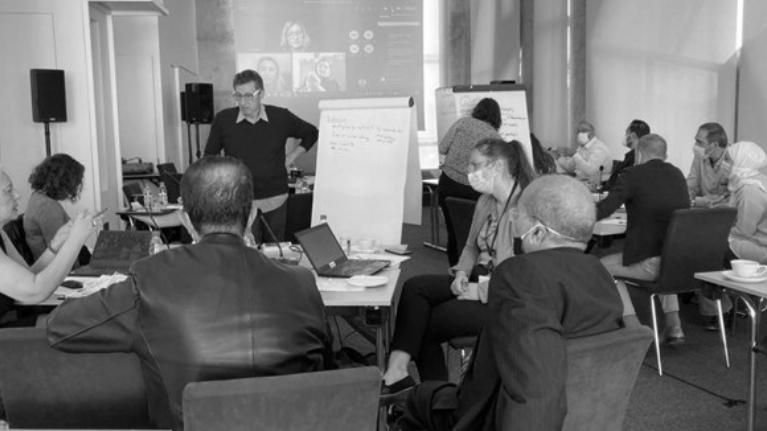
This report presents the outcomes of the Regional Workshop on Improving Workplace Learning and TVET Quality Assurance in Asia and the Pacific. This workshop was designed to assist countries in the region to deal with the challenge of improving productivity and employment growth through workplace learning and to review options for improving the quality of technical and vocational education and training (TVET). The specific objectives of this workshop were to:

• increase the knowledge base and understanding of member States on workplace learning and quality assurance,
• strengthen existing initiatives in workplace learning and quality assurance, and
• provide a forum for participating countries to share their experiences and to develop tripartite action plans.

The discussions during the workshop are summarized in this document.
Subject Tags:

Apprenticeships

Slug
apprenticeships
Identifier
639

TVET systems

Slug
tvet-systems
Identifier
661

Vocational training

Slug
vocational-training
Identifier
124
Regions:

Building skills in Kyrgyz Republic: Good training means good jobs

Building skills in Kyrgyz Republic: Good training means good jobs

Type:
Document
Content Type:
Building skills in Kyrgyz Republic: Good training means good jobs
Language:

English

Slug
english
Identifier
skpEng
Sources:

Other sources

Experts from many international, regional and national agencies generously share their views, experiences and findings on skills, helping policy-makers among other stakeholders to understand the linkages between education, training and the world of work, and how to integrate skills into national development planning to promote employment and economic growth.

Thumbnail
Identifier
skpOSource
Slug
other-sources
Topics:

Access to training

Thumbnail

Access for all to good quality education, vocational training and workplace learning is a fundamental principle of social cohesion and economic growth. Some groups of people may require targeted attention if they are to benefit from education, training and employment opportunities.  

This is particularly the case for disadvantaged youth, lower skilled workers, people with disabilities, and people in rural communities. The attractiveness of vocational education and training is enhanced when combined with entrepreneurship training and when public policies encourage utilization of higher skills by business. 
 

Identifier
skpATSU
Slug
access-to-training

Training quality and relevance

Thumbnail
Identifier
skpTrainQR
Slug
training-quality-and-relevance
Knowledge Products:

Case studies and good practices

Case studies that document good practices and illustrate the benefits and lessons learnt of particular approaches or methods in real practice. 

Thumbnail
Identifier
skpCaseStdy
Slug
case-studies-and-good-practices

Promotional material

Presentations, discussion papers, meeting reports, promotional materials, videos, fact sheets, brochures and newsletters on skills development for employment.

Thumbnail
Identifier
skpAIM
Slug
promotional-material
Publication Date:
09 Feb 2016
This document presents the project results of the 'Kyrgyz Republic: Vocational Education and Skills Development Project'. Since 2008, more than 30,000 students in 25 schools have learned new skills in tailoring, hairdressing, mechanical engineering, carpentry, welding, and other areas under the ADB-supported Vocational Education and Skills Development Project. Placement rates are high: 85% of 211 budding seamstresses in one recent class were immediately hired by private companies upon graduation. A follow-on initiative, the Second Vocational Education and Skills Development Project, is building on this work to expand access to programs in rural areas and strengthen schools’ financial viability.
Subject Tags:

Skills and training policy

Slug
skills-and-training-policy
Identifier
666

Vocational guidance

Slug
vocational-guidance
Identifier
123

Vocational training

Slug
vocational-training
Identifier
124

Youth

Slug
youth
Identifier
319
Regions:
Countries and territories:

World Economic Forum: Jobs and skills: Tackling the global unemployment crisis - Preparing for growth

World Economic Forum: Jobs and skills: Tackling the global unemployment crisis - Preparing for growth

Type:
Document
Content Type:
Publication
Language:

English

Slug
english
Identifier
skpEng
Sources:

International organizations

Information is gathered from other international organizations that promote skills development and the transition from education and training to work. The Interagency Group on Technical and Vocational Education and Training (IAG-TVET) was established in 2009 to share research findings, coordinate joint research endeavours, and improve collaboration among organizations working at the international and national levels.

Thumbnail
Identifier
skpIntOrg
Slug
international-organizations
Topics:

Career guidance and employment services

Thumbnail

Career guidance and counselling, career education and lifelong development of skills for employability are key for success in learning activities, effective career transitions, livelihood planning, entrepreneurship and in increasing labour market participation. They are instrumental in promoting skills utilization, recognition (RPL), as well as in improving enterprise human resource management.

Career development activities encompass a wide variety of support activities including career information and advice, counselling, work exposure (e.g. job shadowing, work experience periods), assessment, coaching, mentoring, professional networking, advocacy, basic and employability skills training (curricular and non-curricular) and entrepreneurship training. It is often an area which is fragmented across different ministries (e.g. education, TVET, employment, youth) requiring an effort to achieve the necessary coordination to provide adequate support to individuals during learning, employment and unemployment/inactivity periods.
 

Identifier
skpLMIES
Slug
career-guidance-and-employment-services

Participation of employers' and workers' organizations

Thumbnail

The world of learning and the world of work are separate but linked. While one involves learning, the other produces goods and services. Neither can thrive without the other. Strong partnerships between government, employers and workers help ensure the relevance of training to the changing needs of enterprises and labour markets. 

Identifier
skpPSP
Slug
participation-of-employers-and-workers-organizations
Knowledge Products:

Promotional material

Presentations, discussion papers, meeting reports, promotional materials, videos, fact sheets, brochures and newsletters on skills development for employment.

Thumbnail
Identifier
skpAIM
Slug
promotional-material
Publication Date:
08 Feb 2016
This Report produced by the World Economic Forum’s Global Agenda Council on Employment presents a list of recommendations for governments, businesses and trade unions to adopt decisive actions to bring employment at the centre of their agendas. The core message of this document is that decision-makers must give the jobs crisis the attention it deserves. Employment must be the priority for the G20.
Subject Tags:

Economic growth

Slug
economic-growth
Identifier
166

Economic policy

Slug
economic-policy
Identifier
171

G20

Slug
g20
Identifier
669
Regions:

Preventing unemployment and underemployment from becoming structural

Preventing unemployment and underemployment from becoming structural

Type:
Document
Content Type:
Preventing unemployment and underemployment from becoming structural
Language:

English

Slug
english
Identifier
skpEng
Sources:

International organizations

Information is gathered from other international organizations that promote skills development and the transition from education and training to work. The Interagency Group on Technical and Vocational Education and Training (IAG-TVET) was established in 2009 to share research findings, coordinate joint research endeavours, and improve collaboration among organizations working at the international and national levels.

Thumbnail
Identifier
skpIntOrg
Slug
international-organizations
Topics:

Anticipating and matching skills needs

Thumbnail

Anticipating and building skills for the future is essential to a rapidly changing labour market. This applies to changes in the types and levels of skills needed as well as in occupational and technical areas. Effective methods to anticipate future skills needs and avoid potential mismatches include: sustained dialogue between employers and trainers, coordination across government institutions, labour market information systems, employment services and performance reviews of training institutions. 

Identifier
skpAFSN
Slug
anticipating-and-matching-skills-needs

Career guidance and employment services

Thumbnail

Career guidance and counselling, career education and lifelong development of skills for employability are key for success in learning activities, effective career transitions, livelihood planning, entrepreneurship and in increasing labour market participation. They are instrumental in promoting skills utilization, recognition (RPL), as well as in improving enterprise human resource management.

Career development activities encompass a wide variety of support activities including career information and advice, counselling, work exposure (e.g. job shadowing, work experience periods), assessment, coaching, mentoring, professional networking, advocacy, basic and employability skills training (curricular and non-curricular) and entrepreneurship training. It is often an area which is fragmented across different ministries (e.g. education, TVET, employment, youth) requiring an effort to achieve the necessary coordination to provide adequate support to individuals during learning, employment and unemployment/inactivity periods.
 

Identifier
skpLMIES
Slug
career-guidance-and-employment-services
Knowledge Products:

Promotional material

Presentations, discussion papers, meeting reports, promotional materials, videos, fact sheets, brochures and newsletters on skills development for employment.

Thumbnail
Identifier
skpAIM
Slug
promotional-material
Publication Date:
08 Feb 2016
Report prepared for the G20 Labour and Employment Ministerial Meeting. Melbourne, Australia, 10-11 September 2014 The persistence of high levels of unemployment following the crisis in many advanced economies and in some emerging economies, as well as the build-up of long-term unemployment, have raised concerns around a possible rise in structural unemployment – i.e. the permanent or persistent component of unemployment that is invariant to the economic cycle. At the same time, many emerging economies have struggled with chronically high levels of underemployment, with many workers trapped in low-paid, informal jobs which fail to fully utilise their skills. These trends have resulted in significant social and economic costs. Besides the tremendous hardship it has caused to individuals and families, it presents a waste of scarce economic resources, including human capital, and reduces the long-run growth potential of economies.

This paper starts by setting out the key challenges faced by policy-makers in G20 countries both in the short-term as a result of the crisis and sluggish recovery in many G20 countries, and in the longer term as a result of ongoing economic, demographic and social transformations. The second part of the paper then sets out the policy responses that should be considered to address these challenges. While the choice and combination of measures will depend on each country’s specific institutions and circumstances, a blend of short- and long-run measures is likely to be needed that simultaneously seek to strengthen growth and encourage job creation, while also tackling structural barriers in the labour market.
Subject Tags:

G20

Slug
g20
Identifier
669

Skills anticipation

Slug
skills-anticipation
Identifier
677
Regions:

Women, work, and the economy: Macroeconomic gains from gender equity

Women, work, and the economy: Macroeconomic gains from gender equity

Type:
Document
Content Type:
Women, work, and the economy: Macroeconomic gains from gender equity
Language:

English

Slug
english
Identifier
skpEng
Sources:

International organizations

Information is gathered from other international organizations that promote skills development and the transition from education and training to work. The Interagency Group on Technical and Vocational Education and Training (IAG-TVET) was established in 2009 to share research findings, coordinate joint research endeavours, and improve collaboration among organizations working at the international and national levels.

Thumbnail
Identifier
skpIntOrg
Slug
international-organizations
Topics:

Gender equality

Thumbnail

Women represent both half of the world's population – and half the world's economic potential. Their participation in the labour market reduces poverty because they often invest 90 per cent of their income in the well-being, education and nutrition of their families. Yet labour force participation by women has stagnated at about 55 per cent globally since 2010. Moreover, women are disproportionately represented in precarious work – low-paid, low-skilled and insecure jobs.

Training plays an important role in the pursuit of equality of opportunity and treatment for women and men in the world of work. Yet women often lack access to technical and vocational education and training. Many also lack the basic functional skills, such as literacy and numeracy, to participate meaningfully in the work force. Overcoming this challenge requires the adoption of a life-cycle approach. This includes improving girls’ access to basic education; overcoming logistic, economic and cultural barriers to apprenticeships and to secondary and vocational training for young women; and meeting the training needs of women re-entering the labour market and of older women who have not had equal access to opportunities for lifelong learning.

Identifier
skpGenEqul
Slug
gender-equality

Other topic

Thumbnail
Identifier
skpOIssue
Slug
other-topic
Knowledge Products:

Promotional material

Presentations, discussion papers, meeting reports, promotional materials, videos, fact sheets, brochures and newsletters on skills development for employment.

Thumbnail
Identifier
skpAIM
Slug
promotional-material
Publication Date:
03 Feb 2016
This Staff Discussion Note examines the specific macro-critical features of women’s participation in the labor market, the constraints preventing women from developing their full economic potential, and possible policies to overcome these obstacles. Implementing policies that remove labor market distortions and create a level playing field for all will give women the opportunity to develop their potential and to participate in economic life more visibly.
Subject Tags:

Economic growth

Slug
economic-growth
Identifier
166

Economic policy

Slug
economic-policy
Identifier
171

Globalization

Slug
globalization
Identifier
267

Inclusion

Slug
inclusion
Identifier
665

Women

Slug
women
Identifier
318
Regions:

Capacitación para personas con discapacidad

Capacitación para personas con discapacidad

Type:
Document
Content Type:
Capacitación para personas con discapacidad
Language:
Sources:

International organizations

Information is gathered from other international organizations that promote skills development and the transition from education and training to work. The Interagency Group on Technical and Vocational Education and Training (IAG-TVET) was established in 2009 to share research findings, coordinate joint research endeavours, and improve collaboration among organizations working at the international and national levels.

Thumbnail
Identifier
skpIntOrg
Slug
international-organizations

Other sources

Experts from many international, regional and national agencies generously share their views, experiences and findings on skills, helping policy-makers among other stakeholders to understand the linkages between education, training and the world of work, and how to integrate skills into national development planning to promote employment and economic growth.

Thumbnail
Identifier
skpOSource
Slug
other-sources
Topics:

People with disabilities

Thumbnail

Of an estimated 1 billion people with disabilities in the world today, some 785 million are of working age. While many are successfully employed and fully integrated into society, most face a disproportionate level of poverty and unemployment. This is a massive loss both to them and their countries. A strategy of including people with disabilities in training and employment promotion policies, combined with targeted supports to ensure their participation, can help disabled persons obtain productive mainstream employment.

Identifier
skpPeoDis
Slug
people-with-disabilities
Knowledge Products:

Promotional material

Presentations, discussion papers, meeting reports, promotional materials, videos, fact sheets, brochures and newsletters on skills development for employment.

Thumbnail
Identifier
skpAIM
Slug
promotional-material

Research papers

Working papers, reports, and other publications from international organizations, academic institutions and bilateral agencies. Research findings to stimulate informed debate on skills, employment and productivity issues. 

Thumbnail
Identifier
skpRPS
Slug
research-papers
Publication Date:
02 Feb 2016

Chile ha logrado indicadores de crecimiento superiores a los de la región, sin embargo, sus beneficios no se han distribuido de manera equitativa en toda su población y las personas en situación de discapacidad forman parte del grupo menos favorecido. El Programa de Gobierno 2014-2018 de Michel Bachelet, consciente de esta situación, propuso dentro de sus objetivos avanzar hacia la inclusión laboral de personas en situación de discapacidad y, para lograrlo, ofreció como estrategia la implementación de un programa de capacitación en oficios para 20.000 personas en situación de discapacidad. La responsabilidad del diseño y ejecución del programa recayó en el Servicio Nacional de Empleo (SENCE), y el presente informe corresponde una propuesta de largo plazo para su diseño.

Subject Tags:

Disadvantaged youth

Slug
disadvantaged-youth
Identifier
663

Discrimination

Slug
discrimination
Identifier
260

Inclusion

Slug
inclusion
Identifier
665

Skills and training policy

Slug
skills-and-training-policy
Identifier
666

Youth

Slug
youth
Identifier
319
Regions:

Americas

Region Image
Countries and territories:

Training on public employment services in North Sudan

Training on public employment services in North Sudan

Type:
Document
Content Type:
Training on public employment services in North Sudan
Language:

English

Slug
english
Identifier
skpEng
Sources:

ILO

The International Labour Organization is the tripartite U.N. agency that promotes Decent Work through employment, social security, labour standards and social dialogue. Its work on skills development is guided by the conceptual framework on Skills to improve productivity, employment growth, and development agreed in 2008 by representatives of Governments, Employers’ Associations and Workers’ Associations. Research, policy advice, and pilot projects and technical cooperation programmes to apply good practices in different circumstances across its 185 member States aims to boost the employability of workers, the productivity and competitiveness of enterprises, and the inclusiveness of economic growth. The ILO Secretariat in offices in 40 countries works with Ministries of Labour, employers’ organizations, and trade unions to integrate skills development into national and sector development strategies in order to better meet current labour market needs and to prepare for the jobs of the future; to expand access to employment-related training so that youth, persons with disabilities and other vulnerable groups are better able to acquire skills and secure productive and decent work; and to improve the ability of public employment services to provide career guidance, maintain labour exchange services, and deliver active labour market programmes.For more information regarding the ILO’s work on skills and employability go to: http://www.ilo.org/skills/lang--en/index.htm; for ILO/Cinterfor's Knowledge Management Plarform, see: http://www.oitcinterfor.org

Thumbnail
Identifier
skpILO
Slug
ilo
Topics:

Career guidance and employment services

Thumbnail

Career guidance and counselling, career education and lifelong development of skills for employability are key for success in learning activities, effective career transitions, livelihood planning, entrepreneurship and in increasing labour market participation. They are instrumental in promoting skills utilization, recognition (RPL), as well as in improving enterprise human resource management.

Career development activities encompass a wide variety of support activities including career information and advice, counselling, work exposure (e.g. job shadowing, work experience periods), assessment, coaching, mentoring, professional networking, advocacy, basic and employability skills training (curricular and non-curricular) and entrepreneurship training. It is often an area which is fragmented across different ministries (e.g. education, TVET, employment, youth) requiring an effort to achieve the necessary coordination to provide adequate support to individuals during learning, employment and unemployment/inactivity periods.
 

Identifier
skpLMIES
Slug
career-guidance-and-employment-services
Knowledge Products:

Other knowledge products

Thumbnail
Identifier
skpOProduct
Slug
other-knowledge-products

Promotional material

Presentations, discussion papers, meeting reports, promotional materials, videos, fact sheets, brochures and newsletters on skills development for employment.

Thumbnail
Identifier
skpAIM
Slug
promotional-material
Publication Date:
28 Jan 2016
This report compiles the training modules and the methodology utilised by the UN Joint Programme on Creating Opportunities for Youth Employment (2009-2012) to prepare government officers to deliver core public employment services in Sudan.
Subject Tags:

Public sector

Slug
public-sector
Identifier
230

Vocational training

Slug
vocational-training
Identifier
124
Regions:

Africa

Region Image
Countries and territories:

Skills development for rural people: A renewed challenge

Skills development for rural people: A renewed challenge

Type:
Document
Content Type:
Skills development for rural people: A renewed challenge
Language:

English

Slug
english
Identifier
skpEng
Sources:

ILO

The International Labour Organization is the tripartite U.N. agency that promotes Decent Work through employment, social security, labour standards and social dialogue. Its work on skills development is guided by the conceptual framework on Skills to improve productivity, employment growth, and development agreed in 2008 by representatives of Governments, Employers’ Associations and Workers’ Associations. Research, policy advice, and pilot projects and technical cooperation programmes to apply good practices in different circumstances across its 185 member States aims to boost the employability of workers, the productivity and competitiveness of enterprises, and the inclusiveness of economic growth. The ILO Secretariat in offices in 40 countries works with Ministries of Labour, employers’ organizations, and trade unions to integrate skills development into national and sector development strategies in order to better meet current labour market needs and to prepare for the jobs of the future; to expand access to employment-related training so that youth, persons with disabilities and other vulnerable groups are better able to acquire skills and secure productive and decent work; and to improve the ability of public employment services to provide career guidance, maintain labour exchange services, and deliver active labour market programmes.For more information regarding the ILO’s work on skills and employability go to: http://www.ilo.org/skills/lang--en/index.htm; for ILO/Cinterfor's Knowledge Management Plarform, see: http://www.oitcinterfor.org

Thumbnail
Identifier
skpILO
Slug
ilo

Other sources

Experts from many international, regional and national agencies generously share their views, experiences and findings on skills, helping policy-makers among other stakeholders to understand the linkages between education, training and the world of work, and how to integrate skills into national development planning to promote employment and economic growth.

Thumbnail
Identifier
skpOSource
Slug
other-sources
Topics:

Access to training

Thumbnail

Access for all to good quality education, vocational training and workplace learning is a fundamental principle of social cohesion and economic growth. Some groups of people may require targeted attention if they are to benefit from education, training and employment opportunities.  

This is particularly the case for disadvantaged youth, lower skilled workers, people with disabilities, and people in rural communities. The attractiveness of vocational education and training is enhanced when combined with entrepreneurship training and when public policies encourage utilization of higher skills by business. 
 

Identifier
skpATSU
Slug
access-to-training

Rural employment

Thumbnail

Eight out of 10 of the world’s working poor who live on US $1.25 per day live in rural areas, where many are caught in vulnerable employment, especially in agriculture.Flourishing rural areas are vital to regional and national development. Yet, rural economies tend to face a wide range of challenges that urban areas are more likely to overcome. These include access to transportation, sanitation and health services, and a consumer base in close proximity to support small and medium enterprise development. Women and men working in rural areas also face difficulties associated with a paucity of economic opportunities, under investment, poor infrastructure and public services, including education, and, in many cases, weak governance and underdeveloped markets.

Education, entrepreneurship, and physical and social infrastructure all play an important role in developing rural regions. Skills are central to improving employability and livelihood opportunities, reducing poverty, enhancing productivity and promoting environmentally sustainable development.

Identifier
skpREmpl
Slug
rural-employment
Knowledge Products:

Promotional material

Presentations, discussion papers, meeting reports, promotional materials, videos, fact sheets, brochures and newsletters on skills development for employment.

Thumbnail
Identifier
skpAIM
Slug
promotional-material
Publication Date:
25 Jan 2016
Paper 10, Debates in skills development This publication presents a synthesis of the inputs presented during the eleventh working group for international cooperation in skills development which focused on issues of rural development.
Subject Tags:

Rural development

Slug
rural-development
Identifier
152

Rural employment

Slug
rural-employment
Identifier
670

Rural workers

Slug
rural-workers
Identifier
637

Skills and training policy

Slug
skills-and-training-policy
Identifier
666
Regions:

Africa

Region Image

Skills development for job creation, economic growth and poverty reduction

Skills development for job creation, economic growth and poverty reduction

Type:
Document
Content Type:
Skills development for job creation, economic growth and poverty reduction
Language:

English

Slug
english
Identifier
skpEng
Sources:

ILO

The International Labour Organization is the tripartite U.N. agency that promotes Decent Work through employment, social security, labour standards and social dialogue. Its work on skills development is guided by the conceptual framework on Skills to improve productivity, employment growth, and development agreed in 2008 by representatives of Governments, Employers’ Associations and Workers’ Associations. Research, policy advice, and pilot projects and technical cooperation programmes to apply good practices in different circumstances across its 185 member States aims to boost the employability of workers, the productivity and competitiveness of enterprises, and the inclusiveness of economic growth. The ILO Secretariat in offices in 40 countries works with Ministries of Labour, employers’ organizations, and trade unions to integrate skills development into national and sector development strategies in order to better meet current labour market needs and to prepare for the jobs of the future; to expand access to employment-related training so that youth, persons with disabilities and other vulnerable groups are better able to acquire skills and secure productive and decent work; and to improve the ability of public employment services to provide career guidance, maintain labour exchange services, and deliver active labour market programmes.For more information regarding the ILO’s work on skills and employability go to: http://www.ilo.org/skills/lang--en/index.htm; for ILO/Cinterfor's Knowledge Management Plarform, see: http://www.oitcinterfor.org

Thumbnail
Identifier
skpILO
Slug
ilo
Topics:

Lifelong learning

Thumbnail

There is a critical need for a greater overall investment in education and training, particularly in developing countries. Education and training investments should be closely linked to economic and employment growth strategies and programmes. Responsibility should be shared between the government (primary responsibility), enterprises, the social partners, and the individual. To make lifelong learning for all a reality, countries will need to make major reforms of their vocational and education and training systems. School-to-work schemes for young people should integrate education with workplace learning. Training systems need to become more flexible and responsive to rapidly changing skill requirements. Reforms should also focus on how learning can be facilitated, not just on training for specific occupational categories.

Identifier
skpPSLLL
Slug
lifelong-learning
Knowledge Products:

Promotional material

Presentations, discussion papers, meeting reports, promotional materials, videos, fact sheets, brochures and newsletters on skills development for employment.

Thumbnail
Identifier
skpAIM
Slug
promotional-material
Publication Date:
25 Jan 2016
Doha forum on decent work and poverty reduction 25-26 October 2011 Doha, Qatar: Background paper At the International Labour organization’s (ILO) 2008 International Labour Conference (ILC), representatives of governments, employers and workers adopted a set of conclusions for using skills development to improve productivity, employment growth and development. The conclusions comprise a set of guidelines that can help sustain the competitiveness of enterprises and the employability of workers. In this framework, skills development can help build a “virtuous circle” in which the quality and relevance of education and training for women and men fuels the innovation, investment, technological change, enterprise development, economic diversification and competitiveness that economies need to accelerate the creation of more jobs, but also more productive jobs.

This paper builds on these ILO conclusions. It provides a broad definition of the issue of skills development and its role in promoting economic growth and poverty reduction. It reviews approaches to skills development within the context of international instruments such as the Millimuim Development Goals (MDGs) and reviews trends in the Arab Region. It then proceeds to address the key policy challenges with an international perspective through citing examples of skills development efforts from countries outside the Arab region. The paper concludes with key messages for the future.
Subject Tags:

Poverty

Slug
poverty
Identifier
148

Poverty alleviation

Slug
poverty-alleviation
Identifier
149

Skills and training policy

Slug
skills-and-training-policy
Identifier
666
Regions:

Arab States

Region Image

A training policy model for enhancing employability and gender equity: The Formujer Programme

A training policy model for enhancing employability and gender equity: The Formujer Programme

Type:
Document
Content Type:
A training policy model for enhancing employability and gender equity: The Formujer Programme
Language:

English

Slug
english
Identifier
skpEng
Sources:

ILO

The International Labour Organization is the tripartite U.N. agency that promotes Decent Work through employment, social security, labour standards and social dialogue. Its work on skills development is guided by the conceptual framework on Skills to improve productivity, employment growth, and development agreed in 2008 by representatives of Governments, Employers’ Associations and Workers’ Associations. Research, policy advice, and pilot projects and technical cooperation programmes to apply good practices in different circumstances across its 185 member States aims to boost the employability of workers, the productivity and competitiveness of enterprises, and the inclusiveness of economic growth. The ILO Secretariat in offices in 40 countries works with Ministries of Labour, employers’ organizations, and trade unions to integrate skills development into national and sector development strategies in order to better meet current labour market needs and to prepare for the jobs of the future; to expand access to employment-related training so that youth, persons with disabilities and other vulnerable groups are better able to acquire skills and secure productive and decent work; and to improve the ability of public employment services to provide career guidance, maintain labour exchange services, and deliver active labour market programmes.For more information regarding the ILO’s work on skills and employability go to: http://www.ilo.org/skills/lang--en/index.htm; for ILO/Cinterfor's Knowledge Management Plarform, see: http://www.oitcinterfor.org

Thumbnail
Identifier
skpILO
Slug
ilo
Topics:

Gender equality

Thumbnail

Women represent both half of the world's population – and half the world's economic potential. Their participation in the labour market reduces poverty because they often invest 90 per cent of their income in the well-being, education and nutrition of their families. Yet labour force participation by women has stagnated at about 55 per cent globally since 2010. Moreover, women are disproportionately represented in precarious work – low-paid, low-skilled and insecure jobs.

Training plays an important role in the pursuit of equality of opportunity and treatment for women and men in the world of work. Yet women often lack access to technical and vocational education and training. Many also lack the basic functional skills, such as literacy and numeracy, to participate meaningfully in the work force. Overcoming this challenge requires the adoption of a life-cycle approach. This includes improving girls’ access to basic education; overcoming logistic, economic and cultural barriers to apprenticeships and to secondary and vocational training for young women; and meeting the training needs of women re-entering the labour market and of older women who have not had equal access to opportunities for lifelong learning.

Identifier
skpGenEqul
Slug
gender-equality

Training quality and relevance

Thumbnail
Identifier
skpTrainQR
Slug
training-quality-and-relevance
Knowledge Products:

Promotional material

Presentations, discussion papers, meeting reports, promotional materials, videos, fact sheets, brochures and newsletters on skills development for employment.

Thumbnail
Identifier
skpAIM
Slug
promotional-material

Research papers

Working papers, reports, and other publications from international organizations, academic institutions and bilateral agencies. Research findings to stimulate informed debate on skills, employment and productivity issues. 

Thumbnail
Identifier
skpRPS
Slug
research-papers
Publication Date:
27 Nov 2015
The purpose of the FORMUJER Programme (Programme to Strengthen Technical and Vocational Training of Low Income Women in Latin America) is to promote and strengthen the capacities of the institutions of the region to design and implement policies intended to improve the quality, relevance and equity of training for work and increase the employability of women and men, paying special attention to the training and labour insertion needs of low income women.

To achieve its objectives, FORMUJER has developed a model for intervention –to which this volume is devoted– that makes an objective in itself of the systematisation, spreading and transfer of the developments, results and lessons learned, that become specific products, among which the FORMUJER publications are included.

The purposes of this document are:

• supplement the conceptual, methodological and strategic rationale of the proposed model of intervention, articulating it with the Conceptual and Teaching Materials Series;
• present its design and structure;
• analyse the process of implementation of the model proposed and the Programme, going further into depth regarding the different strategies applied in each country;
• outline the main results of execution up to mid-2003, in overall terms and, basically, in qualitative terms;
• share, responding to the conviction that gave rise to and guided both its design and its action, the reflections and learning that have been gathered over the five years of execution.
Subject Tags:

Gender

Slug
294
Identifier
294

Globalization

Slug
globalization
Identifier
267

TVET systems

Slug
tvet-systems
Identifier
661

Vocational training

Slug
vocational-training
Identifier
124

Women

Slug
women
Identifier
318
Regions:

Americas

Region Image