La plateforme TADRIB wa TABADEL

La plateforme TADRIB wa TABADEL

Type:
Document
Content Type:
La plateforme TADRIB wa TABADEL
Language:

French

Slug
french
Identifier
skpFrn
Sources:

ILO

The International Labour Organization is the tripartite U.N. agency that promotes Decent Work through employment, social security, labour standards and social dialogue. Its work on skills development is guided by the conceptual framework on Skills to improve productivity, employment growth, and development agreed in 2008 by representatives of Governments, Employers’ Associations and Workers’ Associations. Research, policy advice, and pilot projects and technical cooperation programmes to apply good practices in different circumstances across its 185 member States aims to boost the employability of workers, the productivity and competitiveness of enterprises, and the inclusiveness of economic growth. The ILO Secretariat in offices in 40 countries works with Ministries of Labour, employers’ organizations, and trade unions to integrate skills development into national and sector development strategies in order to better meet current labour market needs and to prepare for the jobs of the future; to expand access to employment-related training so that youth, persons with disabilities and other vulnerable groups are better able to acquire skills and secure productive and decent work; and to improve the ability of public employment services to provide career guidance, maintain labour exchange services, and deliver active labour market programmes.For more information regarding the ILO’s work on skills and employability go to: http://www.ilo.org/skills/lang--en/index.htm; for ILO/Cinterfor's Knowledge Management Plarform, see: http://www.oitcinterfor.org

Thumbnail
Identifier
skpILO
Slug
ilo
Topics:

Youth employability

Thumbnail

Globally, nearly 68 million young women and men are looking for and available for work,  and an estimated 123 million young people are working but living in poverty. The number who are not in employment, education or training (NEET) stands at 267 million, a majority of whom are young women. Significantly, young people are three times as likely as adults (25 years and older) to be unemployed.

Skills development is a primary means of enabling young people to make a smooth transition to work. A comprehensive approach is required to integrate young women and men in the labour market, including relevant and quality skills training, labour market information, career guidance and employment services, recognition of prior learning, incorporating entrepreneurship with training and effective skills forecasting. Improved basic education and core work skills are particularly important to enable youth to engage in lifelong learning as well as transition to the labour market. 

Identifier
skpYoEmp
Slug
youth-employability
Knowledge Products:

Promotional material

Presentations, discussion papers, meeting reports, promotional materials, videos, fact sheets, brochures and newsletters on skills development for employment.

Thumbnail
Identifier
skpAIM
Slug
promotional-material
Publication Date:
25 May 2018

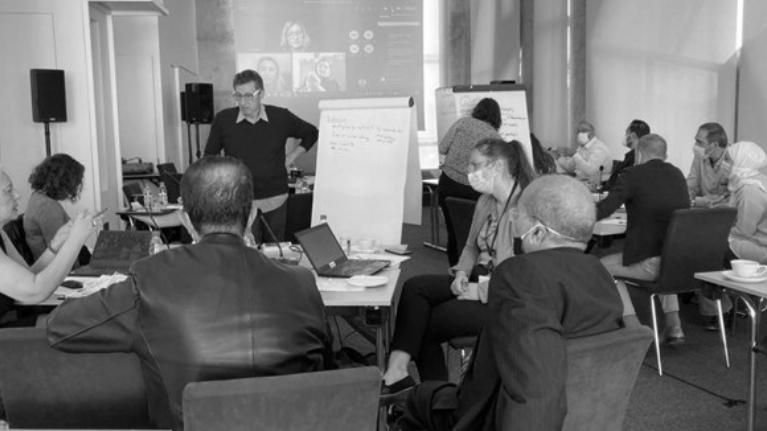
Destinée aux conseillers de l’ANETI pour assurer les formations et l’accompagnement en soft skills. Elle comporte deux espaces :

- TADRIB : cet espace met à disposition des conseillers formateurs de l’ANETI des outils pédagogiques pour former les conseillers à l’accompagnement des jeunes chercheurs d’emploi en soft skills (le manuel du formateur pour des formations courtes et un guide du facilitateur pour des formations plus longues, ainsi qu’une plateforme de formation à distance préparatoire).Il dispose aussi d’un forum d’échanges entre les conseillers formateurs.

- TABADEL : cet espace est destiné aux conseillers accompagnateurs de l’ANETI, et comprend les ressources nécessaires à la préparation et à l'organisation des séances d'accompagnement collectives (modules théoriques et pratiques) à destination des chercheurs d'emploi. Il dispose aussi d’un forum d’échanges de bonnes pratiques entre les conseillers.

Subject Tags:

School-to-work transition

Slug
school-to-work-transition
Identifier
652

Soft skills

Slug
soft-skills
Identifier
678
Regions:

Africa

Region Image
Countries and territories:

Guide d’accompagnement des chercheurs d’emploi dans l’acquisition des competences principales de travail

Guide d’accompagnement des chercheurs d’emploi dans l’acquisition des competences principales de travail

Type:
Document
Content Type:
Guide d’accompagnement des chercheurs d’emploi dans l’acquisition des competences principales de travail
Language:

French

Slug
french
Identifier
skpFrn
Sources:

ILO

The International Labour Organization is the tripartite U.N. agency that promotes Decent Work through employment, social security, labour standards and social dialogue. Its work on skills development is guided by the conceptual framework on Skills to improve productivity, employment growth, and development agreed in 2008 by representatives of Governments, Employers’ Associations and Workers’ Associations. Research, policy advice, and pilot projects and technical cooperation programmes to apply good practices in different circumstances across its 185 member States aims to boost the employability of workers, the productivity and competitiveness of enterprises, and the inclusiveness of economic growth. The ILO Secretariat in offices in 40 countries works with Ministries of Labour, employers’ organizations, and trade unions to integrate skills development into national and sector development strategies in order to better meet current labour market needs and to prepare for the jobs of the future; to expand access to employment-related training so that youth, persons with disabilities and other vulnerable groups are better able to acquire skills and secure productive and decent work; and to improve the ability of public employment services to provide career guidance, maintain labour exchange services, and deliver active labour market programmes.For more information regarding the ILO’s work on skills and employability go to: http://www.ilo.org/skills/lang--en/index.htm; for ILO/Cinterfor's Knowledge Management Plarform, see: http://www.oitcinterfor.org

Thumbnail
Identifier
skpILO
Slug
ilo
Topics:

Youth employability

Thumbnail

Globally, nearly 68 million young women and men are looking for and available for work,  and an estimated 123 million young people are working but living in poverty. The number who are not in employment, education or training (NEET) stands at 267 million, a majority of whom are young women. Significantly, young people are three times as likely as adults (25 years and older) to be unemployed.

Skills development is a primary means of enabling young people to make a smooth transition to work. A comprehensive approach is required to integrate young women and men in the labour market, including relevant and quality skills training, labour market information, career guidance and employment services, recognition of prior learning, incorporating entrepreneurship with training and effective skills forecasting. Improved basic education and core work skills are particularly important to enable youth to engage in lifelong learning as well as transition to the labour market. 

Identifier
skpYoEmp
Slug
youth-employability
Knowledge Products:

Other knowledge products

Thumbnail
Identifier
skpOProduct
Slug
other-knowledge-products
Publication Date:
25 May 2018

Ce guide destiné aux conseillers de l’Agence National pour l’Emploi et le Travail Indépendant (ANETI), a pour but de les aider à organiser et mettre en œuvre l’accompagnement des chercheurs d’emploi dans l’acquisition des 'soft skills'.

Il décrit les principes généraux du processus d’accompagnement des jeunes chercheurs d’emploi, le processus d’accompagnement en soft skills à l’ANETI centré sur dix compétences (la communication et la gestion des conflits, la confiance en soi et l’estime de soi, l’adaptation au changement, les techniques de négociation, l’innovation et la créativité, le leadership, la prise de décision, le travail en équipe, la gestion du stress, le feedback constructif) et fournit des outils théoriques et pratiques pour un accompagnement effectif sur les dix compétences retenues.

Subject Tags:

School-to-work transition

Slug
school-to-work-transition
Identifier
652

Soft skills

Slug
soft-skills
Identifier
678
Regions:

Africa

Region Image
Countries and territories:

Manuel du formateur: Accompagnement des chercheurs d’emploi dans l’acquisition des compétences principales de travail (soft skills)

Manuel du formateur: Accompagnement des chercheurs d’emploi dans l’acquisition des compétences principales de travail (soft skills)

Type:
Document
Content Type:
Manuel du formateur: Accompagnement des chercheurs d’emploi dans l’acquisition des compétences principales de travail (soft skills)
Language:

French

Slug
french
Identifier
skpFrn
Sources:

ILO

The International Labour Organization is the tripartite U.N. agency that promotes Decent Work through employment, social security, labour standards and social dialogue. Its work on skills development is guided by the conceptual framework on Skills to improve productivity, employment growth, and development agreed in 2008 by representatives of Governments, Employers’ Associations and Workers’ Associations. Research, policy advice, and pilot projects and technical cooperation programmes to apply good practices in different circumstances across its 185 member States aims to boost the employability of workers, the productivity and competitiveness of enterprises, and the inclusiveness of economic growth. The ILO Secretariat in offices in 40 countries works with Ministries of Labour, employers’ organizations, and trade unions to integrate skills development into national and sector development strategies in order to better meet current labour market needs and to prepare for the jobs of the future; to expand access to employment-related training so that youth, persons with disabilities and other vulnerable groups are better able to acquire skills and secure productive and decent work; and to improve the ability of public employment services to provide career guidance, maintain labour exchange services, and deliver active labour market programmes.For more information regarding the ILO’s work on skills and employability go to: http://www.ilo.org/skills/lang--en/index.htm; for ILO/Cinterfor's Knowledge Management Plarform, see: http://www.oitcinterfor.org

Thumbnail
Identifier
skpILO
Slug
ilo
Topics:

Youth employability

Thumbnail

Globally, nearly 68 million young women and men are looking for and available for work,  and an estimated 123 million young people are working but living in poverty. The number who are not in employment, education or training (NEET) stands at 267 million, a majority of whom are young women. Significantly, young people are three times as likely as adults (25 years and older) to be unemployed.

Skills development is a primary means of enabling young people to make a smooth transition to work. A comprehensive approach is required to integrate young women and men in the labour market, including relevant and quality skills training, labour market information, career guidance and employment services, recognition of prior learning, incorporating entrepreneurship with training and effective skills forecasting. Improved basic education and core work skills are particularly important to enable youth to engage in lifelong learning as well as transition to the labour market. 

Identifier
skpYoEmp
Slug
youth-employability
Knowledge Products:

Other knowledge products

Thumbnail
Identifier
skpOProduct
Slug
other-knowledge-products
Publication Date:
25 May 2018

Ce manuel du formateur est destiné aux conseillers formateurs de l’ANETI en charge de former des conseillers à l’accompagnement des chercheurs d’emploi en 'soft skills'.

Il contient une série d’activités pédagogiques et d’outils pratiques pour animer de courtes sessions de formation à travers une approche interactive et centrée sur l’apprenant.

Subject Tags:

School-to-work transition

Slug
school-to-work-transition
Identifier
652

Soft skills

Slug
soft-skills
Identifier
678
Regions:

Africa

Region Image
Countries and territories:

Guide d’accompagnement des chercheurs d’emploi dans l’acquisition des competences principales de travail

Guide d’accompagnement des chercheurs d’emploi dans l’acquisition des competences principales de travail

Type:
Document
Content Type:
Guide d’accompagnement des chercheurs d’emploi dans l’acquisition des competences principales de travail
Language:
Sources:

ILO

The International Labour Organization is the tripartite U.N. agency that promotes Decent Work through employment, social security, labour standards and social dialogue. Its work on skills development is guided by the conceptual framework on Skills to improve productivity, employment growth, and development agreed in 2008 by representatives of Governments, Employers’ Associations and Workers’ Associations. Research, policy advice, and pilot projects and technical cooperation programmes to apply good practices in different circumstances across its 185 member States aims to boost the employability of workers, the productivity and competitiveness of enterprises, and the inclusiveness of economic growth. The ILO Secretariat in offices in 40 countries works with Ministries of Labour, employers’ organizations, and trade unions to integrate skills development into national and sector development strategies in order to better meet current labour market needs and to prepare for the jobs of the future; to expand access to employment-related training so that youth, persons with disabilities and other vulnerable groups are better able to acquire skills and secure productive and decent work; and to improve the ability of public employment services to provide career guidance, maintain labour exchange services, and deliver active labour market programmes.For more information regarding the ILO’s work on skills and employability go to: http://www.ilo.org/skills/lang--en/index.htm; for ILO/Cinterfor's Knowledge Management Plarform, see: http://www.oitcinterfor.org

Thumbnail
Identifier
skpILO
Slug
ilo
Topics:

Youth employability

Thumbnail

Globally, nearly 68 million young women and men are looking for and available for work,  and an estimated 123 million young people are working but living in poverty. The number who are not in employment, education or training (NEET) stands at 267 million, a majority of whom are young women. Significantly, young people are three times as likely as adults (25 years and older) to be unemployed.

Skills development is a primary means of enabling young people to make a smooth transition to work. A comprehensive approach is required to integrate young women and men in the labour market, including relevant and quality skills training, labour market information, career guidance and employment services, recognition of prior learning, incorporating entrepreneurship with training and effective skills forecasting. Improved basic education and core work skills are particularly important to enable youth to engage in lifelong learning as well as transition to the labour market. 

Identifier
skpYoEmp
Slug
youth-employability
Knowledge Products:

Other knowledge products

Thumbnail
Identifier
skpOProduct
Slug
other-knowledge-products
Publication Date:
25 May 2018

Ce guide destiné aux conseillers de l’Agence National pour l’Emploi et le Travail Indépendant (ANETI), a pour but de les aider à organiser et mettre en œuvre l’accompagnement des chercheurs d’emploi dans l’acquisition des 'soft skills'.

Il décrit les principes généraux du processus d’accompagnement des jeunes chercheurs d’emploi, le processus d’accompagnement en soft skills à l’ANETI centré sur dix compétences (la communication et la gestion des conflits, la confiance en soi et l’estime de soi, l’adaptation au changement, les techniques de négociation, l’innovation et la créativité, le leadership, la prise de décision, le travail en équipe, la gestion du stress, le feedback constructif) et fournit des outils théoriques et pratiques pour un accompagnement effectif sur les dix compétences retenues.

Subject Tags:

School-to-work transition

Slug
school-to-work-transition
Identifier
652

Soft skills

Slug
soft-skills
Identifier
678
Regions:

Africa

Region Image
Countries and territories:

Manuel de procédures pour le placement à l'international

Manuel de procédures pour le placement à l'international

Type:
Document
Content Type:
Manuel de procédures pour le placement à l'international
Language:

French

Slug
french
Identifier
skpFrn
Sources:

ILO

The International Labour Organization is the tripartite U.N. agency that promotes Decent Work through employment, social security, labour standards and social dialogue. Its work on skills development is guided by the conceptual framework on Skills to improve productivity, employment growth, and development agreed in 2008 by representatives of Governments, Employers’ Associations and Workers’ Associations. Research, policy advice, and pilot projects and technical cooperation programmes to apply good practices in different circumstances across its 185 member States aims to boost the employability of workers, the productivity and competitiveness of enterprises, and the inclusiveness of economic growth. The ILO Secretariat in offices in 40 countries works with Ministries of Labour, employers’ organizations, and trade unions to integrate skills development into national and sector development strategies in order to better meet current labour market needs and to prepare for the jobs of the future; to expand access to employment-related training so that youth, persons with disabilities and other vulnerable groups are better able to acquire skills and secure productive and decent work; and to improve the ability of public employment services to provide career guidance, maintain labour exchange services, and deliver active labour market programmes.For more information regarding the ILO’s work on skills and employability go to: http://www.ilo.org/skills/lang--en/index.htm; for ILO/Cinterfor's Knowledge Management Plarform, see: http://www.oitcinterfor.org

Thumbnail
Identifier
skpILO
Slug
ilo
Topics:

Migrant workers

Thumbnail

According to the ILO global estimates on migrant workers, there were around 164 million migrant workers in 2017. 

Migrant workers contribute to growth and development in their countries of destination, while countries of origin greatly benefit from their remittances and the skills acquired during their migration experience. Yet, many migrant workers face challenges in accessing quality training and decent jobs including under-utilization of skills, a lack of employment or training opportunities, lack of information, and exploitation of low-skilled workers.

To address these challenges, countries need to strengthen skills anticipation systems to inform migration policies, increase access to education and training, and establish bilateral or multilateral recognition of qualifications and skills.

Identifier
skpMigWor
Slug
migrant-workers
Knowledge Products:

Research papers

Working papers, reports, and other publications from international organizations, academic institutions and bilateral agencies. Research findings to stimulate informed debate on skills, employment and productivity issues. 

Thumbnail
Identifier
skpRPS
Slug
research-papers
Publication Date:
12 Apr 2018

Ce manuel de procédure a été développé pour l'Agence Nationale de l'Emploi et le Travail Indépendant (ANETI), le service public d'emploi en Tunisie. Le manuel fourni un appui aux conseillers en emploi pour améliorer leurs services de placement destinés aux chercheurs d'emploi intéressés à trouver un emploi à l'étranger.

Le manuel comprend les sections suivantes:

Section 01: Cadre légal de la migration, acteurs et partenaires
• Les règles et les procédures nécessaires pour la migration légale,
• Le rôle des différents acteurs et partenaires,
• Les accords bilatéraux.

Section 02: Prospection du marché et traitement des offres d’emploi internationales
• Prospection du marché de l’emploi à l’étranger
• L’expérience précédente de l’ANETI
• Volet Employeurs

Section 03: Services rendus aux candidats à la migration
• Informations sur opportunités et risques
• Accompagnement
• Appui au depart

Section 04: Appui aux migrants de retour
• Réintégration des migrants réintégrant le marché du travail et la société informations et accompagnement.

Section 05: Pilotage et suivi
• Chaque section comprend, si nécessaire, des outils, imprimés, notes et tableaux qui sont mis à la disposition du Service de Placement International pour a gestion du programme.

Subject Tags:

Labour migration

Slug
labour-migration
Identifier
609

Talent mobility

Slug
talent-mobility
Identifier
659
Regions:

Arab States

Region Image
Countries and territories:

Réalisations au service de la promotion de l’emploi pour les jeunes en Tunisie

Réalisations au service de la promotion de l’emploi pour les jeunes en Tunisie

Type:
Document
Content Type:
Réalisations au service de la promotion de l’emploi pour les jeunes en Tunisie
Language:

French

Slug
french
Identifier
skpFrn
Sources:

ILO

The International Labour Organization is the tripartite U.N. agency that promotes Decent Work through employment, social security, labour standards and social dialogue. Its work on skills development is guided by the conceptual framework on Skills to improve productivity, employment growth, and development agreed in 2008 by representatives of Governments, Employers’ Associations and Workers’ Associations. Research, policy advice, and pilot projects and technical cooperation programmes to apply good practices in different circumstances across its 185 member States aims to boost the employability of workers, the productivity and competitiveness of enterprises, and the inclusiveness of economic growth. The ILO Secretariat in offices in 40 countries works with Ministries of Labour, employers’ organizations, and trade unions to integrate skills development into national and sector development strategies in order to better meet current labour market needs and to prepare for the jobs of the future; to expand access to employment-related training so that youth, persons with disabilities and other vulnerable groups are better able to acquire skills and secure productive and decent work; and to improve the ability of public employment services to provide career guidance, maintain labour exchange services, and deliver active labour market programmes.For more information regarding the ILO’s work on skills and employability go to: http://www.ilo.org/skills/lang--en/index.htm; for ILO/Cinterfor's Knowledge Management Plarform, see: http://www.oitcinterfor.org

Thumbnail
Identifier
skpILO
Slug
ilo
Topics:

Youth employability

Thumbnail

Globally, nearly 68 million young women and men are looking for and available for work,  and an estimated 123 million young people are working but living in poverty. The number who are not in employment, education or training (NEET) stands at 267 million, a majority of whom are young women. Significantly, young people are three times as likely as adults (25 years and older) to be unemployed.

Skills development is a primary means of enabling young people to make a smooth transition to work. A comprehensive approach is required to integrate young women and men in the labour market, including relevant and quality skills training, labour market information, career guidance and employment services, recognition of prior learning, incorporating entrepreneurship with training and effective skills forecasting. Improved basic education and core work skills are particularly important to enable youth to engage in lifelong learning as well as transition to the labour market. 

Identifier
skpYoEmp
Slug
youth-employability
Knowledge Products:

Promotional material

Presentations, discussion papers, meeting reports, promotional materials, videos, fact sheets, brochures and newsletters on skills development for employment.

Thumbnail
Identifier
skpAIM
Slug
promotional-material
Publication Date:
15 Jan 2018

Brochure.

Le projet PEJTUN mis en œuvre par l’Organisation Internationale du Travail (OIT) avec l’appui financier de la Coopération Danoise au Développement (DANIDA) dans les quatre gouvernorats du Nord-Ouest de la Tunisie à savoir Béja, Jendouba, Siliana et le Kef, vise la création de 1200 emplois durables pour les jeunes. Dance ce cadre, l’OIT en collaboration avec ses mandants a élaboré une étude pour identifier les chaines de valeur à fort potentiel d’emploi pour les jeunes dans les gouvernorats de Béja, Jendouba et Siliana. L’étude propose trois chaînes de valeur par gouvernorat, et le choix a été porté sur deux chaînes de valeur agricoles à savoir l’apiculture biologique dans les gouvernorats de Jendouba et Béja ; et l’aviculture fermière dans le gouvernorat de Siliana.

Subject Tags:

Agriculture

Slug
agriculture
Identifier
225

Employment services

Slug
employment-services
Identifier
680
Regions:

Africa

Region Image
Countries and territories:

Projet JEMP : Quand les formations en «soft skills» améliorent les comportements des jeunes

Projet JEMP : Quand les formations en «soft skills» améliorent les comportements des jeunes

Type:
Document
Content Type:
Projet JEMP : Quand les formations en «soft skills» améliorent les comportements des jeunes
Language:

French

Slug
french
Identifier
skpFrn
Sources:

ILO

The International Labour Organization is the tripartite U.N. agency that promotes Decent Work through employment, social security, labour standards and social dialogue. Its work on skills development is guided by the conceptual framework on Skills to improve productivity, employment growth, and development agreed in 2008 by representatives of Governments, Employers’ Associations and Workers’ Associations. Research, policy advice, and pilot projects and technical cooperation programmes to apply good practices in different circumstances across its 185 member States aims to boost the employability of workers, the productivity and competitiveness of enterprises, and the inclusiveness of economic growth. The ILO Secretariat in offices in 40 countries works with Ministries of Labour, employers’ organizations, and trade unions to integrate skills development into national and sector development strategies in order to better meet current labour market needs and to prepare for the jobs of the future; to expand access to employment-related training so that youth, persons with disabilities and other vulnerable groups are better able to acquire skills and secure productive and decent work; and to improve the ability of public employment services to provide career guidance, maintain labour exchange services, and deliver active labour market programmes.For more information regarding the ILO’s work on skills and employability go to: http://www.ilo.org/skills/lang--en/index.htm; for ILO/Cinterfor's Knowledge Management Plarform, see: http://www.oitcinterfor.org

Thumbnail
Identifier
skpILO
Slug
ilo
Topics:

Youth employability

Thumbnail

Globally, nearly 68 million young women and men are looking for and available for work,  and an estimated 123 million young people are working but living in poverty. The number who are not in employment, education or training (NEET) stands at 267 million, a majority of whom are young women. Significantly, young people are three times as likely as adults (25 years and older) to be unemployed.

Skills development is a primary means of enabling young people to make a smooth transition to work. A comprehensive approach is required to integrate young women and men in the labour market, including relevant and quality skills training, labour market information, career guidance and employment services, recognition of prior learning, incorporating entrepreneurship with training and effective skills forecasting. Improved basic education and core work skills are particularly important to enable youth to engage in lifelong learning as well as transition to the labour market. 

Identifier
skpYoEmp
Slug
youth-employability
Knowledge Products:

Promotional material

Presentations, discussion papers, meeting reports, promotional materials, videos, fact sheets, brochures and newsletters on skills development for employment.

Thumbnail
Identifier
skpAIM
Slug
promotional-material
Publication Date:
15 Jan 2018

JEMP « Jeunes et Employabilité » est un programme porté par l’OIT et financé par le Royaume des Pays-Bas. Son cœur d’action porte sur l’employabilité des jeunes dans quatre gouvernorats de Tunisie; Béja, Jendouba, Siliana et le Kef.

Article par Amel Djait.

Subject Tags:

Soft skills

Slug
soft-skills
Identifier
678
Regions:

Africa

Region Image
Countries and territories:

Labour market impact of National Qualification Frameworks in six countries

Labour market impact of National Qualification Frameworks in six countries

Type:
Document
Content Type:
Labour market impact of National Qualification Frameworks in six countries
Language:

English

Slug
english
Identifier
skpEng
Sources:

Academic institutions

Research papers, synthesis reports, country and programme studies are collected from many academic institutions and national, regional and international professional associations.

Thumbnail
Identifier
skpAcaInst
Slug
academic-institutions

ILO

The International Labour Organization is the tripartite U.N. agency that promotes Decent Work through employment, social security, labour standards and social dialogue. Its work on skills development is guided by the conceptual framework on Skills to improve productivity, employment growth, and development agreed in 2008 by representatives of Governments, Employers’ Associations and Workers’ Associations. Research, policy advice, and pilot projects and technical cooperation programmes to apply good practices in different circumstances across its 185 member States aims to boost the employability of workers, the productivity and competitiveness of enterprises, and the inclusiveness of economic growth. The ILO Secretariat in offices in 40 countries works with Ministries of Labour, employers’ organizations, and trade unions to integrate skills development into national and sector development strategies in order to better meet current labour market needs and to prepare for the jobs of the future; to expand access to employment-related training so that youth, persons with disabilities and other vulnerable groups are better able to acquire skills and secure productive and decent work; and to improve the ability of public employment services to provide career guidance, maintain labour exchange services, and deliver active labour market programmes.For more information regarding the ILO’s work on skills and employability go to: http://www.ilo.org/skills/lang--en/index.htm; for ILO/Cinterfor's Knowledge Management Plarform, see: http://www.oitcinterfor.org

Thumbnail
Identifier
skpILO
Slug
ilo
Topics:

Training quality and relevance

Thumbnail
Identifier
skpTrainQR
Slug
training-quality-and-relevance
Knowledge Products:

Case studies and good practices

Case studies that document good practices and illustrate the benefits and lessons learnt of particular approaches or methods in real practice. 

Thumbnail
Identifier
skpCaseStdy
Slug
case-studies-and-good-practices

Research papers

Working papers, reports, and other publications from international organizations, academic institutions and bilateral agencies. Research findings to stimulate informed debate on skills, employment and productivity issues. 

Thumbnail
Identifier
skpRPS
Slug
research-papers
Publication Date:
24 Oct 2017
In 2010, the ILO together with European Training Foundation (ETF) presented research on ‘The implementation and impact of National Qualifications Framework: Report of a study in 16 countries’ documenting countries that were early adopters of NQFs, such as Australia, Scotland, New Zealand, England, Wales and Northern Ireland as well as countries that had recently started implementation of National Qualifications Framework (NQFs), such as South Africa, Mexico, Chile, Malaysia, Mauritius, Botswana, Sri Lanka, Turkey, Lithuania, Tunisia, Bangladesh and Russia.

In the intervening years as the number of countries implementing NQFs has grown exponentially, the debate has increasingly centered on topics like labour market impact and outcomes of NQFs, including employer experience in using qualification frameworks when making hiring decisions.

This follow-up ILO research is therefore intended to better understand labour market aspects of NQF implementation and to provide sound empirical evidence of how employers recruit, fill vacancies and understand how qualification frameworks are tools for them and for employing people. In doing so we have been careful to chose countries that reflect various stages of implementation including Ireland, France, Belize, Jamaica, Sri Lanka and Tunisia.

The results clearly show that whilst the challenges associated with NQF implementation are myriad, benefits do accrue, especially over the long term. As such, for all the promised benefits of NQFs to be realised, a very long timeframe needs to be taken into account.
Subject Tags:

Competency standards

Slug
competency-standards
Identifier
642

Qualification frameworks

Slug
qualification-frameworks
Identifier
651

TVET systems

Slug
tvet-systems
Identifier
661

Vocational training

Slug
vocational-training
Identifier
124
Regions:

Leaving For Work, Leaving For Good? Evidence From ETF Partner Countries On Migrant Support Measures From An Employment And Skills Perspective

Leaving For Work, Leaving For Good? Evidence From ETF Partner Countries On Migrant Support Measures From An Employment And Skills Perspective

Type:
Document
Content Type:
Leaving For Work, Leaving For Good? Evidence From ETF Partner Countries On Migrant Support Measures From An Employment And Skills Perspective
Language:

English

Slug
english
Identifier
skpEng
Sources:

Other sources

Experts from many international, regional and national agencies generously share their views, experiences and findings on skills, helping policy-makers among other stakeholders to understand the linkages between education, training and the world of work, and how to integrate skills into national development planning to promote employment and economic growth.

Thumbnail
Identifier
skpOSource
Slug
other-sources
Topics:

Lifelong learning

Thumbnail

There is a critical need for a greater overall investment in education and training, particularly in developing countries. Education and training investments should be closely linked to economic and employment growth strategies and programmes. Responsibility should be shared between the government (primary responsibility), enterprises, the social partners, and the individual. To make lifelong learning for all a reality, countries will need to make major reforms of their vocational and education and training systems. School-to-work schemes for young people should integrate education with workplace learning. Training systems need to become more flexible and responsive to rapidly changing skill requirements. Reforms should also focus on how learning can be facilitated, not just on training for specific occupational categories.

Identifier
skpPSLLL
Slug
lifelong-learning

Migrant workers

Thumbnail

According to the ILO global estimates on migrant workers, there were around 164 million migrant workers in 2017. 

Migrant workers contribute to growth and development in their countries of destination, while countries of origin greatly benefit from their remittances and the skills acquired during their migration experience. Yet, many migrant workers face challenges in accessing quality training and decent jobs including under-utilization of skills, a lack of employment or training opportunities, lack of information, and exploitation of low-skilled workers.

To address these challenges, countries need to strengthen skills anticipation systems to inform migration policies, increase access to education and training, and establish bilateral or multilateral recognition of qualifications and skills.

Identifier
skpMigWor
Slug
migrant-workers
Knowledge Products:

Case studies and good practices

Case studies that document good practices and illustrate the benefits and lessons learnt of particular approaches or methods in real practice. 

Thumbnail
Identifier
skpCaseStdy
Slug
case-studies-and-good-practices
Publication Date:
31 May 2017
Working paper This publication provides evidence from ETF partner countries on migrant support measures from an employment and skills perspective along with case studies from different countries. This is part of a series of publications produced by the ETF on this topic, which also includes a global inventory of migrant support measures and individual country studies from Armenia, Georgia, the Republic of Moldova, Morocco and Tunisia.

Subject Tags:

Migrant workers

Slug
migrant-workers
Identifier
681

Migration policy

Slug
migration-policy
Identifier
309
Regions:

Compétences pour le Commerce et la Diversification Économique (STED) en Tunisie, Cas du: Secteur de l’agroalimentaire

Compétences pour le Commerce et la Diversification Économique (STED) en Tunisie, Cas du: Secteur de l’agroalimentaire

Type:
Document
Content Type:
Compétences pour le Commerce et la Diversification Économique (STED) en Tunisie, Cas du: Secteur de l’agroalimentaire
Language:

French

Slug
french
Identifier
skpFrn
Sources:

ILO

The International Labour Organization is the tripartite U.N. agency that promotes Decent Work through employment, social security, labour standards and social dialogue. Its work on skills development is guided by the conceptual framework on Skills to improve productivity, employment growth, and development agreed in 2008 by representatives of Governments, Employers’ Associations and Workers’ Associations. Research, policy advice, and pilot projects and technical cooperation programmes to apply good practices in different circumstances across its 185 member States aims to boost the employability of workers, the productivity and competitiveness of enterprises, and the inclusiveness of economic growth. The ILO Secretariat in offices in 40 countries works with Ministries of Labour, employers’ organizations, and trade unions to integrate skills development into national and sector development strategies in order to better meet current labour market needs and to prepare for the jobs of the future; to expand access to employment-related training so that youth, persons with disabilities and other vulnerable groups are better able to acquire skills and secure productive and decent work; and to improve the ability of public employment services to provide career guidance, maintain labour exchange services, and deliver active labour market programmes.For more information regarding the ILO’s work on skills and employability go to: http://www.ilo.org/skills/lang--en/index.htm; for ILO/Cinterfor's Knowledge Management Plarform, see: http://www.oitcinterfor.org

Thumbnail
Identifier
skpILO
Slug
ilo
Topics:

Sectoral approaches

Thumbnail

Matching skills to labour market demand requires reliable sectoral and occupational information and institutions that connect employers with training providers.  Sector based strategies and institutions have proved effective in engaging all stakeholders in promoting both pre-employment training and life-long learning.

Identifier
skpSectApr
Slug
sectoral-approaches
Knowledge Products:

Case studies and good practices

Case studies that document good practices and illustrate the benefits and lessons learnt of particular approaches or methods in real practice. 

Thumbnail
Identifier
skpCaseStdy
Slug
case-studies-and-good-practices

Research papers

Working papers, reports, and other publications from international organizations, academic institutions and bilateral agencies. Research findings to stimulate informed debate on skills, employment and productivity issues. 

Thumbnail
Identifier
skpRPS
Slug
research-papers
Publication Date:
07 Mar 2017

Le présent rapport est le produit de l’application de la méthodologie STED «Compétences pour le Commerce et la Diversification Economique» au secteur de l’agroalimentaire en Tunisie. Il marque la fin de la phase analytique de la méthodologie et donne le coup d’envoi pour la deuxième phase, celle relative à la mise en oeuvre des initiatives proposées par l’ensemble des intervenants du secteur et qui sont décrites dans ce rapport.


La méthodologie STED, développée par l’OIT, vise à fournir une orientation stratégique pour l'intégration du développement des compétences dans les politiques sectorielles. Elle a été conçue pour soutenir la croissance et la création d'emplois décents dans les secteurs qui ont le potentiel d'accroitre les exportations et de contribuer à la diversification économique.

Subject Tags:

Sectoral approaches

Slug
sectoral-approaches
Identifier
676

Skills anticipation

Slug
skills-anticipation
Identifier
677

Skills mismatch

Slug
skills-mismatch
Identifier
654
Regions:

Africa

Region Image
Countries and territories: