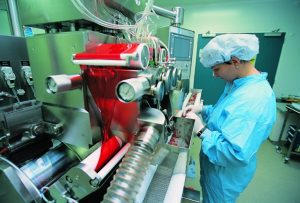
A study of the current and future skills requirements of the marine/maritime economy to 2020

A study of the current and future skills requirements of the marine/maritime economy to 2020

Type:
Document
Content Type:
A study of the current and future skills requirements of the marine/maritime economy to 2020
Language:

English

Slug
english
Identifier
skpEng
Sources:

Other sources

Experts from many international, regional and national agencies generously share their views, experiences and findings on skills, helping policy-makers among other stakeholders to understand the linkages between education, training and the world of work, and how to integrate skills into national development planning to promote employment and economic growth.

Thumbnail
Identifier
skpOSource
Slug
other-sources
Topics:

Anticipating and matching skills needs

Thumbnail

Anticipating and building skills for the future is essential to a rapidly changing labour market. This applies to changes in the types and levels of skills needed as well as in occupational and technical areas. Effective methods to anticipate future skills needs and avoid potential mismatches include: sustained dialogue between employers and trainers, coordination across government institutions, labour market information systems, employment services and performance reviews of training institutions. 

Identifier
skpAFSN
Slug
anticipating-and-matching-skills-needs

Sectoral approaches

Thumbnail

Matching skills to labour market demand requires reliable sectoral and occupational information and institutions that connect employers with training providers.  Sector based strategies and institutions have proved effective in engaging all stakeholders in promoting both pre-employment training and life-long learning.

Identifier
skpSectApr
Slug
sectoral-approaches
Knowledge Products:

Research papers

Working papers, reports, and other publications from international organizations, academic institutions and bilateral agencies. Research findings to stimulate informed debate on skills, employment and productivity issues. 

Thumbnail
Identifier
skpRPS
Slug
research-papers
Publication Date:
21 May 2015
This report, A Study of the current and future skills requirements of the Marine/Maritime Economy to 2020 was undertaken by the Expert Group on Future Skills Needs (EGFSN) to assess the profile and diversity of the occupations and skills requirements of enterprises in the different sectors that make up the Marine/Maritime Economy and to propose recommendations to ensure the right skill base to meet the enterprise needs.
Subject Tags:

Energy

Slug
energy
Identifier
340

Sea transport

Slug
sea-transport
Identifier
249

Skills and training policy

Slug
skills-and-training-policy
Identifier
666

Skills mismatch

Slug
skills-mismatch
Identifier
654

Tourism

Slug
tourism
Identifier
243
Regions:
Countries and territories:

Training needs of young immigrants within European countries

Training needs of young immigrants within European countries

Type:
Document
Content Type:
Training needs of young immigrants within European countries
Language:

English

Slug
english
Identifier
skpEng
Sources:

Other sources

Experts from many international, regional and national agencies generously share their views, experiences and findings on skills, helping policy-makers among other stakeholders to understand the linkages between education, training and the world of work, and how to integrate skills into national development planning to promote employment and economic growth.

Thumbnail
Identifier
skpOSource
Slug
other-sources
Topics:

Migrant workers

Thumbnail

According to the ILO global estimates on migrant workers, there were around 164 million migrant workers in 2017. 

Migrant workers contribute to growth and development in their countries of destination, while countries of origin greatly benefit from their remittances and the skills acquired during their migration experience. Yet, many migrant workers face challenges in accessing quality training and decent jobs including under-utilization of skills, a lack of employment or training opportunities, lack of information, and exploitation of low-skilled workers.

To address these challenges, countries need to strengthen skills anticipation systems to inform migration policies, increase access to education and training, and establish bilateral or multilateral recognition of qualifications and skills.

Identifier
skpMigWor
Slug
migrant-workers

Youth employability

Thumbnail

Globally, nearly 68 million young women and men are looking for and available for work,  and an estimated 123 million young people are working but living in poverty. The number who are not in employment, education or training (NEET) stands at 267 million, a majority of whom are young women. Significantly, young people are three times as likely as adults (25 years and older) to be unemployed.

Skills development is a primary means of enabling young people to make a smooth transition to work. A comprehensive approach is required to integrate young women and men in the labour market, including relevant and quality skills training, labour market information, career guidance and employment services, recognition of prior learning, incorporating entrepreneurship with training and effective skills forecasting. Improved basic education and core work skills are particularly important to enable youth to engage in lifelong learning as well as transition to the labour market. 

Identifier
skpYoEmp
Slug
youth-employability
Knowledge Products:

Research papers

Working papers, reports, and other publications from international organizations, academic institutions and bilateral agencies. Research findings to stimulate informed debate on skills, employment and productivity issues. 

Thumbnail
Identifier
skpRPS
Slug
research-papers
Publication Date:
14 May 2015
The Report presents findings from research conducted in 5 countries: Ireland, Italy, UK, Poland and Spain within the project Pathways to Work: An Employment Upgrade Training Programme for Young Immigrants The perception of labour market barriers is rather similar for both non EU and EU immigrants. Some barriers the non EU immigrants perceive as slightly bigger (especially “Awareness of employment rights and obligations”;” Career orientation & job choice”), while other are perceive as bigger by EU immigrants (especially “CV preparation”; “Communication & Social skills (behaviour-cultural misunderstandings)”). However 47% of non EU immigrants do not have a job, comparing to 21% of EU immigrants without a job.

Within the project “Pathways to work” this research has been conducted in order to:
- gain a deep understanding of current immigrant attitudes and perceived barriers and obstacles to gain fulfilling employment at the appropriate level;
- gain a thorough understanding of immigrants’ training needs to enable them to gain employment at the appropriate level.
Subject Tags:

Apprenticeships

Slug
apprenticeships
Identifier
639

Disadvantaged youth

Slug
disadvantaged-youth
Identifier
663

Discrimination

Slug
discrimination
Identifier
260

Employability

Slug
employability
Identifier
643

Inclusion

Slug
inclusion
Identifier
665

Job matching

Slug
job-matching
Identifier
649

Labour migration

Slug
labour-migration
Identifier
609

Low skilled workers

Slug
low-skilled-workers
Identifier
650

Migrant workers

Slug
migrant-workers
Identifier
681

Migration policy

Slug
migration-policy
Identifier
309

Social protection

Slug
social-protection
Identifier
101

Talent mobility

Slug
talent-mobility
Identifier
659

Youth

Slug
youth
Identifier
319
Regions:

Necesidad de Capacitación de Jóvenes Inmigrantes en los Países Europeos

Necesidad de Capacitación de Jóvenes Inmigrantes en los Países Europeos

Type:
Document
Content Type:
Necesidad de Capacitación de Jóvenes Inmigrantes en los Países Europeos
Language:

Spanish

Slug
spanish
Identifier
skpEsp
Sources:

Other sources

Experts from many international, regional and national agencies generously share their views, experiences and findings on skills, helping policy-makers among other stakeholders to understand the linkages between education, training and the world of work, and how to integrate skills into national development planning to promote employment and economic growth.

Thumbnail
Identifier
skpOSource
Slug
other-sources
Topics:

Migrant workers

Thumbnail

According to the ILO global estimates on migrant workers, there were around 164 million migrant workers in 2017. 

Migrant workers contribute to growth and development in their countries of destination, while countries of origin greatly benefit from their remittances and the skills acquired during their migration experience. Yet, many migrant workers face challenges in accessing quality training and decent jobs including under-utilization of skills, a lack of employment or training opportunities, lack of information, and exploitation of low-skilled workers.

To address these challenges, countries need to strengthen skills anticipation systems to inform migration policies, increase access to education and training, and establish bilateral or multilateral recognition of qualifications and skills.

Identifier
skpMigWor
Slug
migrant-workers

Youth employability

Thumbnail

Globally, nearly 68 million young women and men are looking for and available for work,  and an estimated 123 million young people are working but living in poverty. The number who are not in employment, education or training (NEET) stands at 267 million, a majority of whom are young women. Significantly, young people are three times as likely as adults (25 years and older) to be unemployed.

Skills development is a primary means of enabling young people to make a smooth transition to work. A comprehensive approach is required to integrate young women and men in the labour market, including relevant and quality skills training, labour market information, career guidance and employment services, recognition of prior learning, incorporating entrepreneurship with training and effective skills forecasting. Improved basic education and core work skills are particularly important to enable youth to engage in lifelong learning as well as transition to the labour market. 

Identifier
skpYoEmp
Slug
youth-employability
Knowledge Products:

Research papers

Working papers, reports, and other publications from international organizations, academic institutions and bilateral agencies. Research findings to stimulate informed debate on skills, employment and productivity issues. 

Thumbnail
Identifier
skpRPS
Slug
research-papers
Publication Date:
12 May 2015

Muestra las conclusiones de una investigación llevada a cabo en cinco países: Irlanda, Italia, Reino Unido, Polonia y España, a través del proyecto Pathways to Work: Un Programa de empleo para mejorar la capacitación; un programa para jóvenes inmigrantes

La percepción de los inmigrantes, comunitarios o no, en cuanto a las barreras en el mercado laboral, es muy similar. Los no comunitarios perciben unas como importantes (en especial la relacionada con la “concienciación de los derechos y obligaciones en el empleo”, “orientación profesional y elección de empleo”), mientras que los comunitarios priorizan otras (preparación del CV, Comunicación y habilidades sociales, diferencias culturales). Sin embargo, el 47% de los inmigrantes no comunitarios no tiene trabajo frente al 21% de los comunitarios en desempleo.

Mediante el proyecto “Pathways to work” esta investigación se ha llevado a cabo con los siguientes objetivos:
- Llegar a una profunda comprensión sobre las opciones actuales de los inmigrantes y su percepción de las barreras y obstáculos para conseguir pleno empleo.
- Llegar a un profundo entendimiento de las necesidades de capacitación que tienen los inmigrantes para conseguir un empleo a un nivel adecuado.

Subject Tags:

Apprenticeships

Slug
apprenticeships
Identifier
639

Disadvantaged youth

Slug
disadvantaged-youth
Identifier
663

Discrimination

Slug
discrimination
Identifier
260

Employability

Slug
employability
Identifier
643

Inclusion

Slug
inclusion
Identifier
665

Job matching

Slug
job-matching
Identifier
649

Labour migration

Slug
labour-migration
Identifier
609

Low skilled workers

Slug
low-skilled-workers
Identifier
650

Migrant workers

Slug
migrant-workers
Identifier
681

Migration policy

Slug
migration-policy
Identifier
309

Social protection

Slug
social-protection
Identifier
101

Talent mobility

Slug
talent-mobility
Identifier
659

Youth

Slug
youth
Identifier
319
Regions:

Monitoring ECVET implementation strategies in Europe in 2013

Monitoring ECVET implementation strategies in Europe in 2013

Type:
Document
Content Type:
Monitoring ECVET implementation strategies in Europe in 2013
Language:

English

Slug
english
Identifier
skpEng
Sources:

Other sources

Experts from many international, regional and national agencies generously share their views, experiences and findings on skills, helping policy-makers among other stakeholders to understand the linkages between education, training and the world of work, and how to integrate skills into national development planning to promote employment and economic growth.

Thumbnail
Identifier
skpOSource
Slug
other-sources
Topics:

Training quality and relevance

Thumbnail
Identifier
skpTrainQR
Slug
training-quality-and-relevance
Knowledge Products:

Research papers

Working papers, reports, and other publications from international organizations, academic institutions and bilateral agencies. Research findings to stimulate informed debate on skills, employment and productivity issues. 

Thumbnail
Identifier
skpRPS
Slug
research-papers
Publication Date:
18 Mar 2014
Working Paper No. 22 The aim of the European credit system for vocational education and training (ECVET) is to allow individuals to gain a full vocational education and training (VET) qualification, or to update/upgrade their VET qualifications in a flexible way, by use of credits.

ECVET requires qualifications to be described in terms of learning outcomes that will be then defined as units that might translate into credits. Learning outcomes recognised in form of credits may be transferred between education and training institutions, whether in the same country or abroad, and accumulated towards achieving a full or a partial qualification. If the VET system allows it, learning acquired in non-formal and informal settings may be assessed and validated as credits to be used for transfer and accumulation purposes. In this context, ECVET is more likely to reach its full potential if linked to the European qualifications framework (EQF)/national qualifications framework (NQF) developments that support the description of qualifications in terms of learning outcomes, as well as with national arrangements and practices for validating non-formal and informal learning.

This report covers ECVET developments in 38 countries and regions up to September 2013; it is the fourth since 2010, when Cedefop started its regular ECVET analysis in relation to national VET reforms. The deadlines of the ECVET recommendation set 2013 as the year for ECVET’s gradual application to VET qualifications at all levels of the EQF, following more than three years of testing and development.

Towards a European quality framework for apprenticeships: Best practices and trade union contributions

Towards a European quality framework for apprenticeships: Best practices and trade union contributions

Type:
Document
Content Type:
Towards a European quality framework for apprenticeships: Best practices and trade union contributions
Language:

English

Slug
english
Identifier
skpEng
Sources:

Workers' organizations

Learning new skills and upgrading existing ones help workers maintain their employability and improve their standard of living. Trade unions play a key role in increasing workplace-based training opportunities. The Global KSP shares, among other resource items, case studies, good practices and research provided by trade unions that highlight their involvement in promoting training at individual workplaces, social dialogue and collective bargaining on skills issues, and participating in developing skills policies and strengthening training institutions.

Thumbnail
Identifier
skpWork
Slug
workers-organizations
Topics:

Participation of employers' and workers' organizations

Thumbnail

The world of learning and the world of work are separate but linked. While one involves learning, the other produces goods and services. Neither can thrive without the other. Strong partnerships between government, employers and workers help ensure the relevance of training to the changing needs of enterprises and labour markets. 

Identifier
skpPSP
Slug
participation-of-employers-and-workers-organizations

Youth employability

Thumbnail

Globally, nearly 68 million young women and men are looking for and available for work,  and an estimated 123 million young people are working but living in poverty. The number who are not in employment, education or training (NEET) stands at 267 million, a majority of whom are young women. Significantly, young people are three times as likely as adults (25 years and older) to be unemployed.

Skills development is a primary means of enabling young people to make a smooth transition to work. A comprehensive approach is required to integrate young women and men in the labour market, including relevant and quality skills training, labour market information, career guidance and employment services, recognition of prior learning, incorporating entrepreneurship with training and effective skills forecasting. Improved basic education and core work skills are particularly important to enable youth to engage in lifelong learning as well as transition to the labour market. 

Identifier
skpYoEmp
Slug
youth-employability
Knowledge Products:

Case studies and good practices

Case studies that document good practices and illustrate the benefits and lessons learnt of particular approaches or methods in real practice. 

Thumbnail
Identifier
skpCaseStdy
Slug
case-studies-and-good-practices

Research papers

Working papers, reports, and other publications from international organizations, academic institutions and bilateral agencies. Research findings to stimulate informed debate on skills, employment and productivity issues. 

Thumbnail
Identifier
skpRPS
Slug
research-papers
Publication Date:
05 Mar 2014
This study illustrates the contributions that trade unions are making throughout Europe to help ensure quality apprenticeship systems. It includes the cases of ten member states of the European Union: Bulgaria, Cyprus, Denmark, Estonia, Germany, Ireland, Italy, Netherlands, Spain and United Kingdom.

Local job creation: How employment and training agencies can help: Ireland

Local job creation: How employment and training agencies can help: Ireland

Type:
Document
Content Type:
Local job creation: How employment and training agencies can help: Ireland
Language:

English

Slug
english
Identifier
skpEng
Sources:

Information is gathered from other international organizations that promote skills development and the transition from education and training to work. The Interagency Group on Technical and Vocational Education and Training (IAG-TVET) was established in 2009 to share research findings, coordinate joint research endeavours, and improve collaboration among organizations working at the international and national levels.

Thumbnail
Identifier
skpIntOrg
Slug
international-organizations
Topics:

Career guidance and employment services

Thumbnail

Career guidance and counselling, career education and lifelong development of skills for employability are key for success in learning activities, effective career transitions, livelihood planning, entrepreneurship and in increasing labour market participation. They are instrumental in promoting skills utilization, recognition (RPL), as well as in improving enterprise human resource management.

Career development activities encompass a wide variety of support activities including career information and advice, counselling, work exposure (e.g. job shadowing, work experience periods), assessment, coaching, mentoring, professional networking, advocacy, basic and employability skills training (curricular and non-curricular) and entrepreneurship training. It is often an area which is fragmented across different ministries (e.g. education, TVET, employment, youth) requiring an effort to achieve the necessary coordination to provide adequate support to individuals during learning, employment and unemployment/inactivity periods.
 

Identifier
skpLMIES
Slug
career-guidance-and-employment-services

Skills policies and strategies

Thumbnail

Skills and employment policies should be viewed together.  The full value of one policy set is realized when it supports the objectives of the other.  For investments in education and training to yield maximum benefit to workers, enterprises, and economies, countries’ capacities for coordination is critical in three areas: connecting basic education to technical training and then to market entry; ensuring continuous communication between employers and training providers so that training meets the needs and aspirations of workers and enterprises, and integrating skills development policies with industrial, investment, trade, technology, environmental, rural and local development policies.

Identifier
skpPolConv
Slug
skills-policies-and-strategies

Training quality and relevance

Thumbnail
Identifier
skpTrainQR
Slug
training-quality-and-relevance
Knowledge Products:

Case studies and good practices

Case studies that document good practices and illustrate the benefits and lessons learnt of particular approaches or methods in real practice. 

Thumbnail
Identifier
skpCaseStdy
Slug
case-studies-and-good-practices

Research papers

Working papers, reports, and other publications from international organizations, academic institutions and bilateral agencies. Research findings to stimulate informed debate on skills, employment and productivity issues. 

Thumbnail
Identifier
skpRPS
Slug
research-papers
Publication Date:
26 Sep 2013
How to stimulate growth and support job creation are two critical challenges that countries and localities confront and limited resources require lateral thinking about how actions in one area, such as employment and training, can have simultaneous benefits in others, such as creating new jobs and better supporting labour market inclusion. The OECD Local Economic and Employment Development (LEED) Programme has developed an international cross-comparative study, which examines the contribution of local labour market policy to boosting quality employment.

Each country review examines the capacity of employment services and training providers to contribute to a long-term strategy which strengthens the resiliency of the local economy, increases skills levels and job quality. In Ireland, the review has looked at the range of institutions and bodies involved in employment and skills policies. In-depth work was undertaken in the Dublin and South East regions. The working paper outlines a number of recommendations and actions to promote job creation at the national and local levels.
Subject Tags:

Policy convergence

Slug
policy-convergence
Identifier
674

Skills and training policy

Slug
skills-and-training-policy
Identifier
666
Regions:
Countries and territories:

Ireland: JobBridge National Internship Scheme

Ireland: JobBridge National Internship Scheme

Type:
Document
Content Type:
Ireland: JobBridge National Internship Scheme
Language:

English

Slug
english
Identifier
skpEng
Sources:

Governments

Governments hold a wealth of knowledge on skills development, and are increasingly realizing the value of learning from each others’ experiences. Their policy documents, programme evaluations, and research findings contain their experience and ideas on how to better link skills to employment

Thumbnail
Identifier
skpGov
Slug
governments
Topics:

Access to training

Thumbnail

Access for all to good quality education, vocational training and workplace learning is a fundamental principle of social cohesion and economic growth. Some groups of people may require targeted attention if they are to benefit from education, training and employment opportunities.  

This is particularly the case for disadvantaged youth, lower skilled workers, people with disabilities, and people in rural communities. The attractiveness of vocational education and training is enhanced when combined with entrepreneurship training and when public policies encourage utilization of higher skills by business. 
 

Identifier
skpATSU
Slug
access-to-training

Career guidance and employment services

Thumbnail

Career guidance and counselling, career education and lifelong development of skills for employability are key for success in learning activities, effective career transitions, livelihood planning, entrepreneurship and in increasing labour market participation. They are instrumental in promoting skills utilization, recognition (RPL), as well as in improving enterprise human resource management.

Career development activities encompass a wide variety of support activities including career information and advice, counselling, work exposure (e.g. job shadowing, work experience periods), assessment, coaching, mentoring, professional networking, advocacy, basic and employability skills training (curricular and non-curricular) and entrepreneurship training. It is often an area which is fragmented across different ministries (e.g. education, TVET, employment, youth) requiring an effort to achieve the necessary coordination to provide adequate support to individuals during learning, employment and unemployment/inactivity periods.
 

Identifier
skpLMIES
Slug
career-guidance-and-employment-services
Knowledge Products:

National policies and initiatives

National legislation, policies and initiatives on the issue of training and skills development and the world of work. 

Thumbnail
Identifier
skpNatPol
Slug
national-policies-and-initiatives
Publication Date:
11 Jul 2013
JobBridge, the National Internship Scheme is an Irish Government’s initiative designed to offer jobseekers who have a live claim and have been in receipt of Jobseekers Allowance/Jobseekers Benefit/One Parent Family Payment/Disability Allowance the opportunity to enhance their current skills and develop new ones. The aim of the initiative is to assist in breaking the cycle where jobseekers are unable to get a job without experience, either as new entrants to the labour market after education or training or as unemployed workers wishing to learn new skills. The scheme also provides jobseekers with an opportunity to gain valuable experience to bridge the gap between study and the beginning of their working lives.
Subject Tags:

Employability

Slug
employability
Identifier
643

Internships

Slug
internships
Identifier
648

People with disabilities

Slug
people-with-disabilities
Identifier
323

School-to-work transition

Slug
school-to-work-transition
Identifier
652

Youth

Slug
youth
Identifier
319
Regions:
Countries and territories:

Future skills requirements of the manufacturing sector to 2020

Future skills requirements of the manufacturing sector to 2020

Type:
Document
Content Type:
Future skills requirements of the manufacturing sector to 2020
Language:

English

Slug
english
Identifier
skpEng
Sources:

Governments

Governments hold a wealth of knowledge on skills development, and are increasingly realizing the value of learning from each others’ experiences. Their policy documents, programme evaluations, and research findings contain their experience and ideas on how to better link skills to employment

Thumbnail
Identifier
skpGov
Slug
governments
Topics:

Anticipating and matching skills needs

Thumbnail

Anticipating and building skills for the future is essential to a rapidly changing labour market. This applies to changes in the types and levels of skills needed as well as in occupational and technical areas. Effective methods to anticipate future skills needs and avoid potential mismatches include: sustained dialogue between employers and trainers, coordination across government institutions, labour market information systems, employment services and performance reviews of training institutions. 

Identifier
skpAFSN
Slug
anticipating-and-matching-skills-needs

Sectoral approaches

Thumbnail

Matching skills to labour market demand requires reliable sectoral and occupational information and institutions that connect employers with training providers.  Sector based strategies and institutions have proved effective in engaging all stakeholders in promoting both pre-employment training and life-long learning.

Identifier
skpSectApr
Slug
sectoral-approaches
Knowledge Products:

Research papers

Working papers, reports, and other publications from international organizations, academic institutions and bilateral agencies. Research findings to stimulate informed debate on skills, employment and productivity issues. 

Thumbnail
Identifier
skpRPS
Slug
research-papers

Statistical information

Data produced by the international organizations and countries on trends in skills provision, demand, and employment outcomes to help inform policy-making and monitoring processes.

Thumbnail
Identifier
skpStatInfo
Slug
statistical-information
Publication Date:
11 Jul 2013
The overarching objective of this study is to address the skills requirements of the manufacturing sector in Ireland over the period 2012-2020. Specifically this entails an analysis of global drivers of change; a statistical profile of skills supply and demand in the sector; a quantitative assessment of future skills needs through economic modelling; a qualitative assessment of future skills needs identified through consultations with enterprises and industry stakeholders; and recommendations to address immediate and future skills requirements. The report highlights the importance of continuous up-skilling requirements across all occupations. It argues that the manufacturing sector needs to do more to promote and boost the attractiveness of manufacturing as a career choice since there are highly varied and rewarding career paths within the sector, with good potential for mobility, however, these are often not apparent to students or those working outside of the sector.
Subject Tags:

Manufacturing

Slug
manufacturing
Identifier
216

Sectoral approaches

Slug
sectoral-approaches
Identifier
676

Skills anticipation

Slug
skills-anticipation
Identifier
677

Skills upgrading

Slug
skills-upgrading
Identifier
657
Regions:
Countries and territories:

Activation policies in Ireland

Activation policies in Ireland

Type:
Document
Content Type:
Activation policies in Ireland
Language:

English

Slug
english
Identifier
skpEng
Sources:

Information is gathered from other international organizations that promote skills development and the transition from education and training to work. The Interagency Group on Technical and Vocational Education and Training (IAG-TVET) was established in 2009 to share research findings, coordinate joint research endeavours, and improve collaboration among organizations working at the international and national levels.

Thumbnail
Identifier
skpIntOrg
Slug
international-organizations
Topics:

Career guidance and employment services

Thumbnail

Career guidance and counselling, career education and lifelong development of skills for employability are key for success in learning activities, effective career transitions, livelihood planning, entrepreneurship and in increasing labour market participation. They are instrumental in promoting skills utilization, recognition (RPL), as well as in improving enterprise human resource management.

Career development activities encompass a wide variety of support activities including career information and advice, counselling, work exposure (e.g. job shadowing, work experience periods), assessment, coaching, mentoring, professional networking, advocacy, basic and employability skills training (curricular and non-curricular) and entrepreneurship training. It is often an area which is fragmented across different ministries (e.g. education, TVET, employment, youth) requiring an effort to achieve the necessary coordination to provide adequate support to individuals during learning, employment and unemployment/inactivity periods.
 

Identifier
skpLMIES
Slug
career-guidance-and-employment-services
Knowledge Products:

Research papers

Working papers, reports, and other publications from international organizations, academic institutions and bilateral agencies. Research findings to stimulate informed debate on skills, employment and productivity issues. 

Thumbnail
Identifier
skpRPS
Slug
research-papers
Publication Date:
10 May 2013
OECD Social, Employment and Migration Working Papers, No. 75 This working paper examines the performance of the Public Employment Service and the effectiveness of the activation strategies in Ireland.
Subject Tags:

Job matching

Slug
job-matching
Identifier
649

Vocational guidance

Slug
vocational-guidance
Identifier
123
Regions:
Countries and territories:

The state of apprenticeship in 2010: International comparisons: Australia, Austria, England, France, Germany, Ireland, Sweden, Switzerland

The state of apprenticeship in 2010: International comparisons: Australia, Austria, England, France, Germany, Ireland, Sweden, Switzerland

Type:
Document
Content Type:
The state of apprenticeship in 2010: International comparisons: Australia, Austria, England, France, Germany, Ireland, Sweden, Switzerland
Language:

English

Slug
english
Identifier
skpEng
Sources:

Academic institutions

Research papers, synthesis reports, country and programme studies are collected from many academic institutions and national, regional and international professional associations.

Thumbnail
Identifier
skpAcaInst
Slug
academic-institutions
Topics:

Participation of employers' and workers' organizations

Thumbnail

The world of learning and the world of work are separate but linked. While one involves learning, the other produces goods and services. Neither can thrive without the other. Strong partnerships between government, employers and workers help ensure the relevance of training to the changing needs of enterprises and labour markets. 

Identifier
skpPSP
Slug
participation-of-employers-and-workers-organizations
Knowledge Products:

Research papers

Working papers, reports, and other publications from international organizations, academic institutions and bilateral agencies. Research findings to stimulate informed debate on skills, employment and productivity issues. 

Thumbnail
Identifier
skpRPS
Slug
research-papers
Publication Date:
10 May 2013
A Report for the Apprenticeship Ambassadors Network The report draws comparisons on the planning and delivery of apprenticeships in Australia, Austria, England, France, Germany, Ireland, Sweden and Switzerland. In particular, it focuses on employer involvement and participation in apprenticeship.
Subject Tags:

Career guidance

Slug
career-guidance
Identifier
640

Enterprises

Slug
enterprises
Identifier
175
Regions: