Skills re-training

Slug
skills-re-training
Identifier
655

World Economic Forum: Towards a Reskilling Revolution: A Future of Jobs for All

World Economic Forum: Towards a Reskilling Revolution: A Future of Jobs for All

Type:
Document
Content Type:
Publication
Language:

English

Slug
english
Identifier
skpEng
Sources:

Information is gathered from other international organizations that promote skills development and the transition from education and training to work. The Interagency Group on Technical and Vocational Education and Training (IAG-TVET) was established in 2009 to share research findings, coordinate joint research endeavours, and improve collaboration among organizations working at the international and national levels.

Thumbnail
Identifier
skpIntOrg
Slug
international-organizations
Topics:

Anticipating and matching skills needs

Thumbnail

Anticipating and building skills for the future is essential to a rapidly changing labour market. This applies to changes in the types and levels of skills needed as well as in occupational and technical areas. Effective methods to anticipate future skills needs and avoid potential mismatches include: sustained dialogue between employers and trainers, coordination across government institutions, labour market information systems, employment services and performance reviews of training institutions. 

Identifier
skpAFSN
Slug
anticipating-and-matching-skills-needs

Lifelong learning

Thumbnail

There is a critical need for a greater overall investment in education and training, particularly in developing countries. Education and training investments should be closely linked to economic and employment growth strategies and programmes. Responsibility should be shared between the government (primary responsibility), enterprises, the social partners, and the individual. To make lifelong learning for all a reality, countries will need to make major reforms of their vocational and education and training systems. School-to-work schemes for young people should integrate education with workplace learning. Training systems need to become more flexible and responsive to rapidly changing skill requirements. Reforms should also focus on how learning can be facilitated, not just on training for specific occupational categories.

Identifier
skpPSLLL
Slug
lifelong-learning
Knowledge Products:

Research papers

Working papers, reports, and other publications from international organizations, academic institutions and bilateral agencies. Research findings to stimulate informed debate on skills, employment and productivity issues. 

Thumbnail
Identifier
skpRPS
Slug
research-papers
Publication Date:
24 Jan 2018
World Economic Forum in collaboration with The Boston Consulting Group \'Towards a Reskilling Revolution: A Future of Jobs for All\' introduces a new approach to identifying reskilling and job transition opportunities, including those that might not be immediately apparent. Using big data analysis of online job postings, the methodology in this report demonstrates the power of a data-driven approach to discover reskilling pathways and job transition opportunities.

The methodology can be used to inform the actions of individual workers, policy-makers and companies. It can be applied to a variety of taxonomies of job requirements and sources of data.

Subject Tags:

Lifelong learning

Slug
lifelong-learning
Identifier
400

Private sector

Slug
private-sector
Identifier
229

Skills re-training

Slug
skills-re-training
Identifier
655

Skills upgrading

Slug
skills-upgrading
Identifier
657
Regions:

Future of work and skills

Future of work and skills

Type:
Document
Content Type:
Future of work and skills
Language:

English

Slug
english
Identifier
skpEng
Sources:

Information is gathered from other international organizations that promote skills development and the transition from education and training to work. The Interagency Group on Technical and Vocational Education and Training (IAG-TVET) was established in 2009 to share research findings, coordinate joint research endeavours, and improve collaboration among organizations working at the international and national levels.

Thumbnail
Identifier
skpIntOrg
Slug
international-organizations
Topics:

Anticipating and matching skills needs

Thumbnail

Anticipating and building skills for the future is essential to a rapidly changing labour market. This applies to changes in the types and levels of skills needed as well as in occupational and technical areas. Effective methods to anticipate future skills needs and avoid potential mismatches include: sustained dialogue between employers and trainers, coordination across government institutions, labour market information systems, employment services and performance reviews of training institutions. 

Identifier
skpAFSN
Slug
anticipating-and-matching-skills-needs

Participation of employers' and workers' organizations

Thumbnail

The world of learning and the world of work are separate but linked. While one involves learning, the other produces goods and services. Neither can thrive without the other. Strong partnerships between government, employers and workers help ensure the relevance of training to the changing needs of enterprises and labour markets. 

Identifier
skpPSP
Slug
participation-of-employers-and-workers-organizations
Knowledge Products:

Research papers

Working papers, reports, and other publications from international organizations, academic institutions and bilateral agencies. Research findings to stimulate informed debate on skills, employment and productivity issues. 

Thumbnail
Identifier
skpRPS
Slug
research-papers
Publication Date:
04 Oct 2017
Paper presented at the 2nd Meeting of the G20 Employment Working Group, 15-17 February 2017, Hamburg, Germany. This concept note discusses the mega-trends that are shaping the world of work and the challenges that they set for labour markets in G20 countries. Going forward, some of these challenges include the design and implementation of policies which will:

• Prepare young people for the jobs of the future by ensuring that they are equipped with the right type of skills to successfully navigate through an ever-changing, technology-rich work environment, and give all workers the opportunity to continuously maintain their skills, upskill and/or reskill throughout their working lives.
• Design labour market institutions (e.g. minimum wages; employment protection; health and safety regulations) which encourage employers to seize the opportunities offered by technological change and globalisation, while making sure that the risks are not borne disproportionately by workers in the form of low pay, precariousness and poor working conditions.
• Re-think social security systems to minimise the chances of people slipping through the holes by: (i) tailoring or adapting them to the new forms of employment; or (ii) decoupling them entirely from people’s work status and history.
• Strengthen activation frameworks to mitigate some of the inevitable adjustment costs of moving towards more globalised and technologically advanced economies by helping those workers who have been displaced by changing skills needs into a new job quickly.
• Promote new forms of social dialogue which allow tailored solutions to new challenges to emerge at the firm-level, while strengthening the voice of those workers who are increasingly working independently and separated by distance, language and legal context.
Subject Tags:

G20

Slug
g20
Identifier
669

Skills and training policy

Slug
skills-and-training-policy
Identifier
666

Skills re-training

Slug
skills-re-training
Identifier
655

Skills upgrading

Slug
skills-upgrading
Identifier
657

Technology

Slug
technology
Identifier
345
Regions:

Upskilling, re-skilling and employing adult refugees

Upskilling, re-skilling and employing adult refugees

Kind:
Event
Start Date:
03 Oct 2016
End Date:
05 Jun 2026
Event Location:
Rome, Italy
EventType:
Language:

French

Slug
french
Identifier
skpFrn
Language Version:
--
Sources:

Information is gathered from other international organizations that promote skills development and the transition from education and training to work. The Interagency Group on Technical and Vocational Education and Training (IAG-TVET) was established in 2009 to share research findings, coordinate joint research endeavours, and improve collaboration among organizations working at the international and national levels.

Thumbnail
Identifier
skpIntOrg
Slug
international-organizations

Other sources

Experts from many international, regional and national agencies generously share their views, experiences and findings on skills, helping policy-makers among other stakeholders to understand the linkages between education, training and the world of work, and how to integrate skills into national development planning to promote employment and economic growth.

Thumbnail
Identifier
skpOSource
Slug
other-sources
Topics:

Migrant workers

Thumbnail

According to the ILO global estimates on migrant workers, there were around 164 million migrant workers in 2017. 

Migrant workers contribute to growth and development in their countries of destination, while countries of origin greatly benefit from their remittances and the skills acquired during their migration experience. Yet, many migrant workers face challenges in accessing quality training and decent jobs including under-utilization of skills, a lack of employment or training opportunities, lack of information, and exploitation of low-skilled workers.

To address these challenges, countries need to strengthen skills anticipation systems to inform migration policies, increase access to education and training, and establish bilateral or multilateral recognition of qualifications and skills.

Identifier
skpMigWor
Slug
migrant-workers
Knowledge Products:

Policy and strategy

Recommendations and advice on resolving policy challenges related to skills development systems and their linkages to the world of work.  Concise syntheses of experience from the international organizations.

Thumbnail
Identifier
skpPolOp
Slug
policy-and-strategy

Cedefop and the OECD are co-organising a one day experts’ forum on the role of VET and VET-related measures to help adult refugees, including people in clear need of international protection, to quickly integrate in the labour market and on how countries have responded to the recent arrivals.

Cedefop and the OCedefop and the OECD are co-organising a one day experts’ forum on the role of VET and VET-related measures to help adult refugees, including people in clear need of international protection, to quickly integrate in the labour market and on how countries have responded to the recent arrivals.

The event aims at:

- supporting exchange of national experiences;
- discussing possible European VET and VET-related solutions that could support relocation of adult people in clear need of international protection on the European territory, favouring a rapid labour market integration and possible co-operation mechanisms between a transit country and a host country.

Discussions are expected to have both a technical and policy nature, and will be interdisciplinary with issues touching upon VET, active labour market policies and migration.ECD are co-organising a one day experts’ forum on the role of VET and VET-related measures to help adult refugees, including people in clear need of international protection, to quickly integrate in the labour market and on how countries have responded to the recent arrivals.

Subject Tags:

Migrant workers

Slug
migrant-workers
Identifier
681

Migration policy

Slug
migration-policy
Identifier
309

Skills re-training

Slug
skills-re-training
Identifier
655

Skills upgrading

Slug
skills-upgrading
Identifier
657
Regions:
Countries and territories:
Economic groups:
--

It’s not about age - Pathways for engagement in employing mature age people and existing workers as apprentices: An employer perspective

It’s not about age - Pathways for engagement in employing mature age people and existing workers as apprentices: An employer perspective

Type:
Document
Content Type:
It’s not about age - Pathways for engagement in employing mature age people and existing workers as apprentices: An employer perspective
Language:

English

Slug
english
Identifier
skpEng
Sources:

Employers' organizations

Employers invest in training in order to improve productivity, innovate and adopt new technologies, and compete in changing markets. Case studies and research from individual employers and associations of employers on the Global KSP deal with apprenticeship and workplace skills provision, quality assurance and governance of training institutions, and employers’ roles in anticipating skill needs and in influencing national and sector policies on skills development.

Thumbnail
Identifier
skpEmp
Slug
employers-organizations
Topics:

Older workers

Thumbnail

Access for all to good quality education, vocational training and workplace learning is a fundamental principle of social cohesion and economic growth. Some groups of people may require targeted attention if they are to benefit from education, training and employment opportunities.

This is particularly the case for disadvantaged youth, lower skilled workers, people with disabilities, and people in rural communities. The attractiveness of vocational education and training is enhanced when combined with entrepreneurship training and when public policies encourage utilization of higher skills by business.

Identifier
skpOldwor
Slug
older-workers
Knowledge Products:

Research papers

Working papers, reports, and other publications from international organizations, academic institutions and bilateral agencies. Research findings to stimulate informed debate on skills, employment and productivity issues. 

Thumbnail
Identifier
skpRPS
Slug
research-papers
Publication Date:
01 Sep 2016
Future competitiveness in the skilled workforce will rest partly on the performance and productivity of ageing workforces and, therefore, on the efficient utilisation of older workers. While there are cyclical pressures on the labour market that create fluctuations in the supply of labour, in the long term Australia must maximise the numbers of skilled working age people in the workforce. To that end, this study examines options that actively encourage the engagement of mature age and existing workers in apprenticeships.
Subject Tags:

Apprenticeships

Slug
apprenticeships
Identifier
639

Skills re-training

Slug
skills-re-training
Identifier
655

Skills upgrading

Slug
skills-upgrading
Identifier
657
Regions:
Countries and territories:

Skills guarantee (Video)

Skills guarantee (Video)

Type:
Document
Content Type:
Skills guarantee (Video)
Language:

English

Slug
english
Identifier
skpEng
Sources:

Other sources

Experts from many international, regional and national agencies generously share their views, experiences and findings on skills, helping policy-makers among other stakeholders to understand the linkages between education, training and the world of work, and how to integrate skills into national development planning to promote employment and economic growth.

Thumbnail
Identifier
skpOSource
Slug
other-sources
Topics:

Anticipating and matching skills needs

Thumbnail

Anticipating and building skills for the future is essential to a rapidly changing labour market. This applies to changes in the types and levels of skills needed as well as in occupational and technical areas. Effective methods to anticipate future skills needs and avoid potential mismatches include: sustained dialogue between employers and trainers, coordination across government institutions, labour market information systems, employment services and performance reviews of training institutions. 

Identifier
skpAFSN
Slug
anticipating-and-matching-skills-needs
Knowledge Products:

Promotional material

Presentations, discussion papers, meeting reports, promotional materials, videos, fact sheets, brochures and newsletters on skills development for employment.

Thumbnail
Identifier
skpAIM
Slug
promotional-material
Publication Date:
29 Aug 2016
The Skills Guarantee is one of 10 actions included in the New Skills agenda for Europe and aims to help low-skilled adults acquire a minimum level of literacy, numeracy and digital skills and progress towards an upper secondary qualification.
Subject Tags:

Skills and training policy

Slug
skills-and-training-policy
Identifier
666

Skills mismatch

Slug
skills-mismatch
Identifier
654

Skills re-training

Slug
skills-re-training
Identifier
655

Skills upgrading

Slug
skills-upgrading
Identifier
657

Vocational training

Slug
vocational-training
Identifier
124
Regions:

European semester thematic fiche: Skills for the labour market

European semester thematic fiche: Skills for the labour market

Type:
Document
Content Type:
European semester thematic fiche: Skills for the labour market
Language:

English

Slug
english
Identifier
skpEng
Sources:

Other sources

Experts from many international, regional and national agencies generously share their views, experiences and findings on skills, helping policy-makers among other stakeholders to understand the linkages between education, training and the world of work, and how to integrate skills into national development planning to promote employment and economic growth.

Thumbnail
Identifier
skpOSource
Slug
other-sources
Topics:

Access to training

Thumbnail

Access for all to good quality education, vocational training and workplace learning is a fundamental principle of social cohesion and economic growth. Some groups of people may require targeted attention if they are to benefit from education, training and employment opportunities.  

This is particularly the case for disadvantaged youth, lower skilled workers, people with disabilities, and people in rural communities. The attractiveness of vocational education and training is enhanced when combined with entrepreneurship training and when public policies encourage utilization of higher skills by business. 
 

Identifier
skpATSU
Slug
access-to-training
Knowledge Products:

Promotional material

Presentations, discussion papers, meeting reports, promotional materials, videos, fact sheets, brochures and newsletters on skills development for employment.

Thumbnail
Identifier
skpAIM
Slug
promotional-material
Publication Date:
02 Aug 2016

Skills are critical for competitiveness and employability, as structural changes such as globalisation and technological progress call for ever-higher and more labour market relevant skills for productivity growth and secure quality jobs. The following thematic summary provides a comprehensive picture of skills for the labour market in Europe.

Subject Tags:

Skills and training policy

Slug
skills-and-training-policy
Identifier
666

Skills mismatch

Slug
skills-mismatch
Identifier
654

Skills re-training

Slug
skills-re-training
Identifier
655

Skills upgrading

Slug
skills-upgrading
Identifier
657
Regions:

Workforce development in emerging economies: Comparative perspectives on institutions praxis, and policies

Workforce development in emerging economies: Comparative perspectives on institutions praxis, and policies

Type:
Document
Content Type:
Workforce development in emerging economies: Comparative perspectives on institutions praxis, and policies
Language:

English

Slug
english
Identifier
skpEng
Sources:

Information is gathered from other international organizations that promote skills development and the transition from education and training to work. The Interagency Group on Technical and Vocational Education and Training (IAG-TVET) was established in 2009 to share research findings, coordinate joint research endeavours, and improve collaboration among organizations working at the international and national levels.

Thumbnail
Identifier
skpIntOrg
Slug
international-organizations
Topics:

Training quality and relevance

Thumbnail
Identifier
skpTrainQR
Slug
training-quality-and-relevance
Knowledge Products:

Research papers

Working papers, reports, and other publications from international organizations, academic institutions and bilateral agencies. Research findings to stimulate informed debate on skills, employment and productivity issues. 

Thumbnail
Identifier
skpRPS
Slug
research-papers
Publication Date:
06 Jul 2016
This report examines workforce development (WfD) systems in emerging economies around the world and presents novel systems-level data generated by the Systems Approach for Better Education Results (SABER)-WfD benchmarking tool.

The book’s findings, based on cross-sectional data for nearly 30 countries and time-series data for five countries, identify successes and common issues across countries in the sample. In lagging countries, the biggest difficulties relate to: forming and sustaining strategic partnerships with employers; ensuring equitable and efficient funding for vocational education; and putting in place mechanisms to enhance training providers’ accountability for results defined by their trainees’ job market performance. By framing WfD in the broader skills-for-growth context and drawing on lessons from countries where well-designed WfD strategies have helped to drive sustained growth, this book offers clear guidance on how to enable a more effective approach to the inevitably complex challenges of workforce development in emerging economies.
Subject Tags:

Skills and training policy

Slug
skills-and-training-policy
Identifier
666

Skills re-training

Slug
skills-re-training
Identifier
655

TVET systems

Slug
tvet-systems
Identifier
661

Vocational training

Slug
vocational-training
Identifier
124
Regions:

Transforming the economic lives of the ultra-poor

Transforming the economic lives of the ultra-poor

Type:
Document
Content Type:
Transforming the economic lives of the ultra-poor
Language:

English

Slug
english
Identifier
skpEng
Sources:

Academic institutions

Research papers, synthesis reports, country and programme studies are collected from many academic institutions and national, regional and international professional associations.

Thumbnail
Identifier
skpAcaInst
Slug
academic-institutions

Other sources

Experts from many international, regional and national agencies generously share their views, experiences and findings on skills, helping policy-makers among other stakeholders to understand the linkages between education, training and the world of work, and how to integrate skills into national development planning to promote employment and economic growth.

Thumbnail
Identifier
skpOSource
Slug
other-sources
Topics:

Training quality and relevance

Thumbnail
Identifier
skpTrainQR
Slug
training-quality-and-relevance
Knowledge Products:

Research papers

Working papers, reports, and other publications from international organizations, academic institutions and bilateral agencies. Research findings to stimulate informed debate on skills, employment and productivity issues. 

Thumbnail
Identifier
skpRPS
Slug
research-papers
Publication Date:
30 Jun 2016
This brief presents the key messages of a livelihood programme providing productive assets and skills training to the poorest women in Bangladesh village economies, helping them move into more stable self-employment and achieving significant reductions in poverty.
Subject Tags:

Poverty

Slug
poverty
Identifier
148

Poverty alleviation

Slug
poverty-alleviation
Identifier
149

Skills re-training

Slug
skills-re-training
Identifier
655

Women

Slug
women
Identifier
318
Regions:
Countries and territories:

Bangladesh

Bangladesh has a strong track record of growth and development, even in times of elevated global uncertainty.  A robust demographic dividend, strong ready-made garment exports, resilient remittance inflows, and stable macroeconomic conditions have supported rapid economic growth over the past two decades. A strong recovery from the COVID-19 pandemic continued in FY22, although a recent surge in commodity prices has presented new headwinds. 

Bangladesh reached lower-middle income status in 2015. It is on track to graduate from the UN’s Least Developed Countries list in 2026. Poverty declined from 43.5 percent in 1991 to 14.3 percent in 2016, based on the international poverty line of $1.90 a day (1).  

Like many of its Asian neighbours, Bangladesh faces a major challenge trying to develop modern, employability skills for tens of millions of young women and men. It has a large informal sector, which accounts for 94.7 percent of the total employment in 2017 (2). Youth continue to be highly affected by the lack of opportunities, with the share of youth aged 15-24 not in employment, education or training (NEET), estimated at 27.8 percent in 2020 (3). 

TVET has a huge role to play in equipping the vast young labour force of 15-29 years referred to as the country’s “demographic dividend” with employability skills and providing enhanced support services to ensure a better transition from school to work. TVET may also contribute to reducing poverty by providing employability skills, particularly to those who drop out of school early and to a large number of unemployed and underemployed adults.  

Despite many reform initiatives by the government, the TVET sector needs further strengthening through reform of policies and systems in the labour market.  Enhancing industry-relevance of TVET qualifications will furthermore require closer Government cooperation with the private sector. For one and a half decade, the ILO has worked closely with the Government of Bangladesh and its Social Partners to reform the TVET sector and to improve access for people to increase their skills and employability, in particular youth, women and people from other marginalized groups. 

The impact of the COVID-19 pandemic had detrimental effects on the TVET sector, due to the nation-wide closure of all educational institutes for one and a half years, starting on 17 March 2020.  Most students’ learning was effectively abolished for this duration, and learning and certification was only possible through limited online learning facilities in existence at the time. Only recently has the TVET returned to its prior activity level. 

The ILO landmark programmes aim to strengthen and improve the environment for industry skills development, address the mismatch between the supply and demand for skills training, and drive the increased employability of millions of young women and men. ILO’s support to develop the skills system in Bangladesh has focused on skills system governance, development of skills policies and qualifications frameworks; delivery of quality skills training, expanding access to TVET, and involvement by the private sector.    


Sources 

(1) https://www.worldbank.org/en/country/bangladesh/overview

(2) https://ilostat.ilo.org/topics/informality/

(3) https://ilostat.ilo.org/topics/youth/

Country Assessment and Priority (CAP) – Bangladesh strategy for skills and lifelong learning (2022)

Situation Analysis of Bangladesh TVET Sector (2019) https://www.ilo.org/wcmsp5/groups/public/—asia/—ro-bangkok/—ilo-dhaka/documents/publication/wcms_735704.pdf_

Créer des compétences locales pour des emplois locaux en Tunisie (Video)

Créer des compétences locales pour des emplois locaux en Tunisie (Video)

Type:
Document
Content Type:
Créer des compétences locales pour des emplois locaux en Tunisie (Video)
Language:

French

Slug
french
Identifier
skpFrn
Sources:

ILO

The International Labour Organization is the tripartite U.N. agency that promotes Decent Work through employment, social security, labour standards and social dialogue. Its work on skills development is guided by the conceptual framework on Skills to improve productivity, employment growth, and development agreed in 2008 by representatives of Governments, Employers’ Associations and Workers’ Associations. Research, policy advice, and pilot projects and technical cooperation programmes to apply good practices in different circumstances across its 185 member States aims to boost the employability of workers, the productivity and competitiveness of enterprises, and the inclusiveness of economic growth. The ILO Secretariat in offices in 40 countries works with Ministries of Labour, employers’ organizations, and trade unions to integrate skills development into national and sector development strategies in order to better meet current labour market needs and to prepare for the jobs of the future; to expand access to employment-related training so that youth, persons with disabilities and other vulnerable groups are better able to acquire skills and secure productive and decent work; and to improve the ability of public employment services to provide career guidance, maintain labour exchange services, and deliver active labour market programmes.For more information regarding the ILO’s work on skills and employability go to: http://www.ilo.org/skills/lang--en/index.htm; for ILO/Cinterfor's Knowledge Management Plarform, see: http://www.oitcinterfor.org

Thumbnail
Identifier
skpILO
Slug
ilo
Topics:

Rural employment

Thumbnail

Eight out of 10 of the world’s working poor who live on US $1.25 per day live in rural areas, where many are caught in vulnerable employment, especially in agriculture.Flourishing rural areas are vital to regional and national development. Yet, rural economies tend to face a wide range of challenges that urban areas are more likely to overcome. These include access to transportation, sanitation and health services, and a consumer base in close proximity to support small and medium enterprise development. Women and men working in rural areas also face difficulties associated with a paucity of economic opportunities, under investment, poor infrastructure and public services, including education, and, in many cases, weak governance and underdeveloped markets.

Education, entrepreneurship, and physical and social infrastructure all play an important role in developing rural regions. Skills are central to improving employability and livelihood opportunities, reducing poverty, enhancing productivity and promoting environmentally sustainable development.

Identifier
skpREmpl
Slug
rural-employment
Knowledge Products:

Promotional material

Presentations, discussion papers, meeting reports, promotional materials, videos, fact sheets, brochures and newsletters on skills development for employment.

Thumbnail
Identifier
skpAIM
Slug
promotional-material
Publication Date:
20 Jun 2016

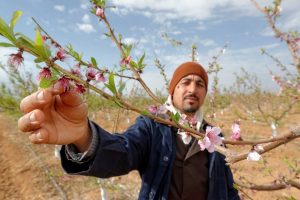
Le Programme d’appui au développement des zones défavorisées (AZD) de l’OIT en Tunisie financé par l’Union Européenne a mis en place des formations d’ouvriers agricoles dans la ville de Regueb. Il s’agissait de combler l’absence de formations existantes dans ce domaine, ce qui ne permettait pas aux habitants de la région, à la terre pourtant fertile, de tirer profit des possibilités offertes en matière d’emplois.

Subject Tags:

Agriculture

Slug
agriculture
Identifier
225

Skills re-training

Slug
skills-re-training
Identifier
655

Vocational training

Slug
vocational-training
Identifier
124
Regions:

Africa

Region Image
Countries and territories:

Age, ageing and skills: Results from the survey of adult skills

Age, ageing and skills: Results from the survey of adult skills

Type:
Document
Content Type:
Age, ageing and skills: Results from the survey of adult skills
Language:

English

Slug
english
Identifier
skpEng
Sources:

Information is gathered from other international organizations that promote skills development and the transition from education and training to work. The Interagency Group on Technical and Vocational Education and Training (IAG-TVET) was established in 2009 to share research findings, coordinate joint research endeavours, and improve collaboration among organizations working at the international and national levels.

Thumbnail
Identifier
skpIntOrg
Slug
international-organizations
Topics:

Older workers

Thumbnail

Access for all to good quality education, vocational training and workplace learning is a fundamental principle of social cohesion and economic growth. Some groups of people may require targeted attention if they are to benefit from education, training and employment opportunities.

This is particularly the case for disadvantaged youth, lower skilled workers, people with disabilities, and people in rural communities. The attractiveness of vocational education and training is enhanced when combined with entrepreneurship training and when public policies encourage utilization of higher skills by business.

Identifier
skpOldwor
Slug
older-workers
Knowledge Products:

Research papers

Working papers, reports, and other publications from international organizations, academic institutions and bilateral agencies. Research findings to stimulate informed debate on skills, employment and productivity issues. 

Thumbnail
Identifier
skpRPS
Slug
research-papers
Publication Date:
06 May 2016
This paper presents a comprehensive analysis of the link between age and proficiency in information-processing skills, based on information drawn from the Survey of Adult Skills (PIAAC). The data reveal significant age-related differences in proficiencies, strongly suggesting that proficiency tends to ‘naturally’ decline with age.

DOI: 10.1787/5jm0q1n38lvc-en
Subject Tags:

Employability

Slug
employability
Identifier
643

Older workers

Slug
older-workers
Identifier
682

Skills re-training

Slug
skills-re-training
Identifier
655

Skills upgrading

Slug
skills-upgrading
Identifier
657
Regions: