Africa

Region Image

Call for Expression of Interest in professional training in Career Guidance

Call for Expression of Interest in professional training in Career Guidance

Type:
Document
Content Type:
News
Language:

English

Slug
english
Identifier
skpEng
Sources:

Academic institutions

Research papers, synthesis reports, country and programme studies are collected from many academic institutions and national, regional and international professional associations.

Thumbnail
Identifier
skpAcaInst
Slug
academic-institutions
Topics:

Career guidance and employment services

Thumbnail

Career guidance and counselling, career education and lifelong development of skills for employability are key for success in learning activities, effective career transitions, livelihood planning, entrepreneurship and in increasing labour market participation. They are instrumental in promoting skills utilization, recognition (RPL), as well as in improving enterprise human resource management.

Career development activities encompass a wide variety of support activities including career information and advice, counselling, work exposure (e.g. job shadowing, work experience periods), assessment, coaching, mentoring, professional networking, advocacy, basic and employability skills training (curricular and non-curricular) and entrepreneurship training. It is often an area which is fragmented across different ministries (e.g. education, TVET, employment, youth) requiring an effort to achieve the necessary coordination to provide adequate support to individuals during learning, employment and unemployment/inactivity periods.
 

Identifier
skpLMIES
Slug
career-guidance-and-employment-services

Core skills and literacy

Thumbnail

Core employability skills build upon and strengthen the skills developed through basic education; the technical skills needed for specific occupations or to perform specific tasks or duties (such as nursing, accounting, using technology or driving a forklift); and professional/personal attributes such as honesty, reliability, punctuality and loyalty. 
Core work skills enable individuals to constantly acquire and apply new knowledge and skills; they are also critical to lifelong learning. Various agencies and organizations have given different labels to these skills, ranging from “key competencies” to “soft skills”, “transferable skills” or “essential skills”.
 

Identifier
skpCore
Slug
core-skills-and-literacy

Youth employability

Thumbnail

Globally, nearly 68 million young women and men are looking for and available for work,  and an estimated 123 million young people are working but living in poverty. The number who are not in employment, education or training (NEET) stands at 267 million, a majority of whom are young women. Significantly, young people are three times as likely as adults (25 years and older) to be unemployed.

Skills development is a primary means of enabling young people to make a smooth transition to work. A comprehensive approach is required to integrate young women and men in the labour market, including relevant and quality skills training, labour market information, career guidance and employment services, recognition of prior learning, incorporating entrepreneurship with training and effective skills forecasting. Improved basic education and core work skills are particularly important to enable youth to engage in lifelong learning as well as transition to the labour market. 

Identifier
skpYoEmp
Slug
youth-employability

Other topic

Thumbnail
Identifier
skpOIssue
Slug
other-topic
Knowledge Products:

Promotional material

Presentations, discussion papers, meeting reports, promotional materials, videos, fact sheets, brochures and newsletters on skills development for employment.

Thumbnail
Identifier
skpAIM
Slug
promotional-material
Publication Date:
06 Oct 2021

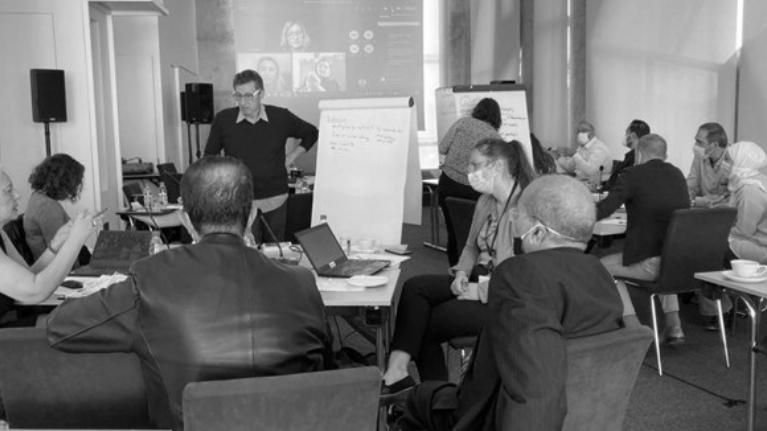
A Master in Lifelong Career Guidance and Development for countries in the MENA (Middle East and North Africa) region, will be offered by the University of Malta with the expert support of the European Training Foundation, the International Labour Organization, and the UNESCO-UNITWIN network.
The Master will be offered online on a part-time basis, starting October 2022.

On-line, part-time Master in Lifelong Career Guidance specifically for the MENA region


Career guidance (or ‘vocational guidance’) has been adopted in several countries in the world because it:

  • helps young people and adults choose their educational and employment pathways more wisely;
  • leads to appropriate choices that ensure more motivated students and more productive and satisfied workers;
  • facilitates a better match between the demand and supply of skills.


Career guidance services are greatly needed in the MENA region. They can be part of the strategy to address the twin challenge of high youth and adult unemployment on the one hand, and skills gaps on the other. They can also foster social inclusion through giving access to a livelihood.


The University of Malta – with the expert support of the European Training Foundation (ETF), the International Labour Organization (ILO), and the UNESCO-UNITWIN Network – has issued a Call for the Expression of Interest for those who would like to receive professional training in career guidance.


The Master course is designed in such a way as to

  • take into account the economic, labour market, educational and cultural realities of the MENA region;
  • provide participants with the interdisciplinary theoretical background and practical experience needed in order to design, deliver, and evaluate lifelong career guidance services;
  • promote regional expertise in policy development, systems-building, and practitioner competence. 


Individuals as well as public and private entities interested in the Masters can


  • email the course coordinators for further information. Professor Ronald G. Sultana ([email protected]) and Dr Manwel Debono ([email protected]) will be happy to respond to questions.


Scholarships, in the form of partial fee waivers, are being offered by the University of Malta to deserving applicants.

Rapid Assessment of Skilling and Reskilling needs arising from the effects of COVID-19

Rapid Assessment of Skilling and Reskilling needs arising from the effects of COVID-19

Type:
Document
Content Type:
Publication
Language:

English

Slug
english
Identifier
skpEng
Sources:

ILO

The International Labour Organization is the tripartite U.N. agency that promotes Decent Work through employment, social security, labour standards and social dialogue. Its work on skills development is guided by the conceptual framework on Skills to improve productivity, employment growth, and development agreed in 2008 by representatives of Governments, Employers’ Associations and Workers’ Associations. Research, policy advice, and pilot projects and technical cooperation programmes to apply good practices in different circumstances across its 185 member States aims to boost the employability of workers, the productivity and competitiveness of enterprises, and the inclusiveness of economic growth. The ILO Secretariat in offices in 40 countries works with Ministries of Labour, employers’ organizations, and trade unions to integrate skills development into national and sector development strategies in order to better meet current labour market needs and to prepare for the jobs of the future; to expand access to employment-related training so that youth, persons with disabilities and other vulnerable groups are better able to acquire skills and secure productive and decent work; and to improve the ability of public employment services to provide career guidance, maintain labour exchange services, and deliver active labour market programmes.For more information regarding the ILO’s work on skills and employability go to: http://www.ilo.org/skills/lang--en/index.htm; for ILO/Cinterfor's Knowledge Management Plarform, see: http://www.oitcinterfor.org

Thumbnail
Identifier
skpILO
Slug
ilo

Other sources

Experts from many international, regional and national agencies generously share their views, experiences and findings on skills, helping policy-makers among other stakeholders to understand the linkages between education, training and the world of work, and how to integrate skills into national development planning to promote employment and economic growth.

Thumbnail
Identifier
skpOSource
Slug
other-sources
Topics:

Anticipating and matching skills needs

Thumbnail

Anticipating and building skills for the future is essential to a rapidly changing labour market. This applies to changes in the types and levels of skills needed as well as in occupational and technical areas. Effective methods to anticipate future skills needs and avoid potential mismatches include: sustained dialogue between employers and trainers, coordination across government institutions, labour market information systems, employment services and performance reviews of training institutions. 

Identifier
skpAFSN
Slug
anticipating-and-matching-skills-needs
Knowledge Products:

Research papers

Working papers, reports, and other publications from international organizations, academic institutions and bilateral agencies. Research findings to stimulate informed debate on skills, employment and productivity issues. 

Thumbnail
Identifier
skpRPS
Slug
research-papers
Publication Date:
26 Sep 2021
This rapid skills survey report presents the findings for the rapid assessment and provides practical and actionable recommendations that can help limit the career-scarring effects of the pandemic on workers through provision of skilling and reskilling, measures. The report also provides skills related actionable recommendations for the economic recovery of the companies in the subsectors that were assessed.
The report focuses on the clothing and textiles and e-commerce sectors (online retail, banking, and insurance), which were identified as sectors that have either been negatively impacted by the COVID-19 pandemic or are experiencing a spike in demand for specific occupations and top-up skills. Acknowledging the devastating impact
the COVID-19 pandemic has had on youth and women, rapid assessment put a special focus on the training, reskilling, and upskilling, since they are vulnerable to labour market downturns. The report is concise, short, and to-the-point, and provides a clear analysis and recommends prioritization of actions for rapid implementation,
a move from the normal by delivering skills development differently in response to the current labour market needs, and repurposing existing programmes. The recommendations are concrete but aimed at making a big difference at a minimal cost.
Subject Tags:

Skilled workers

Slug
skilled-workers
Identifier
45

Skills anticipation

Slug
skills-anticipation
Identifier
677
Regions:

Africa

Region Image

Le tournant de l'apprentissage numérique en Afrique: le rôle des écosystèmes locaux; la Coalition mondiale pour l'éducation célèbre la Journée de l'Afrique

Le tournant de l'apprentissage numérique en Afrique: le rôle des écosystèmes locaux; la Coalition mondiale pour l'éducation célèbre la Journée de l'Afrique

Type:
Document
Content Type:
Meeting document
Language:

French

Slug
french
Identifier
skpFrn
Sources:

Information is gathered from other international organizations that promote skills development and the transition from education and training to work. The Interagency Group on Technical and Vocational Education and Training (IAG-TVET) was established in 2009 to share research findings, coordinate joint research endeavours, and improve collaboration among organizations working at the international and national levels.

Thumbnail
Identifier
skpIntOrg
Slug
international-organizations
Topics:

Apprenticeships

Thumbnail

Quality apprenticeships based on robust social dialogue and public-private partnerships can improve employment prospects for young people while developing high level skills identified by employers as necessary for growth and increased productivity. Both informal and regulated apprenticeship systems are important learning resources enabling young people to overcome the work-inexperience trap, gain new and enhanced skills and recognized qualifications.

Upgrading informal apprenticeships and expanding regulated ones is a cost-effective way to invest in a country’s skills base, promote economic growth and enhance the employability of youth.

Identifier
skpAppren
Slug
apprenticeships
Knowledge Products:

Other knowledge products

Thumbnail
Identifier
skpOProduct
Slug
other-knowledge-products
Publication Date:
21 Sep 2021

Le 25 mai 2021, à l'occasion de la Journée de l'Afrique, l'UNESCO a réuni des ministres africains, des acteurs clés de l'éducation et des représentants du secteur privé lors d'un forum virtuel de la Coalition mondiale pour l'éducation (GEC) auquel ont participé plus de 200 personnes.

Subject Tags:

Apprenticeships

Slug
apprenticeships
Identifier
639

Information and communication technologies

Slug
information-and-communication-technologies
Identifier
346
Regions:

Africa

Region Image

Le tournant de l'apprentissage numérique en Afrique: le rôle des écosystèmes locaux; la Coalition mondiale pour l'éducation célèbre la Journée de l'Afrique

Le tournant de l'apprentissage numérique en Afrique: le rôle des écosystèmes locaux; la Coalition mondiale pour l'éducation célèbre la Journée de l'Afrique

Type:
Document
Content Type:
Meeting document
Language:

French

Slug
french
Identifier
skpFrn
Sources:

Information is gathered from other international organizations that promote skills development and the transition from education and training to work. The Interagency Group on Technical and Vocational Education and Training (IAG-TVET) was established in 2009 to share research findings, coordinate joint research endeavours, and improve collaboration among organizations working at the international and national levels.

Thumbnail
Identifier
skpIntOrg
Slug
international-organizations
Topics:

Apprenticeships

Thumbnail

Quality apprenticeships based on robust social dialogue and public-private partnerships can improve employment prospects for young people while developing high level skills identified by employers as necessary for growth and increased productivity. Both informal and regulated apprenticeship systems are important learning resources enabling young people to overcome the work-inexperience trap, gain new and enhanced skills and recognized qualifications.

Upgrading informal apprenticeships and expanding regulated ones is a cost-effective way to invest in a country’s skills base, promote economic growth and enhance the employability of youth.

Identifier
skpAppren
Slug
apprenticeships
Knowledge Products:

Other knowledge products

Thumbnail
Identifier
skpOProduct
Slug
other-knowledge-products
Publication Date:
21 Sep 2021

Le 25 mai 2021, à l'occasion de la Journée de l'Afrique, l'UNESCO a réuni des ministres africains, des acteurs clés de l'éducation et des représentants du secteur privé lors d'un forum virtuel de la Coalition mondiale pour l'éducation (GEC) auquel ont participé plus de 200 personnes.

Subject Tags:

Apprenticeships

Slug
apprenticeships
Identifier
639

Information and communication technologies

Slug
information-and-communication-technologies
Identifier
346
Regions:

Africa

Region Image

SABER Workforce Development Uganda Country Report 2012

SABER Workforce Development Uganda Country Report 2012

Type:
Document
Content Type:
Project documentation
Language:

English

Slug
english
Identifier
skpEng
Sources:

Information is gathered from other international organizations that promote skills development and the transition from education and training to work. The Interagency Group on Technical and Vocational Education and Training (IAG-TVET) was established in 2009 to share research findings, coordinate joint research endeavours, and improve collaboration among organizations working at the international and national levels.

Thumbnail
Identifier
skpIntOrg
Slug
international-organizations
Topics:

Participation of employers' and workers' organizations

Thumbnail

The world of learning and the world of work are separate but linked. While one involves learning, the other produces goods and services. Neither can thrive without the other. Strong partnerships between government, employers and workers help ensure the relevance of training to the changing needs of enterprises and labour markets. 

Identifier
skpPSP
Slug
participation-of-employers-and-workers-organizations
Knowledge Products:

Evaluation reports

Analytical assessments of technical cooperation programmes and national skills and employment policies, identifying success factors of different interventions in response to particular challenges in different circumstances.

Thumbnail
Identifier
skpEvalRep
Slug
evaluation-reports

Research papers

Working papers, reports, and other publications from international organizations, academic institutions and bilateral agencies. Research findings to stimulate informed debate on skills, employment and productivity issues. 

Thumbnail
Identifier
skpRPS
Slug
research-papers
Publication Date:
13 Sep 2021
The SABER-WfD benchmarking results reveal that while the country’s
political leaders are highly committed to WfD, the system’s capacity to deliver results is
lamentably weak. Addressing all the gaps will require sustained effort and collaboration
across multiple stakeholders inside and outside government. An urgent priority, however, is
to define the modus operandi for enlarging the role of employers and industry stakeholders.
Constituting and empowering an apex-level body to guide this effort would be a good start. By
focusing initially on a few key economic sectors with high growth prospects, this body’s
strategic quick wins in establishing effective partnerships between employers and training
providers would help clarify the operational arrangements for institutional autonomy and
accountability for results. Its experience would provide critical insights for the systemic
transformation of the BTVET sub-sector in the coming years.
Subject Tags:

Economic and social development

Slug
economic-and-social-development
Identifier
125

Workers participation

Slug
workers-participation
Identifier
89
Regions:

Africa

Region Image

SABER Workforce Development Morocco Country Report 2012

SABER Workforce Development Morocco Country Report 2012

Type:
Document
Content Type:
Project documentation
Language:

English

Slug
english
Identifier
skpEng
Sources:

Information is gathered from other international organizations that promote skills development and the transition from education and training to work. The Interagency Group on Technical and Vocational Education and Training (IAG-TVET) was established in 2009 to share research findings, coordinate joint research endeavours, and improve collaboration among organizations working at the international and national levels.

Thumbnail
Identifier
skpIntOrg
Slug
international-organizations
Topics:

Participation of employers' and workers' organizations

Thumbnail

The world of learning and the world of work are separate but linked. While one involves learning, the other produces goods and services. Neither can thrive without the other. Strong partnerships between government, employers and workers help ensure the relevance of training to the changing needs of enterprises and labour markets. 

Identifier
skpPSP
Slug
participation-of-employers-and-workers-organizations
Knowledge Products:

Evaluation reports

Analytical assessments of technical cooperation programmes and national skills and employment policies, identifying success factors of different interventions in response to particular challenges in different circumstances.

Thumbnail
Identifier
skpEvalRep
Slug
evaluation-reports

Research papers

Working papers, reports, and other publications from international organizations, academic institutions and bilateral agencies. Research findings to stimulate informed debate on skills, employment and productivity issues. 

Thumbnail
Identifier
skpRPS
Slug
research-papers
Publication Date:
13 Sep 2021
Cette étude a pour but de donner une image
objective du dispositif de développement de la force
de travail du Maroc. Elle est basée sur un outil
d\'analyse des systèmes d\'éducation et de
développement de la force de travail (SABER?DMO).
Cet outil permet de documenter et d\'évaluer les
politiques et les institutions du pays au regard des
bonnes pratiques internationales.
Réalisée sur la base de consultations des parties
prenantes du dispositif de développement de la
main d\'œuvre du Maroc, l\'étude offre à leur
attention un cadre de référence afin d’évaluer la
trajectoire de développement du dispositif marocain.
Subject Tags:

Economic and social development

Slug
economic-and-social-development
Identifier
125

Workers participation

Slug
workers-participation
Identifier
89
Regions:

Africa

Region Image

Continental virtual conference on skills anticipation and matching in Africa

Continental virtual conference on skills anticipation and matching in Africa

Kind:
Event
Start Date:
15 Sep 2021
End Date:
17 Jun 2026
Event Location:
Online
EventType:
Language:

English

Slug
english
Identifier
skpEng
Language Version:
--
Sources:

ILO

The International Labour Organization is the tripartite U.N. agency that promotes Decent Work through employment, social security, labour standards and social dialogue. Its work on skills development is guided by the conceptual framework on Skills to improve productivity, employment growth, and development agreed in 2008 by representatives of Governments, Employers’ Associations and Workers’ Associations. Research, policy advice, and pilot projects and technical cooperation programmes to apply good practices in different circumstances across its 185 member States aims to boost the employability of workers, the productivity and competitiveness of enterprises, and the inclusiveness of economic growth. The ILO Secretariat in offices in 40 countries works with Ministries of Labour, employers’ organizations, and trade unions to integrate skills development into national and sector development strategies in order to better meet current labour market needs and to prepare for the jobs of the future; to expand access to employment-related training so that youth, persons with disabilities and other vulnerable groups are better able to acquire skills and secure productive and decent work; and to improve the ability of public employment services to provide career guidance, maintain labour exchange services, and deliver active labour market programmes.For more information regarding the ILO’s work on skills and employability go to: http://www.ilo.org/skills/lang--en/index.htm; for ILO/Cinterfor's Knowledge Management Plarform, see: http://www.oitcinterfor.org

Thumbnail
Identifier
skpILO
Slug
ilo

Other sources

Experts from many international, regional and national agencies generously share their views, experiences and findings on skills, helping policy-makers among other stakeholders to understand the linkages between education, training and the world of work, and how to integrate skills into national development planning to promote employment and economic growth.

Thumbnail
Identifier
skpOSource
Slug
other-sources
Topics:

Anticipating and matching skills needs

Thumbnail

Anticipating and building skills for the future is essential to a rapidly changing labour market. This applies to changes in the types and levels of skills needed as well as in occupational and technical areas. Effective methods to anticipate future skills needs and avoid potential mismatches include: sustained dialogue between employers and trainers, coordination across government institutions, labour market information systems, employment services and performance reviews of training institutions. 

Identifier
skpAFSN
Slug
anticipating-and-matching-skills-needs
Knowledge Products:

Raising awareness about the importance of anticipating labour market skills needs

Under the auspices of the Skills Initiative for Africa, (SIFA) the Africa Union Commission, and African Union Development Agency (AUDA-NPEAD), with the technical support of the International Labour Organization will be holding an Africa wide conference on Skills Anticipation.
 

The Conference, a three-day virtual event will take place on 15, 16 and 17 September 2021 and will bring together policy makers, labour market actors to discuss challenges that African countries face in addressing the persistent imbalance between the demand and the supply of skill on the African continent.

The overall objective of the conference is to raise awareness about the strategic role that skills anticipation and matching can play in guiding labour market actors to systematically identify and address future skills needs to avoid potential skills gaps.  

Her Excellencies, Commissioner Professor Sarah Anyang of the African Union, Ambassador Birgitte Markussen of the European Union and the ILO Assistant Director-General and the Regional Director for Africa, Ms. Cynthia Samuel-Olonjuwon will jointly open the proceedings of the conference.

The highlights of the conference include a scene setting talk by Mr. Srinivas Reddy, ILO’s Chief of   Skills and Employability Branch, and keynote address on skills anticipation by Ms. Olga Strietska-Ilina, ILO’s Lead on skills strategies for future labour markets.

A context setting discussion featuring high profile discussants from African member states will explore pathways for Africa’s future skill needs.

Two thematic discussions on the skill implications of the impact of COVID 19 on African labour markets and how countries can strengthen their skills anticipation systems will also be part of the programme of events.

A virtual fair where countries, programmes and organizations will show case skills development related good, practice and knowledge products will start as a pre-conference event on 15 September 2021 and will run until the 16 September 2021. The virtual fair will also be an opportunities for practitioner to network and share experiences

The ultimate objective of the conference is to help African Member States to position structured skills anticipation and matching as one of it’s tools for achieving the Agenda 2063 aspiration for an “Africa whose development is people-driven, and which relies on the potential of its people”.

The Continental Conference, and the overall capacity building work under  the ILO supported skills anticipation component of the SIFA Programme is a stepping stone toward the much needed systems strengthening efforts aimed at improving evidence based skills policy and strategies development and implementation in Africa.

The conference will conclude with the presentation of recommendations on how Africa Union member states can enhance the responsiveness of skills development systems through improved skills anticipation measures.

Ms. Jennifer Chiriga, the Chief of Staff of the African Union Development Agency – NEPAD, Dr. Joni Musabayana, Director of the ILO Decent Work Team for Eastern and Southern Africa, and Mr. Ernst Hustaedt, the Program Director for the SIFA Programme Technical Cooperation Component will preside over the closing of the conference.

For more information about the event click here.

Subject Tags:

Skills anticipation

Slug
skills-anticipation
Identifier
677
Regions:

Africa

Region Image
Countries and territories:
Economic groups:
--

SABER Workforce Development Egypt Country Report 2014

SABER Workforce Development Egypt Country Report 2014

Type:
Document
Content Type:
Project documentation
Language:

English

Slug
english
Identifier
skpEng
Sources:

Information is gathered from other international organizations that promote skills development and the transition from education and training to work. The Interagency Group on Technical and Vocational Education and Training (IAG-TVET) was established in 2009 to share research findings, coordinate joint research endeavours, and improve collaboration among organizations working at the international and national levels.

Thumbnail
Identifier
skpIntOrg
Slug
international-organizations
Topics:

Participation of employers' and workers' organizations

Thumbnail

The world of learning and the world of work are separate but linked. While one involves learning, the other produces goods and services. Neither can thrive without the other. Strong partnerships between government, employers and workers help ensure the relevance of training to the changing needs of enterprises and labour markets. 

Identifier
skpPSP
Slug
participation-of-employers-and-workers-organizations
Knowledge Products:

Evaluation reports

Analytical assessments of technical cooperation programmes and national skills and employment policies, identifying success factors of different interventions in response to particular challenges in different circumstances.

Thumbnail
Identifier
skpEvalRep
Slug
evaluation-reports

Research papers

Working papers, reports, and other publications from international organizations, academic institutions and bilateral agencies. Research findings to stimulate informed debate on skills, employment and productivity issues. 

Thumbnail
Identifier
skpRPS
Slug
research-papers
Publication Date:
12 Sep 2021
SABER Workforce Development Egypt Country Report 2014
Subject Tags:

Economic and social development

Slug
economic-and-social-development
Identifier
125

Workers participation

Slug
workers-participation
Identifier
89
Regions:

Africa

Region Image

SABER Workforce Development Tunisia Country Report 2012

SABER Workforce Development Tunisia Country Report 2012

Type:
Document
Content Type:
SABER Workforce Development Tunisia Country Report 2012
Language:

French

Slug
french
Identifier
skpFrn
Sources:

Information is gathered from other international organizations that promote skills development and the transition from education and training to work. The Interagency Group on Technical and Vocational Education and Training (IAG-TVET) was established in 2009 to share research findings, coordinate joint research endeavours, and improve collaboration among organizations working at the international and national levels.

Thumbnail
Identifier
skpIntOrg
Slug
international-organizations
Topics:
Knowledge Products:

Evaluation reports

Analytical assessments of technical cooperation programmes and national skills and employment policies, identifying success factors of different interventions in response to particular challenges in different circumstances.

Thumbnail
Identifier
skpEvalRep
Slug
evaluation-reports
Publication Date:
12 Sep 2021

Cette étude a pour but de donner une image objective
du dispositif de développement de la force de travail de
la Tunisie. Elle est basée sur un outil d'analyse des
systèmes d'éducation et de développement de la force
de travail (SABERͲDMO). Cet outil permet de
documenter et d'évaluer les politiques et les institutions
du pays au regard des bonnes pratiques internationales.
Réalisée sur la base de consultations des parties
prenantes du dispositif de développement de la main
d'œuvre de la Tunisie, l'étude offre à leur attention un
cadre de référence afin d’évaluer la trajectoire de
développement du dispositif tunisien.

Subject Tags:

Economic and social development

Slug
economic-and-social-development
Identifier
125

Workers participation

Slug
workers-participation
Identifier
89
Regions:

Africa

Region Image
Countries and territories:

SABER Workforce Development Tanzania Country Report 2015

SABER Workforce Development Tanzania Country Report 2015

Type:
Document
Content Type:
Project documentation
Language:

English

Slug
english
Identifier
skpEng
Sources:

Information is gathered from other international organizations that promote skills development and the transition from education and training to work. The Interagency Group on Technical and Vocational Education and Training (IAG-TVET) was established in 2009 to share research findings, coordinate joint research endeavours, and improve collaboration among organizations working at the international and national levels.

Thumbnail
Identifier
skpIntOrg
Slug
international-organizations
Topics:

Participation of employers' and workers' organizations

Thumbnail

The world of learning and the world of work are separate but linked. While one involves learning, the other produces goods and services. Neither can thrive without the other. Strong partnerships between government, employers and workers help ensure the relevance of training to the changing needs of enterprises and labour markets. 

Identifier
skpPSP
Slug
participation-of-employers-and-workers-organizations
Knowledge Products:

Evaluation reports

Analytical assessments of technical cooperation programmes and national skills and employment policies, identifying success factors of different interventions in response to particular challenges in different circumstances.

Thumbnail
Identifier
skpEvalRep
Slug
evaluation-reports
Publication Date:
10 Sep 2021
This report presents the findings of an assessment of Tanzania’s workforce development (WfD) system based on 
the World Bank’s Systems Approach for Better Education Results (SABER) WfD systems benchmarking tool. The 
focus is on policies, institutions, and practices in three important system dimensions: strategic framework, system oversight, and service delivery. By systematically benchmarking the state of policies and practices across these 
three  dimensions,  this  report aims  to inform  dialogue  on important WfD  system  reforms  by  situating current  policies and institutional performance against global good practices.
Subject Tags:

Workers participation

Slug
workers-participation
Identifier
89
Regions:

Africa

Region Image