Employment policy

Slug
employment-policy
Identifier
16

ILO participates at the Global Lifelong Learning Summit 2022

ILO participates at the Global Lifelong Learning Summit 2022

Type:
Document
Content Type:
News
Language:

English

Slug
english
Identifier
skpEng
Sources:

ILO

The International Labour Organization is the tripartite U.N. agency that promotes Decent Work through employment, social security, labour standards and social dialogue. Its work on skills development is guided by the conceptual framework on Skills to improve productivity, employment growth, and development agreed in 2008 by representatives of Governments, Employers’ Associations and Workers’ Associations. Research, policy advice, and pilot projects and technical cooperation programmes to apply good practices in different circumstances across its 185 member States aims to boost the employability of workers, the productivity and competitiveness of enterprises, and the inclusiveness of economic growth. The ILO Secretariat in offices in 40 countries works with Ministries of Labour, employers’ organizations, and trade unions to integrate skills development into national and sector development strategies in order to better meet current labour market needs and to prepare for the jobs of the future; to expand access to employment-related training so that youth, persons with disabilities and other vulnerable groups are better able to acquire skills and secure productive and decent work; and to improve the ability of public employment services to provide career guidance, maintain labour exchange services, and deliver active labour market programmes.For more information regarding the ILO’s work on skills and employability go to: http://www.ilo.org/skills/lang--en/index.htm; for ILO/Cinterfor's Knowledge Management Plarform, see: http://www.oitcinterfor.org

Thumbnail
Identifier
skpILO
Slug
ilo
Topics:

Access to training

Thumbnail

Access for all to good quality education, vocational training and workplace learning is a fundamental principle of social cohesion and economic growth. Some groups of people may require targeted attention if they are to benefit from education, training and employment opportunities.  

This is particularly the case for disadvantaged youth, lower skilled workers, people with disabilities, and people in rural communities. The attractiveness of vocational education and training is enhanced when combined with entrepreneurship training and when public policies encourage utilization of higher skills by business. 
 

Identifier
skpATSU
Slug
access-to-training

Lifelong learning

Thumbnail

There is a critical need for a greater overall investment in education and training, particularly in developing countries. Education and training investments should be closely linked to economic and employment growth strategies and programmes. Responsibility should be shared between the government (primary responsibility), enterprises, the social partners, and the individual. To make lifelong learning for all a reality, countries will need to make major reforms of their vocational and education and training systems. School-to-work schemes for young people should integrate education with workplace learning. Training systems need to become more flexible and responsive to rapidly changing skill requirements. Reforms should also focus on how learning can be facilitated, not just on training for specific occupational categories.

Identifier
skpPSLLL
Slug
lifelong-learning
Knowledge Products:

Promotional material

Presentations, discussion papers, meeting reports, promotional materials, videos, fact sheets, brochures and newsletters on skills development for employment.

Thumbnail
Identifier
skpAIM
Slug
promotional-material
Publication Date:
21 Dec 2022
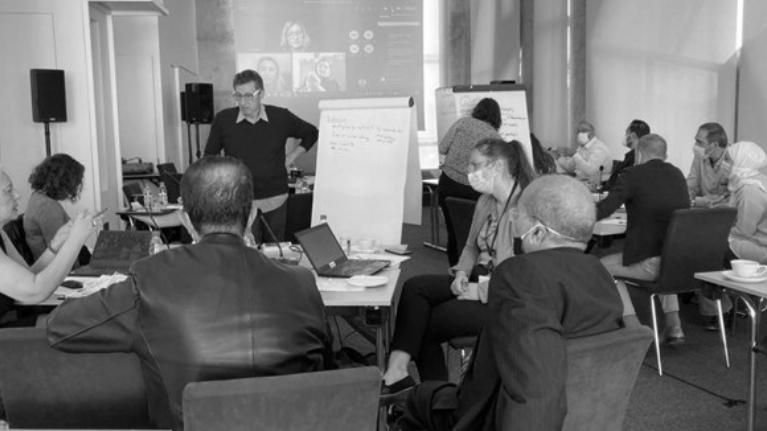
Singapore’s inaugural Global Lifelong Learning Summit was held on 1-2 November 2022 under the theme “Maximizing the socio-economic impact of lifelong learning”. It was jointly organized by the Institute for Adult Learning (IAL) and SkillsFuture Singapore (SSG).

Summit participants included, among others, leaders of international organizations, educational institutions, representatives of government administrations, businesses, workers’ organizations, and champions of less traditional forms of adult learning.

The Summit provided a platform for dialogue on how lifelong learning can support inclusive economic growth, and help workers adapt to increasingly rapid changes to their workplace and work requirements.

The Summit featured a series of international panel sessions by the Asia-Europe Meeting (ASEM) Lifelong Learning Hub; the International Labour Organization (ILO); the Organisation for Economic Co-operation and Development (OECD); and the UNESCO Institute for Lifelong Learning (UIL).

The ILO contributed to the Global Summit by organizing a workshop in collaboration with UNICEF on micro-credentials, which are becoming increasingly popular tools to recognize the completion of short-term learning activities.

Subject Tags:

Access to training

Slug
access-to-training
Identifier
683

Employment policy

Slug
employment-policy
Identifier
16

Skills upgrading

Slug
skills-upgrading
Identifier
657
Regions:

Tripartite workshop for the pilot on recognition and harmonization of occupational standards in the agriculture and construction sectors of Ghana, Nigeria, and Togo

Tripartite workshop for the pilot on recognition and harmonization of occupational standards in the agriculture and construction sectors of Ghana, Nigeria, and Togo

Type:
Document
Content Type:
News
Language:

English

Slug
english
Identifier
skpEng
Sources:

ILO

The International Labour Organization is the tripartite U.N. agency that promotes Decent Work through employment, social security, labour standards and social dialogue. Its work on skills development is guided by the conceptual framework on Skills to improve productivity, employment growth, and development agreed in 2008 by representatives of Governments, Employers’ Associations and Workers’ Associations. Research, policy advice, and pilot projects and technical cooperation programmes to apply good practices in different circumstances across its 185 member States aims to boost the employability of workers, the productivity and competitiveness of enterprises, and the inclusiveness of economic growth. The ILO Secretariat in offices in 40 countries works with Ministries of Labour, employers’ organizations, and trade unions to integrate skills development into national and sector development strategies in order to better meet current labour market needs and to prepare for the jobs of the future; to expand access to employment-related training so that youth, persons with disabilities and other vulnerable groups are better able to acquire skills and secure productive and decent work; and to improve the ability of public employment services to provide career guidance, maintain labour exchange services, and deliver active labour market programmes.For more information regarding the ILO’s work on skills and employability go to: http://www.ilo.org/skills/lang--en/index.htm; for ILO/Cinterfor's Knowledge Management Plarform, see: http://www.oitcinterfor.org

Thumbnail
Identifier
skpILO
Slug
ilo
Topics:

Access to training

Thumbnail

Access for all to good quality education, vocational training and workplace learning is a fundamental principle of social cohesion and economic growth. Some groups of people may require targeted attention if they are to benefit from education, training and employment opportunities.  

This is particularly the case for disadvantaged youth, lower skilled workers, people with disabilities, and people in rural communities. The attractiveness of vocational education and training is enhanced when combined with entrepreneurship training and when public policies encourage utilization of higher skills by business. 
 

Identifier
skpATSU
Slug
access-to-training

Lifelong learning

Thumbnail

There is a critical need for a greater overall investment in education and training, particularly in developing countries. Education and training investments should be closely linked to economic and employment growth strategies and programmes. Responsibility should be shared between the government (primary responsibility), enterprises, the social partners, and the individual. To make lifelong learning for all a reality, countries will need to make major reforms of their vocational and education and training systems. School-to-work schemes for young people should integrate education with workplace learning. Training systems need to become more flexible and responsive to rapidly changing skill requirements. Reforms should also focus on how learning can be facilitated, not just on training for specific occupational categories.

Identifier
skpPSLLL
Slug
lifelong-learning

Migrant workers

Thumbnail

According to the ILO global estimates on migrant workers, there were around 164 million migrant workers in 2017. 

Migrant workers contribute to growth and development in their countries of destination, while countries of origin greatly benefit from their remittances and the skills acquired during their migration experience. Yet, many migrant workers face challenges in accessing quality training and decent jobs including under-utilization of skills, a lack of employment or training opportunities, lack of information, and exploitation of low-skilled workers.

To address these challenges, countries need to strengthen skills anticipation systems to inform migration policies, increase access to education and training, and establish bilateral or multilateral recognition of qualifications and skills.

Identifier
skpMigWor
Slug
migrant-workers
Knowledge Products:

Research papers

Working papers, reports, and other publications from international organizations, academic institutions and bilateral agencies. Research findings to stimulate informed debate on skills, employment and productivity issues. 

Thumbnail
Identifier
skpRPS
Slug
research-papers
Publication Date:
21 Dec 2022

Under the Global Programme on Skills and Lifelong Learning (GPSL3) funded by Norway, tripartite constituents from Ghana, Nigeria and Togo met in Accra on the 30th of November 2022, to strengthen the skills partnership between the three countries active since 2019 and promote skills portability and recognition in the region.

 
This workshop concluded a series of online and country-level face-to-face consultations and exchange processes with representatives of government, workers\' and employers\' organizations from each country to increase skills portability in West Africa and through a skills partnership on migration. The partnership idea between the three countries was developed at the subregional tripartite workshop held in Abuja in September 2019. The purpose of this technical workshop will be for representatives of the three countries to present the skills ecosystems in their respective countries to the other representatives and to discuss the next steps and strategy to promote skills portability and recognition of the harmonized minimum standards at the national levels/ regional levels in the agriculture and construction sectors. The tripartite workshop was attended by representatives of:
  • The Council for Technical and Vocational Education and Training (Ghana),
  • The Ghana Trades Union Congress (Ghana),
  • Ghana Employers\' Association (Ghana),
  • The Nigeria Labour Congress (Nigeria),
  • The National Board of Technical Education (Nigeria),
  • The Nigeria Employers Consultative Association (Nigeria), 
  • Le Ministère De L\'enseignement Technique, de la Formation et de L\'insertion Professionnelles (Togo),
  • Le Conseil National du Patronat du Togo (Togo)
  • La Confédération Nationale des Travailleurs du Togo

The workshop led to the Validation of the harmonized minimum occupational standards for poultry farming, assistant mason, mason, and plumber, the development of recommendations to further strengthen the skills partnership between Ghana, Nigeria and Togo and the construction of a three-year roadmap for mutual recognition of certifications and youth training in the three countries.
Subject Tags:

Employment policy

Slug
employment-policy
Identifier
16

Labour migration

Slug
labour-migration
Identifier
609

Lifelong learning

Slug
lifelong-learning
Identifier
400

Occupational qualification

Slug
occupational-qualification
Identifier
409
Regions:

Africa

Region Image
Countries and territories:

A review of national career development support systems

A review of national career development support systems

Type:
Document
Content Type:
Publication
Language:

English

Slug
english
Identifier
skpEng
Sources:

ILO

The International Labour Organization is the tripartite U.N. agency that promotes Decent Work through employment, social security, labour standards and social dialogue. Its work on skills development is guided by the conceptual framework on Skills to improve productivity, employment growth, and development agreed in 2008 by representatives of Governments, Employers’ Associations and Workers’ Associations. Research, policy advice, and pilot projects and technical cooperation programmes to apply good practices in different circumstances across its 185 member States aims to boost the employability of workers, the productivity and competitiveness of enterprises, and the inclusiveness of economic growth. The ILO Secretariat in offices in 40 countries works with Ministries of Labour, employers’ organizations, and trade unions to integrate skills development into national and sector development strategies in order to better meet current labour market needs and to prepare for the jobs of the future; to expand access to employment-related training so that youth, persons with disabilities and other vulnerable groups are better able to acquire skills and secure productive and decent work; and to improve the ability of public employment services to provide career guidance, maintain labour exchange services, and deliver active labour market programmes.For more information regarding the ILO’s work on skills and employability go to: http://www.ilo.org/skills/lang--en/index.htm; for ILO/Cinterfor's Knowledge Management Plarform, see: http://www.oitcinterfor.org

Thumbnail
Identifier
skpILO
Slug
ilo
Topics:

Career guidance and employment services

Thumbnail

Career guidance and counselling, career education and lifelong development of skills for employability are key for success in learning activities, effective career transitions, livelihood planning, entrepreneurship and in increasing labour market participation. They are instrumental in promoting skills utilization, recognition (RPL), as well as in improving enterprise human resource management.

Career development activities encompass a wide variety of support activities including career information and advice, counselling, work exposure (e.g. job shadowing, work experience periods), assessment, coaching, mentoring, professional networking, advocacy, basic and employability skills training (curricular and non-curricular) and entrepreneurship training. It is often an area which is fragmented across different ministries (e.g. education, TVET, employment, youth) requiring an effort to achieve the necessary coordination to provide adequate support to individuals during learning, employment and unemployment/inactivity periods.
 

Identifier
skpLMIES
Slug
career-guidance-and-employment-services
Knowledge Products:

Evaluation reports

Analytical assessments of technical cooperation programmes and national skills and employment policies, identifying success factors of different interventions in response to particular challenges in different circumstances.

Thumbnail
Identifier
skpEvalRep
Slug
evaluation-reports

National policies and initiatives

National legislation, policies and initiatives on the issue of training and skills development and the world of work. 

Thumbnail
Identifier
skpNatPol
Slug
national-policies-and-initiatives

Policy and strategy

Recommendations and advice on resolving policy challenges related to skills development systems and their linkages to the world of work.  Concise syntheses of experience from the international organizations.

Thumbnail
Identifier
skpPolOp
Slug
policy-and-strategy
Publication Date:
21 Jan 2022

This report synthesises the results of national career development support system reviews in Armenia, Moldova, Panama and Viet Nam.

This report synthesises the results of four national career development support system reviews in  Armenia, Moldova, Panama, and Viet Nam. The analysis introduces examples of national career development practices and policies, challenges and recommendations for further actions. The report illustrates the added value of ongoing and finalised national review processes, their contribution to system and policy development, taking into account  their diverse societal, economic, and political contexts, as well as the different stages of developing their career development support sys­tems. Aspects discussed include availability and use of labour market information, fragmentation of services, inequalities in access to career support, use of digital technology and the engagement of social partners.

Subject Tags:

Career guidance

Slug
career-guidance
Identifier
640

Employability

Slug
employability
Identifier
643

Employment policy

Slug
employment-policy
Identifier
16
Regions:

Assessing Informality and Vulnerability among Disadvantaged Groups in Lebanon: A Survey of Lebanese, and Syrian and Palestinian Refugees

Assessing Informality and Vulnerability among Disadvantaged Groups in Lebanon: A Survey of Lebanese, and Syrian and Palestinian Refugees

Type:
Document
Content Type:
Publication
Language:

English

Slug
english
Identifier
skpEng
Sources:

ILO

The International Labour Organization is the tripartite U.N. agency that promotes Decent Work through employment, social security, labour standards and social dialogue. Its work on skills development is guided by the conceptual framework on Skills to improve productivity, employment growth, and development agreed in 2008 by representatives of Governments, Employers’ Associations and Workers’ Associations. Research, policy advice, and pilot projects and technical cooperation programmes to apply good practices in different circumstances across its 185 member States aims to boost the employability of workers, the productivity and competitiveness of enterprises, and the inclusiveness of economic growth. The ILO Secretariat in offices in 40 countries works with Ministries of Labour, employers’ organizations, and trade unions to integrate skills development into national and sector development strategies in order to better meet current labour market needs and to prepare for the jobs of the future; to expand access to employment-related training so that youth, persons with disabilities and other vulnerable groups are better able to acquire skills and secure productive and decent work; and to improve the ability of public employment services to provide career guidance, maintain labour exchange services, and deliver active labour market programmes.For more information regarding the ILO’s work on skills and employability go to: http://www.ilo.org/skills/lang--en/index.htm; for ILO/Cinterfor's Knowledge Management Plarform, see: http://www.oitcinterfor.org

Thumbnail
Identifier
skpILO
Slug
ilo
Topics:

Migrant workers

Thumbnail

According to the ILO global estimates on migrant workers, there were around 164 million migrant workers in 2017. 

Migrant workers contribute to growth and development in their countries of destination, while countries of origin greatly benefit from their remittances and the skills acquired during their migration experience. Yet, many migrant workers face challenges in accessing quality training and decent jobs including under-utilization of skills, a lack of employment or training opportunities, lack of information, and exploitation of low-skilled workers.

To address these challenges, countries need to strengthen skills anticipation systems to inform migration policies, increase access to education and training, and establish bilateral or multilateral recognition of qualifications and skills.

Identifier
skpMigWor
Slug
migrant-workers

Monitoring and evaluation

Thumbnail

Measuring the outcomes of skills systems, policies and targeted programmes is essential in order to monitor and improve their effectiveness and relevance. Elements of sound assessment processes include: institutions to sustain feedback from employers and trainees; mechanisms to track labour market outcomes of training and systems of accountability that use this information; and, quantitative and qualitative labour market information and its dissemination to all stakeholders.

Identifier
skpPolPer
Slug
monitoring-and-evaluation
Knowledge Products:

Research papers

Working papers, reports, and other publications from international organizations, academic institutions and bilateral agencies. Research findings to stimulate informed debate on skills, employment and productivity issues. 

Thumbnail
Identifier
skpRPS
Slug
research-papers
Publication Date:
01 Oct 2021

This study assesses the extent of informal employment and vulnerability among the most deprived Lebanese citizens, and the Syrian and Palestinian refugees living in Lebanon, through the analysis of representative survey data on employment and labour market conditions of these three population sub-groups.

A sample of vulnerable households of Lebanese, Syrians and Palestinians was selected from the 251 most vulnerable cadastres in Lebanon – home to 87 percent of displaced Syrians and Palestinian refugees, and 67 percent of deprived Lebanese, as identified by the 2015 United Nations inter-agency assessment, and reported in the Lebanon Crisis Response Plan 2017–2020. Findings show that the compound effects of economic and labour market shocks brought on by currency depreciation, concomitant high levels of inflation, the COVID-19 pandemic and the Port of Beirut explosion, have deepened levels of vulnerability and informal employment among these already distressed communities

Subject Tags:

Employment policy

Slug
employment-policy
Identifier
16

Informal economy

Slug
informal-economy
Identifier
187

Labour market

Slug
labour-market
Identifier
22

Migration policy

Slug
migration-policy
Identifier
309
Regions:

Arab States

Region Image

Towards decent work for young refugees and host communities in the digital platform economy in Africa: Kenya, Uganda, Egypt

Towards decent work for young refugees and host communities in the digital platform economy in Africa: Kenya, Uganda, Egypt

Type:
Document
Content Type:
Publication
Language:

English

Slug
english
Identifier
skpEng
Sources:

ILO

The International Labour Organization is the tripartite U.N. agency that promotes Decent Work through employment, social security, labour standards and social dialogue. Its work on skills development is guided by the conceptual framework on Skills to improve productivity, employment growth, and development agreed in 2008 by representatives of Governments, Employers’ Associations and Workers’ Associations. Research, policy advice, and pilot projects and technical cooperation programmes to apply good practices in different circumstances across its 185 member States aims to boost the employability of workers, the productivity and competitiveness of enterprises, and the inclusiveness of economic growth. The ILO Secretariat in offices in 40 countries works with Ministries of Labour, employers’ organizations, and trade unions to integrate skills development into national and sector development strategies in order to better meet current labour market needs and to prepare for the jobs of the future; to expand access to employment-related training so that youth, persons with disabilities and other vulnerable groups are better able to acquire skills and secure productive and decent work; and to improve the ability of public employment services to provide career guidance, maintain labour exchange services, and deliver active labour market programmes.For more information regarding the ILO’s work on skills and employability go to: http://www.ilo.org/skills/lang--en/index.htm; for ILO/Cinterfor's Knowledge Management Plarform, see: http://www.oitcinterfor.org

Thumbnail
Identifier
skpILO
Slug
ilo
Topics:

Youth employability

Thumbnail

Globally, nearly 68 million young women and men are looking for and available for work,  and an estimated 123 million young people are working but living in poverty. The number who are not in employment, education or training (NEET) stands at 267 million, a majority of whom are young women. Significantly, young people are three times as likely as adults (25 years and older) to be unemployed.

Skills development is a primary means of enabling young people to make a smooth transition to work. A comprehensive approach is required to integrate young women and men in the labour market, including relevant and quality skills training, labour market information, career guidance and employment services, recognition of prior learning, incorporating entrepreneurship with training and effective skills forecasting. Improved basic education and core work skills are particularly important to enable youth to engage in lifelong learning as well as transition to the labour market. 

Identifier
skpYoEmp
Slug
youth-employability
Knowledge Products:

Research papers

Working papers, reports, and other publications from international organizations, academic institutions and bilateral agencies. Research findings to stimulate informed debate on skills, employment and productivity issues. 

Thumbnail
Identifier
skpRPS
Slug
research-papers
Publication Date:
12 Aug 2021
This report explores job creation in the gig economy from the unique experiences and perspectives of youth and refugees, as well as from the viewpoint of digital labour and e-commerce platforms, digital training providers, start-up incubators, social partners, and policymakers. The world of work is subject to digital transformation and has witnessed a rapid rise of the digital platform economy over the last decade. Despite a growing body of research on this topic, the specific implications of this transformation for refugees and other marginalized populations remains poorly understood. The ILO’s Youth Employment Accelerator and the PROSPECTS partnership commissioned the present research to set a basis for a series of upcoming interventions in the digital economy, and more specifically in relation to digital labour and e-commerce platforms within PROSPECTS target countries in Africa. With a focus on Kenya, Uganda and Egypt, this report aims to contribute to a better understanding of the main challenges and opportunities that digital labour and e-commerce platforms in Africa pose for supporting a wider transition to decent work, with a concentration on refugees, displaced persons and their host communities. It builds on important recent ILO publications on this topic, including the 2021 World Employment and Social Outlook (WESO) on the digital platform economy and the report Digital Refugee Livelihoods and Decent Work: Towards Inclusion in a Fairer Digital Economy.

The online marketplace is often perceived to be easily accessible at a time when local employment alternatives outside urban centres are frequently scarce. The case of refugees offers a critical view on sometimes overly optimistic ideas about the digital platform economy as inclusive, empowering and transformative. Indeed, the current state of refugees and youth in the digital platform economy raises some serious concern about the lack of inclusion and the absence of adequate social protection, rights at work and decent working conditions.
Subject Tags:

Employment policy

Slug
employment-policy
Identifier
16

Youth employment

Slug
youth-employment
Identifier
15
Regions:

Africa

Region Image

Key results: Applying the G20 Training Strategy: A Partnership of the ILO and the Russian Federation (Phase 2)

Key results: Applying the G20 Training Strategy: A Partnership of the ILO and the Russian Federation (Phase 2)

Type:
Document
Content Type:
Project documentation
Language:

English

Slug
english
Identifier
skpEng
Sources:

ILO

The International Labour Organization is the tripartite U.N. agency that promotes Decent Work through employment, social security, labour standards and social dialogue. Its work on skills development is guided by the conceptual framework on Skills to improve productivity, employment growth, and development agreed in 2008 by representatives of Governments, Employers’ Associations and Workers’ Associations. Research, policy advice, and pilot projects and technical cooperation programmes to apply good practices in different circumstances across its 185 member States aims to boost the employability of workers, the productivity and competitiveness of enterprises, and the inclusiveness of economic growth. The ILO Secretariat in offices in 40 countries works with Ministries of Labour, employers’ organizations, and trade unions to integrate skills development into national and sector development strategies in order to better meet current labour market needs and to prepare for the jobs of the future; to expand access to employment-related training so that youth, persons with disabilities and other vulnerable groups are better able to acquire skills and secure productive and decent work; and to improve the ability of public employment services to provide career guidance, maintain labour exchange services, and deliver active labour market programmes.For more information regarding the ILO’s work on skills and employability go to: http://www.ilo.org/skills/lang--en/index.htm; for ILO/Cinterfor's Knowledge Management Plarform, see: http://www.oitcinterfor.org

Thumbnail
Identifier
skpILO
Slug
ilo
Topics:

Training quality and relevance

Thumbnail
Identifier
skpTrainQR
Slug
training-quality-and-relevance
Knowledge Products:

Other knowledge products

Thumbnail
Identifier
skpOProduct
Slug
other-knowledge-products
Publication Date:
24 Jul 2021
The project is a continued response of the Russian Federation, represented by the Ministry of Finance and the ILO to support skills development in 6 countries: Armenia, Kyrgyzstan, Tajikistan, the Russian Federation, Jordan and Viet Nam. The Project aimed to assist developing and middle-income countries to assess their skills development needs and support the capacity development of national stakeholders to critically analyze, design, update and adapt national and sectoral skills development systems to find country-specific solutions to improve employability and promote decent employment opportunities for all.
Subject Tags:

Employment policy

Slug
employment-policy
Identifier
16

Skills and training policy

Slug
skills-and-training-policy
Identifier
666

TVET systems

Slug
tvet-systems
Identifier
661
Regions:

World Employment and Social Outlook: Trends 2021

World Employment and Social Outlook: Trends 2021

Type:
Document
Content Type:
Publication
Language:

English

Slug
english
Identifier
skpEng
Sources:

ILO

The International Labour Organization is the tripartite U.N. agency that promotes Decent Work through employment, social security, labour standards and social dialogue. Its work on skills development is guided by the conceptual framework on Skills to improve productivity, employment growth, and development agreed in 2008 by representatives of Governments, Employers’ Associations and Workers’ Associations. Research, policy advice, and pilot projects and technical cooperation programmes to apply good practices in different circumstances across its 185 member States aims to boost the employability of workers, the productivity and competitiveness of enterprises, and the inclusiveness of economic growth. The ILO Secretariat in offices in 40 countries works with Ministries of Labour, employers’ organizations, and trade unions to integrate skills development into national and sector development strategies in order to better meet current labour market needs and to prepare for the jobs of the future; to expand access to employment-related training so that youth, persons with disabilities and other vulnerable groups are better able to acquire skills and secure productive and decent work; and to improve the ability of public employment services to provide career guidance, maintain labour exchange services, and deliver active labour market programmes.For more information regarding the ILO’s work on skills and employability go to: http://www.ilo.org/skills/lang--en/index.htm; for ILO/Cinterfor's Knowledge Management Plarform, see: http://www.oitcinterfor.org

Thumbnail
Identifier
skpILO
Slug
ilo
Topics:

Participation of employers' and workers' organizations

Thumbnail

The world of learning and the world of work are separate but linked. While one involves learning, the other produces goods and services. Neither can thrive without the other. Strong partnerships between government, employers and workers help ensure the relevance of training to the changing needs of enterprises and labour markets. 

Identifier
skpPSP
Slug
participation-of-employers-and-workers-organizations

Youth employability

Thumbnail

Globally, nearly 68 million young women and men are looking for and available for work,  and an estimated 123 million young people are working but living in poverty. The number who are not in employment, education or training (NEET) stands at 267 million, a majority of whom are young women. Significantly, young people are three times as likely as adults (25 years and older) to be unemployed.

Skills development is a primary means of enabling young people to make a smooth transition to work. A comprehensive approach is required to integrate young women and men in the labour market, including relevant and quality skills training, labour market information, career guidance and employment services, recognition of prior learning, incorporating entrepreneurship with training and effective skills forecasting. Improved basic education and core work skills are particularly important to enable youth to engage in lifelong learning as well as transition to the labour market. 

Identifier
skpYoEmp
Slug
youth-employability
Knowledge Products:

Research papers

Working papers, reports, and other publications from international organizations, academic institutions and bilateral agencies. Research findings to stimulate informed debate on skills, employment and productivity issues. 

Thumbnail
Identifier
skpRPS
Slug
research-papers
Publication Date:
02 Jun 2021

The COVID-19 pandemic is an employment as well as a health crisis. This ILO flagship report details its effects on the world of work.

This year’s World Employment and Social Outlook: Trends examines global and regional trends in employment, unemployment, labour force participation and productivity, as well as dimensions of job quality such as employment status, informal employment and working poverty. It also provides extensive analysis of the crisis’s varied impact on enterprises and workers.

The report forecasts that employment recovery, though strong, will be insufficient to close the gaps. Workers whose labour market position was disadvantageous prior to the crisis – women, young people, migrants, informal workers and workers in lower-skilled occupations – suffered disproportionately. The report proposes a human-centred recovery strategy to avoid scarring of global labour markets for the years to come.

Subject Tags:

Employment policy

Slug
employment-policy
Identifier
16

Employment services

Slug
employment-services
Identifier
680

Labour market

Slug
labour-market
Identifier
22

Occupational safety and health

Slug
occupational-safety-and-health
Identifier
327
Regions:

Lifelong learning for the future of work

Lifelong learning for the future of work

Type:
Discussion
Start Date:
16 Mar 2018
End Date:
29 Mar 2018
Language:
Language Version:
--
Sources:

ILO

The International Labour Organization is the tripartite U.N. agency that promotes Decent Work through employment, social security, labour standards and social dialogue. Its work on skills development is guided by the conceptual framework on Skills to improve productivity, employment growth, and development agreed in 2008 by representatives of Governments, Employers’ Associations and Workers’ Associations. Research, policy advice, and pilot projects and technical cooperation programmes to apply good practices in different circumstances across its 185 member States aims to boost the employability of workers, the productivity and competitiveness of enterprises, and the inclusiveness of economic growth. The ILO Secretariat in offices in 40 countries works with Ministries of Labour, employers’ organizations, and trade unions to integrate skills development into national and sector development strategies in order to better meet current labour market needs and to prepare for the jobs of the future; to expand access to employment-related training so that youth, persons with disabilities and other vulnerable groups are better able to acquire skills and secure productive and decent work; and to improve the ability of public employment services to provide career guidance, maintain labour exchange services, and deliver active labour market programmes.For more information regarding the ILO’s work on skills and employability go to: http://www.ilo.org/skills/lang--en/index.htm; for ILO/Cinterfor's Knowledge Management Plarform, see: http://www.oitcinterfor.org

Thumbnail
Identifier
skpILO
Slug
ilo
Topics:

Lifelong learning

Thumbnail

There is a critical need for a greater overall investment in education and training, particularly in developing countries. Education and training investments should be closely linked to economic and employment growth strategies and programmes. Responsibility should be shared between the government (primary responsibility), enterprises, the social partners, and the individual. To make lifelong learning for all a reality, countries will need to make major reforms of their vocational and education and training systems. School-to-work schemes for young people should integrate education with workplace learning. Training systems need to become more flexible and responsive to rapidly changing skill requirements. Reforms should also focus on how learning can be facilitated, not just on training for specific occupational categories.

Identifier
skpPSLLL
Slug
lifelong-learning
Knowledge Products:

Other knowledge products

Thumbnail
Identifier
skpOProduct
Slug
other-knowledge-products

Moderators

This E-discussion aims to bring together representatives of government, education and training institutions, the private sector, worker organizations, academia, and international organizations among others to discuss concrete policy options in developed and developing countries for promoting lifelong learning (LLL). It has been organized in the framework of the ILO Centenary Initiative on the Future of Work (FOW). The FOW Initiative aims at understanding as well as responding effectively to new challenges posed by a number of drivers of change in order to advance the Organisation’s mandate for social justice.

Many of the global trends and forces impacting the world of work – technological, climate, new forms of work organization, globalisation, demographical – will have a profound and diverse impact on the demand for skills. Skills development can help workers and economies take advantage of opportunities in the future, act as an important enabler of transition, and address some of the associated costs. However, the capacity of education and training systems to anticipate and adjust to constantly changing skills demands will require:

• good quality basic education that provides the foundational skills that allow people to embrace change, take advantage of emerging job opportunities, and engage in further learning;

• the facilitation of dynamic learning over the life cycle to ensure that people keep pace with digital and technology-related skills and other factors of change to remain productively engaged in employment.

Lifelong Learning (LLL) is central to managing the different transitions that workers will face over the course of the life cycle. It can ensure that they successfully enter the labour market, continually upskill while in employment, and reskill to take advantage of emerging jobs throughout their careers.

This life-cycle approach raises fundamental questions about the respective responsibilities of governments, workers and enterprises in making choices about when and how to reskill and retrain. It requires strategies to ensure the financing and delivery of skills development, whether through the enhancement of public investment, the provision of financial and other incentives to boost engagement in learning activities, and/or approaches that seek to combine a mix of public and private investment in all phases of delivery.

We encourage you to read the Issue Brief ‘Skills Policies and Systems for a Future Workforce’ prepared for the 2nd Meeting of the Global Commission on the Future of Work which took place on February 15-17 as additional background information on this discussion, see below.

This discussion feature works best when accessed from the following browsers: Chrome or Firefox.
To begin the global conversation on LLL we invite you to reflect on the following questions:

1. How can the model of LLL be adapted to cater to a future world of work? What are the building blocks of a well-functioning LLL system?

2. What governance mechanisms will be suitable for the efficient provision of and engagement in relevant LLL for all? What are the respective roles of governments, the private sector and the social partners?

3. What financial mechanisms might be used to encourage the provision of and participation in training; who should bear the cost and how? What are investment priorities for LLL to harness economic growth and minimise social risks?

4. What strategies, policies and incentives will be needed to increase the uptake of LLL?

5. What are the appropriate delivery mechanisms of LLL that will make learning accessible and relevant for youth, adults and older workers, embrace new technologies and forms of learning and balance needs for wide access, flexibility and quality in the learning offer?

Subject Tags:

Employability

Slug
employability
Identifier
643

Employment policy

Slug
employment-policy
Identifier
16

Recognition of prior learning

Slug
recognition-of-prior-learning
Identifier
675

Skills and training policy

Slug
skills-and-training-policy
Identifier
666
Regions:
Countries and territories:
Economic groups:
--

Recognition of Prior Learning

Recognition of Prior Learning

Type:
Discussion
Start Date:
24 Sep 2017
End Date:
30 Sep 2017
Language:

English

Slug
english
Identifier
skpEng
Language Version:
--
Sources:

ILO

The International Labour Organization is the tripartite U.N. agency that promotes Decent Work through employment, social security, labour standards and social dialogue. Its work on skills development is guided by the conceptual framework on Skills to improve productivity, employment growth, and development agreed in 2008 by representatives of Governments, Employers’ Associations and Workers’ Associations. Research, policy advice, and pilot projects and technical cooperation programmes to apply good practices in different circumstances across its 185 member States aims to boost the employability of workers, the productivity and competitiveness of enterprises, and the inclusiveness of economic growth. The ILO Secretariat in offices in 40 countries works with Ministries of Labour, employers’ organizations, and trade unions to integrate skills development into national and sector development strategies in order to better meet current labour market needs and to prepare for the jobs of the future; to expand access to employment-related training so that youth, persons with disabilities and other vulnerable groups are better able to acquire skills and secure productive and decent work; and to improve the ability of public employment services to provide career guidance, maintain labour exchange services, and deliver active labour market programmes.For more information regarding the ILO’s work on skills and employability go to: http://www.ilo.org/skills/lang--en/index.htm; for ILO/Cinterfor's Knowledge Management Plarform, see: http://www.oitcinterfor.org

Thumbnail
Identifier
skpILO
Slug
ilo
Topics:

Lifelong learning

Thumbnail

There is a critical need for a greater overall investment in education and training, particularly in developing countries. Education and training investments should be closely linked to economic and employment growth strategies and programmes. Responsibility should be shared between the government (primary responsibility), enterprises, the social partners, and the individual. To make lifelong learning for all a reality, countries will need to make major reforms of their vocational and education and training systems. School-to-work schemes for young people should integrate education with workplace learning. Training systems need to become more flexible and responsive to rapidly changing skill requirements. Reforms should also focus on how learning can be facilitated, not just on training for specific occupational categories.

Identifier
skpPSLLL
Slug
lifelong-learning

Other topic

Thumbnail
Identifier
skpOIssue
Slug
other-topic
Knowledge Products:

Other knowledge products

Thumbnail
Identifier
skpOProduct
Slug
other-knowledge-products

Moderators

In the absence of recognized qualifications, a large proportion of people face severe disadvantages in getting decent jobs, migrating to other regions and accessing further education, even though they might have the necessary knowledge and skills. The Recognition of Prior Learning (RPL) process can help these individuals acquire a formal qualification that matches their knowledge and skills, and thereby contribute to improving their employability, mobility, lifelong learning, social inclusion and self-esteem. This E-discussion will highlight the importance of RPL and how such systems contribute to poverty reduction, job-creation and employment.

This discussion will commence on 24 September.

Today’s globalized and fast-changing world is marked by an increasing diversity and flexibility in where people work; how people work; the regularization of; and mobility for work. Because of these developments, workers have been able to obtain skills and knowledge through a wide range of sources and means, both within countries and across developed, developing and emerging economies. Capturing the competencies that individuals acquire over the course of their lives, regardless of where or how they were acquired, is important in ensuring that workers have evidence of all skills obtained. Proof of acquired skills also eases the transition between different jobs and can remove barriers to wage growth.

In developing countries with high school dropout rates, many workers acquire workplace skills via informal means. As a consequence they face significant challenges in gaining decent employment and furthering their education if systems are not in place through which knowledge, skills and competence acquired through non-formal and informal means are recognized. Against this backdrop, ensuring that workers have access to systems that enable them to ‘document’ the worth of their skills for use in the labour market becomes increasingly important. With half of the global labour force working and producing in the informal economy (amidst growing informality in industrialized countries), and with the increasing internationalization of labour markets, the benefits of recognizing prior learning are vast. These include the transfer and recognition of the skills of migrants in new contexts, an easier capacity for workers to…..

(Please read full Guidance Note below.)

We invite you to contribute to this discussion by responding to the following questions:

1. How has your country used RPL systems and what results and lessons have emerged from its use?

2. What challenges has your country experienced in the implementation of RPL systems?

3. Recognition systems can be used to promote more inclusive and sustainable economic growth that benefits everyone. In your view, what potential benefits do RPL systems offer migrant workers/refugees?

4. How can we build trust around the assessments offered via RPL?

Subject Tags:

Employability

Slug
employability
Identifier
643

Employment policy

Slug
employment-policy
Identifier
16

Recognition of prior learning

Slug
recognition-of-prior-learning
Identifier
675

Skills and training policy

Slug
skills-and-training-policy
Identifier
666
Regions:
Countries and territories:
Economic groups:
--

El reconocimiento del aprendizaje previo, del 24 al 30 de septiembre

El reconocimiento del aprendizaje previo, del 24 al 30 de septiembre

Type:
Discussion
Start Date:
24 Sep 2017
End Date:
30 Sep 2017
Language:

Spanish

Slug
spanish
Identifier
skpEsp
Language Version:
--
Sources:

ILO

The International Labour Organization is the tripartite U.N. agency that promotes Decent Work through employment, social security, labour standards and social dialogue. Its work on skills development is guided by the conceptual framework on Skills to improve productivity, employment growth, and development agreed in 2008 by representatives of Governments, Employers’ Associations and Workers’ Associations. Research, policy advice, and pilot projects and technical cooperation programmes to apply good practices in different circumstances across its 185 member States aims to boost the employability of workers, the productivity and competitiveness of enterprises, and the inclusiveness of economic growth. The ILO Secretariat in offices in 40 countries works with Ministries of Labour, employers’ organizations, and trade unions to integrate skills development into national and sector development strategies in order to better meet current labour market needs and to prepare for the jobs of the future; to expand access to employment-related training so that youth, persons with disabilities and other vulnerable groups are better able to acquire skills and secure productive and decent work; and to improve the ability of public employment services to provide career guidance, maintain labour exchange services, and deliver active labour market programmes.For more information regarding the ILO’s work on skills and employability go to: http://www.ilo.org/skills/lang--en/index.htm; for ILO/Cinterfor's Knowledge Management Plarform, see: http://www.oitcinterfor.org

Thumbnail
Identifier
skpILO
Slug
ilo
Topics:

Lifelong learning

Thumbnail

There is a critical need for a greater overall investment in education and training, particularly in developing countries. Education and training investments should be closely linked to economic and employment growth strategies and programmes. Responsibility should be shared between the government (primary responsibility), enterprises, the social partners, and the individual. To make lifelong learning for all a reality, countries will need to make major reforms of their vocational and education and training systems. School-to-work schemes for young people should integrate education with workplace learning. Training systems need to become more flexible and responsive to rapidly changing skill requirements. Reforms should also focus on how learning can be facilitated, not just on training for specific occupational categories.

Identifier
skpPSLLL
Slug
lifelong-learning

Other topic

Thumbnail
Identifier
skpOIssue
Slug
other-topic
Knowledge Products:

Other knowledge products

Thumbnail
Identifier
skpOProduct
Slug
other-knowledge-products

Moderators


Ante la ausencia de calificaciones reconocidas, una gran proporción de personas presentan severas desventajas en obtener empleos decentes, migrar a otras regiones y acceder a educación prolongada. Esto, a pesar de que puede que cuenten con los conocimientos y las competencias necesarias. El proceso de reconocimiento del aprendizaje previo puede ayudar estas personas a adquirir calificaciones formales que correspondan a sus conocimientos y competencias y de este modo contribuir a mejorar la empleabilidad, movilidad, el aprendizaje permanente, la inclusión social y la autoestima. Esta discusión resaltará la importancia del reconocimiento del aprendizaje previo y cómo estos sistemas contribuyen a la reducción de la pobreza, la creación de empleo y la empleabilidad.

Los moderadores la discusión serán los expertos en Competencias y Empleabilidad de la OIT, Ashwani Aggarwal y Albert William Okal. (La discusión funciona mejor cuando se accede desde los siguientes navegadores: Chrome o Firefox.)


El mundo globalizado de hoy en día, que evoluciona rápidamente, se caracteriza por una diversidad y flexibilidad crecientes en lo que respecta a dónde trabajan las personas, cómo trabajan, la regularización del y la movilidad para trabajar. Debido a estos cambios, los trabajadores han podido adquirir calificaciones y conocimientos a través de muy diversas fuentes y medios, tanto dentro de los países como entre las economías desarrolladas, en desarrollo y emergentes. Reflejar las competencias que adquieren las personas a lo largo de su vida, independientemente de los medios que utilicen para ello, es importante para asegurar que los trabajadores tengan pruebas de todas las calificaciones obtenidas. La existencia de pruebas de las calificaciones adquiridas facilita asimismo la transición entre los diferentes empleos, y puede eliminar los obstáculos para el crecimiento de los salarios.

En los países en desarrollo en los que la tasa de abandono escolar es alta, muchos trabajadores adquieren calificaciones en el lugar de trabajo a través de medios informales. Como consecuencia, tienen grandes dificultades para hallar un empleo decente y proseguir su educación si no existen sistemas de reconocimiento de los conocimientos, las calificaciones y ….
Ver la nota de orientación completa al fin:

Le invitamos a contribuir a esta discusión respondiendo a las siguientes preguntas:

1. ¿Cómo ha utilizado su país los sistemas de reconocimiento del aprendizaje previo, qué resultados se han obtenido y qué lecciones se han extraído?

2. ¿Qué dificultades ha tenido su país al poner en práctica los sistemas de reconocimiento del aprendizaje previo?

3. Los sistemas de reconocimiento pueden ser utilizados para promover un crecimiento económico más incluyente y sostenible que beneficie a todos. Desde su perspectiva, ¿cuáles son los potenciales beneficios que los sistemas de reconocimiento de aprendizaje previo pueden ofrecer a trabajadores migrantes/refugiados?

4. ¿Cómo podemos sembrar confianza en las evaluaciones ofrecidas mediante el reconocimiento del aprendizaje previo?

Subject Tags:

Employability

Slug
employability
Identifier
643

Employment policy

Slug
employment-policy
Identifier
16

Recognition of prior learning

Slug
recognition-of-prior-learning
Identifier
675

Skills and training policy

Slug
skills-and-training-policy
Identifier
666
Regions:
Countries and territories:
Economic groups:
--