Youth

Slug
youth
Identifier
319

The UNEVOC TVET Leadership Programme

The UNEVOC TVET Leadership Programme

Kind:
Event
Start Date:
25 Jun 2018
End Date:
05 Jun 2026
Event Location:
UN Campus, Bonn, Germany
EventType:
Language:

Spanish

Slug
spanish
Identifier
skpEsp
Language Version:
--
Sources:

TVET institutions

Technical and vocational education and training (TVET) institutions play an important role in equipping young people to enter the world of work and in improving their employability throughout their careers. The Global KSP collects and shares information from TVET institutions on how they respond to changing labour market needs, adopt new training technologies, expand the outreach of their training, and improve the quality of their services including in the areas of governance, financing, teacher education, and industry partnerships.

Thumbnail
Identifier
skpTVET
Slug
tvet-institutions
Topics:

Access to training

Thumbnail

Access for all to good quality education, vocational training and workplace learning is a fundamental principle of social cohesion and economic growth. Some groups of people may require targeted attention if they are to benefit from education, training and employment opportunities.  

This is particularly the case for disadvantaged youth, lower skilled workers, people with disabilities, and people in rural communities. The attractiveness of vocational education and training is enhanced when combined with entrepreneurship training and when public policies encourage utilization of higher skills by business. 
 

Identifier
skpATSU
Slug
access-to-training

Training quality and relevance

Thumbnail
Identifier
skpTrainQR
Slug
training-quality-and-relevance
Knowledge Products:

The Programme seeks to build the capacity of international TVET experts to become change agents in their institutions and countries.

In an era characterized by fast-paced technological change and growing competition, it is evident that the ‘world of work’ keeps changing at a fast rate. It is also evident that as economic, technological and social developments constantly evolve and diversify, so do the skill requirements in the workplace. For economies to become or stay competitive, it is essential that national TVET leaders are aware of such developments, and have the required management and leadership skills to translate their understanding into action. Worldwide, many TVET institutions are struggling to make the necessary changes to stay connected to global developments. A perceived bottleneck in effecting change in TVET institutions relates to the lack of change leaders, and a lack of capacity to develop a vision and implement change. The UNEVOC TVET Leadership Programme seeks to address this bottleneck by building the capacity of international TVET experts to become change agents in their institutions and countries. For transformative TVET leaders to be effective, they need to have a clear vision, a sound thematic knowledge base to support and defend their vision, and the leadership and management skills to drive change.

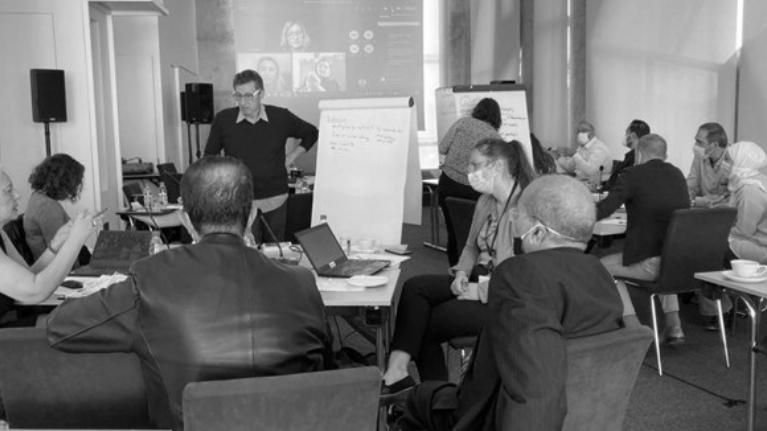
The UNEVOC TVET Leadership Programme addresses these three key elements – ‘vision for change’, ‘knowledge for change’, and ‘skills for change’ – in 9 modules over the course of 10 days. The Programme brings together TVET experts and participants in a highly engaging environment, including practical exercises, intense group work, and the sharing of experiences and case studies. International experts lead the modules and special lectures, explaining the latest developments in policy and practice, and present the latest knowledge in their respective fields. A field trip will allow participants to link theory and practice.


Subject Tags:

Access to training

Slug
access-to-training
Identifier
683

Skills and training policy

Slug
skills-and-training-policy
Identifier
666

TVET systems

Slug
tvet-systems
Identifier
661

Youth

Slug
youth
Identifier
319
Regions:
Countries and territories:
Economic groups:
--

Blog: Multi-level governance for cooperation and coordination in skills systems

Blog: Multi-level governance for cooperation and coordination in skills systems

Type:
Blog
Language:

English

Slug
english
Identifier
skpEng
Sources:

Other sources

Experts from many international, regional and national agencies generously share their views, experiences and findings on skills, helping policy-makers among other stakeholders to understand the linkages between education, training and the world of work, and how to integrate skills into national development planning to promote employment and economic growth.

Thumbnail
Identifier
skpOSource
Slug
other-sources
Authors:
Taurelli, S.
Topics:

Training quality and relevance

Thumbnail
Identifier
skpTrainQR
Slug
training-quality-and-relevance
Publication Date:
14 Dec 2017

Vocational Education and Training (VET) reforms and governance in partner countries. Article by Siria Taurelli, Strategic Project Leader, VET Governance, European Training Foundation (ETF).

Governance matters when reforming VET and skills systems

The ETF’s work on VET governance is centred on the outcomes of public policies in the field of VET and skills in partner countries with which the agency cooperates.

Within the context of this article and its focus on skills systems, governance refers to the institutional settings devised to steer the planning, implementation and review of national offers of education and training. This is a role primarily attributed to the state; however, contemporary definitions of governance take into account a wider range of factors and stakeholders.

According to Oliver (2010:262) , governance can be defined “as the interactions among institutions, processes and traditions that determine how power is exercised, how decisions are taken on issues of public and private concern, and how stakeholders, including citizens, have their say”.

VET and skills form a complex sector, which intersects economic and social policies, competitiveness and social cohesion. This complexity is often reflected in the range of actors involved in the sector’s governance. VET and skills stakeholders include representatives of government, with typically Ministries of Education in the lead, national agencies, social partners, other employers and employees’ organisation, civil society, and VET providers.

These actors operate at national and sub-national level, while their role in policy-making and implementation is also influenced by international agreements and guidelines. This is the case, for example, of the sustainable development goals (SDG)......

To read the rest of this article, click on the PDF below.

Subject Tags:

Governance

Slug
governance
Identifier
283

Productivity

Slug
productivity
Identifier
188

Skills and training policy

Slug
skills-and-training-policy
Identifier
666

TVET systems

Slug
tvet-systems
Identifier
661

Youth

Slug
youth
Identifier
319
Regions:
Countries and territories:
Economic groups:
--

Gender in employment policies and programmes: What works for women?

Gender in employment policies and programmes: What works for women?

Type:
Document
Content Type:
Gender in employment policies and programmes: What works for women?
Language:

English

Slug
english
Identifier
skpEng
Sources:

ILO

The International Labour Organization is the tripartite U.N. agency that promotes Decent Work through employment, social security, labour standards and social dialogue. Its work on skills development is guided by the conceptual framework on Skills to improve productivity, employment growth, and development agreed in 2008 by representatives of Governments, Employers’ Associations and Workers’ Associations. Research, policy advice, and pilot projects and technical cooperation programmes to apply good practices in different circumstances across its 185 member States aims to boost the employability of workers, the productivity and competitiveness of enterprises, and the inclusiveness of economic growth. The ILO Secretariat in offices in 40 countries works with Ministries of Labour, employers’ organizations, and trade unions to integrate skills development into national and sector development strategies in order to better meet current labour market needs and to prepare for the jobs of the future; to expand access to employment-related training so that youth, persons with disabilities and other vulnerable groups are better able to acquire skills and secure productive and decent work; and to improve the ability of public employment services to provide career guidance, maintain labour exchange services, and deliver active labour market programmes.For more information regarding the ILO’s work on skills and employability go to: http://www.ilo.org/skills/lang--en/index.htm; for ILO/Cinterfor's Knowledge Management Plarform, see: http://www.oitcinterfor.org

Thumbnail
Identifier
skpILO
Slug
ilo
Topics:

Gender equality

Thumbnail

Women represent both half of the world's population – and half the world's economic potential. Their participation in the labour market reduces poverty because they often invest 90 per cent of their income in the well-being, education and nutrition of their families. Yet labour force participation by women has stagnated at about 55 per cent globally since 2010. Moreover, women are disproportionately represented in precarious work – low-paid, low-skilled and insecure jobs.

Training plays an important role in the pursuit of equality of opportunity and treatment for women and men in the world of work. Yet women often lack access to technical and vocational education and training. Many also lack the basic functional skills, such as literacy and numeracy, to participate meaningfully in the work force. Overcoming this challenge requires the adoption of a life-cycle approach. This includes improving girls’ access to basic education; overcoming logistic, economic and cultural barriers to apprenticeships and to secondary and vocational training for young women; and meeting the training needs of women re-entering the labour market and of older women who have not had equal access to opportunities for lifelong learning.

Identifier
skpGenEqul
Slug
gender-equality
Knowledge Products:

Research papers

Working papers, reports, and other publications from international organizations, academic institutions and bilateral agencies. Research findings to stimulate informed debate on skills, employment and productivity issues. 

Thumbnail
Identifier
skpRPS
Slug
research-papers
Publication Date:
14 Dec 2017

ILO Employment Policy Department, EMPLOYMENT Working Paper No. 235

The ILO works with developing countries to promote employment, income and decent work opportunities for all women and men, in keeping with the SDGs, but in particular, SDG 5 – Achieve gender equality and empower all women and girls; and SDG 8 – Promote sustained, inclusive and sustainable economic growth, full and productive employment and decent work for all women and men. This report has reviewed and compiled selected examples of gender-responsive (inclusive) employment policies and programmes that underpin ILO’s work, as well as examples of good practice from other organizations, recognizing that collaboration and partnerships on a global scale will be required to achieve the SDGs.

Subject Tags:

Access to training

Slug
access-to-training
Identifier
683

Environment

Slug
environment
Identifier
339

Gender

Slug
294
Identifier
294

Green skills

Slug
green-skills
Identifier
645

Inclusion

Slug
inclusion
Identifier
665

Productivity

Slug
productivity
Identifier
188

Sustainable development

Slug
sustainable-development
Identifier
658

Women

Slug
women
Identifier
318

Youth

Slug
youth
Identifier
319
Regions:

The Africa Competitiveness Report 2017

The Africa Competitiveness Report 2017

Type:
Document
Content Type:
The Africa Competitiveness Report 2017
Language:

English

Slug
english
Identifier
skpEng
Sources:

Information is gathered from other international organizations that promote skills development and the transition from education and training to work. The Interagency Group on Technical and Vocational Education and Training (IAG-TVET) was established in 2009 to share research findings, coordinate joint research endeavours, and improve collaboration among organizations working at the international and national levels.

Thumbnail
Identifier
skpIntOrg
Slug
international-organizations
Topics:

Other topic

Thumbnail
Identifier
skpOIssue
Slug
other-topic
Knowledge Products:

Research papers

Working papers, reports, and other publications from international organizations, academic institutions and bilateral agencies. Research findings to stimulate informed debate on skills, employment and productivity issues. 

Thumbnail
Identifier
skpRPS
Slug
research-papers
Publication Date:
08 Dec 2017
Addressing Africa’s Demographic Dividend Published on a biennial basis, The Africa Competitiveness Report highlights areas requiring policy action and investment to ensure that Africa lays a solid foundation for sustained and inclusive growth. The Report, which is the result of a longstanding collaboration, leverages the knowledge and expertise of the African Development Bank, the World Bank Group, and the World Economic Forum to present a joint policy vision that can help Africa transform its economies.

By conducting a comprehensive analysis of Africa’s most pressing competitiveness challenges, the Report discusses the barriers and challenges to putting Africa’s economies onto a solid footing and helping them to achieve sustainable, broad based growth, taking into account rapid demographic changes. Africa’s working-age population is expected to soar by 450 million people, or close to 70 percent, by 2035. The Report examines how this population growth can either help to achieve broader shared prosperity and improve the livelihood of African people or become a source of fragility, social tension, and economic hardships. It does so by examining the potential of Africa’s fast-growing youth population to catalyze economic development through accelerating rates of job creation. It also discusses the potential of cities to transform, strengthen, and diversify Africa’s economies by creating more dynamic urban manufacturing and service sectors. The Report emphasizes the importance of ensuring that the youth of today and tomorrow possess the skills they need to build vibrant and inclusive economies. It further delivers detailed competitiveness profiles for 35 African countries, and provides a comprehensive summary of the drivers of productivity and competitiveness within the continent.
Subject Tags:

Development policy

Slug
development-policy
Identifier
136

Economic growth

Slug
economic-growth
Identifier
166

Private sector

Slug
private-sector
Identifier
229

Productivity

Slug
productivity
Identifier
188

Youth

Slug
youth
Identifier
319
Regions:

Africa

Region Image

The Missing Entrepreneurs

The Missing Entrepreneurs

Type:
Document
Content Type:
The Missing Entrepreneurs
Language:

English

Slug
english
Identifier
skpEng
Sources:

Information is gathered from other international organizations that promote skills development and the transition from education and training to work. The Interagency Group on Technical and Vocational Education and Training (IAG-TVET) was established in 2009 to share research findings, coordinate joint research endeavours, and improve collaboration among organizations working at the international and national levels.

Thumbnail
Identifier
skpIntOrg
Slug
international-organizations

Other sources

Experts from many international, regional and national agencies generously share their views, experiences and findings on skills, helping policy-makers among other stakeholders to understand the linkages between education, training and the world of work, and how to integrate skills into national development planning to promote employment and economic growth.

Thumbnail
Identifier
skpOSource
Slug
other-sources
Topics:

Gender equality

Thumbnail

Women represent both half of the world's population – and half the world's economic potential. Their participation in the labour market reduces poverty because they often invest 90 per cent of their income in the well-being, education and nutrition of their families. Yet labour force participation by women has stagnated at about 55 per cent globally since 2010. Moreover, women are disproportionately represented in precarious work – low-paid, low-skilled and insecure jobs.

Training plays an important role in the pursuit of equality of opportunity and treatment for women and men in the world of work. Yet women often lack access to technical and vocational education and training. Many also lack the basic functional skills, such as literacy and numeracy, to participate meaningfully in the work force. Overcoming this challenge requires the adoption of a life-cycle approach. This includes improving girls’ access to basic education; overcoming logistic, economic and cultural barriers to apprenticeships and to secondary and vocational training for young women; and meeting the training needs of women re-entering the labour market and of older women who have not had equal access to opportunities for lifelong learning.

Identifier
skpGenEqul
Slug
gender-equality

Migrant workers

Thumbnail

According to the ILO global estimates on migrant workers, there were around 164 million migrant workers in 2017. 

Migrant workers contribute to growth and development in their countries of destination, while countries of origin greatly benefit from their remittances and the skills acquired during their migration experience. Yet, many migrant workers face challenges in accessing quality training and decent jobs including under-utilization of skills, a lack of employment or training opportunities, lack of information, and exploitation of low-skilled workers.

To address these challenges, countries need to strengthen skills anticipation systems to inform migration policies, increase access to education and training, and establish bilateral or multilateral recognition of qualifications and skills.

Identifier
skpMigWor
Slug
migrant-workers

Older workers

Thumbnail

Access for all to good quality education, vocational training and workplace learning is a fundamental principle of social cohesion and economic growth. Some groups of people may require targeted attention if they are to benefit from education, training and employment opportunities.

This is particularly the case for disadvantaged youth, lower skilled workers, people with disabilities, and people in rural communities. The attractiveness of vocational education and training is enhanced when combined with entrepreneurship training and when public policies encourage utilization of higher skills by business.

Identifier
skpOldwor
Slug
older-workers

Youth employability

Thumbnail

Globally, nearly 68 million young women and men are looking for and available for work,  and an estimated 123 million young people are working but living in poverty. The number who are not in employment, education or training (NEET) stands at 267 million, a majority of whom are young women. Significantly, young people are three times as likely as adults (25 years and older) to be unemployed.

Skills development is a primary means of enabling young people to make a smooth transition to work. A comprehensive approach is required to integrate young women and men in the labour market, including relevant and quality skills training, labour market information, career guidance and employment services, recognition of prior learning, incorporating entrepreneurship with training and effective skills forecasting. Improved basic education and core work skills are particularly important to enable youth to engage in lifelong learning as well as transition to the labour market. 

Identifier
skpYoEmp
Slug
youth-employability
Knowledge Products:

Research papers

Working papers, reports, and other publications from international organizations, academic institutions and bilateral agencies. Research findings to stimulate informed debate on skills, employment and productivity issues. 

Thumbnail
Identifier
skpRPS
Slug
research-papers
Publication Date:
06 Dec 2017
Policies for Inclusive Entrepreneurship The Missing Entrepreneurs 2017 is the fourth edition in a series of publications that examine how public policies at national, regional and local levels can support job creation, economic growth and social inclusion by overcoming obstacles to business start-ups and self-employment by people from disadvantaged or under-represented groups in entrepreneurship. It shows that there is substantial potential to combat unemployment and increase labour market participation by facilitating business creation in populations such as women, youth, the unemployed, and migrants. However, the specific problems they face need to be recognised and addressed with effective and efficient policy measures.

This edition contains in-depth policy discussion chapters on the quality of self-employment, including new forms of self-employment such as dependent and false self-employment, and the potential of self-employment as an adjustment mechanism in major firm restructuring and job shedding. Each thematic chapter discusses current policy issues and challenges, and makes recommendations for policy makers. A data section provides a range of information on self-employment and business creation rates, barriers and key characteristics of businesses operated by social group. Finally, country profiles highlight recent trends in inclusive entrepreneurship, key policy challenges and recent policy actions in each of the 28 EU Member States.
Subject Tags:

Entrepreneurship

Slug
entrepreneurship
Identifier
182

Gender

Slug
294
Identifier
294

Older workers

Slug
older-workers
Identifier
682

Productivity

Slug
productivity
Identifier
188

Skills and training policy

Slug
skills-and-training-policy
Identifier
666

Youth

Slug
youth
Identifier
319
Regions:

Information Note: Training for Rural Economic Empowerment (TREE)

Information Note: Training for Rural Economic Empowerment (TREE)

Type:
Document
Content Type:
Information Note: Training for Rural Economic Empowerment (TREE)
Language:

English

Slug
english
Identifier
skpEng
Sources:

ILO

The International Labour Organization is the tripartite U.N. agency that promotes Decent Work through employment, social security, labour standards and social dialogue. Its work on skills development is guided by the conceptual framework on Skills to improve productivity, employment growth, and development agreed in 2008 by representatives of Governments, Employers’ Associations and Workers’ Associations. Research, policy advice, and pilot projects and technical cooperation programmes to apply good practices in different circumstances across its 185 member States aims to boost the employability of workers, the productivity and competitiveness of enterprises, and the inclusiveness of economic growth. The ILO Secretariat in offices in 40 countries works with Ministries of Labour, employers’ organizations, and trade unions to integrate skills development into national and sector development strategies in order to better meet current labour market needs and to prepare for the jobs of the future; to expand access to employment-related training so that youth, persons with disabilities and other vulnerable groups are better able to acquire skills and secure productive and decent work; and to improve the ability of public employment services to provide career guidance, maintain labour exchange services, and deliver active labour market programmes.For more information regarding the ILO’s work on skills and employability go to: http://www.ilo.org/skills/lang--en/index.htm; for ILO/Cinterfor's Knowledge Management Plarform, see: http://www.oitcinterfor.org

Thumbnail
Identifier
skpILO
Slug
ilo
Topics:

Rural employment

Thumbnail

Eight out of 10 of the world’s working poor who live on US $1.25 per day live in rural areas, where many are caught in vulnerable employment, especially in agriculture.Flourishing rural areas are vital to regional and national development. Yet, rural economies tend to face a wide range of challenges that urban areas are more likely to overcome. These include access to transportation, sanitation and health services, and a consumer base in close proximity to support small and medium enterprise development. Women and men working in rural areas also face difficulties associated with a paucity of economic opportunities, under investment, poor infrastructure and public services, including education, and, in many cases, weak governance and underdeveloped markets.

Education, entrepreneurship, and physical and social infrastructure all play an important role in developing rural regions. Skills are central to improving employability and livelihood opportunities, reducing poverty, enhancing productivity and promoting environmentally sustainable development.

Identifier
skpREmpl
Slug
rural-employment
Knowledge Products:

Promotional material

Presentations, discussion papers, meeting reports, promotional materials, videos, fact sheets, brochures and newsletters on skills development for employment.

Thumbnail
Identifier
skpAIM
Slug
promotional-material
Publication Date:
14 Nov 2017

This Information Note presents the Training for Rural Economic Empowerment (TREE) programme of the International Labour Organization (ILO), which aims to promote rural employment using a community-based approach to skills development. It outlines some of the challenges faced in efforts to improve rural livelihoods, presents an overview of the TREE programme, describes some national experiences in implementing TREE and summarizes the programme’s contribution to supporting the ILO’s Decent Work Agenda. It is intended to inform ILO constituents, skills development specialists and training practitioners about the programme and its potential to support national rural skills initiatives.

Subject Tags:

Access to training

Slug
access-to-training
Identifier
683

Rural employment

Slug
rural-employment
Identifier
670

Rural workers

Slug
rural-workers
Identifier
637

Women

Slug
women
Identifier
318

Youth

Slug
youth
Identifier
319
Regions:

Africa

Region Image

Promoting social entrepreneurship and social capital. A practice guide to supporting social entrepreneurship and inclusiveness in rural communities

Promoting social entrepreneurship and social capital. A practice guide to supporting social entrepreneurship and inclusiveness in rural communities

Type:
Document
Content Type:
Promoting social entrepreneurship and social capital. A practice guide to supporting social entrepreneurship and inclusiveness in rural communities
Language:

English

Slug
english
Identifier
skpEng
Sources:

ILO

The International Labour Organization is the tripartite U.N. agency that promotes Decent Work through employment, social security, labour standards and social dialogue. Its work on skills development is guided by the conceptual framework on Skills to improve productivity, employment growth, and development agreed in 2008 by representatives of Governments, Employers’ Associations and Workers’ Associations. Research, policy advice, and pilot projects and technical cooperation programmes to apply good practices in different circumstances across its 185 member States aims to boost the employability of workers, the productivity and competitiveness of enterprises, and the inclusiveness of economic growth. The ILO Secretariat in offices in 40 countries works with Ministries of Labour, employers’ organizations, and trade unions to integrate skills development into national and sector development strategies in order to better meet current labour market needs and to prepare for the jobs of the future; to expand access to employment-related training so that youth, persons with disabilities and other vulnerable groups are better able to acquire skills and secure productive and decent work; and to improve the ability of public employment services to provide career guidance, maintain labour exchange services, and deliver active labour market programmes.For more information regarding the ILO’s work on skills and employability go to: http://www.ilo.org/skills/lang--en/index.htm; for ILO/Cinterfor's Knowledge Management Plarform, see: http://www.oitcinterfor.org

Thumbnail
Identifier
skpILO
Slug
ilo
Topics:

Participation of employers' and workers' organizations

Thumbnail

The world of learning and the world of work are separate but linked. While one involves learning, the other produces goods and services. Neither can thrive without the other. Strong partnerships between government, employers and workers help ensure the relevance of training to the changing needs of enterprises and labour markets. 

Identifier
skpPSP
Slug
participation-of-employers-and-workers-organizations

Youth employability

Thumbnail

Globally, nearly 68 million young women and men are looking for and available for work,  and an estimated 123 million young people are working but living in poverty. The number who are not in employment, education or training (NEET) stands at 267 million, a majority of whom are young women. Significantly, young people are three times as likely as adults (25 years and older) to be unemployed.

Skills development is a primary means of enabling young people to make a smooth transition to work. A comprehensive approach is required to integrate young women and men in the labour market, including relevant and quality skills training, labour market information, career guidance and employment services, recognition of prior learning, incorporating entrepreneurship with training and effective skills forecasting. Improved basic education and core work skills are particularly important to enable youth to engage in lifelong learning as well as transition to the labour market. 

Identifier
skpYoEmp
Slug
youth-employability
Knowledge Products:

Case studies and good practices

Case studies that document good practices and illustrate the benefits and lessons learnt of particular approaches or methods in real practice. 

Thumbnail
Identifier
skpCaseStdy
Slug
case-studies-and-good-practices
Publication Date:
30 Oct 2017
Nurturing the energy and creativity of youth in economically depressed environments is a challenge across the world and the development spectrum. This guide delineates a practice model to building social and economic capital through meaningful youth engagement and the promotion of social entrepreneurship.

In Egypt, a consortium of United Nations agencies worked with government stakeholders, international and local non-governmental organisations (NGOs) to address stark economic and community insecurity in two districts in the Upper Egyptian Governorate of Minya. The ‘Human Security through Inclusive Socioeconomic Development in Upper Egypt – Hayat’ project was designed to strengthen economic security through job creation and increased skills within the local labour force. At the same time, the project enhanced community and personal security through development of social capital and enhanced cohesion and inclusiveness. The ILO component of Hayat focused on the role of youth, particularly in light of high rates of unemployment among those 18 to 35 years of age. This component’s unique design sought to create new opportunities for decent work for young women and men through a combination of vocational and entrepreneurial skills training with activities designed to waken their engagement in community building, thereby creating an enabling environment for nurturing potential social entrepreneurs.

This Guide has been developed to share the ILO’s experience in introducing the concept of social entrepreneurship in a challenging environment, highlighting opportunities, success factors and lessons to be learned.

Subject Tags:

Community development

Slug
community-development
Identifier
126

Rural development

Slug
rural-development
Identifier
152

Youth

Slug
youth
Identifier
319
Regions:

Africa

Region Image
Countries and territories:

Are young people overskilled or underskilled? (Blog)

Are young people overskilled or underskilled? (Blog)

Type:
Document
Content Type:
Are young people overskilled or underskilled? (Blog)
Language:

English

Slug
english
Identifier
skpEng
Sources:

ILO

The International Labour Organization is the tripartite U.N. agency that promotes Decent Work through employment, social security, labour standards and social dialogue. Its work on skills development is guided by the conceptual framework on Skills to improve productivity, employment growth, and development agreed in 2008 by representatives of Governments, Employers’ Associations and Workers’ Associations. Research, policy advice, and pilot projects and technical cooperation programmes to apply good practices in different circumstances across its 185 member States aims to boost the employability of workers, the productivity and competitiveness of enterprises, and the inclusiveness of economic growth. The ILO Secretariat in offices in 40 countries works with Ministries of Labour, employers’ organizations, and trade unions to integrate skills development into national and sector development strategies in order to better meet current labour market needs and to prepare for the jobs of the future; to expand access to employment-related training so that youth, persons with disabilities and other vulnerable groups are better able to acquire skills and secure productive and decent work; and to improve the ability of public employment services to provide career guidance, maintain labour exchange services, and deliver active labour market programmes.For more information regarding the ILO’s work on skills and employability go to: http://www.ilo.org/skills/lang--en/index.htm; for ILO/Cinterfor's Knowledge Management Plarform, see: http://www.oitcinterfor.org

Thumbnail
Identifier
skpILO
Slug
ilo
Topics:

Training quality and relevance

Thumbnail
Identifier
skpTrainQR
Slug
training-quality-and-relevance

Youth employability

Thumbnail

Globally, nearly 68 million young women and men are looking for and available for work,  and an estimated 123 million young people are working but living in poverty. The number who are not in employment, education or training (NEET) stands at 267 million, a majority of whom are young women. Significantly, young people are three times as likely as adults (25 years and older) to be unemployed.

Skills development is a primary means of enabling young people to make a smooth transition to work. A comprehensive approach is required to integrate young women and men in the labour market, including relevant and quality skills training, labour market information, career guidance and employment services, recognition of prior learning, incorporating entrepreneurship with training and effective skills forecasting. Improved basic education and core work skills are particularly important to enable youth to engage in lifelong learning as well as transition to the labour market. 

Identifier
skpYoEmp
Slug
youth-employability
Knowledge Products:

Promotional material

Presentations, discussion papers, meeting reports, promotional materials, videos, fact sheets, brochures and newsletters on skills development for employment.

Thumbnail
Identifier
skpAIM
Slug
promotional-material
Publication Date:
13 Oct 2017
This week, as we prepare ILO’s participation in the World Skills Competition 2017, taking place in Abu Dhabi, UAE from 15-18 October, we are left to reflect on a major theme which is troubling governments, employers, workers and young people across the globe – the so called skills mismatch.

This year’s World Skills Competition features 1,300 competitors, 100,000 visitors and 51 skills. The competition will cover a diverse range of vocational categories including mechatronics, information network cabling, floor tiling, patisserie, and plumbing just to name a few. The ILO, as a conference coalition partner, will be involved in two major activities of the Competition, the WorldSkills Conference and the WorldSkills Youth Forum which comes under the theme 'Skills strategies for a globalized world'.

Refocusing the debate on jobs and skills mismatch….

The ILO’s SKILLS branch will lead a conference session on the topic of skills mismatch that will consider not only what causes skills mismatch, but also to better understand the different types of skills mismatches, the labour market impact they have and their relative importance.

High and persistent levels of youth unemployment, together with job vacancies that remain unfilled, are often attributed to mismatches between jobs and skills. The debate frequently focusses on why employers are unable to fill the vacancies they have. But this is only one form of skills mismatch. The problems faced by employers are technically known as skills gaps or skills shortages (which are a form of skills mismatch), but how important are they compared with other forms of skills mismatch like over-education?

The point here is not to underestimate the importance of skills shortages, as nearly 50 per cent of all European firms report difficulties in recruiting higher education graduates (Eurobaromater survey, 2010), but the evidence that these shortages are to do with skills rather than employment opportunities and conditions is actually weak, and whether they have any effect on the performance or income of these firms is also not clearly understood.

One area that has received relatively little attention is the issue of over-education, which occurs when an individual possesses a level of education in excess of that which is required for their job. After an extensive review of existing research, Prof. Séamus McGuiness of ESRI established that a sizeable fraction of workers are in occupations that do not require as much schooling as they have acquired. Think, for example, about that taxi driver you encountered that holds a PhD, an example that points to a mismatch between jobs and skills.

Click on the PDF below to read the full blog.....
Subject Tags:

Skills mismatch

Slug
skills-mismatch
Identifier
654

Vocational training

Slug
vocational-training
Identifier
124

Youth

Slug
youth
Identifier
319
Regions:

The Future of Work We Want: The Voice of Youth and Different Perspectives from Latin America and the Caribbean

The Future of Work We Want: The Voice of Youth and Different Perspectives from Latin America and the Caribbean

Type:
Document
Content Type:
The Future of Work We Want: The Voice of Youth and Different Perspectives from Latin America and the Caribbean
Language:

English

Slug
english
Identifier
skpEng
Sources:

ILO

The International Labour Organization is the tripartite U.N. agency that promotes Decent Work through employment, social security, labour standards and social dialogue. Its work on skills development is guided by the conceptual framework on Skills to improve productivity, employment growth, and development agreed in 2008 by representatives of Governments, Employers’ Associations and Workers’ Associations. Research, policy advice, and pilot projects and technical cooperation programmes to apply good practices in different circumstances across its 185 member States aims to boost the employability of workers, the productivity and competitiveness of enterprises, and the inclusiveness of economic growth. The ILO Secretariat in offices in 40 countries works with Ministries of Labour, employers’ organizations, and trade unions to integrate skills development into national and sector development strategies in order to better meet current labour market needs and to prepare for the jobs of the future; to expand access to employment-related training so that youth, persons with disabilities and other vulnerable groups are better able to acquire skills and secure productive and decent work; and to improve the ability of public employment services to provide career guidance, maintain labour exchange services, and deliver active labour market programmes.For more information regarding the ILO’s work on skills and employability go to: http://www.ilo.org/skills/lang--en/index.htm; for ILO/Cinterfor's Knowledge Management Plarform, see: http://www.oitcinterfor.org

Thumbnail
Identifier
skpILO
Slug
ilo
Topics:

Anticipating and matching skills needs

Thumbnail

Anticipating and building skills for the future is essential to a rapidly changing labour market. This applies to changes in the types and levels of skills needed as well as in occupational and technical areas. Effective methods to anticipate future skills needs and avoid potential mismatches include: sustained dialogue between employers and trainers, coordination across government institutions, labour market information systems, employment services and performance reviews of training institutions. 

Identifier
skpAFSN
Slug
anticipating-and-matching-skills-needs

Youth employability

Thumbnail

Globally, nearly 68 million young women and men are looking for and available for work,  and an estimated 123 million young people are working but living in poverty. The number who are not in employment, education or training (NEET) stands at 267 million, a majority of whom are young women. Significantly, young people are three times as likely as adults (25 years and older) to be unemployed.

Skills development is a primary means of enabling young people to make a smooth transition to work. A comprehensive approach is required to integrate young women and men in the labour market, including relevant and quality skills training, labour market information, career guidance and employment services, recognition of prior learning, incorporating entrepreneurship with training and effective skills forecasting. Improved basic education and core work skills are particularly important to enable youth to engage in lifelong learning as well as transition to the labour market. 

Identifier
skpYoEmp
Slug
youth-employability
Knowledge Products:

Research papers

Working papers, reports, and other publications from international organizations, academic institutions and bilateral agencies. Research findings to stimulate informed debate on skills, employment and productivity issues. 

Thumbnail
Identifier
skpRPS
Slug
research-papers
Publication Date:
10 Oct 2017
The report included in this publication is a first look at the perspectives and expectations of Latin American youth regarding the future of work. The report offers some conclusions based on the key results of both surveys, which aims to nourish and expand the discussion on the future of work. The report included in this publication is a first look at the perspectives and expectations of Latin American youth regarding the future of work. The report offers some conclusions based on the key results of both surveys, which we hope will nourish and expand the discussion on the future of work.

Both surveys generated new evidence on youth’s expectations with respect to their jobs, working conditions and education in the future. They also provided information on young people’s opinions regarding the effects of technology on education and work, changes that will occur in education and training for work, as well as the expected impact of these changes on their well-being and how much information they have about the discussion on the future of work. Finally, youth were asked about the strategies they will use to respond to these changes and how much confidence they have in the future, among other key issues.

The results reveal an optimistic outlook of youth in terms of employment opportunities and conditions the future will offer them, especially among the youngest group. Most young people believe that the penetration of new technologies, robotization and automation of processes will have a positive impact on their employment future. They have considerable confidence in the future. One hopeful result was that many young people are aware that they need to make a personal effort to acquire education and training to take advantage of the benefits of future opportunities. Despite evidence of mismatch in the labour market, most youth consulted believe that their studies will be useful in the future.

Subject Tags:

Skills anticipation

Slug
skills-anticipation
Identifier
677

Youth

Slug
youth
Identifier
319

Youth unemployment

Slug
youth-unemployment
Identifier
622
Regions:

Americas

Region Image

Promoting women’s empowerment in the Middle East and North Africa: A rapid evidence assessment of labour market interventions

Promoting women’s empowerment in the Middle East and North Africa: A rapid evidence assessment of labour market interventions

Type:
Document
Content Type:
Promoting women’s empowerment in the Middle East and North Africa: A rapid evidence assessment of labour market interventions
Language:

English

Slug
english
Identifier
skpEng
Sources:

ILO

The International Labour Organization is the tripartite U.N. agency that promotes Decent Work through employment, social security, labour standards and social dialogue. Its work on skills development is guided by the conceptual framework on Skills to improve productivity, employment growth, and development agreed in 2008 by representatives of Governments, Employers’ Associations and Workers’ Associations. Research, policy advice, and pilot projects and technical cooperation programmes to apply good practices in different circumstances across its 185 member States aims to boost the employability of workers, the productivity and competitiveness of enterprises, and the inclusiveness of economic growth. The ILO Secretariat in offices in 40 countries works with Ministries of Labour, employers’ organizations, and trade unions to integrate skills development into national and sector development strategies in order to better meet current labour market needs and to prepare for the jobs of the future; to expand access to employment-related training so that youth, persons with disabilities and other vulnerable groups are better able to acquire skills and secure productive and decent work; and to improve the ability of public employment services to provide career guidance, maintain labour exchange services, and deliver active labour market programmes.For more information regarding the ILO’s work on skills and employability go to: http://www.ilo.org/skills/lang--en/index.htm; for ILO/Cinterfor's Knowledge Management Plarform, see: http://www.oitcinterfor.org

Thumbnail
Identifier
skpILO
Slug
ilo
Topics:

Gender equality

Thumbnail

Women represent both half of the world's population – and half the world's economic potential. Their participation in the labour market reduces poverty because they often invest 90 per cent of their income in the well-being, education and nutrition of their families. Yet labour force participation by women has stagnated at about 55 per cent globally since 2010. Moreover, women are disproportionately represented in precarious work – low-paid, low-skilled and insecure jobs.

Training plays an important role in the pursuit of equality of opportunity and treatment for women and men in the world of work. Yet women often lack access to technical and vocational education and training. Many also lack the basic functional skills, such as literacy and numeracy, to participate meaningfully in the work force. Overcoming this challenge requires the adoption of a life-cycle approach. This includes improving girls’ access to basic education; overcoming logistic, economic and cultural barriers to apprenticeships and to secondary and vocational training for young women; and meeting the training needs of women re-entering the labour market and of older women who have not had equal access to opportunities for lifelong learning.

Identifier
skpGenEqul
Slug
gender-equality
Knowledge Products:

Promotional material

Presentations, discussion papers, meeting reports, promotional materials, videos, fact sheets, brochures and newsletters on skills development for employment.

Thumbnail
Identifier
skpAIM
Slug
promotional-material
Publication Date:
09 Oct 2017
Impact brief, Issue 9. The Taqeem Impact Brief Series documents how organizations measure outcomes of their employment programmes, the tools that are applied and the findings and recommendations that emerge to assist them in improving impacts and programme design. This rapid evidence assessment analyses gender equality outcomes of Active Labour Market Programmes in the Middle East and North Africa (MENA). The brief provides an overview of the existing evidence on “what works” in promoting gender equality in the MENA region by presenting results from a rapid evidence assessment (REA) of ALMPs.

Through a structured mapping of available evidence, the REA helps to identify knowledge gaps where future research might be needed. Furthermore, by analysing ten impact evaluations, it provides an overview on how gender equality aspects of ALMPs are typically measured. It shows which indicators are used to gather information on gender and labour market outcomes.

Based on the findings of the assessment, recommendations are formulated for improved measurement to better inform programme planning and implementation.

Subject Tags:

Gender

Slug
294
Identifier
294

Women

Slug
women
Identifier
318

Youth

Slug
youth
Identifier
319
Regions:

Africa

Region Image

Arab States

Region Image