French

Slug
french
Identifier
skpFrn

Compétences au service de l’emploi: Bulletin juin 2015

Compétences au service de l’emploi: Bulletin juin 2015

Type:
Newsletter
Start Date:
01 Jan 1970
Language:

French

Slug
french
Identifier
skpFrn
Sources:

ILO

The International Labour Organization is the tripartite U.N. agency that promotes Decent Work through employment, social security, labour standards and social dialogue. Its work on skills development is guided by the conceptual framework on Skills to improve productivity, employment growth, and development agreed in 2008 by representatives of Governments, Employers’ Associations and Workers’ Associations. Research, policy advice, and pilot projects and technical cooperation programmes to apply good practices in different circumstances across its 185 member States aims to boost the employability of workers, the productivity and competitiveness of enterprises, and the inclusiveness of economic growth. The ILO Secretariat in offices in 40 countries works with Ministries of Labour, employers’ organizations, and trade unions to integrate skills development into national and sector development strategies in order to better meet current labour market needs and to prepare for the jobs of the future; to expand access to employment-related training so that youth, persons with disabilities and other vulnerable groups are better able to acquire skills and secure productive and decent work; and to improve the ability of public employment services to provide career guidance, maintain labour exchange services, and deliver active labour market programmes.For more information regarding the ILO’s work on skills and employability go to: http://www.ilo.org/skills/lang--en/index.htm; for ILO/Cinterfor's Knowledge Management Plarform, see: http://www.oitcinterfor.org

Thumbnail
Identifier
skpILO
Slug
ilo
Topics:
Knowledge Products:

Promotional material

Presentations, discussion papers, meeting reports, promotional materials, videos, fact sheets, brochures and newsletters on skills development for employment.

Thumbnail
Identifier
skpAIM
Slug
promotional-material

Le bulletin mensuel Global KSP met en évidence les publications récemment téléchargées, les rapports, les articles de recherche, les vidéos et les événements à venir sur les compétences au service de l’emploi.

Pour vous abonner au KSP mondial par email cliquez sur "subscribe" au bas de la page ou envoyez-nous un courriel à: [email protected]

Subject Tags:
Regions:
Countries and territories:
Economic groups:
--

Compétences au service de l’emploi: Bulletin mars 2015

Compétences au service de l’emploi: Bulletin mars 2015

Type:
Newsletter
Start Date:
01 Jan 1970
Language:

French

Slug
french
Identifier
skpFrn
Sources:

ILO

The International Labour Organization is the tripartite U.N. agency that promotes Decent Work through employment, social security, labour standards and social dialogue. Its work on skills development is guided by the conceptual framework on Skills to improve productivity, employment growth, and development agreed in 2008 by representatives of Governments, Employers’ Associations and Workers’ Associations. Research, policy advice, and pilot projects and technical cooperation programmes to apply good practices in different circumstances across its 185 member States aims to boost the employability of workers, the productivity and competitiveness of enterprises, and the inclusiveness of economic growth. The ILO Secretariat in offices in 40 countries works with Ministries of Labour, employers’ organizations, and trade unions to integrate skills development into national and sector development strategies in order to better meet current labour market needs and to prepare for the jobs of the future; to expand access to employment-related training so that youth, persons with disabilities and other vulnerable groups are better able to acquire skills and secure productive and decent work; and to improve the ability of public employment services to provide career guidance, maintain labour exchange services, and deliver active labour market programmes.For more information regarding the ILO’s work on skills and employability go to: http://www.ilo.org/skills/lang--en/index.htm; for ILO/Cinterfor's Knowledge Management Plarform, see: http://www.oitcinterfor.org

Thumbnail
Identifier
skpILO
Slug
ilo
Topics:
Knowledge Products:

Promotional material

Presentations, discussion papers, meeting reports, promotional materials, videos, fact sheets, brochures and newsletters on skills development for employment.

Thumbnail
Identifier
skpAIM
Slug
promotional-material

Le bulletin mensuel Global KSP met en évidence les publications récemment téléchargées, les rapports, les articles de recherche, les vidéos et les événements à venir sur les compétences au service de l’emploi.

Pour vous abonner au KSP mondial par email cliquez sur "subscribe" au bas de la page ou envoyez-nous un courriel à: [email protected]

Subject Tags:
Regions:
Countries and territories:
Economic groups:
--

World youth skills day 2016 – Skills development to improve youth employment

World youth skills day 2016 – Skills development to improve youth employment

Kind:
Event
Start Date:
15 Jul 2016
End Date:
18 Jun 2026
Event Location:
United Nations Headquarters
EventType:
Language:

French

Slug
french
Identifier
skpFrn
Language Version:
--
Sources:

ILO

The International Labour Organization is the tripartite U.N. agency that promotes Decent Work through employment, social security, labour standards and social dialogue. Its work on skills development is guided by the conceptual framework on Skills to improve productivity, employment growth, and development agreed in 2008 by representatives of Governments, Employers’ Associations and Workers’ Associations. Research, policy advice, and pilot projects and technical cooperation programmes to apply good practices in different circumstances across its 185 member States aims to boost the employability of workers, the productivity and competitiveness of enterprises, and the inclusiveness of economic growth. The ILO Secretariat in offices in 40 countries works with Ministries of Labour, employers’ organizations, and trade unions to integrate skills development into national and sector development strategies in order to better meet current labour market needs and to prepare for the jobs of the future; to expand access to employment-related training so that youth, persons with disabilities and other vulnerable groups are better able to acquire skills and secure productive and decent work; and to improve the ability of public employment services to provide career guidance, maintain labour exchange services, and deliver active labour market programmes.For more information regarding the ILO’s work on skills and employability go to: http://www.ilo.org/skills/lang--en/index.htm; for ILO/Cinterfor's Knowledge Management Plarform, see: http://www.oitcinterfor.org

Thumbnail
Identifier
skpILO
Slug
ilo

International organizations

Information is gathered from other international organizations that promote skills development and the transition from education and training to work. The Interagency Group on Technical and Vocational Education and Training (IAG-TVET) was established in 2009 to share research findings, coordinate joint research endeavours, and improve collaboration among organizations working at the international and national levels.

Thumbnail
Identifier
skpIntOrg
Slug
international-organizations
Topics:

Lifelong learning

Thumbnail

There is a critical need for a greater overall investment in education and training, particularly in developing countries. Education and training investments should be closely linked to economic and employment growth strategies and programmes. Responsibility should be shared between the government (primary responsibility), enterprises, the social partners, and the individual. To make lifelong learning for all a reality, countries will need to make major reforms of their vocational and education and training systems. School-to-work schemes for young people should integrate education with workplace learning. Training systems need to become more flexible and responsive to rapidly changing skill requirements. Reforms should also focus on how learning can be facilitated, not just on training for specific occupational categories.

Identifier
skpPSLLL
Slug
lifelong-learning

Training quality and relevance

Thumbnail
Identifier
skpTrainQR
Slug
training-quality-and-relevance

Youth employability

Thumbnail

Globally, nearly 68 million young women and men are looking for and available for work,  and an estimated 123 million young people are working but living in poverty. The number who are not in employment, education or training (NEET) stands at 267 million, a majority of whom are young women. Significantly, young people are three times as likely as adults (25 years and older) to be unemployed.

Skills development is a primary means of enabling young people to make a smooth transition to work. A comprehensive approach is required to integrate young women and men in the labour market, including relevant and quality skills training, labour market information, career guidance and employment services, recognition of prior learning, incorporating entrepreneurship with training and effective skills forecasting. Improved basic education and core work skills are particularly important to enable youth to engage in lifelong learning as well as transition to the labour market. 

Identifier
skpYoEmp
Slug
youth-employability
Knowledge Products:

Understanding what works to support young people in today’s and tomorrow’s labor market through training and skills development will be key to the achievement of the 2030 Agenda, and will be at the center of this high-level event.

Young people are almost three times more likely to be unemployed than adults and continuously exposed to lower quality of jobs, greater labor market inequalities, and longer and more insecure school-to-work transitions. In addition, women are more likely to be underemployed and under-paid, and to undertake part-time jobs or work under temporary contracts.

That is why education and training are key determinants of success in the labor market. But unfortunately, existing systems are failing to address the learning needs of many young people, and surveys of learning outcomes and skills show that a large number of youth have low levels of achievement in basic literacy and numeracy. Skills and jobs for youth feature prominently in the 2030 Agenda for Sustainable Development, and SDG target 4.4 calls for a substantial increase in the number of youth and adults who have relevant skills

July 15 is World Youth Skills Day, and the United Nations is observing the day with a special event on the theme of “Skills Development to Improve Youth Employment.” Understanding what works to support young people in today’s and tomorrow’s labor market through training and skills development will be key to the achievement of the 2030 Agenda, and will be at the center of this high-level event.

Subject Tags:

Skills and training policy

Slug
skills-and-training-policy
Identifier
666

Skills mismatch

Slug
skills-mismatch
Identifier
654

Youth

Slug
youth
Identifier
319
Regions:
Countries and territories:
Economic groups:
--

Policy brief: Greening the economies of least developed countries: The role of skills and training

Policy brief: Greening the economies of least developed countries: The role of skills and training

Type:
Document
Content Type:
Policy brief: Greening the economies of least developed countries: The role of skills and training
Language:

English

Slug
english
Identifier
skpEng
Sources:

ILO

The International Labour Organization is the tripartite U.N. agency that promotes Decent Work through employment, social security, labour standards and social dialogue. Its work on skills development is guided by the conceptual framework on Skills to improve productivity, employment growth, and development agreed in 2008 by representatives of Governments, Employers’ Associations and Workers’ Associations. Research, policy advice, and pilot projects and technical cooperation programmes to apply good practices in different circumstances across its 185 member States aims to boost the employability of workers, the productivity and competitiveness of enterprises, and the inclusiveness of economic growth. The ILO Secretariat in offices in 40 countries works with Ministries of Labour, employers’ organizations, and trade unions to integrate skills development into national and sector development strategies in order to better meet current labour market needs and to prepare for the jobs of the future; to expand access to employment-related training so that youth, persons with disabilities and other vulnerable groups are better able to acquire skills and secure productive and decent work; and to improve the ability of public employment services to provide career guidance, maintain labour exchange services, and deliver active labour market programmes.For more information regarding the ILO’s work on skills and employability go to: http://www.ilo.org/skills/lang--en/index.htm; for ILO/Cinterfor's Knowledge Management Plarform, see: http://www.oitcinterfor.org

Thumbnail
Identifier
skpILO
Slug
ilo
Topics:

Anticipating and matching skills needs

Thumbnail

Anticipating and building skills for the future is essential to a rapidly changing labour market. This applies to changes in the types and levels of skills needed as well as in occupational and technical areas. Effective methods to anticipate future skills needs and avoid potential mismatches include: sustained dialogue between employers and trainers, coordination across government institutions, labour market information systems, employment services and performance reviews of training institutions. 

Identifier
skpAFSN
Slug
anticipating-and-matching-skills-needs

Skills policies and strategies

Thumbnail

Skills and employment policies should be viewed together.  The full value of one policy set is realized when it supports the objectives of the other.  For investments in education and training to yield maximum benefit to workers, enterprises, and economies, countries’ capacities for coordination is critical in three areas: connecting basic education to technical training and then to market entry; ensuring continuous communication between employers and training providers so that training meets the needs and aspirations of workers and enterprises, and integrating skills development policies with industrial, investment, trade, technology, environmental, rural and local development policies.

Identifier
skpPolConv
Slug
skills-policies-and-strategies

Training quality and relevance

Thumbnail
Identifier
skpTrainQR
Slug
training-quality-and-relevance
Knowledge Products:

Policy and strategy

Recommendations and advice on resolving policy challenges related to skills development systems and their linkages to the world of work.  Concise syntheses of experience from the international organizations.

Thumbnail
Identifier
skpPolOp
Slug
policy-and-strategy
Publication Date:
21 Jul 2014
This policy brief draws the attention of policy-makers and social partners in least developed countries to the role of skills development in facilitating the building of greener economies, as a way to achieve sustainable development and poverty eradication. It has been written at the request of ILO constituents from Least Developed Countries (LDCs), where environmental deterioration and the consequences of climate change are among the major challenges of the twenty-first century. While change is a challenge, it also offers economic and employment opportunities.

The brief arises out of the Green Jobs Initiative, a partnership between the ILO, the United Nations Environment Programme (UNEP), the International Trade Union Confederation (ITUC) and the International Organization of Employers (IOE). It draws on research applied in policy design and numerous case studies of country experiences and good practices.
Subject Tags:

Green skills

Slug
green-skills
Identifier
645

Policy convergence

Slug
policy-convergence
Identifier
674

Poverty alleviation

Slug
poverty-alleviation
Identifier
149

Skills and training policy

Slug
skills-and-training-policy
Identifier
666

Skills anticipation

Slug
skills-anticipation
Identifier
677
Regions:

Créer des compétences locales pour des emplois locaux en Tunisie (Video)

Créer des compétences locales pour des emplois locaux en Tunisie (Video)

Type:
Document
Content Type:
Créer des compétences locales pour des emplois locaux en Tunisie (Video)
Language:

French

Slug
french
Identifier
skpFrn
Sources:

ILO

The International Labour Organization is the tripartite U.N. agency that promotes Decent Work through employment, social security, labour standards and social dialogue. Its work on skills development is guided by the conceptual framework on Skills to improve productivity, employment growth, and development agreed in 2008 by representatives of Governments, Employers’ Associations and Workers’ Associations. Research, policy advice, and pilot projects and technical cooperation programmes to apply good practices in different circumstances across its 185 member States aims to boost the employability of workers, the productivity and competitiveness of enterprises, and the inclusiveness of economic growth. The ILO Secretariat in offices in 40 countries works with Ministries of Labour, employers’ organizations, and trade unions to integrate skills development into national and sector development strategies in order to better meet current labour market needs and to prepare for the jobs of the future; to expand access to employment-related training so that youth, persons with disabilities and other vulnerable groups are better able to acquire skills and secure productive and decent work; and to improve the ability of public employment services to provide career guidance, maintain labour exchange services, and deliver active labour market programmes.For more information regarding the ILO’s work on skills and employability go to: http://www.ilo.org/skills/lang--en/index.htm; for ILO/Cinterfor's Knowledge Management Plarform, see: http://www.oitcinterfor.org

Thumbnail
Identifier
skpILO
Slug
ilo
Topics:

Rural employment

Thumbnail

Eight out of 10 of the world’s working poor who live on US $1.25 per day live in rural areas, where many are caught in vulnerable employment, especially in agriculture.Flourishing rural areas are vital to regional and national development. Yet, rural economies tend to face a wide range of challenges that urban areas are more likely to overcome. These include access to transportation, sanitation and health services, and a consumer base in close proximity to support small and medium enterprise development. Women and men working in rural areas also face difficulties associated with a paucity of economic opportunities, under investment, poor infrastructure and public services, including education, and, in many cases, weak governance and underdeveloped markets.

Education, entrepreneurship, and physical and social infrastructure all play an important role in developing rural regions. Skills are central to improving employability and livelihood opportunities, reducing poverty, enhancing productivity and promoting environmentally sustainable development.

Identifier
skpREmpl
Slug
rural-employment
Knowledge Products:

Promotional material

Presentations, discussion papers, meeting reports, promotional materials, videos, fact sheets, brochures and newsletters on skills development for employment.

Thumbnail
Identifier
skpAIM
Slug
promotional-material
Publication Date:
20 Jun 2016

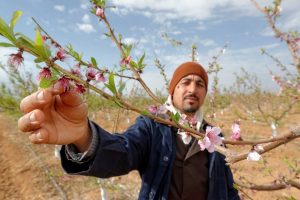
Le Programme d’appui au développement des zones défavorisées (AZD) de l’OIT en Tunisie financé par l’Union Européenne a mis en place des formations d’ouvriers agricoles dans la ville de Regueb. Il s’agissait de combler l’absence de formations existantes dans ce domaine, ce qui ne permettait pas aux habitants de la région, à la terre pourtant fertile, de tirer profit des possibilités offertes en matière d’emplois.

Subject Tags:

Agriculture

Slug
agriculture
Identifier
225

Skills re-training

Slug
skills-re-training
Identifier
655

Vocational training

Slug
vocational-training
Identifier
124
Regions:

Africa

Region Image
Countries and territories:

Questions and answers: How a sectoral approach to skills development helps contribute to productive and competitive economies

Questions and answers: How a sectoral approach to skills development helps contribute to productive and competitive economies

Type:
Document
Content Type:
Questions and answers: How a sectoral approach to skills development helps contribute to productive and competitive economies
Language:

English

Slug
english
Identifier
skpEng
Sources:

ILO

The International Labour Organization is the tripartite U.N. agency that promotes Decent Work through employment, social security, labour standards and social dialogue. Its work on skills development is guided by the conceptual framework on Skills to improve productivity, employment growth, and development agreed in 2008 by representatives of Governments, Employers’ Associations and Workers’ Associations. Research, policy advice, and pilot projects and technical cooperation programmes to apply good practices in different circumstances across its 185 member States aims to boost the employability of workers, the productivity and competitiveness of enterprises, and the inclusiveness of economic growth. The ILO Secretariat in offices in 40 countries works with Ministries of Labour, employers’ organizations, and trade unions to integrate skills development into national and sector development strategies in order to better meet current labour market needs and to prepare for the jobs of the future; to expand access to employment-related training so that youth, persons with disabilities and other vulnerable groups are better able to acquire skills and secure productive and decent work; and to improve the ability of public employment services to provide career guidance, maintain labour exchange services, and deliver active labour market programmes.For more information regarding the ILO’s work on skills and employability go to: http://www.ilo.org/skills/lang--en/index.htm; for ILO/Cinterfor's Knowledge Management Plarform, see: http://www.oitcinterfor.org

Thumbnail
Identifier
skpILO
Slug
ilo
Topics:

Sectoral approaches

Thumbnail

Matching skills to labour market demand requires reliable sectoral and occupational information and institutions that connect employers with training providers.  Sector based strategies and institutions have proved effective in engaging all stakeholders in promoting both pre-employment training and life-long learning.

Identifier
skpSectApr
Slug
sectoral-approaches
Knowledge Products:

Promotional material

Presentations, discussion papers, meeting reports, promotional materials, videos, fact sheets, brochures and newsletters on skills development for employment.

Thumbnail
Identifier
skpAIM
Slug
promotional-material
Publication Date:
13 Jun 2016
Helping enterprises find workers with the right skills, and ensuring that workers acquire the skills they need to find productive employment is a key to unlocking the door to economic prosperity and building inclusive societies. A methodology developed and being implemented by the ILO contributes to export growth, economic diversification and decent jobs by taking a sectoral approach to skills training and development. By adopting a forward-looking perspective, the intervention anticipates a sector’s development and growth opportunities based on its global competitive position and market development and anticipates the skills that the sector most needs to strengthen for future success. An equally important step in the process involves analysing current skills supply and demand. Together, these steps help to identify existing and anticipated skills shortages, and to plot a path to avoiding skills mismatches that contribute to unemployment.

The Global Skills for Employment Knowledge Sharing Platform (Global KSP) spoke with ILO Skills Specialist Cornelius Gregg about the impact of this intervention and how it differs from traditional forms of skills development and contributes to economic growth and productivity.

Download the complete Q&A in PDF.
Subject Tags:

Sectoral approaches

Slug
sectoral-approaches
Identifier
676

Skills and training policy

Slug
skills-and-training-policy
Identifier
666

Skills mismatch

Slug
skills-mismatch
Identifier
654

Trade

Slug
trade
Identifier
250

Vocational training

Slug
vocational-training
Identifier
124
Regions:

Compétences au service de l’emploi: Bulletin mai 2016

Compétences au service de l’emploi: Bulletin mai 2016

Type:
Newsletter
Start Date:
01 Jan 1970
Language:

French

Slug
french
Identifier
skpFrn
Sources:

ILO

The International Labour Organization is the tripartite U.N. agency that promotes Decent Work through employment, social security, labour standards and social dialogue. Its work on skills development is guided by the conceptual framework on Skills to improve productivity, employment growth, and development agreed in 2008 by representatives of Governments, Employers’ Associations and Workers’ Associations. Research, policy advice, and pilot projects and technical cooperation programmes to apply good practices in different circumstances across its 185 member States aims to boost the employability of workers, the productivity and competitiveness of enterprises, and the inclusiveness of economic growth. The ILO Secretariat in offices in 40 countries works with Ministries of Labour, employers’ organizations, and trade unions to integrate skills development into national and sector development strategies in order to better meet current labour market needs and to prepare for the jobs of the future; to expand access to employment-related training so that youth, persons with disabilities and other vulnerable groups are better able to acquire skills and secure productive and decent work; and to improve the ability of public employment services to provide career guidance, maintain labour exchange services, and deliver active labour market programmes.For more information regarding the ILO’s work on skills and employability go to: http://www.ilo.org/skills/lang--en/index.htm; for ILO/Cinterfor's Knowledge Management Plarform, see: http://www.oitcinterfor.org

Thumbnail
Identifier
skpILO
Slug
ilo
Topics:
Knowledge Products:

Promotional material

Presentations, discussion papers, meeting reports, promotional materials, videos, fact sheets, brochures and newsletters on skills development for employment.

Thumbnail
Identifier
skpAIM
Slug
promotional-material
Subject Tags:
Regions:
Countries and territories:
Economic groups:
--

Why demand-driven apprenticeships make sense in increasing the employment prospects of young people and in closing skills gaps

Why demand-driven apprenticeships make sense in increasing the employment prospects of young people and in closing skills gaps

Type:
Document
Content Type:
Why demand-driven apprenticeships make sense in increasing the employment prospects of young people and in closing skills gaps
Language:

English

Slug
english
Identifier
skpEng
Sources:

ILO

The International Labour Organization is the tripartite U.N. agency that promotes Decent Work through employment, social security, labour standards and social dialogue. Its work on skills development is guided by the conceptual framework on Skills to improve productivity, employment growth, and development agreed in 2008 by representatives of Governments, Employers’ Associations and Workers’ Associations. Research, policy advice, and pilot projects and technical cooperation programmes to apply good practices in different circumstances across its 185 member States aims to boost the employability of workers, the productivity and competitiveness of enterprises, and the inclusiveness of economic growth. The ILO Secretariat in offices in 40 countries works with Ministries of Labour, employers’ organizations, and trade unions to integrate skills development into national and sector development strategies in order to better meet current labour market needs and to prepare for the jobs of the future; to expand access to employment-related training so that youth, persons with disabilities and other vulnerable groups are better able to acquire skills and secure productive and decent work; and to improve the ability of public employment services to provide career guidance, maintain labour exchange services, and deliver active labour market programmes.For more information regarding the ILO’s work on skills and employability go to: http://www.ilo.org/skills/lang--en/index.htm; for ILO/Cinterfor's Knowledge Management Plarform, see: http://www.oitcinterfor.org

Thumbnail
Identifier
skpILO
Slug
ilo
Topics:
Knowledge Products:

Promotional material

Presentations, discussion papers, meeting reports, promotional materials, videos, fact sheets, brochures and newsletters on skills development for employment.

Thumbnail
Identifier
skpAIM
Slug
promotional-material
Publication Date:
25 May 2016
Opinion by Michael Axmann, ILO Senior Skills Specialist

I always find it amazing to see how employers in so many different countries shy away from participating in apprenticeship programmes that are largely designed to help young people overcome the work-inexperience trap blocking their transition from education to employment. Frequently labelled as work-based learning, many so-called apprenticeships, however, contain minimal work-based elements - in some countries as little as one month per year during the first years of the apprenticeship. These “short-term dips” into the world of work are very often determined by government policy-makers responsible for these programmes rather than driven by the demand or needs of industries and services. Often, they are simply not sufficient to help young people make the transition from school-to-work, nor effectively address youth unemployment. The ILO’s quality apprenticeship approach offers something completely different. What is more, many employers fully support it.

Our logic is quite simple: employers articulate their skills needs and identify skills mismatches in selected sectors with job creation potential. Next, we start working with them and representatives of trade unions and government. The employers are in the driver’s seat, however, during the entire consultation process. This result is a quality apprenticeship scheme that directly addresses the skills that employers need, while growing a committed, engaged workforce and opening up pathways for new talent into their organizations, occupations and sectors.

There are clear differences between apprenticeships based on skills needs as opposed to a supply-driven approach; and employers appreciate the former. Still, government ministries need to allow the social partners, employers in particular, to play an even bigger role in developing apprenticeship frameworks and management structures, and maintaining and evaluating such programmes. Admittedly, it is not always an easy process, but the benefits will almost certainly far outweigh any perceived challenges and barriers. All of the countries where I have worked over the last four years have advocated for the programme, including, among others, Costa Rica, Greece, Indonesia, Jamaica, Kenya, Latvia, Mexico, Portugal, South Africa, and Spain.

Seventy-five per cent of all small and medium-sized enterprises (SMEs) in Germany, more than 80 per cent of all SMEs in Switzerland and 50 per cent of the sugar mill owners registered in the Association of Employers in the Sugar Sector in Mexico participate in quality apprenticeships. They all do so, not because they are forced to but because they see the benefits of giving young people the relevant skills needed in a specific sector or occupation. Knowledgeable employers recognize the cost-benefits of taking on apprentices and are recuperating the costs of their investment as early as the second year of apprenticeships.

This is the logic we are trying to convey through our work in advocating for quality apprenticeships. If we can manage to get the formula right we can help to establish a strong system – one that responds to closing the skills gaps and increasing the employment prospects of young people when effectively combined with national efforts to spur job growth.


Subject Tags:

Apprenticeships

Slug
apprenticeships
Identifier
639

School-to-work transition

Slug
school-to-work-transition
Identifier
652

Vocational training

Slug
vocational-training
Identifier
124
Regions:

World Employment and Social Outlook 2016: Transforming jobs to end poverty

World Employment and Social Outlook 2016: Transforming jobs to end poverty

Type:
Document
Content Type:
World Employment and Social Outlook 2016: Transforming jobs to end poverty
Language:

English

Slug
english
Identifier
skpEng
Sources:

ILO

The International Labour Organization is the tripartite U.N. agency that promotes Decent Work through employment, social security, labour standards and social dialogue. Its work on skills development is guided by the conceptual framework on Skills to improve productivity, employment growth, and development agreed in 2008 by representatives of Governments, Employers’ Associations and Workers’ Associations. Research, policy advice, and pilot projects and technical cooperation programmes to apply good practices in different circumstances across its 185 member States aims to boost the employability of workers, the productivity and competitiveness of enterprises, and the inclusiveness of economic growth. The ILO Secretariat in offices in 40 countries works with Ministries of Labour, employers’ organizations, and trade unions to integrate skills development into national and sector development strategies in order to better meet current labour market needs and to prepare for the jobs of the future; to expand access to employment-related training so that youth, persons with disabilities and other vulnerable groups are better able to acquire skills and secure productive and decent work; and to improve the ability of public employment services to provide career guidance, maintain labour exchange services, and deliver active labour market programmes.For more information regarding the ILO’s work on skills and employability go to: http://www.ilo.org/skills/lang--en/index.htm; for ILO/Cinterfor's Knowledge Management Plarform, see: http://www.oitcinterfor.org

Thumbnail
Identifier
skpILO
Slug
ilo
Topics:

Career guidance and employment services

Thumbnail

Career guidance and counselling, career education and lifelong development of skills for employability are key for success in learning activities, effective career transitions, livelihood planning, entrepreneurship and in increasing labour market participation. They are instrumental in promoting skills utilization, recognition (RPL), as well as in improving enterprise human resource management.

Career development activities encompass a wide variety of support activities including career information and advice, counselling, work exposure (e.g. job shadowing, work experience periods), assessment, coaching, mentoring, professional networking, advocacy, basic and employability skills training (curricular and non-curricular) and entrepreneurship training. It is often an area which is fragmented across different ministries (e.g. education, TVET, employment, youth) requiring an effort to achieve the necessary coordination to provide adequate support to individuals during learning, employment and unemployment/inactivity periods.
 

Identifier
skpLMIES
Slug
career-guidance-and-employment-services
Knowledge Products:

Research papers

Working papers, reports, and other publications from international organizations, academic institutions and bilateral agencies. Research findings to stimulate informed debate on skills, employment and productivity issues. 

Thumbnail
Identifier
skpRPS
Slug
research-papers
Publication Date:
19 May 2016
This edition of the World Employment and Social Outlook looks at poverty reduction and how it has been influenced by income inequality and the availability of quality jobs in developing and developed countries. The report provides an estimate of the cost to eradicate extreme and moderate poverty globally. It also offers policy recommendations to address the structural challenges needed to provide both quality jobs and poverty reduction.

The report contains six chapters:

Chapter 1: examines the employment dimension of poverty by analysing the incidence of working poverty and the types of jobs that the poor rely on compared with the non-poor. This is done by considering the relation of the poor and non-poor with the labour market, as well as creating a breakdown of poverty in terms of employment status, sector, skills and nature of occupation.
Chapter 2: estimates how much income would be needed in order to end poverty in all countries.
Chapter 3: discusses the role of economic growth in poverty reduction.
Chapter 4: considers the role of labour standards and rights as framework conditions for enhancing individual and collective capabilities.
Chapter 5: considers decent work policies in the context of the rural economy and how these can contribute to the eradication of extreme poverty.
Chapter 6: examines the importance of cross-cutting policies and the role of effective labour market institutions as central levers for successful policy implementation.
Subject Tags:

Economic growth

Slug
economic-growth
Identifier
166

Poverty

Slug
poverty
Identifier
148
Regions:

Employeurs, Entreprises et Compétences

Employeurs, Entreprises et Compétences

Type:
Document
Content Type:
Employeurs, Entreprises et Compétences
Language:

French

Slug
french
Identifier
skpFrn
Sources:

ILO

The International Labour Organization is the tripartite U.N. agency that promotes Decent Work through employment, social security, labour standards and social dialogue. Its work on skills development is guided by the conceptual framework on Skills to improve productivity, employment growth, and development agreed in 2008 by representatives of Governments, Employers’ Associations and Workers’ Associations. Research, policy advice, and pilot projects and technical cooperation programmes to apply good practices in different circumstances across its 185 member States aims to boost the employability of workers, the productivity and competitiveness of enterprises, and the inclusiveness of economic growth. The ILO Secretariat in offices in 40 countries works with Ministries of Labour, employers’ organizations, and trade unions to integrate skills development into national and sector development strategies in order to better meet current labour market needs and to prepare for the jobs of the future; to expand access to employment-related training so that youth, persons with disabilities and other vulnerable groups are better able to acquire skills and secure productive and decent work; and to improve the ability of public employment services to provide career guidance, maintain labour exchange services, and deliver active labour market programmes.For more information regarding the ILO’s work on skills and employability go to: http://www.ilo.org/skills/lang--en/index.htm; for ILO/Cinterfor's Knowledge Management Plarform, see: http://www.oitcinterfor.org

Thumbnail
Identifier
skpILO
Slug
ilo
Topics:

Participation of employers' and workers' organizations

Thumbnail

The world of learning and the world of work are separate but linked. While one involves learning, the other produces goods and services. Neither can thrive without the other. Strong partnerships between government, employers and workers help ensure the relevance of training to the changing needs of enterprises and labour markets. 

Identifier
skpPSP
Slug
participation-of-employers-and-workers-organizations
Knowledge Products:

Promotional material

Presentations, discussion papers, meeting reports, promotional materials, videos, fact sheets, brochures and newsletters on skills development for employment.

Thumbnail
Identifier
skpAIM
Slug
promotional-material
Publication Date:
09 May 2016

Apportez votre contribution par la richesse de votre savoir, de vos idées et de vos expériences relatives aux modes d’acquisition de compétences.

Subject Tags:

Apprenticeships

Slug
apprenticeships
Identifier
639

Employability

Slug
employability
Identifier
643
Regions: