Students' future begins in the classroom

Students' future begins in the classroom

Kind:
Event
Start Date:
08 Dec 2025
End Date:
04 Jun 2026
Event Location:
Tartu, Estonia
EventType:
Language:

Estonian

Slug
estonian
Identifier
skpet
Language Version:
--
Sources:

Academic institutions

Research papers, synthesis reports, country and programme studies are collected from many academic institutions and national, regional and international professional associations.

Thumbnail
Identifier
skpAcaInst
Slug
academic-institutions

Governments

Governments hold a wealth of knowledge on skills development, and are increasingly realizing the value of learning from each others’ experiences. Their policy documents, programme evaluations, and research findings contain their experience and ideas on how to better link skills to employment

Thumbnail
Identifier
skpGov
Slug
governments

Other sources

Experts from many international, regional and national agencies generously share their views, experiences and findings on skills, helping policy-makers among other stakeholders to understand the linkages between education, training and the world of work, and how to integrate skills into national development planning to promote employment and economic growth.

Thumbnail
Identifier
skpOSource
Slug
other-sources
Topics:

Career guidance and employment services

Thumbnail

Career guidance and counselling, career education and lifelong development of skills for employability are key for success in learning activities, effective career transitions, livelihood planning, entrepreneurship and in increasing labour market participation. They are instrumental in promoting skills utilization, recognition (RPL), as well as in improving enterprise human resource management.

Career development activities encompass a wide variety of support activities including career information and advice, counselling, work exposure (e.g. job shadowing, work experience periods), assessment, coaching, mentoring, professional networking, advocacy, basic and employability skills training (curricular and non-curricular) and entrepreneurship training. It is often an area which is fragmented across different ministries (e.g. education, TVET, employment, youth) requiring an effort to achieve the necessary coordination to provide adequate support to individuals during learning, employment and unemployment/inactivity periods.
 

Identifier
skpLMIES
Slug
career-guidance-and-employment-services

Other topic

Thumbnail
Identifier
skpOIssue
Slug
other-topic
Knowledge Products:

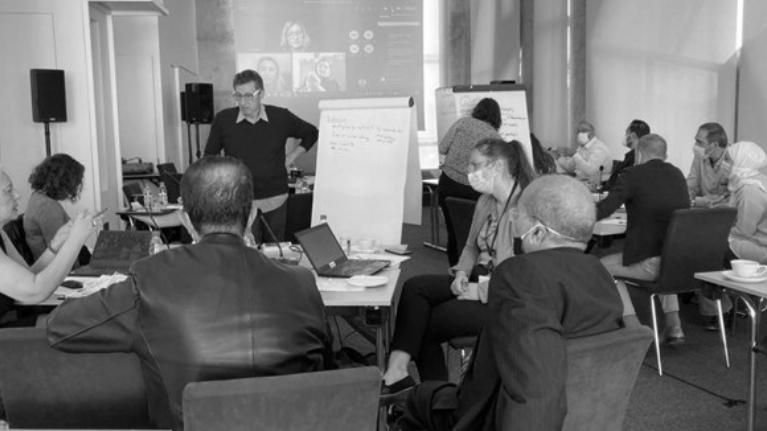
It is a free conference that explores how to boost learners’ motivation, featuring inspiring presentations and workshops highlighting international best practices as well as practical tips from Estonia. The event is intended for teachers, school leaders, career specialists, and other professionals working with young people. Sessions in main hall will be recorded and shared at a later stage.

Time: 8 December 2025 at 9.00-15:30 (CET)

Place: V Spa konverentsikeskus, Riia tn. 2, Tartu, ESTONIA

Languages: Estonian and English

More information: https://confenta.com/ee/opilaste-tulevik/

Subject Tags:
Regions:
Countries and territories:
Economic groups:
--

Euroguidance Malta Annual Conference: Supporting Career Guidance through Artificial Intelligence

Euroguidance Malta Annual Conference: Supporting Career Guidance through Artificial Intelligence

Kind:
Event
Start Date:
28 Nov 2025
End Date:
04 Jun 2026
Event Location:
Sliema, Malta
EventType:
Language:

English

Slug
english
Identifier
skpEng
Language Version:
--
Sources:

Other sources

Experts from many international, regional and national agencies generously share their views, experiences and findings on skills, helping policy-makers among other stakeholders to understand the linkages between education, training and the world of work, and how to integrate skills into national development planning to promote employment and economic growth.

Thumbnail
Identifier
skpOSource
Slug
other-sources
Topics:

Access to training

Thumbnail

Access for all to good quality education, vocational training and workplace learning is a fundamental principle of social cohesion and economic growth. Some groups of people may require targeted attention if they are to benefit from education, training and employment opportunities.  

This is particularly the case for disadvantaged youth, lower skilled workers, people with disabilities, and people in rural communities. The attractiveness of vocational education and training is enhanced when combined with entrepreneurship training and when public policies encourage utilization of higher skills by business. 
 

Identifier
skpATSU
Slug
access-to-training

Career guidance and employment services

Thumbnail

Career guidance and counselling, career education and lifelong development of skills for employability are key for success in learning activities, effective career transitions, livelihood planning, entrepreneurship and in increasing labour market participation. They are instrumental in promoting skills utilization, recognition (RPL), as well as in improving enterprise human resource management.

Career development activities encompass a wide variety of support activities including career information and advice, counselling, work exposure (e.g. job shadowing, work experience periods), assessment, coaching, mentoring, professional networking, advocacy, basic and employability skills training (curricular and non-curricular) and entrepreneurship training. It is often an area which is fragmented across different ministries (e.g. education, TVET, employment, youth) requiring an effort to achieve the necessary coordination to provide adequate support to individuals during learning, employment and unemployment/inactivity periods.
 

Identifier
skpLMIES
Slug
career-guidance-and-employment-services

Digital skills

Thumbnail

The world of work is undergoing a substantial transformation due to new forces. In particular, technological advances, such as AI, automation and robotics, have produced numerous new opportunities, but also given rise to urgent challenges. While new jobs are constantly being created with the emergence of the digital economy, many jobs are at risk of becoming obsolete. Digital innovations will rapidly change the demand for skills, thereby creating a wider skills gap that has the potential to hold back economic growth. Equipping people with basic or advanced digital skills promises to prepare them for unprecedented job opportunities in the digital economy. This will lead to innovation, higher productivity and competitiveness, as well as expanding markets, access to work and entrepreneurship opportunities. 

Identifier
skpdigskills
Slug
digital-skills

Standards, curriculum and learning resources

Thumbnail

The standard or outcome-based approach to curriculum development is a worldwide trend which reflects a paradigm shift from input to outcome-based provision, from teaching to learning, from content to process focused/performance-oriented learning experience. In this new paradigm the learner is expected to demonstrate what he/she knows and is able to do against the standards established at national level. Adopting an outcome-based approach for curriculum development is an effective way to address potential mismatches between technical and vocational education and training (TVET) provision and the needs of the labour market; between irrelevant/ obsolete training programmes, and employers’ and learners’ needs and expectations. 

Identifier
skpStndrd
Slug
standards-curriculum-and-learning-resources
Knowledge Products:

Topics:

-How AI is reshaping the world of work
-AI’s impact on future jobs
-Its use as a tool for guidance teachers, career advisors and educators (e.g. Co Pilot, Chat GBT)
-Skills required by future employees in this changing scenario

Participants:
Participants: 150 people 
-Career advisors/guidance teachers/ PSCD teachers/representatives of heads of schools/SLT, College Principals from Compulsory Schooling
-Employment advisors from Jobsplus
-Career advisors from post-secondary + tertiary institutions (JC, GCHSS, UM, MCAST, ITS, etc.)
-MCGA members (e.g. adult educators/private recruitment agencies, etc.)

Time: 28 November 2025 at 08:30-14.30

Place: AX The Palace, Sliema, Malta

Subject Tags:
Regions:
Countries and territories:
Economic groups:
--

Haustráðstefna FNS 2025 - Virðing og velferð

Haustráðstefna FNS 2025 - Virðing og velferð

Kind:
Event
Start Date:
07 Nov 2025
End Date:
04 Jun 2026
Event Location:
Reykjavík, Iceland
EventType:
Language:

Icelandic

Slug
icelandic
Identifier
skpise
Language Version:
--
Sources:

Other sources

Experts from many international, regional and national agencies generously share their views, experiences and findings on skills, helping policy-makers among other stakeholders to understand the linkages between education, training and the world of work, and how to integrate skills into national development planning to promote employment and economic growth.

Thumbnail
Identifier
skpOSource
Slug
other-sources
Topics:

Gender equality

Thumbnail

Women represent both half of the world's population – and half the world's economic potential. Their participation in the labour market reduces poverty because they often invest 90 per cent of their income in the well-being, education and nutrition of their families. Yet labour force participation by women has stagnated at about 55 per cent globally since 2010. Moreover, women are disproportionately represented in precarious work – low-paid, low-skilled and insecure jobs.

Training plays an important role in the pursuit of equality of opportunity and treatment for women and men in the world of work. Yet women often lack access to technical and vocational education and training. Many also lack the basic functional skills, such as literacy and numeracy, to participate meaningfully in the work force. Overcoming this challenge requires the adoption of a life-cycle approach. This includes improving girls’ access to basic education; overcoming logistic, economic and cultural barriers to apprenticeships and to secondary and vocational training for young women; and meeting the training needs of women re-entering the labour market and of older women who have not had equal access to opportunities for lifelong learning.

Identifier
skpGenEqul
Slug
gender-equality

Lifelong learning

Thumbnail

There is a critical need for a greater overall investment in education and training, particularly in developing countries. Education and training investments should be closely linked to economic and employment growth strategies and programmes. Responsibility should be shared between the government (primary responsibility), enterprises, the social partners, and the individual. To make lifelong learning for all a reality, countries will need to make major reforms of their vocational and education and training systems. School-to-work schemes for young people should integrate education with workplace learning. Training systems need to become more flexible and responsive to rapidly changing skill requirements. Reforms should also focus on how learning can be facilitated, not just on training for specific occupational categories.

Identifier
skpPSLLL
Slug
lifelong-learning

Migrant workers

Thumbnail

According to the ILO global estimates on migrant workers, there were around 164 million migrant workers in 2017. 

Migrant workers contribute to growth and development in their countries of destination, while countries of origin greatly benefit from their remittances and the skills acquired during their migration experience. Yet, many migrant workers face challenges in accessing quality training and decent jobs including under-utilization of skills, a lack of employment or training opportunities, lack of information, and exploitation of low-skilled workers.

To address these challenges, countries need to strengthen skills anticipation systems to inform migration policies, increase access to education and training, and establish bilateral or multilateral recognition of qualifications and skills.

Identifier
skpMigWor
Slug
migrant-workers

People with disabilities

Thumbnail

Of an estimated 1 billion people with disabilities in the world today, some 785 million are of working age. While many are successfully employed and fully integrated into society, most face a disproportionate level of poverty and unemployment. This is a massive loss both to them and their countries. A strategy of including people with disabilities in training and employment promotion policies, combined with targeted supports to ensure their participation, can help disabled persons obtain productive mainstream employment.

Identifier
skpPeoDis
Slug
people-with-disabilities
Knowledge Products:

Conference of the Icelandic Association of career and guidance counsellors

The roster includes a lecture regarding inclusion and diversity. The association of queer people in Iceland (samtökin '78) will talk about currents in society and how career and guidance counsellors can add their strenghts to queer youth. There will also be a lecture and workshop regarding bullying and the importance of inclusion, positivity and healthy discussion in our society.

Time: 7 November 2025 at 09:00-15:30 (UCT+00)

Place: Grand Hótel. Sigtún 28, 105 Reykjavík, Iceland

More information: https://fns.is/greinar/dagskra-haustradstefnu-fns-7-november/


Subject Tags:
Regions:
Countries and territories:
Economic groups:
--

Skills2Capabilities - End of Project Conference

Skills2Capabilities - End of Project Conference

Kind:
Event
Start Date:
13 Nov 2025
End Date:
04 Jun 2026
Event Location:
Maastricht, Netherlands
EventType:
Language:

English

Slug
english
Identifier
skpEng
Language Version:
--
Sources:

Academic institutions

Research papers, synthesis reports, country and programme studies are collected from many academic institutions and national, regional and international professional associations.

Thumbnail
Identifier
skpAcaInst
Slug
academic-institutions

Think tanks, foundations and consultancy services

The platform also contains information and resources developed by Think tanks, foundations and consultancy services.

Thumbnail
Identifier
skpttfcs
Slug
think-tanks-foundations-and-consultancy-services
Topics:

Career guidance and employment services

Thumbnail

Career guidance and counselling, career education and lifelong development of skills for employability are key for success in learning activities, effective career transitions, livelihood planning, entrepreneurship and in increasing labour market participation. They are instrumental in promoting skills utilization, recognition (RPL), as well as in improving enterprise human resource management.

Career development activities encompass a wide variety of support activities including career information and advice, counselling, work exposure (e.g. job shadowing, work experience periods), assessment, coaching, mentoring, professional networking, advocacy, basic and employability skills training (curricular and non-curricular) and entrepreneurship training. It is often an area which is fragmented across different ministries (e.g. education, TVET, employment, youth) requiring an effort to achieve the necessary coordination to provide adequate support to individuals during learning, employment and unemployment/inactivity periods.
 

Identifier
skpLMIES
Slug
career-guidance-and-employment-services

Financing of training

Thumbnail

Initial education and training and lifelong learning benefit individuals, employers and society as a whole. Economic principles dictate that the costs for services with public and private benefits should be shared between public and private funding, or else too little training will be provided or taken up. Effective mechanisms for financing skills development vary according to countries’ economic and political circumstances and the degree and level of social dialogue established.

Identifier
skpFinanT
Slug
financing-training

Skills policies and strategies

Thumbnail

Skills and employment policies should be viewed together.  The full value of one policy set is realized when it supports the objectives of the other.  For investments in education and training to yield maximum benefit to workers, enterprises, and economies, countries’ capacities for coordination is critical in three areas: connecting basic education to technical training and then to market entry; ensuring continuous communication between employers and training providers so that training meets the needs and aspirations of workers and enterprises, and integrating skills development policies with industrial, investment, trade, technology, environmental, rural and local development policies.

Identifier
skpPolConv
Slug
skills-policies-and-strategies

Standards, curriculum and learning resources

Thumbnail

The standard or outcome-based approach to curriculum development is a worldwide trend which reflects a paradigm shift from input to outcome-based provision, from teaching to learning, from content to process focused/performance-oriented learning experience. In this new paradigm the learner is expected to demonstrate what he/she knows and is able to do against the standards established at national level. Adopting an outcome-based approach for curriculum development is an effective way to address potential mismatches between technical and vocational education and training (TVET) provision and the needs of the labour market; between irrelevant/ obsolete training programmes, and employers’ and learners’ needs and expectations. 

Identifier
skpStndrd
Slug
standards-curriculum-and-learning-resources
Knowledge Products:

Skills2Capabilities - End of Project Conference

Skills2Capabilities is about understanding how skill systems need to develop if they are to assist people in making labour market transitions - i.e. between jobs, employers or sectors – and thereby reduce the level of skill mismatch which might otherwise arise. The study is about the capabilities individuals will increasingly need to acquire if they are to effectively manage labour market transitions.
From the demand side, the study addresses the skills and capabilities in demand now and in the future. From the supply side, it addresses how the capabilities of interest are reflected in vocational education and training. The research will provide decision-makers in government and education with a better understanding of the capabilities that skills systems will need to supply in the future. The study is comprised of a range of inter-related projects.

Time: 13-14 November 2025. Day 1 09:00-18.00hrs; Day 2: 09:00-13.00hrs CET

Place: Bonnefanten Museum, Avenue Ceramique 250, Maastricht, Netherlands

More information: https://skills2capabilities.eu/index.html


I Encuentro Internacional de Galicia y Norte de Portugal de Formación para el trabajo. El reto de la convergencia de los sistemas formativos y la mejora de la calidad de la formación.

I Encuentro Internacional de Galicia y Norte de Portugal de Formación para el trabajo. El reto de la convergencia de los sistemas formativos y la mejora de la calidad de la formación.

Kind:
Event
Start Date:
20 Nov 2025
End Date:
04 Jun 2026
Event Location:
Santiago de Compostela (A Coruña), Galicia, Spain
EventType:
Language:

Spanish

Slug
spanish
Identifier
skpEsp
Language Version:
--
Sources:

Academic institutions

Research papers, synthesis reports, country and programme studies are collected from many academic institutions and national, regional and international professional associations.

Thumbnail
Identifier
skpAcaInst
Slug
academic-institutions
Topics:

Access to training

Thumbnail

Access for all to good quality education, vocational training and workplace learning is a fundamental principle of social cohesion and economic growth. Some groups of people may require targeted attention if they are to benefit from education, training and employment opportunities.  

This is particularly the case for disadvantaged youth, lower skilled workers, people with disabilities, and people in rural communities. The attractiveness of vocational education and training is enhanced when combined with entrepreneurship training and when public policies encourage utilization of higher skills by business. 
 

Identifier
skpATSU
Slug
access-to-training

Apprenticeships

Thumbnail

Quality apprenticeships based on robust social dialogue and public-private partnerships can improve employment prospects for young people while developing high level skills identified by employers as necessary for growth and increased productivity. Both informal and regulated apprenticeship systems are important learning resources enabling young people to overcome the work-inexperience trap, gain new and enhanced skills and recognized qualifications.

Upgrading informal apprenticeships and expanding regulated ones is a cost-effective way to invest in a country’s skills base, promote economic growth and enhance the employability of youth.

Identifier
skpAppren
Slug
apprenticeships

Career guidance and employment services

Thumbnail

Career guidance and counselling, career education and lifelong development of skills for employability are key for success in learning activities, effective career transitions, livelihood planning, entrepreneurship and in increasing labour market participation. They are instrumental in promoting skills utilization, recognition (RPL), as well as in improving enterprise human resource management.

Career development activities encompass a wide variety of support activities including career information and advice, counselling, work exposure (e.g. job shadowing, work experience periods), assessment, coaching, mentoring, professional networking, advocacy, basic and employability skills training (curricular and non-curricular) and entrepreneurship training. It is often an area which is fragmented across different ministries (e.g. education, TVET, employment, youth) requiring an effort to achieve the necessary coordination to provide adequate support to individuals during learning, employment and unemployment/inactivity periods.
 

Identifier
skpLMIES
Slug
career-guidance-and-employment-services

Entrepreneurship

Thumbnail
Identifier
entrepreneurship
Slug
entrepreneurship
Knowledge Products:

This conference will lay the foundations for the current Galicia/Northern Portugal International Training for Employment Congress, an annual event held alternately in Portugal and Spain, which will celebrate its 25th edition in 2025.

Throughout all these editions, training and employment have been the focus of attention, explored in depth from different perspectives such as career guidance, ageism, entrepreneurship, knowledge transfer, and training needs, among others.

In this edition, dual training is the central theme of the Congress, given its importance as a methodology which, through complementary training at the training centre and in the company or institution, creates a privileged space for the development of various types of skills, with special mention of personal and cross-cutting skills directly linked to future professional practice, thus promoting the comprehensive development of the student. This situation improves employability by contributing to the balance between training provision and labour market demand, and responding to the need to improve the integration of qualified young people with professional experience into the labour market, undoubtedly one of the greatest challenges for public employment policies in the Spanish and international context.

Time: 20-21 November 2025 at 09.30-22.00 CET

Place: Cidade da Cultura de Galicia, Santiago de Compostela

Languages: Spanish and Portuguese

More information: https://25.congresogalicianortedeportugal.es/

Subject Tags:
Regions:
Countries and territories:
Economic groups:
--

The First Career Guidance Forum (Saudi Arabia)

The First Career Guidance Forum (Saudi Arabia)

Kind:
Event
Start Date:
17 Nov 2025
End Date:
04 Jun 2026
Event Location:
Riyadh, Saudi Arabia
EventType:
Language:

Arabic

Slug
arabic
Identifier
skpArb
Language Version:
--
Sources:

Other sources

Experts from many international, regional and national agencies generously share their views, experiences and findings on skills, helping policy-makers among other stakeholders to understand the linkages between education, training and the world of work, and how to integrate skills into national development planning to promote employment and economic growth.

Thumbnail
Identifier
skpOSource
Slug
other-sources
Topics:

Career guidance and employment services

Thumbnail

Career guidance and counselling, career education and lifelong development of skills for employability are key for success in learning activities, effective career transitions, livelihood planning, entrepreneurship and in increasing labour market participation. They are instrumental in promoting skills utilization, recognition (RPL), as well as in improving enterprise human resource management.

Career development activities encompass a wide variety of support activities including career information and advice, counselling, work exposure (e.g. job shadowing, work experience periods), assessment, coaching, mentoring, professional networking, advocacy, basic and employability skills training (curricular and non-curricular) and entrepreneurship training. It is often an area which is fragmented across different ministries (e.g. education, TVET, employment, youth) requiring an effort to achieve the necessary coordination to provide adequate support to individuals during learning, employment and unemployment/inactivity periods.
 

Identifier
skpLMIES
Slug
career-guidance-and-employment-services

Lifelong learning

Thumbnail

There is a critical need for a greater overall investment in education and training, particularly in developing countries. Education and training investments should be closely linked to economic and employment growth strategies and programmes. Responsibility should be shared between the government (primary responsibility), enterprises, the social partners, and the individual. To make lifelong learning for all a reality, countries will need to make major reforms of their vocational and education and training systems. School-to-work schemes for young people should integrate education with workplace learning. Training systems need to become more flexible and responsive to rapidly changing skill requirements. Reforms should also focus on how learning can be facilitated, not just on training for specific occupational categories.

Identifier
skpPSLLL
Slug
lifelong-learning

Skills policies and strategies

Thumbnail

Skills and employment policies should be viewed together.  The full value of one policy set is realized when it supports the objectives of the other.  For investments in education and training to yield maximum benefit to workers, enterprises, and economies, countries’ capacities for coordination is critical in three areas: connecting basic education to technical training and then to market entry; ensuring continuous communication between employers and training providers so that training meets the needs and aspirations of workers and enterprises, and integrating skills development policies with industrial, investment, trade, technology, environmental, rural and local development policies.

Identifier
skpPolConv
Slug
skills-policies-and-strategies

Teachers, trainers and training organizations

Thumbnail

At the heart of any skills system are the managers and staff of training institutions who face considerable challenges to deliver quality programmes at a time of fiscal constraint. As the expectations placed on institutions continue to grow, managers and trainers are increasingly expected to deliver flexible, responsive and current programmes based on strong partnerships with local employers that provide good employment outcomes. Because of this, there is a need for constituents to build the capacity of their institutional workforce to meet the expectations placed upon them by demand driven systems.

Identifier
skpTeach
Slug
teachers-trainers-and-training-organizations
Knowledge Products:

The First Career Guidance Forum is a national platform dedicated to advancing the field of career guidance and counseling in Saudi Arabia. Hosted by the Human Resources Development Fund (HRDF), the event brings together local and international experts to discuss innovations in guidance practices, policy development, and workforce preparation. Through panels, workshops, and interactive experiences, participants will gain valuable insights, build professional networks, and contribute to shaping the future of career guidance in alignment with Saudi Vision 2030.

Time: 17-19 November 2025 at 09:00–17:00 AST

Place: Voco Hotel Riyadh, King Fahd Road, Riyadh, Saudi Arabia

Languages: Arabic and English

More information: https://www.hrdf.org.sa/ and https://regs.executechnology.net/hrdf/
 

Subject Tags:
Regions:

Arab States

Region Image
Countries and territories:
Economic groups:
--

Investigar para Transformar // Educación Técnica con Impacto: Metodologías pedagógicas para vincular la educación con el sector productivo Research for Transformation // Impactful Technical Education: Pedagogical methodologies for linking education with the world of work

Investigar para Transformar // Educación Técnica con Impacto: Metodologías pedagógicas para vincular la educación con el sector productivo Research for Transformation // Impactful Technical Education: Pedagogical methodologies for linking education with the world of work

Kind:
Event
Start Date:
19 Nov 2025
End Date:
04 Jun 2026
Event Location:
Quito, Ecuador
EventType:
Language:

Spanish

Slug
spanish
Identifier
skpEsp
Language Version:
--
Sources:

Other sources

Experts from many international, regional and national agencies generously share their views, experiences and findings on skills, helping policy-makers among other stakeholders to understand the linkages between education, training and the world of work, and how to integrate skills into national development planning to promote employment and economic growth.

Thumbnail
Identifier
skpOSource
Slug
other-sources
Topics:

Career guidance and employment services

Thumbnail

Career guidance and counselling, career education and lifelong development of skills for employability are key for success in learning activities, effective career transitions, livelihood planning, entrepreneurship and in increasing labour market participation. They are instrumental in promoting skills utilization, recognition (RPL), as well as in improving enterprise human resource management.

Career development activities encompass a wide variety of support activities including career information and advice, counselling, work exposure (e.g. job shadowing, work experience periods), assessment, coaching, mentoring, professional networking, advocacy, basic and employability skills training (curricular and non-curricular) and entrepreneurship training. It is often an area which is fragmented across different ministries (e.g. education, TVET, employment, youth) requiring an effort to achieve the necessary coordination to provide adequate support to individuals during learning, employment and unemployment/inactivity periods.
 

Identifier
skpLMIES
Slug
career-guidance-and-employment-services

Monitoring and evaluation

Thumbnail

Measuring the outcomes of skills systems, policies and targeted programmes is essential in order to monitor and improve their effectiveness and relevance. Elements of sound assessment processes include: institutions to sustain feedback from employers and trainees; mechanisms to track labour market outcomes of training and systems of accountability that use this information; and, quantitative and qualitative labour market information and its dissemination to all stakeholders.

Identifier
skpPolPer
Slug
monitoring-and-evaluation

Youth employability

Thumbnail

Globally, nearly 68 million young women and men are looking for and available for work,  and an estimated 123 million young people are working but living in poverty. The number who are not in employment, education or training (NEET) stands at 267 million, a majority of whom are young women. Significantly, young people are three times as likely as adults (25 years and older) to be unemployed.

Skills development is a primary means of enabling young people to make a smooth transition to work. A comprehensive approach is required to integrate young women and men in the labour market, including relevant and quality skills training, labour market information, career guidance and employment services, recognition of prior learning, incorporating entrepreneurship with training and effective skills forecasting. Improved basic education and core work skills are particularly important to enable youth to engage in lifelong learning as well as transition to the labour market. 

Identifier
skpYoEmp
Slug
youth-employability
Knowledge Products:

This edition of “Research for Transformation” will highlight diverse ways in which evidence can be used to improve the school-to-work transitions of young people in Ecuador’s upper secondary technical education (Bachillerato Técnico).

The Ministry of Education, Sports and Culture of Ecuador and VVOB are convening two thought leaders to speak at the conference:
- Salomé Villarreal, Secundary Director, Ministry of Education, Sports and Culture (MINEDEC)
- Dr. Anthony Mann, Director General, Critical Transitions
Salomé will present findings from the second round of the tracer study carried out by the MINEDEC. In 2022, the first round collected data on 62,000+ students from the Sierra and Amazon regions of Ecuador that participated the study while in their last year of upper secondary education. Now, three years later, we find out how these graduates fared in their transition into the workforce, entrepreneurship, or higher education they look back at the education they received. The findings will open a discussion on how MINEDEC can use these data to improve school-to-work transitions in Ecuador.
Dr. Anthony Mann will make the case for employer engagement in study and career guidance as a cost-effective strategy to develop students’ motivation and social capital and to enable their progression into high priority areas of youth economic opportunity. Presenting global evidence, Dr. Mann will spotlight career talks with guest speakers from the world of work. He will pay attention to key design features for maximum impact (which speakers? which messages? structure? etc.) and will reflect on the pros and cons of different delivery modalities (in-person, video, etc.). His presentation is meant to inspire teachers, school leaders and career guidance counselors and will inform dialogue with MINEDEC on (policy) measures to ensure the scalability of career talks in Ecuador.

Target audience: Policymakers, researchers, teachers, school leaders, career guidance counselors

Languages: Spanish and English

Time: 19 November 2025 at 15:00 CET

Venue: Hilton Colon Hotel, Amazonas Ave 1914, Quito, Ecuador

Subject Tags:
Regions:

Americas

Region Image
Countries and territories:
Economic groups:
--

Career Guidance and Counselling Conference: Contemporary Challenges and Perspectives in Career Counselling, Vocational Guidance and Labour Market Integration: Artificial Intelligence and Skills Development for Youth

Career Guidance and Counselling Conference: Contemporary Challenges and Perspectives in Career Counselling, Vocational Guidance and Labour Market Integration: Artificial Intelligence and Skills Development for Youth

Kind:
Event
Start Date:
28 Nov 2025
End Date:
04 Jun 2026
Event Location:
Athens, Greece
EventType:
Language:

Greek, Modern (-)

Slug
greek-modern
Identifier
skpel
Language Version:
--
Sources:

Academic institutions

Research papers, synthesis reports, country and programme studies are collected from many academic institutions and national, regional and international professional associations.

Thumbnail
Identifier
skpAcaInst
Slug
academic-institutions
Topics:

Career guidance and employment services

Thumbnail

Career guidance and counselling, career education and lifelong development of skills for employability are key for success in learning activities, effective career transitions, livelihood planning, entrepreneurship and in increasing labour market participation. They are instrumental in promoting skills utilization, recognition (RPL), as well as in improving enterprise human resource management.

Career development activities encompass a wide variety of support activities including career information and advice, counselling, work exposure (e.g. job shadowing, work experience periods), assessment, coaching, mentoring, professional networking, advocacy, basic and employability skills training (curricular and non-curricular) and entrepreneurship training. It is often an area which is fragmented across different ministries (e.g. education, TVET, employment, youth) requiring an effort to achieve the necessary coordination to provide adequate support to individuals during learning, employment and unemployment/inactivity periods.
 

Identifier
skpLMIES
Slug
career-guidance-and-employment-services

Digital skills

Thumbnail

The world of work is undergoing a substantial transformation due to new forces. In particular, technological advances, such as AI, automation and robotics, have produced numerous new opportunities, but also given rise to urgent challenges. While new jobs are constantly being created with the emergence of the digital economy, many jobs are at risk of becoming obsolete. Digital innovations will rapidly change the demand for skills, thereby creating a wider skills gap that has the potential to hold back economic growth. Equipping people with basic or advanced digital skills promises to prepare them for unprecedented job opportunities in the digital economy. This will lead to innovation, higher productivity and competitiveness, as well as expanding markets, access to work and entrepreneurship opportunities. 

Identifier
skpdigskills
Slug
digital-skills

People with disabilities

Thumbnail

Of an estimated 1 billion people with disabilities in the world today, some 785 million are of working age. While many are successfully employed and fully integrated into society, most face a disproportionate level of poverty and unemployment. This is a massive loss both to them and their countries. A strategy of including people with disabilities in training and employment promotion policies, combined with targeted supports to ensure their participation, can help disabled persons obtain productive mainstream employment.

Identifier
skpPeoDis
Slug
people-with-disabilities

Youth employability

Thumbnail

Globally, nearly 68 million young women and men are looking for and available for work,  and an estimated 123 million young people are working but living in poverty. The number who are not in employment, education or training (NEET) stands at 267 million, a majority of whom are young women. Significantly, young people are three times as likely as adults (25 years and older) to be unemployed.

Skills development is a primary means of enabling young people to make a smooth transition to work. A comprehensive approach is required to integrate young women and men in the labour market, including relevant and quality skills training, labour market information, career guidance and employment services, recognition of prior learning, incorporating entrepreneurship with training and effective skills forecasting. Improved basic education and core work skills are particularly important to enable youth to engage in lifelong learning as well as transition to the labour market. 

Identifier
skpYoEmp
Slug
youth-employability
Knowledge Products:

Organized by the European University Cyprus in collaboration with the Laboratory of Counselling Science and Career Development of the National and Kapodistrian University of Athens, this international conference brings together academics, practitioners, researchers, and policymakers from Greece, Cyprus, and abroad. The event will explore how rapid technological advancements, particularly artificial intelligence, are reshaping career guidance, youth employability, and the development of transversal and digital skills.

Through keynote speeches, panel discussions, and interactive workshops, participants will exchange ideas and good practices on inclusive and future-oriented approaches to career guidance and counselling, focusing on the transition from education to the labour market and the role of counsellors in supporting meaningful, sustainable, and human-centered career development.

Time: 28 November 2025 at 09.00-16.00 EET

Venue: Radisson Blu Park Hotel, 10 Alexandras Avenue, 10682 Athens, Greece

Languages: Greek, Keynote in English

More information: https://euc.ac.cy/el/career-guidance-counseling-oct25/

Subject Tags:
Regions:
Countries and territories:
Economic groups:
--

Desigualtat econòmica i inserció sociolaboral (Economic Inequality and Socio-Labour Inclusion)

Desigualtat econòmica i inserció sociolaboral (Economic Inequality and Socio-Labour Inclusion)

Kind:
Event
Start Date:
23 Oct 2025
End Date:
04 Jun 2026
Event Location:
Barcelona, Catalonia, Spain
EventType:
Language:

English

Slug
english
Identifier
skpEng
Language Version:
--
Sources:

Academic institutions

Research papers, synthesis reports, country and programme studies are collected from many academic institutions and national, regional and international professional associations.

Thumbnail
Identifier
skpAcaInst
Slug
academic-institutions
Topics:

Access to training

Thumbnail

Access for all to good quality education, vocational training and workplace learning is a fundamental principle of social cohesion and economic growth. Some groups of people may require targeted attention if they are to benefit from education, training and employment opportunities.  

This is particularly the case for disadvantaged youth, lower skilled workers, people with disabilities, and people in rural communities. The attractiveness of vocational education and training is enhanced when combined with entrepreneurship training and when public policies encourage utilization of higher skills by business. 
 

Identifier
skpATSU
Slug
access-to-training

Financing of training

Thumbnail

Initial education and training and lifelong learning benefit individuals, employers and society as a whole. Economic principles dictate that the costs for services with public and private benefits should be shared between public and private funding, or else too little training will be provided or taken up. Effective mechanisms for financing skills development vary according to countries’ economic and political circumstances and the degree and level of social dialogue established.

Identifier
skpFinanT
Slug
financing-training

Lifelong learning

Thumbnail

There is a critical need for a greater overall investment in education and training, particularly in developing countries. Education and training investments should be closely linked to economic and employment growth strategies and programmes. Responsibility should be shared between the government (primary responsibility), enterprises, the social partners, and the individual. To make lifelong learning for all a reality, countries will need to make major reforms of their vocational and education and training systems. School-to-work schemes for young people should integrate education with workplace learning. Training systems need to become more flexible and responsive to rapidly changing skill requirements. Reforms should also focus on how learning can be facilitated, not just on training for specific occupational categories.

Identifier
skpPSLLL
Slug
lifelong-learning

Youth employability

Thumbnail

Globally, nearly 68 million young women and men are looking for and available for work,  and an estimated 123 million young people are working but living in poverty. The number who are not in employment, education or training (NEET) stands at 267 million, a majority of whom are young women. Significantly, young people are three times as likely as adults (25 years and older) to be unemployed.

Skills development is a primary means of enabling young people to make a smooth transition to work. A comprehensive approach is required to integrate young women and men in the labour market, including relevant and quality skills training, labour market information, career guidance and employment services, recognition of prior learning, incorporating entrepreneurship with training and effective skills forecasting. Improved basic education and core work skills are particularly important to enable youth to engage in lifelong learning as well as transition to the labour market. 

Identifier
skpYoEmp
Slug
youth-employability
Knowledge Products:

This session, led by Dr. Tibor B. Borbély-Pecze from ELTE University (Budapest, Hungary), will explore the relationship between economic inequality and socio-labour inclusion, focusing on how structural disparities shape opportunities in education and employment. Drawing from European research and policy frameworks, the talk will highlight innovative strategies to promote fair access to career guidance and lifelong learning.

The event is aimed at students, educators, and professionals in the fields of social education, pedagogy, and guidance, as well as anyone interested in understanding how economic conditions affect social mobility and inclusion

Languages: Catalan and English

Time: 23 October 2025 at 12:30

Place: Universitat de Barcelona, Facultat d'educació, Passeig de la Vall d'Hebron 171, Campus Mundet, Edifici Migdia 2, aula 003, Barcelona

Subject Tags:
Regions:
Countries and territories:
Economic groups:
--

Euroguidance European Conference: Sustaining guidance within the Union of Skills (regional)

Euroguidance European Conference: Sustaining guidance within the Union of Skills (regional)

Kind:
Event
Start Date:
02 Dec 2025
End Date:
04 Jun 2026
Event Location:
Riga, Latvia and online
EventType:
Language:

English

Slug
english
Identifier
skpEng
Language Version:
--
Sources:

Governments

Governments hold a wealth of knowledge on skills development, and are increasingly realizing the value of learning from each others’ experiences. Their policy documents, programme evaluations, and research findings contain their experience and ideas on how to better link skills to employment

Thumbnail
Identifier
skpGov
Slug
governments
Topics:

Anticipating and matching skills needs

Thumbnail

Anticipating and building skills for the future is essential to a rapidly changing labour market. This applies to changes in the types and levels of skills needed as well as in occupational and technical areas. Effective methods to anticipate future skills needs and avoid potential mismatches include: sustained dialogue between employers and trainers, coordination across government institutions, labour market information systems, employment services and performance reviews of training institutions. 

Identifier
skpAFSN
Slug
anticipating-and-matching-skills-needs

Career guidance and employment services

Thumbnail

Career guidance and counselling, career education and lifelong development of skills for employability are key for success in learning activities, effective career transitions, livelihood planning, entrepreneurship and in increasing labour market participation. They are instrumental in promoting skills utilization, recognition (RPL), as well as in improving enterprise human resource management.

Career development activities encompass a wide variety of support activities including career information and advice, counselling, work exposure (e.g. job shadowing, work experience periods), assessment, coaching, mentoring, professional networking, advocacy, basic and employability skills training (curricular and non-curricular) and entrepreneurship training. It is often an area which is fragmented across different ministries (e.g. education, TVET, employment, youth) requiring an effort to achieve the necessary coordination to provide adequate support to individuals during learning, employment and unemployment/inactivity periods.
 

Identifier
skpLMIES
Slug
career-guidance-and-employment-services

Recognition and portability of skills

Thumbnail

Skills development can be viewed from a life-cycle perspective of building, maintaining and improving competencies and skills. A holistic approach to skills development encompasses the following features: access to good basic education; development of cognitive and core skills, including literacy, numeracy, communication, problem-solving and learning ability; and, availability of continuous training opportunities targeting adult and older workers.  Systems to improve recognition of attained skills across occupations, industries and countries improve the employability of workers, reduce labour shortages, and promote good working conditions for migrant workers. 

Identifier
skpRAPS
Slug
recognition-and-portability-of-skills

Skills for green transition/climate action

Thumbnail

The growing importance of sustainable development and the shift to a low-carbon and climateresilient economy will require new skills and qualifications, offering great potential for the creation of green jobs but also implying structural changes and a transformation of existing jobs. The transition to a low-carbon and greener economy will generate millions of new jobs, negatively affect some high-emitting sectors, and alter most existing occupations in terms of task compositions and skills requirements. 

Ensuring the right skills for green jobs is a prerequisite to make the transition to a greener economy happen. Today, skills gaps are already recognised as a major bottleneck in a number of sectors, such as renewable energy, energy and resource efficiency, green building or environmental services. The adoption and dissemination of clean technologies require skills in technology application, adaptation and maintenance. Skills are also crucial for economies and
businesses, workers and entrepreneurs to rapidly adapt to changes deriving from climate change and environmental policies. 

Identifier
skpGreen
Slug
skills-for-green-transition-climate-action
Knowledge Products:

Guidance practitioners, trainers, researchers and policy makers in the field of career guidance are welcome to join us at the Euroguidance European conference in Riga, Latvia on December 2-3, 2025. This flagship event for Europe in the Global Careers Month calendar focuses on "Sustaining Guidance within the Union of Skills."

Explore the vital link between career guidance, skills, and sustainability. The program offers a breadth of experiences, with two keynotes, ten workshops, twelve papers, and a panel discussion featuring diverse perspectives from practice, research, policy, education, and industry.

You'll also have a chance to connect with peers and enjoy Riga's rich culture with a guided visit to the Old Town or the Latvian National Library and a lively dinner with traditional folk music and dancing. 

Can't make it in person? Selected sessions will be streamed live and recorded for one year for all registered attendees.

The event is aimed at the European guidance community, but on-line attendance is available globally.

Time: 2 December 2025 at 09:00-21:00 and 3 December 2025 at 09:30-16:00 EET

Location: Radisson Blu Daugava, Kuģu iela 24,  Riga, Latvia. Online participation link will be sent to registered participants'

More information: https://sites.google.com/view/euroguidance2025gcm/home


Subject Tags:
Regions:
Countries and territories:
Economic groups:
--