Monthly career guidance sessions for international students
English
Academic institutions
Research papers, synthesis reports, country and programme studies are collected from many academic institutions and national, regional and international professional associations.

Career guidance and employment services

Career guidance and counselling, career education and lifelong development of skills for employability are key for success in learning activities, effective career transitions, livelihood planning, entrepreneurship and in increasing labour market participation. They are instrumental in promoting skills utilization, recognition (RPL), as well as in improving enterprise human resource management.
Career development activities encompass a wide variety of support activities including career information and advice, counselling, work exposure (e.g. job shadowing, work experience periods), assessment, coaching, mentoring, professional networking, advocacy, basic and employability skills training (curricular and non-curricular) and entrepreneurship training. It is often an area which is fragmented across different ministries (e.g. education, TVET, employment, youth) requiring an effort to achieve the necessary coordination to provide adequate support to individuals during learning, employment and unemployment/inactivity periods.
Lifelong learning

There is a critical need for a greater overall investment in education and training, particularly in developing countries. Education and training investments should be closely linked to economic and employment growth strategies and programmes. Responsibility should be shared between the government (primary responsibility), enterprises, the social partners, and the individual. To make lifelong learning for all a reality, countries will need to make major reforms of their vocational and education and training systems. School-to-work schemes for young people should integrate education with workplace learning. Training systems need to become more flexible and responsive to rapidly changing skill requirements. Reforms should also focus on how learning can be facilitated, not just on training for specific occupational categories.
Recognition and portability of skills
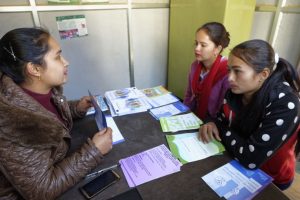
Skills development can be viewed from a life-cycle perspective of building, maintaining and improving competencies and skills. A holistic approach to skills development encompasses the following features: access to good basic education; development of cognitive and core skills, including literacy, numeracy, communication, problem-solving and learning ability; and, availability of continuous training opportunities targeting adult and older workers. Systems to improve recognition of attained skills across occupations, industries and countries improve the employability of workers, reduce labour shortages, and promote good working conditions for migrant workers.
University of Jyväskylä Career Services and International House Jyväskylä (City of Jyväskylä) collaborate in arranging monthly career guidance sessions for international degree students at the University of Jyväskylä. Students can either visit the Pop-up career guidance sessions arranged in Agora without prior appointment reservation or book a meeting with the career advisor. If you have questions about career planning, job search, or application documents, visit the pop-up career guidance sessions arranged at Agora JYU Mattilaniemi campus (Mattilaniemi 2) or book an appointment.
Pop-up career guidance sessions in the Mattilaniemi Campus: no prior reservation is needed - just walk in.
Time: 27 November 2025 at 14:00-15:30
Place: Agora (room AgD212.1), JYU Mattilaniemi campus, Jyväskylä, Finland
More information: https://www.jyu.fi/en/events/monthly-career-guidance-sessions-for-international-students
Europe and Central Asia
