Access to training

Thumbnail

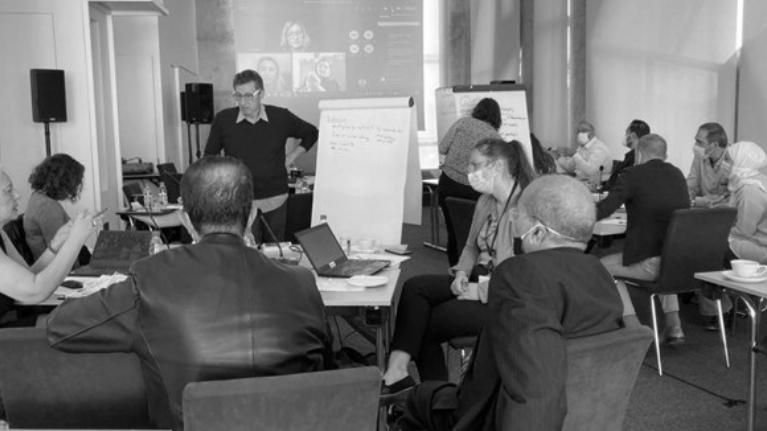
Access for all to good quality education, vocational training and workplace learning is a fundamental principle of social cohesion and economic growth. Some groups of people may require targeted attention if they are to benefit from education, training and employment opportunities.  

This is particularly the case for disadvantaged youth, lower skilled workers, people with disabilities, and people in rural communities. The attractiveness of vocational education and training is enhanced when combined with entrepreneurship training and when public policies encourage utilization of higher skills by business. 
 

Identifier
skpATSU
Slug
access-to-training

Ensuring labour market success for ethnic minority and immigrant youth

Ensuring labour market success for ethnic minority and immigrant youth

Type:
Document
Content Type:
Ensuring labour market success for ethnic minority and immigrant youth
Language:

English

Slug
english
Identifier
skpEng
Sources:

International organizations

Information is gathered from other international organizations that promote skills development and the transition from education and training to work. The Interagency Group on Technical and Vocational Education and Training (IAG-TVET) was established in 2009 to share research findings, coordinate joint research endeavours, and improve collaboration among organizations working at the international and national levels.

Thumbnail
Identifier
skpIntOrg
Slug
international-organizations
Topics:

Access to training

Thumbnail

Access for all to good quality education, vocational training and workplace learning is a fundamental principle of social cohesion and economic growth. Some groups of people may require targeted attention if they are to benefit from education, training and employment opportunities.  

This is particularly the case for disadvantaged youth, lower skilled workers, people with disabilities, and people in rural communities. The attractiveness of vocational education and training is enhanced when combined with entrepreneurship training and when public policies encourage utilization of higher skills by business. 
 

Identifier
skpATSU
Slug
access-to-training

Youth employability

Thumbnail

Globally, nearly 68 million young women and men are looking for and available for work,  and an estimated 123 million young people are working but living in poverty. The number who are not in employment, education or training (NEET) stands at 267 million, a majority of whom are young women. Significantly, young people are three times as likely as adults (25 years and older) to be unemployed.

Skills development is a primary means of enabling young people to make a smooth transition to work. A comprehensive approach is required to integrate young women and men in the labour market, including relevant and quality skills training, labour market information, career guidance and employment services, recognition of prior learning, incorporating entrepreneurship with training and effective skills forecasting. Improved basic education and core work skills are particularly important to enable youth to engage in lifelong learning as well as transition to the labour market. 

Identifier
skpYoEmp
Slug
youth-employability
Knowledge Products:

Research papers

Working papers, reports, and other publications from international organizations, academic institutions and bilateral agencies. Research findings to stimulate informed debate on skills, employment and productivity issues. 

Thumbnail
Identifier
skpRPS
Slug
research-papers
Publication Date:
07 Dec 2012
OECD - Local Economic and Employment Development (LEED) Working Papers, 2011/09 This publication looks at how to improve employment outcomes for two groups – recent migrants, and young people from more established minority communities (second and third generation and beyond). The paper offers a synthesis of project findings and good practice, and provides criteria and checklists for local activity. It builds on previous LEED work to support the integration of immigrants and disadvantaged groups into the labour market, and increasing workforce skills, and is a continuation of the Fulfilling Promise: Ensuring Labour Market Success for Ethnic Minority and Immigrant Youth project launched in 2010. The project was developed to generate further analysis as to why ethnic minorities and immigrant youth as whole tend to perform more poorly in the jobs market, with a particular focus on the second and third generations. 15 local case studies and learning models from OECD and non-OECD countries were commissioned to improve understanding of what remains an under-researched area. They focus on locally-based initiatives and strategies from a wide range of localities in nine case studies and six shorter learning models.
Subject Tags:

Low skilled workers

Slug
low-skilled-workers
Identifier
650

Public private partnerships

Slug
public-private-partnerships
Identifier
138

School-to-work transition

Slug
school-to-work-transition
Identifier
652

Skills recognition

Slug
skills-recognition
Identifier
656

Vocational counseling

Slug
vocational-counseling
Identifier
662

Youth unemployment

Slug
youth-unemployment
Identifier
622
Regions:

Jordan: National Agenda 2006 - 2015

Jordan: National Agenda 2006 - 2015

Type:
Document
Content Type:
Jordan: National Agenda 2006 - 2015
Language:

English

Slug
english
Identifier
skpEng
Sources:

Governments

Governments hold a wealth of knowledge on skills development, and are increasingly realizing the value of learning from each others’ experiences. Their policy documents, programme evaluations, and research findings contain their experience and ideas on how to better link skills to employment

Thumbnail
Identifier
skpGov
Slug
governments
Topics:

Access to training

Thumbnail

Access for all to good quality education, vocational training and workplace learning is a fundamental principle of social cohesion and economic growth. Some groups of people may require targeted attention if they are to benefit from education, training and employment opportunities.  

This is particularly the case for disadvantaged youth, lower skilled workers, people with disabilities, and people in rural communities. The attractiveness of vocational education and training is enhanced when combined with entrepreneurship training and when public policies encourage utilization of higher skills by business. 
 

Identifier
skpATSU
Slug
access-to-training

Training quality and relevance

Thumbnail
Identifier
skpTrainQR
Slug
training-quality-and-relevance
Knowledge Products:

National policies and initiatives

National legislation, policies and initiatives on the issue of training and skills development and the world of work. 

Thumbnail
Identifier
skpNatPol
Slug
national-policies-and-initiatives
Publication Date:
07 Dec 2012
Development of the National Agenda represents a milestone in efforts to build a modern Jordan and address challenges facing the country. It stands as a unique, holistic and inclusive approach that aims primarily to improve the quality of life for Jordanians, build a strong economy, guarantee basic freedoms and human rights and strengthen democracy and cultural and political pluralism. The National Agenda places high priority on the development of human resources, in order to upgrade the production base and expand development benefits. The National Agenda goals and targets center around eight themes. They include: Political development and inclusion; justice and legislation; investment development; financial services and fiscal reform; employment support and vocational training; social welfare; education, higher education, scientific research and innovation; and, infrastructure upgrade.
Subject Tags:

Human resources development

Slug
human-resources-development
Identifier
118

Vocational training

Slug
vocational-training
Identifier
124
Regions:

Arab States

Region Image
Countries and territories:

Review of policies to strengthen skills-employment linkages for marginalised young people

Review of policies to strengthen skills-employment linkages for marginalised young people

Type:
Document
Content Type:
Review of policies to strengthen skills-employment linkages for marginalised young people
Language:

English

Slug
english
Identifier
skpEng
Sources:

International organizations

Information is gathered from other international organizations that promote skills development and the transition from education and training to work. The Interagency Group on Technical and Vocational Education and Training (IAG-TVET) was established in 2009 to share research findings, coordinate joint research endeavours, and improve collaboration among organizations working at the international and national levels.

Thumbnail
Identifier
skpIntOrg
Slug
international-organizations
Topics:

Access to training

Thumbnail

Access for all to good quality education, vocational training and workplace learning is a fundamental principle of social cohesion and economic growth. Some groups of people may require targeted attention if they are to benefit from education, training and employment opportunities.  

This is particularly the case for disadvantaged youth, lower skilled workers, people with disabilities, and people in rural communities. The attractiveness of vocational education and training is enhanced when combined with entrepreneurship training and when public policies encourage utilization of higher skills by business. 
 

Identifier
skpATSU
Slug
access-to-training

Financing of training

Thumbnail

Initial education and training and lifelong learning benefit individuals, employers and society as a whole. Economic principles dictate that the costs for services with public and private benefits should be shared between public and private funding, or else too little training will be provided or taken up. Effective mechanisms for financing skills development vary according to countries’ economic and political circumstances and the degree and level of social dialogue established.

Identifier
skpFinanT
Slug
financing-training

Monitoring and evaluation

Thumbnail

Measuring the outcomes of skills systems, policies and targeted programmes is essential in order to monitor and improve their effectiveness and relevance. Elements of sound assessment processes include: institutions to sustain feedback from employers and trainees; mechanisms to track labour market outcomes of training and systems of accountability that use this information; and, quantitative and qualitative labour market information and its dissemination to all stakeholders.

Identifier
skpPolPer
Slug
monitoring-and-evaluation

Rural employment

Thumbnail

Eight out of 10 of the world’s working poor who live on US $1.25 per day live in rural areas, where many are caught in vulnerable employment, especially in agriculture.Flourishing rural areas are vital to regional and national development. Yet, rural economies tend to face a wide range of challenges that urban areas are more likely to overcome. These include access to transportation, sanitation and health services, and a consumer base in close proximity to support small and medium enterprise development. Women and men working in rural areas also face difficulties associated with a paucity of economic opportunities, under investment, poor infrastructure and public services, including education, and, in many cases, weak governance and underdeveloped markets.

Education, entrepreneurship, and physical and social infrastructure all play an important role in developing rural regions. Skills are central to improving employability and livelihood opportunities, reducing poverty, enhancing productivity and promoting environmentally sustainable development.

Identifier
skpREmpl
Slug
rural-employment

Training quality and relevance

Thumbnail
Identifier
skpTrainQR
Slug
training-quality-and-relevance

Youth employability

Thumbnail

Globally, nearly 68 million young women and men are looking for and available for work,  and an estimated 123 million young people are working but living in poverty. The number who are not in employment, education or training (NEET) stands at 267 million, a majority of whom are young women. Significantly, young people are three times as likely as adults (25 years and older) to be unemployed.

Skills development is a primary means of enabling young people to make a smooth transition to work. A comprehensive approach is required to integrate young women and men in the labour market, including relevant and quality skills training, labour market information, career guidance and employment services, recognition of prior learning, incorporating entrepreneurship with training and effective skills forecasting. Improved basic education and core work skills are particularly important to enable youth to engage in lifelong learning as well as transition to the labour market. 

Identifier
skpYoEmp
Slug
youth-employability
Knowledge Products:

Case studies and good practices

Case studies that document good practices and illustrate the benefits and lessons learnt of particular approaches or methods in real practice. 

Thumbnail
Identifier
skpCaseStdy
Slug
case-studies-and-good-practices

Research papers

Working papers, reports, and other publications from international organizations, academic institutions and bilateral agencies. Research findings to stimulate informed debate on skills, employment and productivity issues. 

Thumbnail
Identifier
skpRPS
Slug
research-papers
Publication Date:
06 Dec 2012
Background paper prepared for the Education for All Global Monitoring Report 2012 There is evidence for a growing mismatch between labour market demands and the skills young people acquire in school and training programmes in countries throughout the developing world. This report examines what type of policies and programmes are advocated in key strategy documents for 46 developing countries in the Middle East, North Africa, South Asia, and Sub-Saharan Africa with a focus on skills development needs of disadvantaged young people, and particularly those living in rural areas. Four countries - Bangladesh, Jordan, Sierra Leone and Ethiopia – have been selected for an in-depth assessment of their plans. Training systems in these countries are undergoing extensive reforms – both in terms of policies related to skills development of youth, as well as relevant programmes - and governments, donors and civil society organizations appear to be placing an increased focus on addressing the skills-labour market mismatch for disadvantaged youth. The four case studies in this report focus on examining the provision of skills training (including how learning is certified), the financing of skills development programmes, and the governance of these programmes.
Subject Tags:

Apprenticeships

Slug
apprenticeships
Identifier
639

Disadvantaged youth

Slug
disadvantaged-youth
Identifier
663

Employability

Slug
employability
Identifier
643

Financing training

Slug
financing-training
Identifier
673

Informal economy

Slug
informal-economy
Identifier
187

Rural development

Slug
rural-development
Identifier
152

Rural employment

Slug
rural-employment
Identifier
670

School-to-work transition

Slug
school-to-work-transition
Identifier
652

Skills mismatch

Slug
skills-mismatch
Identifier
654

Vocational training

Slug
vocational-training
Identifier
124

Youth unemployment

Slug
youth-unemployment
Identifier
622
Regions:

Africa

Region Image

Arab States

Region Image
Countries and territories:

Bangladesh

Bangladesh has a strong track record of growth and development, even in times of elevated global uncertainty.  A robust demographic dividend, strong ready-made garment exports, resilient remittance inflows, and stable macroeconomic conditions have supported rapid economic growth over the past two decades. A strong recovery from the COVID-19 pandemic continued in FY22, although a recent surge in commodity prices has presented new headwinds. 

Bangladesh reached lower-middle income status in 2015. It is on track to graduate from the UN’s Least Developed Countries list in 2026. Poverty declined from 43.5 percent in 1991 to 14.3 percent in 2016, based on the international poverty line of $1.90 a day (1).  

Like many of its Asian neighbours, Bangladesh faces a major challenge trying to develop modern, employability skills for tens of millions of young women and men. It has a large informal sector, which accounts for 94.7 percent of the total employment in 2017 (2). Youth continue to be highly affected by the lack of opportunities, with the share of youth aged 15-24 not in employment, education or training (NEET), estimated at 27.8 percent in 2020 (3). 

TVET has a huge role to play in equipping the vast young labour force of 15-29 years referred to as the country’s “demographic dividend” with employability skills and providing enhanced support services to ensure a better transition from school to work. TVET may also contribute to reducing poverty by providing employability skills, particularly to those who drop out of school early and to a large number of unemployed and underemployed adults.  

Despite many reform initiatives by the government, the TVET sector needs further strengthening through reform of policies and systems in the labour market.  Enhancing industry-relevance of TVET qualifications will furthermore require closer Government cooperation with the private sector. For one and a half decade, the ILO has worked closely with the Government of Bangladesh and its Social Partners to reform the TVET sector and to improve access for people to increase their skills and employability, in particular youth, women and people from other marginalized groups. 

The impact of the COVID-19 pandemic had detrimental effects on the TVET sector, due to the nation-wide closure of all educational institutes for one and a half years, starting on 17 March 2020.  Most students’ learning was effectively abolished for this duration, and learning and certification was only possible through limited online learning facilities in existence at the time. Only recently has the TVET returned to its prior activity level. 

The ILO landmark programmes aim to strengthen and improve the environment for industry skills development, address the mismatch between the supply and demand for skills training, and drive the increased employability of millions of young women and men. ILO’s support to develop the skills system in Bangladesh has focused on skills system governance, development of skills policies and qualifications frameworks; delivery of quality skills training, expanding access to TVET, and involvement by the private sector.    


Sources 

(1) https://www.worldbank.org/en/country/bangladesh/overview

(2) https://ilostat.ilo.org/topics/informality/

(3) https://ilostat.ilo.org/topics/youth/

Country Assessment and Priority (CAP) – Bangladesh strategy for skills and lifelong learning (2022)

Situation Analysis of Bangladesh TVET Sector (2019) https://www.ilo.org/wcmsp5/groups/public/—asia/—ro-bangkok/—ilo-dhaka/documents/publication/wcms_735704.pdf_

Better Skills, Better Jobs, Better Lives: A Strategic Approach to Skills Policies

Better Skills, Better Jobs, Better Lives: A Strategic Approach to Skills Policies

Type:
Document
Content Type:
Better Skills, Better Jobs, Better Lives: A Strategic Approach to Skills Policies
Language:

English

Slug
english
Identifier
skpEng
Sources:

International organizations

Information is gathered from other international organizations that promote skills development and the transition from education and training to work. The Interagency Group on Technical and Vocational Education and Training (IAG-TVET) was established in 2009 to share research findings, coordinate joint research endeavours, and improve collaboration among organizations working at the international and national levels.

Thumbnail
Identifier
skpIntOrg
Slug
international-organizations
Topics:

Access to training

Thumbnail

Access for all to good quality education, vocational training and workplace learning is a fundamental principle of social cohesion and economic growth. Some groups of people may require targeted attention if they are to benefit from education, training and employment opportunities.  

This is particularly the case for disadvantaged youth, lower skilled workers, people with disabilities, and people in rural communities. The attractiveness of vocational education and training is enhanced when combined with entrepreneurship training and when public policies encourage utilization of higher skills by business. 
 

Identifier
skpATSU
Slug
access-to-training

Anticipating and matching skills needs

Thumbnail

Anticipating and building skills for the future is essential to a rapidly changing labour market. This applies to changes in the types and levels of skills needed as well as in occupational and technical areas. Effective methods to anticipate future skills needs and avoid potential mismatches include: sustained dialogue between employers and trainers, coordination across government institutions, labour market information systems, employment services and performance reviews of training institutions. 

Identifier
skpAFSN
Slug
anticipating-and-matching-skills-needs

Financing of training

Thumbnail

Initial education and training and lifelong learning benefit individuals, employers and society as a whole. Economic principles dictate that the costs for services with public and private benefits should be shared between public and private funding, or else too little training will be provided or taken up. Effective mechanisms for financing skills development vary according to countries’ economic and political circumstances and the degree and level of social dialogue established.

Identifier
skpFinanT
Slug
financing-training

Lifelong learning

Thumbnail

There is a critical need for a greater overall investment in education and training, particularly in developing countries. Education and training investments should be closely linked to economic and employment growth strategies and programmes. Responsibility should be shared between the government (primary responsibility), enterprises, the social partners, and the individual. To make lifelong learning for all a reality, countries will need to make major reforms of their vocational and education and training systems. School-to-work schemes for young people should integrate education with workplace learning. Training systems need to become more flexible and responsive to rapidly changing skill requirements. Reforms should also focus on how learning can be facilitated, not just on training for specific occupational categories.

Identifier
skpPSLLL
Slug
lifelong-learning

Participation of employers' and workers' organizations

Thumbnail

The world of learning and the world of work are separate but linked. While one involves learning, the other produces goods and services. Neither can thrive without the other. Strong partnerships between government, employers and workers help ensure the relevance of training to the changing needs of enterprises and labour markets. 

Identifier
skpPSP
Slug
participation-of-employers-and-workers-organizations

Sectoral approaches

Thumbnail

Matching skills to labour market demand requires reliable sectoral and occupational information and institutions that connect employers with training providers.  Sector based strategies and institutions have proved effective in engaging all stakeholders in promoting both pre-employment training and life-long learning.

Identifier
skpSectApr
Slug
sectoral-approaches

Skills policies and strategies

Thumbnail

Skills and employment policies should be viewed together.  The full value of one policy set is realized when it supports the objectives of the other.  For investments in education and training to yield maximum benefit to workers, enterprises, and economies, countries’ capacities for coordination is critical in three areas: connecting basic education to technical training and then to market entry; ensuring continuous communication between employers and training providers so that training meets the needs and aspirations of workers and enterprises, and integrating skills development policies with industrial, investment, trade, technology, environmental, rural and local development policies.

Identifier
skpPolConv
Slug
skills-policies-and-strategies

Training quality and relevance

Thumbnail
Identifier
skpTrainQR
Slug
training-quality-and-relevance

Youth employability

Thumbnail

Globally, nearly 68 million young women and men are looking for and available for work,  and an estimated 123 million young people are working but living in poverty. The number who are not in employment, education or training (NEET) stands at 267 million, a majority of whom are young women. Significantly, young people are three times as likely as adults (25 years and older) to be unemployed.

Skills development is a primary means of enabling young people to make a smooth transition to work. A comprehensive approach is required to integrate young women and men in the labour market, including relevant and quality skills training, labour market information, career guidance and employment services, recognition of prior learning, incorporating entrepreneurship with training and effective skills forecasting. Improved basic education and core work skills are particularly important to enable youth to engage in lifelong learning as well as transition to the labour market. 

Identifier
skpYoEmp
Slug
youth-employability
Knowledge Products:

International standards

International conventions and recommendations and other international instruments on human resource and skills development. Strategy papers on the practical application of international standards from international organizations covering issues related to training, effective utilization and development of skills, and on linking skills to employment.

Thumbnail
Identifier
skpISSP
Slug
international-standards
Publication Date:
05 Dec 2012
The OECD Skills Strategy provides an integrated, cross-government strategic framework to help countries understand more about how to invest in skills in a way that will transform lives and drive economies. It will help countries to identify the strengths and weaknesses of their existing national skills pool and skills systems, benchmark them internationally, and develop policies for improvement. In particular, the strategy provides the foundations upon which governments can work effectively with all interested parties – national, local and regional government, employers, employees, and learners – and across all relevant policy areas to: develop the right skills to respond to the needs of the labour market; ensure that where skills exist they are fully utilized; tackle unemployment and help young people to gain a foothold in the labour market in a way that makes best use of their skills; stimulate the creation of more high-skilled and high value-added jobs to compete more effectively in today’s global economy; exploit linkages across policy fields.
Subject Tags:

Apprenticeships

Slug
apprenticeships
Identifier
639

Economic recovery

Slug
economic-recovery
Identifier
667

Employability

Slug
employability
Identifier
643

Entrepreneurship

Slug
entrepreneurship
Identifier
182

Financing training

Slug
financing-training
Identifier
673

Green skills

Slug
green-skills
Identifier
645

Human resources development

Slug
human-resources-development
Identifier
118

Lifelong learning

Slug
lifelong-learning
Identifier
400

Policy convergence

Slug
policy-convergence
Identifier
674

Sectoral approaches

Slug
sectoral-approaches
Identifier
676

Skills and training policy

Slug
skills-and-training-policy
Identifier
666

Skills anticipation

Slug
skills-anticipation
Identifier
677

Skills mismatch

Slug
skills-mismatch
Identifier
654

Youth

Slug
youth
Identifier
319
Regions:

Project brief: The Adolescent Girls Initiative

Project brief: The Adolescent Girls Initiative

Type:
Document
Content Type:
Project brief: The Adolescent Girls Initiative
Language:

English

Slug
english
Identifier
skpEng
Sources:

International organizations

Information is gathered from other international organizations that promote skills development and the transition from education and training to work. The Interagency Group on Technical and Vocational Education and Training (IAG-TVET) was established in 2009 to share research findings, coordinate joint research endeavours, and improve collaboration among organizations working at the international and national levels.

Thumbnail
Identifier
skpIntOrg
Slug
international-organizations
Topics:

Access to training

Thumbnail

Access for all to good quality education, vocational training and workplace learning is a fundamental principle of social cohesion and economic growth. Some groups of people may require targeted attention if they are to benefit from education, training and employment opportunities.  

This is particularly the case for disadvantaged youth, lower skilled workers, people with disabilities, and people in rural communities. The attractiveness of vocational education and training is enhanced when combined with entrepreneurship training and when public policies encourage utilization of higher skills by business. 
 

Identifier
skpATSU
Slug
access-to-training
Knowledge Products:

Promotional material

Presentations, discussion papers, meeting reports, promotional materials, videos, fact sheets, brochures and newsletters on skills development for employment.

Thumbnail
Identifier
skpAIM
Slug
promotional-material
Publication Date:
23 Nov 2012
In 2008, the World Bank launched the "Adolescent Girls Initiative" to promote the transition of young women from school to productive employment. The program is being piloted in eight low-income countries (Afghanistan, Jordan, Lao PDR, Liberia, Haiti, Nepal, Rwanda, and South Sudan) and is currently reaching some 17,000 girls. Each program is individually tailored to the country context, with a common goal of discovering what works best in programming to help adolescent girls and young women succeed in the labor market. With new knowledge of what works, successful approaches can be replicated and brought to scale.
Subject Tags:

Entrepreneurship

Slug
entrepreneurship
Identifier
182

Lifelong learning

Slug
lifelong-learning
Identifier
400

Vocational training

Slug
vocational-training
Identifier
124

Women

Slug
women
Identifier
318

Youth

Slug
youth
Identifier
319
Regions:

Cambodia (Kingdom of): Education Strategic Plan 2009-2013

Cambodia (Kingdom of): Education Strategic Plan 2009-2013

Type:
Document
Content Type:
Cambodia (Kingdom of): Education Strategic Plan 2009-2013
Language:

English

Slug
english
Identifier
skpEng
Sources:

Governments

Governments hold a wealth of knowledge on skills development, and are increasingly realizing the value of learning from each others’ experiences. Their policy documents, programme evaluations, and research findings contain their experience and ideas on how to better link skills to employment

Thumbnail
Identifier
skpGov
Slug
governments
Topics:

Access to training

Thumbnail

Access for all to good quality education, vocational training and workplace learning is a fundamental principle of social cohesion and economic growth. Some groups of people may require targeted attention if they are to benefit from education, training and employment opportunities.  

This is particularly the case for disadvantaged youth, lower skilled workers, people with disabilities, and people in rural communities. The attractiveness of vocational education and training is enhanced when combined with entrepreneurship training and when public policies encourage utilization of higher skills by business. 
 

Identifier
skpATSU
Slug
access-to-training

Training quality and relevance

Thumbnail
Identifier
skpTrainQR
Slug
training-quality-and-relevance
Knowledge Products:

National policies and initiatives

National legislation, policies and initiatives on the issue of training and skills development and the world of work. 

Thumbnail
Identifier
skpNatPol
Slug
national-policies-and-initiatives
Publication Date:
23 Nov 2012
The Education Strategic Plan 2009-2013 consists of three policy pillars: (i) ensuring equitable access; (ii) improved quality and efficiency of education services; and (iii) institutional development and capacity building for decentralization. A particular focus is on pro-poor reform policies and strategies, equity issues and reduction of existing disparities as well as improving quality of education.
Subject Tags:

Lifelong learning

Slug
lifelong-learning
Identifier
400

Vocational training

Slug
vocational-training
Identifier
124

Youth

Slug
youth
Identifier
319
Regions:
Countries and territories:

Cambodia (Kingdom of): Education Strategic Plan 2009‐2013

Cambodia (Kingdom of): Education Strategic Plan 2009‐2013

Type:
Document
Content Type:
Cambodia (Kingdom of): Education Strategic Plan 2009‐2013
Language:

English

Slug
english
Identifier
skpEng
Sources:

Governments

Governments hold a wealth of knowledge on skills development, and are increasingly realizing the value of learning from each others’ experiences. Their policy documents, programme evaluations, and research findings contain their experience and ideas on how to better link skills to employment

Thumbnail
Identifier
skpGov
Slug
governments
Topics:

Access to training

Thumbnail

Access for all to good quality education, vocational training and workplace learning is a fundamental principle of social cohesion and economic growth. Some groups of people may require targeted attention if they are to benefit from education, training and employment opportunities.  

This is particularly the case for disadvantaged youth, lower skilled workers, people with disabilities, and people in rural communities. The attractiveness of vocational education and training is enhanced when combined with entrepreneurship training and when public policies encourage utilization of higher skills by business. 
 

Identifier
skpATSU
Slug
access-to-training

Training quality and relevance

Thumbnail
Identifier
skpTrainQR
Slug
training-quality-and-relevance
Knowledge Products:

National policies and initiatives

National legislation, policies and initiatives on the issue of training and skills development and the world of work. 

Thumbnail
Identifier
skpNatPol
Slug
national-policies-and-initiatives
Publication Date:
23 Nov 2012

The Education Strategic Plan 2009-2013 consists of three policy pillars: (i) ensuring equitable access; (ii) improved quality and efficiency of education services; and (iii) institutional development and capacity building for decentralization. A particular focus is on pro-poor reform policies and strategies, equity issues and reduction of existing disparities as well as improving quality of education.

Subject Tags:

Lifelong learning

Slug
lifelong-learning
Identifier
400

Vocational training

Slug
vocational-training
Identifier
124

Youth

Slug
youth
Identifier
319
Regions:
Countries and territories:

Japan: Agreement on the “Employment Strategy for Young People”

Japan: Agreement on the “Employment Strategy for Young People”

Type:
Document
Content Type:
Japan: Agreement on the “Employment Strategy for Young People”
Language:

English

Slug
english
Identifier
skpEng
Sources:

Governments

Governments hold a wealth of knowledge on skills development, and are increasingly realizing the value of learning from each others’ experiences. Their policy documents, programme evaluations, and research findings contain their experience and ideas on how to better link skills to employment

Thumbnail
Identifier
skpGov
Slug
governments
Topics:

Access to training

Thumbnail

Access for all to good quality education, vocational training and workplace learning is a fundamental principle of social cohesion and economic growth. Some groups of people may require targeted attention if they are to benefit from education, training and employment opportunities.  

This is particularly the case for disadvantaged youth, lower skilled workers, people with disabilities, and people in rural communities. The attractiveness of vocational education and training is enhanced when combined with entrepreneurship training and when public policies encourage utilization of higher skills by business. 
 

Identifier
skpATSU
Slug
access-to-training
Knowledge Products:

National policies and initiatives

National legislation, policies and initiatives on the issue of training and skills development and the world of work. 

Thumbnail
Identifier
skpNatPol
Slug
national-policies-and-initiatives
Publication Date:
22 Nov 2012
The measures outline in the Agreement are aimed at encouraging young people to participate in and contribute to the process of economic growth by providing society-wide support for their development into robust young Japanese capable of carving out careers for themselves and eventually achieve an inclusive growth — a growth involving young people.
Subject Tags:

Entrepreneurship

Slug
entrepreneurship
Identifier
182

Internships

Slug
internships
Identifier
648

Job matching

Slug
job-matching
Identifier
649

Lifelong learning

Slug
lifelong-learning
Identifier
400

Vocational training

Slug
vocational-training
Identifier
124

Youth

Slug
youth
Identifier
319
Regions:
Countries and territories:

Factsheet on Youth Unemployment among Women

Factsheet on Youth Unemployment among Women

Type:
Document
Content Type:
Factsheet on Youth Unemployment among Women
Language:

English

Slug
english
Identifier
skpEng
Sources:

Other sources

Experts from many international, regional and national agencies generously share their views, experiences and findings on skills, helping policy-makers among other stakeholders to understand the linkages between education, training and the world of work, and how to integrate skills into national development planning to promote employment and economic growth.

Thumbnail
Identifier
skpOSource
Slug
other-sources
Topics:

Access to training

Thumbnail

Access for all to good quality education, vocational training and workplace learning is a fundamental principle of social cohesion and economic growth. Some groups of people may require targeted attention if they are to benefit from education, training and employment opportunities.  

This is particularly the case for disadvantaged youth, lower skilled workers, people with disabilities, and people in rural communities. The attractiveness of vocational education and training is enhanced when combined with entrepreneurship training and when public policies encourage utilization of higher skills by business. 
 

Identifier
skpATSU
Slug
access-to-training

Lifelong learning

Thumbnail

There is a critical need for a greater overall investment in education and training, particularly in developing countries. Education and training investments should be closely linked to economic and employment growth strategies and programmes. Responsibility should be shared between the government (primary responsibility), enterprises, the social partners, and the individual. To make lifelong learning for all a reality, countries will need to make major reforms of their vocational and education and training systems. School-to-work schemes for young people should integrate education with workplace learning. Training systems need to become more flexible and responsive to rapidly changing skill requirements. Reforms should also focus on how learning can be facilitated, not just on training for specific occupational categories.

Identifier
skpPSLLL
Slug
lifelong-learning
Knowledge Products:

Promotional material

Presentations, discussion papers, meeting reports, promotional materials, videos, fact sheets, brochures and newsletters on skills development for employment.

Thumbnail
Identifier
skpAIM
Slug
promotional-material
Publication Date:
22 Nov 2012
Subject Tags:

Green jobs

Slug
green-jobs
Identifier
623

Lifelong learning

Slug
lifelong-learning
Identifier
400

Technology

Slug
technology
Identifier
345

Women

Slug
women
Identifier
318

Youth

Slug
youth
Identifier
319
Regions:

Human Resources Development Convention, 1975 (No. 142)

Human Resources Development Convention, 1975 (No. 142)

Type:
Document
Content Type:
Human Resources Development Convention, 1975 (No. 142)
Language:

English

Slug
english
Identifier
skpEng
Sources:

ILO

The International Labour Organization is the tripartite U.N. agency that promotes Decent Work through employment, social security, labour standards and social dialogue. Its work on skills development is guided by the conceptual framework on Skills to improve productivity, employment growth, and development agreed in 2008 by representatives of Governments, Employers’ Associations and Workers’ Associations. Research, policy advice, and pilot projects and technical cooperation programmes to apply good practices in different circumstances across its 185 member States aims to boost the employability of workers, the productivity and competitiveness of enterprises, and the inclusiveness of economic growth. The ILO Secretariat in offices in 40 countries works with Ministries of Labour, employers’ organizations, and trade unions to integrate skills development into national and sector development strategies in order to better meet current labour market needs and to prepare for the jobs of the future; to expand access to employment-related training so that youth, persons with disabilities and other vulnerable groups are better able to acquire skills and secure productive and decent work; and to improve the ability of public employment services to provide career guidance, maintain labour exchange services, and deliver active labour market programmes.For more information regarding the ILO’s work on skills and employability go to: http://www.ilo.org/skills/lang--en/index.htm; for ILO/Cinterfor's Knowledge Management Plarform, see: http://www.oitcinterfor.org

Thumbnail
Identifier
skpILO
Slug
ilo
Topics:

Access to training

Thumbnail

Access for all to good quality education, vocational training and workplace learning is a fundamental principle of social cohesion and economic growth. Some groups of people may require targeted attention if they are to benefit from education, training and employment opportunities.  

This is particularly the case for disadvantaged youth, lower skilled workers, people with disabilities, and people in rural communities. The attractiveness of vocational education and training is enhanced when combined with entrepreneurship training and when public policies encourage utilization of higher skills by business. 
 

Identifier
skpATSU
Slug
access-to-training
Knowledge Products:

International standards

International conventions and recommendations and other international instruments on human resource and skills development. Strategy papers on the practical application of international standards from international organizations covering issues related to training, effective utilization and development of skills, and on linking skills to employment.

Thumbnail
Identifier
skpISSP
Slug
international-standards
Publication Date:
21 Nov 2012
Entered into force on 19 July 1977 The Human Resources Development Convention, 1975 emphasizes the roles of governments, employers and workers and the importance of social dialogue in designing and implementing training policies and programmes that are appropriate for country circumstances.
Subject Tags:

Human resources development

Slug
human-resources-development
Identifier
118

People with disabilities

Slug
people-with-disabilities
Identifier
323

Vocational training

Slug
vocational-training
Identifier
124

Youth

Slug
youth
Identifier
319
Regions: