Youth employment

Slug
youth-employment
Identifier
15

Skills for IT!

Skills for IT!

Type:
Document
Content Type:
Press release
Language:

English

Slug
english
Identifier
skpEng
Sources:

ILO

The International Labour Organization is the tripartite U.N. agency that promotes Decent Work through employment, social security, labour standards and social dialogue. Its work on skills development is guided by the conceptual framework on Skills to improve productivity, employment growth, and development agreed in 2008 by representatives of Governments, Employers’ Associations and Workers’ Associations. Research, policy advice, and pilot projects and technical cooperation programmes to apply good practices in different circumstances across its 185 member States aims to boost the employability of workers, the productivity and competitiveness of enterprises, and the inclusiveness of economic growth. The ILO Secretariat in offices in 40 countries works with Ministries of Labour, employers’ organizations, and trade unions to integrate skills development into national and sector development strategies in order to better meet current labour market needs and to prepare for the jobs of the future; to expand access to employment-related training so that youth, persons with disabilities and other vulnerable groups are better able to acquire skills and secure productive and decent work; and to improve the ability of public employment services to provide career guidance, maintain labour exchange services, and deliver active labour market programmes.For more information regarding the ILO’s work on skills and employability go to: http://www.ilo.org/skills/lang--en/index.htm; for ILO/Cinterfor's Knowledge Management Plarform, see: http://www.oitcinterfor.org

Thumbnail
Identifier
skpILO
Slug
ilo
Topics:

Anticipating and matching skills needs

Thumbnail

Anticipating and building skills for the future is essential to a rapidly changing labour market. This applies to changes in the types and levels of skills needed as well as in occupational and technical areas. Effective methods to anticipate future skills needs and avoid potential mismatches include: sustained dialogue between employers and trainers, coordination across government institutions, labour market information systems, employment services and performance reviews of training institutions. 

Identifier
skpAFSN
Slug
anticipating-and-matching-skills-needs

Sectoral approaches

Thumbnail

Matching skills to labour market demand requires reliable sectoral and occupational information and institutions that connect employers with training providers.  Sector based strategies and institutions have proved effective in engaging all stakeholders in promoting both pre-employment training and life-long learning.

Identifier
skpSectApr
Slug
sectoral-approaches

Training quality and relevance

Thumbnail
Identifier
skpTrainQR
Slug
training-quality-and-relevance

Youth employability

Thumbnail

Globally, nearly 68 million young women and men are looking for and available for work,  and an estimated 123 million young people are working but living in poverty. The number who are not in employment, education or training (NEET) stands at 267 million, a majority of whom are young women. Significantly, young people are three times as likely as adults (25 years and older) to be unemployed.

Skills development is a primary means of enabling young people to make a smooth transition to work. A comprehensive approach is required to integrate young women and men in the labour market, including relevant and quality skills training, labour market information, career guidance and employment services, recognition of prior learning, incorporating entrepreneurship with training and effective skills forecasting. Improved basic education and core work skills are particularly important to enable youth to engage in lifelong learning as well as transition to the labour market. 

Identifier
skpYoEmp
Slug
youth-employability
Knowledge Products:

Policy and strategy

Recommendations and advice on resolving policy challenges related to skills development systems and their linkages to the world of work.  Concise syntheses of experience from the international organizations.

Thumbnail
Identifier
skpPolOp
Slug
policy-and-strategy
Publication Date:
02 Nov 2021

Strategic priorities for skills development to support the growth of the IT industry in Bosnia and Herzegovina

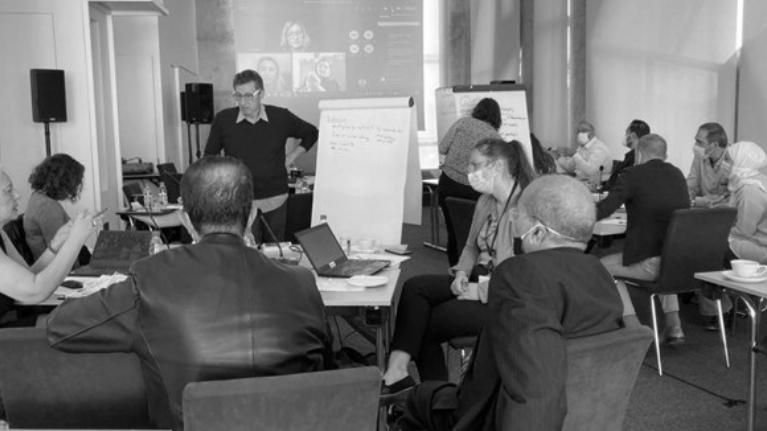
The IT industry is one of the fastest growing industries in BiH with a high potential for the creation of decent jobs. However, the lack of skilled workers hinders growth and expansion. To support policy makers and the companies in the IT sector to address this challenge, the International Labour Organization  Office for Central and Eastern Europe and Bit Alliance  developed a diagnostic background and conducted a skills foresight workshop on November 18th, based on the ILO Rapid STED Methodology. 

The background study identifies quantitative and qualitative skills deficits of IT companies in both IT and non-IT occupations and analyzes the existing offer for education and training. It was presented and discussed at the "Skills Foresight Workshop" on October 18th with the participation of IT companies, representatives of TVET (Technical and Vocational Education and Training) and higher education institutions.  

The background study reveals that the IT the sector in Bosnia and Herzegovina offers an increasing number of employment opportunities, which are particularly attractive to new employees due to rapid wage growth. According to the study by 2030 Bosnia and Herzegovina will need more than 25 000 developers, 6000 test specialists and 3000 DevOps experts. Although the supply of qualifications in the IT sector is growing, it is not evolving fast enough to meet the needs of the companies in the long run. 

The foresight workshop was conducted in a participatory manner, allowing participants to express their opinions and to prioritise actions. The three most important recommendations are: 

  1. Encouragement amendments to legal and administrative frameworks, to allow for curricula updates in response to technological change
  2. Encouragement Interdisciplinary programs between Economics and of Electrical Engineering faculties, to train non-IT specialists in the IT industry (e.g. on Business Information Systems, HR, Digital Marketing, Project Managers, Product Owners, Scrum Masters, etc.)
  3. Establishing secondary vocational schools for IT to complement secondary IT education in Schools of Electrical Engineering, grammar and high schools with IT streams.

Based on this, the International Labour Organization and Bit Alliance will develop a strategic skills development plan for the IT sector. The validated plan and the background research will be published in late 2021 and be freely accessible online. 

Subject Tags:

Sectoral approaches

Slug
sectoral-approaches
Identifier
676

Self employment

Slug
self-employment
Identifier
12

Skills anticipation

Slug
skills-anticipation
Identifier
677

Youth employment

Slug
youth-employment
Identifier
15
Regions:
Countries and territories:

Every TVET student counts!

Every TVET student counts!

Type:
Document
Content Type:
Press release
Language:

English

Slug
english
Identifier
skpEng
Sources:

ILO

The International Labour Organization is the tripartite U.N. agency that promotes Decent Work through employment, social security, labour standards and social dialogue. Its work on skills development is guided by the conceptual framework on Skills to improve productivity, employment growth, and development agreed in 2008 by representatives of Governments, Employers’ Associations and Workers’ Associations. Research, policy advice, and pilot projects and technical cooperation programmes to apply good practices in different circumstances across its 185 member States aims to boost the employability of workers, the productivity and competitiveness of enterprises, and the inclusiveness of economic growth. The ILO Secretariat in offices in 40 countries works with Ministries of Labour, employers’ organizations, and trade unions to integrate skills development into national and sector development strategies in order to better meet current labour market needs and to prepare for the jobs of the future; to expand access to employment-related training so that youth, persons with disabilities and other vulnerable groups are better able to acquire skills and secure productive and decent work; and to improve the ability of public employment services to provide career guidance, maintain labour exchange services, and deliver active labour market programmes.For more information regarding the ILO’s work on skills and employability go to: http://www.ilo.org/skills/lang--en/index.htm; for ILO/Cinterfor's Knowledge Management Plarform, see: http://www.oitcinterfor.org

Thumbnail
Identifier
skpILO
Slug
ilo
Topics:

Anticipating and matching skills needs

Thumbnail

Anticipating and building skills for the future is essential to a rapidly changing labour market. This applies to changes in the types and levels of skills needed as well as in occupational and technical areas. Effective methods to anticipate future skills needs and avoid potential mismatches include: sustained dialogue between employers and trainers, coordination across government institutions, labour market information systems, employment services and performance reviews of training institutions. 

Identifier
skpAFSN
Slug
anticipating-and-matching-skills-needs

Monitoring and evaluation

Thumbnail

Measuring the outcomes of skills systems, policies and targeted programmes is essential in order to monitor and improve their effectiveness and relevance. Elements of sound assessment processes include: institutions to sustain feedback from employers and trainees; mechanisms to track labour market outcomes of training and systems of accountability that use this information; and, quantitative and qualitative labour market information and its dissemination to all stakeholders.

Identifier
skpPolPer
Slug
monitoring-and-evaluation

Youth employability

Thumbnail

Globally, nearly 68 million young women and men are looking for and available for work,  and an estimated 123 million young people are working but living in poverty. The number who are not in employment, education or training (NEET) stands at 267 million, a majority of whom are young women. Significantly, young people are three times as likely as adults (25 years and older) to be unemployed.

Skills development is a primary means of enabling young people to make a smooth transition to work. A comprehensive approach is required to integrate young women and men in the labour market, including relevant and quality skills training, labour market information, career guidance and employment services, recognition of prior learning, incorporating entrepreneurship with training and effective skills forecasting. Improved basic education and core work skills are particularly important to enable youth to engage in lifelong learning as well as transition to the labour market. 

Identifier
skpYoEmp
Slug
youth-employability
Knowledge Products:

Case studies and good practices

Case studies that document good practices and illustrate the benefits and lessons learnt of particular approaches or methods in real practice. 

Thumbnail
Identifier
skpCaseStdy
Slug
case-studies-and-good-practices
Publication Date:
02 Nov 2021

Designing a Graduate Tracking System for assessing the impact of TVET in Montenegro

Every year, two thirds of secondary school students in Montenegro choose Vocational Education and Training (VET) to access pre-university schooling. However, the whereabouts of these students after graduation remains largely unknown - do they find a job in their vocation, register with the Employment Agency or continue with university education? To support policy makers in getting answers to these questions, the International Labour Organization (ILO) conducted a background study and developed a proposal for tracking graduates from VET education in Montenegro based on administrative data.

The research was presented at a workshop on October 22nd organized by ILO, with the participation of representatives of the Ministry of Education, Science, Culture and Sports, the National VET Agency, the Taxation Agency, the Employment Agency, the Montenegrin Statistical Office and the University of Montenegro. All participants provided valuable contributions to the discussions from the perspective of their portfolio and agreed on future steps for implementing a Graduate Tracking System.

The background study analyses European best practices and suggests a step-by-step model for introducing a Graduate Tracking System, including institutional roles and responsibilities. In spite of sporadic attempts to track students from VET and higher education with qualitative tracer studies, the response rates did not provide the results to support evidence-based policy making. The ILO study therefore suggests creating a comprehensive Graduate Tracking System that combines qualitative surveys with quantitative data on Education, Taxation and Employment, to get a fuller picture on VET graduates’ employment and education outcomes in the long run.    

The three most important workshop recommendations include: a) Establishing an inter-institutional Coordination Group and define roles and responsibilities; b) Conducting a pilot tracking of smaller cohorts of VET graduates in 2022 in two sectors (three-year students in the dual vs. the school-based environment and four-year students) by combining administrative and survey data; c) Designing a methodology for data collection and processing of VET graduates in the first half of 2022. The background study and the road map will be published in late 2021 and be freely accessible online.

Subject Tags:
Slug
data-analysis
Identifier
361

Labour market information

Slug
labour-market-information
Identifier
684

Skills anticipation

Slug
skills-anticipation
Identifier
677

Youth employment

Slug
youth-employment
Identifier
15
Regions:
Countries and territories:

How Empowerment and an Enabling Environment Matters for Youth Employment Programme Effectiveness

How Empowerment and an Enabling Environment Matters for Youth Employment Programme Effectiveness

Type:
Document
Content Type:
Publication
Language:

English

Slug
english
Identifier
skpEng
Sources:

ILO

The International Labour Organization is the tripartite U.N. agency that promotes Decent Work through employment, social security, labour standards and social dialogue. Its work on skills development is guided by the conceptual framework on Skills to improve productivity, employment growth, and development agreed in 2008 by representatives of Governments, Employers’ Associations and Workers’ Associations. Research, policy advice, and pilot projects and technical cooperation programmes to apply good practices in different circumstances across its 185 member States aims to boost the employability of workers, the productivity and competitiveness of enterprises, and the inclusiveness of economic growth. The ILO Secretariat in offices in 40 countries works with Ministries of Labour, employers’ organizations, and trade unions to integrate skills development into national and sector development strategies in order to better meet current labour market needs and to prepare for the jobs of the future; to expand access to employment-related training so that youth, persons with disabilities and other vulnerable groups are better able to acquire skills and secure productive and decent work; and to improve the ability of public employment services to provide career guidance, maintain labour exchange services, and deliver active labour market programmes.For more information regarding the ILO’s work on skills and employability go to: http://www.ilo.org/skills/lang--en/index.htm; for ILO/Cinterfor's Knowledge Management Plarform, see: http://www.oitcinterfor.org

Thumbnail
Identifier
skpILO
Slug
ilo

Other sources

Experts from many international, regional and national agencies generously share their views, experiences and findings on skills, helping policy-makers among other stakeholders to understand the linkages between education, training and the world of work, and how to integrate skills into national development planning to promote employment and economic growth.

Thumbnail
Identifier
skpOSource
Slug
other-sources
Topics:

Youth employability

Thumbnail

Globally, nearly 68 million young women and men are looking for and available for work,  and an estimated 123 million young people are working but living in poverty. The number who are not in employment, education or training (NEET) stands at 267 million, a majority of whom are young women. Significantly, young people are three times as likely as adults (25 years and older) to be unemployed.

Skills development is a primary means of enabling young people to make a smooth transition to work. A comprehensive approach is required to integrate young women and men in the labour market, including relevant and quality skills training, labour market information, career guidance and employment services, recognition of prior learning, incorporating entrepreneurship with training and effective skills forecasting. Improved basic education and core work skills are particularly important to enable youth to engage in lifelong learning as well as transition to the labour market. 

Identifier
skpYoEmp
Slug
youth-employability
Knowledge Products:

Research papers

Working papers, reports, and other publications from international organizations, academic institutions and bilateral agencies. Research findings to stimulate informed debate on skills, employment and productivity issues. 

Thumbnail
Identifier
skpRPS
Slug
research-papers
Publication Date:
06 Oct 2021

Youth in Africa face a myriad of constraints that affect their access to and success in the labour market. 

The current COVID-19 pandemic, which disproportionally affects young people, is putting further pressure on the job market. Youth employment programmes try to tackle these constraints, for example by providing training and skills development or promoting entrepreneurship and supporting the development of small and medium enterprises, or through a combination of these. 

Some youth employment programmes also aim to empower youth and create a more enabling environment in which they can thrive in the labour market. However, we know very little about the importance of youth empowerment and the enabling environment for employment and business outcomes: this paper aims to address this gap by understanding how a focus on empowerment and an enabling environment matters for the effectiveness of youth employment programmes in Africa.

Subject Tags:

Youth

Slug
youth
Identifier
319

Youth employment

Slug
youth-employment
Identifier
15
Regions:

Africa

Region Image

Call for Expression of Interest in professional training in Career Guidance

Call for Expression of Interest in professional training in Career Guidance

Type:
Document
Content Type:
News
Language:

English

Slug
english
Identifier
skpEng
Sources:

Academic institutions

Research papers, synthesis reports, country and programme studies are collected from many academic institutions and national, regional and international professional associations.

Thumbnail
Identifier
skpAcaInst
Slug
academic-institutions
Topics:

Career guidance and employment services

Thumbnail

Career guidance and counselling, career education and lifelong development of skills for employability are key for success in learning activities, effective career transitions, livelihood planning, entrepreneurship and in increasing labour market participation. They are instrumental in promoting skills utilization, recognition (RPL), as well as in improving enterprise human resource management.

Career development activities encompass a wide variety of support activities including career information and advice, counselling, work exposure (e.g. job shadowing, work experience periods), assessment, coaching, mentoring, professional networking, advocacy, basic and employability skills training (curricular and non-curricular) and entrepreneurship training. It is often an area which is fragmented across different ministries (e.g. education, TVET, employment, youth) requiring an effort to achieve the necessary coordination to provide adequate support to individuals during learning, employment and unemployment/inactivity periods.
 

Identifier
skpLMIES
Slug
career-guidance-and-employment-services

Core skills and literacy

Thumbnail

Core employability skills build upon and strengthen the skills developed through basic education; the technical skills needed for specific occupations or to perform specific tasks or duties (such as nursing, accounting, using technology or driving a forklift); and professional/personal attributes such as honesty, reliability, punctuality and loyalty. 
Core work skills enable individuals to constantly acquire and apply new knowledge and skills; they are also critical to lifelong learning. Various agencies and organizations have given different labels to these skills, ranging from “key competencies” to “soft skills”, “transferable skills” or “essential skills”.
 

Identifier
skpCore
Slug
core-skills-and-literacy

Youth employability

Thumbnail

Globally, nearly 68 million young women and men are looking for and available for work,  and an estimated 123 million young people are working but living in poverty. The number who are not in employment, education or training (NEET) stands at 267 million, a majority of whom are young women. Significantly, young people are three times as likely as adults (25 years and older) to be unemployed.

Skills development is a primary means of enabling young people to make a smooth transition to work. A comprehensive approach is required to integrate young women and men in the labour market, including relevant and quality skills training, labour market information, career guidance and employment services, recognition of prior learning, incorporating entrepreneurship with training and effective skills forecasting. Improved basic education and core work skills are particularly important to enable youth to engage in lifelong learning as well as transition to the labour market. 

Identifier
skpYoEmp
Slug
youth-employability

Other topic

Thumbnail
Identifier
skpOIssue
Slug
other-topic
Knowledge Products:

Promotional material

Presentations, discussion papers, meeting reports, promotional materials, videos, fact sheets, brochures and newsletters on skills development for employment.

Thumbnail
Identifier
skpAIM
Slug
promotional-material
Publication Date:
06 Oct 2021

A Master in Lifelong Career Guidance and Development for countries in the MENA (Middle East and North Africa) region, will be offered by the University of Malta with the expert support of the European Training Foundation, the International Labour Organization, and the UNESCO-UNITWIN network.
The Master will be offered online on a part-time basis, starting October 2022.

On-line, part-time Master in Lifelong Career Guidance specifically for the MENA region


Career guidance (or ‘vocational guidance’) has been adopted in several countries in the world because it:

  • helps young people and adults choose their educational and employment pathways more wisely;
  • leads to appropriate choices that ensure more motivated students and more productive and satisfied workers;
  • facilitates a better match between the demand and supply of skills.


Career guidance services are greatly needed in the MENA region. They can be part of the strategy to address the twin challenge of high youth and adult unemployment on the one hand, and skills gaps on the other. They can also foster social inclusion through giving access to a livelihood.


The University of Malta – with the expert support of the European Training Foundation (ETF), the International Labour Organization (ILO), and the UNESCO-UNITWIN Network – has issued a Call for the Expression of Interest for those who would like to receive professional training in career guidance.


The Master course is designed in such a way as to

  • take into account the economic, labour market, educational and cultural realities of the MENA region;
  • provide participants with the interdisciplinary theoretical background and practical experience needed in order to design, deliver, and evaluate lifelong career guidance services;
  • promote regional expertise in policy development, systems-building, and practitioner competence. 


Individuals as well as public and private entities interested in the Masters can


  • email the course coordinators for further information. Professor Ronald G. Sultana ([email protected]) and Dr Manwel Debono ([email protected]) will be happy to respond to questions.


Scholarships, in the form of partial fee waivers, are being offered by the University of Malta to deserving applicants.

Building a resilient generation in Central Asia and Europe

Building a resilient generation in Central Asia and Europe

Type:
Document
Content Type:
Publication
Language:

English

Slug
english
Identifier
skpEng
Sources:

Information is gathered from other international organizations that promote skills development and the transition from education and training to work. The Interagency Group on Technical and Vocational Education and Training (IAG-TVET) was established in 2009 to share research findings, coordinate joint research endeavours, and improve collaboration among organizations working at the international and national levels.

Thumbnail
Identifier
skpIntOrg
Slug
international-organizations
Topics:

Digital skills

Thumbnail

The world of work is undergoing a substantial transformation due to new forces. In particular, technological advances, such as AI, automation and robotics, have produced numerous new opportunities, but also given rise to urgent challenges. While new jobs are constantly being created with the emergence of the digital economy, many jobs are at risk of becoming obsolete. Digital innovations will rapidly change the demand for skills, thereby creating a wider skills gap that has the potential to hold back economic growth. Equipping people with basic or advanced digital skills promises to prepare them for unprecedented job opportunities in the digital economy. This will lead to innovation, higher productivity and competitiveness, as well as expanding markets, access to work and entrepreneurship opportunities. 

Identifier
skpdigskills
Slug
digital-skills

Lifelong learning

Thumbnail

There is a critical need for a greater overall investment in education and training, particularly in developing countries. Education and training investments should be closely linked to economic and employment growth strategies and programmes. Responsibility should be shared between the government (primary responsibility), enterprises, the social partners, and the individual. To make lifelong learning for all a reality, countries will need to make major reforms of their vocational and education and training systems. School-to-work schemes for young people should integrate education with workplace learning. Training systems need to become more flexible and responsive to rapidly changing skill requirements. Reforms should also focus on how learning can be facilitated, not just on training for specific occupational categories.

Identifier
skpPSLLL
Slug
lifelong-learning

Skills for green transition/climate action

Thumbnail

The growing importance of sustainable development and the shift to a low-carbon and climateresilient economy will require new skills and qualifications, offering great potential for the creation of green jobs but also implying structural changes and a transformation of existing jobs. The transition to a low-carbon and greener economy will generate millions of new jobs, negatively affect some high-emitting sectors, and alter most existing occupations in terms of task compositions and skills requirements. 

Ensuring the right skills for green jobs is a prerequisite to make the transition to a greener economy happen. Today, skills gaps are already recognised as a major bottleneck in a number of sectors, such as renewable energy, energy and resource efficiency, green building or environmental services. The adoption and dissemination of clean technologies require skills in technology application, adaptation and maintenance. Skills are also crucial for economies and
businesses, workers and entrepreneurs to rapidly adapt to changes deriving from climate change and environmental policies. 

Identifier
skpGreen
Slug
skills-for-green-transition-climate-action

Youth employability

Thumbnail

Globally, nearly 68 million young women and men are looking for and available for work,  and an estimated 123 million young people are working but living in poverty. The number who are not in employment, education or training (NEET) stands at 267 million, a majority of whom are young women. Significantly, young people are three times as likely as adults (25 years and older) to be unemployed.

Skills development is a primary means of enabling young people to make a smooth transition to work. A comprehensive approach is required to integrate young women and men in the labour market, including relevant and quality skills training, labour market information, career guidance and employment services, recognition of prior learning, incorporating entrepreneurship with training and effective skills forecasting. Improved basic education and core work skills are particularly important to enable youth to engage in lifelong learning as well as transition to the labour market. 

Identifier
skpYoEmp
Slug
youth-employability
Knowledge Products:

Research papers

Working papers, reports, and other publications from international organizations, academic institutions and bilateral agencies. Research findings to stimulate informed debate on skills, employment and productivity issues. 

Thumbnail
Identifier
skpRPS
Slug
research-papers
Publication Date:
07 Sep 2021

Youth views on lifelong learning, inclusion, and the green transition

What are the hopes, concerns, and expectations of young people in Eastern Europe and Central Asia (ECA) about their futures and the role of education, social inclusion, and the environment? This UNICEF-ETF joint report brings youth voices, views, and sentiments from the ECA region as a contribution to the regional and global discussions on how to create better lifelong learning systems, more inclusive communities, and greener societies.

Subject Tags:

Disadvantaged youth

Slug
disadvantaged-youth
Identifier
663

Lifelong learning

Slug
lifelong-learning
Identifier
400

Youth employment

Slug
youth-employment
Identifier
15
Regions:

Youth Recovery Plan

Youth Recovery Plan

Type:
Document
Content Type:
Publication
Language:

English

Slug
english
Identifier
skpEng
Sources:

Other sources

Experts from many international, regional and national agencies generously share their views, experiences and findings on skills, helping policy-makers among other stakeholders to understand the linkages between education, training and the world of work, and how to integrate skills into national development planning to promote employment and economic growth.

Thumbnail
Identifier
skpOSource
Slug
other-sources
Topics:

Youth employability

Thumbnail

Globally, nearly 68 million young women and men are looking for and available for work,  and an estimated 123 million young people are working but living in poverty. The number who are not in employment, education or training (NEET) stands at 267 million, a majority of whom are young women. Significantly, young people are three times as likely as adults (25 years and older) to be unemployed.

Skills development is a primary means of enabling young people to make a smooth transition to work. A comprehensive approach is required to integrate young women and men in the labour market, including relevant and quality skills training, labour market information, career guidance and employment services, recognition of prior learning, incorporating entrepreneurship with training and effective skills forecasting. Improved basic education and core work skills are particularly important to enable youth to engage in lifelong learning as well as transition to the labour market. 

Identifier
skpYoEmp
Slug
youth-employability
Knowledge Products:

Research papers

Working papers, reports, and other publications from international organizations, academic institutions and bilateral agencies. Research findings to stimulate informed debate on skills, employment and productivity issues. 

Thumbnail
Identifier
skpRPS
Slug
research-papers
Publication Date:
18 Aug 2021
Young people are the most affected demographic when it comes to the world\'s rising socio-economic, political and environmental crises. Yet, they are also the best placed to lead the transition to a more equitable world. This is one of the key findings of the world\'s first Youth-Driven Recovery Plan developed by the World Economic Forum\'s Global Shapers Community, a network of 14,000 inspiring young people driving dialogue, action and change.Marking the community\'s tenth anniversary, the plan features 40 policy recommendations to help policymakers integrate the voices of the next generation into recovery efforts. It features the insights and ideas of more than 2 million people, who participated in surveys and dialogues in more than 150 cities and 180 countries. This plan encompasses their hopes for a better future.
Subject Tags:

Youth

Slug
youth
Identifier
319

Youth employment

Slug
youth-employment
Identifier
15

Youth unemployment

Slug
youth-unemployment
Identifier
622
Regions:

Towards decent work for young refugees and host communities in the digital platform economy in Africa: Kenya, Uganda, Egypt

Towards decent work for young refugees and host communities in the digital platform economy in Africa: Kenya, Uganda, Egypt

Type:
Document
Content Type:
Publication
Language:

English

Slug
english
Identifier
skpEng
Sources:

ILO

The International Labour Organization is the tripartite U.N. agency that promotes Decent Work through employment, social security, labour standards and social dialogue. Its work on skills development is guided by the conceptual framework on Skills to improve productivity, employment growth, and development agreed in 2008 by representatives of Governments, Employers’ Associations and Workers’ Associations. Research, policy advice, and pilot projects and technical cooperation programmes to apply good practices in different circumstances across its 185 member States aims to boost the employability of workers, the productivity and competitiveness of enterprises, and the inclusiveness of economic growth. The ILO Secretariat in offices in 40 countries works with Ministries of Labour, employers’ organizations, and trade unions to integrate skills development into national and sector development strategies in order to better meet current labour market needs and to prepare for the jobs of the future; to expand access to employment-related training so that youth, persons with disabilities and other vulnerable groups are better able to acquire skills and secure productive and decent work; and to improve the ability of public employment services to provide career guidance, maintain labour exchange services, and deliver active labour market programmes.For more information regarding the ILO’s work on skills and employability go to: http://www.ilo.org/skills/lang--en/index.htm; for ILO/Cinterfor's Knowledge Management Plarform, see: http://www.oitcinterfor.org

Thumbnail
Identifier
skpILO
Slug
ilo
Topics:

Youth employability

Thumbnail

Globally, nearly 68 million young women and men are looking for and available for work,  and an estimated 123 million young people are working but living in poverty. The number who are not in employment, education or training (NEET) stands at 267 million, a majority of whom are young women. Significantly, young people are three times as likely as adults (25 years and older) to be unemployed.

Skills development is a primary means of enabling young people to make a smooth transition to work. A comprehensive approach is required to integrate young women and men in the labour market, including relevant and quality skills training, labour market information, career guidance and employment services, recognition of prior learning, incorporating entrepreneurship with training and effective skills forecasting. Improved basic education and core work skills are particularly important to enable youth to engage in lifelong learning as well as transition to the labour market. 

Identifier
skpYoEmp
Slug
youth-employability
Knowledge Products:

Research papers

Working papers, reports, and other publications from international organizations, academic institutions and bilateral agencies. Research findings to stimulate informed debate on skills, employment and productivity issues. 

Thumbnail
Identifier
skpRPS
Slug
research-papers
Publication Date:
12 Aug 2021
This report explores job creation in the gig economy from the unique experiences and perspectives of youth and refugees, as well as from the viewpoint of digital labour and e-commerce platforms, digital training providers, start-up incubators, social partners, and policymakers. The world of work is subject to digital transformation and has witnessed a rapid rise of the digital platform economy over the last decade. Despite a growing body of research on this topic, the specific implications of this transformation for refugees and other marginalized populations remains poorly understood. The ILO’s Youth Employment Accelerator and the PROSPECTS partnership commissioned the present research to set a basis for a series of upcoming interventions in the digital economy, and more specifically in relation to digital labour and e-commerce platforms within PROSPECTS target countries in Africa. With a focus on Kenya, Uganda and Egypt, this report aims to contribute to a better understanding of the main challenges and opportunities that digital labour and e-commerce platforms in Africa pose for supporting a wider transition to decent work, with a concentration on refugees, displaced persons and their host communities. It builds on important recent ILO publications on this topic, including the 2021 World Employment and Social Outlook (WESO) on the digital platform economy and the report Digital Refugee Livelihoods and Decent Work: Towards Inclusion in a Fairer Digital Economy.

The online marketplace is often perceived to be easily accessible at a time when local employment alternatives outside urban centres are frequently scarce. The case of refugees offers a critical view on sometimes overly optimistic ideas about the digital platform economy as inclusive, empowering and transformative. Indeed, the current state of refugees and youth in the digital platform economy raises some serious concern about the lack of inclusion and the absence of adequate social protection, rights at work and decent working conditions.
Subject Tags:

Employment policy

Slug
employment-policy
Identifier
16

Youth employment

Slug
youth-employment
Identifier
15
Regions:

Africa

Region Image

Decent jobs for Youth Impact report 2019-2021

Decent jobs for Youth Impact report 2019-2021

Type:
Document
Content Type:
Publication
Language:

English

Slug
english
Identifier
skpEng
Sources:

ILO

The International Labour Organization is the tripartite U.N. agency that promotes Decent Work through employment, social security, labour standards and social dialogue. Its work on skills development is guided by the conceptual framework on Skills to improve productivity, employment growth, and development agreed in 2008 by representatives of Governments, Employers’ Associations and Workers’ Associations. Research, policy advice, and pilot projects and technical cooperation programmes to apply good practices in different circumstances across its 185 member States aims to boost the employability of workers, the productivity and competitiveness of enterprises, and the inclusiveness of economic growth. The ILO Secretariat in offices in 40 countries works with Ministries of Labour, employers’ organizations, and trade unions to integrate skills development into national and sector development strategies in order to better meet current labour market needs and to prepare for the jobs of the future; to expand access to employment-related training so that youth, persons with disabilities and other vulnerable groups are better able to acquire skills and secure productive and decent work; and to improve the ability of public employment services to provide career guidance, maintain labour exchange services, and deliver active labour market programmes.For more information regarding the ILO’s work on skills and employability go to: http://www.ilo.org/skills/lang--en/index.htm; for ILO/Cinterfor's Knowledge Management Plarform, see: http://www.oitcinterfor.org

Thumbnail
Identifier
skpILO
Slug
ilo
Topics:

Monitoring and evaluation

Thumbnail

Measuring the outcomes of skills systems, policies and targeted programmes is essential in order to monitor and improve their effectiveness and relevance. Elements of sound assessment processes include: institutions to sustain feedback from employers and trainees; mechanisms to track labour market outcomes of training and systems of accountability that use this information; and, quantitative and qualitative labour market information and its dissemination to all stakeholders.

Identifier
skpPolPer
Slug
monitoring-and-evaluation

Youth employability

Thumbnail

Globally, nearly 68 million young women and men are looking for and available for work,  and an estimated 123 million young people are working but living in poverty. The number who are not in employment, education or training (NEET) stands at 267 million, a majority of whom are young women. Significantly, young people are three times as likely as adults (25 years and older) to be unemployed.

Skills development is a primary means of enabling young people to make a smooth transition to work. A comprehensive approach is required to integrate young women and men in the labour market, including relevant and quality skills training, labour market information, career guidance and employment services, recognition of prior learning, incorporating entrepreneurship with training and effective skills forecasting. Improved basic education and core work skills are particularly important to enable youth to engage in lifelong learning as well as transition to the labour market. 

Identifier
skpYoEmp
Slug
youth-employability
Knowledge Products:

Evaluation reports

Analytical assessments of technical cooperation programmes and national skills and employment policies, identifying success factors of different interventions in response to particular challenges in different circumstances.

Thumbnail
Identifier
skpEvalRep
Slug
evaluation-reports
Publication Date:
11 Aug 2021
The report is a product of the first systematic monitoring process undertaken with partners of Decent Jobs for Youth.
Subject Tags:

Youth employment

Slug
youth-employment
Identifier
15
Regions:

Podcast - Lost in COVID-19 limbo-land: Pandemic hits youth employment hard

Podcast - Lost in COVID-19 limbo-land: Pandemic hits youth employment hard

Type:
Document
Content Type:
News
Language:

English

Slug
english
Identifier
skpEng
Sources:

ILO

The International Labour Organization is the tripartite U.N. agency that promotes Decent Work through employment, social security, labour standards and social dialogue. Its work on skills development is guided by the conceptual framework on Skills to improve productivity, employment growth, and development agreed in 2008 by representatives of Governments, Employers’ Associations and Workers’ Associations. Research, policy advice, and pilot projects and technical cooperation programmes to apply good practices in different circumstances across its 185 member States aims to boost the employability of workers, the productivity and competitiveness of enterprises, and the inclusiveness of economic growth. The ILO Secretariat in offices in 40 countries works with Ministries of Labour, employers’ organizations, and trade unions to integrate skills development into national and sector development strategies in order to better meet current labour market needs and to prepare for the jobs of the future; to expand access to employment-related training so that youth, persons with disabilities and other vulnerable groups are better able to acquire skills and secure productive and decent work; and to improve the ability of public employment services to provide career guidance, maintain labour exchange services, and deliver active labour market programmes.For more information regarding the ILO’s work on skills and employability go to: http://www.ilo.org/skills/lang--en/index.htm; for ILO/Cinterfor's Knowledge Management Plarform, see: http://www.oitcinterfor.org

Thumbnail
Identifier
skpILO
Slug
ilo
Topics:

Youth employability

Thumbnail

Globally, nearly 68 million young women and men are looking for and available for work,  and an estimated 123 million young people are working but living in poverty. The number who are not in employment, education or training (NEET) stands at 267 million, a majority of whom are young women. Significantly, young people are three times as likely as adults (25 years and older) to be unemployed.

Skills development is a primary means of enabling young people to make a smooth transition to work. A comprehensive approach is required to integrate young women and men in the labour market, including relevant and quality skills training, labour market information, career guidance and employment services, recognition of prior learning, incorporating entrepreneurship with training and effective skills forecasting. Improved basic education and core work skills are particularly important to enable youth to engage in lifelong learning as well as transition to the labour market. 

Identifier
skpYoEmp
Slug
youth-employability
Knowledge Products:

Other knowledge products

Thumbnail
Identifier
skpOProduct
Slug
other-knowledge-products
Publication Date:
09 Aug 2021

Podcast series: Global challenges – Global solutions

The COVID-19 pandemic has disproportionately affected young people not only in terms of their participation in the labour market but also through severe disruptions in education and training. In this podcast, ILO senior youth employment experts Niall O’Higgins and Sher Verick analyze the current situation and where we are headed.

The COVID-19 pandemic has hit the world’s young workers hard. While the pandemic has had an unprecedented impact across the global workforce, youth have suffered greater job losses than other age groups. According to the latest ILO statistical update on the impact of COVID, which came out just before World Youth Skills Day on 15 July, employment of young people aged 15 to 24 fell sharply in 2020.

What’s more, the crisis and lockdown measures constrained young people from even looking for work, increasing the so-called NEETs - young people not in employment, education, and training—last year, leaving young people worse off for years to come.

This podcast is also available on Spotify  , Apple Podcasts  and YouTube.
Subject Tags:

Youth

Slug
youth
Identifier
319

Youth employment

Slug
youth-employment
Identifier
15
Regions:

Проведення трейсерних досліджень випускників закладів освіти (Tracer Studies). Посібник із передбачення/прогнозування та забезпечення збалансування навичок і робочих місць. Випуск 6

Проведення трейсерних досліджень випускників закладів освіти (Tracer Studies). Посібник із передбачення/прогнозування та забезпечення збалансування навичок і робочих місць. Випуск 6

Type:
Document
Content Type:
Publication
Language:

Ukrainian

Slug
ukrainian
Identifier
skpuk
Sources:

ILO

The International Labour Organization is the tripartite U.N. agency that promotes Decent Work through employment, social security, labour standards and social dialogue. Its work on skills development is guided by the conceptual framework on Skills to improve productivity, employment growth, and development agreed in 2008 by representatives of Governments, Employers’ Associations and Workers’ Associations. Research, policy advice, and pilot projects and technical cooperation programmes to apply good practices in different circumstances across its 185 member States aims to boost the employability of workers, the productivity and competitiveness of enterprises, and the inclusiveness of economic growth. The ILO Secretariat in offices in 40 countries works with Ministries of Labour, employers’ organizations, and trade unions to integrate skills development into national and sector development strategies in order to better meet current labour market needs and to prepare for the jobs of the future; to expand access to employment-related training so that youth, persons with disabilities and other vulnerable groups are better able to acquire skills and secure productive and decent work; and to improve the ability of public employment services to provide career guidance, maintain labour exchange services, and deliver active labour market programmes.For more information regarding the ILO’s work on skills and employability go to: http://www.ilo.org/skills/lang--en/index.htm; for ILO/Cinterfor's Knowledge Management Plarform, see: http://www.oitcinterfor.org

Thumbnail
Identifier
skpILO
Slug
ilo

Information is gathered from other international organizations that promote skills development and the transition from education and training to work. The Interagency Group on Technical and Vocational Education and Training (IAG-TVET) was established in 2009 to share research findings, coordinate joint research endeavours, and improve collaboration among organizations working at the international and national levels.

Thumbnail
Identifier
skpIntOrg
Slug
international-organizations
Topics:

Anticipating and matching skills needs

Thumbnail

Anticipating and building skills for the future is essential to a rapidly changing labour market. This applies to changes in the types and levels of skills needed as well as in occupational and technical areas. Effective methods to anticipate future skills needs and avoid potential mismatches include: sustained dialogue between employers and trainers, coordination across government institutions, labour market information systems, employment services and performance reviews of training institutions. 

Identifier
skpAFSN
Slug
anticipating-and-matching-skills-needs

Standards, curriculum and learning resources

Thumbnail

The standard or outcome-based approach to curriculum development is a worldwide trend which reflects a paradigm shift from input to outcome-based provision, from teaching to learning, from content to process focused/performance-oriented learning experience. In this new paradigm the learner is expected to demonstrate what he/she knows and is able to do against the standards established at national level. Adopting an outcome-based approach for curriculum development is an effective way to address potential mismatches between technical and vocational education and training (TVET) provision and the needs of the labour market; between irrelevant/ obsolete training programmes, and employers’ and learners’ needs and expectations. 

Identifier
skpStndrd
Slug
standards-curriculum-and-learning-resources

Work-based learning and skills utilization

Thumbnail

Increasingly, countries around the world, at all levels of development are putting work-based learning, particularly apprenticeships, high on their policy agenda, recognizing its potential for reducing skills mismatch, meeting skills demand of a fast changing labour market, providing cost-effective training, promoting private sector development and smoothing transitions to the world of work. 

Moreover, the issue of how skills are used in the workplace and how businesses engage with the local skills ecosystem are getting greater attention. It is increasingly recognized that workers who better use their skills are more likely to have greater job satisfaction, earn better wages and are more prepared to adapt to changes in the nature of work, while employers benefit from a more productive and innovative workforce, enabling them to maximise business performance and profitability. 

Identifier
skpWrkLrn
Slug
work-based-learning-and-skills-utilization

Youth employability

Thumbnail

Globally, nearly 68 million young women and men are looking for and available for work,  and an estimated 123 million young people are working but living in poverty. The number who are not in employment, education or training (NEET) stands at 267 million, a majority of whom are young women. Significantly, young people are three times as likely as adults (25 years and older) to be unemployed.

Skills development is a primary means of enabling young people to make a smooth transition to work. A comprehensive approach is required to integrate young women and men in the labour market, including relevant and quality skills training, labour market information, career guidance and employment services, recognition of prior learning, incorporating entrepreneurship with training and effective skills forecasting. Improved basic education and core work skills are particularly important to enable youth to engage in lifelong learning as well as transition to the labour market. 

Identifier
skpYoEmp
Slug
youth-employability
Knowledge Products:

Case studies and good practices

Case studies that document good practices and illustrate the benefits and lessons learnt of particular approaches or methods in real practice. 

Thumbnail
Identifier
skpCaseStdy
Slug
case-studies-and-good-practices

Policy and strategy

Recommendations and advice on resolving policy challenges related to skills development systems and their linkages to the world of work.  Concise syntheses of experience from the international organizations.

Thumbnail
Identifier
skpPolOp
Slug
policy-and-strategy

Tools and guidance

The platform includes a variety of practical tools and guidance materials developed by the ILO at global and national levels. The resources include guides, case studies, cheklist, visual materials and more, and they cover a wide range of topics. Some are specifically aimed at certain groups of stakeholders, for example employers, workers or governments, and some are designed to support specific groups of beneficiaries. 

Thumbnail
Identifier
skpTag
Slug
tools-and-guidance
Publication Date:
26 Jul 2021

Цей посібник є частиною серії розробленої Європейським фондом освіти (ETF), Європейським центром розвитку професійного навчання (Cedefop) та Міжнародним бюро праці (МБП). Цей посібник охоплює питання розробки та проведення трейсерних досліджень та має на меті сприяти поліпшенню рівня професійної підготовки у професійно-технічній та вищій освіті завдяки проведенню високоякісних опитувань випускників. Головною метою таких досліджень є виявлення актуальності рівня освіти/підготовки кадрів для переходу на роботу та подальшої професійного зростання в перші роки після закінчення навчання.

Цільовою аудиторією цього посібника є представники закладів освіти, які планують організовувати та проводити власні трейсерні дослідження. Він також орієнтований на різні категорії користувачів: особи, відповідальні за прийняття рішень та формування політики; дослідницькі центри та експертні мережі, що беруть участь у проведенні трейсерних досліджень; а також асоціації та мережі, що цікавляться результатами цих досліджень. Читач отримає докладні вказівки щодо того, як розробити трейсерне дослідження, підготувати опитувальник та провести аналіз даних, за відсутності спеціальних знань експерта у методології обстеження.

(English)

"Carrying out tracer studies: Guide to anticipating and matching skills and jobs (Vol. 6)".

This guide is a part of the ETF, ILO and Cedefop series of guides on skills anticipation and matching.

It covers development and carrying out of tracer studies and aims to contribute to the improvement of education in TVET and higher education through high quality graduate surveys or tracer studies. The key objective of such studies is to identify the relevance of education/training for transition to a job and further vocational career in the first years after graduating.

The main audience for this guide is those in education institutions who are going to organize and implement their own tracer studies (institutional tracer studies). It is also targeted at users in various categories: policy and decision-makers; research centers and expert networks involved/engaged in carrying out tracer studies for clients; and associations and networks with interest in evidence offered by tracer studies.

Subject Tags:

Skills anticipation

Slug
skills-anticipation
Identifier
677

TVET systems

Slug
tvet-systems
Identifier
661

Work-based learning

Slug
work-based-learning
Identifier
679

Youth employment

Slug
youth-employment
Identifier
15
Regions:
Countries and territories: