Access to training

Slug
access-to-training
Identifier
683

Effective Teacher Policies

Effective Teacher Policies

Type:
Document
Content Type:
Effective Teacher Policies
Language:

English

Slug
english
Identifier
skpEng
Sources:

Information is gathered from other international organizations that promote skills development and the transition from education and training to work. The Interagency Group on Technical and Vocational Education and Training (IAG-TVET) was established in 2009 to share research findings, coordinate joint research endeavours, and improve collaboration among organizations working at the international and national levels.

Thumbnail
Identifier
skpIntOrg
Slug
international-organizations
Topics:

Training quality and relevance

Thumbnail
Identifier
skpTrainQR
Slug
training-quality-and-relevance
Knowledge Products:

Research papers

Working papers, reports, and other publications from international organizations, academic institutions and bilateral agencies. Research findings to stimulate informed debate on skills, employment and productivity issues. 

Thumbnail
Identifier
skpRPS
Slug
research-papers
Publication Date:
04 Oct 2018

Insights from PISA

Teachers are the most important resource in today’s schools. In every country, teachers’ salaries and training represent the greatest share of expenditure in education. And this investment in teachers can have significant returns: research shows that being taught by the best teachers can make a real difference in the learning and life outcomes of otherwise similar students. Teachers, in other words, are not interchangeable workers in some sort of industrial assembly line; individual teachers can change lives – and better teachers are crucial to improving the education that schools provide. Improving the effectiveness, efficiency and equity of schooling depends, in large measure, on ensuring that competent people want to work as teachers, that their teaching is of high quality and that high-quality teaching is provided to all students. This report, building on data from the Indicators of Education Systems (INES) programme, the Teaching and Learning International Survey (TALIS) and the Programme for International Student Assessment (PISA), explores three teacher-policy questions: How do the best-performing countries select, develop, evaluate and compensate teachers? How does teacher sorting across schools affect the equity of education systems? And how can countries attract and retain talented men and women to teaching?


Subject Tags:

Access to training

Slug
access-to-training
Identifier
683

Education and training

Slug
education-and-training
Identifier
116
Regions:

Recognition, validation and accreditation of youth and adult basic education as a foundation of lifelong learning

Recognition, validation and accreditation of youth and adult basic education as a foundation of lifelong learning

Type:
Document
Content Type:
Recognition, validation and accreditation of youth and adult basic education as a foundation of lifelong learning
Language:

English

Slug
english
Identifier
skpEng
Sources:

Information is gathered from other international organizations that promote skills development and the transition from education and training to work. The Interagency Group on Technical and Vocational Education and Training (IAG-TVET) was established in 2009 to share research findings, coordinate joint research endeavours, and improve collaboration among organizations working at the international and national levels.

Thumbnail
Identifier
skpIntOrg
Slug
international-organizations
Topics:

Lifelong learning

Thumbnail

There is a critical need for a greater overall investment in education and training, particularly in developing countries. Education and training investments should be closely linked to economic and employment growth strategies and programmes. Responsibility should be shared between the government (primary responsibility), enterprises, the social partners, and the individual. To make lifelong learning for all a reality, countries will need to make major reforms of their vocational and education and training systems. School-to-work schemes for young people should integrate education with workplace learning. Training systems need to become more flexible and responsive to rapidly changing skill requirements. Reforms should also focus on how learning can be facilitated, not just on training for specific occupational categories.

Identifier
skpPSLLL
Slug
lifelong-learning

Youth employability

Thumbnail

Globally, nearly 68 million young women and men are looking for and available for work,  and an estimated 123 million young people are working but living in poverty. The number who are not in employment, education or training (NEET) stands at 267 million, a majority of whom are young women. Significantly, young people are three times as likely as adults (25 years and older) to be unemployed.

Skills development is a primary means of enabling young people to make a smooth transition to work. A comprehensive approach is required to integrate young women and men in the labour market, including relevant and quality skills training, labour market information, career guidance and employment services, recognition of prior learning, incorporating entrepreneurship with training and effective skills forecasting. Improved basic education and core work skills are particularly important to enable youth to engage in lifelong learning as well as transition to the labour market. 

Identifier
skpYoEmp
Slug
youth-employability
Knowledge Products:

Research papers

Working papers, reports, and other publications from international organizations, academic institutions and bilateral agencies. Research findings to stimulate informed debate on skills, employment and productivity issues. 

Thumbnail
Identifier
skpRPS
Slug
research-papers
Publication Date:
18 Jul 2018

This report summarizes the research and discussion of the expert group, drawing on three meetings held by UNESCO in 2016, as well as a literature review. It focuses on three themes – principles, policy and practice – and provides examples of how the issue is being approached across the world. It offers 12 conclusions based on the evidence gathered and proposes a number of key messages for stakeholders in Member States. The aim is to support Member States to improve and recalibrate their approaches to the RVA of non-formal and basic education so that young people and adults who have already been let down by the formal education system are not failed again.

Subject Tags:

Access to training

Slug
access-to-training
Identifier
683

Lifelong learning

Slug
lifelong-learning
Identifier
400

Youth

Slug
youth
Identifier
319
Regions:

International Trade Forum: 100 % Youth

International Trade Forum: 100 % Youth

Type:
Document
Content Type:
International Trade Forum: 100 % Youth
Language:

English

Slug
english
Identifier
skpEng
Sources:

Other sources

Experts from many international, regional and national agencies generously share their views, experiences and findings on skills, helping policy-makers among other stakeholders to understand the linkages between education, training and the world of work, and how to integrate skills into national development planning to promote employment and economic growth.

Thumbnail
Identifier
skpOSource
Slug
other-sources
Topics:

Youth employability

Thumbnail

Globally, nearly 68 million young women and men are looking for and available for work,  and an estimated 123 million young people are working but living in poverty. The number who are not in employment, education or training (NEET) stands at 267 million, a majority of whom are young women. Significantly, young people are three times as likely as adults (25 years and older) to be unemployed.

Skills development is a primary means of enabling young people to make a smooth transition to work. A comprehensive approach is required to integrate young women and men in the labour market, including relevant and quality skills training, labour market information, career guidance and employment services, recognition of prior learning, incorporating entrepreneurship with training and effective skills forecasting. Improved basic education and core work skills are particularly important to enable youth to engage in lifelong learning as well as transition to the labour market. 

Identifier
skpYoEmp
Slug
youth-employability
Knowledge Products:

Promotional material

Presentations, discussion papers, meeting reports, promotional materials, videos, fact sheets, brochures and newsletters on skills development for employment.

Thumbnail
Identifier
skpAIM
Slug
promotional-material
Publication Date:
18 Jul 2018

Issue 2. Youth and Trade.

Contains article entitled "Scaling up action on youth employment with the global goals", written by Felix Weidenkaff, Youth Employment Officer, International Labour Organization

Subject Tags:

Access to training

Slug
access-to-training
Identifier
683

Disadvantaged youth

Slug
disadvantaged-youth
Identifier
663
Regions:

Call for expression of interest: The ILO Toolkit for Quality Apprenticeships-Volume II: Guide for practitioners to develop and implement apprenticeship programmes

Call for expression of interest: The ILO Toolkit for Quality Apprenticeships-Volume II: Guide for practitioners to develop and implement apprenticeship programmes

Type:
Document
Content Type:
Call for expression of interest: The ILO Toolkit for Quality Apprenticeships-Volume II: Guide for practitioners to develop and implement apprenticeship programmes
Language:

English

Slug
english
Identifier
skpEng
Sources:

ILO

The International Labour Organization is the tripartite U.N. agency that promotes Decent Work through employment, social security, labour standards and social dialogue. Its work on skills development is guided by the conceptual framework on Skills to improve productivity, employment growth, and development agreed in 2008 by representatives of Governments, Employers’ Associations and Workers’ Associations. Research, policy advice, and pilot projects and technical cooperation programmes to apply good practices in different circumstances across its 185 member States aims to boost the employability of workers, the productivity and competitiveness of enterprises, and the inclusiveness of economic growth. The ILO Secretariat in offices in 40 countries works with Ministries of Labour, employers’ organizations, and trade unions to integrate skills development into national and sector development strategies in order to better meet current labour market needs and to prepare for the jobs of the future; to expand access to employment-related training so that youth, persons with disabilities and other vulnerable groups are better able to acquire skills and secure productive and decent work; and to improve the ability of public employment services to provide career guidance, maintain labour exchange services, and deliver active labour market programmes.For more information regarding the ILO’s work on skills and employability go to: http://www.ilo.org/skills/lang--en/index.htm; for ILO/Cinterfor's Knowledge Management Plarform, see: http://www.oitcinterfor.org

Thumbnail
Identifier
skpILO
Slug
ilo
Topics:

Access to training

Thumbnail

Access for all to good quality education, vocational training and workplace learning is a fundamental principle of social cohesion and economic growth. Some groups of people may require targeted attention if they are to benefit from education, training and employment opportunities.  

This is particularly the case for disadvantaged youth, lower skilled workers, people with disabilities, and people in rural communities. The attractiveness of vocational education and training is enhanced when combined with entrepreneurship training and when public policies encourage utilization of higher skills by business. 
 

Identifier
skpATSU
Slug
access-to-training

Youth employability

Thumbnail

Globally, nearly 68 million young women and men are looking for and available for work,  and an estimated 123 million young people are working but living in poverty. The number who are not in employment, education or training (NEET) stands at 267 million, a majority of whom are young women. Significantly, young people are three times as likely as adults (25 years and older) to be unemployed.

Skills development is a primary means of enabling young people to make a smooth transition to work. A comprehensive approach is required to integrate young women and men in the labour market, including relevant and quality skills training, labour market information, career guidance and employment services, recognition of prior learning, incorporating entrepreneurship with training and effective skills forecasting. Improved basic education and core work skills are particularly important to enable youth to engage in lifelong learning as well as transition to the labour market. 

Identifier
skpYoEmp
Slug
youth-employability
Knowledge Products:

Promotional material

Presentations, discussion papers, meeting reports, promotional materials, videos, fact sheets, brochures and newsletters on skills development for employment.

Thumbnail
Identifier
skpAIM
Slug
promotional-material
Publication Date:
17 Jul 2018

Deadline for submission: 21 September 2018.

The International Labour Organization (ILO) is issuing a 'Call for expression of interest for the development and implementation of quality apprenticeship programmes, Volume II'. While Volume I of the series, launched in December 2017, presented the defining features of the ILO’s approach to Quality Apprenticeship systems and aimed to support policymakers in the design of national apprenticeship systems, Volume II will focus on the practicalities of developing, implementing, monitoring and evaluating quality apprenticeship programmes.

The primary target group for the second volume are practitioners in TVET institutions, intermediary organizations, enterprises and other organizations responsible for designing and managing apprenticeship programmes. This Guide is expected to include a compendium of tools to be used by the key stakeholders of the Quality Apprenticeships value chain; highlight best practices and examples from various developed, emerging & developing countries, and provide essential templates.

Interested consultant/s should submit a brief expression of interest including the CV/s of those to be involved in the project and budget.

The full details of the assignment are provided in the PDF document below.

Proposals should be sent to Ashwani Aggarwal and Josée-Anne Larue by 21 September, 2018 . See contact information located at the top right hand side of the page.

Subject Tags:

Access to training

Slug
access-to-training
Identifier
683

Apprenticeships

Slug
apprenticeships
Identifier
639
Regions:

Pathways to empowerment. Recognizing the competences of Syrian refugees in Egypt, Iraq, Jordan, Lebanon and Turkey

Pathways to empowerment. Recognizing the competences of Syrian refugees in Egypt, Iraq, Jordan, Lebanon and Turkey

Type:
Document
Content Type:
Pathways to empowerment. Recognizing the competences of Syrian refugees in Egypt, Iraq, Jordan, Lebanon and Turkey
Language:

English

Slug
english
Identifier
skpEng
Sources:

Information is gathered from other international organizations that promote skills development and the transition from education and training to work. The Interagency Group on Technical and Vocational Education and Training (IAG-TVET) was established in 2009 to share research findings, coordinate joint research endeavours, and improve collaboration among organizations working at the international and national levels.

Thumbnail
Identifier
skpIntOrg
Slug
international-organizations
Topics:

Migrant workers

Thumbnail

According to the ILO global estimates on migrant workers, there were around 164 million migrant workers in 2017. 

Migrant workers contribute to growth and development in their countries of destination, while countries of origin greatly benefit from their remittances and the skills acquired during their migration experience. Yet, many migrant workers face challenges in accessing quality training and decent jobs including under-utilization of skills, a lack of employment or training opportunities, lack of information, and exploitation of low-skilled workers.

To address these challenges, countries need to strengthen skills anticipation systems to inform migration policies, increase access to education and training, and establish bilateral or multilateral recognition of qualifications and skills.

Identifier
skpMigWor
Slug
migrant-workers

Skills policies and strategies

Thumbnail

Skills and employment policies should be viewed together.  The full value of one policy set is realized when it supports the objectives of the other.  For investments in education and training to yield maximum benefit to workers, enterprises, and economies, countries’ capacities for coordination is critical in three areas: connecting basic education to technical training and then to market entry; ensuring continuous communication between employers and training providers so that training meets the needs and aspirations of workers and enterprises, and integrating skills development policies with industrial, investment, trade, technology, environmental, rural and local development policies.

Identifier
skpPolConv
Slug
skills-policies-and-strategies

Youth employability

Thumbnail

Globally, nearly 68 million young women and men are looking for and available for work,  and an estimated 123 million young people are working but living in poverty. The number who are not in employment, education or training (NEET) stands at 267 million, a majority of whom are young women. Significantly, young people are three times as likely as adults (25 years and older) to be unemployed.

Skills development is a primary means of enabling young people to make a smooth transition to work. A comprehensive approach is required to integrate young women and men in the labour market, including relevant and quality skills training, labour market information, career guidance and employment services, recognition of prior learning, incorporating entrepreneurship with training and effective skills forecasting. Improved basic education and core work skills are particularly important to enable youth to engage in lifelong learning as well as transition to the labour market. 

Identifier
skpYoEmp
Slug
youth-employability
Knowledge Products:

Research papers

Working papers, reports, and other publications from international organizations, academic institutions and bilateral agencies. Research findings to stimulate informed debate on skills, employment and productivity issues. 

Thumbnail
Identifier
skpRPS
Slug
research-papers
Publication Date:
11 Jun 2018

This publication maps and analyses the non-formal and informal learning and competences of Syrian refugee youth and young adults living in Egypt, Iraq, Jordan, Lebanon and Turkey (the five main hosting countries since the beginning of the Syria crisis).

This publication aims at helping policy makers in these countries setting up appropriate recognition systems that will formally recognize, validate and accredit the qualifications of refugees, so that in turn, these refugees are able to re-enter education and training or integrate the work of work and regain their dignity.

This publication is the result of close collaboration between the UNESCO Institute for Lifelong Learning (UIL), in Hamburg, Germany, and the UNESCO Beirut Office and Regional Bureau for Education in the Arab States.

Subject Tags:

Access to training

Slug
access-to-training
Identifier
683

Migrant workers

Slug
migrant-workers
Identifier
681

School-to-work transition

Slug
school-to-work-transition
Identifier
652

Skills recognition

Slug
skills-recognition
Identifier
656
Regions:

Arab States

Region Image
Countries and territories:

Inter-agency Group on Technical and Vocational Education and Training (TVET) Newsletter, Nov. 2017

Inter-agency Group on Technical and Vocational Education and Training (TVET) Newsletter, Nov. 2017

Type:
Document
Content Type:
Inter-agency Group on Technical and Vocational Education and Training (TVET) Newsletter, Nov. 2017
Language:

English

Slug
english
Identifier
skpEng
Sources:

Information is gathered from other international organizations that promote skills development and the transition from education and training to work. The Interagency Group on Technical and Vocational Education and Training (IAG-TVET) was established in 2009 to share research findings, coordinate joint research endeavours, and improve collaboration among organizations working at the international and national levels.

Thumbnail
Identifier
skpIntOrg
Slug
international-organizations
Topics:

Other topic

Thumbnail
Identifier
skpOIssue
Slug
other-topic
Knowledge Products:

Promotional material

Presentations, discussion papers, meeting reports, promotional materials, videos, fact sheets, brochures and newsletters on skills development for employment.

Thumbnail
Identifier
skpAIM
Slug
promotional-material
Publication Date:
25 May 2018
Subject Tags:

Access to training

Slug
access-to-training
Identifier
683

Skills and training policy

Slug
skills-and-training-policy
Identifier
666

Skills anticipation

Slug
skills-anticipation
Identifier
677

Skills mismatch

Slug
skills-mismatch
Identifier
654
Regions:

What We're Learning from Online Education

What We're Learning from Online Education

Type:
Document
Content Type:
What We're Learning from Online Education
Language:

English

Slug
english
Identifier
skpEng
Sources:
Topics:

Training quality and relevance

Thumbnail
Identifier
skpTrainQR
Slug
training-quality-and-relevance
Knowledge Products:

Promotional material

Presentations, discussion papers, meeting reports, promotional materials, videos, fact sheets, brochures and newsletters on skills development for employment.

Thumbnail
Identifier
skpAIM
Slug
promotional-material
Publication Date:
21 Mar 2018
In this video, Daphne Koller is enticing top universities to put their most intriguing courses online for free -- not just as a service, but as a way to research how people learn. With Coursera (cofounded by Andrew Ng), each keystroke, quiz, peer-to-peer discussion and self-graded assignment builds an unprecedented pool of data on how knowledge is processed.
Subject Tags:

Access to training

Slug
access-to-training
Identifier
683

Lifelong learning

Slug
lifelong-learning
Identifier
400
Regions:

How to Reform Worker-Training and Adjustment Policies for an Era of Technological Change

How to Reform Worker-Training and Adjustment Policies for an Era of Technological Change

Type:
Document
Content Type:
How to Reform Worker-Training and Adjustment Policies for an Era of Technological Change
Language:

English

Slug
english
Identifier
skpEng
Sources:

Other sources

Experts from many international, regional and national agencies generously share their views, experiences and findings on skills, helping policy-makers among other stakeholders to understand the linkages between education, training and the world of work, and how to integrate skills into national development planning to promote employment and economic growth.

Thumbnail
Identifier
skpOSource
Slug
other-sources
Topics:

Access to training

Thumbnail

Access for all to good quality education, vocational training and workplace learning is a fundamental principle of social cohesion and economic growth. Some groups of people may require targeted attention if they are to benefit from education, training and employment opportunities.  

This is particularly the case for disadvantaged youth, lower skilled workers, people with disabilities, and people in rural communities. The attractiveness of vocational education and training is enhanced when combined with entrepreneurship training and when public policies encourage utilization of higher skills by business. 
 

Identifier
skpATSU
Slug
access-to-training

Anticipating and matching skills needs

Thumbnail

Anticipating and building skills for the future is essential to a rapidly changing labour market. This applies to changes in the types and levels of skills needed as well as in occupational and technical areas. Effective methods to anticipate future skills needs and avoid potential mismatches include: sustained dialogue between employers and trainers, coordination across government institutions, labour market information systems, employment services and performance reviews of training institutions. 

Identifier
skpAFSN
Slug
anticipating-and-matching-skills-needs

Training quality and relevance

Thumbnail
Identifier
skpTrainQR
Slug
training-quality-and-relevance
Knowledge Products:

Evaluation reports

Analytical assessments of technical cooperation programmes and national skills and employment policies, identifying success factors of different interventions in response to particular challenges in different circumstances.

Thumbnail
Identifier
skpEvalRep
Slug
evaluation-reports

Research papers

Working papers, reports, and other publications from international organizations, academic institutions and bilateral agencies. Research findings to stimulate informed debate on skills, employment and productivity issues. 

Thumbnail
Identifier
skpRPS
Slug
research-papers
Publication Date:
20 Mar 2018

This report lays out an actionable policy agenda to ensure that workers are better positioned to navigate a potentially more turbulent, but ultimately beneficial labour market in an era of technological change. It offers four key factors that are important to reducing the costs of worker dislocation: Ensuring full employment, nationally and regionally; Ensuring workers have needed competencies before they are laid off; reducing financial hardships for laid-off workers; and, providing better transition assistance to help laid-off workers find new employment.

Subject Tags:

Access to training

Slug
access-to-training
Identifier
683

Employability

Slug
employability
Identifier
643

Skills re-training

Slug
skills-re-training
Identifier
655

Skills upgrading

Slug
skills-upgrading
Identifier
657

Work-based learning

Slug
work-based-learning
Identifier
679
Regions:

Americas

Region Image
Countries and territories:

Baseline Assessment of Skills and Employment of Indigenous and Tribal Peoples in Bangladesh

Baseline Assessment of Skills and Employment of Indigenous and Tribal Peoples in Bangladesh

Type:
Document
Content Type:
Baseline Assessment of Skills and Employment of Indigenous and Tribal Peoples in Bangladesh
Language:

English

Slug
english
Identifier
skpEng
Sources:

ILO

The International Labour Organization is the tripartite U.N. agency that promotes Decent Work through employment, social security, labour standards and social dialogue. Its work on skills development is guided by the conceptual framework on Skills to improve productivity, employment growth, and development agreed in 2008 by representatives of Governments, Employers’ Associations and Workers’ Associations. Research, policy advice, and pilot projects and technical cooperation programmes to apply good practices in different circumstances across its 185 member States aims to boost the employability of workers, the productivity and competitiveness of enterprises, and the inclusiveness of economic growth. The ILO Secretariat in offices in 40 countries works with Ministries of Labour, employers’ organizations, and trade unions to integrate skills development into national and sector development strategies in order to better meet current labour market needs and to prepare for the jobs of the future; to expand access to employment-related training so that youth, persons with disabilities and other vulnerable groups are better able to acquire skills and secure productive and decent work; and to improve the ability of public employment services to provide career guidance, maintain labour exchange services, and deliver active labour market programmes.For more information regarding the ILO’s work on skills and employability go to: http://www.ilo.org/skills/lang--en/index.htm; for ILO/Cinterfor's Knowledge Management Plarform, see: http://www.oitcinterfor.org

Thumbnail
Identifier
skpILO
Slug
ilo

Other sources

Experts from many international, regional and national agencies generously share their views, experiences and findings on skills, helping policy-makers among other stakeholders to understand the linkages between education, training and the world of work, and how to integrate skills into national development planning to promote employment and economic growth.

Thumbnail
Identifier
skpOSource
Slug
other-sources
Topics:

Access to training

Thumbnail

Access for all to good quality education, vocational training and workplace learning is a fundamental principle of social cohesion and economic growth. Some groups of people may require targeted attention if they are to benefit from education, training and employment opportunities.  

This is particularly the case for disadvantaged youth, lower skilled workers, people with disabilities, and people in rural communities. The attractiveness of vocational education and training is enhanced when combined with entrepreneurship training and when public policies encourage utilization of higher skills by business. 
 

Identifier
skpATSU
Slug
access-to-training

Other topic

Thumbnail
Identifier
skpOIssue
Slug
other-topic
Knowledge Products:

Research papers

Working papers, reports, and other publications from international organizations, academic institutions and bilateral agencies. Research findings to stimulate informed debate on skills, employment and productivity issues. 

Thumbnail
Identifier
skpRPS
Slug
research-papers
Publication Date:
06 Mar 2018
This publication highlights the need for Indigenous and Tribal men and women in Bangladesh to have enhanced access to skills training opportunities in order to help them find decent work. The Skills and Employment Baseline Assessment of Indigenous and Tribal Peoples in Bangladesh was conducted by the Bangladesh Institute of Development Studies (BIDS) for the Swiss Agency for Development and Cooperation (SDC) with the support of ILO. The findings of this report will contribute greatly to the body of knowledge on the socio-economic condition and skills of indigenous and tribal peoples in Bangladesh. The survey indicates that the skills and employability of Indigenous and Tribal men and women in Bangladesh urgently need to be enhanced. Providing skills that link to Decent Work is an important step which will help lift many out of poverty.
Subject Tags:

Access to training

Slug
access-to-training
Identifier
683

Poverty alleviation

Slug
poverty-alleviation
Identifier
149
Regions:
Countries and territories:

Bangladesh

Bangladesh has a strong track record of growth and development, even in times of elevated global uncertainty.  A robust demographic dividend, strong ready-made garment exports, resilient remittance inflows, and stable macroeconomic conditions have supported rapid economic growth over the past two decades. A strong recovery from the COVID-19 pandemic continued in FY22, although a recent surge in commodity prices has presented new headwinds. 

Bangladesh reached lower-middle income status in 2015. It is on track to graduate from the UN’s Least Developed Countries list in 2026. Poverty declined from 43.5 percent in 1991 to 14.3 percent in 2016, based on the international poverty line of $1.90 a day (1).  

Like many of its Asian neighbours, Bangladesh faces a major challenge trying to develop modern, employability skills for tens of millions of young women and men. It has a large informal sector, which accounts for 94.7 percent of the total employment in 2017 (2). Youth continue to be highly affected by the lack of opportunities, with the share of youth aged 15-24 not in employment, education or training (NEET), estimated at 27.8 percent in 2020 (3). 

TVET has a huge role to play in equipping the vast young labour force of 15-29 years referred to as the country’s “demographic dividend” with employability skills and providing enhanced support services to ensure a better transition from school to work. TVET may also contribute to reducing poverty by providing employability skills, particularly to those who drop out of school early and to a large number of unemployed and underemployed adults.  

Despite many reform initiatives by the government, the TVET sector needs further strengthening through reform of policies and systems in the labour market.  Enhancing industry-relevance of TVET qualifications will furthermore require closer Government cooperation with the private sector. For one and a half decade, the ILO has worked closely with the Government of Bangladesh and its Social Partners to reform the TVET sector and to improve access for people to increase their skills and employability, in particular youth, women and people from other marginalized groups. 

The impact of the COVID-19 pandemic had detrimental effects on the TVET sector, due to the nation-wide closure of all educational institutes for one and a half years, starting on 17 March 2020.  Most students’ learning was effectively abolished for this duration, and learning and certification was only possible through limited online learning facilities in existence at the time. Only recently has the TVET returned to its prior activity level. 

The ILO landmark programmes aim to strengthen and improve the environment for industry skills development, address the mismatch between the supply and demand for skills training, and drive the increased employability of millions of young women and men. ILO’s support to develop the skills system in Bangladesh has focused on skills system governance, development of skills policies and qualifications frameworks; delivery of quality skills training, expanding access to TVET, and involvement by the private sector.    


Sources 

(1) https://www.worldbank.org/en/country/bangladesh/overview

(2) https://ilostat.ilo.org/topics/informality/

(3) https://ilostat.ilo.org/topics/youth/

Country Assessment and Priority (CAP) – Bangladesh strategy for skills and lifelong learning (2022)

Situation Analysis of Bangladesh TVET Sector (2019) https://www.ilo.org/wcmsp5/groups/public/—asia/—ro-bangkok/—ilo-dhaka/documents/publication/wcms_735704.pdf_

The UNEVOC TVET Leadership Programme

The UNEVOC TVET Leadership Programme

Kind:
Event
Start Date:
25 Jun 2018
End Date:
17 Jun 2026
Event Location:
UN Campus, Bonn, Germany
EventType:
Language:

Spanish

Slug
spanish
Identifier
skpEsp
Language Version:
--
Sources:

TVET institutions

Technical and vocational education and training (TVET) institutions play an important role in equipping young people to enter the world of work and in improving their employability throughout their careers. The Global KSP collects and shares information from TVET institutions on how they respond to changing labour market needs, adopt new training technologies, expand the outreach of their training, and improve the quality of their services including in the areas of governance, financing, teacher education, and industry partnerships.

Thumbnail
Identifier
skpTVET
Slug
tvet-institutions
Topics:

Access to training

Thumbnail

Access for all to good quality education, vocational training and workplace learning is a fundamental principle of social cohesion and economic growth. Some groups of people may require targeted attention if they are to benefit from education, training and employment opportunities.  

This is particularly the case for disadvantaged youth, lower skilled workers, people with disabilities, and people in rural communities. The attractiveness of vocational education and training is enhanced when combined with entrepreneurship training and when public policies encourage utilization of higher skills by business. 
 

Identifier
skpATSU
Slug
access-to-training

Training quality and relevance

Thumbnail
Identifier
skpTrainQR
Slug
training-quality-and-relevance
Knowledge Products:

The Programme seeks to build the capacity of international TVET experts to become change agents in their institutions and countries.

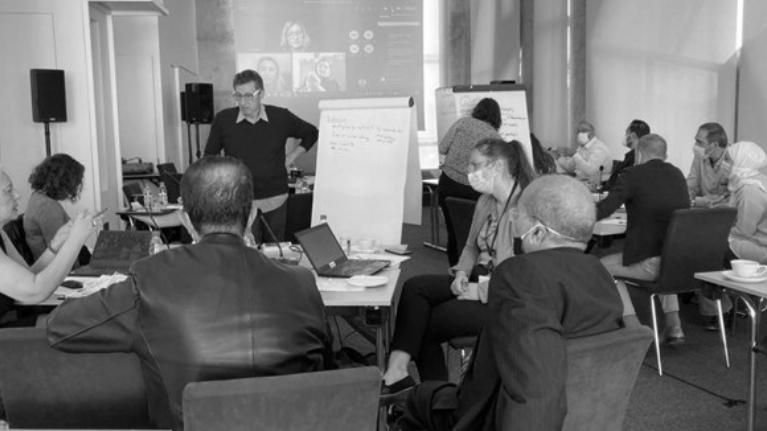
In an era characterized by fast-paced technological change and growing competition, it is evident that the ‘world of work’ keeps changing at a fast rate. It is also evident that as economic, technological and social developments constantly evolve and diversify, so do the skill requirements in the workplace. For economies to become or stay competitive, it is essential that national TVET leaders are aware of such developments, and have the required management and leadership skills to translate their understanding into action. Worldwide, many TVET institutions are struggling to make the necessary changes to stay connected to global developments. A perceived bottleneck in effecting change in TVET institutions relates to the lack of change leaders, and a lack of capacity to develop a vision and implement change. The UNEVOC TVET Leadership Programme seeks to address this bottleneck by building the capacity of international TVET experts to become change agents in their institutions and countries. For transformative TVET leaders to be effective, they need to have a clear vision, a sound thematic knowledge base to support and defend their vision, and the leadership and management skills to drive change.

The UNEVOC TVET Leadership Programme addresses these three key elements – ‘vision for change’, ‘knowledge for change’, and ‘skills for change’ – in 9 modules over the course of 10 days. The Programme brings together TVET experts and participants in a highly engaging environment, including practical exercises, intense group work, and the sharing of experiences and case studies. International experts lead the modules and special lectures, explaining the latest developments in policy and practice, and present the latest knowledge in their respective fields. A field trip will allow participants to link theory and practice.

Subject Tags:

Access to training

Slug
access-to-training
Identifier
683

Skills and training policy

Slug
skills-and-training-policy
Identifier
666

TVET systems

Slug
tvet-systems
Identifier
661

Youth

Slug
youth
Identifier
319
Regions:
Countries and territories:
Economic groups:
--