Anticipating and matching skills needs

Thumbnail

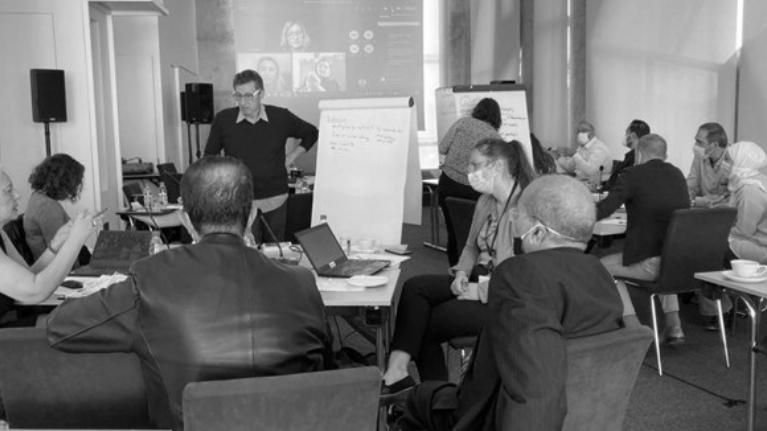
Anticipating and building skills for the future is essential to a rapidly changing labour market. This applies to changes in the types and levels of skills needed as well as in occupational and technical areas. Effective methods to anticipate future skills needs and avoid potential mismatches include: sustained dialogue between employers and trainers, coordination across government institutions, labour market information systems, employment services and performance reviews of training institutions. 

Identifier
skpAFSN
Slug
anticipating-and-matching-skills-needs

UNESCO: Digital skills for life and work

UNESCO: Digital skills for life and work

Type:
Document
Content Type:
UNESCO: Digital skills for life and work
Language:

English

Slug
english
Identifier
skpEng
Sources:

International organizations

Information is gathered from other international organizations that promote skills development and the transition from education and training to work. The Interagency Group on Technical and Vocational Education and Training (IAG-TVET) was established in 2009 to share research findings, coordinate joint research endeavours, and improve collaboration among organizations working at the international and national levels.

Thumbnail
Identifier
skpIntOrg
Slug
international-organizations
Topics:

Anticipating and matching skills needs

Thumbnail

Anticipating and building skills for the future is essential to a rapidly changing labour market. This applies to changes in the types and levels of skills needed as well as in occupational and technical areas. Effective methods to anticipate future skills needs and avoid potential mismatches include: sustained dialogue between employers and trainers, coordination across government institutions, labour market information systems, employment services and performance reviews of training institutions. 

Identifier
skpAFSN
Slug
anticipating-and-matching-skills-needs
Knowledge Products:

Research papers

Working papers, reports, and other publications from international organizations, academic institutions and bilateral agencies. Research findings to stimulate informed debate on skills, employment and productivity issues. 

Thumbnail
Identifier
skpRPS
Slug
research-papers
Publication Date:
19 Sep 2017
The report highlights the emergence of a new global skills gap where gender, class, geography and age can have a huge impact on whether a person is able to harness new technologies or not. It also presents strategies for ensuring all groups of people can develop these skills. Drafted by the Broadband Commission for Sustainable Development's Working Group on Education, chaired by Ms. Irena Bokova, Director General of Unesco, and John Galvin, Vice-President of Intel, the report identifies essential digital skills and competencies from basic skills to high-level professional skills.

Findings show that the development of these digital skills depends on a number of factors such as appropriate involvement of government, blending traditional ‘non-digital’ education approaches and digital applications, bridging formal and non-formal digital skills provision, and enhancing the digital competencies of teachers.

The report also focuses special attention to the often overlooked ‘complementary’ skills required to navigate technology-driven societies, such as an understanding of privacy considerations; knowledge of how to engage as responsible digital citizens; and awareness of how digital technology, big data and algorithms are shaping society.

Included in the report are policy recommendations that advice for governments to:

- Maintain public involvement in the increasingly commercially driven space of digital skills development.

- Redouble efforts to address inequalities in the provision of digital skills and competencies.

- Generate increased data on digital skills across populations to identify and fill gaps through education.

- Promote open digital resources and address needs not met by commercial providers.

- Foster partnerships with various stakeholders—including industry partners—to expand and improve the quality and relevance of digital skills development initiatives.

Also included in the report is a compendium of case studies illustrating successful examples of public and private sector working together in Africa, Asia, Europe and North America to ensure that all people have the skills and competencies they need to participate in the knowledge-based economy of the future.

Subject Tags:

Skills and training policy

Slug
skills-and-training-policy
Identifier
666

Skills anticipation

Slug
skills-anticipation
Identifier
677

Technology

Slug
technology
Identifier
345
Regions:

The Future of Work We Want: A global dialogue

The Future of Work We Want: A global dialogue

Type:
Document
Content Type:
The Future of Work We Want: A global dialogue
Language:

English

Slug
english
Identifier
skpEng
Sources:

ILO

The International Labour Organization is the tripartite U.N. agency that promotes Decent Work through employment, social security, labour standards and social dialogue. Its work on skills development is guided by the conceptual framework on Skills to improve productivity, employment growth, and development agreed in 2008 by representatives of Governments, Employers’ Associations and Workers’ Associations. Research, policy advice, and pilot projects and technical cooperation programmes to apply good practices in different circumstances across its 185 member States aims to boost the employability of workers, the productivity and competitiveness of enterprises, and the inclusiveness of economic growth. The ILO Secretariat in offices in 40 countries works with Ministries of Labour, employers’ organizations, and trade unions to integrate skills development into national and sector development strategies in order to better meet current labour market needs and to prepare for the jobs of the future; to expand access to employment-related training so that youth, persons with disabilities and other vulnerable groups are better able to acquire skills and secure productive and decent work; and to improve the ability of public employment services to provide career guidance, maintain labour exchange services, and deliver active labour market programmes.For more information regarding the ILO’s work on skills and employability go to: http://www.ilo.org/skills/lang--en/index.htm; for ILO/Cinterfor's Knowledge Management Plarform, see: http://www.oitcinterfor.org

Thumbnail
Identifier
skpILO
Slug
ilo
Topics:

Anticipating and matching skills needs

Thumbnail

Anticipating and building skills for the future is essential to a rapidly changing labour market. This applies to changes in the types and levels of skills needed as well as in occupational and technical areas. Effective methods to anticipate future skills needs and avoid potential mismatches include: sustained dialogue between employers and trainers, coordination across government institutions, labour market information systems, employment services and performance reviews of training institutions. 

Identifier
skpAFSN
Slug
anticipating-and-matching-skills-needs

Other topic

Thumbnail
Identifier
skpOIssue
Slug
other-topic
Knowledge Products:

Promotional material

Presentations, discussion papers, meeting reports, promotional materials, videos, fact sheets, brochures and newsletters on skills development for employment.

Thumbnail
Identifier
skpAIM
Slug
promotional-material
Publication Date:
01 Sep 2017
This report presents a short summary of the International Labour Organization’s (ILO’s) Global Dialogue on 'The Future of Work We Want', which brought together leading economists, academics and representatives from governments and social partners (employers’ and workers’ organizations) to discuss the profound changes sweeping through the world of work. More than 700 people participated in the two-day event, “The Future of Work We Want: A Global Dialogue”, which took place at the International Labour Office in Geneva on 6–7 April 2017. In addition, more than 2,000 people throughout the world followed the event and contributed via live video streaming and social media.

The Global Dialogue was part of the broader ILO Centenary Initiative to explore and examine the future of work in order to gain a better understanding of the drivers of the current unprecedented change, such as technological innovation, the changes in the organization of work and production, globalization, climate change, regulatory environment, demographic and migration shifts.

This report presents a short summary of discussions and includes:

• Work and society

• Decent jobs for all

• How to shape the future of work for youth

• Organization of work and production

• Governance of work

• Conclusions and the way forward
Subject Tags:

Economic and social development

Slug
economic-and-social-development
Identifier
125

Governance

Slug
governance
Identifier
283

Lifelong learning

Slug
lifelong-learning
Identifier
400
Regions:

El futuro del trabajo que queremos. La voz de los jóvenes y diferentes miradas desde América Latina y el Caribe

El futuro del trabajo que queremos. La voz de los jóvenes y diferentes miradas desde América Latina y el Caribe

Type:
Document
Content Type:
El futuro del trabajo que queremos. La voz de los jóvenes y diferentes miradas desde América Latina y el Caribe
Language:
Sources:

ILO

The International Labour Organization is the tripartite U.N. agency that promotes Decent Work through employment, social security, labour standards and social dialogue. Its work on skills development is guided by the conceptual framework on Skills to improve productivity, employment growth, and development agreed in 2008 by representatives of Governments, Employers’ Associations and Workers’ Associations. Research, policy advice, and pilot projects and technical cooperation programmes to apply good practices in different circumstances across its 185 member States aims to boost the employability of workers, the productivity and competitiveness of enterprises, and the inclusiveness of economic growth. The ILO Secretariat in offices in 40 countries works with Ministries of Labour, employers’ organizations, and trade unions to integrate skills development into national and sector development strategies in order to better meet current labour market needs and to prepare for the jobs of the future; to expand access to employment-related training so that youth, persons with disabilities and other vulnerable groups are better able to acquire skills and secure productive and decent work; and to improve the ability of public employment services to provide career guidance, maintain labour exchange services, and deliver active labour market programmes.For more information regarding the ILO’s work on skills and employability go to: http://www.ilo.org/skills/lang--en/index.htm; for ILO/Cinterfor's Knowledge Management Plarform, see: http://www.oitcinterfor.org

Thumbnail
Identifier
skpILO
Slug
ilo
Topics:

Anticipating and matching skills needs

Thumbnail

Anticipating and building skills for the future is essential to a rapidly changing labour market. This applies to changes in the types and levels of skills needed as well as in occupational and technical areas. Effective methods to anticipate future skills needs and avoid potential mismatches include: sustained dialogue between employers and trainers, coordination across government institutions, labour market information systems, employment services and performance reviews of training institutions. 

Identifier
skpAFSN
Slug
anticipating-and-matching-skills-needs

Youth employability

Thumbnail

Globally, nearly 68 million young women and men are looking for and available for work,  and an estimated 123 million young people are working but living in poverty. The number who are not in employment, education or training (NEET) stands at 267 million, a majority of whom are young women. Significantly, young people are three times as likely as adults (25 years and older) to be unemployed.

Skills development is a primary means of enabling young people to make a smooth transition to work. A comprehensive approach is required to integrate young women and men in the labour market, including relevant and quality skills training, labour market information, career guidance and employment services, recognition of prior learning, incorporating entrepreneurship with training and effective skills forecasting. Improved basic education and core work skills are particularly important to enable youth to engage in lifelong learning as well as transition to the labour market. 

Identifier
skpYoEmp
Slug
youth-employability
Knowledge Products:

Research papers

Working papers, reports, and other publications from international organizations, academic institutions and bilateral agencies. Research findings to stimulate informed debate on skills, employment and productivity issues. 

Thumbnail
Identifier
skpRPS
Slug
research-papers
Publication Date:
22 Aug 2017

OIT Américas. Informes Técnicos 2017/7. El Informe que se presenta en esta publicación, es una primera aproximación a las percepciones y expectativas de los jóvenes latinoamericanos sobre el futuro del trabajo con base en los resultados de encuestas.

Los resultados señalan una perspectiva muy optimista por parte de los jóvenes sobre las oportunidades y condiciones laborales que el futuro les depara, especialmente entre los de menor edad.

Subject Tags:

Skills anticipation

Slug
skills-anticipation
Identifier
677

Youth

Slug
youth
Identifier
319
Regions:

Americas

Region Image

6 ways Latin America can close its skills gap

6 ways Latin America can close its skills gap

Type:
Document
Content Type:
6 ways Latin America can close its skills gap
Language:

English

Slug
english
Identifier
skpEng
Sources:

Other sources

Experts from many international, regional and national agencies generously share their views, experiences and findings on skills, helping policy-makers among other stakeholders to understand the linkages between education, training and the world of work, and how to integrate skills into national development planning to promote employment and economic growth.

Thumbnail
Identifier
skpOSource
Slug
other-sources
Topics:

Anticipating and matching skills needs

Thumbnail

Anticipating and building skills for the future is essential to a rapidly changing labour market. This applies to changes in the types and levels of skills needed as well as in occupational and technical areas. Effective methods to anticipate future skills needs and avoid potential mismatches include: sustained dialogue between employers and trainers, coordination across government institutions, labour market information systems, employment services and performance reviews of training institutions. 

Identifier
skpAFSN
Slug
anticipating-and-matching-skills-needs
Knowledge Products:

Promotional material

Presentations, discussion papers, meeting reports, promotional materials, videos, fact sheets, brochures and newsletters on skills development for employment.

Thumbnail
Identifier
skpAIM
Slug
promotional-material
Publication Date:
17 Aug 2017
This article draws attention to the skills gap in Latin America and the challenges of the region in this regard. Skills gaps are one of the leading social and economic issues of our time. In Latin America and the Caribbean (LAC), more than in any other emerging region, companies are not seeing their skills needs being met. According to the World Bank Enterprise Surveys, 36% of firms say they struggle to find an adequately qualified work force, a percentage higher than in any other region in the world, compared to a global average of 21% and an OECD average of 15%. Addressing the human capital and skills gaps has very high development returns because human capital and skills are a vector connecting five of the key interrelated challenges facing the region: sluggish productivity growth, low innovation rates, inequality, informality and social exclusion.
Subject Tags:

Skills and training policy

Slug
skills-and-training-policy
Identifier
666

Skills anticipation

Slug
skills-anticipation
Identifier
677

Skills mismatch

Slug
skills-mismatch
Identifier
654
Regions:

Americas

Region Image

People, machines, robots and skills

People, machines, robots and skills

Type:
Document
Content Type:
People, machines, robots and skills
Language:

English

Slug
english
Identifier
skpEng
Sources:

Other sources

Experts from many international, regional and national agencies generously share their views, experiences and findings on skills, helping policy-makers among other stakeholders to understand the linkages between education, training and the world of work, and how to integrate skills into national development planning to promote employment and economic growth.

Thumbnail
Identifier
skpOSource
Slug
other-sources
Topics:

Anticipating and matching skills needs

Thumbnail

Anticipating and building skills for the future is essential to a rapidly changing labour market. This applies to changes in the types and levels of skills needed as well as in occupational and technical areas. Effective methods to anticipate future skills needs and avoid potential mismatches include: sustained dialogue between employers and trainers, coordination across government institutions, labour market information systems, employment services and performance reviews of training institutions. 

Identifier
skpAFSN
Slug
anticipating-and-matching-skills-needs
Knowledge Products:

Promotional material

Presentations, discussion papers, meeting reports, promotional materials, videos, fact sheets, brochures and newsletters on skills development for employment.

Thumbnail
Identifier
skpAIM
Slug
promotional-material
Publication Date:
16 Aug 2017
This briefing note discusses the way technology is changing our world and labour markets in particular. Technological unemployment is a recurring theme, but joblessness in the digital age will depend on human, not artificial, intelligence.
Subject Tags:

Skills anticipation

Slug
skills-anticipation
Identifier
677

Skills mismatch

Slug
skills-mismatch
Identifier
654

Technology

Slug
technology
Identifier
345
Regions:

The future of work, employment and skills in Latin America and the Caribbean

The future of work, employment and skills in Latin America and the Caribbean

Type:
Document
Content Type:
The future of work, employment and skills in Latin America and the Caribbean
Language:

English

Slug
english
Identifier
skpEng
Sources:

ILO

The International Labour Organization is the tripartite U.N. agency that promotes Decent Work through employment, social security, labour standards and social dialogue. Its work on skills development is guided by the conceptual framework on Skills to improve productivity, employment growth, and development agreed in 2008 by representatives of Governments, Employers’ Associations and Workers’ Associations. Research, policy advice, and pilot projects and technical cooperation programmes to apply good practices in different circumstances across its 185 member States aims to boost the employability of workers, the productivity and competitiveness of enterprises, and the inclusiveness of economic growth. The ILO Secretariat in offices in 40 countries works with Ministries of Labour, employers’ organizations, and trade unions to integrate skills development into national and sector development strategies in order to better meet current labour market needs and to prepare for the jobs of the future; to expand access to employment-related training so that youth, persons with disabilities and other vulnerable groups are better able to acquire skills and secure productive and decent work; and to improve the ability of public employment services to provide career guidance, maintain labour exchange services, and deliver active labour market programmes.For more information regarding the ILO’s work on skills and employability go to: http://www.ilo.org/skills/lang--en/index.htm; for ILO/Cinterfor's Knowledge Management Plarform, see: http://www.oitcinterfor.org

Thumbnail
Identifier
skpILO
Slug
ilo
Topics:

Anticipating and matching skills needs

Thumbnail

Anticipating and building skills for the future is essential to a rapidly changing labour market. This applies to changes in the types and levels of skills needed as well as in occupational and technical areas. Effective methods to anticipate future skills needs and avoid potential mismatches include: sustained dialogue between employers and trainers, coordination across government institutions, labour market information systems, employment services and performance reviews of training institutions. 

Identifier
skpAFSN
Slug
anticipating-and-matching-skills-needs

Other topic

Thumbnail
Identifier
skpOIssue
Slug
other-topic
Knowledge Products:

Research papers

Working papers, reports, and other publications from international organizations, academic institutions and bilateral agencies. Research findings to stimulate informed debate on skills, employment and productivity issues. 

Thumbnail
Identifier
skpRPS
Slug
research-papers
Publication Date:
15 Aug 2017
This paper analyses the ‘stylized facts’ of the current realities in the world of production and the world of work in Latin America and the Caribbean. It groups the key factors that can be considered as the main drivers of change and determinants of the future of work in the region. It suggests the need for a more integrated and renewed view of the nexus of productive development-technology-innovation-education-skills-employment and employability. And it argues the need for new, broader pacts that express this vision, along with institutional reforms that translate it into concrete, sustainable actions and State policies.
Subject Tags:

Employability

Slug
employability
Identifier
643

Productivity

Slug
productivity
Identifier
188

Skills and training policy

Slug
skills-and-training-policy
Identifier
666

Skills anticipation

Slug
skills-anticipation
Identifier
677

Technology

Slug
technology
Identifier
345
Regions:

Americas

Region Image

India skills report 2017

India skills report 2017

Type:
Document
Content Type:
India skills report 2017
Language:

English

Slug
english
Identifier
skpEng
Sources:

International organizations

Information is gathered from other international organizations that promote skills development and the transition from education and training to work. The Interagency Group on Technical and Vocational Education and Training (IAG-TVET) was established in 2009 to share research findings, coordinate joint research endeavours, and improve collaboration among organizations working at the international and national levels.

Thumbnail
Identifier
skpIntOrg
Slug
international-organizations

Other sources

Experts from many international, regional and national agencies generously share their views, experiences and findings on skills, helping policy-makers among other stakeholders to understand the linkages between education, training and the world of work, and how to integrate skills into national development planning to promote employment and economic growth.

Thumbnail
Identifier
skpOSource
Slug
other-sources
Topics:

Anticipating and matching skills needs

Thumbnail

Anticipating and building skills for the future is essential to a rapidly changing labour market. This applies to changes in the types and levels of skills needed as well as in occupational and technical areas. Effective methods to anticipate future skills needs and avoid potential mismatches include: sustained dialogue between employers and trainers, coordination across government institutions, labour market information systems, employment services and performance reviews of training institutions. 

Identifier
skpAFSN
Slug
anticipating-and-matching-skills-needs

Youth employability

Thumbnail

Globally, nearly 68 million young women and men are looking for and available for work,  and an estimated 123 million young people are working but living in poverty. The number who are not in employment, education or training (NEET) stands at 267 million, a majority of whom are young women. Significantly, young people are three times as likely as adults (25 years and older) to be unemployed.

Skills development is a primary means of enabling young people to make a smooth transition to work. A comprehensive approach is required to integrate young women and men in the labour market, including relevant and quality skills training, labour market information, career guidance and employment services, recognition of prior learning, incorporating entrepreneurship with training and effective skills forecasting. Improved basic education and core work skills are particularly important to enable youth to engage in lifelong learning as well as transition to the labour market. 

Identifier
skpYoEmp
Slug
youth-employability
Knowledge Products:

Research papers

Working papers, reports, and other publications from international organizations, academic institutions and bilateral agencies. Research findings to stimulate informed debate on skills, employment and productivity issues. 

Thumbnail
Identifier
skpRPS
Slug
research-papers
Publication Date:
15 Aug 2017
India Skills Report 2017 presents a quantitative and qualitative analysis of demand and supply in the labour market. The report takes stock of the talent landscape by analysing the employability of youth and the needs and expectations of employers. Currently in its fourth edition, it also captures various initiatives taken by the government and its impact on economic growth. The report is a joint initiative by Confederation of Indian Industry, PeopleStrong, Wheebox, UNDP and AICTE (All India Council for Technical Education).
Subject Tags:

Gender

Slug
294
Identifier
294

Job matching

Slug
job-matching
Identifier
649

Labour market information

Slug
labour-market-information
Identifier
684

Skills mismatch

Slug
skills-mismatch
Identifier
654

Youth

Slug
youth
Identifier
319
Regions:
Countries and territories:

Labour in the 21st Century: Insights into a changing world of work

Labour in the 21st Century: Insights into a changing world of work

Type:
Document
Content Type:
Labour in the 21st Century: Insights into a changing world of work
Language:

English

Slug
english
Identifier
skpEng
Sources:

Other sources

Experts from many international, regional and national agencies generously share their views, experiences and findings on skills, helping policy-makers among other stakeholders to understand the linkages between education, training and the world of work, and how to integrate skills into national development planning to promote employment and economic growth.

Thumbnail
Identifier
skpOSource
Slug
other-sources
Topics:

Anticipating and matching skills needs

Thumbnail

Anticipating and building skills for the future is essential to a rapidly changing labour market. This applies to changes in the types and levels of skills needed as well as in occupational and technical areas. Effective methods to anticipate future skills needs and avoid potential mismatches include: sustained dialogue between employers and trainers, coordination across government institutions, labour market information systems, employment services and performance reviews of training institutions. 

Identifier
skpAFSN
Slug
anticipating-and-matching-skills-needs

Other topic

Thumbnail
Identifier
skpOIssue
Slug
other-topic
Knowledge Products:

Research papers

Working papers, reports, and other publications from international organizations, academic institutions and bilateral agencies. Research findings to stimulate informed debate on skills, employment and productivity issues. 

Thumbnail
Identifier
skpRPS
Slug
research-papers
Publication Date:
14 Aug 2017
Part of the ADAPT Labor Studies Book Series. Several major transformations have characterized the world of work in recent years. Those transformations follow different patterns in different countries, yet their dynamics are so interrelated that it is often hard, if not impossible, to distinguish the causal relationships among them. Technological advances, globalization, old and new media, demographic changes, and new production and economic systems are all key factors acting on this ongoing transformation which is impacting both the world of work and society as a whole. In the spirit of Karl Polanyi, the well-known scholar who described the rise of market-based societies, we are led to wonder if we are witnessing a new 'Great Transformation of Work', on such a scale that it might change the very meaning of work in our society, and even its anthropological connotations. Accordingly, this volume investigates and discusses the different aspects of this transformation from a comparative perspective. In order to propose better solutions to cope with these changes, it is necessary to analyze their ongoing dynamics. Lawmakers, unions, scholars and practitioners are all called to do their part in order to achieve the goals of sustainability and fairness of our economic systems.
Subject Tags:

Gender equality

Slug
gender-equality
Identifier
144

Inclusion

Slug
inclusion
Identifier
665

Labour market information

Slug
labour-market-information
Identifier
684

Skills anticipation

Slug
skills-anticipation
Identifier
677

Sustainable development

Slug
sustainable-development
Identifier
658

Technology

Slug
technology
Identifier
345
Regions:

The Future of Jobs and Skills in the Middle East and North Africa

The Future of Jobs and Skills in the Middle East and North Africa

Type:
Document
Content Type:
The Future of Jobs and Skills in the Middle East and North Africa
Language:

English

Slug
english
Identifier
skpEng
Sources:

Other sources

Experts from many international, regional and national agencies generously share their views, experiences and findings on skills, helping policy-makers among other stakeholders to understand the linkages between education, training and the world of work, and how to integrate skills into national development planning to promote employment and economic growth.

Thumbnail
Identifier
skpOSource
Slug
other-sources
Topics:

Anticipating and matching skills needs

Thumbnail

Anticipating and building skills for the future is essential to a rapidly changing labour market. This applies to changes in the types and levels of skills needed as well as in occupational and technical areas. Effective methods to anticipate future skills needs and avoid potential mismatches include: sustained dialogue between employers and trainers, coordination across government institutions, labour market information systems, employment services and performance reviews of training institutions. 

Identifier
skpAFSN
Slug
anticipating-and-matching-skills-needs

Youth employability

Thumbnail

Globally, nearly 68 million young women and men are looking for and available for work,  and an estimated 123 million young people are working but living in poverty. The number who are not in employment, education or training (NEET) stands at 267 million, a majority of whom are young women. Significantly, young people are three times as likely as adults (25 years and older) to be unemployed.

Skills development is a primary means of enabling young people to make a smooth transition to work. A comprehensive approach is required to integrate young women and men in the labour market, including relevant and quality skills training, labour market information, career guidance and employment services, recognition of prior learning, incorporating entrepreneurship with training and effective skills forecasting. Improved basic education and core work skills are particularly important to enable youth to engage in lifelong learning as well as transition to the labour market. 

Identifier
skpYoEmp
Slug
youth-employability
Knowledge Products:

Research papers

Working papers, reports, and other publications from international organizations, academic institutions and bilateral agencies. Research findings to stimulate informed debate on skills, employment and productivity issues. 

Thumbnail
Identifier
skpRPS
Slug
research-papers
Publication Date:
07 Aug 2017
Preparing the Region for the Fourth Industrial Revolution. This Executive Briefing has been prepared by the World Economic Forum. Education and work in the Middle East and North Africa region will determine the livelihoods of over 300 million people and drive growth and development for generations to come. As one of the youngest populations in the world, it is imperative that the region make adequate investments in education and learning that hold value in the labour market and prepare citizens for the world of tomorrow. In addition, as the global transformation of work unfolds in the region, policymakers, business leaders and workers must be prepared to proactively manage this period of transition.

This Executive Briefing uses the latest available data, including through a research partnership with LinkedIn, to provide a concise overview of the region’s education, skills and jobs agenda. It is intended as a practical guide for leaders from business, government, civil society and the education sector to plan for the needs of the future. It is also a call to action to the region’s leaders to address urgently the reforms that are needed today to ensure that the Middle East and North Africa’s young people can harness the new opportunities that are coming their way.

In addition to providing insights on current trends and future projections, the World Economic Forum also aims to provide a platform for multistakeholder collaboration to prepare for the future of work by closing skills gaps and gender gaps through two key initiatives in the region. The New Vision for Arab Employment consolidates the latest insights, brings together business efforts to impart employability skills and supports constructive public-private dialogue for reform of education systems and labour policies. To date, companies engaged in the initiative have supported skills development for 250,000 people. In addition the Gender Parity Task Forces help provide a method for national stakeholders to close economic gender gaps, with the first task force in the region to be launched this year. We invite more stakeholders to join these efforts, enhancing collaboration and coordination to accelerate impact.
Subject Tags:

Public private partnerships

Slug
public-private-partnerships
Identifier
138

Skills anticipation

Slug
skills-anticipation
Identifier
677

Skills mismatch

Slug
skills-mismatch
Identifier
654

Soft skills

Slug
soft-skills
Identifier
678

Technology

Slug
technology
Identifier
345

Youth

Slug
youth
Identifier
319
Regions:

Africa

Region Image

Arab States

Region Image

Future skill needs in Europe: critical labour force trends

Future skill needs in Europe: critical labour force trends

Type:
Document
Content Type:
Future skill needs in Europe: critical labour force trends
Language:

English

Slug
english
Identifier
skpEng
Sources:

Other sources

Experts from many international, regional and national agencies generously share their views, experiences and findings on skills, helping policy-makers among other stakeholders to understand the linkages between education, training and the world of work, and how to integrate skills into national development planning to promote employment and economic growth.

Thumbnail
Identifier
skpOSource
Slug
other-sources
Topics:

Anticipating and matching skills needs

Thumbnail

Anticipating and building skills for the future is essential to a rapidly changing labour market. This applies to changes in the types and levels of skills needed as well as in occupational and technical areas. Effective methods to anticipate future skills needs and avoid potential mismatches include: sustained dialogue between employers and trainers, coordination across government institutions, labour market information systems, employment services and performance reviews of training institutions. 

Identifier
skpAFSN
Slug
anticipating-and-matching-skills-needs
Knowledge Products:

Research papers

Working papers, reports, and other publications from international organizations, academic institutions and bilateral agencies. Research findings to stimulate informed debate on skills, employment and productivity issues. 

Thumbnail
Identifier
skpRPS
Slug
research-papers
Publication Date:
03 Aug 2017
The European labour market is challenged by changes in the demographic composition of the labour force and increasing work complexities and processes.

Skills forecasting makes useful contribution to decisions by policy-makers, experts and individuals. In this publication, Cedefop presents the latest results of skills supply and demand forecasts. Alongside the most likely scenario, it shows the impact of alternative labour market activation or migration policies on future labour market imbalances, illustrating the effects of the ‘highest possible’ labour market activity rates based on past and possible future baseline trends. The role of migration in mitigating labour market imbalances is incorporated into the scenario, responding to available job opportunities, income differentials and unemployment levels across Member States.

DOI: 10.2801/56396
Subject Tags:

Skills anticipation

Slug
skills-anticipation
Identifier
677
Regions: