Preguntas y respuestas sobre: La estrategia de formación del G20: Una fuerza de trabajo capacitada para un crecimiento sólido, sostenible y equilibrado. (Parte 2)
Spanish
ILO
The International Labour Organization is the tripartite U.N. agency that promotes Decent Work through employment, social security, labour standards and social dialogue. Its work on skills development is guided by the conceptual framework on Skills to improve productivity, employment growth, and development agreed in 2008 by representatives of Governments, Employers’ Associations and Workers’ Associations. Research, policy advice, and pilot projects and technical cooperation programmes to apply good practices in different circumstances across its 185 member States aims to boost the employability of workers, the productivity and competitiveness of enterprises, and the inclusiveness of economic growth. The ILO Secretariat in offices in 40 countries works with Ministries of Labour, employers’ organizations, and trade unions to integrate skills development into national and sector development strategies in order to better meet current labour market needs and to prepare for the jobs of the future; to expand access to employment-related training so that youth, persons with disabilities and other vulnerable groups are better able to acquire skills and secure productive and decent work; and to improve the ability of public employment services to provide career guidance, maintain labour exchange services, and deliver active labour market programmes.For more information regarding the ILO’s work on skills and employability go to: http://www.ilo.org/skills/lang--en/index.htm; for ILO/Cinterfor's Knowledge Management Plarform, see: http://www.oitcinterfor.org

Other sources
Experts from many international, regional and national agencies generously share their views, experiences and findings on skills, helping policy-makers among other stakeholders to understand the linkages between education, training and the world of work, and how to integrate skills into national development planning to promote employment and economic growth.

Access to training

Access for all to good quality education, vocational training and workplace learning is a fundamental principle of social cohesion and economic growth. Some groups of people may require targeted attention if they are to benefit from education, training and employment opportunities.
This is particularly the case for disadvantaged youth, lower skilled workers, people with disabilities, and people in rural communities. The attractiveness of vocational education and training is enhanced when combined with entrepreneurship training and when public policies encourage utilization of higher skills by business.
Apprenticeships
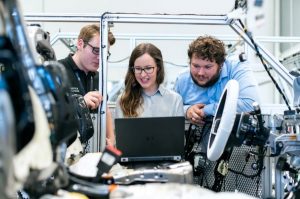
Quality apprenticeships based on robust social dialogue and public-private partnerships can improve employment prospects for young people while developing high level skills identified by employers as necessary for growth and increased productivity. Both informal and regulated apprenticeship systems are important learning resources enabling young people to overcome the work-inexperience trap, gain new and enhanced skills and recognized qualifications.
Upgrading informal apprenticeships and expanding regulated ones is a cost-effective way to invest in a country’s skills base, promote economic growth and enhance the employability of youth.
Anticipating and matching skills needs

Anticipating and building skills for the future is essential to a rapidly changing labour market. This applies to changes in the types and levels of skills needed as well as in occupational and technical areas. Effective methods to anticipate future skills needs and avoid potential mismatches include: sustained dialogue between employers and trainers, coordination across government institutions, labour market information systems, employment services and performance reviews of training institutions.
Career guidance and employment services

Career guidance and counselling, career education and lifelong development of skills for employability are key for success in learning activities, effective career transitions, livelihood planning, entrepreneurship and in increasing labour market participation. They are instrumental in promoting skills utilization, recognition (RPL), as well as in improving enterprise human resource management.
Career development activities encompass a wide variety of support activities including career information and advice, counselling, work exposure (e.g. job shadowing, work experience periods), assessment, coaching, mentoring, professional networking, advocacy, basic and employability skills training (curricular and non-curricular) and entrepreneurship training. It is often an area which is fragmented across different ministries (e.g. education, TVET, employment, youth) requiring an effort to achieve the necessary coordination to provide adequate support to individuals during learning, employment and unemployment/inactivity periods.
Financing of training
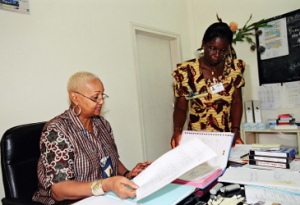
Initial education and training and lifelong learning benefit individuals, employers and society as a whole. Economic principles dictate that the costs for services with public and private benefits should be shared between public and private funding, or else too little training will be provided or taken up. Effective mechanisms for financing skills development vary according to countries’ economic and political circumstances and the degree and level of social dialogue established.
Lifelong learning

There is a critical need for a greater overall investment in education and training, particularly in developing countries. Education and training investments should be closely linked to economic and employment growth strategies and programmes. Responsibility should be shared between the government (primary responsibility), enterprises, the social partners, and the individual. To make lifelong learning for all a reality, countries will need to make major reforms of their vocational and education and training systems. School-to-work schemes for young people should integrate education with workplace learning. Training systems need to become more flexible and responsive to rapidly changing skill requirements. Reforms should also focus on how learning can be facilitated, not just on training for specific occupational categories.
Migrant workers

According to the ILO global estimates on migrant workers, there were around 164 million migrant workers in 2017.
Migrant workers contribute to growth and development in their countries of destination, while countries of origin greatly benefit from their remittances and the skills acquired during their migration experience. Yet, many migrant workers face challenges in accessing quality training and decent jobs including under-utilization of skills, a lack of employment or training opportunities, lack of information, and exploitation of low-skilled workers.
To address these challenges, countries need to strengthen skills anticipation systems to inform migration policies, increase access to education and training, and establish bilateral or multilateral recognition of qualifications and skills.
Monitoring and evaluation

Measuring the outcomes of skills systems, policies and targeted programmes is essential in order to monitor and improve their effectiveness and relevance. Elements of sound assessment processes include: institutions to sustain feedback from employers and trainees; mechanisms to track labour market outcomes of training and systems of accountability that use this information; and, quantitative and qualitative labour market information and its dissemination to all stakeholders.
Older workers

Access for all to good quality education, vocational training and workplace learning is a fundamental principle of social cohesion and economic growth. Some groups of people may require targeted attention if they are to benefit from education, training and employment opportunities.
This is particularly the case for disadvantaged youth, lower skilled workers, people with disabilities, and people in rural communities. The attractiveness of vocational education and training is enhanced when combined with entrepreneurship training and when public policies encourage utilization of higher skills by business.
Participation of employers' and workers' organizations

The world of learning and the world of work are separate but linked. While one involves learning, the other produces goods and services. Neither can thrive without the other. Strong partnerships between government, employers and workers help ensure the relevance of training to the changing needs of enterprises and labour markets.
People with disabilities

Of an estimated 1 billion people with disabilities in the world today, some 785 million are of working age. While many are successfully employed and fully integrated into society, most face a disproportionate level of poverty and unemployment. This is a massive loss both to them and their countries. A strategy of including people with disabilities in training and employment promotion policies, combined with targeted supports to ensure their participation, can help disabled persons obtain productive mainstream employment.
Sectoral approaches

Matching skills to labour market demand requires reliable sectoral and occupational information and institutions that connect employers with training providers. Sector based strategies and institutions have proved effective in engaging all stakeholders in promoting both pre-employment training and life-long learning.
Skills policies and strategies

Skills and employment policies should be viewed together. The full value of one policy set is realized when it supports the objectives of the other. For investments in education and training to yield maximum benefit to workers, enterprises, and economies, countries’ capacities for coordination is critical in three areas: connecting basic education to technical training and then to market entry; ensuring continuous communication between employers and training providers so that training meets the needs and aspirations of workers and enterprises, and integrating skills development policies with industrial, investment, trade, technology, environmental, rural and local development policies.
Training quality and relevance

Youth employability

Globally, nearly 68 million young women and men are looking for and available for work, and an estimated 123 million young people are working but living in poverty. The number who are not in employment, education or training (NEET) stands at 267 million, a majority of whom are young women. Significantly, young people are three times as likely as adults (25 years and older) to be unemployed.
Skills development is a primary means of enabling young people to make a smooth transition to work. A comprehensive approach is required to integrate young women and men in the labour market, including relevant and quality skills training, labour market information, career guidance and employment services, recognition of prior learning, incorporating entrepreneurship with training and effective skills forecasting. Improved basic education and core work skills are particularly important to enable youth to engage in lifelong learning as well as transition to the labour market.
Promotional material
Presentations, discussion papers, meeting reports, promotional materials, videos, fact sheets, brochures and newsletters on skills development for employment.

Las competencias constituyen un pilar para lograr el trabajo decente. A la larga, las habilidades que la gente obtiene y usa efectivamente pueden contribuir a la prosperidad, basado en cuántos hombres y mujeres se encuentran empleados y cuán productivos son en su trabajo. El desarrollo de competencias es percibido por países, empresas y personas por igual como un elemento estratégico, y en consecuencia buscan aumentar sus inversiones en este campo. La estrategia de formación del G20 ofrece un marco de políticas para el desarrollo de una fuerza de trabajo debidamente capacitada y para lograr el trabajo decente en empresas que sean sostenibles.
¿Cuáles son los componentes básicos para lograr una estrategia sólida de formación?
Las políticas y estrategias sólidas de formación y desarrollo de competencias se construyen a partir de una serie de componentes básicos, entre ellos: la previsión de las necesidades futuras en términos del desarrollo de competencias; la participación de los interlocutores sociales; la aplicación de enfoques sectoriales; la disponibilidad de información sobre el mercado laboral y de servicios de empleo; la calidad y pertinencia de la formación; la igualdad de género; el acceso amplio a oportunidades de formación; la financiación de la formación; y la evaluación del desempeño de las políticas.
Si bien existe un amplio consenso sobre los componentes básicos que dan forma a las buenas políticas y sistemas de formación, aún existen grandes disparidades en su aplicación y resultados. Por esta la EF G20 alienta el intercambio de experiencias, análisis y puntos de vista para abordar problemas referentes a la creación de políticas de formación de buena calidad y el logro de buenos resultados.
¿Qué otros factores contribuyen a desarrollar políticas y estrategias de formación efectivas?
Una asociación sólida entre gobiernos, empleadores, trabajadores y centros de formación es una característica esencial para forjar un nexo eficaz y duradero entre el mundo del aprendizaje y el del trabajo, que responda efectivamente a las necesidades cambiantes de habilidades y formación. Para que resulte eficaz y lograr promover un desarrollo sostenible y dinámico, las políticas de formación deben ser insertadas en un entorno económico y político más amplio, por ejemplo en coordinación con políticas de empleo, industria, comercio, tecnología, economía y medio ambiente.
¿Cómo promueve el desarrollo de habilidades, la equidad y el crecimiento inclusivo?
La adopción de un enfoque más inclusivo en materia de educación, formación y aprendizaje en el trabajo puede ayudar a hacer frente a diversas desigualdades y romper el ciclo de pobreza que impide a las personas tomar ventaja de las oportunidades económicas. Esto puede beneficiar especialmente a los grupos menos representados, como las personas con discapacidad, las personas de comunidades desfavorecidas, y las personas que han estado desempleadas durante largos períodos de tiempo.
Descargue el artículo completo en PDF o vea parte 3 en la margen derecho.