Fill the Gap: Final event of the Mind the Gap project: results, lessons learned, and recommendations
Fill the Gap: Final event of the Mind the Gap project: results, lessons learned, and recommendations
Italian
Other sources
Experts from many international, regional and national agencies generously share their views, experiences and findings on skills, helping policy-makers among other stakeholders to understand the linkages between education, training and the world of work, and how to integrate skills into national development planning to promote employment and economic growth.

Career guidance and employment services

Career guidance and counselling, career education and lifelong development of skills for employability are key for success in learning activities, effective career transitions, livelihood planning, entrepreneurship and in increasing labour market participation. They are instrumental in promoting skills utilization, recognition (RPL), as well as in improving enterprise human resource management.
Career development activities encompass a wide variety of support activities including career information and advice, counselling, work exposure (e.g. job shadowing, work experience periods), assessment, coaching, mentoring, professional networking, advocacy, basic and employability skills training (curricular and non-curricular) and entrepreneurship training. It is often an area which is fragmented across different ministries (e.g. education, TVET, employment, youth) requiring an effort to achieve the necessary coordination to provide adequate support to individuals during learning, employment and unemployment/inactivity periods.
Core skills and literacy

Core employability skills build upon and strengthen the skills developed through basic education; the technical skills needed for specific occupations or to perform specific tasks or duties (such as nursing, accounting, using technology or driving a forklift); and professional/personal attributes such as honesty, reliability, punctuality and loyalty.
Core work skills enable individuals to constantly acquire and apply new knowledge and skills; they are also critical to lifelong learning. Various agencies and organizations have given different labels to these skills, ranging from “key competencies” to “soft skills”, “transferable skills” or “essential skills”.
Digital skills

The world of work is undergoing a substantial transformation due to new forces. In particular, technological advances, such as AI, automation and robotics, have produced numerous new opportunities, but also given rise to urgent challenges. While new jobs are constantly being created with the emergence of the digital economy, many jobs are at risk of becoming obsolete. Digital innovations will rapidly change the demand for skills, thereby creating a wider skills gap that has the potential to hold back economic growth. Equipping people with basic or advanced digital skills promises to prepare them for unprecedented job opportunities in the digital economy. This will lead to innovation, higher productivity and competitiveness, as well as expanding markets, access to work and entrepreneurship opportunities.
Governance and coordination mechanisms
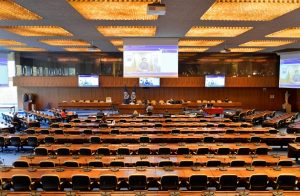
Effective governance and coordination are key elements of successful skill systems. Whilst coordination is an important factor, it needs to operate alongside other key conditions to strengthen governance. When multi-level governance is supported by effective communication, sustainable financing and effective coordination, it has the best chance of supporting the establishment of a lifelong learning ecosystem that enables individuals and enterprises to more effectively navigate the world of work and learning.
This event serves as the final conference for a school-community project. The agenda is structured around presenting student projects from three different schools, interspersed with three thematic panel discussions. The panels will focus on key topics such as workshops for transversal skills, school guidance, and the use of "community pacts" as a tool for civic participation in schools. The event will conclude with institutional remarks from the Deputy Mayor of Milan and the Regional School Office.
Objectives:
- To engagingly present the results and student projects.
- To share lessons learned from the project and transform them into concrete proposals and recommendations for the future.
Target Audience:
The event is designed for an audience of 30-50 people, comprising: local Institutions (e.g., Municipality of Milan), school representatives (teachers, principals, students), representatives from the Third Sector (non-profits, associations like Junior Achievement, ActionAid, Fondazione Mondo Digitale)
Time: 4 November 2025 at 9:00-12:00 GMT+1
Place: Via De Amicis 10, Milano, Italy
Europe and Central Asia