Career guidance and employment services

Thumbnail

Career guidance and counselling, career education and lifelong development of skills for employability are key for success in learning activities, effective career transitions, livelihood planning, entrepreneurship and in increasing labour market participation. They are instrumental in promoting skills utilization, recognition (RPL), as well as in improving enterprise human resource management.

Career development activities encompass a wide variety of support activities including career information and advice, counselling, work exposure (e.g. job shadowing, work experience periods), assessment, coaching, mentoring, professional networking, advocacy, basic and employability skills training (curricular and non-curricular) and entrepreneurship training. It is often an area which is fragmented across different ministries (e.g. education, TVET, employment, youth) requiring an effort to achieve the necessary coordination to provide adequate support to individuals during learning, employment and unemployment/inactivity periods.
 

Identifier
skpLMIES
Slug
career-guidance-and-employment-services

Nyílt kurzusokat bemutató workshop pályaorientációval foglalkozó szakemberek számára

Nyílt kurzusokat bemutató workshop pályaorientációval foglalkozó szakemberek számára

Kind:
Event
Start Date:
27 Nov 2025
End Date:
05 Jun 2026
Event Location:
Budapest, Hungary
EventType:
Language:

Hungarian

Slug
hungarian
Identifier
skphu
Language Version:
--
Sources:

Other sources

Experts from many international, regional and national agencies generously share their views, experiences and findings on skills, helping policy-makers among other stakeholders to understand the linkages between education, training and the world of work, and how to integrate skills into national development planning to promote employment and economic growth.

Thumbnail
Identifier
skpOSource
Slug
other-sources
Topics:

Career guidance and employment services

Thumbnail

Career guidance and counselling, career education and lifelong development of skills for employability are key for success in learning activities, effective career transitions, livelihood planning, entrepreneurship and in increasing labour market participation. They are instrumental in promoting skills utilization, recognition (RPL), as well as in improving enterprise human resource management.

Career development activities encompass a wide variety of support activities including career information and advice, counselling, work exposure (e.g. job shadowing, work experience periods), assessment, coaching, mentoring, professional networking, advocacy, basic and employability skills training (curricular and non-curricular) and entrepreneurship training. It is often an area which is fragmented across different ministries (e.g. education, TVET, employment, youth) requiring an effort to achieve the necessary coordination to provide adequate support to individuals during learning, employment and unemployment/inactivity periods.
 

Identifier
skpLMIES
Slug
career-guidance-and-employment-services

Online and distance learning

Thumbnail

In view of the rapid socio-economic and technological changes, jobs and the skills required to perform them continue to evolve. Many jobs in labour intensive sectors, which tend to be occupied by economically vulnerable groups of people (such as women and the poorly educated), are at high risk of being automated. In this light, delivering job-relevant skills at a reasonable cost, especially for workers whose jobs are at risk, is important. If well implemented, ICTs in TVET have the potential to improve access to learning, to improve quality while decreasing costs, to make teaching and learning more relevant to people’s work and lives, and to encourage individuals to become lifelong learners.

Identifier
skpOnlDist
Slug
online-and-distance-learning
Knowledge Products:

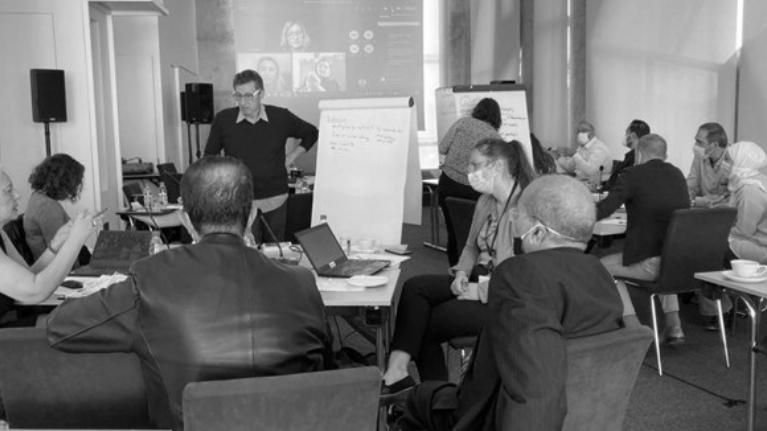
Within the framework of the National Office of Vocational Education and Training and Adult Learning, the Euroguidance Hungary Centre is launching a workshop series to present MOOCs related to career guidance developed by the Hungarian Centre’s experts.

The first event of the series will take place on 27 November 2025 at the National Office of Vocational Education and Training and Adult Learning as part of the #GlobalCareersMonth2025.

At the workshop, three courses will be presented:

Dr. habil. Tibor Bors Borbély-Pecze: Navigating Complexity: Systems Theory in Career Guidance

Gergely Kiss: Career Knowledge Base in service of Youth Career Orientation

Dr. Andrea Visztenvelt: The Role of Self-Awareness in the Career Development Process of Adult Learners

Time: 27 November 2025 at 09:00-14:30 CET

Place: National Office of Vocational Education and Training and Adult Learning, 1065 Budapest, Bajcsy-Zsilinszky út 53.

Language: Hungarian

More information: https://euroguidance.nive.hu/nyilt-kurzusokat-bemutato-workshop-palyaorientacioval-foglalkozo-szakemberek-szamara/

Subject Tags:
Regions:
Countries and territories:
Economic groups:
--

Celebrating 25 Years of CICA: Reflecting on Our Journey and Looking Ahead

Celebrating 25 Years of CICA: Reflecting on Our Journey and Looking Ahead

Kind:
Event
Start Date:
29 Oct 2025
End Date:
04 Jun 2026
Event Location:
Online
EventType:
Language:

English

Slug
english
Identifier
skpEng
Language Version:
--
Sources:

Other sources

Experts from many international, regional and national agencies generously share their views, experiences and findings on skills, helping policy-makers among other stakeholders to understand the linkages between education, training and the world of work, and how to integrate skills into national development planning to promote employment and economic growth.

Thumbnail
Identifier
skpOSource
Slug
other-sources
Topics:

Career guidance and employment services

Thumbnail

Career guidance and counselling, career education and lifelong development of skills for employability are key for success in learning activities, effective career transitions, livelihood planning, entrepreneurship and in increasing labour market participation. They are instrumental in promoting skills utilization, recognition (RPL), as well as in improving enterprise human resource management.

Career development activities encompass a wide variety of support activities including career information and advice, counselling, work exposure (e.g. job shadowing, work experience periods), assessment, coaching, mentoring, professional networking, advocacy, basic and employability skills training (curricular and non-curricular) and entrepreneurship training. It is often an area which is fragmented across different ministries (e.g. education, TVET, employment, youth) requiring an effort to achieve the necessary coordination to provide adequate support to individuals during learning, employment and unemployment/inactivity periods.
 

Identifier
skpLMIES
Slug
career-guidance-and-employment-services

Governance and coordination mechanisms

Thumbnail

Effective governance and coordination are key elements of successful skill systems. Whilst coordination is an important factor, it needs to operate alongside other key conditions to strengthen governance. When multi-level governance is supported by effective communication, sustainable financing and effective coordination, it has the best chance of supporting the establishment of a lifelong learning ecosystem that enables individuals and enterprises to more effectively navigate the world of work and learning.

Identifier
skpGovern
Slug
governance-and-coordination-mechanisms

Other topic

Thumbnail
Identifier
skpOIssue
Slug
other-topic
Knowledge Products:

Join us as we celebrate 25 years since the formation of the Career Industry Council of Australia (CICA), the national peak body for the career development profession.

Hosted by Executive Director David Carney, this special anniversary webinar brings together current and past CICA Presidents for a lively and insightful conversation about CICA’s journey, its impact on the profession, and the opportunities ahead for career development in Australia.

Together, the panel will share their personal reflections on key challenges and opportunities during their presidencies, memorable milestones and achievements, and the evolution of CICA’s role in shaping the career development landscape.

They will also reflect on what this 25-year milestone means to them and offer messages for current Council members, practitioners, and stakeholder partners.

This celebratory and thought-provoking event is open to everyone in the career development community, including practitioners, educators, researchers, policymakers, and partners who have supported and contributed to CICA’s story.

Come and celebrate a quarter century of leadership, collaboration, and impact, and be part of an inspiring conversation about the future of career development in Australia.

Time: 29 October 2025 at 12.30pm AEDT

Place: Online, register at https://events.humanitix.com/celebrating-25-years-of-cica-reflecting-on-our-journey-and-looking-ahead

More information: https://events.humanitix.com/celebrating-25-years-of-cica-reflecting-on-our-journey-and-looking-ahead

The First Career Guidance Forum (Saudi Arabia)

The First Career Guidance Forum (Saudi Arabia)

Kind:
Event
Start Date:
17 Nov 2025
End Date:
05 Jun 2026
Event Location:
Riyadh, Saudi Arabia
EventType:
Language:

Arabic

Slug
arabic
Identifier
skpArb
Language Version:
--
Sources:

Other sources

Experts from many international, regional and national agencies generously share their views, experiences and findings on skills, helping policy-makers among other stakeholders to understand the linkages between education, training and the world of work, and how to integrate skills into national development planning to promote employment and economic growth.

Thumbnail
Identifier
skpOSource
Slug
other-sources
Topics:

Career guidance and employment services

Thumbnail

Career guidance and counselling, career education and lifelong development of skills for employability are key for success in learning activities, effective career transitions, livelihood planning, entrepreneurship and in increasing labour market participation. They are instrumental in promoting skills utilization, recognition (RPL), as well as in improving enterprise human resource management.

Career development activities encompass a wide variety of support activities including career information and advice, counselling, work exposure (e.g. job shadowing, work experience periods), assessment, coaching, mentoring, professional networking, advocacy, basic and employability skills training (curricular and non-curricular) and entrepreneurship training. It is often an area which is fragmented across different ministries (e.g. education, TVET, employment, youth) requiring an effort to achieve the necessary coordination to provide adequate support to individuals during learning, employment and unemployment/inactivity periods.
 

Identifier
skpLMIES
Slug
career-guidance-and-employment-services

Lifelong learning

Thumbnail

There is a critical need for a greater overall investment in education and training, particularly in developing countries. Education and training investments should be closely linked to economic and employment growth strategies and programmes. Responsibility should be shared between the government (primary responsibility), enterprises, the social partners, and the individual. To make lifelong learning for all a reality, countries will need to make major reforms of their vocational and education and training systems. School-to-work schemes for young people should integrate education with workplace learning. Training systems need to become more flexible and responsive to rapidly changing skill requirements. Reforms should also focus on how learning can be facilitated, not just on training for specific occupational categories.

Identifier
skpPSLLL
Slug
lifelong-learning

Skills policies and strategies

Thumbnail

Skills and employment policies should be viewed together.  The full value of one policy set is realized when it supports the objectives of the other.  For investments in education and training to yield maximum benefit to workers, enterprises, and economies, countries’ capacities for coordination is critical in three areas: connecting basic education to technical training and then to market entry; ensuring continuous communication between employers and training providers so that training meets the needs and aspirations of workers and enterprises, and integrating skills development policies with industrial, investment, trade, technology, environmental, rural and local development policies.

Identifier
skpPolConv
Slug
skills-policies-and-strategies

Teachers, trainers and training organizations

Thumbnail

At the heart of any skills system are the managers and staff of training institutions who face considerable challenges to deliver quality programmes at a time of fiscal constraint. As the expectations placed on institutions continue to grow, managers and trainers are increasingly expected to deliver flexible, responsive and current programmes based on strong partnerships with local employers that provide good employment outcomes. Because of this, there is a need for constituents to build the capacity of their institutional workforce to meet the expectations placed upon them by demand driven systems.

Identifier
skpTeach
Slug
teachers-trainers-and-training-organizations
Knowledge Products:

The First Career Guidance Forum is a national platform dedicated to advancing the field of career guidance and counseling in Saudi Arabia. Hosted by the Human Resources Development Fund (HRDF), the event brings together local and international experts to discuss innovations in guidance practices, policy development, and workforce preparation. Through panels, workshops, and interactive experiences, participants will gain valuable insights, build professional networks, and contribute to shaping the future of career guidance in alignment with Saudi Vision 2030.

Time: 17-19 November 2025 at 09:00–17:00 AST

Place: Voco Hotel Riyadh, King Fahd Road, Riyadh, Saudi Arabia

Languages: Arabic and English

More information: https://www.hrdf.org.sa/ and https://regs.executechnology.net/hrdf/
 

Subject Tags:
Regions:

Arab States

Region Image
Countries and territories:
Economic groups:
--

Webinar 07: Charting the Future of Career Development—An Invitation to Global Dialogue!

Webinar 07: Charting the Future of Career Development—An Invitation to Global Dialogue!

Kind:
Event
Start Date:
25 Nov 2025
End Date:
05 Jun 2026
Event Location:
Online
EventType:
Language:

English

Slug
english
Identifier
skpEng
Language Version:
--
Sources:

Other sources

Experts from many international, regional and national agencies generously share their views, experiences and findings on skills, helping policy-makers among other stakeholders to understand the linkages between education, training and the world of work, and how to integrate skills into national development planning to promote employment and economic growth.

Thumbnail
Identifier
skpOSource
Slug
other-sources
Topics:

Career guidance and employment services

Thumbnail

Career guidance and counselling, career education and lifelong development of skills for employability are key for success in learning activities, effective career transitions, livelihood planning, entrepreneurship and in increasing labour market participation. They are instrumental in promoting skills utilization, recognition (RPL), as well as in improving enterprise human resource management.

Career development activities encompass a wide variety of support activities including career information and advice, counselling, work exposure (e.g. job shadowing, work experience periods), assessment, coaching, mentoring, professional networking, advocacy, basic and employability skills training (curricular and non-curricular) and entrepreneurship training. It is often an area which is fragmented across different ministries (e.g. education, TVET, employment, youth) requiring an effort to achieve the necessary coordination to provide adequate support to individuals during learning, employment and unemployment/inactivity periods.
 

Identifier
skpLMIES
Slug
career-guidance-and-employment-services

Skills policies and strategies

Thumbnail

Skills and employment policies should be viewed together.  The full value of one policy set is realized when it supports the objectives of the other.  For investments in education and training to yield maximum benefit to workers, enterprises, and economies, countries’ capacities for coordination is critical in three areas: connecting basic education to technical training and then to market entry; ensuring continuous communication between employers and training providers so that training meets the needs and aspirations of workers and enterprises, and integrating skills development policies with industrial, investment, trade, technology, environmental, rural and local development policies.

Identifier
skpPolConv
Slug
skills-policies-and-strategies

Work-based learning and skills utilization

Thumbnail

Increasingly, countries around the world, at all levels of development are putting work-based learning, particularly apprenticeships, high on their policy agenda, recognizing its potential for reducing skills mismatch, meeting skills demand of a fast changing labour market, providing cost-effective training, promoting private sector development and smoothing transitions to the world of work. 

Moreover, the issue of how skills are used in the workplace and how businesses engage with the local skills ecosystem are getting greater attention. It is increasingly recognized that workers who better use their skills are more likely to have greater job satisfaction, earn better wages and are more prepared to adapt to changes in the nature of work, while employers benefit from a more productive and innovative workforce, enabling them to maximise business performance and profitability. 

Identifier
skpWrkLrn
Slug
work-based-learning-and-skills-utilization

Youth employability

Thumbnail

Globally, nearly 68 million young women and men are looking for and available for work,  and an estimated 123 million young people are working but living in poverty. The number who are not in employment, education or training (NEET) stands at 267 million, a majority of whom are young women. Significantly, young people are three times as likely as adults (25 years and older) to be unemployed.

Skills development is a primary means of enabling young people to make a smooth transition to work. A comprehensive approach is required to integrate young women and men in the labour market, including relevant and quality skills training, labour market information, career guidance and employment services, recognition of prior learning, incorporating entrepreneurship with training and effective skills forecasting. Improved basic education and core work skills are particularly important to enable youth to engage in lifelong learning as well as transition to the labour market. 

Identifier
skpYoEmp
Slug
youth-employability
Knowledge Products:

The two events, of which this is the second, form part of an ongoing webinar series titled “Charting the Future of Career Development — An Invitation to Global Dialogue!”

In November, we will explore the approaches of China and Brazil to employability-skills development, career education, and career readiness. On November 25, the presenter will be Dr Marcelo Afonso Ribeiro (University of Sao Paolo, Brazil).

The participants are researchers and professionals in career education and guidance from Nigeria, Kenya, other parts of Africa, and beyond. This project is a collaboration between Nigerian career-development researchers and practitioners and the European Scientific Network for Career Learning and Education (CAREER LEAD).

Time: 25 November 2025 at 2:30 to 3:30 GMT+1

Place: Online, participation link https://fhnw.zoom.us/j/7598818785

More information: https://drive.switch.ch/index.php/s/cIfAWxnaLoSIvSO and https://career-lead.eu/all-information1

Subject Tags:
Regions:

Africa

Region Image
Countries and territories:
Economic groups:
--

Webinar 06: Charting the Future of Career Development—An Invitation to Global Dialogue!

Webinar 06: Charting the Future of Career Development—An Invitation to Global Dialogue!

Kind:
Event
Start Date:
04 Nov 2025
End Date:
05 Jun 2026
Event Location:
Online
EventType:
Language:

English

Slug
english
Identifier
skpEng
Language Version:
--
Sources:

Other sources

Experts from many international, regional and national agencies generously share their views, experiences and findings on skills, helping policy-makers among other stakeholders to understand the linkages between education, training and the world of work, and how to integrate skills into national development planning to promote employment and economic growth.

Thumbnail
Identifier
skpOSource
Slug
other-sources
Topics:

Career guidance and employment services

Thumbnail

Career guidance and counselling, career education and lifelong development of skills for employability are key for success in learning activities, effective career transitions, livelihood planning, entrepreneurship and in increasing labour market participation. They are instrumental in promoting skills utilization, recognition (RPL), as well as in improving enterprise human resource management.

Career development activities encompass a wide variety of support activities including career information and advice, counselling, work exposure (e.g. job shadowing, work experience periods), assessment, coaching, mentoring, professional networking, advocacy, basic and employability skills training (curricular and non-curricular) and entrepreneurship training. It is often an area which is fragmented across different ministries (e.g. education, TVET, employment, youth) requiring an effort to achieve the necessary coordination to provide adequate support to individuals during learning, employment and unemployment/inactivity periods.
 

Identifier
skpLMIES
Slug
career-guidance-and-employment-services

Skills policies and strategies

Thumbnail

Skills and employment policies should be viewed together.  The full value of one policy set is realized when it supports the objectives of the other.  For investments in education and training to yield maximum benefit to workers, enterprises, and economies, countries’ capacities for coordination is critical in three areas: connecting basic education to technical training and then to market entry; ensuring continuous communication between employers and training providers so that training meets the needs and aspirations of workers and enterprises, and integrating skills development policies with industrial, investment, trade, technology, environmental, rural and local development policies.

Identifier
skpPolConv
Slug
skills-policies-and-strategies

Work-based learning and skills utilization

Thumbnail

Increasingly, countries around the world, at all levels of development are putting work-based learning, particularly apprenticeships, high on their policy agenda, recognizing its potential for reducing skills mismatch, meeting skills demand of a fast changing labour market, providing cost-effective training, promoting private sector development and smoothing transitions to the world of work. 

Moreover, the issue of how skills are used in the workplace and how businesses engage with the local skills ecosystem are getting greater attention. It is increasingly recognized that workers who better use their skills are more likely to have greater job satisfaction, earn better wages and are more prepared to adapt to changes in the nature of work, while employers benefit from a more productive and innovative workforce, enabling them to maximise business performance and profitability. 

Identifier
skpWrkLrn
Slug
work-based-learning-and-skills-utilization

Youth employability

Thumbnail

Globally, nearly 68 million young women and men are looking for and available for work,  and an estimated 123 million young people are working but living in poverty. The number who are not in employment, education or training (NEET) stands at 267 million, a majority of whom are young women. Significantly, young people are three times as likely as adults (25 years and older) to be unemployed.

Skills development is a primary means of enabling young people to make a smooth transition to work. A comprehensive approach is required to integrate young women and men in the labour market, including relevant and quality skills training, labour market information, career guidance and employment services, recognition of prior learning, incorporating entrepreneurship with training and effective skills forecasting. Improved basic education and core work skills are particularly important to enable youth to engage in lifelong learning as well as transition to the labour market. 

Identifier
skpYoEmp
Slug
youth-employability
Knowledge Products:

The two events, of which this is the first, form part of an ongoing webinar series titled “Charting the Future of Career Development — An Invitation to Global Dialogue!”

In November, we will explore the approaches of China and Brazil to employability-skills development, career education, and career readiness. On November 4, the presentation will be delivered by Dr Leili Jin

The participants are researchers and professionals in career education and guidance from Nigeria, Kenya, other parts of Africa, and beyond. This project is a collaboration between Nigerian career-development researchers and practitioners and the European Scientific Network for Career Learning and Education (CAREER LEAD).

Time: 4 November at 10:00 to 11:00 GMT+1 

Place: Online, participation link:  https://fhnw.zoom.us/j/7598818785

More information: https://drive.switch.ch/index.php/s/cIfAWxnaLoSIvSO and https://career-lead.eu/all-information1

Subject Tags:
Regions:

Africa

Region Image
Countries and territories:
Economic groups:
--

How2RMIT: Get Career-Ready from Your First Year of Uni

How2RMIT: Get Career-Ready from Your First Year of Uni

Kind:
Event
Start Date:
31 Oct 2025
End Date:
05 Jun 2026
Event Location:
Ho Chi Minh City, Vietnam
EventType:
Language:

English

Slug
english
Identifier
skpEng
Language Version:
--
Sources:

Academic institutions

Research papers, synthesis reports, country and programme studies are collected from many academic institutions and national, regional and international professional associations.

Thumbnail
Identifier
skpAcaInst
Slug
academic-institutions
Topics:

Career guidance and employment services

Thumbnail

Career guidance and counselling, career education and lifelong development of skills for employability are key for success in learning activities, effective career transitions, livelihood planning, entrepreneurship and in increasing labour market participation. They are instrumental in promoting skills utilization, recognition (RPL), as well as in improving enterprise human resource management.

Career development activities encompass a wide variety of support activities including career information and advice, counselling, work exposure (e.g. job shadowing, work experience periods), assessment, coaching, mentoring, professional networking, advocacy, basic and employability skills training (curricular and non-curricular) and entrepreneurship training. It is often an area which is fragmented across different ministries (e.g. education, TVET, employment, youth) requiring an effort to achieve the necessary coordination to provide adequate support to individuals during learning, employment and unemployment/inactivity periods.
 

Identifier
skpLMIES
Slug
career-guidance-and-employment-services

Youth employability

Thumbnail

Globally, nearly 68 million young women and men are looking for and available for work,  and an estimated 123 million young people are working but living in poverty. The number who are not in employment, education or training (NEET) stands at 267 million, a majority of whom are young women. Significantly, young people are three times as likely as adults (25 years and older) to be unemployed.

Skills development is a primary means of enabling young people to make a smooth transition to work. A comprehensive approach is required to integrate young women and men in the labour market, including relevant and quality skills training, labour market information, career guidance and employment services, recognition of prior learning, incorporating entrepreneurship with training and effective skills forecasting. Improved basic education and core work skills are particularly important to enable youth to engage in lifelong learning as well as transition to the labour market. 

Identifier
skpYoEmp
Slug
youth-employability
Knowledge Products:

RMIT University's Saigon South Campus is welcoming over 2,000 university students in semester 3, 2025. To support first year students, the RMIT Job Shop Team is hosting repeated workshops to engage first year students to take proactive ownership in students' Career Readiness by introducing 'Roadmaps to Employability' through the stages of Explore, Experience, Engage.

In students' 1st year: Explore life after high school through volunteering, student clubs, and self-exploration through career assessments. Explore new experiences, new friends, and enjoy the journey of transitioning to uni life.

In students' 2nd year: Gain Experience through leading club projects, joining competitions, and experiencing part-time jobs. Applying essential employability skills through activities in and outside the classroom.

In students' final year: Engage with industry through on and off campus industry events, mentoring, and having their CV and LinkedIn profiles updated, ready to share with industry connections for future employment opportunities.

Time: 31 October - 19 November 2025 at 14:00-15:00 (Vietnam Time Zone)

Place: RMIT University, Saigon South Campus, Ho Chi Minh City, Vietnam

More information: https://www.rmit.edu.vn/student-life/life-and-work-opportunities/job-shop and https://www.facebook.com/RMITVNCareerCentre


Subject Tags:
Regions:
Countries and territories:
Economic groups:
--

Investigar para Transformar // Educación Técnica con Impacto: Metodologías pedagógicas para vincular la educación con el sector productivo Research for Transformation // Impactful Technical Education: Pedagogical methodologies for linking education with the world of work

Investigar para Transformar // Educación Técnica con Impacto: Metodologías pedagógicas para vincular la educación con el sector productivo Research for Transformation // Impactful Technical Education: Pedagogical methodologies for linking education with the world of work

Kind:
Event
Start Date:
19 Nov 2025
End Date:
05 Jun 2026
Event Location:
Quito, Ecuador
EventType:
Language:

Spanish

Slug
spanish
Identifier
skpEsp
Language Version:
--
Sources:

Other sources

Experts from many international, regional and national agencies generously share their views, experiences and findings on skills, helping policy-makers among other stakeholders to understand the linkages between education, training and the world of work, and how to integrate skills into national development planning to promote employment and economic growth.

Thumbnail
Identifier
skpOSource
Slug
other-sources
Topics:

Career guidance and employment services

Thumbnail

Career guidance and counselling, career education and lifelong development of skills for employability are key for success in learning activities, effective career transitions, livelihood planning, entrepreneurship and in increasing labour market participation. They are instrumental in promoting skills utilization, recognition (RPL), as well as in improving enterprise human resource management.

Career development activities encompass a wide variety of support activities including career information and advice, counselling, work exposure (e.g. job shadowing, work experience periods), assessment, coaching, mentoring, professional networking, advocacy, basic and employability skills training (curricular and non-curricular) and entrepreneurship training. It is often an area which is fragmented across different ministries (e.g. education, TVET, employment, youth) requiring an effort to achieve the necessary coordination to provide adequate support to individuals during learning, employment and unemployment/inactivity periods.
 

Identifier
skpLMIES
Slug
career-guidance-and-employment-services

Monitoring and evaluation

Thumbnail

Measuring the outcomes of skills systems, policies and targeted programmes is essential in order to monitor and improve their effectiveness and relevance. Elements of sound assessment processes include: institutions to sustain feedback from employers and trainees; mechanisms to track labour market outcomes of training and systems of accountability that use this information; and, quantitative and qualitative labour market information and its dissemination to all stakeholders.

Identifier
skpPolPer
Slug
monitoring-and-evaluation

Youth employability

Thumbnail

Globally, nearly 68 million young women and men are looking for and available for work,  and an estimated 123 million young people are working but living in poverty. The number who are not in employment, education or training (NEET) stands at 267 million, a majority of whom are young women. Significantly, young people are three times as likely as adults (25 years and older) to be unemployed.

Skills development is a primary means of enabling young people to make a smooth transition to work. A comprehensive approach is required to integrate young women and men in the labour market, including relevant and quality skills training, labour market information, career guidance and employment services, recognition of prior learning, incorporating entrepreneurship with training and effective skills forecasting. Improved basic education and core work skills are particularly important to enable youth to engage in lifelong learning as well as transition to the labour market. 

Identifier
skpYoEmp
Slug
youth-employability
Knowledge Products:

This edition of “Research for Transformation” will highlight diverse ways in which evidence can be used to improve the school-to-work transitions of young people in Ecuador’s upper secondary technical education (Bachillerato Técnico).

The Ministry of Education, Sports and Culture of Ecuador and VVOB are convening two thought leaders to speak at the conference:
- Salomé Villarreal, Secundary Director, Ministry of Education, Sports and Culture (MINEDEC)
- Dr. Anthony Mann, Director General, Critical Transitions
Salomé will present findings from the second round of the tracer study carried out by the MINEDEC. In 2022, the first round collected data on 62,000+ students from the Sierra and Amazon regions of Ecuador that participated the study while in their last year of upper secondary education. Now, three years later, we find out how these graduates fared in their transition into the workforce, entrepreneurship, or higher education they look back at the education they received. The findings will open a discussion on how MINEDEC can use these data to improve school-to-work transitions in Ecuador.
Dr. Anthony Mann will make the case for employer engagement in study and career guidance as a cost-effective strategy to develop students’ motivation and social capital and to enable their progression into high priority areas of youth economic opportunity. Presenting global evidence, Dr. Mann will spotlight career talks with guest speakers from the world of work. He will pay attention to key design features for maximum impact (which speakers? which messages? structure? etc.) and will reflect on the pros and cons of different delivery modalities (in-person, video, etc.). His presentation is meant to inspire teachers, school leaders and career guidance counselors and will inform dialogue with MINEDEC on (policy) measures to ensure the scalability of career talks in Ecuador.

Target audience: Policymakers, researchers, teachers, school leaders, career guidance counselors

Languages: Spanish and English

Time: 19 November 2025 at 15:00 CET

Venue: Hilton Colon Hotel, Amazonas Ave 1914, Quito, Ecuador

Subject Tags:
Regions:

Americas

Region Image
Countries and territories:
Economic groups:
--

Career Guidance and Counselling Conference: Contemporary Challenges and Perspectives in Career Counselling, Vocational Guidance and Labour Market Integration: Artificial Intelligence and Skills Development for Youth

Career Guidance and Counselling Conference: Contemporary Challenges and Perspectives in Career Counselling, Vocational Guidance and Labour Market Integration: Artificial Intelligence and Skills Development for Youth

Kind:
Event
Start Date:
28 Nov 2025
End Date:
05 Jun 2026
Event Location:
Athens, Greece
EventType:
Language:

Greek, Modern (-)

Slug
greek-modern
Identifier
skpel
Language Version:
--
Sources:

Academic institutions

Research papers, synthesis reports, country and programme studies are collected from many academic institutions and national, regional and international professional associations.

Thumbnail
Identifier
skpAcaInst
Slug
academic-institutions
Topics:

Career guidance and employment services

Thumbnail

Career guidance and counselling, career education and lifelong development of skills for employability are key for success in learning activities, effective career transitions, livelihood planning, entrepreneurship and in increasing labour market participation. They are instrumental in promoting skills utilization, recognition (RPL), as well as in improving enterprise human resource management.

Career development activities encompass a wide variety of support activities including career information and advice, counselling, work exposure (e.g. job shadowing, work experience periods), assessment, coaching, mentoring, professional networking, advocacy, basic and employability skills training (curricular and non-curricular) and entrepreneurship training. It is often an area which is fragmented across different ministries (e.g. education, TVET, employment, youth) requiring an effort to achieve the necessary coordination to provide adequate support to individuals during learning, employment and unemployment/inactivity periods.
 

Identifier
skpLMIES
Slug
career-guidance-and-employment-services

Digital skills

Thumbnail

The world of work is undergoing a substantial transformation due to new forces. In particular, technological advances, such as AI, automation and robotics, have produced numerous new opportunities, but also given rise to urgent challenges. While new jobs are constantly being created with the emergence of the digital economy, many jobs are at risk of becoming obsolete. Digital innovations will rapidly change the demand for skills, thereby creating a wider skills gap that has the potential to hold back economic growth. Equipping people with basic or advanced digital skills promises to prepare them for unprecedented job opportunities in the digital economy. This will lead to innovation, higher productivity and competitiveness, as well as expanding markets, access to work and entrepreneurship opportunities. 

Identifier
skpdigskills
Slug
digital-skills

People with disabilities

Thumbnail

Of an estimated 1 billion people with disabilities in the world today, some 785 million are of working age. While many are successfully employed and fully integrated into society, most face a disproportionate level of poverty and unemployment. This is a massive loss both to them and their countries. A strategy of including people with disabilities in training and employment promotion policies, combined with targeted supports to ensure their participation, can help disabled persons obtain productive mainstream employment.

Identifier
skpPeoDis
Slug
people-with-disabilities

Youth employability

Thumbnail

Globally, nearly 68 million young women and men are looking for and available for work,  and an estimated 123 million young people are working but living in poverty. The number who are not in employment, education or training (NEET) stands at 267 million, a majority of whom are young women. Significantly, young people are three times as likely as adults (25 years and older) to be unemployed.

Skills development is a primary means of enabling young people to make a smooth transition to work. A comprehensive approach is required to integrate young women and men in the labour market, including relevant and quality skills training, labour market information, career guidance and employment services, recognition of prior learning, incorporating entrepreneurship with training and effective skills forecasting. Improved basic education and core work skills are particularly important to enable youth to engage in lifelong learning as well as transition to the labour market. 

Identifier
skpYoEmp
Slug
youth-employability
Knowledge Products:

Organized by the European University Cyprus in collaboration with the Laboratory of Counselling Science and Career Development of the National and Kapodistrian University of Athens, this international conference brings together academics, practitioners, researchers, and policymakers from Greece, Cyprus, and abroad. The event will explore how rapid technological advancements, particularly artificial intelligence, are reshaping career guidance, youth employability, and the development of transversal and digital skills.

Through keynote speeches, panel discussions, and interactive workshops, participants will exchange ideas and good practices on inclusive and future-oriented approaches to career guidance and counselling, focusing on the transition from education to the labour market and the role of counsellors in supporting meaningful, sustainable, and human-centered career development.

Time: 28 November 2025 at 09.00-16.00 EET

Venue: Radisson Blu Park Hotel, 10 Alexandras Avenue, 10682 Athens, Greece

Languages: Greek, Keynote in English

More information: https://euc.ac.cy/el/career-guidance-counseling-oct25/

Subject Tags:
Regions:
Countries and territories:
Economic groups:
--

Career Guidance - for a Sustainable Future webinar

Career Guidance - for a Sustainable Future webinar

Kind:
Event
Start Date:
13 Nov 2025
End Date:
05 Jun 2026
Event Location:
Online
EventType:
Language:

English

Slug
english
Identifier
skpEng
Language Version:
--
Sources:

Governments

Governments hold a wealth of knowledge on skills development, and are increasingly realizing the value of learning from each others’ experiences. Their policy documents, programme evaluations, and research findings contain their experience and ideas on how to better link skills to employment

Thumbnail
Identifier
skpGov
Slug
governments
Topics:

Career guidance and employment services

Thumbnail

Career guidance and counselling, career education and lifelong development of skills for employability are key for success in learning activities, effective career transitions, livelihood planning, entrepreneurship and in increasing labour market participation. They are instrumental in promoting skills utilization, recognition (RPL), as well as in improving enterprise human resource management.

Career development activities encompass a wide variety of support activities including career information and advice, counselling, work exposure (e.g. job shadowing, work experience periods), assessment, coaching, mentoring, professional networking, advocacy, basic and employability skills training (curricular and non-curricular) and entrepreneurship training. It is often an area which is fragmented across different ministries (e.g. education, TVET, employment, youth) requiring an effort to achieve the necessary coordination to provide adequate support to individuals during learning, employment and unemployment/inactivity periods.
 

Identifier
skpLMIES
Slug
career-guidance-and-employment-services

Lifelong learning

Thumbnail

There is a critical need for a greater overall investment in education and training, particularly in developing countries. Education and training investments should be closely linked to economic and employment growth strategies and programmes. Responsibility should be shared between the government (primary responsibility), enterprises, the social partners, and the individual. To make lifelong learning for all a reality, countries will need to make major reforms of their vocational and education and training systems. School-to-work schemes for young people should integrate education with workplace learning. Training systems need to become more flexible and responsive to rapidly changing skill requirements. Reforms should also focus on how learning can be facilitated, not just on training for specific occupational categories.

Identifier
skpPSLLL
Slug
lifelong-learning

Skills for green transition/climate action

Thumbnail

The growing importance of sustainable development and the shift to a low-carbon and climateresilient economy will require new skills and qualifications, offering great potential for the creation of green jobs but also implying structural changes and a transformation of existing jobs. The transition to a low-carbon and greener economy will generate millions of new jobs, negatively affect some high-emitting sectors, and alter most existing occupations in terms of task compositions and skills requirements. 

Ensuring the right skills for green jobs is a prerequisite to make the transition to a greener economy happen. Today, skills gaps are already recognised as a major bottleneck in a number of sectors, such as renewable energy, energy and resource efficiency, green building or environmental services. The adoption and dissemination of clean technologies require skills in technology application, adaptation and maintenance. Skills are also crucial for economies and
businesses, workers and entrepreneurs to rapidly adapt to changes deriving from climate change and environmental policies. 

Identifier
skpGreen
Slug
skills-for-green-transition-climate-action

Skills for transition to formality

Thumbnail

Most young people around the world do not have the chance to attend formal institutions of learning. The capacity of formal education and training systems is often limited due to inadequate training infrastructures and the relatively high costs of full-time, centre-based training. Consequently, large numbers of youth are learning and then working in the informal economy. 

Informal apprenticeship systems that transmit the skills of a trade to a young person in a micro- or small enterprise have operated for generations in many countries. They are considered by far the most important source of skills training in Africa and South Asia.

Women and men in the informal economy often do not possess a formal proof of their skills. Skills acquired informally are not visible and hence are often not recognized by employers. Transitions to the formal labour market can also be facilitated if skills are assessed and recognized. Systems of Recognition of Prior Learning are being introduced by countries to offer access to further learning or to formal labour markets.

Identifier
skpTrnForm
Slug
skills-for-transition-to-formality
Knowledge Products:

As the world transitions to a more sustainable society, the labor market is affected in various ways. New jobs are being created, some environmentally harmful jobs are disappearing, and many jobs require new skills. In this webinar Professor Tristram Hooley will discuss the challenges of providing career guidance during a period of environmental crisis.

Target group for this webinar will mainly be career guidance professionals, practitioners and teachers that are interested in guidance in the green transition.

Time: 13 November 2025 at 13:00-14:30 UTC+1

Place: Online (link)

More information: https://www.skolverket.se/kompetensutveckling/kalender-for-webbinarier-och-konferenser/gron-vagledning-for-en-hallbar-framtid---webbinarium

Subject Tags:
Regions:
Countries and territories:
Economic groups:
--

CDANZ Character Strengths Special Interest Group Meeting

CDANZ Character Strengths Special Interest Group Meeting

Kind:
Event
Start Date:
11 Nov 2025
End Date:
05 Jun 2026
Event Location:
Online
EventType:
Language:

English

Slug
english
Identifier
skpEng
Language Version:
--
Sources:

Academic institutions

Research papers, synthesis reports, country and programme studies are collected from many academic institutions and national, regional and international professional associations.

Thumbnail
Identifier
skpAcaInst
Slug
academic-institutions
Topics:

Career guidance and employment services

Thumbnail

Career guidance and counselling, career education and lifelong development of skills for employability are key for success in learning activities, effective career transitions, livelihood planning, entrepreneurship and in increasing labour market participation. They are instrumental in promoting skills utilization, recognition (RPL), as well as in improving enterprise human resource management.

Career development activities encompass a wide variety of support activities including career information and advice, counselling, work exposure (e.g. job shadowing, work experience periods), assessment, coaching, mentoring, professional networking, advocacy, basic and employability skills training (curricular and non-curricular) and entrepreneurship training. It is often an area which is fragmented across different ministries (e.g. education, TVET, employment, youth) requiring an effort to achieve the necessary coordination to provide adequate support to individuals during learning, employment and unemployment/inactivity periods.
 

Identifier
skpLMIES
Slug
career-guidance-and-employment-services
Knowledge Products:

The CDANZ Character Strengths SIG welcomes both CDANZ members and non-members who are interested in helping their clients apply VIA character strengths in their career development. You could be a careers practitioner or educator working in educational institutions, a career coach in private practice, or an HR professional. The majority of us are based in New Zealand but you're very welcome to join us from all other parts of the world!

Pre-Meeting Preparation: Please complete the VIA Character Strengths Survey and bring along a copy of your results to the meeting. The survey is free and is available at: https://www.viacharacter.org/account/register    

Learn more about character strengths in career development: https://www.linkedin.com/pulse/character-strengths-your-career-development-dr-sherrie-lee-5myoc/

Time: 11 November 2025 at 19:00-20:00 NZDT

Place: Online, please register at https://zoom.us/meeting/register/g-yuFqnURI-SepMQ2wBJiw


Subject Tags:
Regions:
Countries and territories:
Economic groups:
--