Career Guidance - for a Sustainable Future webinar
English
Governments
Governments hold a wealth of knowledge on skills development, and are increasingly realizing the value of learning from each others’ experiences. Their policy documents, programme evaluations, and research findings contain their experience and ideas on how to better link skills to employment

Career guidance and employment services

Career guidance and counselling, career education and lifelong development of skills for employability are key for success in learning activities, effective career transitions, livelihood planning, entrepreneurship and in increasing labour market participation. They are instrumental in promoting skills utilization, recognition (RPL), as well as in improving enterprise human resource management.
Career development activities encompass a wide variety of support activities including career information and advice, counselling, work exposure (e.g. job shadowing, work experience periods), assessment, coaching, mentoring, professional networking, advocacy, basic and employability skills training (curricular and non-curricular) and entrepreneurship training. It is often an area which is fragmented across different ministries (e.g. education, TVET, employment, youth) requiring an effort to achieve the necessary coordination to provide adequate support to individuals during learning, employment and unemployment/inactivity periods.
Lifelong learning

There is a critical need for a greater overall investment in education and training, particularly in developing countries. Education and training investments should be closely linked to economic and employment growth strategies and programmes. Responsibility should be shared between the government (primary responsibility), enterprises, the social partners, and the individual. To make lifelong learning for all a reality, countries will need to make major reforms of their vocational and education and training systems. School-to-work schemes for young people should integrate education with workplace learning. Training systems need to become more flexible and responsive to rapidly changing skill requirements. Reforms should also focus on how learning can be facilitated, not just on training for specific occupational categories.
Skills for green transition/climate action
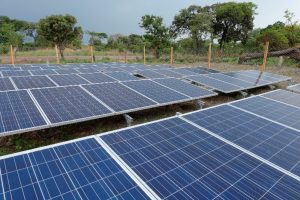
The growing importance of sustainable development and the shift to a low-carbon and climateresilient economy will require new skills and qualifications, offering great potential for the creation of green jobs but also implying structural changes and a transformation of existing jobs. The transition to a low-carbon and greener economy will generate millions of new jobs, negatively affect some high-emitting sectors, and alter most existing occupations in terms of task compositions and skills requirements.
Ensuring the right skills for green jobs is a prerequisite to make the transition to a greener economy happen. Today, skills gaps are already recognised as a major bottleneck in a number of sectors, such as renewable energy, energy and resource efficiency, green building or environmental services. The adoption and dissemination of clean technologies require skills in technology application, adaptation and maintenance. Skills are also crucial for economies and
businesses, workers and entrepreneurs to rapidly adapt to changes deriving from climate change and environmental policies.
Skills for transition to formality
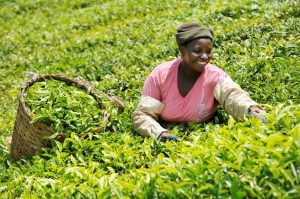
Most young people around the world do not have the chance to attend formal institutions of learning. The capacity of formal education and training systems is often limited due to inadequate training infrastructures and the relatively high costs of full-time, centre-based training. Consequently, large numbers of youth are learning and then working in the informal economy.
Informal apprenticeship systems that transmit the skills of a trade to a young person in a micro- or small enterprise have operated for generations in many countries. They are considered by far the most important source of skills training in Africa and South Asia.
Women and men in the informal economy often do not possess a formal proof of their skills. Skills acquired informally are not visible and hence are often not recognized by employers. Transitions to the formal labour market can also be facilitated if skills are assessed and recognized. Systems of Recognition of Prior Learning are being introduced by countries to offer access to further learning or to formal labour markets.
As the world transitions to a more sustainable society, the labor market is affected in various ways. New jobs are being created, some environmentally harmful jobs are disappearing, and many jobs require new skills. In this webinar Professor Tristram Hooley will discuss the challenges of providing career guidance during a period of environmental crisis.
Target group for this webinar will mainly be career guidance professionals, practitioners and teachers that are interested in guidance in the green transition.
Time: 13 November 2025 at 13:00-14:30 UTC+1
Place: Online (link)
More information: https://www.skolverket.se/kompetensutveckling/kalender-for-webbinarier-och-konferenser/gron-vagledning-for-en-hallbar-framtid---webbinarium
Europe and Central Asia
