Promotional material

Presentations, discussion papers, meeting reports, promotional materials, videos, fact sheets, brochures and newsletters on skills development for employment.

Thumbnail
Identifier
skpAIM
Slug
promotional-material

Rolling Out the Digital TVET in Ukraine: Activities Overview

Rolling Out the Digital TVET in Ukraine: Activities Overview

Type:
Document
Content Type:
Presentation
Language:

English

Slug
english
Identifier
skpEng
Sources:

ILO

The International Labour Organization is the tripartite U.N. agency that promotes Decent Work through employment, social security, labour standards and social dialogue. Its work on skills development is guided by the conceptual framework on Skills to improve productivity, employment growth, and development agreed in 2008 by representatives of Governments, Employers’ Associations and Workers’ Associations. Research, policy advice, and pilot projects and technical cooperation programmes to apply good practices in different circumstances across its 185 member States aims to boost the employability of workers, the productivity and competitiveness of enterprises, and the inclusiveness of economic growth. The ILO Secretariat in offices in 40 countries works with Ministries of Labour, employers’ organizations, and trade unions to integrate skills development into national and sector development strategies in order to better meet current labour market needs and to prepare for the jobs of the future; to expand access to employment-related training so that youth, persons with disabilities and other vulnerable groups are better able to acquire skills and secure productive and decent work; and to improve the ability of public employment services to provide career guidance, maintain labour exchange services, and deliver active labour market programmes.For more information regarding the ILO’s work on skills and employability go to: http://www.ilo.org/skills/lang--en/index.htm; for ILO/Cinterfor's Knowledge Management Plarform, see: http://www.oitcinterfor.org

Thumbnail
Identifier
skpILO
Slug
ilo
Topics:

Online and distance learning

Thumbnail

In view of the rapid socio-economic and technological changes, jobs and the skills required to perform them continue to evolve. Many jobs in labour intensive sectors, which tend to be occupied by economically vulnerable groups of people (such as women and the poorly educated), are at high risk of being automated. In this light, delivering job-relevant skills at a reasonable cost, especially for workers whose jobs are at risk, is important. If well implemented, ICTs in TVET have the potential to improve access to learning, to improve quality while decreasing costs, to make teaching and learning more relevant to people’s work and lives, and to encourage individuals to become lifelong learners.

Identifier
skpOnlDist
Slug
online-and-distance-learning

Training quality and relevance

Thumbnail
Identifier
skpTrainQR
Slug
training-quality-and-relevance
Knowledge Products:

Case studies and good practices

Case studies that document good practices and illustrate the benefits and lessons learnt of particular approaches or methods in real practice. 

Thumbnail
Identifier
skpCaseStdy
Slug
case-studies-and-good-practices

Promotional material

Presentations, discussion papers, meeting reports, promotional materials, videos, fact sheets, brochures and newsletters on skills development for employment.

Thumbnail
Identifier
skpAIM
Slug
promotional-material
Publication Date:
28 Jul 2021

Jointly with the Ministry of Education and Science if Ukraine, the ILO implements the project \'E-TVET in Ukraine: Training continuity and modernization during COVID-19 and beyond\'

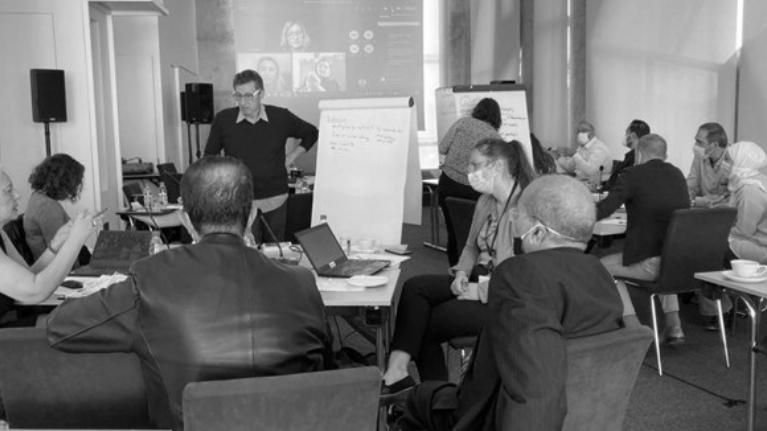
#ETVET The presentation gives a comprehensive overview of the activities of the ILO project  \'E-TVET in Ukraine: Training continuity and modernization during COVID-19 and beyond\' during the national conference ‘Education of opportunities - new horizons of vocational education and training in Ukraine’ organsied by the Ministry of Education and Science in Ukraine. 

Alessandra Molz, Skills and Employability Specialist, the ILO Office for Central and Eastern Europe, highlighted the  core activities implemented by the ILO to support the digitalisation of TVET in Ukraine: 

  • Methodological Innovations: Interactive multimedia materials developed by ILO help students in four occupations to study through mobile-friendly interactive e-Lessons, virtual simulators, 3D animations, and training videos. The e-Learning materials can easily be applied by all TVET schools in Ukraine. In addition, the project develops self-learning materials and interactive games on labor rights and gender equality. 
  • Capacity Building: As part of the project, ILO trained a cohort of methodologists, teachers and trainers from 24 regions of Ukraine in developing and facilitating e-Learning and blended-learning facilitators. The trainings also included representatives of the Social Partners (Workers\' and Employers\' Organsiations); 
  • National e-Platform: The ILO currently develops a national e-Learning platform for TVET, which will enable TVET schools, teachers and methodologists to share the learning materials and their experience, as well as to facilitate the collaboration between TVET schools. 

ABOUT

E-TVET in Ukraine: Training continuity and modernization during COVID-19
and beyond assists the Ministry of Education and Science of Ukraine in piloting E-learning in
TVET in four different occupations. The aim is to guarantee the continuity of vocational education during the pandemic through e-Learning and blended learning (a combination of e-Learning and face-to-face learning). Learn more.

Subject Tags:

Access to training

Slug
access-to-training
Identifier
683

Lifelong learning

Slug
lifelong-learning
Identifier
400

TVET systems

Slug
tvet-systems
Identifier
661
Regions:

Competency-Based Training (CBT): An Introductory Manual for Practitioners

Competency-Based Training (CBT): An Introductory Manual for Practitioners

Type:
Document
Content Type:
Project documentation
Language:

English

Slug
english
Identifier
skpEng
Sources:

ILO

The International Labour Organization is the tripartite U.N. agency that promotes Decent Work through employment, social security, labour standards and social dialogue. Its work on skills development is guided by the conceptual framework on Skills to improve productivity, employment growth, and development agreed in 2008 by representatives of Governments, Employers’ Associations and Workers’ Associations. Research, policy advice, and pilot projects and technical cooperation programmes to apply good practices in different circumstances across its 185 member States aims to boost the employability of workers, the productivity and competitiveness of enterprises, and the inclusiveness of economic growth. The ILO Secretariat in offices in 40 countries works with Ministries of Labour, employers’ organizations, and trade unions to integrate skills development into national and sector development strategies in order to better meet current labour market needs and to prepare for the jobs of the future; to expand access to employment-related training so that youth, persons with disabilities and other vulnerable groups are better able to acquire skills and secure productive and decent work; and to improve the ability of public employment services to provide career guidance, maintain labour exchange services, and deliver active labour market programmes.For more information regarding the ILO’s work on skills and employability go to: http://www.ilo.org/skills/lang--en/index.htm; for ILO/Cinterfor's Knowledge Management Plarform, see: http://www.oitcinterfor.org

Thumbnail
Identifier
skpILO
Slug
ilo
Topics:

Access to training

Thumbnail

Access for all to good quality education, vocational training and workplace learning is a fundamental principle of social cohesion and economic growth. Some groups of people may require targeted attention if they are to benefit from education, training and employment opportunities.  

This is particularly the case for disadvantaged youth, lower skilled workers, people with disabilities, and people in rural communities. The attractiveness of vocational education and training is enhanced when combined with entrepreneurship training and when public policies encourage utilization of higher skills by business. 
 

Identifier
skpATSU
Slug
access-to-training
Knowledge Products:

Promotional material

Presentations, discussion papers, meeting reports, promotional materials, videos, fact sheets, brochures and newsletters on skills development for employment.

Thumbnail
Identifier
skpAIM
Slug
promotional-material
Publication Date:
27 Jul 2021
Infographic The competency-based training (CBT) approach to TVET is highly effective to ensure that training programmes remain relevant to the labour market.
Subject Tags:

TVET systems

Slug
tvet-systems
Identifier
661
Regions:

Arab States

Region Image

ILO Skills and Lifelong Learning Newsletter – June 2021

ILO Skills and Lifelong Learning Newsletter – June 2021

Type:
Newsletter
Start Date:
01 Jun 2024
Language:

English

Slug
english
Identifier
skpEng
Sources:

ILO

The International Labour Organization is the tripartite U.N. agency that promotes Decent Work through employment, social security, labour standards and social dialogue. Its work on skills development is guided by the conceptual framework on Skills to improve productivity, employment growth, and development agreed in 2008 by representatives of Governments, Employers’ Associations and Workers’ Associations. Research, policy advice, and pilot projects and technical cooperation programmes to apply good practices in different circumstances across its 185 member States aims to boost the employability of workers, the productivity and competitiveness of enterprises, and the inclusiveness of economic growth. The ILO Secretariat in offices in 40 countries works with Ministries of Labour, employers’ organizations, and trade unions to integrate skills development into national and sector development strategies in order to better meet current labour market needs and to prepare for the jobs of the future; to expand access to employment-related training so that youth, persons with disabilities and other vulnerable groups are better able to acquire skills and secure productive and decent work; and to improve the ability of public employment services to provide career guidance, maintain labour exchange services, and deliver active labour market programmes.For more information regarding the ILO’s work on skills and employability go to: http://www.ilo.org/skills/lang--en/index.htm; for ILO/Cinterfor's Knowledge Management Plarform, see: http://www.oitcinterfor.org

Thumbnail
Identifier
skpILO
Slug
ilo
Topics:

Access to training

Thumbnail

Access for all to good quality education, vocational training and workplace learning is a fundamental principle of social cohesion and economic growth. Some groups of people may require targeted attention if they are to benefit from education, training and employment opportunities.  

This is particularly the case for disadvantaged youth, lower skilled workers, people with disabilities, and people in rural communities. The attractiveness of vocational education and training is enhanced when combined with entrepreneurship training and when public policies encourage utilization of higher skills by business. 
 

Identifier
skpATSU
Slug
access-to-training

Anticipating and matching skills needs

Thumbnail

Anticipating and building skills for the future is essential to a rapidly changing labour market. This applies to changes in the types and levels of skills needed as well as in occupational and technical areas. Effective methods to anticipate future skills needs and avoid potential mismatches include: sustained dialogue between employers and trainers, coordination across government institutions, labour market information systems, employment services and performance reviews of training institutions. 

Identifier
skpAFSN
Slug
anticipating-and-matching-skills-needs

Career guidance and employment services

Thumbnail

Career guidance and counselling, career education and lifelong development of skills for employability are key for success in learning activities, effective career transitions, livelihood planning, entrepreneurship and in increasing labour market participation. They are instrumental in promoting skills utilization, recognition (RPL), as well as in improving enterprise human resource management.

Career development activities encompass a wide variety of support activities including career information and advice, counselling, work exposure (e.g. job shadowing, work experience periods), assessment, coaching, mentoring, professional networking, advocacy, basic and employability skills training (curricular and non-curricular) and entrepreneurship training. It is often an area which is fragmented across different ministries (e.g. education, TVET, employment, youth) requiring an effort to achieve the necessary coordination to provide adequate support to individuals during learning, employment and unemployment/inactivity periods.
 

Identifier
skpLMIES
Slug
career-guidance-and-employment-services
Knowledge Products:

Promotional material

Presentations, discussion papers, meeting reports, promotional materials, videos, fact sheets, brochures and newsletters on skills development for employment.

Thumbnail
Identifier
skpAIM
Slug
promotional-material

Monthly Newsletter of the ILO SKILLS Branch

The ILO Skills and Lifelong Learning monthly newsletter highlights recently uploaded publications, reports, research items, videos and upcoming events on skills development and lifelong learning.

Sign up to receive the Newsletter by clicking here.

Subject Tags:

Access to training

Slug
access-to-training
Identifier
683
Regions:
Countries and territories:
Economic groups:
--

ILO Skills and Lifelong Learning Newsletter – May 2021

ILO Skills and Lifelong Learning Newsletter – May 2021

Type:
Newsletter
Start Date:
01 May 2021
Language:

English

Slug
english
Identifier
skpEng
Sources:

ILO

The International Labour Organization is the tripartite U.N. agency that promotes Decent Work through employment, social security, labour standards and social dialogue. Its work on skills development is guided by the conceptual framework on Skills to improve productivity, employment growth, and development agreed in 2008 by representatives of Governments, Employers’ Associations and Workers’ Associations. Research, policy advice, and pilot projects and technical cooperation programmes to apply good practices in different circumstances across its 185 member States aims to boost the employability of workers, the productivity and competitiveness of enterprises, and the inclusiveness of economic growth. The ILO Secretariat in offices in 40 countries works with Ministries of Labour, employers’ organizations, and trade unions to integrate skills development into national and sector development strategies in order to better meet current labour market needs and to prepare for the jobs of the future; to expand access to employment-related training so that youth, persons with disabilities and other vulnerable groups are better able to acquire skills and secure productive and decent work; and to improve the ability of public employment services to provide career guidance, maintain labour exchange services, and deliver active labour market programmes.For more information regarding the ILO’s work on skills and employability go to: http://www.ilo.org/skills/lang--en/index.htm; for ILO/Cinterfor's Knowledge Management Plarform, see: http://www.oitcinterfor.org

Thumbnail
Identifier
skpILO
Slug
ilo
Topics:

Access to training

Thumbnail

Access for all to good quality education, vocational training and workplace learning is a fundamental principle of social cohesion and economic growth. Some groups of people may require targeted attention if they are to benefit from education, training and employment opportunities.  

This is particularly the case for disadvantaged youth, lower skilled workers, people with disabilities, and people in rural communities. The attractiveness of vocational education and training is enhanced when combined with entrepreneurship training and when public policies encourage utilization of higher skills by business. 
 

Identifier
skpATSU
Slug
access-to-training

Anticipating and matching skills needs

Thumbnail

Anticipating and building skills for the future is essential to a rapidly changing labour market. This applies to changes in the types and levels of skills needed as well as in occupational and technical areas. Effective methods to anticipate future skills needs and avoid potential mismatches include: sustained dialogue between employers and trainers, coordination across government institutions, labour market information systems, employment services and performance reviews of training institutions. 

Identifier
skpAFSN
Slug
anticipating-and-matching-skills-needs

Training quality and relevance

Thumbnail
Identifier
skpTrainQR
Slug
training-quality-and-relevance
Knowledge Products:

Promotional material

Presentations, discussion papers, meeting reports, promotional materials, videos, fact sheets, brochures and newsletters on skills development for employment.

Thumbnail
Identifier
skpAIM
Slug
promotional-material

Monthly Newsletter of the ILO SKILLS Branch

The ILO Skills and Lifelong Learning monthly newsletter highlights recently uploaded publications, reports, research items, videos and upcoming events on skills development and lifelong learning.

Sign up to receive the Newsletter by clicking here.

Subject Tags:

Skills indicators

Slug
skills-indicators
Identifier
653
Regions:
Countries and territories:
Economic groups:
--

Skills Virtual Fair: South-south and triangular cooperation

Skills Virtual Fair: South-south and triangular cooperation

Type:
Document
Content Type:
Meeting document
Language:

English

Slug
english
Identifier
skpEng
Sources:

ILO

The International Labour Organization is the tripartite U.N. agency that promotes Decent Work through employment, social security, labour standards and social dialogue. Its work on skills development is guided by the conceptual framework on Skills to improve productivity, employment growth, and development agreed in 2008 by representatives of Governments, Employers’ Associations and Workers’ Associations. Research, policy advice, and pilot projects and technical cooperation programmes to apply good practices in different circumstances across its 185 member States aims to boost the employability of workers, the productivity and competitiveness of enterprises, and the inclusiveness of economic growth. The ILO Secretariat in offices in 40 countries works with Ministries of Labour, employers’ organizations, and trade unions to integrate skills development into national and sector development strategies in order to better meet current labour market needs and to prepare for the jobs of the future; to expand access to employment-related training so that youth, persons with disabilities and other vulnerable groups are better able to acquire skills and secure productive and decent work; and to improve the ability of public employment services to provide career guidance, maintain labour exchange services, and deliver active labour market programmes.For more information regarding the ILO’s work on skills and employability go to: http://www.ilo.org/skills/lang--en/index.htm; for ILO/Cinterfor's Knowledge Management Plarform, see: http://www.oitcinterfor.org

Thumbnail
Identifier
skpILO
Slug
ilo
Topics:

Access to training

Thumbnail

Access for all to good quality education, vocational training and workplace learning is a fundamental principle of social cohesion and economic growth. Some groups of people may require targeted attention if they are to benefit from education, training and employment opportunities.  

This is particularly the case for disadvantaged youth, lower skilled workers, people with disabilities, and people in rural communities. The attractiveness of vocational education and training is enhanced when combined with entrepreneurship training and when public policies encourage utilization of higher skills by business. 
 

Identifier
skpATSU
Slug
access-to-training

Apprenticeships

Thumbnail

Quality apprenticeships based on robust social dialogue and public-private partnerships can improve employment prospects for young people while developing high level skills identified by employers as necessary for growth and increased productivity. Both informal and regulated apprenticeship systems are important learning resources enabling young people to overcome the work-inexperience trap, gain new and enhanced skills and recognized qualifications.

Upgrading informal apprenticeships and expanding regulated ones is a cost-effective way to invest in a country’s skills base, promote economic growth and enhance the employability of youth.

Identifier
skpAppren
Slug
apprenticeships

Digital skills

Thumbnail

The world of work is undergoing a substantial transformation due to new forces. In particular, technological advances, such as AI, automation and robotics, have produced numerous new opportunities, but also given rise to urgent challenges. While new jobs are constantly being created with the emergence of the digital economy, many jobs are at risk of becoming obsolete. Digital innovations will rapidly change the demand for skills, thereby creating a wider skills gap that has the potential to hold back economic growth. Equipping people with basic or advanced digital skills promises to prepare them for unprecedented job opportunities in the digital economy. This will lead to innovation, higher productivity and competitiveness, as well as expanding markets, access to work and entrepreneurship opportunities. 

Identifier
skpdigskills
Slug
digital-skills
Knowledge Products:

Case studies and good practices

Case studies that document good practices and illustrate the benefits and lessons learnt of particular approaches or methods in real practice. 

Thumbnail
Identifier
skpCaseStdy
Slug
case-studies-and-good-practices

Promotional material

Presentations, discussion papers, meeting reports, promotional materials, videos, fact sheets, brochures and newsletters on skills development for employment.

Thumbnail
Identifier
skpAIM
Slug
promotional-material

Research papers

Working papers, reports, and other publications from international organizations, academic institutions and bilateral agencies. Research findings to stimulate informed debate on skills, employment and productivity issues. 

Thumbnail
Identifier
skpRPS
Slug
research-papers
Publication Date:
25 May 2021

The first ILO Skills Virtual Fair aimed to foster South-South and Triangular Cooperation (SSTC), to tackle specific skills development challenges. It focused on four main topics: 1) quality apprenticeships; 2) skills needs anticipation; 3) digital skills and digital transformation; and 4) skills in agriculture. 

The Fair gathered more than 1,000 registered participants from 132 countries and included over 10 panel discussions with policy-makers and representatives of training institutions from Africa, Asia and the Americas. The Fair also featured thirty-nine virtual booths highlighting examples of good practices and digital solutions for skills development.

Participants had the opportunity to present innovations, engage and exchange knowledge and experiences directly with others to broaden their networks and build partnerships. As a direct positive result of the two-days virtual event, at least six new partnerships were developed among partners from South Africa, India, Switzerland, Democratic Republic of Congo, Vietnam, Brazil and Tanzania.

You can find the video recording of the sessions and the contents shared by participants by clicking on the links provided below.

Recording of the sessions (videos)

Day 1: 21 April

Day 2: 22 April


Exhibition Booths and Tech Fair content available here.


Subject Tags:

Access to training

Slug
access-to-training
Identifier
683

Apprenticeships

Slug
apprenticeships
Identifier
639

Skills anticipation

Slug
skills-anticipation
Identifier
677
Regions:

Skills Virtual Fair: South-south and triangular cooperationd triangular cooperation - Repository page 1

Skills Virtual Fair: South-south and triangular cooperationd triangular cooperation - Repository page 1

Type:
Document
Content Type:
Meeting document
Language:

English

Slug
english
Identifier
skpEng
Sources:

ILO

The International Labour Organization is the tripartite U.N. agency that promotes Decent Work through employment, social security, labour standards and social dialogue. Its work on skills development is guided by the conceptual framework on Skills to improve productivity, employment growth, and development agreed in 2008 by representatives of Governments, Employers’ Associations and Workers’ Associations. Research, policy advice, and pilot projects and technical cooperation programmes to apply good practices in different circumstances across its 185 member States aims to boost the employability of workers, the productivity and competitiveness of enterprises, and the inclusiveness of economic growth. The ILO Secretariat in offices in 40 countries works with Ministries of Labour, employers’ organizations, and trade unions to integrate skills development into national and sector development strategies in order to better meet current labour market needs and to prepare for the jobs of the future; to expand access to employment-related training so that youth, persons with disabilities and other vulnerable groups are better able to acquire skills and secure productive and decent work; and to improve the ability of public employment services to provide career guidance, maintain labour exchange services, and deliver active labour market programmes.For more information regarding the ILO’s work on skills and employability go to: http://www.ilo.org/skills/lang--en/index.htm; for ILO/Cinterfor's Knowledge Management Plarform, see: http://www.oitcinterfor.org

Thumbnail
Identifier
skpILO
Slug
ilo
Topics:

Access to training

Thumbnail

Access for all to good quality education, vocational training and workplace learning is a fundamental principle of social cohesion and economic growth. Some groups of people may require targeted attention if they are to benefit from education, training and employment opportunities.  

This is particularly the case for disadvantaged youth, lower skilled workers, people with disabilities, and people in rural communities. The attractiveness of vocational education and training is enhanced when combined with entrepreneurship training and when public policies encourage utilization of higher skills by business. 
 

Identifier
skpATSU
Slug
access-to-training

Apprenticeships

Thumbnail

Quality apprenticeships based on robust social dialogue and public-private partnerships can improve employment prospects for young people while developing high level skills identified by employers as necessary for growth and increased productivity. Both informal and regulated apprenticeship systems are important learning resources enabling young people to overcome the work-inexperience trap, gain new and enhanced skills and recognized qualifications.

Upgrading informal apprenticeships and expanding regulated ones is a cost-effective way to invest in a country’s skills base, promote economic growth and enhance the employability of youth.

Identifier
skpAppren
Slug
apprenticeships

Digital skills

Thumbnail

The world of work is undergoing a substantial transformation due to new forces. In particular, technological advances, such as AI, automation and robotics, have produced numerous new opportunities, but also given rise to urgent challenges. While new jobs are constantly being created with the emergence of the digital economy, many jobs are at risk of becoming obsolete. Digital innovations will rapidly change the demand for skills, thereby creating a wider skills gap that has the potential to hold back economic growth. Equipping people with basic or advanced digital skills promises to prepare them for unprecedented job opportunities in the digital economy. This will lead to innovation, higher productivity and competitiveness, as well as expanding markets, access to work and entrepreneurship opportunities. 

Identifier
skpdigskills
Slug
digital-skills

Lifelong learning

Thumbnail

There is a critical need for a greater overall investment in education and training, particularly in developing countries. Education and training investments should be closely linked to economic and employment growth strategies and programmes. Responsibility should be shared between the government (primary responsibility), enterprises, the social partners, and the individual. To make lifelong learning for all a reality, countries will need to make major reforms of their vocational and education and training systems. School-to-work schemes for young people should integrate education with workplace learning. Training systems need to become more flexible and responsive to rapidly changing skill requirements. Reforms should also focus on how learning can be facilitated, not just on training for specific occupational categories.

Identifier
skpPSLLL
Slug
lifelong-learning
Knowledge Products:

Case studies and good practices

Case studies that document good practices and illustrate the benefits and lessons learnt of particular approaches or methods in real practice. 

Thumbnail
Identifier
skpCaseStdy
Slug
case-studies-and-good-practices

Promotional material

Presentations, discussion papers, meeting reports, promotional materials, videos, fact sheets, brochures and newsletters on skills development for employment.

Thumbnail
Identifier
skpAIM
Slug
promotional-material

Research papers

Working papers, reports, and other publications from international organizations, academic institutions and bilateral agencies. Research findings to stimulate informed debate on skills, employment and productivity issues. 

Thumbnail
Identifier
skpRPS
Slug
research-papers
Publication Date:
25 May 2021

The first ILO Skills Virtual Fair aimed to foster South-South and Triangular Cooperation (SSTC), to tackle specific skills development challenges. It focused on four main topics: 1) quality apprenticeships; 2) skills needs anticipation; 3) digital skills and digital transformation; and 4) skills in agriculture. 

The Fair gathered more than 1,000 registered participants from 132 countries and included over 10 panel discussions with policy-makers and representatives of training institutions from Africa, Asia and the Americas. The Fair also featured thirty-nine virtual booths highlighting examples of good practices and digital solutions for skills development.

Participants had the opportunity to present innovations, engage and exchange knowledge and experiences directly with others to broaden their networks and build partnerships. As a direct positive result of the two-days virtual event, at least six new partnerships were developed among partners from South Africa, India, Switzerland, Democratic Republic of Congo, Vietnam, Brazil and Tanzania.

You can find the video recording of the sessions and the contents shared by participants by clicking on the links provided below.

Recording of the sessions (videos)

Day 1: 21 April

Day 2: 22 April


Exhibition Booths and Tech Fair content available here.


Subject Tags:

Access to training

Slug
access-to-training
Identifier
683

Apprenticeships

Slug
apprenticeships
Identifier
639

Skills anticipation

Slug
skills-anticipation
Identifier
677
Regions:

Skills Virtual Fair: South-south and triangular cooperation. Exhibition Booths and Tech Fair

Skills Virtual Fair: South-south and triangular cooperation. Exhibition Booths and Tech Fair

Type:
Document
Content Type:
Meeting document
Language:

English

Slug
english
Identifier
skpEng
Sources:

ILO

The International Labour Organization is the tripartite U.N. agency that promotes Decent Work through employment, social security, labour standards and social dialogue. Its work on skills development is guided by the conceptual framework on Skills to improve productivity, employment growth, and development agreed in 2008 by representatives of Governments, Employers’ Associations and Workers’ Associations. Research, policy advice, and pilot projects and technical cooperation programmes to apply good practices in different circumstances across its 185 member States aims to boost the employability of workers, the productivity and competitiveness of enterprises, and the inclusiveness of economic growth. The ILO Secretariat in offices in 40 countries works with Ministries of Labour, employers’ organizations, and trade unions to integrate skills development into national and sector development strategies in order to better meet current labour market needs and to prepare for the jobs of the future; to expand access to employment-related training so that youth, persons with disabilities and other vulnerable groups are better able to acquire skills and secure productive and decent work; and to improve the ability of public employment services to provide career guidance, maintain labour exchange services, and deliver active labour market programmes.For more information regarding the ILO’s work on skills and employability go to: http://www.ilo.org/skills/lang--en/index.htm; for ILO/Cinterfor's Knowledge Management Plarform, see: http://www.oitcinterfor.org

Thumbnail
Identifier
skpILO
Slug
ilo
Topics:

Access to training

Thumbnail

Access for all to good quality education, vocational training and workplace learning is a fundamental principle of social cohesion and economic growth. Some groups of people may require targeted attention if they are to benefit from education, training and employment opportunities.  

This is particularly the case for disadvantaged youth, lower skilled workers, people with disabilities, and people in rural communities. The attractiveness of vocational education and training is enhanced when combined with entrepreneurship training and when public policies encourage utilization of higher skills by business. 
 

Identifier
skpATSU
Slug
access-to-training

Anticipating and matching skills needs

Thumbnail

Anticipating and building skills for the future is essential to a rapidly changing labour market. This applies to changes in the types and levels of skills needed as well as in occupational and technical areas. Effective methods to anticipate future skills needs and avoid potential mismatches include: sustained dialogue between employers and trainers, coordination across government institutions, labour market information systems, employment services and performance reviews of training institutions. 

Identifier
skpAFSN
Slug
anticipating-and-matching-skills-needs

Digital skills

Thumbnail

The world of work is undergoing a substantial transformation due to new forces. In particular, technological advances, such as AI, automation and robotics, have produced numerous new opportunities, but also given rise to urgent challenges. While new jobs are constantly being created with the emergence of the digital economy, many jobs are at risk of becoming obsolete. Digital innovations will rapidly change the demand for skills, thereby creating a wider skills gap that has the potential to hold back economic growth. Equipping people with basic or advanced digital skills promises to prepare them for unprecedented job opportunities in the digital economy. This will lead to innovation, higher productivity and competitiveness, as well as expanding markets, access to work and entrepreneurship opportunities. 

Identifier
skpdigskills
Slug
digital-skills

Lifelong learning

Thumbnail

There is a critical need for a greater overall investment in education and training, particularly in developing countries. Education and training investments should be closely linked to economic and employment growth strategies and programmes. Responsibility should be shared between the government (primary responsibility), enterprises, the social partners, and the individual. To make lifelong learning for all a reality, countries will need to make major reforms of their vocational and education and training systems. School-to-work schemes for young people should integrate education with workplace learning. Training systems need to become more flexible and responsive to rapidly changing skill requirements. Reforms should also focus on how learning can be facilitated, not just on training for specific occupational categories.

Identifier
skpPSLLL
Slug
lifelong-learning
Knowledge Products:

Case studies and good practices

Case studies that document good practices and illustrate the benefits and lessons learnt of particular approaches or methods in real practice. 

Thumbnail
Identifier
skpCaseStdy
Slug
case-studies-and-good-practices

National policies and initiatives

National legislation, policies and initiatives on the issue of training and skills development and the world of work. 

Thumbnail
Identifier
skpNatPol
Slug
national-policies-and-initiatives

Promotional material

Presentations, discussion papers, meeting reports, promotional materials, videos, fact sheets, brochures and newsletters on skills development for employment.

Thumbnail
Identifier
skpAIM
Slug
promotional-material

Research papers

Working papers, reports, and other publications from international organizations, academic institutions and bilateral agencies. Research findings to stimulate informed debate on skills, employment and productivity issues. 

Thumbnail
Identifier
skpRPS
Slug
research-papers
Publication Date:
12 May 2021

You can find the contents shared by presenters at the online Exhibition Booths and Tech Fair by clicking on the links provided below.

Exhibition Booths

Agence Tunisienne de la Formation Professionnelle (ATFP)

American University of Beirut - Environment and Sustainable Development Unit

Domestic Workers Association of Zimbabwe

GAN Global

Gemini Africa

Head-On-Nails

INFOTEP - Dominican Republic

INTECAP – Guatemala

Kenya National Qualifications Authority (KNQA)

Luminus Education – Jordan

National Skill Development Corporation (NSDC) – India

OIT CINTERFOR

Punjab Skills Development Fund (PSDF)

QOOT - Lebanon AgriFood Innovation Cluster

Quality Council for Trades and Occupations (QCTO) - South Africa 

SKILLMAN

Tertiary and Vocational Education Commission - Sri Lanka

TESDA – Philippines

Top Skills Ltd

UNIDO Learning and Knowledge Development Facility (LKDF)

Vocational Training and Employment Center (VTEC) – Egypt


Tech Fair

EON Reality

Funzi 

Realto & iVideo (Swiss Federal Institute for Vocational Education and Training) 

SkillLab

ProAbled

UNICEF - Learning Passport

Localized

SKOLKOVO


Subject Tags:

Access to training

Slug
access-to-training
Identifier
683

TVET systems

Slug
tvet-systems
Identifier
661
Regions:

Skills Virtual Fair: South-south and triangular cooperation

Skills Virtual Fair: South-south and triangular cooperation

Type:
Document
Content Type:
Meeting document
Language:

English

Slug
english
Identifier
skpEng
Sources:

ILO

The International Labour Organization is the tripartite U.N. agency that promotes Decent Work through employment, social security, labour standards and social dialogue. Its work on skills development is guided by the conceptual framework on Skills to improve productivity, employment growth, and development agreed in 2008 by representatives of Governments, Employers’ Associations and Workers’ Associations. Research, policy advice, and pilot projects and technical cooperation programmes to apply good practices in different circumstances across its 185 member States aims to boost the employability of workers, the productivity and competitiveness of enterprises, and the inclusiveness of economic growth. The ILO Secretariat in offices in 40 countries works with Ministries of Labour, employers’ organizations, and trade unions to integrate skills development into national and sector development strategies in order to better meet current labour market needs and to prepare for the jobs of the future; to expand access to employment-related training so that youth, persons with disabilities and other vulnerable groups are better able to acquire skills and secure productive and decent work; and to improve the ability of public employment services to provide career guidance, maintain labour exchange services, and deliver active labour market programmes.For more information regarding the ILO’s work on skills and employability go to: http://www.ilo.org/skills/lang--en/index.htm; for ILO/Cinterfor's Knowledge Management Plarform, see: http://www.oitcinterfor.org

Thumbnail
Identifier
skpILO
Slug
ilo
Topics:

Access to training

Thumbnail

Access for all to good quality education, vocational training and workplace learning is a fundamental principle of social cohesion and economic growth. Some groups of people may require targeted attention if they are to benefit from education, training and employment opportunities.  

This is particularly the case for disadvantaged youth, lower skilled workers, people with disabilities, and people in rural communities. The attractiveness of vocational education and training is enhanced when combined with entrepreneurship training and when public policies encourage utilization of higher skills by business. 
 

Identifier
skpATSU
Slug
access-to-training

Digital skills

Thumbnail

The world of work is undergoing a substantial transformation due to new forces. In particular, technological advances, such as AI, automation and robotics, have produced numerous new opportunities, but also given rise to urgent challenges. While new jobs are constantly being created with the emergence of the digital economy, many jobs are at risk of becoming obsolete. Digital innovations will rapidly change the demand for skills, thereby creating a wider skills gap that has the potential to hold back economic growth. Equipping people with basic or advanced digital skills promises to prepare them for unprecedented job opportunities in the digital economy. This will lead to innovation, higher productivity and competitiveness, as well as expanding markets, access to work and entrepreneurship opportunities. 

Identifier
skpdigskills
Slug
digital-skills

Lifelong learning

Thumbnail

There is a critical need for a greater overall investment in education and training, particularly in developing countries. Education and training investments should be closely linked to economic and employment growth strategies and programmes. Responsibility should be shared between the government (primary responsibility), enterprises, the social partners, and the individual. To make lifelong learning for all a reality, countries will need to make major reforms of their vocational and education and training systems. School-to-work schemes for young people should integrate education with workplace learning. Training systems need to become more flexible and responsive to rapidly changing skill requirements. Reforms should also focus on how learning can be facilitated, not just on training for specific occupational categories.

Identifier
skpPSLLL
Slug
lifelong-learning
Knowledge Products:

Case studies and good practices

Case studies that document good practices and illustrate the benefits and lessons learnt of particular approaches or methods in real practice. 

Thumbnail
Identifier
skpCaseStdy
Slug
case-studies-and-good-practices

Promotional material

Presentations, discussion papers, meeting reports, promotional materials, videos, fact sheets, brochures and newsletters on skills development for employment.

Thumbnail
Identifier
skpAIM
Slug
promotional-material

Research papers

Working papers, reports, and other publications from international organizations, academic institutions and bilateral agencies. Research findings to stimulate informed debate on skills, employment and productivity issues. 

Thumbnail
Identifier
skpRPS
Slug
research-papers
Publication Date:
12 May 2021

The first ILO Skills Virtual Fair aimed to foster South-South and Triangular Cooperation (SSTC), to tackle specific skills development challenges. It focused on four main topics: 1) quality apprenticeships; 2) skills needs anticipation; 3) digital skills and digital transformation; and 4) skills in agriculture. 

The Fair gathered more than 1,000 registered participants from 132 countries and included over 10 panel discussions with policy-makers and representatives of training institutions from Africa, Asia and the Americas. The Fair also featured thirty-nine virtual booths highlighting examples of good practices and digital solutions for skills development.

Participants had the opportunity to present innovations, engage and exchange knowledge and experiences directly with others to broaden their networks and build partnerships. As a direct positive result of the two-days virtual event, at least six new partnerships were developed among partners from South Africa, India, Switzerland, Democratic Republic of Congo, Vietnam, Brazil and Tanzania.

You can find the video recording of the sessions and the contents shared by participants by clicking on the links provided below.

Recording of the sessions (videos)

Day 1: 21 April

Day 2: 22 April


Exhibition Booths and Tech Fair content available here.


Subject Tags:

Access to training

Slug
access-to-training
Identifier
683

Apprenticeships

Slug
apprenticeships
Identifier
639

Skills anticipation

Slug
skills-anticipation
Identifier
677
Regions:

ILO Skills and Lifelong Learning Newsletter – April 2021

ILO Skills and Lifelong Learning Newsletter – April 2021

Type:
Newsletter
Start Date:
01 Apr 2021
Language:

English

Slug
english
Identifier
skpEng
Sources:

ILO

The International Labour Organization is the tripartite U.N. agency that promotes Decent Work through employment, social security, labour standards and social dialogue. Its work on skills development is guided by the conceptual framework on Skills to improve productivity, employment growth, and development agreed in 2008 by representatives of Governments, Employers’ Associations and Workers’ Associations. Research, policy advice, and pilot projects and technical cooperation programmes to apply good practices in different circumstances across its 185 member States aims to boost the employability of workers, the productivity and competitiveness of enterprises, and the inclusiveness of economic growth. The ILO Secretariat in offices in 40 countries works with Ministries of Labour, employers’ organizations, and trade unions to integrate skills development into national and sector development strategies in order to better meet current labour market needs and to prepare for the jobs of the future; to expand access to employment-related training so that youth, persons with disabilities and other vulnerable groups are better able to acquire skills and secure productive and decent work; and to improve the ability of public employment services to provide career guidance, maintain labour exchange services, and deliver active labour market programmes.For more information regarding the ILO’s work on skills and employability go to: http://www.ilo.org/skills/lang--en/index.htm; for ILO/Cinterfor's Knowledge Management Plarform, see: http://www.oitcinterfor.org

Thumbnail
Identifier
skpILO
Slug
ilo
Topics:

Access to training

Thumbnail

Access for all to good quality education, vocational training and workplace learning is a fundamental principle of social cohesion and economic growth. Some groups of people may require targeted attention if they are to benefit from education, training and employment opportunities.  

This is particularly the case for disadvantaged youth, lower skilled workers, people with disabilities, and people in rural communities. The attractiveness of vocational education and training is enhanced when combined with entrepreneurship training and when public policies encourage utilization of higher skills by business. 
 

Identifier
skpATSU
Slug
access-to-training

Anticipating and matching skills needs

Thumbnail

Anticipating and building skills for the future is essential to a rapidly changing labour market. This applies to changes in the types and levels of skills needed as well as in occupational and technical areas. Effective methods to anticipate future skills needs and avoid potential mismatches include: sustained dialogue between employers and trainers, coordination across government institutions, labour market information systems, employment services and performance reviews of training institutions. 

Identifier
skpAFSN
Slug
anticipating-and-matching-skills-needs

Skills for green transition/climate action

Thumbnail

The growing importance of sustainable development and the shift to a low-carbon and climateresilient economy will require new skills and qualifications, offering great potential for the creation of green jobs but also implying structural changes and a transformation of existing jobs. The transition to a low-carbon and greener economy will generate millions of new jobs, negatively affect some high-emitting sectors, and alter most existing occupations in terms of task compositions and skills requirements. 

Ensuring the right skills for green jobs is a prerequisite to make the transition to a greener economy happen. Today, skills gaps are already recognised as a major bottleneck in a number of sectors, such as renewable energy, energy and resource efficiency, green building or environmental services. The adoption and dissemination of clean technologies require skills in technology application, adaptation and maintenance. Skills are also crucial for economies and
businesses, workers and entrepreneurs to rapidly adapt to changes deriving from climate change and environmental policies. 

Identifier
skpGreen
Slug
skills-for-green-transition-climate-action
Knowledge Products:

Promotional material

Presentations, discussion papers, meeting reports, promotional materials, videos, fact sheets, brochures and newsletters on skills development for employment.

Thumbnail
Identifier
skpAIM
Slug
promotional-material

Monthly Newsletter of the ILO SKILLS Branch: click here to get it.

The ILO Skills and Lifelong Learning monthly newsletter highlights recently uploaded publications, reports, research items, videos, and upcoming events on skills development and lifelong learning.

To sign up to receive the Newsletter by email click here.

Subject Tags:

Access to training

Slug
access-to-training
Identifier
683
Regions:
Countries and territories:
Economic groups:
--

Blog: Digitalisation and the dual training system: can it prepare young apprentices for a digital world of work?

Blog: Digitalisation and the dual training system: can it prepare young apprentices for a digital world of work?

Type:
Blog
Language:

English

Slug
english
Identifier
skpEng
Sources:

Other sources

Experts from many international, regional and national agencies generously share their views, experiences and findings on skills, helping policy-makers among other stakeholders to understand the linkages between education, training and the world of work, and how to integrate skills into national development planning to promote employment and economic growth.

Thumbnail
Identifier
skpOSource
Slug
other-sources
Authors:
Flake, R.
Topics:
Publication Date:
12 Apr 2021

Article by Dr. Regina Flake, Senior Economist at the German Economic Institute, Cologne, Germany.

Many apprentices in companies belong to the generation of the so-called “digital natives”. They grew up with computers, smartphones and other digital devices and aren’t afraid of new digital technologies. Yet the fact that they are more digitally competent doesn’t mean they also have better math or reading skills than the previous generations of apprentices.

Some German companies have found a way to make use of the affinity of young apprentices for new digital technologies to improve the quality of their apprenticeship training. They do this by introducing E-learning tools that support their apprentices – often in a playful way – in subjects in which they need supplementary assistance. This helps guarantee that the apprentices can successfully follow training, both practical within companies as well as theoretical, within vocational schools. One prerequisite for this approach is that not only the apprentices, but also the in-company trainers are open to change and have the necessary competencies to make use of new digital tools.

To read the rest of this article, click on the PDF below.

Subject Tags:

Apprenticeships

Slug
apprenticeships
Identifier
639
Countries and territories:
Economic groups:
--