Promotional material

Presentations, discussion papers, meeting reports, promotional materials, videos, fact sheets, brochures and newsletters on skills development for employment.

Thumbnail
Identifier
skpAIM
Slug
promotional-material

Information Note: Training for Rural Economic Empowerment (TREE)

Information Note: Training for Rural Economic Empowerment (TREE)

Type:
Document
Content Type:
Information Note: Training for Rural Economic Empowerment (TREE)
Language:

English

Slug
english
Identifier
skpEng
Sources:

ILO

The International Labour Organization is the tripartite U.N. agency that promotes Decent Work through employment, social security, labour standards and social dialogue. Its work on skills development is guided by the conceptual framework on Skills to improve productivity, employment growth, and development agreed in 2008 by representatives of Governments, Employers’ Associations and Workers’ Associations. Research, policy advice, and pilot projects and technical cooperation programmes to apply good practices in different circumstances across its 185 member States aims to boost the employability of workers, the productivity and competitiveness of enterprises, and the inclusiveness of economic growth. The ILO Secretariat in offices in 40 countries works with Ministries of Labour, employers’ organizations, and trade unions to integrate skills development into national and sector development strategies in order to better meet current labour market needs and to prepare for the jobs of the future; to expand access to employment-related training so that youth, persons with disabilities and other vulnerable groups are better able to acquire skills and secure productive and decent work; and to improve the ability of public employment services to provide career guidance, maintain labour exchange services, and deliver active labour market programmes.For more information regarding the ILO’s work on skills and employability go to: http://www.ilo.org/skills/lang--en/index.htm; for ILO/Cinterfor's Knowledge Management Plarform, see: http://www.oitcinterfor.org

Thumbnail
Identifier
skpILO
Slug
ilo
Topics:

Rural employment

Thumbnail

Eight out of 10 of the world’s working poor who live on US $1.25 per day live in rural areas, where many are caught in vulnerable employment, especially in agriculture.Flourishing rural areas are vital to regional and national development. Yet, rural economies tend to face a wide range of challenges that urban areas are more likely to overcome. These include access to transportation, sanitation and health services, and a consumer base in close proximity to support small and medium enterprise development. Women and men working in rural areas also face difficulties associated with a paucity of economic opportunities, under investment, poor infrastructure and public services, including education, and, in many cases, weak governance and underdeveloped markets.

Education, entrepreneurship, and physical and social infrastructure all play an important role in developing rural regions. Skills are central to improving employability and livelihood opportunities, reducing poverty, enhancing productivity and promoting environmentally sustainable development.

Identifier
skpREmpl
Slug
rural-employment
Knowledge Products:

Promotional material

Presentations, discussion papers, meeting reports, promotional materials, videos, fact sheets, brochures and newsletters on skills development for employment.

Thumbnail
Identifier
skpAIM
Slug
promotional-material
Publication Date:
14 Nov 2017

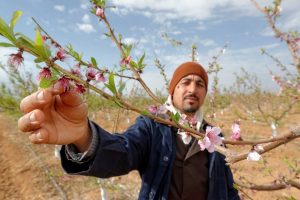
This Information Note presents the Training for Rural Economic Empowerment (TREE) programme of the International Labour Organization (ILO), which aims to promote rural employment using a community-based approach to skills development. It outlines some of the challenges faced in efforts to improve rural livelihoods, presents an overview of the TREE programme, describes some national experiences in implementing TREE and summarizes the programme’s contribution to supporting the ILO’s Decent Work Agenda. It is intended to inform ILO constituents, skills development specialists and training practitioners about the programme and its potential to support national rural skills initiatives.

Subject Tags:

Access to training

Slug
access-to-training
Identifier
683

Rural employment

Slug
rural-employment
Identifier
670

Rural workers

Slug
rural-workers
Identifier
637

Women

Slug
women
Identifier
318

Youth

Slug
youth
Identifier
319
Regions:

Africa

Region Image

ILO International Symposium: Job-rich Growth for Sustainable Development

ILO International Symposium: Job-rich Growth for Sustainable Development

Kind:
Event
Start Date:
27 Nov 2017
End Date:
18 Jun 2026
Event Location:
Geneva, Switzerland
EventType:
Language:

English

Slug
english
Identifier
skpEng
Language Version:
--
Sources:

ILO

The International Labour Organization is the tripartite U.N. agency that promotes Decent Work through employment, social security, labour standards and social dialogue. Its work on skills development is guided by the conceptual framework on Skills to improve productivity, employment growth, and development agreed in 2008 by representatives of Governments, Employers’ Associations and Workers’ Associations. Research, policy advice, and pilot projects and technical cooperation programmes to apply good practices in different circumstances across its 185 member States aims to boost the employability of workers, the productivity and competitiveness of enterprises, and the inclusiveness of economic growth. The ILO Secretariat in offices in 40 countries works with Ministries of Labour, employers’ organizations, and trade unions to integrate skills development into national and sector development strategies in order to better meet current labour market needs and to prepare for the jobs of the future; to expand access to employment-related training so that youth, persons with disabilities and other vulnerable groups are better able to acquire skills and secure productive and decent work; and to improve the ability of public employment services to provide career guidance, maintain labour exchange services, and deliver active labour market programmes.For more information regarding the ILO’s work on skills and employability go to: http://www.ilo.org/skills/lang--en/index.htm; for ILO/Cinterfor's Knowledge Management Plarform, see: http://www.oitcinterfor.org

Thumbnail
Identifier
skpILO
Slug
ilo
Topics:

Anticipating and matching skills needs

Thumbnail

Anticipating and building skills for the future is essential to a rapidly changing labour market. This applies to changes in the types and levels of skills needed as well as in occupational and technical areas. Effective methods to anticipate future skills needs and avoid potential mismatches include: sustained dialogue between employers and trainers, coordination across government institutions, labour market information systems, employment services and performance reviews of training institutions. 

Identifier
skpAFSN
Slug
anticipating-and-matching-skills-needs

Sectoral approaches

Thumbnail

Matching skills to labour market demand requires reliable sectoral and occupational information and institutions that connect employers with training providers.  Sector based strategies and institutions have proved effective in engaging all stakeholders in promoting both pre-employment training and life-long learning.

Identifier
skpSectApr
Slug
sectoral-approaches

Training quality and relevance

Thumbnail
Identifier
skpTrainQR
Slug
training-quality-and-relevance
Knowledge Products:

Promotional material

Presentations, discussion papers, meeting reports, promotional materials, videos, fact sheets, brochures and newsletters on skills development for employment.

Thumbnail
Identifier
skpAIM
Slug
promotional-material

From 27-28 November 2017 at the ILO/Geneva. The symposium is part of the work of the ILO Employment Department under its Global Product on Jobs and Skills Mismatch. It follows an earlier conference, held in May, which looked at the labour market impact and policy implications of various forms of skill mismatch.

The ILO Employment Policy Department will bring together researchers, policy-makers, practitioners and other stakeholders to review and discuss on-going research on demand for jobs and bottlenecks in developed and developing countries. The themes discussed will cover the impact of automation and digital technologies, issues related to pro-employment macro-economic and sectoral policies, trends in employment and labour market programmes, the future of work for youth and women, transition to formality, and the design and implementation of comprehensive employment policy frameworks. The main objective is to share knowledge and policy lessons learnt on fostering full employment and inclusive and sustainable economic growth. The symposium is part of the work of the Department under its Global Product on Jobs and Skills Mismatch. It follows an earlier conference, held in May 2017, which looked at the labour market impact and policy implications of various forms of skill mismatch.

Conference objectives

The conference will bring researchers, academics, development partners, ILO staff and others to:

- share lessons learned in fostering job-rich growth, emanating from policy interventions and research, that are particularly relevant for the Department’s work going forward;
- contribute knowledge to the ILO’s Future of Work initiative with respect to the future of employment and skills;
- present and discuss results of new research and selected tools and evidence from experience at the country level;
- strengthen the knowledge sharing network among academia, other UN agencies and development partners on the goal of full, productive and freely chosen employment.

Members of permanent missions, employers and workers, international organizations and academia are welcome to attend.

Agenda for this event can be found on the right hand margin of this page.

For more information:

Subject Tags:

Job matching

Slug
job-matching
Identifier
649

Labour market information

Slug
labour-market-information
Identifier
684

Sectoral approaches

Slug
sectoral-approaches
Identifier
676

Skills and training policy

Slug
skills-and-training-policy
Identifier
666

Skills anticipation

Slug
skills-anticipation
Identifier
677

Technology

Slug
technology
Identifier
345
Regions:
Countries and territories:
Economic groups:
--

Skills anticipation: Looking to the future

Skills anticipation: Looking to the future

Type:
Document
Content Type:
Skills anticipation: Looking to the future
Language:

English

Slug
english
Identifier
skpEng
Sources:

Other sources

Experts from many international, regional and national agencies generously share their views, experiences and findings on skills, helping policy-makers among other stakeholders to understand the linkages between education, training and the world of work, and how to integrate skills into national development planning to promote employment and economic growth.

Thumbnail
Identifier
skpOSource
Slug
other-sources
Topics:

Anticipating and matching skills needs

Thumbnail

Anticipating and building skills for the future is essential to a rapidly changing labour market. This applies to changes in the types and levels of skills needed as well as in occupational and technical areas. Effective methods to anticipate future skills needs and avoid potential mismatches include: sustained dialogue between employers and trainers, coordination across government institutions, labour market information systems, employment services and performance reviews of training institutions. 

Identifier
skpAFSN
Slug
anticipating-and-matching-skills-needs
Knowledge Products:

Promotional material

Presentations, discussion papers, meeting reports, promotional materials, videos, fact sheets, brochures and newsletters on skills development for employment.

Thumbnail
Identifier
skpAIM
Slug
promotional-material
Publication Date:
30 Oct 2017
Briefing note. This Note highlights the issue of skills anticipation as a policy tool for decision making.
Subject Tags:

Labour market information

Slug
labour-market-information
Identifier
684

Skills anticipation

Slug
skills-anticipation
Identifier
677
Regions:

Global Skills for Employment KSP: Newsletter October-November 2017

Global Skills for Employment KSP: Newsletter October-November 2017

Type:
Newsletter
Start Date:
01 Jan 1970
Language:

English

Slug
english
Identifier
skpEng
Sources:

ILO

The International Labour Organization is the tripartite U.N. agency that promotes Decent Work through employment, social security, labour standards and social dialogue. Its work on skills development is guided by the conceptual framework on Skills to improve productivity, employment growth, and development agreed in 2008 by representatives of Governments, Employers’ Associations and Workers’ Associations. Research, policy advice, and pilot projects and technical cooperation programmes to apply good practices in different circumstances across its 185 member States aims to boost the employability of workers, the productivity and competitiveness of enterprises, and the inclusiveness of economic growth. The ILO Secretariat in offices in 40 countries works with Ministries of Labour, employers’ organizations, and trade unions to integrate skills development into national and sector development strategies in order to better meet current labour market needs and to prepare for the jobs of the future; to expand access to employment-related training so that youth, persons with disabilities and other vulnerable groups are better able to acquire skills and secure productive and decent work; and to improve the ability of public employment services to provide career guidance, maintain labour exchange services, and deliver active labour market programmes.For more information regarding the ILO’s work on skills and employability go to: http://www.ilo.org/skills/lang--en/index.htm; for ILO/Cinterfor's Knowledge Management Plarform, see: http://www.oitcinterfor.org

Thumbnail
Identifier
skpILO
Slug
ilo
Topics:
Knowledge Products:

Promotional material

Presentations, discussion papers, meeting reports, promotional materials, videos, fact sheets, brochures and newsletters on skills development for employment.

Thumbnail
Identifier
skpAIM
Slug
promotional-material

The Global KSP monthly newsletter highlights recently uploaded publications, reports, research items, videos and upcoming events on skills for employability.

To sign up to receive the Global KSP by email click ‘subscribe’ at the bottom of the page or send us an email at: [email protected]

Subject Tags:
Regions:
Countries and territories:
Economic groups:
--

Competencias para el empleo PIC Global: Boletín octubre-noviembre 2017

Competencias para el empleo PIC Global: Boletín octubre-noviembre 2017

Type:
Newsletter
Start Date:
01 Jan 1970
Language:

Spanish

Slug
spanish
Identifier
skpEsp
Sources:

ILO

The International Labour Organization is the tripartite U.N. agency that promotes Decent Work through employment, social security, labour standards and social dialogue. Its work on skills development is guided by the conceptual framework on Skills to improve productivity, employment growth, and development agreed in 2008 by representatives of Governments, Employers’ Associations and Workers’ Associations. Research, policy advice, and pilot projects and technical cooperation programmes to apply good practices in different circumstances across its 185 member States aims to boost the employability of workers, the productivity and competitiveness of enterprises, and the inclusiveness of economic growth. The ILO Secretariat in offices in 40 countries works with Ministries of Labour, employers’ organizations, and trade unions to integrate skills development into national and sector development strategies in order to better meet current labour market needs and to prepare for the jobs of the future; to expand access to employment-related training so that youth, persons with disabilities and other vulnerable groups are better able to acquire skills and secure productive and decent work; and to improve the ability of public employment services to provide career guidance, maintain labour exchange services, and deliver active labour market programmes.For more information regarding the ILO’s work on skills and employability go to: http://www.ilo.org/skills/lang--en/index.htm; for ILO/Cinterfor's Knowledge Management Plarform, see: http://www.oitcinterfor.org

Thumbnail
Identifier
skpILO
Slug
ilo
Topics:
Knowledge Products:

Promotional material

Presentations, discussion papers, meeting reports, promotional materials, videos, fact sheets, brochures and newsletters on skills development for employment.

Thumbnail
Identifier
skpAIM
Slug
promotional-material

El boletín mensual PIC Global destaca publicaciones, informes, artículos de investigación, videos y eventos sobre capacidades para el empleo recientemente cargados a la plataforma.

Para inscribirse a nuestro boletín electrónico, haga clic en " Suscríbase para recibir nuestro boletín de noticias" en la parte inferior de la página o envíenos un correo electrónico a: [email protected]

Subject Tags:
Regions:
Countries and territories:
Economic groups:
--

Compétences au service de l’emploi: Bulletin octobre-novembre 2017

Compétences au service de l’emploi: Bulletin octobre-novembre 2017

Type:
Newsletter
Start Date:
01 Jan 1970
Language:

French

Slug
french
Identifier
skpFrn
Sources:

ILO

The International Labour Organization is the tripartite U.N. agency that promotes Decent Work through employment, social security, labour standards and social dialogue. Its work on skills development is guided by the conceptual framework on Skills to improve productivity, employment growth, and development agreed in 2008 by representatives of Governments, Employers’ Associations and Workers’ Associations. Research, policy advice, and pilot projects and technical cooperation programmes to apply good practices in different circumstances across its 185 member States aims to boost the employability of workers, the productivity and competitiveness of enterprises, and the inclusiveness of economic growth. The ILO Secretariat in offices in 40 countries works with Ministries of Labour, employers’ organizations, and trade unions to integrate skills development into national and sector development strategies in order to better meet current labour market needs and to prepare for the jobs of the future; to expand access to employment-related training so that youth, persons with disabilities and other vulnerable groups are better able to acquire skills and secure productive and decent work; and to improve the ability of public employment services to provide career guidance, maintain labour exchange services, and deliver active labour market programmes.For more information regarding the ILO’s work on skills and employability go to: http://www.ilo.org/skills/lang--en/index.htm; for ILO/Cinterfor's Knowledge Management Plarform, see: http://www.oitcinterfor.org

Thumbnail
Identifier
skpILO
Slug
ilo
Topics:
Knowledge Products:

Promotional material

Presentations, discussion papers, meeting reports, promotional materials, videos, fact sheets, brochures and newsletters on skills development for employment.

Thumbnail
Identifier
skpAIM
Slug
promotional-material

Le bulletin mensuel Global KSP met en évidence les publications récemment téléchargées, les rapports, les articles de recherche, les vidéos et les événements à venir sur les compétences au service de l’emploi.

Pour vous abonner au KSP mondial par email cliquez sur "subscribe" au bas de la page ou envoyez-nous un courriel à: [email protected]

Subject Tags:
Regions:
Countries and territories:
Economic groups:
--

ILO Recognition of Prior Learning (RPL) Workshop - Photo slideshow

ILO Recognition of Prior Learning (RPL) Workshop - Photo slideshow

Type:
Document
Content Type:
ILO Recognition of Prior Learning (RPL) Workshop - Photo slideshow
Language:

English

Slug
english
Identifier
skpEng
Sources:

ILO

The International Labour Organization is the tripartite U.N. agency that promotes Decent Work through employment, social security, labour standards and social dialogue. Its work on skills development is guided by the conceptual framework on Skills to improve productivity, employment growth, and development agreed in 2008 by representatives of Governments, Employers’ Associations and Workers’ Associations. Research, policy advice, and pilot projects and technical cooperation programmes to apply good practices in different circumstances across its 185 member States aims to boost the employability of workers, the productivity and competitiveness of enterprises, and the inclusiveness of economic growth. The ILO Secretariat in offices in 40 countries works with Ministries of Labour, employers’ organizations, and trade unions to integrate skills development into national and sector development strategies in order to better meet current labour market needs and to prepare for the jobs of the future; to expand access to employment-related training so that youth, persons with disabilities and other vulnerable groups are better able to acquire skills and secure productive and decent work; and to improve the ability of public employment services to provide career guidance, maintain labour exchange services, and deliver active labour market programmes.For more information regarding the ILO’s work on skills and employability go to: http://www.ilo.org/skills/lang--en/index.htm; for ILO/Cinterfor's Knowledge Management Plarform, see: http://www.oitcinterfor.org

Thumbnail
Identifier
skpILO
Slug
ilo
Topics:

Lifelong learning

Thumbnail

There is a critical need for a greater overall investment in education and training, particularly in developing countries. Education and training investments should be closely linked to economic and employment growth strategies and programmes. Responsibility should be shared between the government (primary responsibility), enterprises, the social partners, and the individual. To make lifelong learning for all a reality, countries will need to make major reforms of their vocational and education and training systems. School-to-work schemes for young people should integrate education with workplace learning. Training systems need to become more flexible and responsive to rapidly changing skill requirements. Reforms should also focus on how learning can be facilitated, not just on training for specific occupational categories.

Identifier
skpPSLLL
Slug
lifelong-learning
Knowledge Products:

Promotional material

Presentations, discussion papers, meeting reports, promotional materials, videos, fact sheets, brochures and newsletters on skills development for employment.

Thumbnail
Identifier
skpAIM
Slug
promotional-material
Publication Date:
25 Oct 2017
From 25 to 29 September 2017, RPL experts from more than 20 countries met in Johannesburg, South Africa, to discuss common challenges and share solutions about recognition systems.
Subject Tags:

Productivity

Slug
productivity
Identifier
188

Recognition of prior learning

Slug
recognition-of-prior-learning
Identifier
675
Regions:

Learning and Knowledge Development (LDK) Facility

Learning and Knowledge Development (LDK) Facility

Type:
Document
Content Type:
Learning and Knowledge Development (LDK) Facility
Language:

English

Slug
english
Identifier
skpEng
Sources:

Information is gathered from other international organizations that promote skills development and the transition from education and training to work. The Interagency Group on Technical and Vocational Education and Training (IAG-TVET) was established in 2009 to share research findings, coordinate joint research endeavours, and improve collaboration among organizations working at the international and national levels.

Thumbnail
Identifier
skpIntOrg
Slug
international-organizations
Topics:

Training quality and relevance

Thumbnail
Identifier
skpTrainQR
Slug
training-quality-and-relevance

Youth employability

Thumbnail

Globally, nearly 68 million young women and men are looking for and available for work,  and an estimated 123 million young people are working but living in poverty. The number who are not in employment, education or training (NEET) stands at 267 million, a majority of whom are young women. Significantly, young people are three times as likely as adults (25 years and older) to be unemployed.

Skills development is a primary means of enabling young people to make a smooth transition to work. A comprehensive approach is required to integrate young women and men in the labour market, including relevant and quality skills training, labour market information, career guidance and employment services, recognition of prior learning, incorporating entrepreneurship with training and effective skills forecasting. Improved basic education and core work skills are particularly important to enable youth to engage in lifelong learning as well as transition to the labour market. 

Identifier
skpYoEmp
Slug
youth-employability
Knowledge Products:

Case studies and good practices

Case studies that document good practices and illustrate the benefits and lessons learnt of particular approaches or methods in real practice. 

Thumbnail
Identifier
skpCaseStdy
Slug
case-studies-and-good-practices

Promotional material

Presentations, discussion papers, meeting reports, promotional materials, videos, fact sheets, brochures and newsletters on skills development for employment.

Thumbnail
Identifier
skpAIM
Slug
promotional-material
Publication Date:
24 Oct 2017
Learning and Knowledge Development (LKD) Facility Mission:

To equip youth in developing and transition countries with industrial skills and know-how. To make this happen the LKD Facility:

-Establishes, in partnership with global manufacturing companies, training academies for the operation and maintenance of heavy equipment in different sectors.
-Expands access of youth to job-oriented and market demand-driven skills in the sectors of logistics and industrial maintenance of machinery.

About the LKD Facility:

The Learning and Knowledge Development (LKD) Facility is a platform that promotes industrial skills development among young people in emerging economies. Working with the private sector through Public Private Development Partnerships, the LKD Facility supports the establishment and upgrading of local industrial training academies to help meet the labour market’s increasing demand for skilled employees, ultimately contributing to inclusive and sustainable industrial development.

The long-term success of local industrial academies that partner with the LKD Facility is ensured through constant monitoring of economic, environmental and social impact. UNIDO manages the LKD Facility, on behalf of SIDA, as the major project donor, and private sector partners.
Subject Tags:

Private sector

Slug
private-sector
Identifier
229

Skills and training policy

Slug
skills-and-training-policy
Identifier
666

TVET systems

Slug
tvet-systems
Identifier
661
Regions:

Recognition of Prior Learning (RPL): From key concepts to implementation

Recognition of Prior Learning (RPL): From key concepts to implementation

Kind:
Event
Start Date:
25 Sep 2017
End Date:
18 Jun 2026
Event Location:
Johannesburg, South Africa
EventType:
Language:

English

Slug
english
Identifier
skpEng
Language Version:
--
Sources:

ILO

The International Labour Organization is the tripartite U.N. agency that promotes Decent Work through employment, social security, labour standards and social dialogue. Its work on skills development is guided by the conceptual framework on Skills to improve productivity, employment growth, and development agreed in 2008 by representatives of Governments, Employers’ Associations and Workers’ Associations. Research, policy advice, and pilot projects and technical cooperation programmes to apply good practices in different circumstances across its 185 member States aims to boost the employability of workers, the productivity and competitiveness of enterprises, and the inclusiveness of economic growth. The ILO Secretariat in offices in 40 countries works with Ministries of Labour, employers’ organizations, and trade unions to integrate skills development into national and sector development strategies in order to better meet current labour market needs and to prepare for the jobs of the future; to expand access to employment-related training so that youth, persons with disabilities and other vulnerable groups are better able to acquire skills and secure productive and decent work; and to improve the ability of public employment services to provide career guidance, maintain labour exchange services, and deliver active labour market programmes.For more information regarding the ILO’s work on skills and employability go to: http://www.ilo.org/skills/lang--en/index.htm; for ILO/Cinterfor's Knowledge Management Plarform, see: http://www.oitcinterfor.org

Thumbnail
Identifier
skpILO
Slug
ilo
Topics:

Access to training

Thumbnail

Access for all to good quality education, vocational training and workplace learning is a fundamental principle of social cohesion and economic growth. Some groups of people may require targeted attention if they are to benefit from education, training and employment opportunities.  

This is particularly the case for disadvantaged youth, lower skilled workers, people with disabilities, and people in rural communities. The attractiveness of vocational education and training is enhanced when combined with entrepreneurship training and when public policies encourage utilization of higher skills by business. 
 

Identifier
skpATSU
Slug
access-to-training

Lifelong learning

Thumbnail

There is a critical need for a greater overall investment in education and training, particularly in developing countries. Education and training investments should be closely linked to economic and employment growth strategies and programmes. Responsibility should be shared between the government (primary responsibility), enterprises, the social partners, and the individual. To make lifelong learning for all a reality, countries will need to make major reforms of their vocational and education and training systems. School-to-work schemes for young people should integrate education with workplace learning. Training systems need to become more flexible and responsive to rapidly changing skill requirements. Reforms should also focus on how learning can be facilitated, not just on training for specific occupational categories.

Identifier
skpPSLLL
Slug
lifelong-learning
Knowledge Products:

Promotional material

Presentations, discussion papers, meeting reports, promotional materials, videos, fact sheets, brochures and newsletters on skills development for employment.

Thumbnail
Identifier
skpAIM
Slug
promotional-material

People are always learning, everywhere and throughout their lives. However, learning that takes place outside the formal education and training system is often not well understood nor valued. On-the-job training; informal apprenticeships; participating in sporting activities; organizing community events; raising children; managing a household; caring for elderly relatives often do not come with a certificate of competencies. By recognizing all types of learning - an individual’s knowledge, skills and experience – one can benefit in the labour market, formal education and training, financially and in terms of self-esteem.

Across the world, countries increasingly recognize the value of informal and non-formal learning and many are establishing systems to acknowledge competencies gained through these training modalities. The global workshop ‘Recognition of Prior Learning (RPL): From key concepts to implementation’ organized by the ILO provided a venue for countries with different degrees of RPL experience to come together and compare their experiences, guided by technical specialists in the field. From 25 to 29 September 2017, RPL experts from more than 20 countries met in Johannesburg, South Africa, to discuss common challenges and share solutions.

Subject Tags:

Recognition of prior learning

Slug
recognition-of-prior-learning
Identifier
675
Regions:
Countries and territories:
Economic groups:
--

Are young people overskilled or underskilled? (Blog)

Are young people overskilled or underskilled? (Blog)

Type:
Document
Content Type:
Are young people overskilled or underskilled? (Blog)
Language:

English

Slug
english
Identifier
skpEng
Sources:

ILO

The International Labour Organization is the tripartite U.N. agency that promotes Decent Work through employment, social security, labour standards and social dialogue. Its work on skills development is guided by the conceptual framework on Skills to improve productivity, employment growth, and development agreed in 2008 by representatives of Governments, Employers’ Associations and Workers’ Associations. Research, policy advice, and pilot projects and technical cooperation programmes to apply good practices in different circumstances across its 185 member States aims to boost the employability of workers, the productivity and competitiveness of enterprises, and the inclusiveness of economic growth. The ILO Secretariat in offices in 40 countries works with Ministries of Labour, employers’ organizations, and trade unions to integrate skills development into national and sector development strategies in order to better meet current labour market needs and to prepare for the jobs of the future; to expand access to employment-related training so that youth, persons with disabilities and other vulnerable groups are better able to acquire skills and secure productive and decent work; and to improve the ability of public employment services to provide career guidance, maintain labour exchange services, and deliver active labour market programmes.For more information regarding the ILO’s work on skills and employability go to: http://www.ilo.org/skills/lang--en/index.htm; for ILO/Cinterfor's Knowledge Management Plarform, see: http://www.oitcinterfor.org

Thumbnail
Identifier
skpILO
Slug
ilo
Topics:

Training quality and relevance

Thumbnail
Identifier
skpTrainQR
Slug
training-quality-and-relevance

Youth employability

Thumbnail

Globally, nearly 68 million young women and men are looking for and available for work,  and an estimated 123 million young people are working but living in poverty. The number who are not in employment, education or training (NEET) stands at 267 million, a majority of whom are young women. Significantly, young people are three times as likely as adults (25 years and older) to be unemployed.

Skills development is a primary means of enabling young people to make a smooth transition to work. A comprehensive approach is required to integrate young women and men in the labour market, including relevant and quality skills training, labour market information, career guidance and employment services, recognition of prior learning, incorporating entrepreneurship with training and effective skills forecasting. Improved basic education and core work skills are particularly important to enable youth to engage in lifelong learning as well as transition to the labour market. 

Identifier
skpYoEmp
Slug
youth-employability
Knowledge Products:

Promotional material

Presentations, discussion papers, meeting reports, promotional materials, videos, fact sheets, brochures and newsletters on skills development for employment.

Thumbnail
Identifier
skpAIM
Slug
promotional-material
Publication Date:
13 Oct 2017
This week, as we prepare ILO’s participation in the World Skills Competition 2017, taking place in Abu Dhabi, UAE from 15-18 October, we are left to reflect on a major theme which is troubling governments, employers, workers and young people across the globe – the so called skills mismatch.

This year’s World Skills Competition features 1,300 competitors, 100,000 visitors and 51 skills. The competition will cover a diverse range of vocational categories including mechatronics, information network cabling, floor tiling, patisserie, and plumbing just to name a few. The ILO, as a conference coalition partner, will be involved in two major activities of the Competition, the WorldSkills Conference and the WorldSkills Youth Forum which comes under the theme 'Skills strategies for a globalized world'.

Refocusing the debate on jobs and skills mismatch….

The ILO’s SKILLS branch will lead a conference session on the topic of skills mismatch that will consider not only what causes skills mismatch, but also to better understand the different types of skills mismatches, the labour market impact they have and their relative importance.

High and persistent levels of youth unemployment, together with job vacancies that remain unfilled, are often attributed to mismatches between jobs and skills. The debate frequently focusses on why employers are unable to fill the vacancies they have. But this is only one form of skills mismatch. The problems faced by employers are technically known as skills gaps or skills shortages (which are a form of skills mismatch), but how important are they compared with other forms of skills mismatch like over-education?

The point here is not to underestimate the importance of skills shortages, as nearly 50 per cent of all European firms report difficulties in recruiting higher education graduates (Eurobaromater survey, 2010), but the evidence that these shortages are to do with skills rather than employment opportunities and conditions is actually weak, and whether they have any effect on the performance or income of these firms is also not clearly understood.

One area that has received relatively little attention is the issue of over-education, which occurs when an individual possesses a level of education in excess of that which is required for their job. After an extensive review of existing research, Prof. Séamus McGuiness of ESRI established that a sizeable fraction of workers are in occupations that do not require as much schooling as they have acquired. Think, for example, about that taxi driver you encountered that holds a PhD, an example that points to a mismatch between jobs and skills.

Click on the PDF below to read the full blog.....
Subject Tags:

Skills mismatch

Slug
skills-mismatch
Identifier
654

Vocational training

Slug
vocational-training
Identifier
124

Youth

Slug
youth
Identifier
319
Regions: