The changing world of work: beyond digitalisation

The changing world of work: beyond digitalisation

Kind:
Event
Start Date:
12 Oct 2018
End Date:
06 Jun 2026
Event Location:
Brussels, Belgium
EventType:
Language:

English

Slug
english
Identifier
skpEng
Language Version:
--
Sources:

Other sources

Experts from many international, regional and national agencies generously share their views, experiences and findings on skills, helping policy-makers among other stakeholders to understand the linkages between education, training and the world of work, and how to integrate skills into national development planning to promote employment and economic growth.

Thumbnail
Identifier
skpOSource
Slug
other-sources
Topics:

Anticipating and matching skills needs

Thumbnail

Anticipating and building skills for the future is essential to a rapidly changing labour market. This applies to changes in the types and levels of skills needed as well as in occupational and technical areas. Effective methods to anticipate future skills needs and avoid potential mismatches include: sustained dialogue between employers and trainers, coordination across government institutions, labour market information systems, employment services and performance reviews of training institutions. 

Identifier
skpAFSN
Slug
anticipating-and-matching-skills-needs
Knowledge Products:

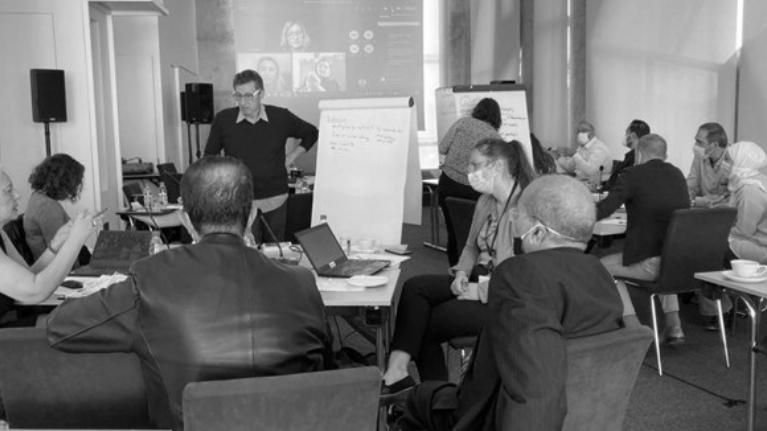
The event will take place in Brussels and will be an opportunity to discuss the most recent developments presented in the 2018 Review on Employment and Social Developments in Europe.

The conference will examine the important opportunities as well as the risks of the ongoing fast technological transformation, together with globalisation and demographic change. It will explore the key adjustment needs in order to ensure that EU workers can reap the benefits of these developments.

The conference will bring together high-level external experts from employment and social ministries, social partners, academia international organisations, civil society organisations and business (Microsoft, Uber).

It is organised by the European Commission in cooperation with the European Economic and Social Committee. Marianne Thyssen, European Commissioner for Employment, Social Affairs, Skills and Labour Mobility will open the event.

Deadline for registration: Monday, 08 October 2018

For more information, click on the link provided below.

Subject Tags:

Social policy

Slug
social-policy
Identifier
300

Technology

Slug
technology
Identifier
345
Regions:
Countries and territories:

Economic groups:
--

ILO International Symposium: Job-rich Growth for Sustainable Development

ILO International Symposium: Job-rich Growth for Sustainable Development

Kind:
Event
Start Date:
27 Nov 2017
End Date:
06 Jun 2026
Event Location:
Geneva, Switzerland
EventType:
Language:

English

Slug
english
Identifier
skpEng
Language Version:
--
Sources:

ILO

The International Labour Organization is the tripartite U.N. agency that promotes Decent Work through employment, social security, labour standards and social dialogue. Its work on skills development is guided by the conceptual framework on Skills to improve productivity, employment growth, and development agreed in 2008 by representatives of Governments, Employers’ Associations and Workers’ Associations. Research, policy advice, and pilot projects and technical cooperation programmes to apply good practices in different circumstances across its 185 member States aims to boost the employability of workers, the productivity and competitiveness of enterprises, and the inclusiveness of economic growth. The ILO Secretariat in offices in 40 countries works with Ministries of Labour, employers’ organizations, and trade unions to integrate skills development into national and sector development strategies in order to better meet current labour market needs and to prepare for the jobs of the future; to expand access to employment-related training so that youth, persons with disabilities and other vulnerable groups are better able to acquire skills and secure productive and decent work; and to improve the ability of public employment services to provide career guidance, maintain labour exchange services, and deliver active labour market programmes.For more information regarding the ILO’s work on skills and employability go to: http://www.ilo.org/skills/lang--en/index.htm; for ILO/Cinterfor's Knowledge Management Plarform, see: http://www.oitcinterfor.org

Thumbnail
Identifier
skpILO
Slug
ilo
Topics:

Anticipating and matching skills needs

Thumbnail

Anticipating and building skills for the future is essential to a rapidly changing labour market. This applies to changes in the types and levels of skills needed as well as in occupational and technical areas. Effective methods to anticipate future skills needs and avoid potential mismatches include: sustained dialogue between employers and trainers, coordination across government institutions, labour market information systems, employment services and performance reviews of training institutions. 

Identifier
skpAFSN
Slug
anticipating-and-matching-skills-needs

Sectoral approaches

Thumbnail

Matching skills to labour market demand requires reliable sectoral and occupational information and institutions that connect employers with training providers.  Sector based strategies and institutions have proved effective in engaging all stakeholders in promoting both pre-employment training and life-long learning.

Identifier
skpSectApr
Slug
sectoral-approaches

Training quality and relevance

Thumbnail
Identifier
skpTrainQR
Slug
training-quality-and-relevance
Knowledge Products:

Promotional material

Presentations, discussion papers, meeting reports, promotional materials, videos, fact sheets, brochures and newsletters on skills development for employment.

Thumbnail
Identifier
skpAIM
Slug
promotional-material

From 27-28 November 2017 at the ILO/Geneva. The symposium is part of the work of the ILO Employment Department under its Global Product on Jobs and Skills Mismatch. It follows an earlier conference, held in May, which looked at the labour market impact and policy implications of various forms of skill mismatch.

The ILO Employment Policy Department will bring together researchers, policy-makers, practitioners and other stakeholders to review and discuss on-going research on demand for jobs and bottlenecks in developed and developing countries. The themes discussed will cover the impact of automation and digital technologies, issues related to pro-employment macro-economic and sectoral policies, trends in employment and labour market programmes, the future of work for youth and women, transition to formality, and the design and implementation of comprehensive employment policy frameworks. The main objective is to share knowledge and policy lessons learnt on fostering full employment and inclusive and sustainable economic growth. The symposium is part of the work of the Department under its Global Product on Jobs and Skills Mismatch. It follows an earlier conference, held in May 2017, which looked at the labour market impact and policy implications of various forms of skill mismatch.

Conference objectives

The conference will bring researchers, academics, development partners, ILO staff and others to:

- share lessons learned in fostering job-rich growth, emanating from policy interventions and research, that are particularly relevant for the Department’s work going forward;
- contribute knowledge to the ILO’s Future of Work initiative with respect to the future of employment and skills;
- present and discuss results of new research and selected tools and evidence from experience at the country level;
- strengthen the knowledge sharing network among academia, other UN agencies and development partners on the goal of full, productive and freely chosen employment.

Members of permanent missions, employers and workers, international organizations and academia are welcome to attend.

Agenda for this event can be found on the right hand margin of this page.

For more information:

Subject Tags:

Job matching

Slug
job-matching
Identifier
649

Labour market information

Slug
labour-market-information
Identifier
684

Sectoral approaches

Slug
sectoral-approaches
Identifier
676

Skills and training policy

Slug
skills-and-training-policy
Identifier
666

Skills anticipation

Slug
skills-anticipation
Identifier
677

Technology

Slug
technology
Identifier
345
Regions:
Countries and territories:

Economic groups:
--

WorldSkills Conference 2017 - Skills strategies for a globalized world

WorldSkills Conference 2017 - Skills strategies for a globalized world

Kind:
Event
Start Date:
16 Oct 2017
End Date:
06 Jun 2026
Event Location:
ADNEC Abu Dhabi, UAE
EventType:
Language:

English

Slug
english
Identifier
skpEng
Language Version:
--
Sources:

ILO

The International Labour Organization is the tripartite U.N. agency that promotes Decent Work through employment, social security, labour standards and social dialogue. Its work on skills development is guided by the conceptual framework on Skills to improve productivity, employment growth, and development agreed in 2008 by representatives of Governments, Employers’ Associations and Workers’ Associations. Research, policy advice, and pilot projects and technical cooperation programmes to apply good practices in different circumstances across its 185 member States aims to boost the employability of workers, the productivity and competitiveness of enterprises, and the inclusiveness of economic growth. The ILO Secretariat in offices in 40 countries works with Ministries of Labour, employers’ organizations, and trade unions to integrate skills development into national and sector development strategies in order to better meet current labour market needs and to prepare for the jobs of the future; to expand access to employment-related training so that youth, persons with disabilities and other vulnerable groups are better able to acquire skills and secure productive and decent work; and to improve the ability of public employment services to provide career guidance, maintain labour exchange services, and deliver active labour market programmes.For more information regarding the ILO’s work on skills and employability go to: http://www.ilo.org/skills/lang--en/index.htm; for ILO/Cinterfor's Knowledge Management Plarform, see: http://www.oitcinterfor.org

Thumbnail
Identifier
skpILO
Slug
ilo

Other sources

Experts from many international, regional and national agencies generously share their views, experiences and findings on skills, helping policy-makers among other stakeholders to understand the linkages between education, training and the world of work, and how to integrate skills into national development planning to promote employment and economic growth.

Thumbnail
Identifier
skpOSource
Slug
other-sources
Topics:

Access to training

Thumbnail

Access for all to good quality education, vocational training and workplace learning is a fundamental principle of social cohesion and economic growth. Some groups of people may require targeted attention if they are to benefit from education, training and employment opportunities.  

This is particularly the case for disadvantaged youth, lower skilled workers, people with disabilities, and people in rural communities. The attractiveness of vocational education and training is enhanced when combined with entrepreneurship training and when public policies encourage utilization of higher skills by business. 
 

Identifier
skpATSU
Slug
access-to-training

Youth employability

Thumbnail

Globally, nearly 68 million young women and men are looking for and available for work,  and an estimated 123 million young people are working but living in poverty. The number who are not in employment, education or training (NEET) stands at 267 million, a majority of whom are young women. Significantly, young people are three times as likely as adults (25 years and older) to be unemployed.

Skills development is a primary means of enabling young people to make a smooth transition to work. A comprehensive approach is required to integrate young women and men in the labour market, including relevant and quality skills training, labour market information, career guidance and employment services, recognition of prior learning, incorporating entrepreneurship with training and effective skills forecasting. Improved basic education and core work skills are particularly important to enable youth to engage in lifelong learning as well as transition to the labour market. 

Identifier
skpYoEmp
Slug
youth-employability
Knowledge Products:

The Conference provides a forum where you can help shape the global skills agenda, with other leading figures from industry, governments, international organizations, and academia.

The advent of the fourth industrial revolution means that we must prepare urgently for dramatic changes to the way that we learn, live, and work.

The connectivity of cyber-physical systems is transforming the needs of society and employers — and breaking down the limits of national borders. There is a danger that the demand for new skills, to match future industries, may outpace the provision of appropriate training and education. So how should the VET sector respond to the continuous developments of emerging technologies? How should we promote international cooperation? And, what will be the future of skills in an era when borders have become less of an obstacle to movement?

See PDF below for more information about the Conference.

To register for the Conference

Subject Tags:
Regions:

Arab States

Region Image
Countries and territories:

Economic groups:
--

5th World Congress on Technical Vocational Education and Training

5th World Congress on Technical Vocational Education and Training

Kind:
Event
Start Date:
01 Nov 2016
End Date:
06 Jun 2026
Event Location:
Johor, Malaysia
EventType:
Language:

English

Slug
english
Identifier
skpEng
Language Version:
--
Sources:

TVET institutions

Technical and vocational education and training (TVET) institutions play an important role in equipping young people to enter the world of work and in improving their employability throughout their careers. The Global KSP collects and shares information from TVET institutions on how they respond to changing labour market needs, adopt new training technologies, expand the outreach of their training, and improve the quality of their services including in the areas of governance, financing, teacher education, and industry partnerships.

Thumbnail
Identifier
skpTVET
Slug
tvet-institutions
Topics:

Training quality and relevance

Thumbnail
Identifier
skpTrainQR
Slug
training-quality-and-relevance
Knowledge Products:

The world congress aims to serve as a platform for discussion, dissemination and sharing of contemporary research and scientific knowledge and information in the field of teacher education for TVET.

Subject Tags:

TVET systems

Slug
tvet-systems
Identifier
661

Vocational training

Slug
vocational-training
Identifier
124
Regions:
Countries and territories:

Economic groups:
--

Skills, jobs and sustainable development: global trends, local challenges

Skills, jobs and sustainable development: global trends, local challenges

Kind:
Event
Start Date:
20 Oct 2016
End Date:
06 Jun 2026
Event Location:
Paris, France
EventType:
Language:

English

Slug
english
Identifier
skpEng
Language Version:
--
Sources:

Information is gathered from other international organizations that promote skills development and the transition from education and training to work. The Interagency Group on Technical and Vocational Education and Training (IAG-TVET) was established in 2009 to share research findings, coordinate joint research endeavours, and improve collaboration among organizations working at the international and national levels.

Thumbnail
Identifier
skpIntOrg
Slug
international-organizations

Other sources

Experts from many international, regional and national agencies generously share their views, experiences and findings on skills, helping policy-makers among other stakeholders to understand the linkages between education, training and the world of work, and how to integrate skills into national development planning to promote employment and economic growth.

Thumbnail
Identifier
skpOSource
Slug
other-sources
Topics:

Anticipating and matching skills needs

Thumbnail

Anticipating and building skills for the future is essential to a rapidly changing labour market. This applies to changes in the types and levels of skills needed as well as in occupational and technical areas. Effective methods to anticipate future skills needs and avoid potential mismatches include: sustained dialogue between employers and trainers, coordination across government institutions, labour market information systems, employment services and performance reviews of training institutions. 

Identifier
skpAFSN
Slug
anticipating-and-matching-skills-needs

Training quality and relevance

Thumbnail
Identifier
skpTrainQR
Slug
training-quality-and-relevance
Knowledge Products:

This joint Cedefop-UNESCO global skills conference aims to discuss the implications of global economic trends and market forces for anticipated skill needs and mismatches, and the responses of education and training systems building on labour market intelligence.

The conference will:

- discuss how information on global trends in skill needs is used by countries to review and renew their education and training provisions and how qualifications frameworks (at sector, national, regional and global levels) can support coordination and dialogue between education and training including labour market actors across different regions of the world;
- provide a platform for sharing best practices in skills anticipation and matching approaches and discuss possible ways forward and,
- offer possibilities for setting up and sustaining a modern infrastructure for data collection – a ‘data revolution’ – allowing robust analysis on anticipated skill needs with real-time labour market intelligence, contributing to the effectiveness of informed policy-making.

Global policy priorities, challenges and applicable solutions which can be applied in different regions of the world will be debated by experts in skills, along with representatives of governments and social partners in a series of discussions structured around two key themes:

1. Global trends and skills: common forces, different challenges.
2. Education and training for a global economy: using informed decision-making to adapt to a new landscape.

Subject Tags:

Skills and training policy

Slug
skills-and-training-policy
Identifier
666

Skills mismatch

Slug
skills-mismatch
Identifier
654
Regions:
Countries and territories:

Economic groups:
--

Shaping the new world of work. The impacts of digitalisation and robotisation

Shaping the new world of work. The impacts of digitalisation and robotisation

Kind:
Event
Start Date:
28 Jun 2016
End Date:
06 Jun 2026
Event Location:
Brussels, Belgium
EventType:
Language:

English

Slug
english
Identifier
skpEng
Language Version:
--
Sources:

Employers' organizations

Employers invest in training in order to improve productivity, innovate and adopt new technologies, and compete in changing markets. Case studies and research from individual employers and associations of employers on the Global KSP deal with apprenticeship and workplace skills provision, quality assurance and governance of training institutions, and employers’ roles in anticipating skill needs and in influencing national and sector policies on skills development.

Thumbnail
Identifier
skpEmp
Slug
employers-organizations
Topics:

Anticipating and matching skills needs

Thumbnail

Anticipating and building skills for the future is essential to a rapidly changing labour market. This applies to changes in the types and levels of skills needed as well as in occupational and technical areas. Effective methods to anticipate future skills needs and avoid potential mismatches include: sustained dialogue between employers and trainers, coordination across government institutions, labour market information systems, employment services and performance reviews of training institutions. 

Identifier
skpAFSN
Slug
anticipating-and-matching-skills-needs
Knowledge Products:

The purpose of this ETUC/ETUI conference is to discuss how the world and nature of work and employment is being changed radically by the digital revolution.

This event will not only focus on the quantity of work (‘will robots destroy our jobs?’) but also on the quality of work (working conditions, life-work balance, autonomy versus precarious jobs, impacts on social dialogue, health and safety at the workplace etc.) and the challenges of these trends for trade unions and workers. The event will try to answer the question how trade unions and civil society can help define a path to a ‘social digitalisation of work and the work place’ which will support and even strengthen the overall well-being of Europe’s workers.

Subject Tags:

Skills mismatch

Slug
skills-mismatch
Identifier
654
Regions:
Countries and territories:
Economic groups:
--

Shaping the new world of work. The impacts of digitalisation and robotisation

Shaping the new world of work. The impacts of digitalisation and robotisation

Kind:
Event
Start Date:
04 Aug 2024
End Date:
06 Jun 2026
Event Location:
Curitiba - Paraná – Brasil
EventType:
Language:

English

Slug
english
Identifier
skpEng
Language Version:
--
Sources:

ILO

The International Labour Organization is the tripartite U.N. agency that promotes Decent Work through employment, social security, labour standards and social dialogue. Its work on skills development is guided by the conceptual framework on Skills to improve productivity, employment growth, and development agreed in 2008 by representatives of Governments, Employers’ Associations and Workers’ Associations. Research, policy advice, and pilot projects and technical cooperation programmes to apply good practices in different circumstances across its 185 member States aims to boost the employability of workers, the productivity and competitiveness of enterprises, and the inclusiveness of economic growth. The ILO Secretariat in offices in 40 countries works with Ministries of Labour, employers’ organizations, and trade unions to integrate skills development into national and sector development strategies in order to better meet current labour market needs and to prepare for the jobs of the future; to expand access to employment-related training so that youth, persons with disabilities and other vulnerable groups are better able to acquire skills and secure productive and decent work; and to improve the ability of public employment services to provide career guidance, maintain labour exchange services, and deliver active labour market programmes.For more information regarding the ILO’s work on skills and employability go to: http://www.ilo.org/skills/lang--en/index.htm; for ILO/Cinterfor's Knowledge Management Plarform, see: http://www.oitcinterfor.org

Thumbnail
Identifier
skpILO
Slug
ilo

Other sources

Experts from many international, regional and national agencies generously share their views, experiences and findings on skills, helping policy-makers among other stakeholders to understand the linkages between education, training and the world of work, and how to integrate skills into national development planning to promote employment and economic growth.

Thumbnail
Identifier
skpOSource
Slug
other-sources
Topics:

Training quality and relevance

Thumbnail
Identifier
skpTrainQR
Slug
training-quality-and-relevance
Knowledge Products:

The Conference will promote learning opportunities and sharing of experiences that work on a range of skills development topics. The Skills Development International Conference 2016 is organized by the National Service of Industrial Apprenticeship - SENAI (Curitiba, Brazil), SENAI National Department (Brasília - Brazil) with the technical support of the Inter-American Centre for Knowledge Development in Vocational Training - ILO/CINTERFOR (Montevideo, Uruguay) and the International Training Centre - ITC/ILO (Turin, Italy).

The Conference will promote learning opportunities and sharing of experiences between various institutions that work on the following themes: Skills development, competitiveness and innovation; skills and social development; strategic and operational management at vocational training institutions; and, teaching and learning methodologies. Register by: 17 June.

Subject Tags:

Development policy

Slug
development-policy
Identifier
136

Skills mismatch

Slug
skills-mismatch
Identifier
654
Regions:
Countries and territories:
Economic groups:
--

Skills Development International Conference 2016: Knowledge as strategy for development

Skills Development International Conference 2016: Knowledge as strategy for development

Kind:
Event
Start Date:
04 Aug 2016
End Date:
06 Jun 2026
Event Location:
Curitiba - Paraná – Brasil
EventType:
Language:

English

Slug
english
Identifier
skpEng
Language Version:
--
Sources:

ILO

The International Labour Organization is the tripartite U.N. agency that promotes Decent Work through employment, social security, labour standards and social dialogue. Its work on skills development is guided by the conceptual framework on Skills to improve productivity, employment growth, and development agreed in 2008 by representatives of Governments, Employers’ Associations and Workers’ Associations. Research, policy advice, and pilot projects and technical cooperation programmes to apply good practices in different circumstances across its 185 member States aims to boost the employability of workers, the productivity and competitiveness of enterprises, and the inclusiveness of economic growth. The ILO Secretariat in offices in 40 countries works with Ministries of Labour, employers’ organizations, and trade unions to integrate skills development into national and sector development strategies in order to better meet current labour market needs and to prepare for the jobs of the future; to expand access to employment-related training so that youth, persons with disabilities and other vulnerable groups are better able to acquire skills and secure productive and decent work; and to improve the ability of public employment services to provide career guidance, maintain labour exchange services, and deliver active labour market programmes.For more information regarding the ILO’s work on skills and employability go to: http://www.ilo.org/skills/lang--en/index.htm; for ILO/Cinterfor's Knowledge Management Plarform, see: http://www.oitcinterfor.org

Thumbnail
Identifier
skpILO
Slug
ilo

Other sources

Experts from many international, regional and national agencies generously share their views, experiences and findings on skills, helping policy-makers among other stakeholders to understand the linkages between education, training and the world of work, and how to integrate skills into national development planning to promote employment and economic growth.

Thumbnail
Identifier
skpOSource
Slug
other-sources
Topics:

Training quality and relevance

Thumbnail
Identifier
skpTrainQR
Slug
training-quality-and-relevance
Knowledge Products:

The Conference will promote learning opportunities and sharing of experiences that work on a range of skills development topics. The Skills Development International Conference 2016 is organized by the National Service of Industrial Apprenticeship - SENAI (Curitiba, Brazil), SENAI National Department (Brasília - Brazil) with the technical support of the Inter-American Centre for Knowledge Development in Vocational Training - ILO/CINTERFOR (Montevideo, Uruguay) and the International Training Centre - ITC/ILO (Turin, Italy).

The Conference will promote learning opportunities and sharing of experiences between various institutions that work on the following themes: Skills development, competitiveness and innovation; skills and social development; strategic and operational management at vocational training institutions; and, teaching and learning methodologies. Register by: 17 June.

Subject Tags:

Development policy

Slug
development-policy
Identifier
136

Skills mismatch

Slug
skills-mismatch
Identifier
654
Regions:
Countries and territories:
Economic groups:
--

International conference on ensuring greater impact of TVET for sustainable development

International conference on ensuring greater impact of TVET for sustainable development

Kind:
Event
Start Date:
16 Jan 2024
End Date:
06 Jun 2026
Event Location:
Bandar Seri Begawan, Brunei
EventType:
Language:

English

Slug
english
Identifier
skpEng
Language Version:
--
Sources:

TVET institutions

Technical and vocational education and training (TVET) institutions play an important role in equipping young people to enter the world of work and in improving their employability throughout their careers. The Global KSP collects and shares information from TVET institutions on how they respond to changing labour market needs, adopt new training technologies, expand the outreach of their training, and improve the quality of their services including in the areas of governance, financing, teacher education, and industry partnerships.

Thumbnail
Identifier
skpTVET
Slug
tvet-institutions
Topics:

Training quality and relevance

Thumbnail
Identifier
skpTrainQR
Slug
training-quality-and-relevance
Knowledge Products:

This conference provides an opportunity for researchers, lecturers, and policy makers to share recent findings and innovation, best practices, and policies relevant to TVET.

In the last few years, much has been happening in the area of technical and vocational education and training (TVET) in Southeast Asia and the Pacific Region. One of the salient developments is that many countries have placed TVET as mainstream education. Initiative to increase the number of enrolment at secondary level is of the indications that TVET is gaining attention and popularity.

Considering that TVET graduates will be in the frontline of future workforces is vital particularly by equipping them with the necessary knowledge and skills to sustain economic, cultural, and environmental development. This development is also in line with the regional initiative of ASEAN Integration whereby economic, cultural and political aspirations are highlighted. This conference provides an opportunity for researchers, lecturers, and policy makers to share recent findings and innovation, best practices, and policies relevant to vocational and technical education.

Subject Tags:

Skills and training policy

Slug
skills-and-training-policy
Identifier
666

TVET systems

Slug
tvet-systems
Identifier
661

Vocational training

Slug
vocational-training
Identifier
124
Regions:
Countries and territories:
Economic groups:
--

eLearning Africa 2016 – Making vision reality

eLearning Africa 2016 – Making vision reality

Kind:
Event
Start Date:
24 May 2016
End Date:
06 Jun 2026
Event Location:
Cairo, Egypt
EventType:
Language:

English

Slug
english
Identifier
skpEng
Language Version:
--
Sources:

Employers' organizations

Employers invest in training in order to improve productivity, innovate and adopt new technologies, and compete in changing markets. Case studies and research from individual employers and associations of employers on the Global KSP deal with apprenticeship and workplace skills provision, quality assurance and governance of training institutions, and employers’ roles in anticipating skill needs and in influencing national and sector policies on skills development.

Thumbnail
Identifier
skpEmp
Slug
employers-organizations

Governments

Governments hold a wealth of knowledge on skills development, and are increasingly realizing the value of learning from each others’ experiences. Their policy documents, programme evaluations, and research findings contain their experience and ideas on how to better link skills to employment

Thumbnail
Identifier
skpGov
Slug
governments
Topics:

Access to training

Thumbnail

Access for all to good quality education, vocational training and workplace learning is a fundamental principle of social cohesion and economic growth. Some groups of people may require targeted attention if they are to benefit from education, training and employment opportunities.  

This is particularly the case for disadvantaged youth, lower skilled workers, people with disabilities, and people in rural communities. The attractiveness of vocational education and training is enhanced when combined with entrepreneurship training and when public policies encourage utilization of higher skills by business. 
 

Identifier
skpATSU
Slug
access-to-training

Training quality and relevance

Thumbnail
Identifier
skpTrainQR
Slug
training-quality-and-relevance
Knowledge Products:

The 11th International Conference on ICT for Development, Education & Training is the key networking venue for practitioners and professionals from Africa and all over the world.

eLearning Africa is the key networking event for ICT enhanced development, education and training in Africa. As the largest conference of its kind, the three-day event is a must for those wanting to develop multinational, cross-industry partnerships and contacts whilst sharing knowledge and learning new skills.

Taking place in Cairo, Egypt, the 11th eLearning Africa will bring together decision makers and practitioners from across the education, business and public sectors to debate, share and take action on all themes surrounding access, openness, skills, pedagogy, sustainable development, best practice and more.

Subject Tags:

Private sector

Slug
private-sector
Identifier
229

Skills and training policy

Slug
skills-and-training-policy
Identifier
666

Technology

Slug
technology
Identifier
345
Regions:

Africa

Region Image
Countries and territories:
Economic groups:
--