Skills for green transition/climate action

Thumbnail

The growing importance of sustainable development and the shift to a low-carbon and climateresilient economy will require new skills and qualifications, offering great potential for the creation of green jobs but also implying structural changes and a transformation of existing jobs. The transition to a low-carbon and greener economy will generate millions of new jobs, negatively affect some high-emitting sectors, and alter most existing occupations in terms of task compositions and skills requirements. 

Ensuring the right skills for green jobs is a prerequisite to make the transition to a greener economy happen. Today, skills gaps are already recognised as a major bottleneck in a number of sectors, such as renewable energy, energy and resource efficiency, green building or environmental services. The adoption and dissemination of clean technologies require skills in technology application, adaptation and maintenance. Skills are also crucial for economies and
businesses, workers and entrepreneurs to rapidly adapt to changes deriving from climate change and environmental policies. 

Identifier
skpGreen
Slug
skills-for-green-transition-climate-action

Joint Cedefop/OECD symposium: Apprenticeships for greener economies and societies

Joint Cedefop/OECD symposium: Apprenticeships for greener economies and societies

Kind:
Event
Start Date:
21 Oct 2021
End Date:
05 Jun 2026
Event Location:
Online
EventType:
Language:

English

Slug
english
Identifier
skpEng
Language Version:
--
Sources:

Information is gathered from other international organizations that promote skills development and the transition from education and training to work. The Interagency Group on Technical and Vocational Education and Training (IAG-TVET) was established in 2009 to share research findings, coordinate joint research endeavours, and improve collaboration among organizations working at the international and national levels.

Thumbnail
Identifier
skpIntOrg
Slug
international-organizations
Topics:

Skills for green transition/climate action
Thumbnail

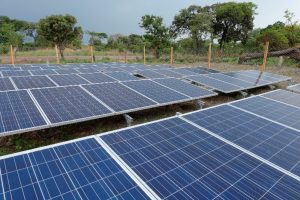
The growing importance of sustainable development and the shift to a low-carbon and climateresilient economy will require new skills and qualifications, offering great potential for the creation of green jobs but also implying structural changes and a transformation of existing jobs. The transition to a low-carbon and greener economy will generate millions of new jobs, negatively affect some high-emitting sectors, and alter most existing occupations in terms of task compositions and skills requirements. 

Ensuring the right skills for green jobs is a prerequisite to make the transition to a greener economy happen. Today, skills gaps are already recognised as a major bottleneck in a number of sectors, such as renewable energy, energy and resource efficiency, green building or environmental services. The adoption and dissemination of clean technologies require skills in technology application, adaptation and maintenance. Skills are also crucial for economies and
businesses, workers and entrepreneurs to rapidly adapt to changes deriving from climate change and environmental policies. 

Identifier
skpGreen
Slug
skills-for-green-transition-climate-action
Knowledge Products:

Joint Cedefop/OECD symposium: Apprenticeships for greener economies and societies

The joint Cedefop/OECD symposium on apprenticeship brings together policy-makers, practitioners and researchers from around the world to consider new research or analysis of practices exploring the links between apprenticeships and the transition towards greener economies and societies, as well as the implications for policy-making.

After a period of relative neglect in many countries, the past decade has witnessed a revival of apprenticeships, in recognition of their effectiveness in easing school-to-work transitions, but also increasingly because of their particular potential for developing skills closely tied to labour market needs.

The transition to a green economy and society aims at mitigating the environmental impact of human activity, including investment in environmentally friendly technologies, better waste management and land use, and changes in production, consumption and behaviour patterns, among others. Ambitious climate change mitigation policies are not only good for the environment, but also for jobs. The OECD’s 2020 Ministerial Council Statement highlights that OECD country recovery plans will boost growth, incomes and employment while promoting cleaner and more sustainable economies.

These changes have implications for preparing, reskilling and upskilling the workforce. Both the Paris Agreement and the European Green Deal (EGD) – the EU growth strategy – recognise that skills development is an indispensable pillar for the transition. Possessing the right set of skills will be essential in supporting worker mobility from sectors and jobs with declining employment – for example the oil and gas, agriculture, aviation and tourism sectors – to sectors such as renewable energy industries, where job opportunities rise rapidly; it will also be essential in creating a qualified workforce in the long term in a greener labour market. Apprenticeships can provide opportunities to develop the right skills for the green transition, both for young people in initial education and for adults in need of upskilling or reskilling.

Preregistration of general participants is now open.
To preregister, check the privacy statement and click here.
For more information click here.

 

Subject Tags:

Apprenticeships

Slug
apprenticeships
Identifier
639

Green skills

Slug
green-skills
Identifier
645
Regions:
Countries and territories:
Economic groups:
--

WorldSkills Conference 2021 - The Road Ahead: Skills for a Resilient Future

WorldSkills Conference 2021 - The Road Ahead: Skills for a Resilient Future

Kind:
Event
Start Date:
25 Oct 2021
End Date:
05 Jun 2026
Event Location:
Online, Shanghai
EventType:
Language:

English

Slug
english
Identifier
skpEng
Language Version:
--
Sources:

Other sources

Experts from many international, regional and national agencies generously share their views, experiences and findings on skills, helping policy-makers among other stakeholders to understand the linkages between education, training and the world of work, and how to integrate skills into national development planning to promote employment and economic growth.

Thumbnail
Identifier
skpOSource
Slug
other-sources
Topics:

Anticipating and matching skills needs

Thumbnail

Anticipating and building skills for the future is essential to a rapidly changing labour market. This applies to changes in the types and levels of skills needed as well as in occupational and technical areas. Effective methods to anticipate future skills needs and avoid potential mismatches include: sustained dialogue between employers and trainers, coordination across government institutions, labour market information systems, employment services and performance reviews of training institutions. 

Identifier
skpAFSN
Slug
anticipating-and-matching-skills-needs

Digital skills

Thumbnail

The world of work is undergoing a substantial transformation due to new forces. In particular, technological advances, such as AI, automation and robotics, have produced numerous new opportunities, but also given rise to urgent challenges. While new jobs are constantly being created with the emergence of the digital economy, many jobs are at risk of becoming obsolete. Digital innovations will rapidly change the demand for skills, thereby creating a wider skills gap that has the potential to hold back economic growth. Equipping people with basic or advanced digital skills promises to prepare them for unprecedented job opportunities in the digital economy. This will lead to innovation, higher productivity and competitiveness, as well as expanding markets, access to work and entrepreneurship opportunities. 

Identifier
skpdigskills
Slug
digital-skills

Skills for green transition/climate action

Thumbnail

The growing importance of sustainable development and the shift to a low-carbon and climateresilient economy will require new skills and qualifications, offering great potential for the creation of green jobs but also implying structural changes and a transformation of existing jobs. The transition to a low-carbon and greener economy will generate millions of new jobs, negatively affect some high-emitting sectors, and alter most existing occupations in terms of task compositions and skills requirements. 

Ensuring the right skills for green jobs is a prerequisite to make the transition to a greener economy happen. Today, skills gaps are already recognised as a major bottleneck in a number of sectors, such as renewable energy, energy and resource efficiency, green building or environmental services. The adoption and dissemination of clean technologies require skills in technology application, adaptation and maintenance. Skills are also crucial for economies and
businesses, workers and entrepreneurs to rapidly adapt to changes deriving from climate change and environmental policies. 

Identifier
skpGreen
Slug
skills-for-green-transition-climate-action
Knowledge Products:

The five-day hybrid event will take place in Shanghai and online to allow as many international participants as possible to join.

The world continues to endure the battle against the COVID-19 pandemic. As countries strive to implement recovery policies that can palliate its devastating economic and social effects of the last months, WorldSkills International wants to shed light on the role of skills development in building more resilient societies.

A year ahead of WorldSkills Shanghai 2022, experts from international organizations and government officials, leaders of business and industry will meet to discuss the effect of the pandemic on VET and how skills can address some of the world’s pressing challenges, such as climate change, poverty, or the future of work.

The WorldSkills Conference 2021, “The Road Ahead: Skills for a Resilient Future” will take place from 25 to 29 October 2021 in a hybrid format, allowing participants to join the conversation live either from Shanghai or online.

The three main tracks of this year's Conference will lead the way in global skills development for future generations: skills for green jobs, poverty reduction through skills, and the future of apprenticeship systems.

The Conference will kick off on Monday, 25th October at 16:00 CST with a high-level discussion which will look at the learnings of the past year and shed light on the skills set needed to build a resilient future.

To learn more and to register click here.


Subject Tags:

Apprenticeships

Slug
apprenticeships
Identifier
639

Green jobs

Slug
green-jobs
Identifier
623

Skills and training policy

Slug
skills-and-training-policy
Identifier
666

Skills anticipation

Slug
skills-anticipation
Identifier
677

TVET systems

Slug
tvet-systems
Identifier
661
Regions:
Countries and territories:
Economic groups:
--

Building a resilient generation in Central Asia and Europe

Building a resilient generation in Central Asia and Europe

Type:
Document
Content Type:
Publication
Language:

English

Slug
english
Identifier
skpEng
Sources:

Information is gathered from other international organizations that promote skills development and the transition from education and training to work. The Interagency Group on Technical and Vocational Education and Training (IAG-TVET) was established in 2009 to share research findings, coordinate joint research endeavours, and improve collaboration among organizations working at the international and national levels.

Thumbnail
Identifier
skpIntOrg
Slug
international-organizations
Topics:

Digital skills

Thumbnail

The world of work is undergoing a substantial transformation due to new forces. In particular, technological advances, such as AI, automation and robotics, have produced numerous new opportunities, but also given rise to urgent challenges. While new jobs are constantly being created with the emergence of the digital economy, many jobs are at risk of becoming obsolete. Digital innovations will rapidly change the demand for skills, thereby creating a wider skills gap that has the potential to hold back economic growth. Equipping people with basic or advanced digital skills promises to prepare them for unprecedented job opportunities in the digital economy. This will lead to innovation, higher productivity and competitiveness, as well as expanding markets, access to work and entrepreneurship opportunities. 

Identifier
skpdigskills
Slug
digital-skills

Lifelong learning

Thumbnail

There is a critical need for a greater overall investment in education and training, particularly in developing countries. Education and training investments should be closely linked to economic and employment growth strategies and programmes. Responsibility should be shared between the government (primary responsibility), enterprises, the social partners, and the individual. To make lifelong learning for all a reality, countries will need to make major reforms of their vocational and education and training systems. School-to-work schemes for young people should integrate education with workplace learning. Training systems need to become more flexible and responsive to rapidly changing skill requirements. Reforms should also focus on how learning can be facilitated, not just on training for specific occupational categories.

Identifier
skpPSLLL
Slug
lifelong-learning

Skills for green transition/climate action

Thumbnail

The growing importance of sustainable development and the shift to a low-carbon and climateresilient economy will require new skills and qualifications, offering great potential for the creation of green jobs but also implying structural changes and a transformation of existing jobs. The transition to a low-carbon and greener economy will generate millions of new jobs, negatively affect some high-emitting sectors, and alter most existing occupations in terms of task compositions and skills requirements. 

Ensuring the right skills for green jobs is a prerequisite to make the transition to a greener economy happen. Today, skills gaps are already recognised as a major bottleneck in a number of sectors, such as renewable energy, energy and resource efficiency, green building or environmental services. The adoption and dissemination of clean technologies require skills in technology application, adaptation and maintenance. Skills are also crucial for economies and
businesses, workers and entrepreneurs to rapidly adapt to changes deriving from climate change and environmental policies. 

Identifier
skpGreen
Slug
skills-for-green-transition-climate-action

Youth employability

Thumbnail

Globally, nearly 68 million young women and men are looking for and available for work,  and an estimated 123 million young people are working but living in poverty. The number who are not in employment, education or training (NEET) stands at 267 million, a majority of whom are young women. Significantly, young people are three times as likely as adults (25 years and older) to be unemployed.

Skills development is a primary means of enabling young people to make a smooth transition to work. A comprehensive approach is required to integrate young women and men in the labour market, including relevant and quality skills training, labour market information, career guidance and employment services, recognition of prior learning, incorporating entrepreneurship with training and effective skills forecasting. Improved basic education and core work skills are particularly important to enable youth to engage in lifelong learning as well as transition to the labour market. 

Identifier
skpYoEmp
Slug
youth-employability
Knowledge Products:

Research papers

Working papers, reports, and other publications from international organizations, academic institutions and bilateral agencies. Research findings to stimulate informed debate on skills, employment and productivity issues. 

Thumbnail
Identifier
skpRPS
Slug
research-papers
Publication Date:
07 Sep 2021

Youth views on lifelong learning, inclusion, and the green transition

What are the hopes, concerns, and expectations of young people in Eastern Europe and Central Asia (ECA) about their futures and the role of education, social inclusion, and the environment? This UNICEF-ETF joint report brings youth voices, views, and sentiments from the ECA region as a contribution to the regional and global discussions on how to create better lifelong learning systems, more inclusive communities, and greener societies.
Subject Tags:

Disadvantaged youth

Slug
disadvantaged-youth
Identifier
663

Lifelong learning

Slug
lifelong-learning
Identifier
400

Youth employment

Slug
youth-employment
Identifier
15
Regions:

Green jobs for young people in Africa: Work in progress

Green jobs for young people in Africa: Work in progress

Type:
Document
Content Type:
Publication
Language:

English

Slug
english
Identifier
skpEng
Sources:

ILO

The International Labour Organization is the tripartite U.N. agency that promotes Decent Work through employment, social security, labour standards and social dialogue. Its work on skills development is guided by the conceptual framework on Skills to improve productivity, employment growth, and development agreed in 2008 by representatives of Governments, Employers’ Associations and Workers’ Associations. Research, policy advice, and pilot projects and technical cooperation programmes to apply good practices in different circumstances across its 185 member States aims to boost the employability of workers, the productivity and competitiveness of enterprises, and the inclusiveness of economic growth. The ILO Secretariat in offices in 40 countries works with Ministries of Labour, employers’ organizations, and trade unions to integrate skills development into national and sector development strategies in order to better meet current labour market needs and to prepare for the jobs of the future; to expand access to employment-related training so that youth, persons with disabilities and other vulnerable groups are better able to acquire skills and secure productive and decent work; and to improve the ability of public employment services to provide career guidance, maintain labour exchange services, and deliver active labour market programmes.For more information regarding the ILO’s work on skills and employability go to: http://www.ilo.org/skills/lang--en/index.htm; for ILO/Cinterfor's Knowledge Management Plarform, see: http://www.oitcinterfor.org

Thumbnail
Identifier
skpILO
Slug
ilo

Other sources

Experts from many international, regional and national agencies generously share their views, experiences and findings on skills, helping policy-makers among other stakeholders to understand the linkages between education, training and the world of work, and how to integrate skills into national development planning to promote employment and economic growth.

Thumbnail
Identifier
skpOSource
Slug
other-sources
Topics:

Skills for green transition/climate action

Thumbnail

The growing importance of sustainable development and the shift to a low-carbon and climateresilient economy will require new skills and qualifications, offering great potential for the creation of green jobs but also implying structural changes and a transformation of existing jobs. The transition to a low-carbon and greener economy will generate millions of new jobs, negatively affect some high-emitting sectors, and alter most existing occupations in terms of task compositions and skills requirements. 

Ensuring the right skills for green jobs is a prerequisite to make the transition to a greener economy happen. Today, skills gaps are already recognised as a major bottleneck in a number of sectors, such as renewable energy, energy and resource efficiency, green building or environmental services. The adoption and dissemination of clean technologies require skills in technology application, adaptation and maintenance. Skills are also crucial for economies and
businesses, workers and entrepreneurs to rapidly adapt to changes deriving from climate change and environmental policies. 

Identifier
skpGreen
Slug
skills-for-green-transition-climate-action
Knowledge Products:

Research papers

Working papers, reports, and other publications from international organizations, academic institutions and bilateral agencies. Research findings to stimulate informed debate on skills, employment and productivity issues. 

Thumbnail
Identifier
skpRPS
Slug
research-papers
Publication Date:
30 Aug 2021
A job is considered green if it contributes substantially to protecting or restoring ecosystems and
biodiversity; reducing resource consumption and inefficiency; de-carbonizing the economy; and minimizing
or altogether eliminating all forms of waste and pollution – while also generating and supporting the
wellbeing of people.

The challenge for African governments is that a green transformation of the economy will destroy and
displace existing jobs, even as it creates new ones. This is bound to be disruptive, even if the eventual
outcomes are generally positive. What should African governments, funding partners, researchers and
other relevant stakeholders do to support a green transition of their economies, which stimulates job
creation that benefits young people? This paper consolidates and reviews evidence on the creation of
green jobs for African youth at regional, national and sectoral levels.
Subject Tags:

Green jobs

Slug
green-jobs
Identifier
623

Green skills

Slug
green-skills
Identifier
645
Regions:

Africa

Region Image

Technical and vocational education training (TVET) reform in Bangladesh - Final Evaluation

Technical and vocational education training (TVET) reform in Bangladesh - Final Evaluation

Type:
Document
Content Type:
Project documentation
Language:

English

Slug
english
Identifier
skpEng
Sources:

ILO

The International Labour Organization is the tripartite U.N. agency that promotes Decent Work through employment, social security, labour standards and social dialogue. Its work on skills development is guided by the conceptual framework on Skills to improve productivity, employment growth, and development agreed in 2008 by representatives of Governments, Employers’ Associations and Workers’ Associations. Research, policy advice, and pilot projects and technical cooperation programmes to apply good practices in different circumstances across its 185 member States aims to boost the employability of workers, the productivity and competitiveness of enterprises, and the inclusiveness of economic growth. The ILO Secretariat in offices in 40 countries works with Ministries of Labour, employers’ organizations, and trade unions to integrate skills development into national and sector development strategies in order to better meet current labour market needs and to prepare for the jobs of the future; to expand access to employment-related training so that youth, persons with disabilities and other vulnerable groups are better able to acquire skills and secure productive and decent work; and to improve the ability of public employment services to provide career guidance, maintain labour exchange services, and deliver active labour market programmes.For more information regarding the ILO’s work on skills and employability go to: http://www.ilo.org/skills/lang--en/index.htm; for ILO/Cinterfor's Knowledge Management Plarform, see: http://www.oitcinterfor.org

Thumbnail
Identifier
skpILO
Slug
ilo
Topics:

Other topic

Thumbnail
Identifier
skpOIssue
Slug
other-topic

Skills for green transition/climate action

Thumbnail

The growing importance of sustainable development and the shift to a low-carbon and climateresilient economy will require new skills and qualifications, offering great potential for the creation of green jobs but also implying structural changes and a transformation of existing jobs. The transition to a low-carbon and greener economy will generate millions of new jobs, negatively affect some high-emitting sectors, and alter most existing occupations in terms of task compositions and skills requirements. 

Ensuring the right skills for green jobs is a prerequisite to make the transition to a greener economy happen. Today, skills gaps are already recognised as a major bottleneck in a number of sectors, such as renewable energy, energy and resource efficiency, green building or environmental services. The adoption and dissemination of clean technologies require skills in technology application, adaptation and maintenance. Skills are also crucial for economies and
businesses, workers and entrepreneurs to rapidly adapt to changes deriving from climate change and environmental policies. 

Identifier
skpGreen
Slug
skills-for-green-transition-climate-action
Knowledge Products:

Evaluation reports

Analytical assessments of technical cooperation programmes and national skills and employment policies, identifying success factors of different interventions in response to particular challenges in different circumstances.

Thumbnail
Identifier
skpEvalRep
Slug
evaluation-reports
Publication Date:
01 Jun 2021

Technical and vocational education training (TVET) reform in Bangladesh - Final Evaluation

Subject Tags:

Skills indicators

Slug
skills-indicators
Identifier
653
Regions:
Countries and territories:

Bangladesh

Bangladesh has a strong track record of growth and development, even in times of elevated global uncertainty.  A robust demographic dividend, strong ready-made garment exports, resilient remittance inflows, and stable macroeconomic conditions have supported rapid economic growth over the past two decades. A strong recovery from the COVID-19 pandemic continued in FY22, although a recent surge in commodity prices has presented new headwinds. 

Bangladesh reached lower-middle income status in 2015. It is on track to graduate from the UN’s Least Developed Countries list in 2026. Poverty declined from 43.5 percent in 1991 to 14.3 percent in 2016, based on the international poverty line of $1.90 a day (1).  

Like many of its Asian neighbours, Bangladesh faces a major challenge trying to develop modern, employability skills for tens of millions of young women and men. It has a large informal sector, which accounts for 94.7 percent of the total employment in 2017 (2). Youth continue to be highly affected by the lack of opportunities, with the share of youth aged 15-24 not in employment, education or training (NEET), estimated at 27.8 percent in 2020 (3). 

TVET has a huge role to play in equipping the vast young labour force of 15-29 years referred to as the country’s “demographic dividend” with employability skills and providing enhanced support services to ensure a better transition from school to work. TVET may also contribute to reducing poverty by providing employability skills, particularly to those who drop out of school early and to a large number of unemployed and underemployed adults.  

Despite many reform initiatives by the government, the TVET sector needs further strengthening through reform of policies and systems in the labour market.  Enhancing industry-relevance of TVET qualifications will furthermore require closer Government cooperation with the private sector. For one and a half decade, the ILO has worked closely with the Government of Bangladesh and its Social Partners to reform the TVET sector and to improve access for people to increase their skills and employability, in particular youth, women and people from other marginalized groups. 

The impact of the COVID-19 pandemic had detrimental effects on the TVET sector, due to the nation-wide closure of all educational institutes for one and a half years, starting on 17 March 2020.  Most students’ learning was effectively abolished for this duration, and learning and certification was only possible through limited online learning facilities in existence at the time. Only recently has the TVET returned to its prior activity level. 

The ILO landmark programmes aim to strengthen and improve the environment for industry skills development, address the mismatch between the supply and demand for skills training, and drive the increased employability of millions of young women and men. ILO’s support to develop the skills system in Bangladesh has focused on skills system governance, development of skills policies and qualifications frameworks; delivery of quality skills training, expanding access to TVET, and involvement by the private sector.    


Sources 

(1) https://www.worldbank.org/en/country/bangladesh/overview

(2) https://ilostat.ilo.org/topics/informality/

(3) https://ilostat.ilo.org/topics/youth/

Country Assessment and Priority (CAP) – Bangladesh strategy for skills and lifelong learning (2022)

Situation Analysis of Bangladesh TVET Sector (2019) https://www.ilo.org/wcmsp5/groups/public/—asia/—ro-bangkok/—ilo-dhaka/documents/publication/wcms_735704.pdf_

ILO Skills and Lifelong Learning Newsletter – April 2021

ILO Skills and Lifelong Learning Newsletter – April 2021

Type:
Newsletter
Start Date:
01 Apr 2021
Language:

English

Slug
english
Identifier
skpEng
Sources:

ILO

The International Labour Organization is the tripartite U.N. agency that promotes Decent Work through employment, social security, labour standards and social dialogue. Its work on skills development is guided by the conceptual framework on Skills to improve productivity, employment growth, and development agreed in 2008 by representatives of Governments, Employers’ Associations and Workers’ Associations. Research, policy advice, and pilot projects and technical cooperation programmes to apply good practices in different circumstances across its 185 member States aims to boost the employability of workers, the productivity and competitiveness of enterprises, and the inclusiveness of economic growth. The ILO Secretariat in offices in 40 countries works with Ministries of Labour, employers’ organizations, and trade unions to integrate skills development into national and sector development strategies in order to better meet current labour market needs and to prepare for the jobs of the future; to expand access to employment-related training so that youth, persons with disabilities and other vulnerable groups are better able to acquire skills and secure productive and decent work; and to improve the ability of public employment services to provide career guidance, maintain labour exchange services, and deliver active labour market programmes.For more information regarding the ILO’s work on skills and employability go to: http://www.ilo.org/skills/lang--en/index.htm; for ILO/Cinterfor's Knowledge Management Plarform, see: http://www.oitcinterfor.org

Thumbnail
Identifier
skpILO
Slug
ilo
Topics:

Access to training

Thumbnail

Access for all to good quality education, vocational training and workplace learning is a fundamental principle of social cohesion and economic growth. Some groups of people may require targeted attention if they are to benefit from education, training and employment opportunities.  

This is particularly the case for disadvantaged youth, lower skilled workers, people with disabilities, and people in rural communities. The attractiveness of vocational education and training is enhanced when combined with entrepreneurship training and when public policies encourage utilization of higher skills by business. 
 

Identifier
skpATSU
Slug
access-to-training

Anticipating and matching skills needs

Thumbnail

Anticipating and building skills for the future is essential to a rapidly changing labour market. This applies to changes in the types and levels of skills needed as well as in occupational and technical areas. Effective methods to anticipate future skills needs and avoid potential mismatches include: sustained dialogue between employers and trainers, coordination across government institutions, labour market information systems, employment services and performance reviews of training institutions. 

Identifier
skpAFSN
Slug
anticipating-and-matching-skills-needs

Skills for green transition/climate action

Thumbnail

The growing importance of sustainable development and the shift to a low-carbon and climateresilient economy will require new skills and qualifications, offering great potential for the creation of green jobs but also implying structural changes and a transformation of existing jobs. The transition to a low-carbon and greener economy will generate millions of new jobs, negatively affect some high-emitting sectors, and alter most existing occupations in terms of task compositions and skills requirements. 

Ensuring the right skills for green jobs is a prerequisite to make the transition to a greener economy happen. Today, skills gaps are already recognised as a major bottleneck in a number of sectors, such as renewable energy, energy and resource efficiency, green building or environmental services. The adoption and dissemination of clean technologies require skills in technology application, adaptation and maintenance. Skills are also crucial for economies and
businesses, workers and entrepreneurs to rapidly adapt to changes deriving from climate change and environmental policies. 

Identifier
skpGreen
Slug
skills-for-green-transition-climate-action
Knowledge Products:

Promotional material

Presentations, discussion papers, meeting reports, promotional materials, videos, fact sheets, brochures and newsletters on skills development for employment.

Thumbnail
Identifier
skpAIM
Slug
promotional-material

Monthly Newsletter of the ILO SKILLS Branch: click here to get it.

The ILO Skills and Lifelong Learning monthly newsletter highlights recently uploaded publications, reports, research items, videos, and upcoming events on skills development and lifelong learning.

To sign up to receive the Newsletter by email click here.

Subject Tags:

Access to training

Slug
access-to-training
Identifier
683
Regions:
Countries and territories:
Economic groups:
--

Digital, greener and more resilient

Digital, greener and more resilient

Type:
Document
Content Type:
Publication
Language:

English

Slug
english
Identifier
skpEng
Sources:

Information is gathered from other international organizations that promote skills development and the transition from education and training to work. The Interagency Group on Technical and Vocational Education and Training (IAG-TVET) was established in 2009 to share research findings, coordinate joint research endeavours, and improve collaboration among organizations working at the international and national levels.

Thumbnail
Identifier
skpIntOrg
Slug
international-organizations
Topics:

Digital skills

Thumbnail

The world of work is undergoing a substantial transformation due to new forces. In particular, technological advances, such as AI, automation and robotics, have produced numerous new opportunities, but also given rise to urgent challenges. While new jobs are constantly being created with the emergence of the digital economy, many jobs are at risk of becoming obsolete. Digital innovations will rapidly change the demand for skills, thereby creating a wider skills gap that has the potential to hold back economic growth. Equipping people with basic or advanced digital skills promises to prepare them for unprecedented job opportunities in the digital economy. This will lead to innovation, higher productivity and competitiveness, as well as expanding markets, access to work and entrepreneurship opportunities. 

Identifier
skpdigskills
Slug
digital-skills

Skills for green transition/climate action

Thumbnail

The growing importance of sustainable development and the shift to a low-carbon and climateresilient economy will require new skills and qualifications, offering great potential for the creation of green jobs but also implying structural changes and a transformation of existing jobs. The transition to a low-carbon and greener economy will generate millions of new jobs, negatively affect some high-emitting sectors, and alter most existing occupations in terms of task compositions and skills requirements. 

Ensuring the right skills for green jobs is a prerequisite to make the transition to a greener economy happen. Today, skills gaps are already recognised as a major bottleneck in a number of sectors, such as renewable energy, energy and resource efficiency, green building or environmental services. The adoption and dissemination of clean technologies require skills in technology application, adaptation and maintenance. Skills are also crucial for economies and
businesses, workers and entrepreneurs to rapidly adapt to changes deriving from climate change and environmental policies. 

Identifier
skpGreen
Slug
skills-for-green-transition-climate-action
Knowledge Products:

Research papers

Working papers, reports, and other publications from international organizations, academic institutions and bilateral agencies. Research findings to stimulate informed debate on skills, employment and productivity issues. 

Thumbnail
Identifier
skpRPS
Slug
research-papers
Publication Date:
29 Apr 2021

Megatrends such as automation, greening and population ageing, along with the coronavirus pandemic, are reshaping the European labour market. Providing a long-term perspective to changes in skills and jobs, skills forecasts can make a useful contribution to decisions by policy-makers, experts, and social partners.

Individuals and the professionals that support them can benefit from skills intelligence based on forecasts, feeding education, training and career decisions. In times of rapid change, scenarios are useful in shedding light on the impact of megatrends. In this short publication, Cedefop presents the key findings emerging from scenarios around Covid-19, automation and the European green deal. These scenarios are meant to stimulate reflection on labour market trends to 2030 and support evidence-based policy-making in VET, skills and related areas.

Subject Tags:

Information and communication technologies

Slug
information-and-communication-technologies
Identifier
346

Skills anticipation

Slug
skills-anticipation
Identifier
677
Regions: