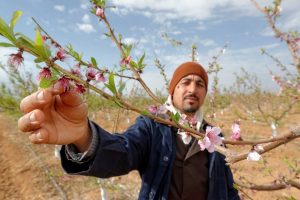
Skills for youth employment and rural development: Building a future with decent work for young people

Skills for youth employment and rural development: Building a future with decent work for young people

Type:
Document
Content Type:
Skills for youth employment and rural development: Building a future with decent work for young people
Language:

English

Slug
english
Identifier
skpEng
Sources:

ILO

The International Labour Organization is the tripartite U.N. agency that promotes Decent Work through employment, social security, labour standards and social dialogue. Its work on skills development is guided by the conceptual framework on Skills to improve productivity, employment growth, and development agreed in 2008 by representatives of Governments, Employers’ Associations and Workers’ Associations. Research, policy advice, and pilot projects and technical cooperation programmes to apply good practices in different circumstances across its 185 member States aims to boost the employability of workers, the productivity and competitiveness of enterprises, and the inclusiveness of economic growth. The ILO Secretariat in offices in 40 countries works with Ministries of Labour, employers’ organizations, and trade unions to integrate skills development into national and sector development strategies in order to better meet current labour market needs and to prepare for the jobs of the future; to expand access to employment-related training so that youth, persons with disabilities and other vulnerable groups are better able to acquire skills and secure productive and decent work; and to improve the ability of public employment services to provide career guidance, maintain labour exchange services, and deliver active labour market programmes.For more information regarding the ILO’s work on skills and employability go to: http://www.ilo.org/skills/lang--en/index.htm; for ILO/Cinterfor's Knowledge Management Plarform, see: http://www.oitcinterfor.org

Thumbnail
Identifier
skpILO
Slug
ilo

Other sources

Experts from many international, regional and national agencies generously share their views, experiences and findings on skills, helping policy-makers among other stakeholders to understand the linkages between education, training and the world of work, and how to integrate skills into national development planning to promote employment and economic growth.

Thumbnail
Identifier
skpOSource
Slug
other-sources
Topics:

Participation of employers' and workers' organizations

Thumbnail

The world of learning and the world of work are separate but linked. While one involves learning, the other produces goods and services. Neither can thrive without the other. Strong partnerships between government, employers and workers help ensure the relevance of training to the changing needs of enterprises and labour markets. 

Identifier
skpPSP
Slug
participation-of-employers-and-workers-organizations

Rural employment

Thumbnail

Eight out of 10 of the world’s working poor who live on US $1.25 per day live in rural areas, where many are caught in vulnerable employment, especially in agriculture.Flourishing rural areas are vital to regional and national development. Yet, rural economies tend to face a wide range of challenges that urban areas are more likely to overcome. These include access to transportation, sanitation and health services, and a consumer base in close proximity to support small and medium enterprise development. Women and men working in rural areas also face difficulties associated with a paucity of economic opportunities, under investment, poor infrastructure and public services, including education, and, in many cases, weak governance and underdeveloped markets.

Education, entrepreneurship, and physical and social infrastructure all play an important role in developing rural regions. Skills are central to improving employability and livelihood opportunities, reducing poverty, enhancing productivity and promoting environmentally sustainable development.

Identifier
skpREmpl
Slug
rural-employment

Youth employability

Thumbnail

Globally, nearly 68 million young women and men are looking for and available for work,  and an estimated 123 million young people are working but living in poverty. The number who are not in employment, education or training (NEET) stands at 267 million, a majority of whom are young women. Significantly, young people are three times as likely as adults (25 years and older) to be unemployed.

Skills development is a primary means of enabling young people to make a smooth transition to work. A comprehensive approach is required to integrate young women and men in the labour market, including relevant and quality skills training, labour market information, career guidance and employment services, recognition of prior learning, incorporating entrepreneurship with training and effective skills forecasting. Improved basic education and core work skills are particularly important to enable youth to engage in lifelong learning as well as transition to the labour market. 

Identifier
skpYoEmp
Slug
youth-employability
Knowledge Products:

Promotional material

Presentations, discussion papers, meeting reports, promotional materials, videos, fact sheets, brochures and newsletters on skills development for employment.

Thumbnail
Identifier
skpAIM
Slug
promotional-material
Publication Date:
07 Nov 2012
Provides an overview of the Skills for Youth Employment and Rural Development Programme, a five-year partnership between the ILO and the Danish Africa Commission which is supporting social partners in Zimbabwe, Benin and Burkina Faso to address the challenges of youth employment and rural development. The skills training strategy focuses broadly on two main areas of action: 1) introducing the ILO's Training for Rural Economic Empowerment (TREE) methodology in rural communities, and 2) improving the Quality of delivery of training in Informal Apprenticeship (QIA) in the informal economy. The post-training strategy includes making microfinance and business development service markets work for youth and their self-help groups or cooperatives.
Subject Tags:

Apprenticeships

Slug
apprenticeships
Identifier
639

Poverty alleviation

Slug
poverty-alleviation
Identifier
149

Rural development

Slug
rural-development
Identifier
152

Rural employment

Slug
rural-employment
Identifier
670

Vocational training

Slug
vocational-training
Identifier
124

Youth

Slug
youth
Identifier
319
Regions:

Africa

Region Image
Countries and territories:

Education, employment and barriers for young people with disabilities in southern Africa

Education, employment and barriers for young people with disabilities in southern Africa

Type:
Document
Content Type:
Education, employment and barriers for young people with disabilities in southern Africa
Language:
Sources:

Information is gathered from other international organizations that promote skills development and the transition from education and training to work. The Interagency Group on Technical and Vocational Education and Training (IAG-TVET) was established in 2009 to share research findings, coordinate joint research endeavours, and improve collaboration among organizations working at the international and national levels.

Thumbnail
Identifier
skpIntOrg
Slug
international-organizations
Topics:

People with disabilities

Thumbnail

Of an estimated 1 billion people with disabilities in the world today, some 785 million are of working age. While many are successfully employed and fully integrated into society, most face a disproportionate level of poverty and unemployment. This is a massive loss both to them and their countries. A strategy of including people with disabilities in training and employment promotion policies, combined with targeted supports to ensure their participation, can help disabled persons obtain productive mainstream employment.

Identifier
skpPeoDis
Slug
people-with-disabilities

Youth employability

Thumbnail

Globally, nearly 68 million young women and men are looking for and available for work,  and an estimated 123 million young people are working but living in poverty. The number who are not in employment, education or training (NEET) stands at 267 million, a majority of whom are young women. Significantly, young people are three times as likely as adults (25 years and older) to be unemployed.

Skills development is a primary means of enabling young people to make a smooth transition to work. A comprehensive approach is required to integrate young women and men in the labour market, including relevant and quality skills training, labour market information, career guidance and employment services, recognition of prior learning, incorporating entrepreneurship with training and effective skills forecasting. Improved basic education and core work skills are particularly important to enable youth to engage in lifelong learning as well as transition to the labour market. 

Identifier
skpYoEmp
Slug
youth-employability
Knowledge Products:

Research papers

Working papers, reports, and other publications from international organizations, academic institutions and bilateral agencies. Research findings to stimulate informed debate on skills, employment and productivity issues. 

Thumbnail
Identifier
skpRPS
Slug
research-papers
Publication Date:
06 Nov 2012

Background paper prepared for the Education for All Global Monitoring Report 2012

This background paper draws from recent and unique research on living conditions among people with and without disabilities in southern Africa. It confirms that disabled youth are far from experiencing equity in education and opportunities in the labor market. The study concludes that understanding the distinction between the general problems in the education system in poor countries on one side, and the particular problems facing disabled youth on the other is critical to improving this situation. Without targeting disabled youth particularly to increase access and improve achievement, there is clearly a danger that broad programs for improving the educational system will fail if disabled youth, a large and most neglected minority group, are not included both through general and specific measures. The study also reveals some of the complexities involved in the relationship between disability, education and participation in society through meaningful employment. In order to achieve the intentions of the UN Convention on the Rights of Person with Disabilities it is, however, necessary that interventions into the education system to improve the quality and the relevance go hand-in-hand with research that can generate further knowledge on barriers and facilitators for disabled youth to participate fully.

Subject Tags:

Education and training

Slug
education-and-training
Identifier
116

Employability

Slug
employability
Identifier
643

Youth

Slug
youth
Identifier
319

Youth unemployment

Slug
youth-unemployment
Identifier
622
Regions:

Africa

Region Image

The price of exclusion: the economic consequences of excluding people with disabilities from the world of work

The price of exclusion: the economic consequences of excluding people with disabilities from the world of work

Type:
Document
Content Type:
The price of exclusion: the economic consequences of excluding people with disabilities from the world of work
Language:

English

Slug
english
Identifier
skpEng
Sources:

ILO

The International Labour Organization is the tripartite U.N. agency that promotes Decent Work through employment, social security, labour standards and social dialogue. Its work on skills development is guided by the conceptual framework on Skills to improve productivity, employment growth, and development agreed in 2008 by representatives of Governments, Employers’ Associations and Workers’ Associations. Research, policy advice, and pilot projects and technical cooperation programmes to apply good practices in different circumstances across its 185 member States aims to boost the employability of workers, the productivity and competitiveness of enterprises, and the inclusiveness of economic growth. The ILO Secretariat in offices in 40 countries works with Ministries of Labour, employers’ organizations, and trade unions to integrate skills development into national and sector development strategies in order to better meet current labour market needs and to prepare for the jobs of the future; to expand access to employment-related training so that youth, persons with disabilities and other vulnerable groups are better able to acquire skills and secure productive and decent work; and to improve the ability of public employment services to provide career guidance, maintain labour exchange services, and deliver active labour market programmes.For more information regarding the ILO’s work on skills and employability go to: http://www.ilo.org/skills/lang--en/index.htm; for ILO/Cinterfor's Knowledge Management Plarform, see: http://www.oitcinterfor.org

Thumbnail
Identifier
skpILO
Slug
ilo
Topics:

Career guidance and employment services

Thumbnail

Career guidance and counselling, career education and lifelong development of skills for employability are key for success in learning activities, effective career transitions, livelihood planning, entrepreneurship and in increasing labour market participation. They are instrumental in promoting skills utilization, recognition (RPL), as well as in improving enterprise human resource management.

Career development activities encompass a wide variety of support activities including career information and advice, counselling, work exposure (e.g. job shadowing, work experience periods), assessment, coaching, mentoring, professional networking, advocacy, basic and employability skills training (curricular and non-curricular) and entrepreneurship training. It is often an area which is fragmented across different ministries (e.g. education, TVET, employment, youth) requiring an effort to achieve the necessary coordination to provide adequate support to individuals during learning, employment and unemployment/inactivity periods.
 

Identifier
skpLMIES
Slug
career-guidance-and-employment-services

People with disabilities

Thumbnail

Of an estimated 1 billion people with disabilities in the world today, some 785 million are of working age. While many are successfully employed and fully integrated into society, most face a disproportionate level of poverty and unemployment. This is a massive loss both to them and their countries. A strategy of including people with disabilities in training and employment promotion policies, combined with targeted supports to ensure their participation, can help disabled persons obtain productive mainstream employment.

Identifier
skpPeoDis
Slug
people-with-disabilities
Knowledge Products:

Promotional material

Presentations, discussion papers, meeting reports, promotional materials, videos, fact sheets, brochures and newsletters on skills development for employment.

Thumbnail
Identifier
skpAIM
Slug
promotional-material

Research papers

Working papers, reports, and other publications from international organizations, academic institutions and bilateral agencies. Research findings to stimulate informed debate on skills, employment and productivity issues. 

Thumbnail
Identifier
skpRPS
Slug
research-papers
Publication Date:
02 Nov 2012
Employment Working Paper No. 43 The study breaks ground in developing and pilot-testing a new approach to quantifying the macroeconomic losses related to exclusion of people with disabilities from workplace. Its innovative approach was tested using data from ten low and middle-income developing countries in Asia (China, Thailand and Viet Nam) and in Africa (Ethiopia, Malawi, Namibia, South Africa, Tanzania, Zambia and Zimbabwe). It concludes that economic losses related to disability are large and measurable, ranging from between 3 and 7 per cent of GDP.
Subject Tags:

Economic and social rights

Slug
economic-and-social-rights
Identifier
264

People with disabilities

Slug
people-with-disabilities
Identifier
323

Productivity

Slug
productivity
Identifier
188
Regions:

Africa

Region Image