Montrez de l’audace pour le changement : la croissance pour tous grâce à l’acquisition de compétences , 6 au 17 mars
French
ILO
The International Labour Organization is the tripartite U.N. agency that promotes Decent Work through employment, social security, labour standards and social dialogue. Its work on skills development is guided by the conceptual framework on Skills to improve productivity, employment growth, and development agreed in 2008 by representatives of Governments, Employers’ Associations and Workers’ Associations. Research, policy advice, and pilot projects and technical cooperation programmes to apply good practices in different circumstances across its 185 member States aims to boost the employability of workers, the productivity and competitiveness of enterprises, and the inclusiveness of economic growth. The ILO Secretariat in offices in 40 countries works with Ministries of Labour, employers’ organizations, and trade unions to integrate skills development into national and sector development strategies in order to better meet current labour market needs and to prepare for the jobs of the future; to expand access to employment-related training so that youth, persons with disabilities and other vulnerable groups are better able to acquire skills and secure productive and decent work; and to improve the ability of public employment services to provide career guidance, maintain labour exchange services, and deliver active labour market programmes.For more information regarding the ILO’s work on skills and employability go to: http://www.ilo.org/skills/lang--en/index.htm; for ILO/Cinterfor's Knowledge Management Plarform, see: http://www.oitcinterfor.org

Access to training

Access for all to good quality education, vocational training and workplace learning is a fundamental principle of social cohesion and economic growth. Some groups of people may require targeted attention if they are to benefit from education, training and employment opportunities.
This is particularly the case for disadvantaged youth, lower skilled workers, people with disabilities, and people in rural communities. The attractiveness of vocational education and training is enhanced when combined with entrepreneurship training and when public policies encourage utilization of higher skills by business.
Gender equality
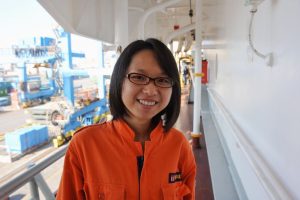
Women represent both half of the world's population – and half the world's economic potential. Their participation in the labour market reduces poverty because they often invest 90 per cent of their income in the well-being, education and nutrition of their families. Yet labour force participation by women has stagnated at about 55 per cent globally since 2010. Moreover, women are disproportionately represented in precarious work – low-paid, low-skilled and insecure jobs.
Training plays an important role in the pursuit of equality of opportunity and treatment for women and men in the world of work. Yet women often lack access to technical and vocational education and training. Many also lack the basic functional skills, such as literacy and numeracy, to participate meaningfully in the work force. Overcoming this challenge requires the adoption of a life-cycle approach. This includes improving girls’ access to basic education; overcoming logistic, economic and cultural barriers to apprenticeships and to secondary and vocational training for young women; and meeting the training needs of women re-entering the labour market and of older women who have not had equal access to opportunities for lifelong learning.
Other knowledge products

Moderators
Cette discussion virtuelle qui s’inspire de la Journée internationale de la femme de cette année, aura pour but d’étudier et d’encourager le partage des programmes et bonnes pratiques innovants qui peuvent aider à bâtir un monde du travail meilleur pour le développement actuel et futur – notamment pour les femmes et autres groupes défavorisés. Partagez vos expériences maintenant! Certaines contributions pourront aussi figurer dans une publication de l’OIT sur le sujet.
Plusieurs éléments moteurs du changement transformationnel sur le plan international ont des répercussions majeures sur l’évolution des compétences. Par exemple, les progrès technologiques vont modifier de façon fondamentale notre mode de vie, de travail et nos modes d’échanges sociaux. Souvent considérée comme la quatrième révolution industrielle, l’arrivée de la robotique, de la nanotechnologie, de l’impression en 3D et de la biotechnologie va exiger d’énormes évolutions des compétences nécessaires pour prospérer dans ce nouveau monde.
L’engagement de « Ne laisser personne de côté » pris dans le Programme pour le développement durable de 2030 et les Objectifs pour le développement durable qui l’accompagnent oblige les états membres à établir des plans pour mettre fin à la pauvreté, lutter contre le changement climatique et combattre l’injustice et les inégalités.
Veuillez lire la Note explicative complet.
Questions pour cette semaine :
4. Différents pays ont suivi des approches différentes pour encourager la croissance pour tous par l’enrichissement des compétences. Mais s’agit-il d’élargir l’accès aux établissements dispensant des formations structurées ? Ou s’agit-il d’améliorer la qualité et l’image de l’EFTP ? S’agit-il de compétences spécifiques qui pourraient ouvrir des emplois décents et productifs aux groupes défavorisés ? Ou de créer des débouchés menant à des emplois de qualité, bien rémunérés et qualifiés ? Qu’en pensez-vous au vu de votre expérience ?
5. Y-a-t-il des programmes uniques en leur genre et innovants dans votre pays qui s’adressent aux groupes défavorisés et portent sur leurs besoins spécifiques en compétences ?
6. Le développement de l’automatisation va changer la nature des emplois et ce sont les postes des travailleurs peu qualifiés qui sont le plus exposés.