A Joint Webinar in Celebration of Global Careers Month 2025 (regional)
Japanese
Other sources
Experts from many international, regional and national agencies generously share their views, experiences and findings on skills, helping policy-makers among other stakeholders to understand the linkages between education, training and the world of work, and how to integrate skills into national development planning to promote employment and economic growth.

Gender equality
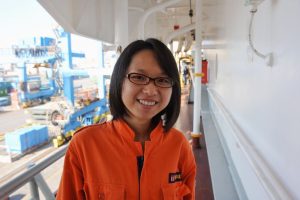
Women represent both half of the world's population – and half the world's economic potential. Their participation in the labour market reduces poverty because they often invest 90 per cent of their income in the well-being, education and nutrition of their families. Yet labour force participation by women has stagnated at about 55 per cent globally since 2010. Moreover, women are disproportionately represented in precarious work – low-paid, low-skilled and insecure jobs.
Training plays an important role in the pursuit of equality of opportunity and treatment for women and men in the world of work. Yet women often lack access to technical and vocational education and training. Many also lack the basic functional skills, such as literacy and numeracy, to participate meaningfully in the work force. Overcoming this challenge requires the adoption of a life-cycle approach. This includes improving girls’ access to basic education; overcoming logistic, economic and cultural barriers to apprenticeships and to secondary and vocational training for young women; and meeting the training needs of women re-entering the labour market and of older women who have not had equal access to opportunities for lifelong learning.
Work-based learning and skills utilization
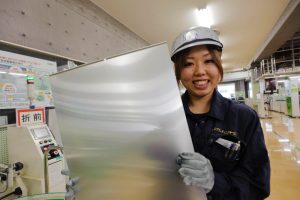
Increasingly, countries around the world, at all levels of development are putting work-based learning, particularly apprenticeships, high on their policy agenda, recognizing its potential for reducing skills mismatch, meeting skills demand of a fast changing labour market, providing cost-effective training, promoting private sector development and smoothing transitions to the world of work.
Moreover, the issue of how skills are used in the workplace and how businesses engage with the local skills ecosystem are getting greater attention. It is increasingly recognized that workers who better use their skills are more likely to have greater job satisfaction, earn better wages and are more prepared to adapt to changes in the nature of work, while employers benefit from a more productive and innovative workforce, enabling them to maximise business performance and profitability.
This event, jointly organized by the Future Oriented Youth Society (FYouth) of Korea and the Japanese Society for the Studies for Career Education (JSSCE), aims to foster an exchange of ideas on common career guidance themes through research and practical reports. Serving as a starting point for future collaboration, this event marks the beginning of our efforts to establish continuous academic exchange. Japan and Korea share many challenges in the school-to-work transition for young people, and with the recent increase in human mobility between the nations, this partnership will enhance the universality and applicability of our research.
The specific details of the event are as follows, although the title is provisional.
Title: A Joint Webinar in Celebration of Global Careers Month 2025
Date: Between November 10-21, 2025
Format: Webinar
• Session 1: Nov 13 (Tue), 19:00-19:40 (JST/KST) - Speaker: Atsushi OKABE (Work-based Learning and Use of Technology)
• Session 2: Nov 14 (Fri), 14:00-14:40 (JST/KST) - Speaker: Minwook LEE (Work-based Learning and Use of Technology)
• Session 3: Nov 20 (Thu), 19:00-19:40 (JST/KST) - Speaker: Shintaro TAKANO (Gender Equality in Career Development)
• Session 4: Nov 21 (Fri), 11:00-11:40 (JST/KST) - Speaker: In-Hyuk LEE (Work-based Learning and Use of Technology)
Languages: Japanese, Korean and English
More information: http://www.f-youth.or.kr/html/sub01.asp and https://jssce.jp/committee/iaevg/
Asia and the Pacific
