Summary report - E-Discussion on skills for rural employment: Challenges and solutions
English
ILO
The International Labour Organization is the tripartite U.N. agency that promotes Decent Work through employment, social security, labour standards and social dialogue. Its work on skills development is guided by the conceptual framework on Skills to improve productivity, employment growth, and development agreed in 2008 by representatives of Governments, Employers’ Associations and Workers’ Associations. Research, policy advice, and pilot projects and technical cooperation programmes to apply good practices in different circumstances across its 185 member States aims to boost the employability of workers, the productivity and competitiveness of enterprises, and the inclusiveness of economic growth. The ILO Secretariat in offices in 40 countries works with Ministries of Labour, employers’ organizations, and trade unions to integrate skills development into national and sector development strategies in order to better meet current labour market needs and to prepare for the jobs of the future; to expand access to employment-related training so that youth, persons with disabilities and other vulnerable groups are better able to acquire skills and secure productive and decent work; and to improve the ability of public employment services to provide career guidance, maintain labour exchange services, and deliver active labour market programmes.For more information regarding the ILO’s work on skills and employability go to: http://www.ilo.org/skills/lang--en/index.htm; for ILO/Cinterfor's Knowledge Management Plarform, see: http://www.oitcinterfor.org

Rural employment
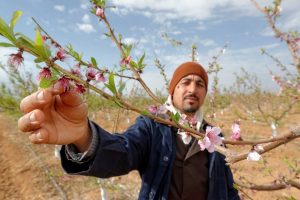
Eight out of 10 of the world’s working poor who live on US $1.25 per day live in rural areas, where many are caught in vulnerable employment, especially in agriculture.Flourishing rural areas are vital to regional and national development. Yet, rural economies tend to face a wide range of challenges that urban areas are more likely to overcome. These include access to transportation, sanitation and health services, and a consumer base in close proximity to support small and medium enterprise development. Women and men working in rural areas also face difficulties associated with a paucity of economic opportunities, under investment, poor infrastructure and public services, including education, and, in many cases, weak governance and underdeveloped markets.
Education, entrepreneurship, and physical and social infrastructure all play an important role in developing rural regions. Skills are central to improving employability and livelihood opportunities, reducing poverty, enhancing productivity and promoting environmentally sustainable development.
Other knowledge products