Alma Maters and Career Journeys of all employees in the school
English
Academic institutions
Research papers, synthesis reports, country and programme studies are collected from many academic institutions and national, regional and international professional associations.

Apprenticeships
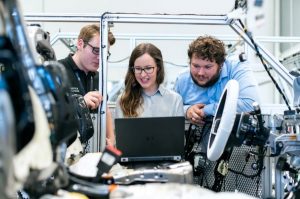
Quality apprenticeships based on robust social dialogue and public-private partnerships can improve employment prospects for young people while developing high level skills identified by employers as necessary for growth and increased productivity. Both informal and regulated apprenticeship systems are important learning resources enabling young people to overcome the work-inexperience trap, gain new and enhanced skills and recognized qualifications.
Upgrading informal apprenticeships and expanding regulated ones is a cost-effective way to invest in a country’s skills base, promote economic growth and enhance the employability of youth.
Career guidance and employment services

Career guidance and counselling, career education and lifelong development of skills for employability are key for success in learning activities, effective career transitions, livelihood planning, entrepreneurship and in increasing labour market participation. They are instrumental in promoting skills utilization, recognition (RPL), as well as in improving enterprise human resource management.
Career development activities encompass a wide variety of support activities including career information and advice, counselling, work exposure (e.g. job shadowing, work experience periods), assessment, coaching, mentoring, professional networking, advocacy, basic and employability skills training (curricular and non-curricular) and entrepreneurship training. It is often an area which is fragmented across different ministries (e.g. education, TVET, employment, youth) requiring an effort to achieve the necessary coordination to provide adequate support to individuals during learning, employment and unemployment/inactivity periods.
Lifelong learning

There is a critical need for a greater overall investment in education and training, particularly in developing countries. Education and training investments should be closely linked to economic and employment growth strategies and programmes. Responsibility should be shared between the government (primary responsibility), enterprises, the social partners, and the individual. To make lifelong learning for all a reality, countries will need to make major reforms of their vocational and education and training systems. School-to-work schemes for young people should integrate education with workplace learning. Training systems need to become more flexible and responsive to rapidly changing skill requirements. Reforms should also focus on how learning can be facilitated, not just on training for specific occupational categories.
People with disabilities

Of an estimated 1 billion people with disabilities in the world today, some 785 million are of working age. While many are successfully employed and fully integrated into society, most face a disproportionate level of poverty and unemployment. This is a massive loss both to them and their countries. A strategy of including people with disabilities in training and employment promotion policies, combined with targeted supports to ensure their participation, can help disabled persons obtain productive mainstream employment.
Teachers, Leaders, Assistants' Alma Maters and Career journeys will be displayed throughout the school. Students will ask their teachers / assistants etc to share their Career Journey with them. There will be a quiz with prizes at the end of the week.
Date: 17-30 November 2025
Time: 09:00-17:00
Place: Kildare Town Community School, Dunmurry Road, Kildare Town, Co Kildare, R51D288, Ireland
Languages: English, Gaeilge, French, Spanish
For more information: https://careersportal.ie/website/careerguidance/events/16447?school_id=746
Europe and Central Asia
