Cracking the code: Girls' Education in STEM
English
Information is gathered from other international organizations that promote skills development and the transition from education and training to work. The Interagency Group on Technical and Vocational Education and Training (IAG-TVET) was established in 2009 to share research findings, coordinate joint research endeavours, and improve collaboration among organizations working at the international and national levels.

Gender equality
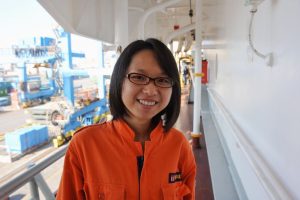
Women represent both half of the world's population – and half the world's economic potential. Their participation in the labour market reduces poverty because they often invest 90 per cent of their income in the well-being, education and nutrition of their families. Yet labour force participation by women has stagnated at about 55 per cent globally since 2010. Moreover, women are disproportionately represented in precarious work – low-paid, low-skilled and insecure jobs.
Training plays an important role in the pursuit of equality of opportunity and treatment for women and men in the world of work. Yet women often lack access to technical and vocational education and training. Many also lack the basic functional skills, such as literacy and numeracy, to participate meaningfully in the work force. Overcoming this challenge requires the adoption of a life-cycle approach. This includes improving girls’ access to basic education; overcoming logistic, economic and cultural barriers to apprenticeships and to secondary and vocational training for young women; and meeting the training needs of women re-entering the labour market and of older women who have not had equal access to opportunities for lifelong learning.
Promotional material
Presentations, discussion papers, meeting reports, promotional materials, videos, fact sheets, brochures and newsletters on skills development for employment.

Why does this gender gap exist and how can it be addressed? The UNESCO Forum will provide platform for debate and hands-on learning to: present latest findings from research and practice; facilitate policy dialogue, experience-sharing and networking, and; make the case for strengthening girls’ education in STEM subjects.
Girls and women face multiple challenges that compromise their education opportunities. One area of longstanding concern is the low rate of female participation in science, technology, engineering and mathematics (STEM) education and consequently STEM careers. This is a major concern, as STEM careers are often called ‘jobs of the future,’ driving social and personal well-being, inclusive growth and sustainable development, through innovation and creativity.
Why does this gender gap exist and how can it be addressed? The UNESCO International Symposium and Policy Forum will be organized over three days, serving as a platform for debate and hands-on learning, seeking to:
• Present latest findings from research and practice
• Facilitate policy dialogue, experience-sharing and networking
• Make the case for strengthening girls’ education in STEM subjects
The programme will be based on the overarching theme of girls’ education in STEM, with four sub-themes/tracks:
1. Building the foundations: Gender-responsive quality STEM education
2. Changing the equation: Addressing stereotypes and bias hindering girls’ participation
3. Gravitating into the field: Reaching out, engaging and empowering girls and women
4. Wiring the network: Partnerships, cross-sector learning and cooperation
This event will bring together over 200 delegates including: the Ministry of education and other officials; education practitioners and educators; researchers and experts; representatives of intergovernmental and non-governmental organizations; development partners; civil society representatives; private sector stakeholders and others.