2018 Global Commodities Forum, "Building skills for sustainable development"
English
Other sources
Experts from many international, regional and national agencies generously share their views, experiences and findings on skills, helping policy-makers among other stakeholders to understand the linkages between education, training and the world of work, and how to integrate skills into national development planning to promote employment and economic growth.

Skills policies and strategies
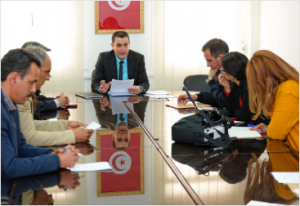
Skills and employment policies should be viewed together. The full value of one policy set is realized when it supports the objectives of the other. For investments in education and training to yield maximum benefit to workers, enterprises, and economies, countries’ capacities for coordination is critical in three areas: connecting basic education to technical training and then to market entry; ensuring continuous communication between employers and training providers so that training meets the needs and aspirations of workers and enterprises, and integrating skills development policies with industrial, investment, trade, technology, environmental, rural and local development policies.
Promotional material
Presentations, discussion papers, meeting reports, promotional materials, videos, fact sheets, brochures and newsletters on skills development for employment.

Research papers
Working papers, reports, and other publications from international organizations, academic institutions and bilateral agencies. Research findings to stimulate informed debate on skills, employment and productivity issues.

The Global Commodities Forum is part of the UNCTAD Technical Cooperation programme, Breaking the Chains of Commodity Dependence.
Launched in 2010, the Forum provides a high-level, neutral multi-stakeholder platform to discuss issues related to the production and trade of commodities, with a focus on developing countries. It aims to generate partnerships and innovative policy ideas for leaders of government, the private sector and civil society.
The theme of the 2018 Global Commodities Forum is ‘Building skills for sustainable development’
Participants will examine and discuss the roles that skill development plays in the commodities sector in moving up the value chain, contributing to industrial development (Sustainable Development Goal 9) and providing decent work (Goal 8) and professional education (Goal 4). Forum participants will consider the policies and investments that are necessary to build skills as a main channel for commodity-led development strategies.
For Governments, this includes establishing responsive, scalable training programmes, ideally in collaboration with industry, before launching new value added activities. Participants will look at how to achieve efficiencies by mirroring integration strategies for commodities industries in their associated training programmes, for example through regional or multi-vocational approaches. In addition, they will learn how sustainable job creation can be useful in aligning industrial and human capital policies in commodity-led development strategies.
From the industry perspective, participants will discover how certain skills can help improve corporate performance, meet corporate social responsibility engagements, comply with local content requirements and deliver durable benefits to host communities.
Particular emphasis will be placed on how human capital development strategies should adapt to the increasing automation of the mining sector, and how these strategies help prepare for the transition to a lower-carbon energy mix in pursuit of universal access to affordable, clean energy (Goal 7) and contribute to increasing the participation of women in skilled vocations in value added activities (Goal 5).